Clients want 24/7 accessibility for bookings, but how are software companies balancing customer convenience with operators’ business needs? Kate Parker investigates
By Kate Parker | Published in Spa Business 2017 issue 2
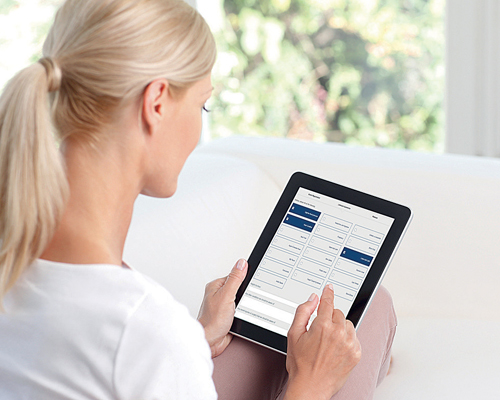
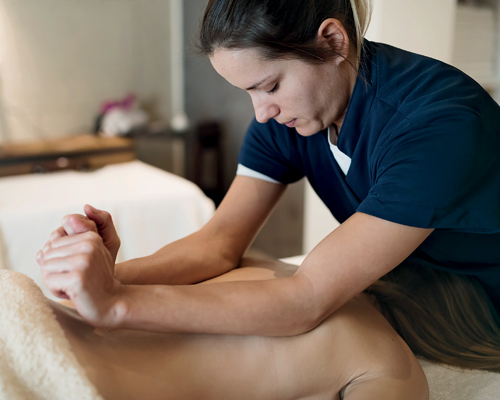
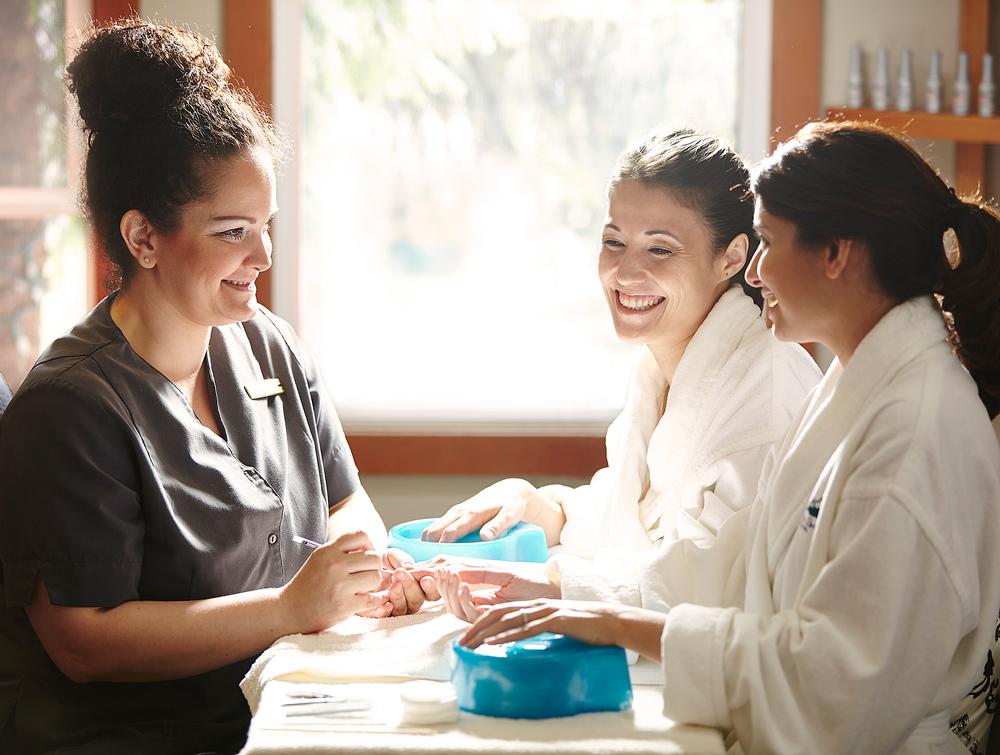
Younger clients expect to be able to book treatments online – and on a whim / shutterstock
Online booking poses particular challenges when looking at the combined needs of operator and customer, with one seeking to control and optimise the whole process for business efficiency and the other desiring 24/7 accessibility and total convenience. So how are software companies fulfilling the brief to make online booking ever smarter and more intuitive for everyone?
Digital natives In 2017, smartphone use is ubiquitous, online shopping is a norm, and today’s spa customers expect to access appointment booking at a time that’s convenient to them. Add to this the fact that increasing numbers of digitally dependent Millennials are becoming wellness consumers, and there’s a demand for software companies to integrate an online platform within their programmes.
Josh McCarter, CEO of spa software company Booker, says younger people expect to be able to accomplish tasks online, quickly and on a whim – without having to make a phone call. “About 60 to 70 per cent of online bookings are made via smartphone in Booker,” says McCarter. “Millennials’ expectations for customer service, technology integration and mobile friendliness are high. Online booking is less of a ‘nice to have’ today than a necessity to deliver the kind of experience these customers want.”
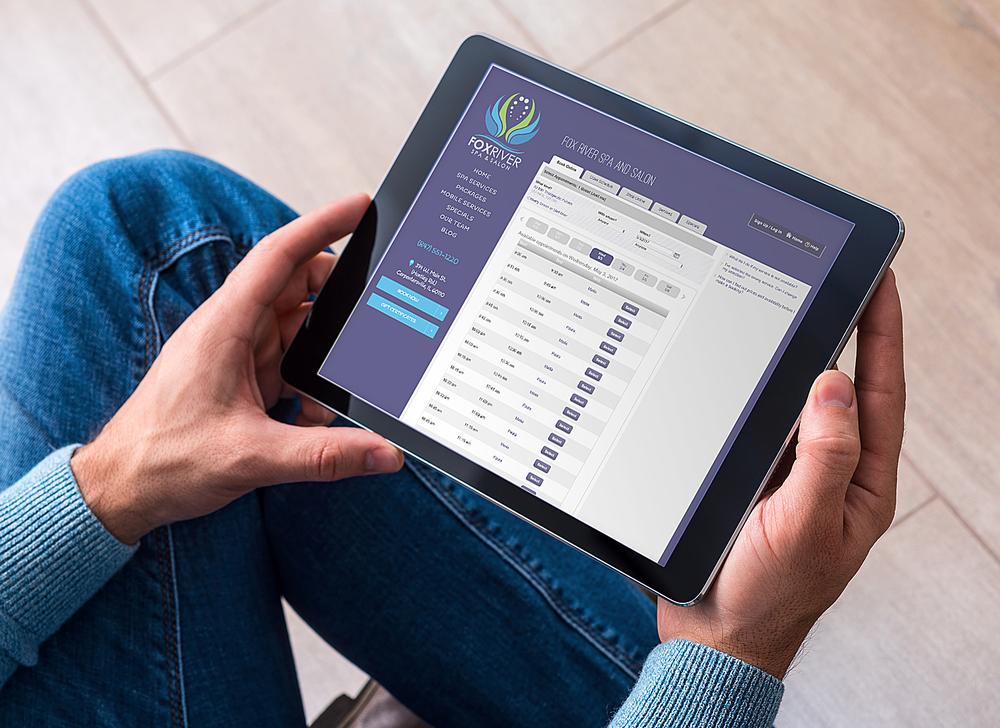
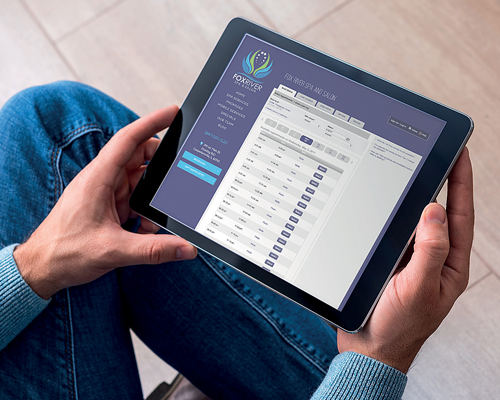
Booker client Julie Bevel, owner and operator of Fox River Spa & Salon in Illinois, US, says that adding online booking has enabled her business to target these groups. “Our younger clientele – customers 40 years and younger – are much more likely to book online,” she explains. “We see a lot of appointments booked between 10pm and midnight, when clients are making plans.”
Fox River Spa & Salon lets clients access 90 per cent of services online all the time. Bevel says that between 25 and 35 per cent of all treatments are booked online each month, and that online booking is helping her business grow. For example, she says in March 2016, 160 bookings were made online; in March of this year, that number went up to 234. “With an average ticket price of $73, that’s over $5,400 worth of additional revenue made through online booking year-on-year,” she explains.
Boosting revenue The latest innovation from software company Mindbody is an app that allows spas to make all of their available appointments easily searchable and bookable. The app lists all the spas, salons, fitness studios and yoga studios that are using Mindbody software, and consumers can search for services based on their location, search available appointments, and then book and pay for treatments, all in one place. “It’s a lead-generation tool for spas, allowing you to get new prospects to your door,” says Stephanie Jennings, Mindbody’s senior vice president of sales.
Spa technology provider SpaSoft says its online booking engine is used by 25 per cent of its customers, and has recently upgraded with a feature for add-on services. “Guests can now choose to enhance their service by electing to add things such as an eyebrow wax, facial or aromatherapy oils,” says marketing manager Amanda Wisell. “This helps spas boost revenue while customising services to each guest.”
Healing Springs Spa at the Harrison Hot Springs Resort in Canada uses SpaSoft’s online booking engine and has seen 14 per cent of its bookings coming from the site, accounting for almost CA$20,000 in bookings per month. Angela Striker, spa and resort manager, says that she’s also seen an impressive 75 per cent increase in enhancement bookings – services set to be upsold within the booking system. “As all spa directors know, these are like gravy – very little cost in terms of product and layered into an existing service – so have zero time costs,” she says. “I also see more people booking multiple services.”
With online booking, spa staff also spend less time inputting data manually, freeing them up to spend time where it’s really needed – offering face-to-face service when customers come through the door for their treatments. Mindbody client Nicole Thobani, managing director of London-based Spa & Massage, Boutique Spa and Camden Beauty Spa, says that online booking has had a positive impact on her business. “Online booking has saved a lot of time for our front-of-house team in a number of ways: it reduces time spent on the phone booking appointments, reduces data errors, reduces miscommunication regarding spa policies, and reduces check-in and check-out times,” she explains.
The Operator balancing act While user experience is key, spa operators themselves have to offset customer convenience with their business interests. A key area of concern for spa operators centres on control and the visibility of the spa booking calendar. However, software companies say that they’re giving operators the expertise to shape online booking to their advantage.
“Spa owners sometimes approach online booking with the concern that they’ll lose control over their manual booking strategies,” says Frank Pitsikalis, founder and CEO of software company ResortSuite. “But once they learn the flexibility built into ResortSuite WEB – with controls like web-enabling only certain services, or the ability to yield-manage which services to make web-bookable at which times to maximise revenue opportunities – they see where online booking can actually improve their operations, and their bottom line.”
Software company Premier Software’s flagship business management system, Core, has a fully-integrated web-suite within its functionality, which incorporates a personalised online booking facility, set to be upgraded later this year. The company’s chief operations officer Leonie Wileman explains: “Core clients often raise concerns regarding diary management and the visibility of their schedule to the outside world, but what the outside world sees is completely within their control. Spa operators can control which bookings are available, either by room, treatment or time.”
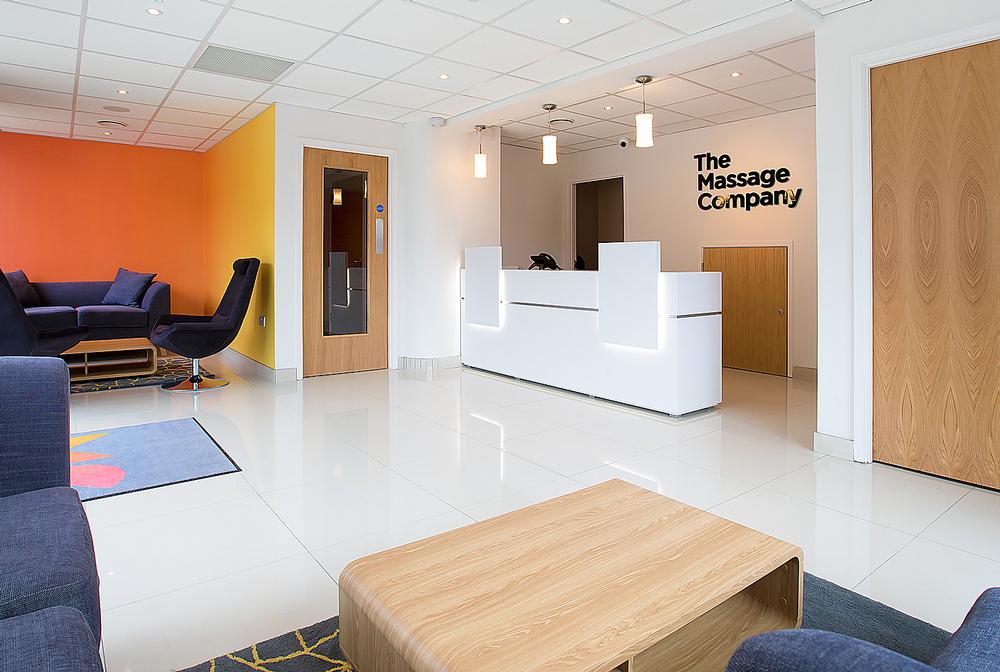
UK-based franchisor The Massage Company, a Premier Software client, built its company on top of online booking rather than the other way around. Operations director Charlie Thompson says that because of this, the online booking facility is an integral part of the business, and 38 per cent of his bookings are done online – well above what he says is an industry average of 15 per cent.
“Online booking as a whole increases the efficiency of our business, improves the customer journey and reduces front-office costs,” says Thompson.
Thompson also says Premier Software’s direct search function is working particularly well for digital marketing. “With this feature, we can set the link used in our Facebook or Google Adwords campaign to send clients straight to the treatment in question,” he explains. “This ensures there is a smooth journey from the point-of-advert to the point-of-purchase.”
Retaining rapport Customisation plays a vital role in integrating the booking process, ensuring a consistent customer experience on and offline, with clear brand identification.
As Mindbody’s Jennings says, “Our branded web and app solutions embed our booking tools into a spa’s website, Facebook page or custom app. That means spas can brand their customers’ online experience, whether they’re booking via a browser, social media or a mobile phone.”
Once a customer has bought into your brand identity, personalisation then ensures online booking retains that feeling of rapport with a customer that some operators may fear is lost online. Booker’s McCarter believes the best way to retain a customer relationship online is to drive people to make appointments through smart use of email and social media. “Offering specials and automated appointment reminders that are personalised to that individual can deliver that personal touch and keep customers coming back,” he explains.
Online booking also provides trackable data, providing useful insights to be used to understand customers, or to better manage staff schedules and facilities.
Fox River Spa & Salon’s Bevel describes how they were able to import the Booker app to live within their salon website’s page, and by doing so, are able to analyse customers’ movements through the site. “We find that clients typically go from the specials page, then to service descriptions and team profiles, and then to booking,” she says. “By tracking their journey through the app, we were able to see how important employee profiles are. With 19 employees with different strengths, we tailored profiles to speak to each of the team’s ideal client. It helped strengthen our business because customers feel as though they know who they’re working with.”
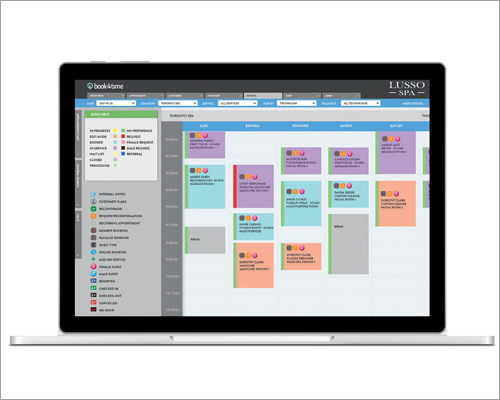
Changing landscape Social media shapes opinions, and spa operators realise that brand reputation and loyalty can be built – or damaged – online. “People are sharing more now than ever before, their experiences are being broadcasted through live streaming on Facebook, pictures are instantly uploaded to Instagram and Twitter and people are leaving real-time reviews,” says Roger Sholanki, CEO of software company Book4Time. “All this leaves irrevocable content that makes bookings spike or dwindle, depending on how your business is set up to deal with online bookings, not to mention increased online promotions, coupons and gift-card buying.”
More than 80 per cent of software company The Assistant Company’s (TAC) customers use online booking in their spas. Managing director Guenther Poellabauer recognises the myriad effects of social media on a changing landscape. “Spa bloggers and their user-generated content have become a powerful influence factor when it comes to booking inspiration and online bookings,” he explains. “Decisions are no longer based on one-way information from companies, but on recommendations on social media.”
So what are spa operators predicting will be the key changes to online booking over the coming years? With the continuing drive towards mobile, software companies see customers being able to access online booking from any digital device, including wearables, smart-home devices and virtual assistants like Apple’s Siri or Amazon’s Alexa. Others see increasing levels of personalisation as key to the future, with behavioural advertising and ever-more sophisticated cookies driving revenue.
But one thing’s certain – from the development of AI bots that increase conversion and just-in-time booking opportunities, to the integration of health apps on wearable devices linked to medical profiles and from online spa therapists, to gamification and augmented reality – spa software will continue to make things more accessible, efficient and convenient.
Read more from this issue of Attractions Management magazine
View contents of Attractions Management 2017 issue 2
Wellness communities: Europe
Part 2 of our series explores some of
the most exciting European wellness
communities in development
Promotional feature: Babor
CEO Michael Schummert explains how the
company’s expertise in results-driven treatments makes its precision
‘Made in Germany’ products more relevant than ever before
"We see a lot of appointments booked between 10pm and midnight, when clients are making plans" - Julie Bevel, owner, Fox River Spa
Angela Striker
"I’ve seen a 75 per cent increase in the booking of our ‘enhancements’ " - Angela Striker, spa manager, Healing Springs Spa
Nicole Thobani
"Online booking has saved a lot of time for our front-of-house team" - Nicole Thobani, managing director, Camden Beauty Spa
Charlie Thompson
"Online booking increases the efficiency of our business, improves the customer journey and reduces front-office costs" Charlie Thompson, Operations Director, The Massage Company
Roger Sholanki
"Experiences shared on Facebook, Instagram and Twitter, and real-time reviews, can make online bookings spike or dwindle" - Roger Sholanki, CEO, Book4Time
At Harrison Hot Springs Resort, there’s been an uptick in people booking multiple services online
Online booking systems can send appointment reminders and promotions to spa clients / shutterstock
The Massage Company says 38 per cent of its bookings are made online
COMPANY PROFILES
TechnoAlpin Indoor
TechnoAlpin is the world leader for snowmaking systems. With the Indoor snow division, TechnoAlpin c [more...]
IDEATTACK
IDEATTACK is a full-service planning and
design company with headquarters in
Los Angeles. [more...]
Painting With Light
By combining lighting, video, scenic and architectural elements, sound and special effects we tell s [more...]
Polin Waterparks
Polin was founded in Istanbul in 1976. Polin
has since grown into a leading company in
the waterpa [more...]
Clients want 24/7 accessibility for bookings, but how are software companies balancing customer convenience with operators’ business needs? Kate Parker investigates
By Kate Parker | Published in Spa Business 2017 issue 2
Younger clients expect to be able to book treatments online – and on a whim / shutterstock
Online booking poses particular challenges when looking at the combined needs of operator and customer, with one seeking to control and optimise the whole process for business efficiency and the other desiring 24/7 accessibility and total convenience. So how are software companies fulfilling the brief to make online booking ever smarter and more intuitive for everyone?
Digital natives In 2017, smartphone use is ubiquitous, online shopping is a norm, and today’s spa customers expect to access appointment booking at a time that’s convenient to them. Add to this the fact that increasing numbers of digitally dependent Millennials are becoming wellness consumers, and there’s a demand for software companies to integrate an online platform within their programmes.
Josh McCarter, CEO of spa software company Booker, says younger people expect to be able to accomplish tasks online, quickly and on a whim – without having to make a phone call. “About 60 to 70 per cent of online bookings are made via smartphone in Booker,” says McCarter. “Millennials’ expectations for customer service, technology integration and mobile friendliness are high. Online booking is less of a ‘nice to have’ today than a necessity to deliver the kind of experience these customers want.”
Booker client Julie Bevel, owner and operator of Fox River Spa & Salon in Illinois, US, says that adding online booking has enabled her business to target these groups. “Our younger clientele – customers 40 years and younger – are much more likely to book online,” she explains. “We see a lot of appointments booked between 10pm and midnight, when clients are making plans.”
Fox River Spa & Salon lets clients access 90 per cent of services online all the time. Bevel says that between 25 and 35 per cent of all treatments are booked online each month, and that online booking is helping her business grow. For example, she says in March 2016, 160 bookings were made online; in March of this year, that number went up to 234. “With an average ticket price of $73, that’s over $5,400 worth of additional revenue made through online booking year-on-year,” she explains.
Boosting revenue The latest innovation from software company Mindbody is an app that allows spas to make all of their available appointments easily searchable and bookable. The app lists all the spas, salons, fitness studios and yoga studios that are using Mindbody software, and consumers can search for services based on their location, search available appointments, and then book and pay for treatments, all in one place. “It’s a lead-generation tool for spas, allowing you to get new prospects to your door,” says Stephanie Jennings, Mindbody’s senior vice president of sales.
Spa technology provider SpaSoft says its online booking engine is used by 25 per cent of its customers, and has recently upgraded with a feature for add-on services. “Guests can now choose to enhance their service by electing to add things such as an eyebrow wax, facial or aromatherapy oils,” says marketing manager Amanda Wisell. “This helps spas boost revenue while customising services to each guest.”
Healing Springs Spa at the Harrison Hot Springs Resort in Canada uses SpaSoft’s online booking engine and has seen 14 per cent of its bookings coming from the site, accounting for almost CA$20,000 in bookings per month. Angela Striker, spa and resort manager, says that she’s also seen an impressive 75 per cent increase in enhancement bookings – services set to be upsold within the booking system. “As all spa directors know, these are like gravy – very little cost in terms of product and layered into an existing service – so have zero time costs,” she says. “I also see more people booking multiple services.”
With online booking, spa staff also spend less time inputting data manually, freeing them up to spend time where it’s really needed – offering face-to-face service when customers come through the door for their treatments. Mindbody client Nicole Thobani, managing director of London-based Spa & Massage, Boutique Spa and Camden Beauty Spa, says that online booking has had a positive impact on her business. “Online booking has saved a lot of time for our front-of-house team in a number of ways: it reduces time spent on the phone booking appointments, reduces data errors, reduces miscommunication regarding spa policies, and reduces check-in and check-out times,” she explains.
The Operator balancing act While user experience is key, spa operators themselves have to offset customer convenience with their business interests. A key area of concern for spa operators centres on control and the visibility of the spa booking calendar. However, software companies say that they’re giving operators the expertise to shape online booking to their advantage.
“Spa owners sometimes approach online booking with the concern that they’ll lose control over their manual booking strategies,” says Frank Pitsikalis, founder and CEO of software company ResortSuite. “But once they learn the flexibility built into ResortSuite WEB – with controls like web-enabling only certain services, or the ability to yield-manage which services to make web-bookable at which times to maximise revenue opportunities – they see where online booking can actually improve their operations, and their bottom line.”
Software company Premier Software’s flagship business management system, Core, has a fully-integrated web-suite within its functionality, which incorporates a personalised online booking facility, set to be upgraded later this year. The company’s chief operations officer Leonie Wileman explains: “Core clients often raise concerns regarding diary management and the visibility of their schedule to the outside world, but what the outside world sees is completely within their control. Spa operators can control which bookings are available, either by room, treatment or time.”
UK-based franchisor The Massage Company, a Premier Software client, built its company on top of online booking rather than the other way around. Operations director Charlie Thompson says that because of this, the online booking facility is an integral part of the business, and 38 per cent of his bookings are done online – well above what he says is an industry average of 15 per cent.
“Online booking as a whole increases the efficiency of our business, improves the customer journey and reduces front-office costs,” says Thompson.
Thompson also says Premier Software’s direct search function is working particularly well for digital marketing. “With this feature, we can set the link used in our Facebook or Google Adwords campaign to send clients straight to the treatment in question,” he explains. “This ensures there is a smooth journey from the point-of-advert to the point-of-purchase.”
Retaining rapport Customisation plays a vital role in integrating the booking process, ensuring a consistent customer experience on and offline, with clear brand identification.
As Mindbody’s Jennings says, “Our branded web and app solutions embed our booking tools into a spa’s website, Facebook page or custom app. That means spas can brand their customers’ online experience, whether they’re booking via a browser, social media or a mobile phone.”
Once a customer has bought into your brand identity, personalisation then ensures online booking retains that feeling of rapport with a customer that some operators may fear is lost online. Booker’s McCarter believes the best way to retain a customer relationship online is to drive people to make appointments through smart use of email and social media. “Offering specials and automated appointment reminders that are personalised to that individual can deliver that personal touch and keep customers coming back,” he explains.
Online booking also provides trackable data, providing useful insights to be used to understand customers, or to better manage staff schedules and facilities.
Fox River Spa & Salon’s Bevel describes how they were able to import the Booker app to live within their salon website’s page, and by doing so, are able to analyse customers’ movements through the site. “We find that clients typically go from the specials page, then to service descriptions and team profiles, and then to booking,” she says. “By tracking their journey through the app, we were able to see how important employee profiles are. With 19 employees with different strengths, we tailored profiles to speak to each of the team’s ideal client. It helped strengthen our business because customers feel as though they know who they’re working with.”
Changing landscape Social media shapes opinions, and spa operators realise that brand reputation and loyalty can be built – or damaged – online. “People are sharing more now than ever before, their experiences are being broadcasted through live streaming on Facebook, pictures are instantly uploaded to Instagram and Twitter and people are leaving real-time reviews,” says Roger Sholanki, CEO of software company Book4Time. “All this leaves irrevocable content that makes bookings spike or dwindle, depending on how your business is set up to deal with online bookings, not to mention increased online promotions, coupons and gift-card buying.”
More than 80 per cent of software company The Assistant Company’s (TAC) customers use online booking in their spas. Managing director Guenther Poellabauer recognises the myriad effects of social media on a changing landscape. “Spa bloggers and their user-generated content have become a powerful influence factor when it comes to booking inspiration and online bookings,” he explains. “Decisions are no longer based on one-way information from companies, but on recommendations on social media.”
So what are spa operators predicting will be the key changes to online booking over the coming years? With the continuing drive towards mobile, software companies see customers being able to access online booking from any digital device, including wearables, smart-home devices and virtual assistants like Apple’s Siri or Amazon’s Alexa. Others see increasing levels of personalisation as key to the future, with behavioural advertising and ever-more sophisticated cookies driving revenue.
But one thing’s certain – from the development of AI bots that increase conversion and just-in-time booking opportunities, to the integration of health apps on wearable devices linked to medical profiles and from online spa therapists, to gamification and augmented reality – spa software will continue to make things more accessible, efficient and convenient.
Read more from this issue of Attractions Management magazine
View contents of Attractions Management 2017 issue 2
Wellness communities: Europe
Part 2 of our series explores some of
the most exciting European wellness
communities in development
Promotional feature: Babor
CEO Michael Schummert explains how the
company’s expertise in results-driven treatments makes its precision
‘Made in Germany’ products more relevant than ever before
"We see a lot of appointments booked between 10pm and midnight, when clients are making plans" - Julie Bevel, owner, Fox River Spa
Angela Striker
"I’ve seen a 75 per cent increase in the booking of our ‘enhancements’ " - Angela Striker, spa manager, Healing Springs Spa
Nicole Thobani
"Online booking has saved a lot of time for our front-of-house team" - Nicole Thobani, managing director, Camden Beauty Spa
Charlie Thompson
"Online booking increases the efficiency of our business, improves the customer journey and reduces front-office costs" Charlie Thompson, Operations Director, The Massage Company
Roger Sholanki
"Experiences shared on Facebook, Instagram and Twitter, and real-time reviews, can make online bookings spike or dwindle" - Roger Sholanki, CEO, Book4Time
At Harrison Hot Springs Resort, there’s been an uptick in people booking multiple services online
Online booking systems can send appointment reminders and promotions to spa clients / shutterstock
The Massage Company says 38 per cent of its bookings are made online
London Museum will open four new food and drink destinations when it launches its new home
at Smithfield on 28 November, making hospitality a central part of the visitor experience at one
of the capital's biggest cultural openings of the year.
OMA has completed a major transformation of New York's New Museum, creating a larger
cultural campus that combines expanded exhibition spaces with learning, performance,
hospitality and public programming.
A US$50 million (£44.2 million, €51.2 million) transformation of Chicago's historic McCormick
Mansion has created a new destination that combines live magic, immersive theatre, dining and
private membership under one roof.
The Montana Historical Society has officially celebrated the opening of its new Montana
Heritage
Center, a US$107 million (£79 million, €92 million) destination that combines immersive
storytelling with cutting-edge audiovisual technology to bring the sta
San Antonio Zoo has reported a US$283 million economic impact for 2025, following a decade-
long transformation programme that has seen almost US$200 million invested into the Texas
attraction.
Plans for the AU$180 million redevelopment of Reef HQ Aquarium in Townsville, Australia, are
progressing, with the project set to transform the attraction into a global centre for reef
education and conservation.
Abu Dhabi-based investment firm Mubadala Capital has made a binding, fully financed
€1 billion
offer to acquire Pierre and Vacances SA, the European holiday resort operator behind the
continental European Center Parcs business.
Disney has reaffirmed its commitment to investing US$30 billion in its US parks and cruise
business by 2033, using new America250 celebrations to underline the role its attractions play
in supporting jobs, tourism and economic growth.
Expo 2030 Riyadh is being planned as a permanent visitor destination, with organisers
confirming the six-million-square-metre site will become a Global Village after the event closes.
The owner of one of Australia's best-known waterparks has acquired a major competitor,
creating a new attractions business spanning two of the country's largest visitor destinations.