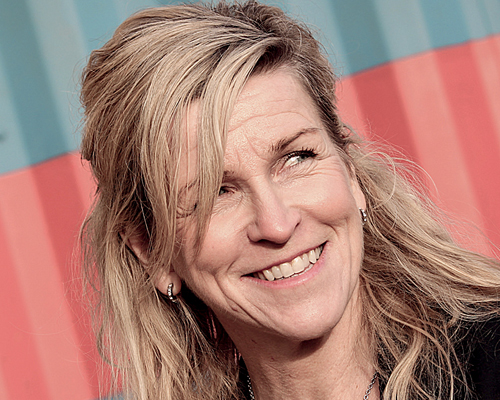
What’s Activage, and what inspired you to create it? The idea for Activage came five years ago, borne out of a wish to help my dad when he fell sick with a joint and muscle disorder. I was travelling a lot with my work and couldn’t be with him as often as I wanted, but when I did visit I wanted us to do something positive together.
At the time, I was part of the management team of a big fitness company in the north of Sweden and knew something of the effects of training and exercise for older people. So when I visited my dad, I started with some simple exercises – and very quickly I could see it really helped. I therefore decided, together with my family, to hire a personal trainer to visit him a couple of times a week.
I started by talking to 15 or 20 personal trainers, but no-one wanted to take this job on. That was really frustrating. Many simply didn’t feel confident working with an older person, because it hadn’t been covered during their training.
I’m an entrepreneur – and the daughter of an entrepreneur – and to me this was really crazy. Here was a service I wanted to buy and it just wasn’t available. I knew I’d have to bring my heart and my entrepreneurial thoughts together to solve that.
Then my research began in earnest. If you wanted to work with seniors exclusively, where did you get your training? I found there were no comprehensive courses at that time. I could see a real gap in the market, and I started to talk to potential business partners, together with physiotherapists and researchers in the area of senior fitness.
We also began to work on a more thorough analysis of the market for senior fitness, both in the Nordic countries and in wider Europe, where there are more than 96 million people over the age of 65 years. We also went to the US, where senior fitness is a huge, well-established industry; the education system produces specialists in senior fitness, while some gym chains operate exclusively for seniors.
How did you shape the Activage offering? We worked with Nina Lindelof, a physiotherapist and post-doctoral researcher at Sweden’s Umeå University, together with distance education organisation the International Sports Sciences Association to develop and build a qualification that would train people to become senior fitness specialists. Two years ago, we launched the Activage Academy.
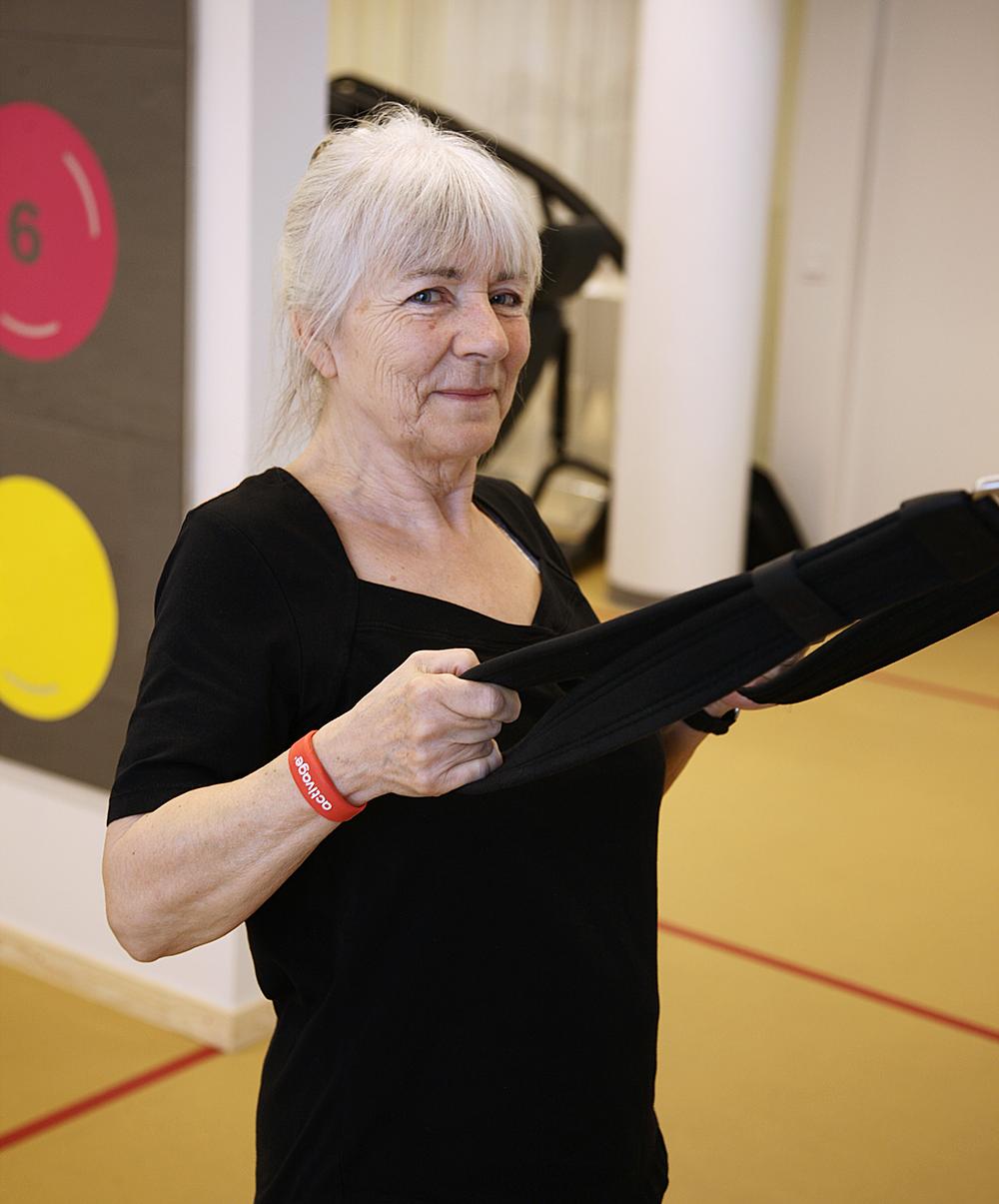
We also knew we wanted to open a gym for seniors, so we talked to more than 400 seniors who had never set foot inside a gym, asking them what would make them take that first step. We got some really interesting answers, but among the main reasons was that many seniors thought the music was too loud and everyone seemed so young. That isn’t helped by the way the industry chooses to market and portray itself; there are very few images depicting seniors. The people we spoke to simply didn’t feel the exercise and wellness industry represented them. They felt excluded.
How are you different? We took the information we had gathered, built our concept and opened our first flagship gym in Stockholm in March 2016. We have a completely different model compared to other gyms. Every feature of the space has been thought through, millimetre by millimetre, from the sound and lighting to the colour scheme and atmosphere.
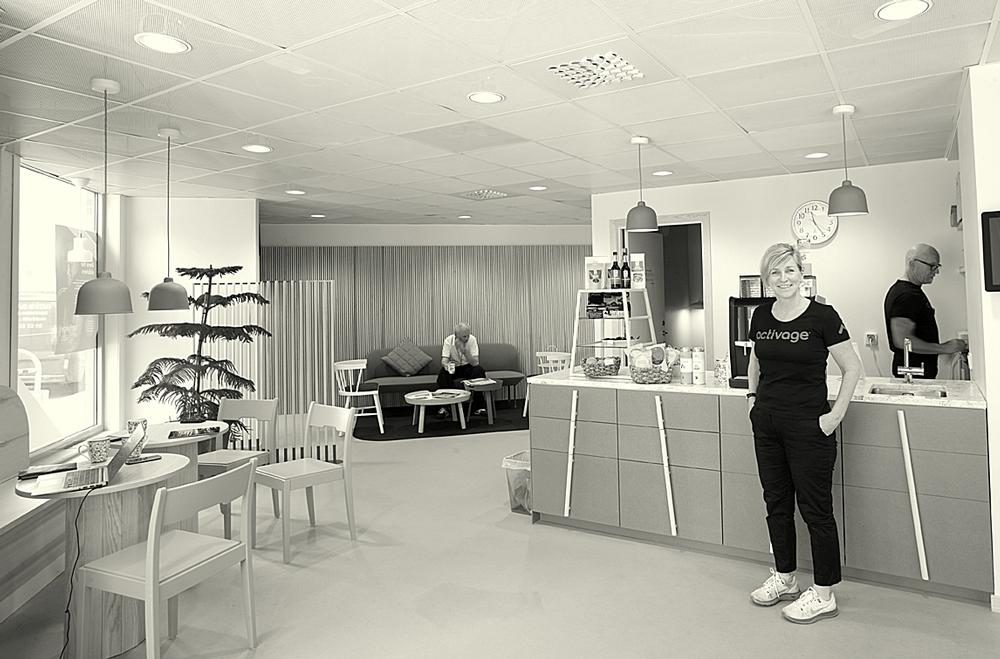
Our gym is small – not more than 170sq m (1,830sq ft) – and half of that is social space, where you can meet new and old friends and have a cup of coffee or something to eat. From our research among seniors, we know this social aspect is as important as the physical exercise.
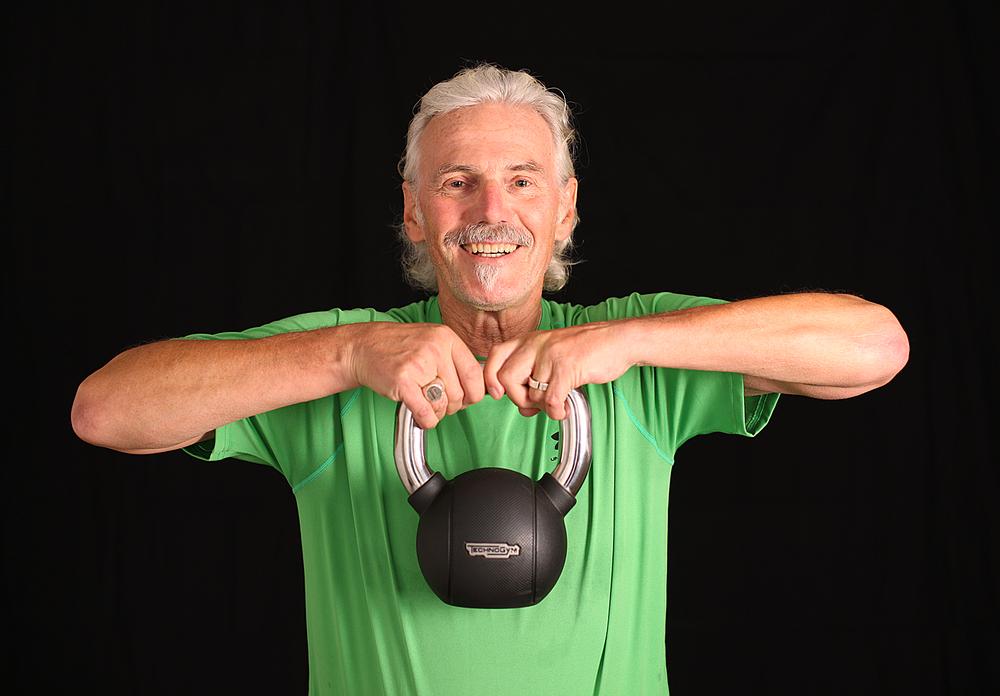
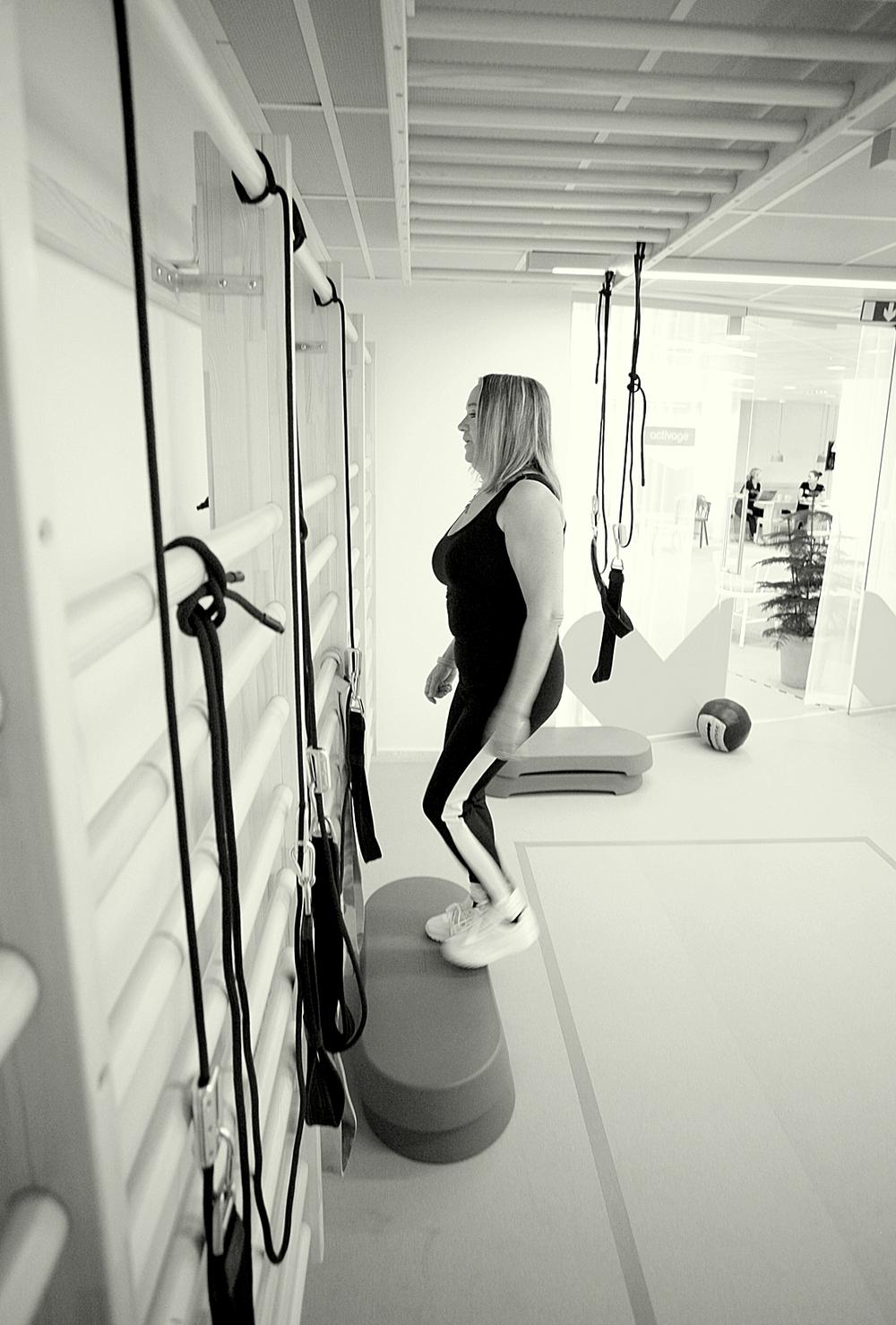
Kristoffer Sjoberg, our gym manager, has been exercising with the over-90s for many years and is a well-known name in Sweden when it comes to senior strength training. With his knowledge and experience, together with the expertise of our physiotherapists, we’ve put together an offering that includes strength, balance and functional training, working with very small groups.
It’s really important that the gym is exclusively for seniors. All of our members need a personal trainer for the first eight weeks, so we can assess and reassure them that we have exactly the right kind of training to meet their specific needs.
How much does membership cost? Weekly fees cost anything from 150 to 400 Swedish Krona (US$17-$45, €16–€42, £14–£37), depending on the amount of personal training that the member requires. Since we opened, we’ve seen membership grow beyond our estimations. Our youngest member is 58 and the oldest 88. The majority of our members are in their early 70s and most had never been in a gym before.
Do you have plans to open more Activage centres? We created the concept to make it scalable and we already have interested parties wanting to be franchisees. We’d like to open more Activage centres in Sweden in 2017 – either our own or franchises – and then expand into wider Europe, depending on investor input. Ultimately, we want to have Activage gyms in every country in Europe.
Read more from this issue of Attractions Management magazine
View contents of Attractions Management 2017 issue 2
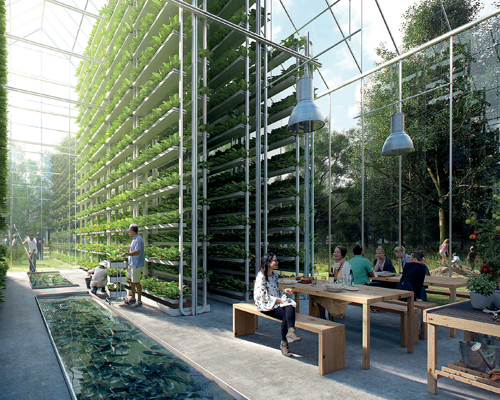
Wellness communities: Europe
Part 2 of our series explores some of
the most exciting European wellness
communities in development
Promotional feature: Babor
CEO Michael Schummert explains how the
company’s expertise in results-driven treatments makes its precision
‘Made in Germany’ products more relevant than ever before
What’s Activage, and what inspired you to create it? The idea for Activage came five years ago, borne out of a wish to help my dad when he fell sick with a joint and muscle disorder. I was travelling a lot with my work and couldn’t be with him as often as I wanted, but when I did visit I wanted us to do something positive together.
At the time, I was part of the management team of a big fitness company in the north of Sweden and knew something of the effects of training and exercise for older people. So when I visited my dad, I started with some simple exercises – and very quickly I could see it really helped. I therefore decided, together with my family, to hire a personal trainer to visit him a couple of times a week.
I started by talking to 15 or 20 personal trainers, but no-one wanted to take this job on. That was really frustrating. Many simply didn’t feel confident working with an older person, because it hadn’t been covered during their training.
I’m an entrepreneur – and the daughter of an entrepreneur – and to me this was really crazy. Here was a service I wanted to buy and it just wasn’t available. I knew I’d have to bring my heart and my entrepreneurial thoughts together to solve that.
Then my research began in earnest. If you wanted to work with seniors exclusively, where did you get your training? I found there were no comprehensive courses at that time. I could see a real gap in the market, and I started to talk to potential business partners, together with physiotherapists and researchers in the area of senior fitness.
We also began to work on a more thorough analysis of the market for senior fitness, both in the Nordic countries and in wider Europe, where there are more than 96 million people over the age of 65 years. We also went to the US, where senior fitness is a huge, well-established industry; the education system produces specialists in senior fitness, while some gym chains operate exclusively for seniors.
How did you shape the Activage offering? We worked with Nina Lindelof, a physiotherapist and post-doctoral researcher at Sweden’s Umeå University, together with distance education organisation the International Sports Sciences Association to develop and build a qualification that would train people to become senior fitness specialists. Two years ago, we launched the Activage Academy.
We also knew we wanted to open a gym for seniors, so we talked to more than 400 seniors who had never set foot inside a gym, asking them what would make them take that first step. We got some really interesting answers, but among the main reasons was that many seniors thought the music was too loud and everyone seemed so young. That isn’t helped by the way the industry chooses to market and portray itself; there are very few images depicting seniors. The people we spoke to simply didn’t feel the exercise and wellness industry represented them. They felt excluded.
How are you different? We took the information we had gathered, built our concept and opened our first flagship gym in Stockholm in March 2016. We have a completely different model compared to other gyms. Every feature of the space has been thought through, millimetre by millimetre, from the sound and lighting to the colour scheme and atmosphere.
Our gym is small – not more than 170sq m (1,830sq ft) – and half of that is social space, where you can meet new and old friends and have a cup of coffee or something to eat. From our research among seniors, we know this social aspect is as important as the physical exercise.
Kristoffer Sjoberg, our gym manager, has been exercising with the over-90s for many years and is a well-known name in Sweden when it comes to senior strength training. With his knowledge and experience, together with the expertise of our physiotherapists, we’ve put together an offering that includes strength, balance and functional training, working with very small groups.
It’s really important that the gym is exclusively for seniors. All of our members need a personal trainer for the first eight weeks, so we can assess and reassure them that we have exactly the right kind of training to meet their specific needs.
How much does membership cost? Weekly fees cost anything from 150 to 400 Swedish Krona (US$17-$45, €16–€42, £14–£37), depending on the amount of personal training that the member requires. Since we opened, we’ve seen membership grow beyond our estimations. Our youngest member is 58 and the oldest 88. The majority of our members are in their early 70s and most had never been in a gym before.
Do you have plans to open more Activage centres? We created the concept to make it scalable and we already have interested parties wanting to be franchisees. We’d like to open more Activage centres in Sweden in 2017 – either our own or franchises – and then expand into wider Europe, depending on investor input. Ultimately, we want to have Activage gyms in every country in Europe.
Read more from this issue of Attractions Management magazine
View contents of Attractions Management 2017 issue 2
Wellness communities: Europe
Part 2 of our series explores some of
the most exciting European wellness
communities in development
Promotional feature: Babor
CEO Michael Schummert explains how the
company’s expertise in results-driven treatments makes its precision
‘Made in Germany’ products more relevant than ever before
London Museum will open four new food and drink destinations when it launches its new home
at Smithfield on 28 November, making hospitality a central part of the visitor experience at one
of the capital's biggest cultural openings of the year.
OMA has completed a major transformation of New York's New Museum, creating a larger
cultural campus that combines expanded exhibition spaces with learning, performance,
hospitality and public programming.
A US$50 million (£44.2 million, €51.2 million) transformation of Chicago's historic McCormick
Mansion has created a new destination that combines live magic, immersive theatre, dining and
private membership under one roof.
The Montana Historical Society has officially celebrated the opening of its new Montana
Heritage
Center, a US$107 million (£79 million, €92 million) destination that combines immersive
storytelling with cutting-edge audiovisual technology to bring the sta
San Antonio Zoo has reported a US$283 million economic impact for 2025, following a decade-
long transformation programme that has seen almost US$200 million invested into the Texas
attraction.
Plans for the AU$180 million redevelopment of Reef HQ Aquarium in Townsville, Australia, are
progressing, with the project set to transform the attraction into a global centre for reef
education and conservation.
Abu Dhabi-based investment firm Mubadala Capital has made a binding, fully financed
€1 billion
offer to acquire Pierre and Vacances SA, the European holiday resort operator behind the
continental European Center Parcs business.
Disney has reaffirmed its commitment to investing US$30 billion in its US parks and cruise
business by 2033, using new America250 celebrations to underline the role its attractions play
in supporting jobs, tourism and economic growth.
Expo 2030 Riyadh is being planned as a permanent visitor destination, with organisers
confirming the six-million-square-metre site will become a Global Village after the event closes.
The owner of one of Australia's best-known waterparks has acquired a major competitor,
creating a new attractions business spanning two of the country's largest visitor destinations.