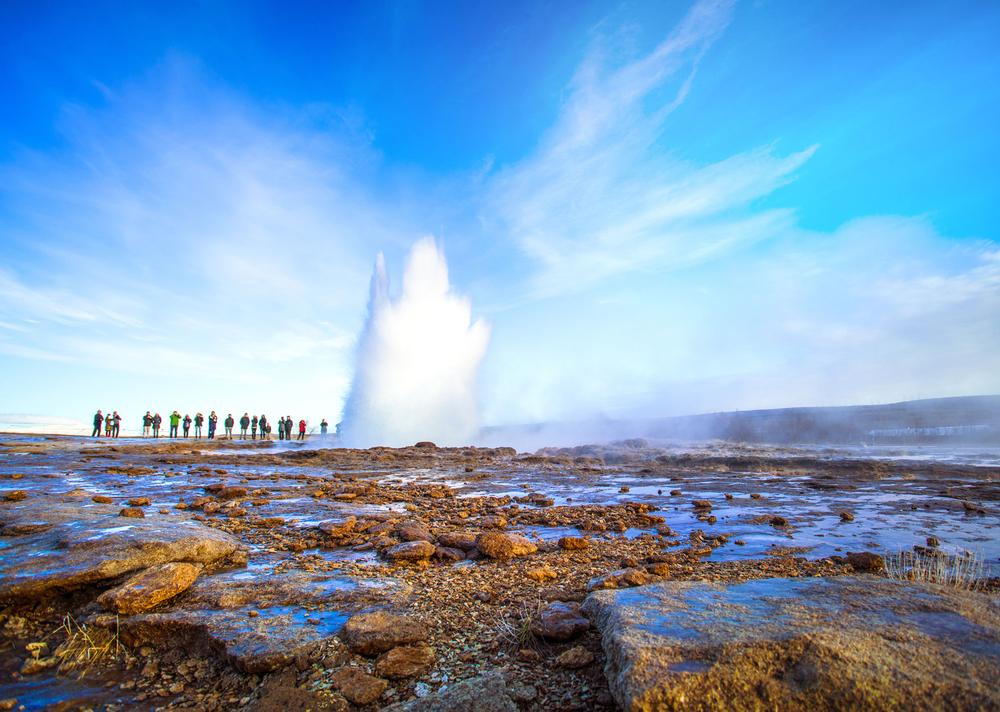
The eruption of the Eyjafjallajökull volcano in Iceland in
2010 led to explosive growth for its tourism industry.
Kath Hudson finds out more about how the tourism and
attractions industries are growing up side by side
By Kath Hudson | Published in Attractions Management 2018 issue 2
Over 2 million tourists visited Iceland in 2017, a figure that quadrupled over a seven-year period / shutterstock
In the space of a couple of years, two disasters happened in Iceland. Firstly, the financial crash in 2008, when the banks collapsed and the Icelandic krona dropped 35 per cent against the euro. Then, in 2010, Eyjafjallajökull erupted for the first time in 180 years, causing massive disruption to European air travel and making sure everyone took notice of Iceland.
Happily some good came out of the chaos: these two big news stories helped put the country on the map. With extra assistance from Instagram – also established in 2010 – which acted as a shop window for Iceland’s spectacular scenery, news soon got around that this was the place to go. Plus, it was cheap and it had real volcanoes! In just seven years, the tourism industry quadrupled: from 459,000 in 2010, to 2.1 million in 2017. Tourism has become the country’s largest industry, with 2020 targets hit early.
Now that the country has recovered from the crash, it is no longer such a bargain place to visit, which means the spike in tourists has abated. Although the massive boom might be over, tourism is now growing at a more sustainable and manageable level. This year the industry is expected to expand by 10 per cent and tourism chiefs have a chance to look at the product and plan strategically.
It is also providing fertile ground for the attractions industry. Led by entrepreneurs, two major attractions launched last year, both of which are inspired by and aim to complement the natural wonders by providing interpretation and education.
Bardur Gunnarsson, managing director of LAVA, an Icelandic volcano and earthquake centre, says the development of these attractions is a sign of a more grown-up tourism industry: “Eight years ago it wouldn’t have been possible to have created an attraction like LAVA. It was a bit like the wild west here, but now the tourism industry has become more mature.”
Selling the off-season Iceland has a great deal to recommend it: the natural wonders of the northern lights and beautiful scenery; the volcanos and geothermal baths are a geographer’s paradise; the abundant wildlife to spot, including seals, whales and puffins; as well as adrenaline activities like hiking, ice climbing, skiing and cave exploring.
Gunnar Sigurðarson, manager of Visit Iceland & Creative Industries, says the main focus is consolidation rather than growth, making sure the offer is strong to boost visits in the off season and spread tourism across the country, rather than just the south, where Keflavik airport is located.
“Tourism is now the largest revenue generating industry: more than the fishing industry and aluminium sectors together. When Promote Iceland started, tourism was the third largest industry and far behind the two others,” says Sigurðarson. “Our focus over the past years, in cooperation with the tourism industry, has been to decrease seasonality and promote regional destinations in Iceland. From the government point of view, now the goal is not to grow the number of travellers visiting the country, but to ensure we build the skills, capacity and quality.”
Currently, Iceland is seen as a winter destination: 42 per cent come in the colder months, 26 per cent in the summer, 19 per cent in the spring and 12 per cent in the autumn. Promote Iceland is keen to even this out and so marketing efforts will be focused solely on the off-season, prioritising the wider regional destinations, particularly stimulating growth in rural areas.
The Promote Iceland website has created a brand identity for the seven different regions including the unspoilt wilderness of the Westfjords, the lava fields and mountains of the north and lush forests and farmlands of the east.
“We predict visitors will increasingly focus on visiting Iceland during winter and we will see the total number further increase,” says Sigurðarson. “We have put more emphasis on our marketing efforts to educate and inform visitors before and during their stay about Iceland’s fragile nature, responsible travel behaviour, local culture and Icelandic peculiarities.”
To this end, visitors are asked to observe the Iceland pledge, which includes being responsible, not venturing off the beaten track, using campsites rather than wild camping and taking care when photographing its natural splendours. There is even an Iceland academy on the website where would-be visitors can learn about everything from staying safe on glaciers to hot tub etiquette.
Sigurðarson believes demand will remain robust and that the attractions industry will play an important role in continuing to draw people to the country, as well as to educate them and instil respect for its environment. “Manmade attractions can make a huge impact,” he says. “For example, LAVA is not only thought of as a tourist attraction, but an educational exhibition for Icelanders, where they can learn the science of Icelandic geology.”
Although there have been news reports of some airlines dropping services from the UK to Iceland, the country still has flights to 80 destinations and is seeing a rise in Spanish tourists because of direct flights to Spain. In response to more tourists from Asia, it is only a matter of time before direct flights are set up with Asian countries.
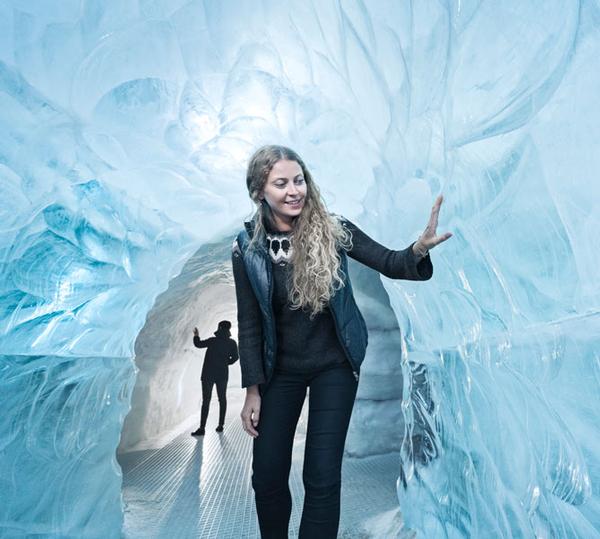
Bringing nature to guests Launched in 2017 by two friends who saw an opportunity, the Perlan Museum celebrates Iceland’s natural wonders, through large-scale exhibits and the latest research and scientific findings. Noteworthy experiences offered include a view of Reykjavik from the 360-degree observation deck, taking a walk through the world’s first indoor ice cave and feeling the force of an earthquake.
Founder and CEO Gunnar Gunnarsson says the aim of the museum is to interpret nature for tourists and Icelanders. “We wanted to create a huge exhibit, the biggest and best in Iceland,” he says. “But you can’t copy nature. Our idea is to bring nature to guests in the best way possible. We try to replicate some natural phenomena through virtual reality and stories. We allow our visitors to touch ice and educate them about protecting it.”
The disappearance of glaciers is leading to enormous change both in Iceland and around the world. The first exhibition, the Glaciers and Ice Cave Exhibition, presents the history of glaciers, shows the lifeforms which live on them, their effect on the landscape and what will happen when, or if, they disappear.
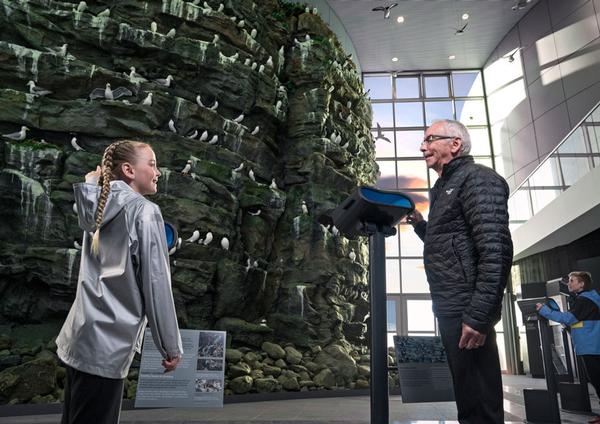
A second exhibition opened in May, Land, Coast, Ocean, and it is based on earthquakes and volcanos, with highlights that include a life-size replica cliff, and virtual reality fish and birds. Work is already underway on the third attraction, a cutting edge, 150-seat planetarium, which has been designed by Bowen Productions and will launch in the autumn.
“This will be one of the first planetariums in the world to have 3D sound,” says Gunnarsson. “It will present a show about Icelandic nature and feature both the Northern Lights and the Southern Lights as they appear from space.”
Funded by investors, the museum cost £25m to develop and Gunnarsson says that each year £1.5m will be invested to keep it updated. He says the growth in tourism has allowed this project to come to fruition. “The growth in tourism has provided us with a fantastic opportunity. With more tourists we can invest in more attractions, which gives Icelanders the opportunity to learn more about their country.”
Learning about nature According to LAVA’s managing director Bardur Gunnarsson, Iceland attracts a special kind of tourist: “Almost everyone who comes to Iceland is interested in nature. They are quite adventurous and want exciting experiences, but aren’t willing to take risks. They want controlled, safe environments. They are keen on learning and like good guides and exhibitions.
“There are now a few great attractions in Iceland. Into the Glacier paved the way.”
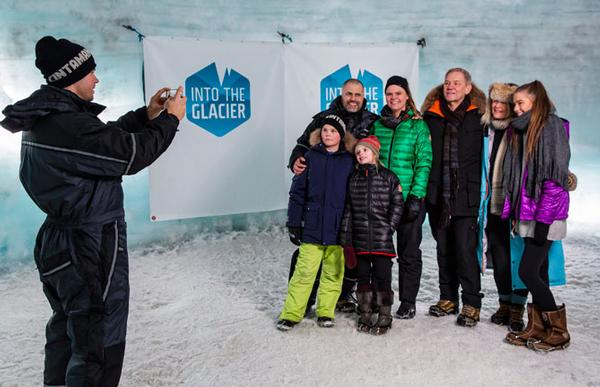
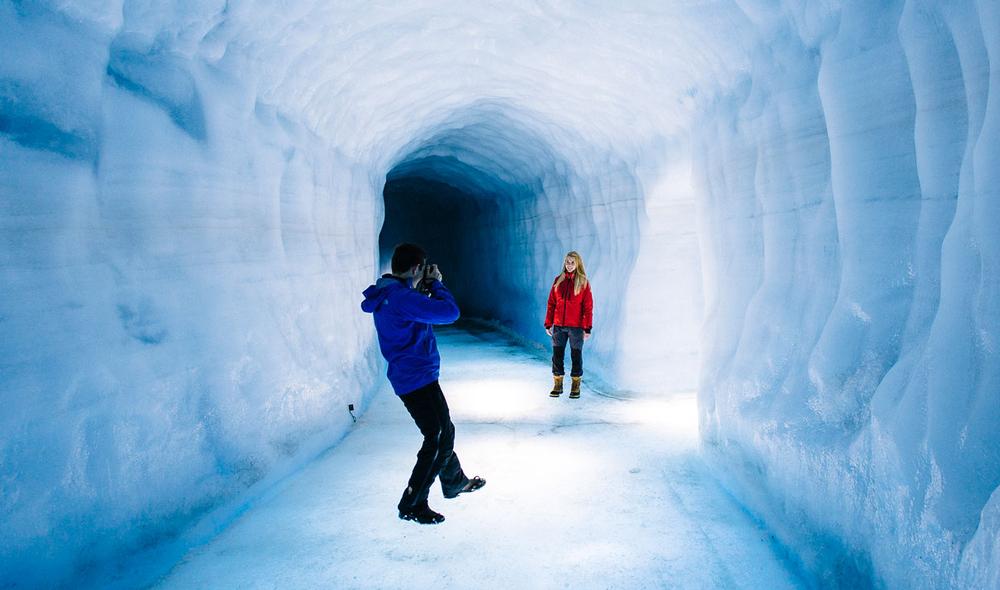
Into the Glacier offers various tours to Iceland’s most significant new attraction, a man-made ice cave. The ice tunnel and the caves are located high on Iceland‘s second largest glacier, Langjökull, so there’s the opportunity to explore the glacier and see it from inside.
“It talks about glaciers, how they behave and global warming,” he says. “And the Lava Tunnel in Raufarhólshellir is also a beautiful project. It was a lava cave which was being impacted by tourism, so was closed to protect it and now they offer guided tours about geology.”
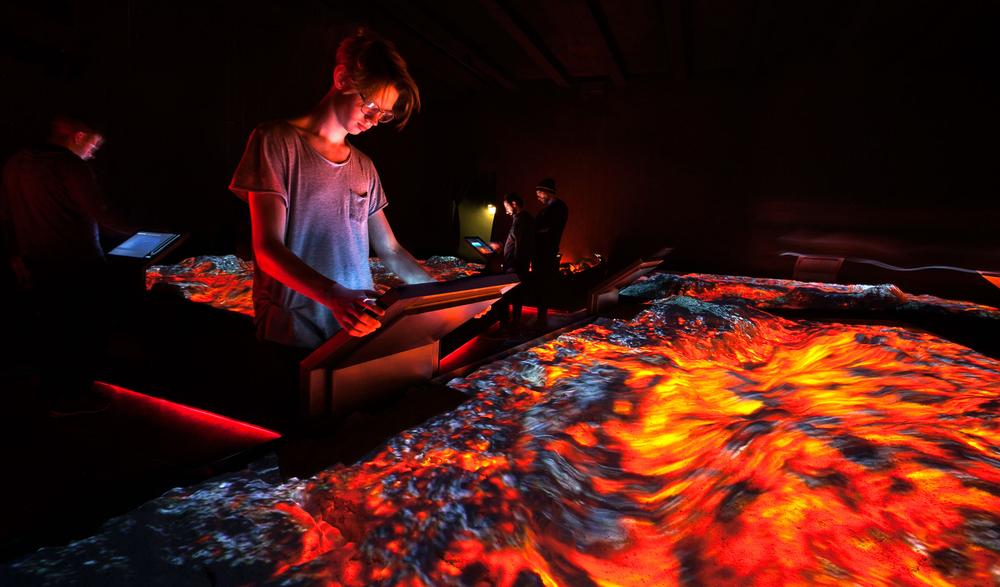
Another landmark development, LAVA was established in spring 2017 to give the inside track on volcanos. An educational, interactive exhibition depicting volcanic activity, earthquakes and the formation of Iceland, it has been developed with the support of the Icelandic Meteorological Office and the Department of Civil Protection and Emergency Management.
LAVA’s Gunnarsson says the project was led by entrepreneurs who felt there was a huge need for some educational exhibitions: “Volcanoes are one of the biggest attractions of Iceland and our guests didn’t really know that much about them. They stand on the black sand beaches and gaze at them without understanding the magnitude. We wanted to create an attraction which could interpret volcanoes, within their vicinity.”
With dwell time of around 45 minutes, the attraction features two parts: an exhibition with interactive exhibits including a lava corridor, and an earthquake corridor. It concludes with a movie on the latest eruption.
“By far our biggest market is tourists, but we also hope it will spark an interest in volcanology among Icelanders, especially schools,” says LAVA’s Gunnarsson. “It is a great place to start a day sightseeing: have a coffee and a lecture and head further east so you understand what you are seeing. Alternatively, when the days are short in winter, visitors can come to reflect on what they have seen.”
Read more from this issue of Attractions Management magazine
View contents of Attractions Management 2018 issue 2
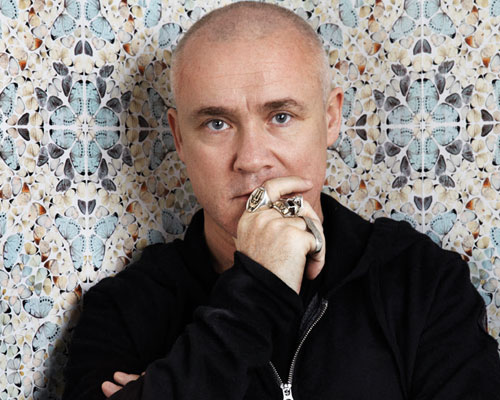
People profile: Damien Hirst
Turner Prize-winning artist Damien Hirst exhibits a series of spot paintings and huge sculptures at a Norfolk stately home
People profile: Penka Kouneva
Movie and video game composer Penka Kouneva moves into the world of attractions with the Heroes and Legends exhibit and VR installations
Industry Opinion: Zoos & Aquariums
WAZA’s Sabrina Brando on providing animals with opportunities for choices, stimulating environments and enriching activities
Interview: Sultan Al Dhaheri
With the launch of Warner Bros World and
the Louvre in Abu Dhabi, the Department
of Culture and Tourism’s Sultan Al Dhaheri
explains how investing in attractions is
helping the emirate meet its tourism goals
Animal sanctuaries: Paws for Thought
The UK’s Big Cat Sanctuary is the subject
of a recent BBC documentary. Managing
director Giles Clark explains how the
facility works – and introduces Maya
the jaguar and Willow the cheetah
Science Centres: Getting Engaged
Researchers Dr Amy Seakins and
Dr Heather King explain how science
capital empowers science centres
to engage wider audiences in STEM,
plus European initiatives in action
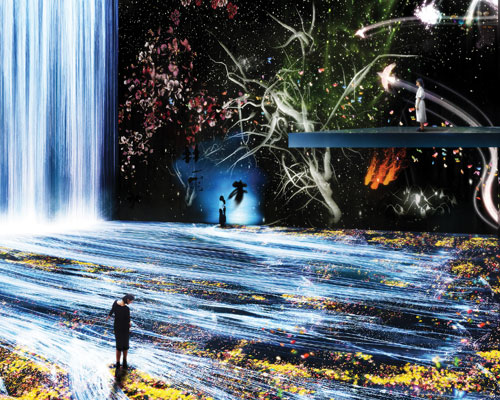
Digital art: Light Fantastic
Tokyo-based digital art collective teamLab is
on a mission to change the way we interact
with and experience art. Magali Robathan
reports on the group’s installation work
and their upcoming museum launch
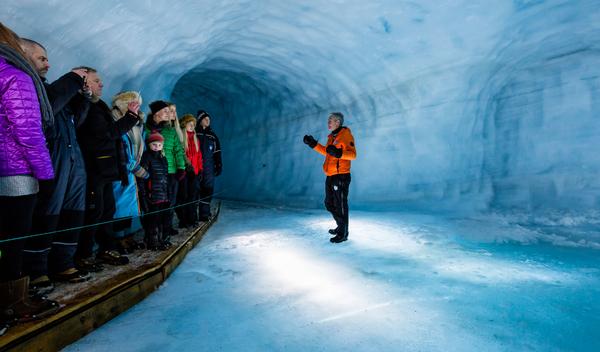
Visitors on the tour are able to explore the glacier and see it from the inside
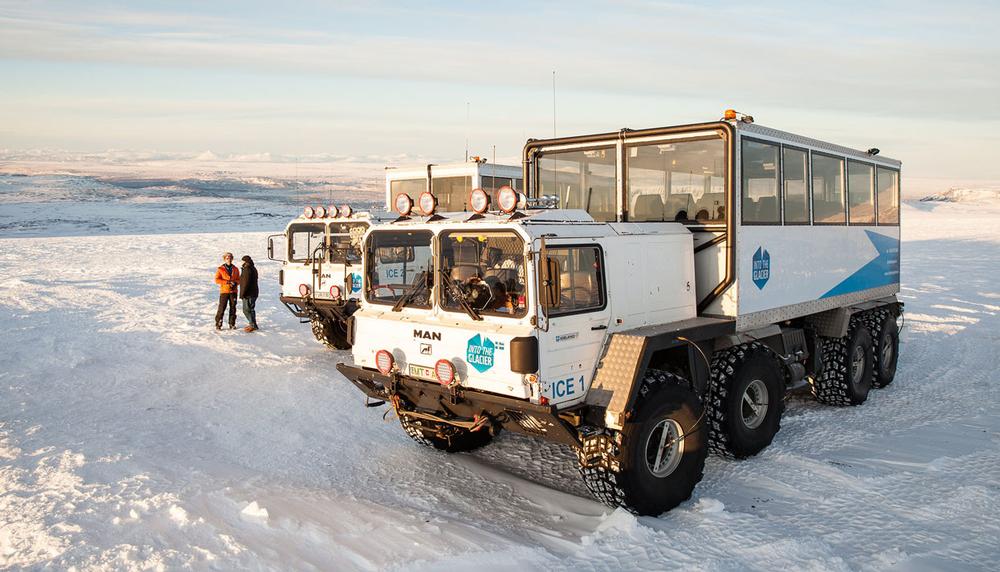
Located at Iceland’s second largest glacier, Langjökull, this attraction lets visitors experience what it would be like underneath the ice of the glacier, and view the blue ice, with a manmade ice cave which leads to the glacier. The tour also includes a ride on the glacier in special vehicles, to enjoy spectacular views from the ice cap.
People leave with a greater appreciation of glaciers. Like other glaciers, Langjökull is shrinking and is expected to disappear within 80 to 120 years. Visitors are invited to offset the carbon of their transport to the site with a donation to plant a tree in a nearby forest, which aims to reduce the carbon in the atmosphere. Every year 5,000 trees are planted. The Lava Tunnel
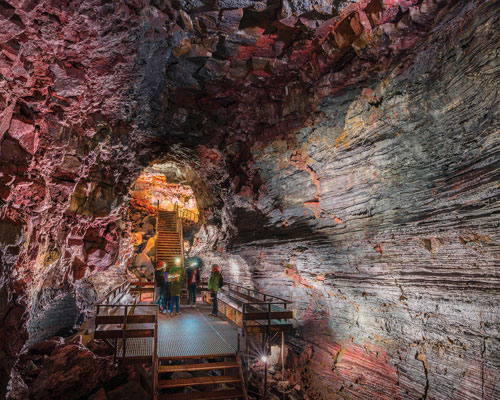
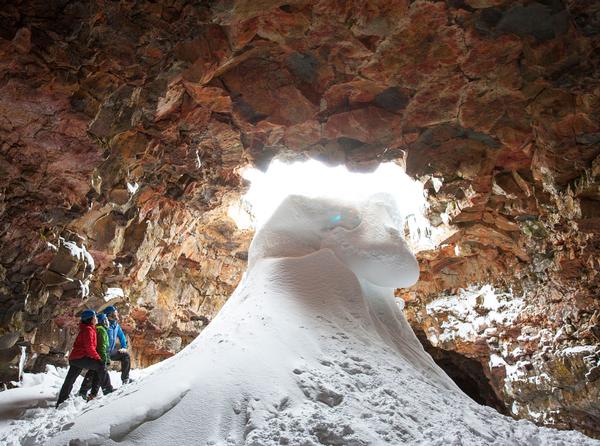
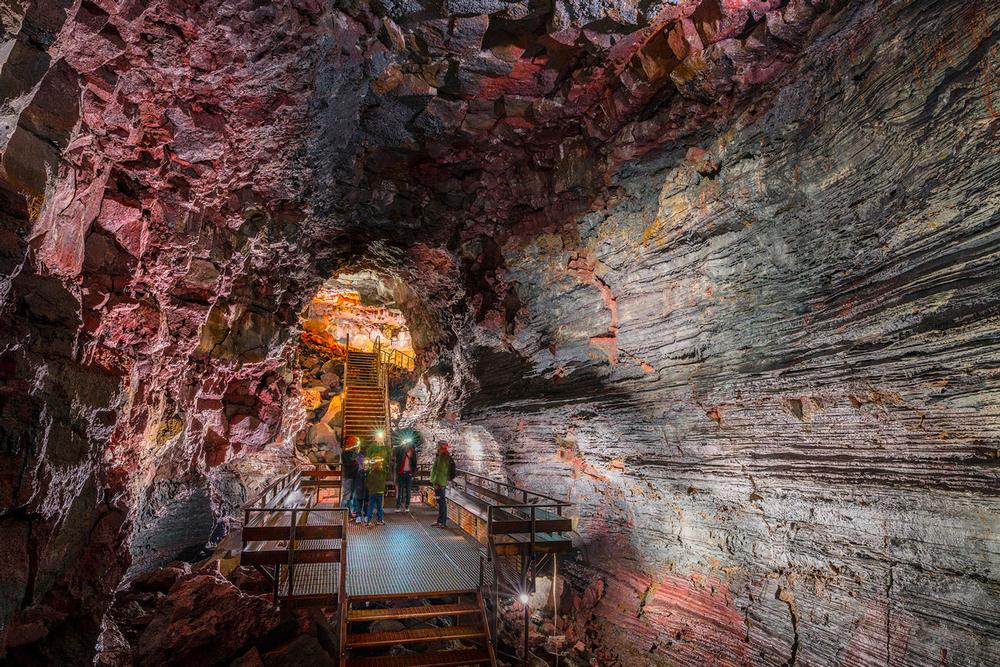
Follow the lava path from the Leitahraun eruption, which took place 5,200 years ago
Allowing visitors to witness the inner workings of a volcano, the Lava Tunnel is co-owned by Icelandic mountaineer Hallgrímur Kristinsson and is the one of the longest lava tubes in Iceland. It promises a spectacular experience, where visitors witness the beautiful caves inside the volcano, lava falls and formations, as well as ice sculptures in winter.
Two tours are on offer. The standard tour takes 55 minutes, but the more adventurous can opt for the extreme tour which takes up to 3.5 hours and promises an unforgettable experience, going to the end of the 1.4km tunnel to see magnificent lava falls. Visitors will leave with an appreciation of nature, as well as more knowledge about volcanoes.
Over 2 million tourists visited Iceland in 2017, a figure that quadrupled over a seven-year period
Over 2 million tourists visited Iceland in 2017, a figure that quadrupled over a seven-year period
Gunnar Sigurðarson
is manager of
Visit Iceland
Into the Glacier offers various tours to a man-made ice cave on Iceland‘s second largest glacier, Langjökull
Into the Glacier offers various tours to a man-made ice cave on Iceland‘s second largest glacier, Langjökull
Into the Glacier offers various tours to a man-made ice cave on Iceland‘s second largest glacier, Langjökull
Perlan Museum’s Glacier and Ice Cave exhibit. A second exhibition – Land, Coast, Ocean – is opening soon as well as a new planetarium
Perlan Museum’s Glacier and Ice Cave exhibit. A second exhibition – Land, Coast, Ocean – is opening soon as well as a new planetarium
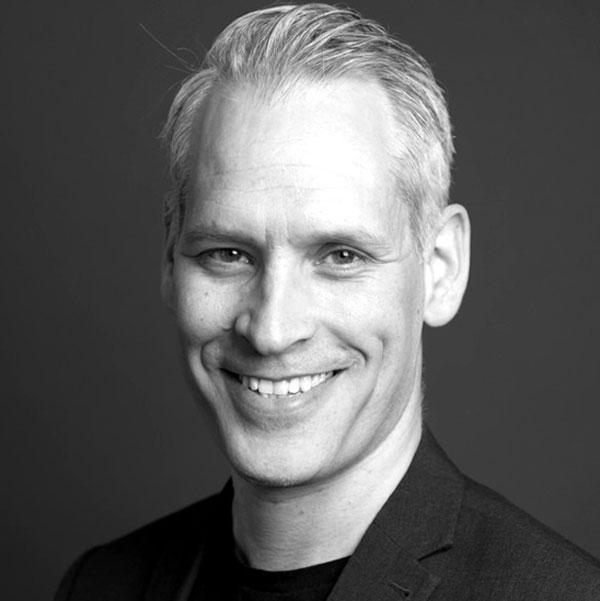
Gunnar Gunnarsson
is CEO of the new
Perlan Museum
The Lava Centre is an interactive exhibition depicting volcanic activity, earthquakes and the creation of Iceland over millions of years
Bardur Gunnarsson is managing director
at LAVA
COMPANY PROFILES
Alterface
Alterface’s Creative Division team is
seasoned in concept and ride development,
as well as storyte [more...]
IAAPA EMEA
IAAPA Expo Europe was established in 2006 and has grown to the largest international conference and [more...]
Holovis
Holovis is a privately owned company
established in 2004 by CEO Stuart
Hetherington. [more...]
TechnoAlpin Indoor
TechnoAlpin is the world leader for snowmaking systems. With the Indoor snow division, TechnoAlpin c [more...]
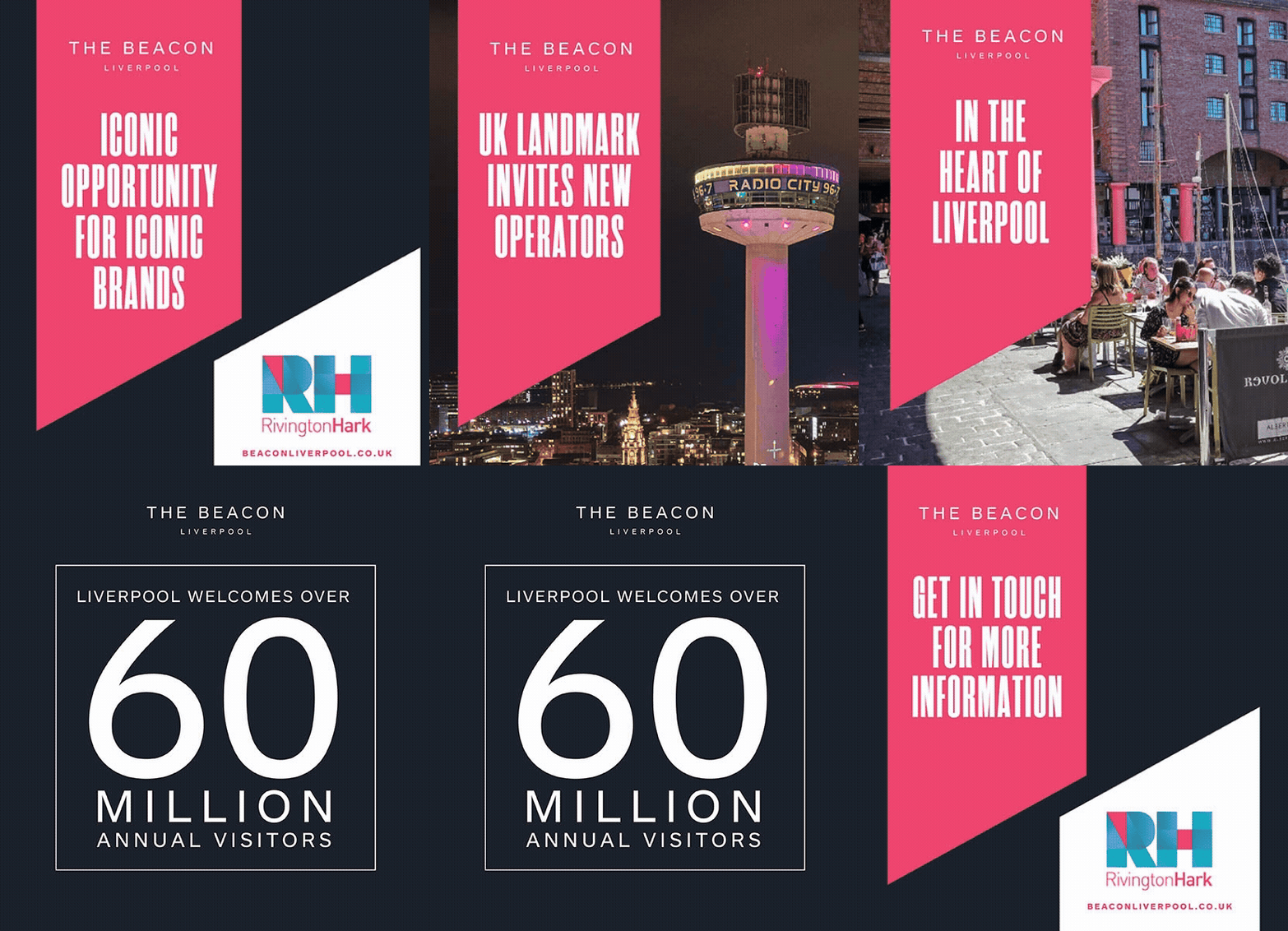
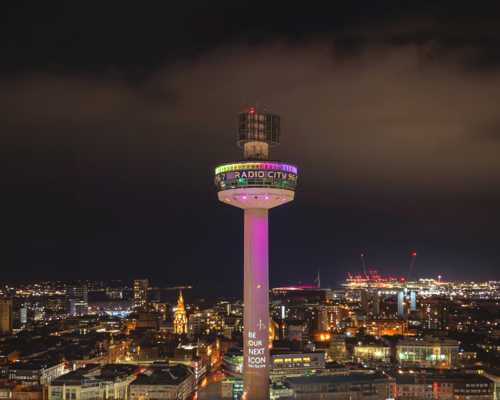
An opportunity to reimagine one of the UK’s most recognisable towers has been formally
opened by Rivington Hark, as St Johns Beacon invites operators and partners to shape its
next phase. [more...]
The eruption of the Eyjafjallajökull volcano in Iceland in
2010 led to explosive growth for its tourism industry.
Kath Hudson finds out more about how the tourism and
attractions industries are growing up side by side
By Kath Hudson | Published in Attractions Management 2018 issue 2
Over 2 million tourists visited Iceland in 2017, a figure that quadrupled over a seven-year period / shutterstock
In the space of a couple of years, two disasters happened in Iceland. Firstly, the financial crash in 2008, when the banks collapsed and the Icelandic krona dropped 35 per cent against the euro. Then, in 2010, Eyjafjallajökull erupted for the first time in 180 years, causing massive disruption to European air travel and making sure everyone took notice of Iceland.
Happily some good came out of the chaos: these two big news stories helped put the country on the map. With extra assistance from Instagram – also established in 2010 – which acted as a shop window for Iceland’s spectacular scenery, news soon got around that this was the place to go. Plus, it was cheap and it had real volcanoes! In just seven years, the tourism industry quadrupled: from 459,000 in 2010, to 2.1 million in 2017. Tourism has become the country’s largest industry, with 2020 targets hit early.
Now that the country has recovered from the crash, it is no longer such a bargain place to visit, which means the spike in tourists has abated. Although the massive boom might be over, tourism is now growing at a more sustainable and manageable level. This year the industry is expected to expand by 10 per cent and tourism chiefs have a chance to look at the product and plan strategically.
It is also providing fertile ground for the attractions industry. Led by entrepreneurs, two major attractions launched last year, both of which are inspired by and aim to complement the natural wonders by providing interpretation and education.
Bardur Gunnarsson, managing director of LAVA, an Icelandic volcano and earthquake centre, says the development of these attractions is a sign of a more grown-up tourism industry: “Eight years ago it wouldn’t have been possible to have created an attraction like LAVA. It was a bit like the wild west here, but now the tourism industry has become more mature.”
Selling the off-season Iceland has a great deal to recommend it: the natural wonders of the northern lights and beautiful scenery; the volcanos and geothermal baths are a geographer’s paradise; the abundant wildlife to spot, including seals, whales and puffins; as well as adrenaline activities like hiking, ice climbing, skiing and cave exploring.
Gunnar Sigurðarson, manager of Visit Iceland & Creative Industries, says the main focus is consolidation rather than growth, making sure the offer is strong to boost visits in the off season and spread tourism across the country, rather than just the south, where Keflavik airport is located.
“Tourism is now the largest revenue generating industry: more than the fishing industry and aluminium sectors together. When Promote Iceland started, tourism was the third largest industry and far behind the two others,” says Sigurðarson. “Our focus over the past years, in cooperation with the tourism industry, has been to decrease seasonality and promote regional destinations in Iceland. From the government point of view, now the goal is not to grow the number of travellers visiting the country, but to ensure we build the skills, capacity and quality.”
Currently, Iceland is seen as a winter destination: 42 per cent come in the colder months, 26 per cent in the summer, 19 per cent in the spring and 12 per cent in the autumn. Promote Iceland is keen to even this out and so marketing efforts will be focused solely on the off-season, prioritising the wider regional destinations, particularly stimulating growth in rural areas.
The Promote Iceland website has created a brand identity for the seven different regions including the unspoilt wilderness of the Westfjords, the lava fields and mountains of the north and lush forests and farmlands of the east.
“We predict visitors will increasingly focus on visiting Iceland during winter and we will see the total number further increase,” says Sigurðarson. “We have put more emphasis on our marketing efforts to educate and inform visitors before and during their stay about Iceland’s fragile nature, responsible travel behaviour, local culture and Icelandic peculiarities.”
To this end, visitors are asked to observe the Iceland pledge, which includes being responsible, not venturing off the beaten track, using campsites rather than wild camping and taking care when photographing its natural splendours. There is even an Iceland academy on the website where would-be visitors can learn about everything from staying safe on glaciers to hot tub etiquette.
Sigurðarson believes demand will remain robust and that the attractions industry will play an important role in continuing to draw people to the country, as well as to educate them and instil respect for its environment. “Manmade attractions can make a huge impact,” he says. “For example, LAVA is not only thought of as a tourist attraction, but an educational exhibition for Icelanders, where they can learn the science of Icelandic geology.”
Although there have been news reports of some airlines dropping services from the UK to Iceland, the country still has flights to 80 destinations and is seeing a rise in Spanish tourists because of direct flights to Spain. In response to more tourists from Asia, it is only a matter of time before direct flights are set up with Asian countries.
Bringing nature to guests Launched in 2017 by two friends who saw an opportunity, the Perlan Museum celebrates Iceland’s natural wonders, through large-scale exhibits and the latest research and scientific findings. Noteworthy experiences offered include a view of Reykjavik from the 360-degree observation deck, taking a walk through the world’s first indoor ice cave and feeling the force of an earthquake.
Founder and CEO Gunnar Gunnarsson says the aim of the museum is to interpret nature for tourists and Icelanders. “We wanted to create a huge exhibit, the biggest and best in Iceland,” he says. “But you can’t copy nature. Our idea is to bring nature to guests in the best way possible. We try to replicate some natural phenomena through virtual reality and stories. We allow our visitors to touch ice and educate them about protecting it.”
The disappearance of glaciers is leading to enormous change both in Iceland and around the world. The first exhibition, the Glaciers and Ice Cave Exhibition, presents the history of glaciers, shows the lifeforms which live on them, their effect on the landscape and what will happen when, or if, they disappear.
A second exhibition opened in May, Land, Coast, Ocean, and it is based on earthquakes and volcanos, with highlights that include a life-size replica cliff, and virtual reality fish and birds. Work is already underway on the third attraction, a cutting edge, 150-seat planetarium, which has been designed by Bowen Productions and will launch in the autumn.
“This will be one of the first planetariums in the world to have 3D sound,” says Gunnarsson. “It will present a show about Icelandic nature and feature both the Northern Lights and the Southern Lights as they appear from space.”
Funded by investors, the museum cost £25m to develop and Gunnarsson says that each year £1.5m will be invested to keep it updated. He says the growth in tourism has allowed this project to come to fruition. “The growth in tourism has provided us with a fantastic opportunity. With more tourists we can invest in more attractions, which gives Icelanders the opportunity to learn more about their country.”
Learning about nature According to LAVA’s managing director Bardur Gunnarsson, Iceland attracts a special kind of tourist: “Almost everyone who comes to Iceland is interested in nature. They are quite adventurous and want exciting experiences, but aren’t willing to take risks. They want controlled, safe environments. They are keen on learning and like good guides and exhibitions.
“There are now a few great attractions in Iceland. Into the Glacier paved the way.”
Into the Glacier offers various tours to Iceland’s most significant new attraction, a man-made ice cave. The ice tunnel and the caves are located high on Iceland‘s second largest glacier, Langjökull, so there’s the opportunity to explore the glacier and see it from inside.
“It talks about glaciers, how they behave and global warming,” he says. “And the Lava Tunnel in Raufarhólshellir is also a beautiful project. It was a lava cave which was being impacted by tourism, so was closed to protect it and now they offer guided tours about geology.”
Another landmark development, LAVA was established in spring 2017 to give the inside track on volcanos. An educational, interactive exhibition depicting volcanic activity, earthquakes and the formation of Iceland, it has been developed with the support of the Icelandic Meteorological Office and the Department of Civil Protection and Emergency Management.
LAVA’s Gunnarsson says the project was led by entrepreneurs who felt there was a huge need for some educational exhibitions: “Volcanoes are one of the biggest attractions of Iceland and our guests didn’t really know that much about them. They stand on the black sand beaches and gaze at them without understanding the magnitude. We wanted to create an attraction which could interpret volcanoes, within their vicinity.”
With dwell time of around 45 minutes, the attraction features two parts: an exhibition with interactive exhibits including a lava corridor, and an earthquake corridor. It concludes with a movie on the latest eruption.
“By far our biggest market is tourists, but we also hope it will spark an interest in volcanology among Icelanders, especially schools,” says LAVA’s Gunnarsson. “It is a great place to start a day sightseeing: have a coffee and a lecture and head further east so you understand what you are seeing. Alternatively, when the days are short in winter, visitors can come to reflect on what they have seen.”
Read more from this issue of Attractions Management magazine
View contents of Attractions Management 2018 issue 2
People profile: Damien Hirst
Turner Prize-winning artist Damien Hirst exhibits a series of spot paintings and huge sculptures at a Norfolk stately home
People profile: Penka Kouneva
Movie and video game composer Penka Kouneva moves into the world of attractions with the Heroes and Legends exhibit and VR installations
Industry Opinion: Zoos & Aquariums
WAZA’s Sabrina Brando on providing animals with opportunities for choices, stimulating environments and enriching activities
Interview: Sultan Al Dhaheri
With the launch of Warner Bros World and
the Louvre in Abu Dhabi, the Department
of Culture and Tourism’s Sultan Al Dhaheri
explains how investing in attractions is
helping the emirate meet its tourism goals
Animal sanctuaries: Paws for Thought
The UK’s Big Cat Sanctuary is the subject
of a recent BBC documentary. Managing
director Giles Clark explains how the
facility works – and introduces Maya
the jaguar and Willow the cheetah
Science Centres: Getting Engaged
Researchers Dr Amy Seakins and
Dr Heather King explain how science
capital empowers science centres
to engage wider audiences in STEM,
plus European initiatives in action
Digital art: Light Fantastic
Tokyo-based digital art collective teamLab is
on a mission to change the way we interact
with and experience art. Magali Robathan
reports on the group’s installation work
and their upcoming museum launch
Visitors on the tour are able to explore the glacier and see it from the inside
Located at Iceland’s second largest glacier, Langjökull, this attraction lets visitors experience what it would be like underneath the ice of the glacier, and view the blue ice, with a manmade ice cave which leads to the glacier. The tour also includes a ride on the glacier in special vehicles, to enjoy spectacular views from the ice cap.
People leave with a greater appreciation of glaciers. Like other glaciers, Langjökull is shrinking and is expected to disappear within 80 to 120 years. Visitors are invited to offset the carbon of their transport to the site with a donation to plant a tree in a nearby forest, which aims to reduce the carbon in the atmosphere. Every year 5,000 trees are planted. The Lava Tunnel
Follow the lava path from the Leitahraun eruption, which took place 5,200 years ago
Allowing visitors to witness the inner workings of a volcano, the Lava Tunnel is co-owned by Icelandic mountaineer Hallgrímur Kristinsson and is the one of the longest lava tubes in Iceland. It promises a spectacular experience, where visitors witness the beautiful caves inside the volcano, lava falls and formations, as well as ice sculptures in winter.
Two tours are on offer. The standard tour takes 55 minutes, but the more adventurous can opt for the extreme tour which takes up to 3.5 hours and promises an unforgettable experience, going to the end of the 1.4km tunnel to see magnificent lava falls. Visitors will leave with an appreciation of nature, as well as more knowledge about volcanoes.
Over 2 million tourists visited Iceland in 2017, a figure that quadrupled over a seven-year period
Over 2 million tourists visited Iceland in 2017, a figure that quadrupled over a seven-year period
Gunnar Sigurðarson
is manager of
Visit Iceland
Into the Glacier offers various tours to a man-made ice cave on Iceland‘s second largest glacier, Langjökull
Into the Glacier offers various tours to a man-made ice cave on Iceland‘s second largest glacier, Langjökull
Into the Glacier offers various tours to a man-made ice cave on Iceland‘s second largest glacier, Langjökull
Perlan Museum’s Glacier and Ice Cave exhibit. A second exhibition – Land, Coast, Ocean – is opening soon as well as a new planetarium
Perlan Museum’s Glacier and Ice Cave exhibit. A second exhibition – Land, Coast, Ocean – is opening soon as well as a new planetarium
Gunnar Gunnarsson
is CEO of the new
Perlan Museum
The Lava Centre is an interactive exhibition depicting volcanic activity, earthquakes and the creation of Iceland over millions of years
Movie Park Germany has opened a new Paramount Pictures-themed attraction as part of its 30th
anniversary celebrations, using immersive storytelling and adaptive reuse to reinforce the park’s
longstanding “Hollywood in Germany” positioning.
Therme Manchester’s 28-acre development, which will include interconnected glass pavilions
that measure 65,000sq m, will be the largest bathing and wellbeing attraction in the world once
complete, according to prof David Russell, CEO of Therme UK.
Efteling has opened Hooghmoed, a new family drop tower designed to broaden the appeal of its
recently launched Sirene Island themed area and introduce younger visitors to thrill attractions.
A proposed Puy du Fou development near Bicester and Universal Destinations and Experiences’
planned resort in Bedford are emerging as part of a wider transformation of the Oxford–
Cambridge Growth Corridor into a major centre for UK leisure and tourism inv
Shedd Aquarium has opened the Immersion Theater developed in partnership with SimEx-
Iwerks, as part of a wider strategy to enhance the guest experience and create additional
revenue opportunities.
The UK government has announced a temporary reduction in VAT on visitor attractions and
children’s meals as part of a summer cost-of-living support package designed to stimulate the
visitor economy and encourage family days out.
As designer Yinka Ilori prepares for his first solo gallery show in London, he speaks exclusively
to CLADmag about his mission to spread joy, the power of play, and his bold approach to using
colour (including the colours you won’t see in his work).
The government of Thailand is exploring plans for a THB300bn (£6.3bn, US$8.3bn)
entertainment complex in the country’s Eastern Economic Corridor (EEC), with officials
proposing a large-scale theme park and sports destination as part of a broader tourism and
economic development strategy.
Royal Caribbean has revealed its Hero of the Seas cruise ship, home to the most pools at sea
(nine), and a record-breaking 28 dining venues, as well as attractions including a waterpark
with two new family raft slides.
An opportunity to reimagine one of the UK’s most recognisable towers has been formally
opened by Rivington Hark, as St Johns Beacon invites operators and partners to shape its
next phase. [more...]