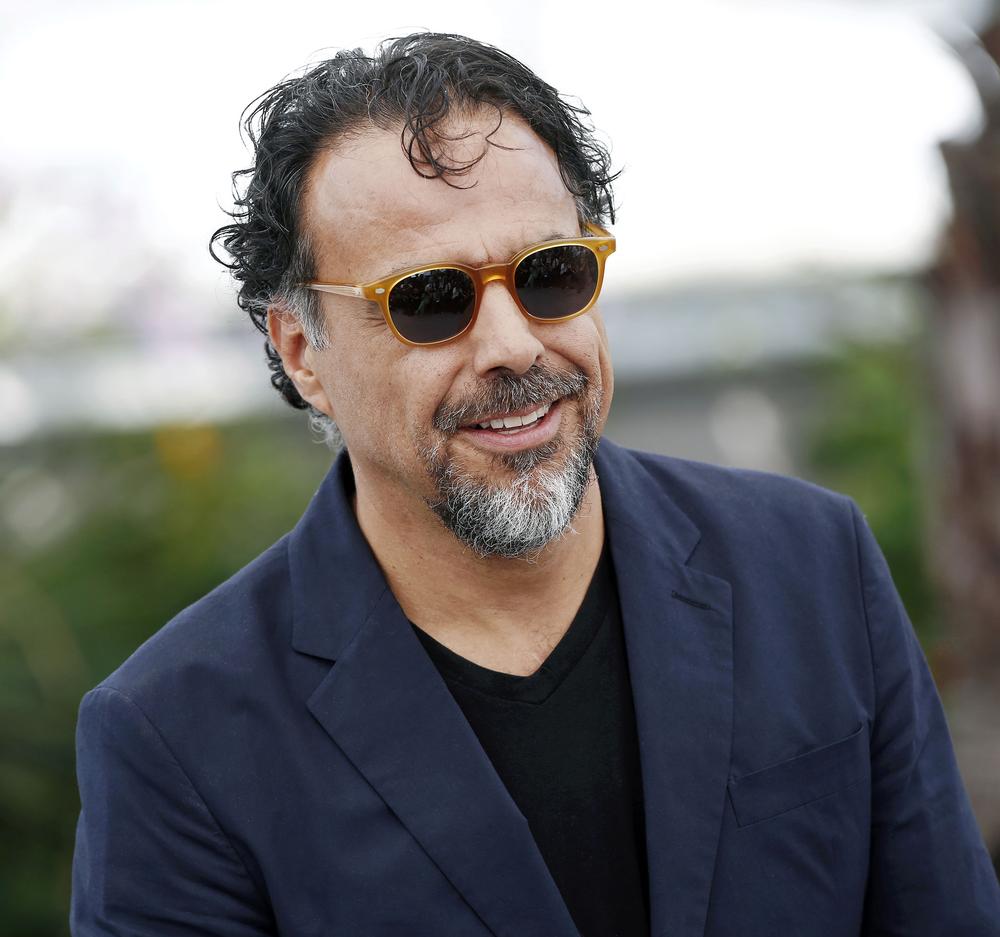
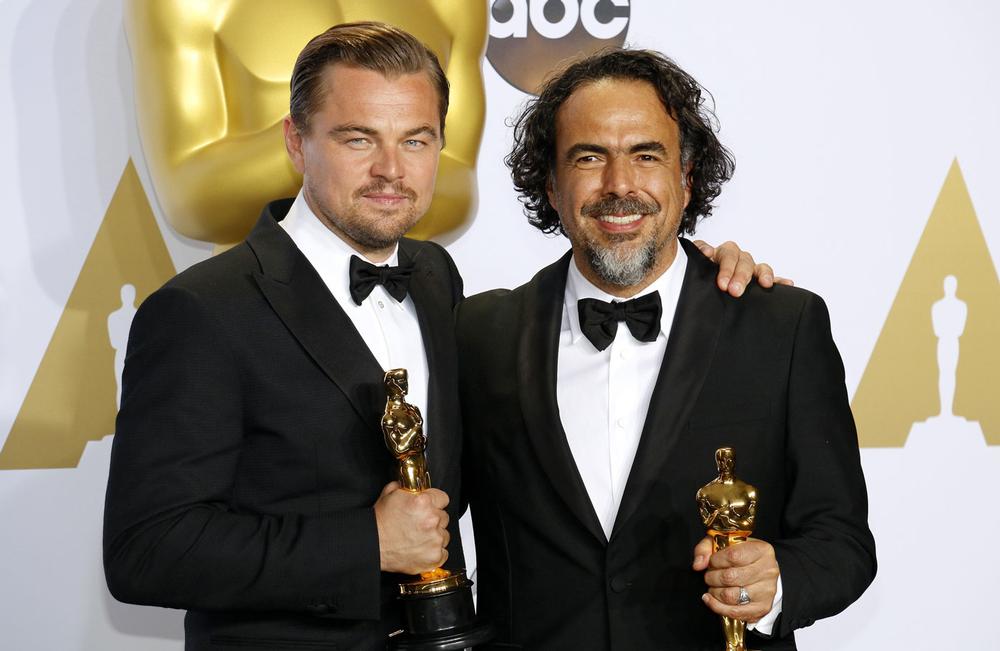
Alejandro González Iñárritu is an Oscar-winning director / PHOTO: Shutterstock/Andrea Raffin
At the 90th Academy Awards held in March this year, the Mexican film director Alejandro González Iñárritu – winner of best director Oscar for The Revenant in 2015 and for Birdman in 2014 – collected a special award for a virtual reality installation.
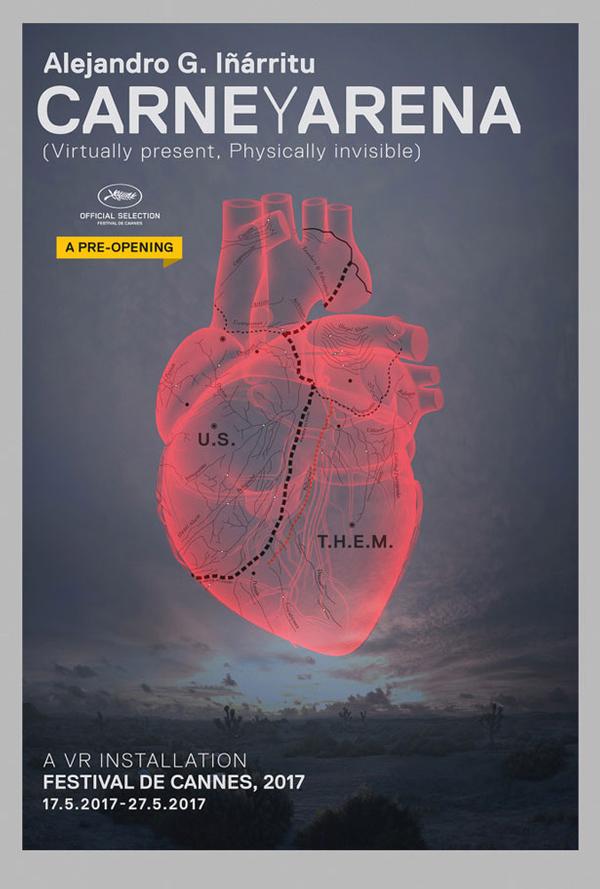
Special Oscar awards are rarely presented, but the Academy said Iñárritu was being honoured for Carne y Arena (Virtually present, Physically invisible) because the six-minute experience was “a visionary and powerful experience in storytelling”. It marks the first Oscar awarded to the medium of VR.
The director, writer and producer, whose other acclaimed films include Rudo y Cursi, 21 Grams and Babel, created Carne y Arena to look at the plight of migrants crossing the Sonoran desert of Arizona and California.
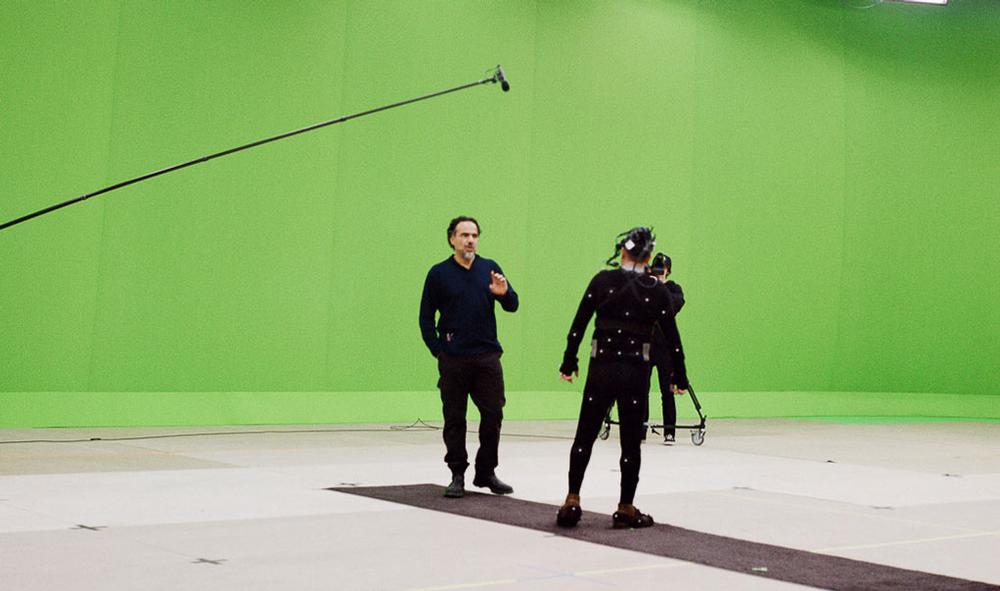
Guests put on their VR headsets to become completely immersed in a refugee’s journey, based on real-life accounts, with the solo experience made all the more realistic through the use of cool temperatures, breezes and sandy floors.
“During the past four years in which this project has been growing in my mind, I had the privilege of meeting and interviewing many Mexican and Central American refugees. Their life stories haunted me, so I invited some of them to collaborate with me in the project,” Iñárritu says.
“My intention was to experiment with VR technology to explore the human condition in an attempt to break the dictatorship of the frame, within which things are just observed, and claim the space to allow the visitor to go through a direct experience walking in the immigrants’ feet, under their skin, and into their hearts.”
It premiered at the Cannes Film Festival in May 2017, before spending six months at Fondazione Prada in Milan, Italy, followed by six months at Los Angeles County Museum of Art (LACMA) in California. Carne y Arena is currently open to the general public at a location in Washington, DC.
In an interview with Variety magazine, Iñárritu discussed the potential and challenges of VR as a medium, saying it has elements of theatre, documentary and physical installation. “It’s many different arts combined.”
“VR has the potential to change the landscape of museums and galleries because you can go into the mind of an artist. I think great artists will be able to create amazing pieces where you will really walk into their brain, and that will be life-changing. The experience is huge,” he says.
“Narratively, I think it will require the new generation to bring a new way to approach it. We should not be contaminating this with old narrative arts of theatre or cinema. I think this is its own beast. This requires a new way, and I don’t know if it’s anti-narrative, but it should be much more unexpected – a new way with a new language. That’s what I think is exciting about it. What I call it is a ‘narrative space’. There’s a narrative but it’s more of a spatial, atmospheric narrative than a traditional narrative.”
He comments that the drawbacks include the quality, the weight of the headsets and that it tends not be a collective experience, but that the medium is being developed to overcome these.
He adds: “VR is really amazing. It challenges your conception of time and space in a way that nothing does.”
The Academy of Motion Picture Arts and Sciences president John Bailey explained the reason for the special Oscar statuette: “Iñárritu’s multimedia art and cinema experience is a deeply emotional and physically immersive venture into the world of migrants crossing the desert of the American southwest in early dawn light. More than even a creative breakthrough in the still emerging form of virtual reality, it viscerally connects us to the hot-button political and social realities of the US-Mexico border.”
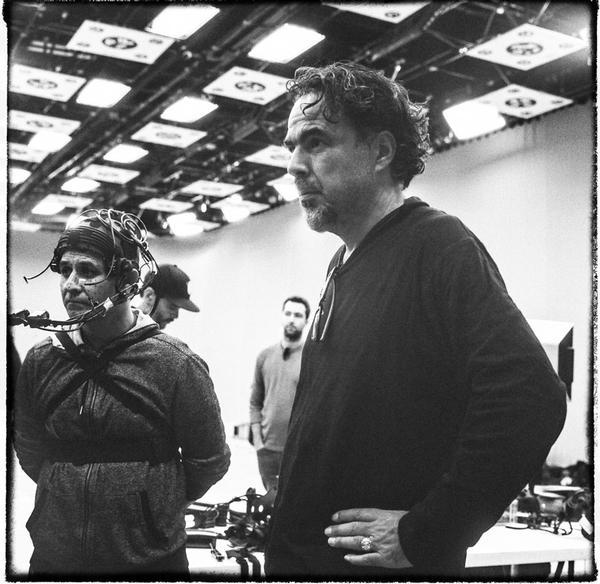
Iñárritu worked with longtime collaborator and cinematographer Emmanuel Lubezki, producer Mary Parent and ILMxLAB, Lucasfilm’s VR entertainment laboratory.
Read more from this issue of Attractions Management magazine
View contents of Attractions Management 2018 issue 2
People profile: Damien Hirst
Turner Prize-winning artist Damien Hirst exhibits a series of spot paintings and huge sculptures at a Norfolk stately home
People profile: Penka Kouneva
Movie and video game composer Penka Kouneva moves into the world of attractions with the Heroes and Legends exhibit and VR installations
Industry Opinion: Zoos & Aquariums
WAZA’s Sabrina Brando on providing animals with opportunities for choices, stimulating environments and enriching activities
Interview: Sultan Al Dhaheri
With the launch of Warner Bros World and
the Louvre in Abu Dhabi, the Department
of Culture and Tourism’s Sultan Al Dhaheri
explains how investing in attractions is
helping the emirate meet its tourism goals
Animal sanctuaries: Paws for Thought
The UK’s Big Cat Sanctuary is the subject
of a recent BBC documentary. Managing
director Giles Clark explains how the
facility works – and introduces Maya
the jaguar and Willow the cheetah
Science Centres: Getting Engaged
Researchers Dr Amy Seakins and
Dr Heather King explain how science
capital empowers science centres
to engage wider audiences in STEM,
plus European initiatives in action
Digital art: Light Fantastic
Tokyo-based digital art collective teamLab is
on a mission to change the way we interact
with and experience art. Magali Robathan
reports on the group’s installation work
and their upcoming museum launch
Alejandro González Iñárritu is an Oscar-winning director / PHOTO: Shutterstock/Andrea Raffin
At the 90th Academy Awards held in March this year, the Mexican film director Alejandro González Iñárritu – winner of best director Oscar for The Revenant in 2015 and for Birdman in 2014 – collected a special award for a virtual reality installation.
Special Oscar awards are rarely presented, but the Academy said Iñárritu was being honoured for Carne y Arena (Virtually present, Physically invisible) because the six-minute experience was “a visionary and powerful experience in storytelling”. It marks the first Oscar awarded to the medium of VR.
The director, writer and producer, whose other acclaimed films include Rudo y Cursi, 21 Grams and Babel, created Carne y Arena to look at the plight of migrants crossing the Sonoran desert of Arizona and California.
Guests put on their VR headsets to become completely immersed in a refugee’s journey, based on real-life accounts, with the solo experience made all the more realistic through the use of cool temperatures, breezes and sandy floors.
“During the past four years in which this project has been growing in my mind, I had the privilege of meeting and interviewing many Mexican and Central American refugees. Their life stories haunted me, so I invited some of them to collaborate with me in the project,” Iñárritu says.
“My intention was to experiment with VR technology to explore the human condition in an attempt to break the dictatorship of the frame, within which things are just observed, and claim the space to allow the visitor to go through a direct experience walking in the immigrants’ feet, under their skin, and into their hearts.”
It premiered at the Cannes Film Festival in May 2017, before spending six months at Fondazione Prada in Milan, Italy, followed by six months at Los Angeles County Museum of Art (LACMA) in California. Carne y Arena is currently open to the general public at a location in Washington, DC.
In an interview with Variety magazine, Iñárritu discussed the potential and challenges of VR as a medium, saying it has elements of theatre, documentary and physical installation. “It’s many different arts combined.”
“VR has the potential to change the landscape of museums and galleries because you can go into the mind of an artist. I think great artists will be able to create amazing pieces where you will really walk into their brain, and that will be life-changing. The experience is huge,” he says.
“Narratively, I think it will require the new generation to bring a new way to approach it. We should not be contaminating this with old narrative arts of theatre or cinema. I think this is its own beast. This requires a new way, and I don’t know if it’s anti-narrative, but it should be much more unexpected – a new way with a new language. That’s what I think is exciting about it. What I call it is a ‘narrative space’. There’s a narrative but it’s more of a spatial, atmospheric narrative than a traditional narrative.”
He comments that the drawbacks include the quality, the weight of the headsets and that it tends not be a collective experience, but that the medium is being developed to overcome these.
He adds: “VR is really amazing. It challenges your conception of time and space in a way that nothing does.”
The Academy of Motion Picture Arts and Sciences president John Bailey explained the reason for the special Oscar statuette: “Iñárritu’s multimedia art and cinema experience is a deeply emotional and physically immersive venture into the world of migrants crossing the desert of the American southwest in early dawn light. More than even a creative breakthrough in the still emerging form of virtual reality, it viscerally connects us to the hot-button political and social realities of the US-Mexico border.”
Iñárritu worked with longtime collaborator and cinematographer Emmanuel Lubezki, producer Mary Parent and ILMxLAB, Lucasfilm’s VR entertainment laboratory.
Read more from this issue of Attractions Management magazine
View contents of Attractions Management 2018 issue 2
People profile: Damien Hirst
Turner Prize-winning artist Damien Hirst exhibits a series of spot paintings and huge sculptures at a Norfolk stately home
People profile: Penka Kouneva
Movie and video game composer Penka Kouneva moves into the world of attractions with the Heroes and Legends exhibit and VR installations
Industry Opinion: Zoos & Aquariums
WAZA’s Sabrina Brando on providing animals with opportunities for choices, stimulating environments and enriching activities
Interview: Sultan Al Dhaheri
With the launch of Warner Bros World and
the Louvre in Abu Dhabi, the Department
of Culture and Tourism’s Sultan Al Dhaheri
explains how investing in attractions is
helping the emirate meet its tourism goals
Animal sanctuaries: Paws for Thought
The UK’s Big Cat Sanctuary is the subject
of a recent BBC documentary. Managing
director Giles Clark explains how the
facility works – and introduces Maya
the jaguar and Willow the cheetah
Science Centres: Getting Engaged
Researchers Dr Amy Seakins and
Dr Heather King explain how science
capital empowers science centres
to engage wider audiences in STEM,
plus European initiatives in action
Digital art: Light Fantastic
Tokyo-based digital art collective teamLab is
on a mission to change the way we interact
with and experience art. Magali Robathan
reports on the group’s installation work
and their upcoming museum launch
A US$50 million (£44.2 million, €51.2 million) transformation of Chicago's historic McCormick
Mansion has created a new destination that combines live magic, immersive theatre, dining and
private membership under one roof.
The Montana Historical Society has officially celebrated the opening of its new Montana
Heritage
Center, a US$107 million (£79 million, €92 million) destination that combines immersive
storytelling with cutting-edge audiovisual technology to bring the sta
San Antonio Zoo has reported a US$283 million economic impact for 2025, following a decade-
long transformation programme that has seen almost US$200 million invested into the Texas
attraction.
Plans for the AU$180 million redevelopment of Reef HQ Aquarium in Townsville, Australia, are
progressing, with the project set to transform the attraction into a global centre for reef
education and conservation.
Abu Dhabi-based investment firm Mubadala Capital has made a binding, fully financed
€1 billion
offer to acquire Pierre and Vacances SA, the European holiday resort operator behind the
continental European Center Parcs business.
Disney has reaffirmed its commitment to investing US$30 billion in its US parks and cruise
business by 2033, using new America250 celebrations to underline the role its attractions play
in supporting jobs, tourism and economic growth.
Expo 2030 Riyadh is being planned as a permanent visitor destination, with organisers
confirming the six-million-square-metre site will become a Global Village after the event closes.
The owner of one of Australia's best-known waterparks has acquired a major competitor,
creating a new attractions business spanning two of the country's largest visitor destinations.
The Toverland theme park in the Netherlands has announced a €98m expansion programme
that will add a resort, new attractions and staff facilities as it pursues plans to become a multi-
day destination.
Hotel de France, located on the British Isle of Jersey, has created a wellness retreat package
that includes a hot yoga session that will take place in Jersey Zoo’s butterfly sanctuary.
+ More news
COMPANY PROFILES
TechnoAlpin Indoor TechnoAlpin is the world leader for snowmaking systems. With the Indoor snow division, TechnoAlpin c [more...]
Holovis Holovis is a privately owned company
established in 2004 by CEO Stuart
Hetherington. [more...]
Sally Corporation Our services include: Dark ride design & build; Redevelopment of existing attractions; High-quality [more...]
QubicaAMF UK QubicaAMF is the largest and most
innovative bowling equipment provider with
600 employees worldwi [more...]