They are the most majestic and charismatic of animals,
but the outlook for big cats in the wild currently looks
grim. Kath Hudson finds out how the Big Cat Sanctuary
is on a mission to change the situation
By Kath Hudson | Published in Attractions Management 2018 issue 2
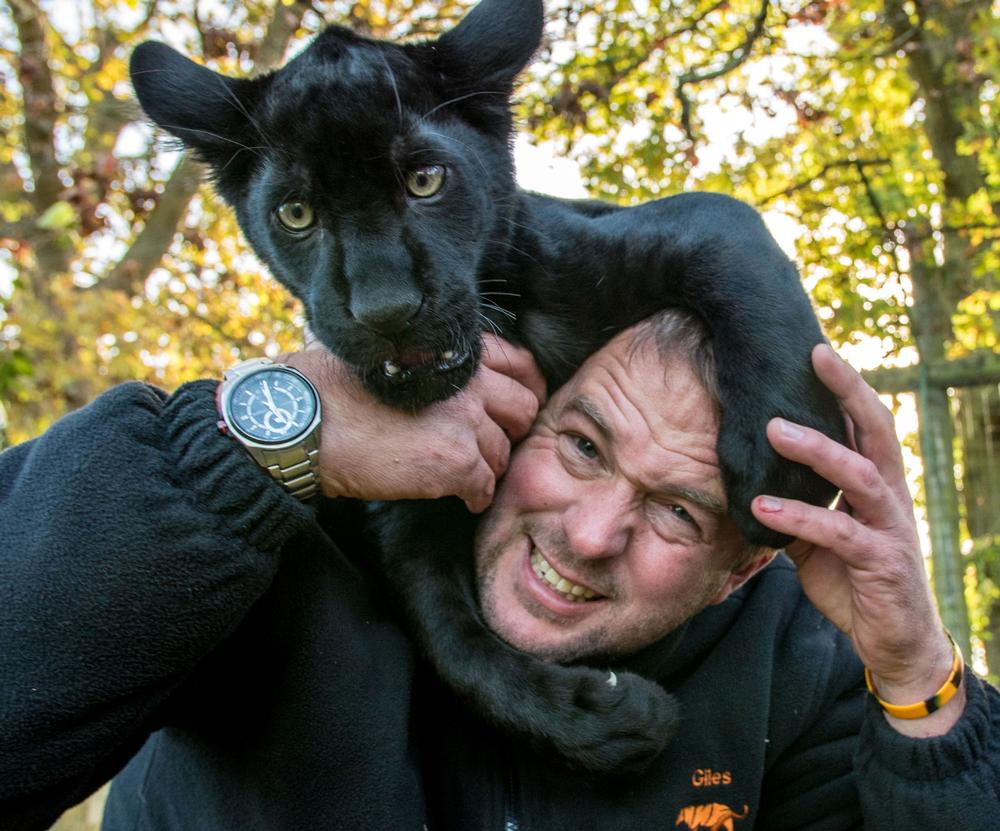
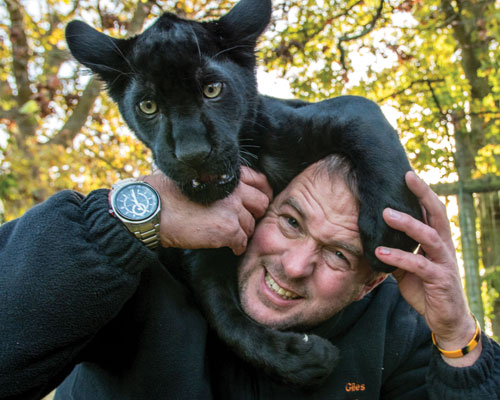
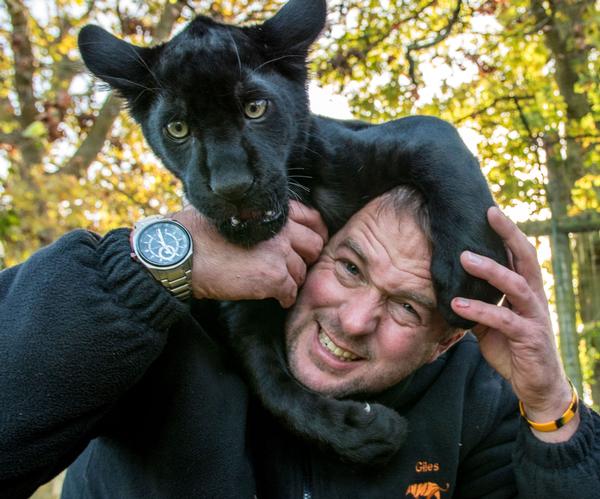
Giles Clark, pictured here with Maya the jaguar, is managing director of the Big Cat Sanctuary
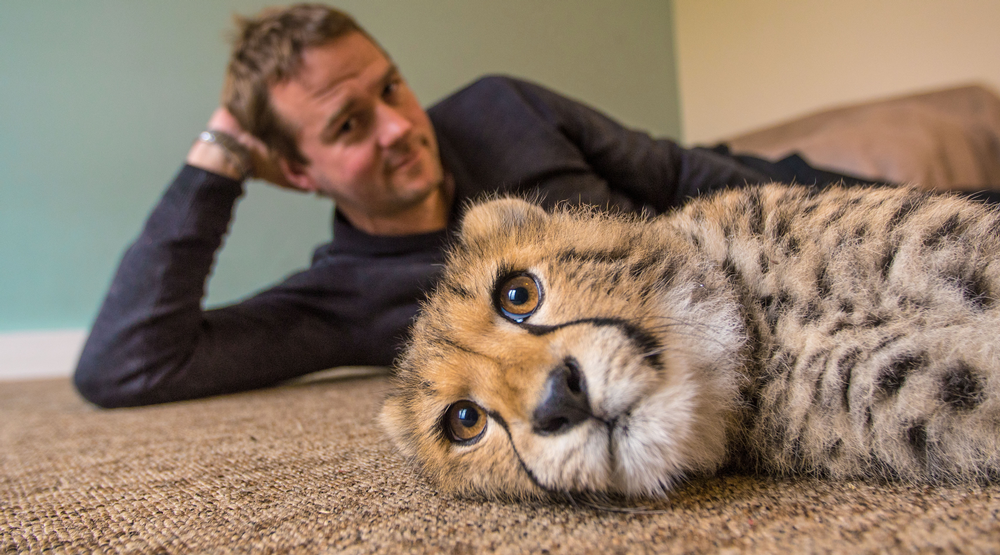
The most important justification for zoos is that the animals act as ambassadors for their wild counterparts, by raising awareness and support for conservation. There is a crisis for cats in the wild and my mission is to make a difference. We can’t let these animals disappear.” So says Giles Clark, managing director of the Big Cat Sanctuary and star of the recent BBC documentary Big Cats in the House, in which he shares the limelight with Maya the jaguar and Willow the cheetah.
After watching the documentary and becoming immersed in Clark’s world, it comes as something of a surprise to hear his voice on the phone. There is a distinct Aussie twang to it, legacy of his two decades of globetrotting, which helped him develop his big cat expertise.
He says amazing opportunities led him to his current position at the sanctuary, which is located in Ashford, Kent – the very southeast corner of the UK. “It’s a vocation, not a career,” he says. “It’s a job that doesn’t feel like a job, but nonetheless, it is all consuming and never stops. While we might all want to cuddle a mewing baby jaguar, not all of us would want to rub its bum with gauze to help her poo or camp out in the trees in the jungle to look for wild cats.”
Clark has come full circle with his work. After 17 years of living abroad – volunteering in India and a long stint in Australia, including developing a state-of-the-art tiger facility at Steve Irwin’s Brisbane Zoo – he has come back to work for his first boss. Peter Sampson is the owner of the Big Cat Sanctuary, as well as Paradise Park in Broxbourne, Hertfordshire, where Clark started his journey as a 14-year-old on work experience, leading to his first job.
Cat ambassadors The Big Cat Sanctuary was initially established by Malcolm Dudley, who ran it purely as a sanctuary to provide new homes to big cats with inappropriate homes, like nightclubs or circuses; or no homes, as happened with the lions from Windsor Safari Park after it closed in 1992.
There are approximately 50 big cats at the sanctuary at any one time. Some of the cats are part of a breeding programme, while others have retired from breeding, either because they are too old or because there are already enough of their genes in the cat population.
Since acquiring the 16-hectare facility in 2000, Sampson has turned it into a charity with a board of trustees, joined the European Endangered Species Programme, to help preserve species through breeding, and set up partnerships with global conservation partners.
Clark joined in 2016, with some big ambitions. Having worked with the BBC in Australia, one of his first initiatives was to arrange for a film crew to make a fly-on-the-wall documentary. The plans for a standard zoo-style documentary changed when Maya the Jaguar entered the scene (see ‘Maya the Jaguar’ on page 46) and offered an irresistible and compelling storyline. If there was a feline who could mobilise the public to the plight of wild cats, it would be Maya.
Clark has also changed the mission statement to reflect his aim to use the sanctuary as a way of safeguarding wild cats. “We have four pillars of ethos: firstly to ensure the welfare of our resident cats and ensure they breed to maintain a healthy and sustainable population,” he says. “Then we want to raise awareness and educate people about the situation of wild cats. Finally, the overarching goal is to support in situ conservation. Our cats at the sanctuary are ambassadors to help safeguard their wild counterparts.”
Innovative model The sanctuary needs to generate £1m a year to operate. One of its biggest challenges is that cats living in captivity survive much longer than their wild counterparts. “Some of the big cats live until their early 20s – so they are expensive to keep, especially if they get health issues, we see problems which wouldn’t happen in the wild,” says Clark. “And if you think vet bills are expensive, imagine what root canal treatment on a lion costs!”
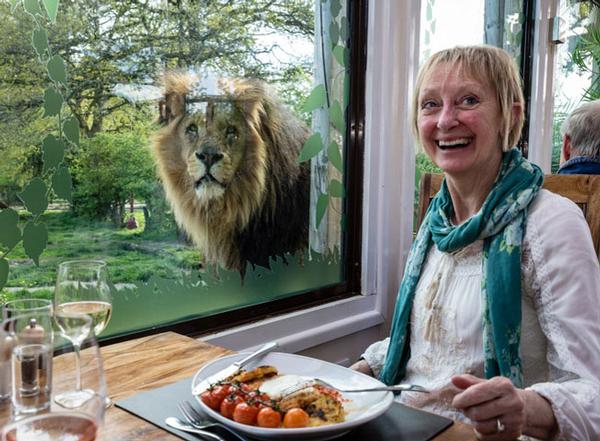
Running the sanctuary as a standard zoo has been deemed by the board to be unsuitable since cats are generally reclusive and try to avoid humans if they can. For this reason, it is not operated as a standard attraction where visitors can turn up and buy a ticket, but instead people can book a selection of tailored packages, which give a superior experience: overnight stays at the safari lodge, photography workshops and big cat encounters. Added to this, a handful of open days are run each year, which generate around 25 per cent of the facility’s annual income.
“Having crowds of people around all the time could stress the cats,” says Clark. “When we have the open days, some cats go into hiding and are not seen. These packages mean we can have less infrastructure and fewer staff, but visitors get a better experience and it is more conducive to the cats’ wellbeing.”
Supporting conservation Fundraising is important, not just for the running costs, but also to fulfil Clark’s ambitions to support conservation projects in the wild. The clock is ticking: 80 per cent of the wild cat population is in trouble and experts believe many species could become extinct in the wild in the next decade, unless there are serious interventions. Clark is determined that this won’t happen on his watch. “I want to be part of the solution,” he says. “The amount we are donating is growing year on year, but I want to grow it from thousands to tens of thousands.”
The Big Cat Sanctuary has numerous conservation partners. The documentary shows some of the ongoing work, and much of it makes painful viewing: lions dying in Kenya after being poisoned; the seizure of big cat skins in Cambodia, revealing the extent of the poaching problem. However, it also reflects what is being done to help. The Big Cat Sanctuary funded GPS collars for lions in Kenya to help inform a conservation strategy and cameras to track movements of jaguars in Costa Rica.
“I don’t ever switch off. I’m always thinking about something to do with the cats,” says Clark. “But there aren’t any bad parts to my job. I have been very fortunate to work with some amazing species and to form bonds and relationships. We’ve got a purpose to what we do, which gets me fired up and excited about making a difference.”
Read more from this issue of Attractions Management magazine
View contents of Attractions Management 2018 issue 2
People profile: Damien Hirst
Turner Prize-winning artist Damien Hirst exhibits a series of spot paintings and huge sculptures at a Norfolk stately home
People profile: Penka Kouneva
Movie and video game composer Penka Kouneva moves into the world of attractions with the Heroes and Legends exhibit and VR installations
Industry Opinion: Zoos & Aquariums
WAZA’s Sabrina Brando on providing animals with opportunities for choices, stimulating environments and enriching activities
Interview: Sultan Al Dhaheri
With the launch of Warner Bros World and
the Louvre in Abu Dhabi, the Department
of Culture and Tourism’s Sultan Al Dhaheri
explains how investing in attractions is
helping the emirate meet its tourism goals
Animal sanctuaries: Paws for Thought
The UK’s Big Cat Sanctuary is the subject
of a recent BBC documentary. Managing
director Giles Clark explains how the
facility works – and introduces Maya
the jaguar and Willow the cheetah
Science Centres: Getting Engaged
Researchers Dr Amy Seakins and
Dr Heather King explain how science
capital empowers science centres
to engage wider audiences in STEM,
plus European initiatives in action
Digital art: Light Fantastic
Tokyo-based digital art collective teamLab is
on a mission to change the way we interact
with and experience art. Magali Robathan
reports on the group’s installation work
and their upcoming museum launch
• The Big Cat Sanctuary has 40 enclosures, and 50 cats
• There are 40 different species of wild cats and The Big Cat Sanctuary is home to 15 species
• During the winter the cats eat between 750 and 850 kilos of food per week
• Meat, chicken, fish, mice and rats feature on the menu
• It costs a minimum of £1m one year to run The Big Cat Sanctuary • Last year the charity donated around £20,000 to global conservation projects
• The global illegal wildlife trade is worth some £18bn a year and is one of the top five international crimes. Cats are especially sought after.
• Tigers have been virtually wiped out in Cambodia by hunters, globally the population has dropped by 95 per cent since 1990.
• There are less lions than rhinos in Africa: with the population now below 23,000
• Cheetahs are the most endangered of big cats in Africa.
Maya the Jaguar Who couldn’t fall in love with this adorable jaguar? When filming began, Maya was not part of the equation, but her arrival as a five-day-old, neglected by her mum, meant hours of previous footage were shelved and the show was renamed Big Cats in the House.
The bond between Giles Clark and Maya is heartwarming. The documentary shows him feeding her every two hours, day and night, taking her swimming, an anxious vet visit and a lively appearance on BBC Breakfast.
As Maya nears her first birthday, Clark says she is showing less and less interest in him. Soon he will stop entering her enclosure as she becomes an independent and solitary adult.
She has already been a great ambassador for her wild cousins, helping the team raise £13,500 in an evening fundraiser, which led to the sanctuary buying tracking cameras for a jaguar research and conservation project in Costa Rica. And since the documentary, a meet-and-greet is on offer at the sanctuary with Clark, Maya and Willow, with tickets priced at £99.
Maya turned up at the sanctuary during filming,
aged just five days old
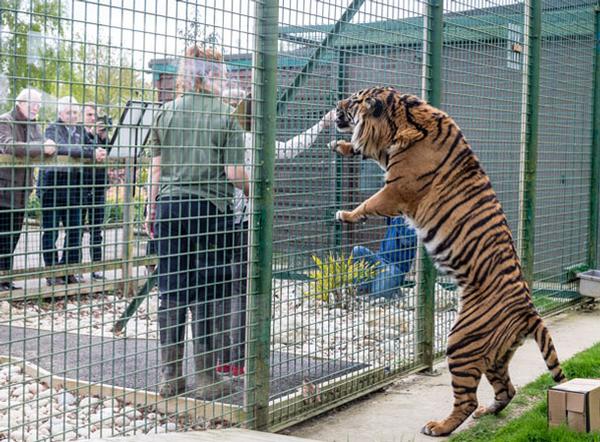
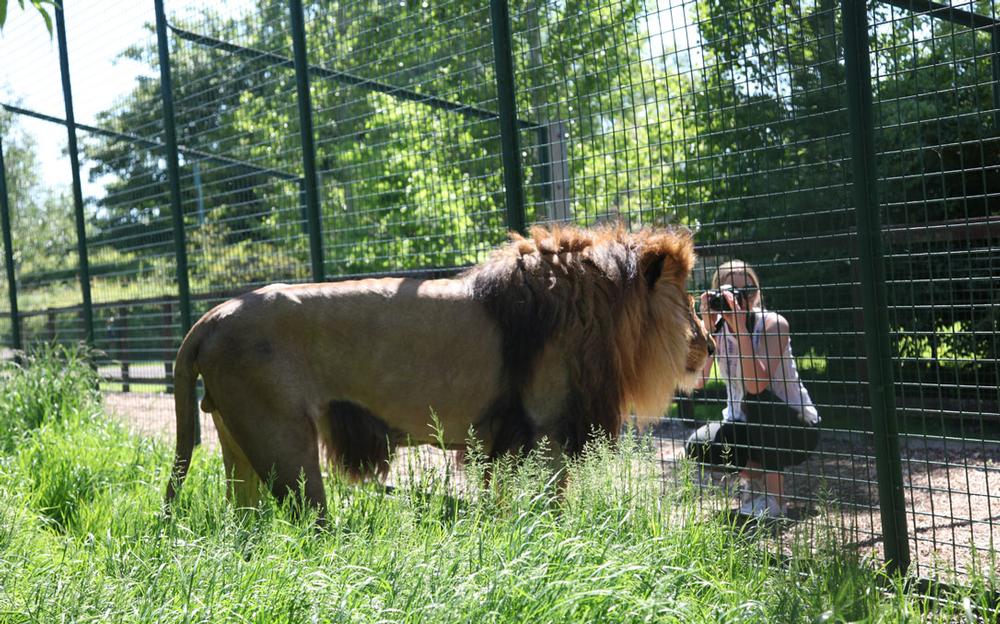
Experiences on offer at the sanctuary include Big Cat Encounters and Ranger for the Day
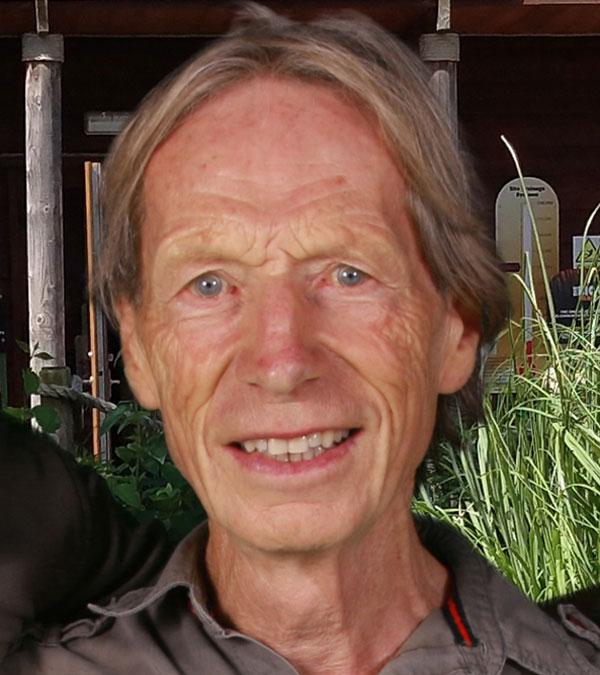
Peter Sampson
is the owner of
the sanctuary
Experiences on offer at the sanctuary include Big Cat Encounters and Ranger for the Day
Experiences on offer at the sanctuary include Big Cat Encounters and Ranger for the Day
Experiences on offer at the sanctuary include Big Cat Encounters and Ranger for the Day
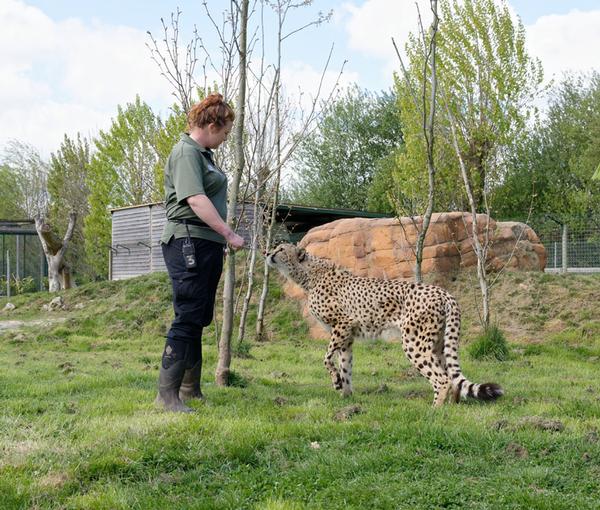
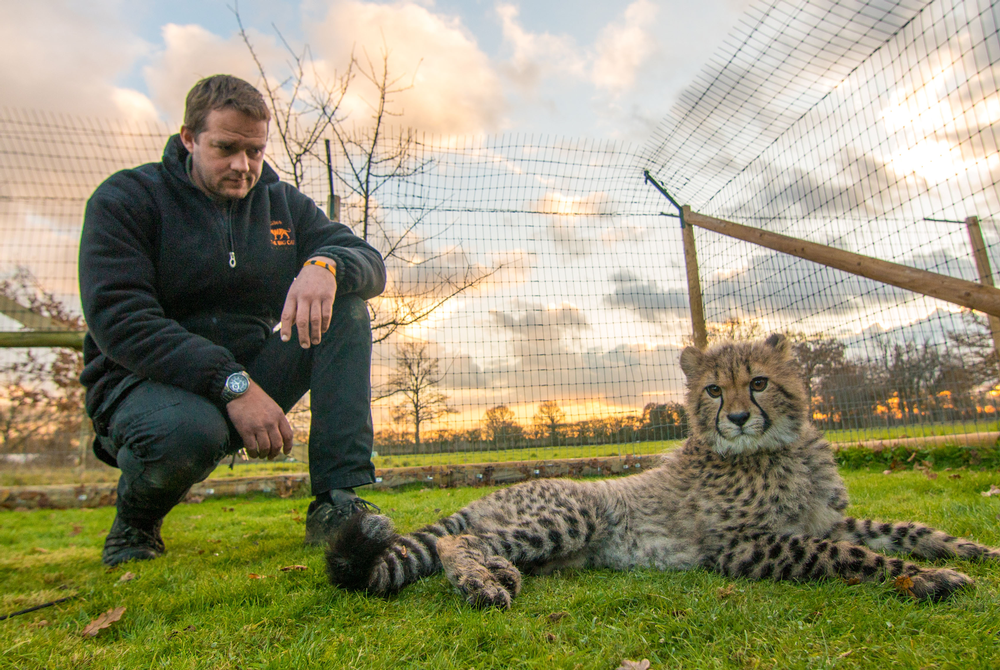
Cheetah Willow arrived at the sanctuary as a cub with a fractured leg, but she made a speedy recovery
Cheetah Willow arrived at the sanctuary as a cub with a fractured leg, but she made a speedy recovery
COMPANY PROFILES
Polin Waterparks
Polin was founded in Istanbul in 1976. Polin
has since grown into a leading company in
the waterpa [more...]
Holovis
Holovis is a privately owned company
established in 2004 by CEO Stuart
Hetherington. [more...]
They are the most majestic and charismatic of animals,
but the outlook for big cats in the wild currently looks
grim. Kath Hudson finds out how the Big Cat Sanctuary
is on a mission to change the situation
By Kath Hudson | Published in Attractions Management 2018 issue 2
Giles Clark, pictured here with Maya the jaguar, is managing director of the Big Cat Sanctuary
The most important justification for zoos is that the animals act as ambassadors for their wild counterparts, by raising awareness and support for conservation. There is a crisis for cats in the wild and my mission is to make a difference. We can’t let these animals disappear.” So says Giles Clark, managing director of the Big Cat Sanctuary and star of the recent BBC documentary Big Cats in the House, in which he shares the limelight with Maya the jaguar and Willow the cheetah.
After watching the documentary and becoming immersed in Clark’s world, it comes as something of a surprise to hear his voice on the phone. There is a distinct Aussie twang to it, legacy of his two decades of globetrotting, which helped him develop his big cat expertise.
He says amazing opportunities led him to his current position at the sanctuary, which is located in Ashford, Kent – the very southeast corner of the UK. “It’s a vocation, not a career,” he says. “It’s a job that doesn’t feel like a job, but nonetheless, it is all consuming and never stops. While we might all want to cuddle a mewing baby jaguar, not all of us would want to rub its bum with gauze to help her poo or camp out in the trees in the jungle to look for wild cats.”
Clark has come full circle with his work. After 17 years of living abroad – volunteering in India and a long stint in Australia, including developing a state-of-the-art tiger facility at Steve Irwin’s Brisbane Zoo – he has come back to work for his first boss. Peter Sampson is the owner of the Big Cat Sanctuary, as well as Paradise Park in Broxbourne, Hertfordshire, where Clark started his journey as a 14-year-old on work experience, leading to his first job.
Cat ambassadors The Big Cat Sanctuary was initially established by Malcolm Dudley, who ran it purely as a sanctuary to provide new homes to big cats with inappropriate homes, like nightclubs or circuses; or no homes, as happened with the lions from Windsor Safari Park after it closed in 1992.
There are approximately 50 big cats at the sanctuary at any one time. Some of the cats are part of a breeding programme, while others have retired from breeding, either because they are too old or because there are already enough of their genes in the cat population.
Since acquiring the 16-hectare facility in 2000, Sampson has turned it into a charity with a board of trustees, joined the European Endangered Species Programme, to help preserve species through breeding, and set up partnerships with global conservation partners.
Clark joined in 2016, with some big ambitions. Having worked with the BBC in Australia, one of his first initiatives was to arrange for a film crew to make a fly-on-the-wall documentary. The plans for a standard zoo-style documentary changed when Maya the Jaguar entered the scene (see ‘Maya the Jaguar’ on page 46) and offered an irresistible and compelling storyline. If there was a feline who could mobilise the public to the plight of wild cats, it would be Maya.
Clark has also changed the mission statement to reflect his aim to use the sanctuary as a way of safeguarding wild cats. “We have four pillars of ethos: firstly to ensure the welfare of our resident cats and ensure they breed to maintain a healthy and sustainable population,” he says. “Then we want to raise awareness and educate people about the situation of wild cats. Finally, the overarching goal is to support in situ conservation. Our cats at the sanctuary are ambassadors to help safeguard their wild counterparts.”
Innovative model The sanctuary needs to generate £1m a year to operate. One of its biggest challenges is that cats living in captivity survive much longer than their wild counterparts. “Some of the big cats live until their early 20s – so they are expensive to keep, especially if they get health issues, we see problems which wouldn’t happen in the wild,” says Clark. “And if you think vet bills are expensive, imagine what root canal treatment on a lion costs!”
Running the sanctuary as a standard zoo has been deemed by the board to be unsuitable since cats are generally reclusive and try to avoid humans if they can. For this reason, it is not operated as a standard attraction where visitors can turn up and buy a ticket, but instead people can book a selection of tailored packages, which give a superior experience: overnight stays at the safari lodge, photography workshops and big cat encounters. Added to this, a handful of open days are run each year, which generate around 25 per cent of the facility’s annual income.
“Having crowds of people around all the time could stress the cats,” says Clark. “When we have the open days, some cats go into hiding and are not seen. These packages mean we can have less infrastructure and fewer staff, but visitors get a better experience and it is more conducive to the cats’ wellbeing.”
Supporting conservation Fundraising is important, not just for the running costs, but also to fulfil Clark’s ambitions to support conservation projects in the wild. The clock is ticking: 80 per cent of the wild cat population is in trouble and experts believe many species could become extinct in the wild in the next decade, unless there are serious interventions. Clark is determined that this won’t happen on his watch. “I want to be part of the solution,” he says. “The amount we are donating is growing year on year, but I want to grow it from thousands to tens of thousands.”
The Big Cat Sanctuary has numerous conservation partners. The documentary shows some of the ongoing work, and much of it makes painful viewing: lions dying in Kenya after being poisoned; the seizure of big cat skins in Cambodia, revealing the extent of the poaching problem. However, it also reflects what is being done to help. The Big Cat Sanctuary funded GPS collars for lions in Kenya to help inform a conservation strategy and cameras to track movements of jaguars in Costa Rica.
“I don’t ever switch off. I’m always thinking about something to do with the cats,” says Clark. “But there aren’t any bad parts to my job. I have been very fortunate to work with some amazing species and to form bonds and relationships. We’ve got a purpose to what we do, which gets me fired up and excited about making a difference.”
Read more from this issue of Attractions Management magazine
View contents of Attractions Management 2018 issue 2
People profile: Damien Hirst
Turner Prize-winning artist Damien Hirst exhibits a series of spot paintings and huge sculptures at a Norfolk stately home
People profile: Penka Kouneva
Movie and video game composer Penka Kouneva moves into the world of attractions with the Heroes and Legends exhibit and VR installations
Industry Opinion: Zoos & Aquariums
WAZA’s Sabrina Brando on providing animals with opportunities for choices, stimulating environments and enriching activities
Interview: Sultan Al Dhaheri
With the launch of Warner Bros World and
the Louvre in Abu Dhabi, the Department
of Culture and Tourism’s Sultan Al Dhaheri
explains how investing in attractions is
helping the emirate meet its tourism goals
Animal sanctuaries: Paws for Thought
The UK’s Big Cat Sanctuary is the subject
of a recent BBC documentary. Managing
director Giles Clark explains how the
facility works – and introduces Maya
the jaguar and Willow the cheetah
Science Centres: Getting Engaged
Researchers Dr Amy Seakins and
Dr Heather King explain how science
capital empowers science centres
to engage wider audiences in STEM,
plus European initiatives in action
Digital art: Light Fantastic
Tokyo-based digital art collective teamLab is
on a mission to change the way we interact
with and experience art. Magali Robathan
reports on the group’s installation work
and their upcoming museum launch
• The Big Cat Sanctuary has 40 enclosures, and 50 cats
• There are 40 different species of wild cats and The Big Cat Sanctuary is home to 15 species
• During the winter the cats eat between 750 and 850 kilos of food per week
• Meat, chicken, fish, mice and rats feature on the menu
• It costs a minimum of £1m one year to run The Big Cat Sanctuary • Last year the charity donated around £20,000 to global conservation projects
• The global illegal wildlife trade is worth some £18bn a year and is one of the top five international crimes. Cats are especially sought after.
• Tigers have been virtually wiped out in Cambodia by hunters, globally the population has dropped by 95 per cent since 1990.
• There are less lions than rhinos in Africa: with the population now below 23,000
• Cheetahs are the most endangered of big cats in Africa.
Maya the Jaguar Who couldn’t fall in love with this adorable jaguar? When filming began, Maya was not part of the equation, but her arrival as a five-day-old, neglected by her mum, meant hours of previous footage were shelved and the show was renamed Big Cats in the House.
The bond between Giles Clark and Maya is heartwarming. The documentary shows him feeding her every two hours, day and night, taking her swimming, an anxious vet visit and a lively appearance on BBC Breakfast.
As Maya nears her first birthday, Clark says she is showing less and less interest in him. Soon he will stop entering her enclosure as she becomes an independent and solitary adult.
She has already been a great ambassador for her wild cousins, helping the team raise £13,500 in an evening fundraiser, which led to the sanctuary buying tracking cameras for a jaguar research and conservation project in Costa Rica. And since the documentary, a meet-and-greet is on offer at the sanctuary with Clark, Maya and Willow, with tickets priced at £99.
Maya turned up at the sanctuary during filming,
aged just five days old
Experiences on offer at the sanctuary include Big Cat Encounters and Ranger for the Day
Peter Sampson
is the owner of
the sanctuary
Experiences on offer at the sanctuary include Big Cat Encounters and Ranger for the Day
Experiences on offer at the sanctuary include Big Cat Encounters and Ranger for the Day
Experiences on offer at the sanctuary include Big Cat Encounters and Ranger for the Day
Cheetah Willow arrived at the sanctuary as a cub with a fractured leg, but she made a speedy recovery
Cheetah Willow arrived at the sanctuary as a cub with a fractured leg, but she made a speedy recovery
Expo 2030 Riyadh is being planned as a permanent visitor destination, with organisers
confirming the six-million-square-metre site will become a Global Village after the event closes.
The owner of one of Australia's best-known waterparks has acquired a major competitor,
creating a new attractions business spanning two of the country's largest visitor destinations.
The Toverland theme park in the Netherlands has announced a €98m expansion programme
that will add a resort, new attractions and staff facilities as it pursues plans to become a multi-
day destination.
Hotel de France, located on the British Isle of Jersey, has created a wellness retreat package
that includes a hot yoga session that will take place in Jersey Zoo’s butterfly sanctuary.
A new immersive attraction designed to transport visitors into the final hours of ancient Pompeii
is preparing to open near the world-famous archaeological site in southern Italy.
Experience design company, BRC Imagination Arts, has completed a transition that sees founder
Bob Rogers pass ownership of the business to four long-serving senior executives, while
remaining actively involved with the company.
Movie Park Germany has opened a new Paramount Pictures-themed attraction as part of its 30th
anniversary celebrations, using immersive storytelling and adaptive reuse to reinforce the park’s
longstanding “Hollywood in Germany” positioning.
Therme Manchester’s 28-acre development, which will include interconnected glass pavilions
that measure 65,000sq m, will be the largest bathing and wellbeing attraction in the world once
complete, according to prof David Russell, CEO of Therme UK.
Efteling has opened Hooghmoed, a new family drop tower designed to broaden the appeal of its
recently launched Sirene Island themed area and introduce younger visitors to thrill attractions.
A proposed Puy du Fou development near Bicester and Universal Destinations and Experiences’
planned resort in Bedford are emerging as part of a wider transformation of the Oxford–
Cambridge Growth Corridor into a major centre for UK leisure and tourism inv
+ More news
COMPANY PROFILES
Polin Waterparks Polin was founded in Istanbul in 1976. Polin
has since grown into a leading company in
the waterpa [more...]
Holovis Holovis is a privately owned company
established in 2004 by CEO Stuart
Hetherington. [more...]