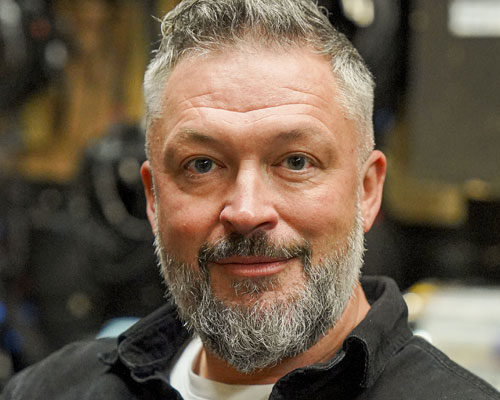
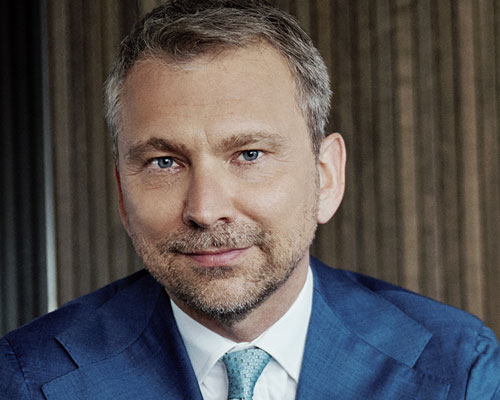
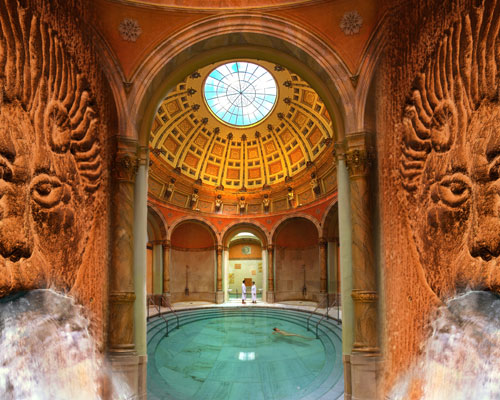
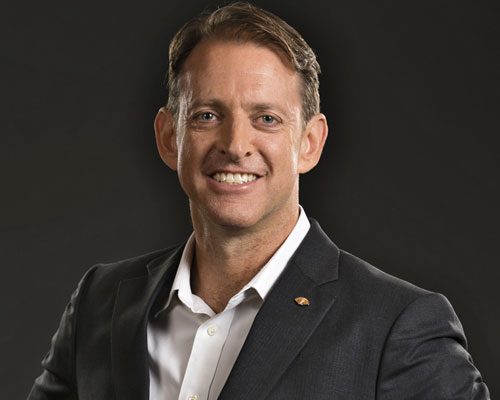
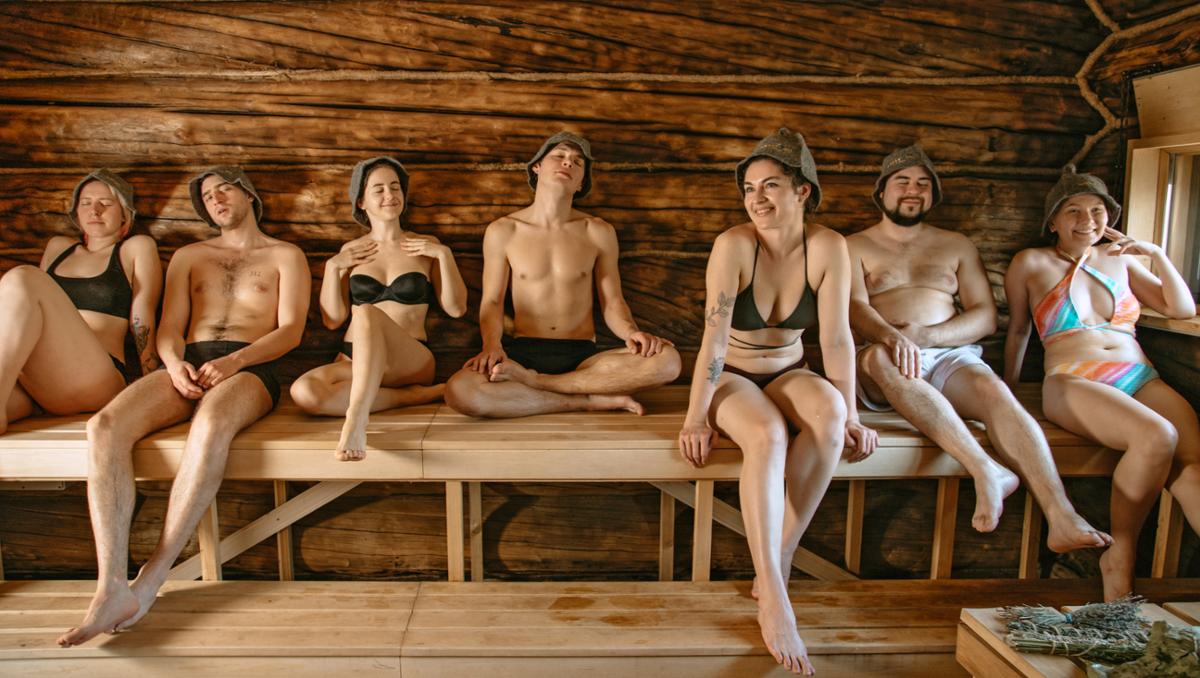
Banya No 1 was opened by Andrei Fomin 11 years ago / photo: Banya no 1
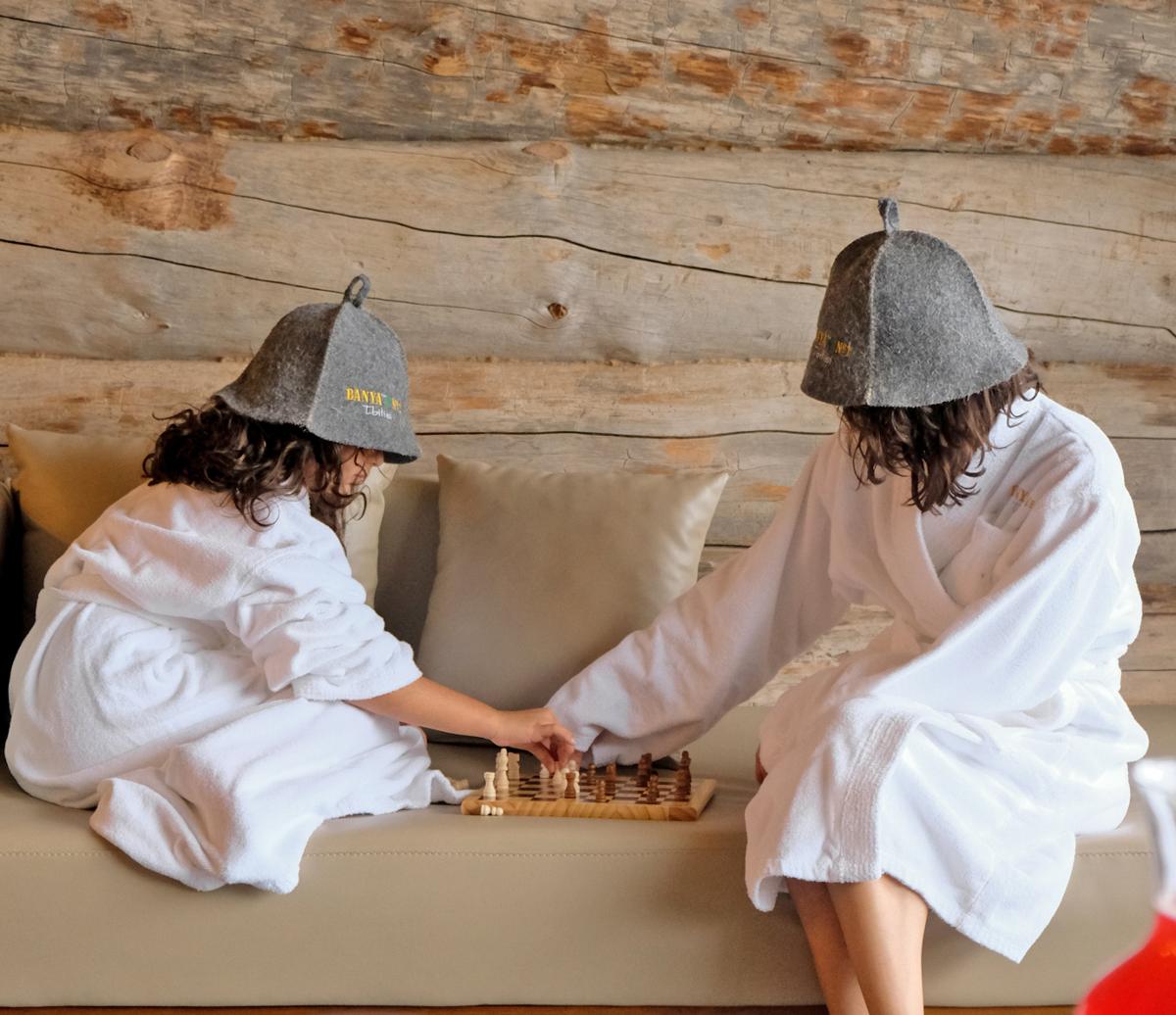
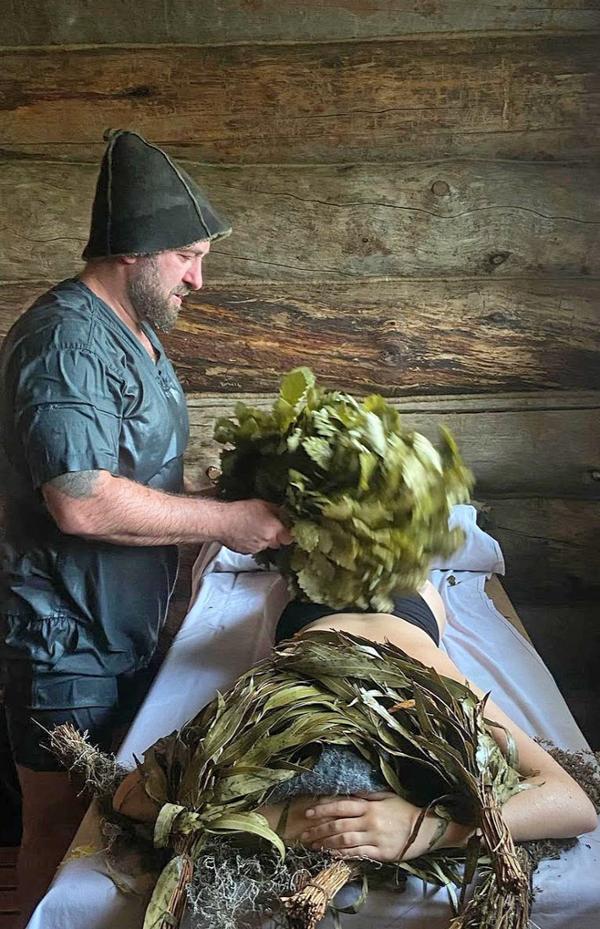
When you enter the original Banya No 1 in London’s hip neighbourhood of Hoxton, you’re greeted with celebrity photos – Justin Bieber, Kate Moss, Renee Zellweger – all of whom have come here for the famous Parenie treatment. A revitalising ritual performed in a special Russian sauna that uses super-heated steam, Parenie uses oak, birch and eucalyptus branches to move the hot air around. It’s similar to aufguss, but the warm leafy bunches are also pressed to the body for deep muscle relief. Following this, a sauna master guides you to a cold bucket shower, then to an icy-cold plunge – to create a sense of invigoration, as well as to boost circulation and improve the immune system. But after the cold plunge, you don a snug robe and spend time resting before starting all over again.
Opened 11 years ago, Banya No 1 has steadily built up a following among both locals and visitors, according to founder and managing director Andrei Fomin. In 2021, a second location launched in the west London neighbourhood of Chiswick and last year, the first international Banya No 1 opened in Tbilisi, Georgia, which includes overnight accommodation.
But Fomin also has his sights set further afield. “Our goal is to take the banya into the global mainstream.”
Rest and refuel The Russian banya has been around for centuries and Fomin knows he’s not the first to open one in London, explaining that they were popular with Jewish immigrants in the late 19th century. But the last facility closed in 1943 and he feels Banya No 1 brings something different to the table.
Its cycle of hot-cold-rest-repeat sees guests usually booking a three-hour session. And the ‘rest’ part of the cycle is crucial, says Fomin. “The banya session is very flexible. Some people visit the steamroom a couple of times, then have the Parenie or another treatment, while others go five times or even more. The only thing we recommend is to take a rest. The golden rule is to spend double the time that you spent in the steamroom for the rest.”
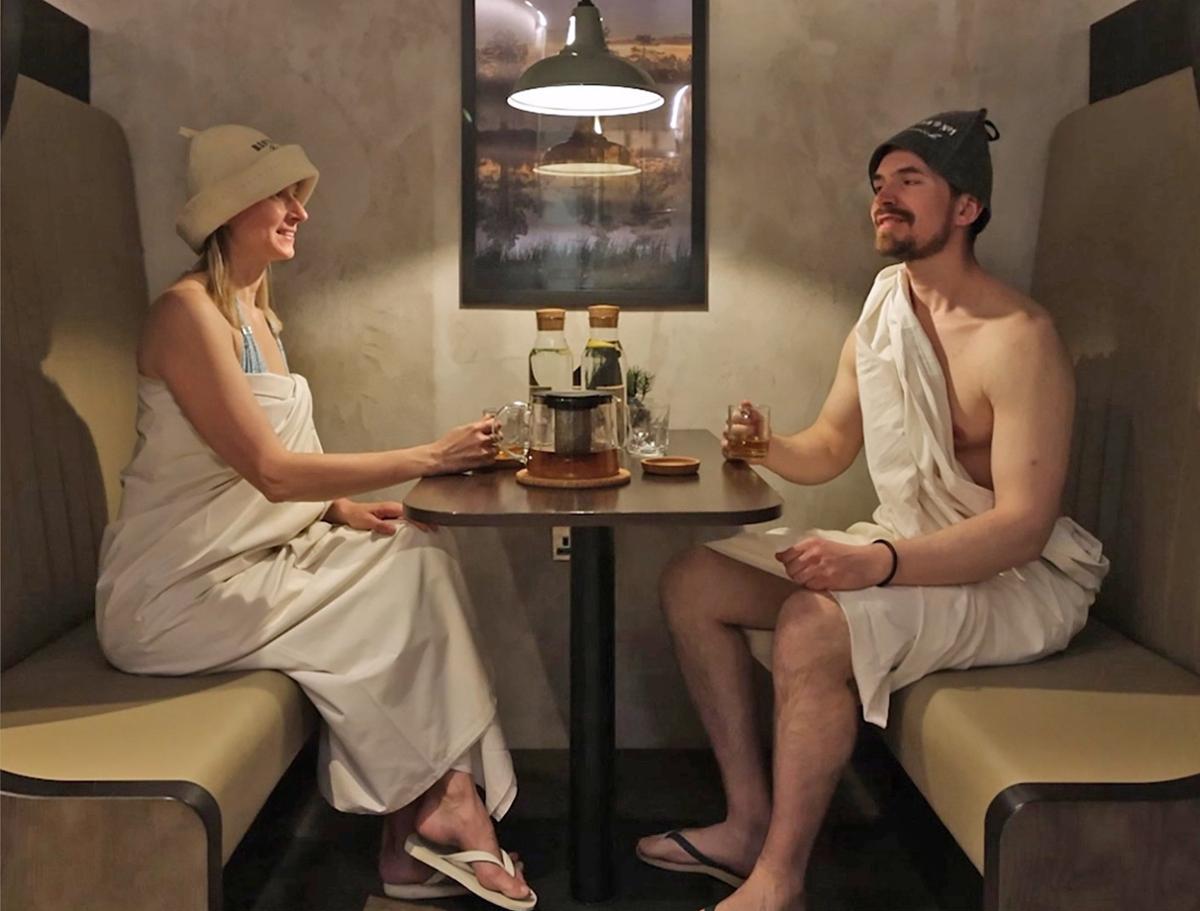
Food and drink are also key – they refuel you and replenish the water and electrolytes lost when sweating. Guests are designated a restaurant booth for their stay and served traditional food like salt-cured salmon, mushroom tea or Kvass, a fermented drink made of rye bread and honey.
Banya to the core The Hoxton Banya No 1 includes a public, shared area with a larger steamroom, cold plunge and bucket shower, with prices ranging from £80 (US$102, €92) for a 3-hour, off-peak banya with Parenie, to £190 (US$241, €220) for the full package, including a three-hour banya at peak times, Parenie, honey and salt scrub, 25-minute massage, sea buckthorn tea and other delicacies.
A private banya, called Taiga, is also available to rent for up to 10 people at £200 (US$251, €230) per hour for a minimum of 2 hours. It’s popular with couples or groups of friends and packages including treatments are also available.
But at the heart of the offering is the banya. “Unlike saunas, which are often secondary facilities, it’s a focal point,” says Fomin. The authentic cabin is built from 6m-long kelo logs – a type of Arctic pine he’s particular about because it continues standing for 50-100 years after it dies and when cut is fully dried and immediately airtight so steam cannot escape. Humidity inside is up to 60 per cent and the 60-70˚C steam – created at a scorching 700˚C in a massive brick stove lined with cast iron – feels intense.
Global expansion The experience at Banya No 1 is family-friendly. In the public banya, children must be at least eight years old, but in the private banya, it’s at the discretion of the parents. Unlike many spas, the male/female ratio is an almost even 52/48 split. More than half (55 per cent) come with their partners, 30 per cent are solo guests and 15 per cent come as part of a group.
“Banya No 1 customers are typically well-travelled, curious people who love to try new things,” says Fomin. “And because we take them out of their comfort zone, that creates a memorable experience. We’re now building on the success story of the banya concept and taking it around the world – be it a plug-and-play addition to a hotel spa or a standalone bathhouse.”
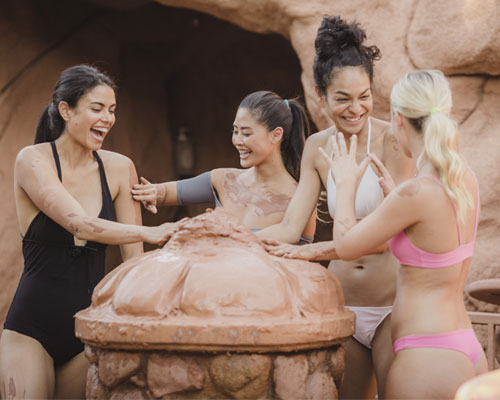
A third London location in Fulham spanning 800sq m will open in 2025, as well as a larger facility in Tbilisi that will offer traditional mud treatments. He’s also looking at sites in France, Spain, Austria, Dubai and the US.
“Banya is cultural,” says Fomin. “It has nothing to do with nations or politics. Banya is everywhere – Kazakhstan, Armenia, Ukraine and the Baltic states. It might have different names – like in Latvia, it’s a pirt – but the principles are the same.”
He points to a sign from the 19th century for an original Russian banya in London, a copy of which is on display in the restaurant. ‘Keep fit and well by regular visits to the real Russian Vapour Baths,’ it reads.
“It’s so interesting to me,” Fomin concludes, adding that the marketing message hasn’t changed in 100 years. “These are old and time-proven practices. It’s all about the benefits of the heat and the cold. Everyone knows this now.”
Read more from this issue of Attractions Management magazine
View contents of Attractions Management 2023 issue 4
Sponsored: Highest French distinction for RKF's CEO
After receiving the highest civilian award for services to the French nation, Riadh Bouaziz, CEO of RKF Luxury Linen, reflects on his company’s many achievements and considers what lies ahead
Association focus: Thermal Heritage
Jane Kitchen finds out how two key associations – the European Historic Thermal Towns Association and the Great Spa Towns of Europe – are protecting and promoting the unique cultural relevances of Europe’s spa towns
Interview: Paul Simons
As he retires from the Great Spa Towns of Europe, the industry leader reflects on his long and esteemed career
Sponsored: New ways with water
Working globally with architects and interior designers allows Myrtha Wellness to embrace the latest trends in the international hospitality sector, as director Stefano Cattaneo explains
Sponsored: Cutting edge
Ara Patterson from Equinox Hotels talks about a partnership with
Gharieni that’s delivering ROI and innovative treatments for guests
Interview: Niamh O'Connell
What does Jumeirah’s first vice president of wellbeing have planned for the Middle East-based hospitality group?
Sponsored: Lasse Eriksen on contrast therapy
Contrast therapy is gaining attention for its healing effects. We ask aufguss and sauna expert Lasse Eriksen to share his views on the perfect experience
Nature spas: Tree of life
Lisa Starr discovers two retreats in Austria and Italy which base their wellbeing concepts on forests
Sponsored: Spirit of Excellence
Rupert Schmid and Pierre-Louis Delapalme, owners of Biologique Recherche, discuss the global rollout of its ‘Ambassade’ flagship spas
Sponsored: Outstanding performance
Bicester Hotel & Spa is working with Matrix Fitness to enable wellness guests to train like athletes with a unique offering
Banya No 1 was opened by Andrei Fomin 11 years ago / photo: Banya no 1
When you enter the original Banya No 1 in London’s hip neighbourhood of Hoxton, you’re greeted with celebrity photos – Justin Bieber, Kate Moss, Renee Zellweger – all of whom have come here for the famous Parenie treatment. A revitalising ritual performed in a special Russian sauna that uses super-heated steam, Parenie uses oak, birch and eucalyptus branches to move the hot air around. It’s similar to aufguss, but the warm leafy bunches are also pressed to the body for deep muscle relief. Following this, a sauna master guides you to a cold bucket shower, then to an icy-cold plunge – to create a sense of invigoration, as well as to boost circulation and improve the immune system. But after the cold plunge, you don a snug robe and spend time resting before starting all over again.
Opened 11 years ago, Banya No 1 has steadily built up a following among both locals and visitors, according to founder and managing director Andrei Fomin. In 2021, a second location launched in the west London neighbourhood of Chiswick and last year, the first international Banya No 1 opened in Tbilisi, Georgia, which includes overnight accommodation.
But Fomin also has his sights set further afield. “Our goal is to take the banya into the global mainstream.”
Rest and refuel The Russian banya has been around for centuries and Fomin knows he’s not the first to open one in London, explaining that they were popular with Jewish immigrants in the late 19th century. But the last facility closed in 1943 and he feels Banya No 1 brings something different to the table.
Its cycle of hot-cold-rest-repeat sees guests usually booking a three-hour session. And the ‘rest’ part of the cycle is crucial, says Fomin. “The banya session is very flexible. Some people visit the steamroom a couple of times, then have the Parenie or another treatment, while others go five times or even more. The only thing we recommend is to take a rest. The golden rule is to spend double the time that you spent in the steamroom for the rest.”
Food and drink are also key – they refuel you and replenish the water and electrolytes lost when sweating. Guests are designated a restaurant booth for their stay and served traditional food like salt-cured salmon, mushroom tea or Kvass, a fermented drink made of rye bread and honey.
Banya to the core The Hoxton Banya No 1 includes a public, shared area with a larger steamroom, cold plunge and bucket shower, with prices ranging from £80 (US$102, €92) for a 3-hour, off-peak banya with Parenie, to £190 (US$241, €220) for the full package, including a three-hour banya at peak times, Parenie, honey and salt scrub, 25-minute massage, sea buckthorn tea and other delicacies.
A private banya, called Taiga, is also available to rent for up to 10 people at £200 (US$251, €230) per hour for a minimum of 2 hours. It’s popular with couples or groups of friends and packages including treatments are also available.
But at the heart of the offering is the banya. “Unlike saunas, which are often secondary facilities, it’s a focal point,” says Fomin. The authentic cabin is built from 6m-long kelo logs – a type of Arctic pine he’s particular about because it continues standing for 50-100 years after it dies and when cut is fully dried and immediately airtight so steam cannot escape. Humidity inside is up to 60 per cent and the 60-70˚C steam – created at a scorching 700˚C in a massive brick stove lined with cast iron – feels intense.
Global expansion The experience at Banya No 1 is family-friendly. In the public banya, children must be at least eight years old, but in the private banya, it’s at the discretion of the parents. Unlike many spas, the male/female ratio is an almost even 52/48 split. More than half (55 per cent) come with their partners, 30 per cent are solo guests and 15 per cent come as part of a group.
“Banya No 1 customers are typically well-travelled, curious people who love to try new things,” says Fomin. “And because we take them out of their comfort zone, that creates a memorable experience. We’re now building on the success story of the banya concept and taking it around the world – be it a plug-and-play addition to a hotel spa or a standalone bathhouse.”
A third London location in Fulham spanning 800sq m will open in 2025, as well as a larger facility in Tbilisi that will offer traditional mud treatments. He’s also looking at sites in France, Spain, Austria, Dubai and the US.
“Banya is cultural,” says Fomin. “It has nothing to do with nations or politics. Banya is everywhere – Kazakhstan, Armenia, Ukraine and the Baltic states. It might have different names – like in Latvia, it’s a pirt – but the principles are the same.”
He points to a sign from the 19th century for an original Russian banya in London, a copy of which is on display in the restaurant. ‘Keep fit and well by regular visits to the real Russian Vapour Baths,’ it reads.
“It’s so interesting to me,” Fomin concludes, adding that the marketing message hasn’t changed in 100 years. “These are old and time-proven practices. It’s all about the benefits of the heat and the cold. Everyone knows this now.”
Read more from this issue of Attractions Management magazine
View contents of Attractions Management 2023 issue 4
Sponsored: Highest French distinction for RKF's CEO
After receiving the highest civilian award for services to the French nation, Riadh Bouaziz, CEO of RKF Luxury Linen, reflects on his company’s many achievements and considers what lies ahead
Association focus: Thermal Heritage
Jane Kitchen finds out how two key associations – the European Historic Thermal Towns Association and the Great Spa Towns of Europe – are protecting and promoting the unique cultural relevances of Europe’s spa towns
Interview: Paul Simons
As he retires from the Great Spa Towns of Europe, the industry leader reflects on his long and esteemed career
Sponsored: New ways with water
Working globally with architects and interior designers allows Myrtha Wellness to embrace the latest trends in the international hospitality sector, as director Stefano Cattaneo explains
Sponsored: Cutting edge
Ara Patterson from Equinox Hotels talks about a partnership with
Gharieni that’s delivering ROI and innovative treatments for guests
Interview: Niamh O'Connell
What does Jumeirah’s first vice president of wellbeing have planned for the Middle East-based hospitality group?
Sponsored: Lasse Eriksen on contrast therapy
Contrast therapy is gaining attention for its healing effects. We ask aufguss and sauna expert Lasse Eriksen to share his views on the perfect experience
Nature spas: Tree of life
Lisa Starr discovers two retreats in Austria and Italy which base their wellbeing concepts on forests
Sponsored: Spirit of Excellence
Rupert Schmid and Pierre-Louis Delapalme, owners of Biologique Recherche, discuss the global rollout of its ‘Ambassade’ flagship spas
Sponsored: Outstanding performance
Bicester Hotel & Spa is working with Matrix Fitness to enable wellness guests to train like athletes with a unique offering
A US$50 million (£44.2 million, €51.2 million) transformation of Chicago's historic McCormick
Mansion has created a new destination that combines live magic, immersive theatre, dining and
private membership under one roof.
The Montana Historical Society has officially celebrated the opening of its new Montana
Heritage
Center, a US$107 million (£79 million, €92 million) destination that combines immersive
storytelling with cutting-edge audiovisual technology to bring the sta
San Antonio Zoo has reported a US$283 million economic impact for 2025, following a decade-
long transformation programme that has seen almost US$200 million invested into the Texas
attraction.
Plans for the AU$180 million redevelopment of Reef HQ Aquarium in Townsville, Australia, are
progressing, with the project set to transform the attraction into a global centre for reef
education and conservation.
Abu Dhabi-based investment firm Mubadala Capital has made a binding, fully financed
€1 billion
offer to acquire Pierre and Vacances SA, the European holiday resort operator behind the
continental European Center Parcs business.
Disney has reaffirmed its commitment to investing US$30 billion in its US parks and cruise
business by 2033, using new America250 celebrations to underline the role its attractions play
in supporting jobs, tourism and economic growth.
Expo 2030 Riyadh is being planned as a permanent visitor destination, with organisers
confirming the six-million-square-metre site will become a Global Village after the event closes.
The owner of one of Australia's best-known waterparks has acquired a major competitor,
creating a new attractions business spanning two of the country's largest visitor destinations.
The Toverland theme park in the Netherlands has announced a €98m expansion programme
that will add a resort, new attractions and staff facilities as it pursues plans to become a multi-
day destination.
Hotel de France, located on the British Isle of Jersey, has created a wellness retreat package
that includes a hot yoga session that will take place in Jersey Zoo’s butterfly sanctuary.
+ More news
COMPANY PROFILES
Taylor Made Designs Founded in 1993, Taylor Made
Designs supply corporate clothing
and brand-enhancing merchandise
to [more...]
instantprint We’re a Yorkshire-based online printer, founded
in 2009 by Adam Carnell and James Kinsella. [more...]
QubicaAMF UK QubicaAMF is the largest and most
innovative bowling equipment provider with
600 employees worldwi [more...]
Holovis Holovis is a privately owned company
established in 2004 by CEO Stuart
Hetherington. [more...]