The unique cultural relevance of European spa towns is being protected,
celebrated and promoted through two organisations: the European
Historic Thermal Towns Association and the Great Spa Towns of
Europe. Jane Kitchen talks to the people heading up both associations
Europe has an incredibly rich and deep history when it comes to spas, with much of it dating back more than 2,000 years. The Romans built cities around natural thermal springs which now sit at the epicentre of countries such as England, Germany, Greece, Hungary, Portugal, France, Serbia and Bulgaria.
By the 10th century, many European spas had been taken over by monasteries, which held spiritual beliefs around the healing qualities of water. But in the 18th and 19th centuries, a new kind of spa town was emerging. These locations combined therapeutic and natural landscapes, high culture and fashionable resorts, casinos and sports halls. And the railways brought the people there.
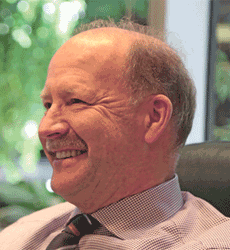
“The European spa towns were the original tourism destinations,” explains Paul Simons, retired secretary general of the Great Spa Towns of Europe (GSTE). “After [the railroads] connected capital cities and the great industrial areas, they didn’t go to the seaside – they went to spa towns. Spa towns were the prototype of what are now resorts in the modern tourism business.”
Europe’s royalty gathered in the towns and artists, writers and composers – including Mozart and Beethoven – sought patronage as well as peace and quiet while ‘taking the cure’ and producing new work. By the 19th century, more than 600 spa towns existed across Europe. Today, over 400 of them remain, many of which still have a strong tradition of wellbeing and culture.
A cultural route In 2009, a group of six historic thermal towns came together to create an organisation to celebrate their unique offering. The European Historic Thermal Towns Association (EHTTA), which today includes 50 member spa towns across 18 countries, is a political representation of its member towns, lobbying on their behalf and connecting them to other European institutions. Its mission is to enhance, promote and protect thermal tourism and thermal heritage in Europe.
On top of this, EHTTA also serves as, and manages, one of 48 Cultural Routes created by the Council of Europe. These routes encourage visitors to take “a journey through space and time” to understand Europe’s shared and living heritage and provide marketing and communication to consumers.
“The association is the backbone – the organisational and institutional frame,” explains Simone Zagrodnik, executive director of EHTTA. “But the Cultural Route – this is where you can really play up the cultural tourism and health tourism aspects.”
Towns or municipalities pay a membership fee to be part of EHTTA and there’s also funding from sponsorship and other projects. In addition to sharing knowledge, expertise and best practices, members benefit from marketing efforts as well as press trips and travel agent familiarisation excursions (see p50). This is something many of the smaller spa towns could never accomplish on their own.
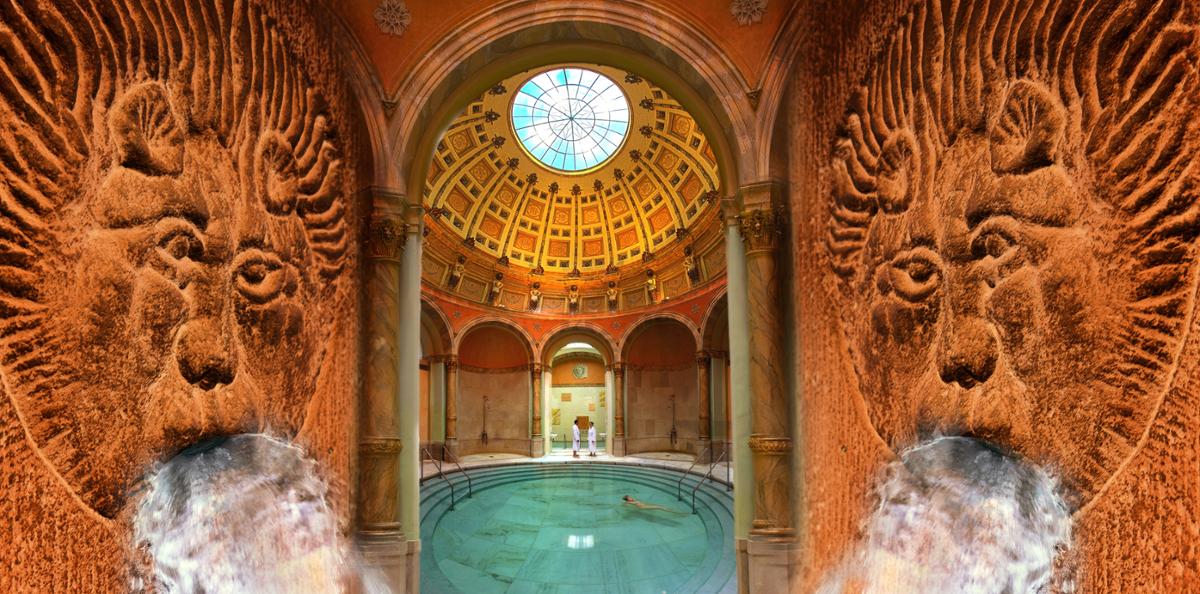
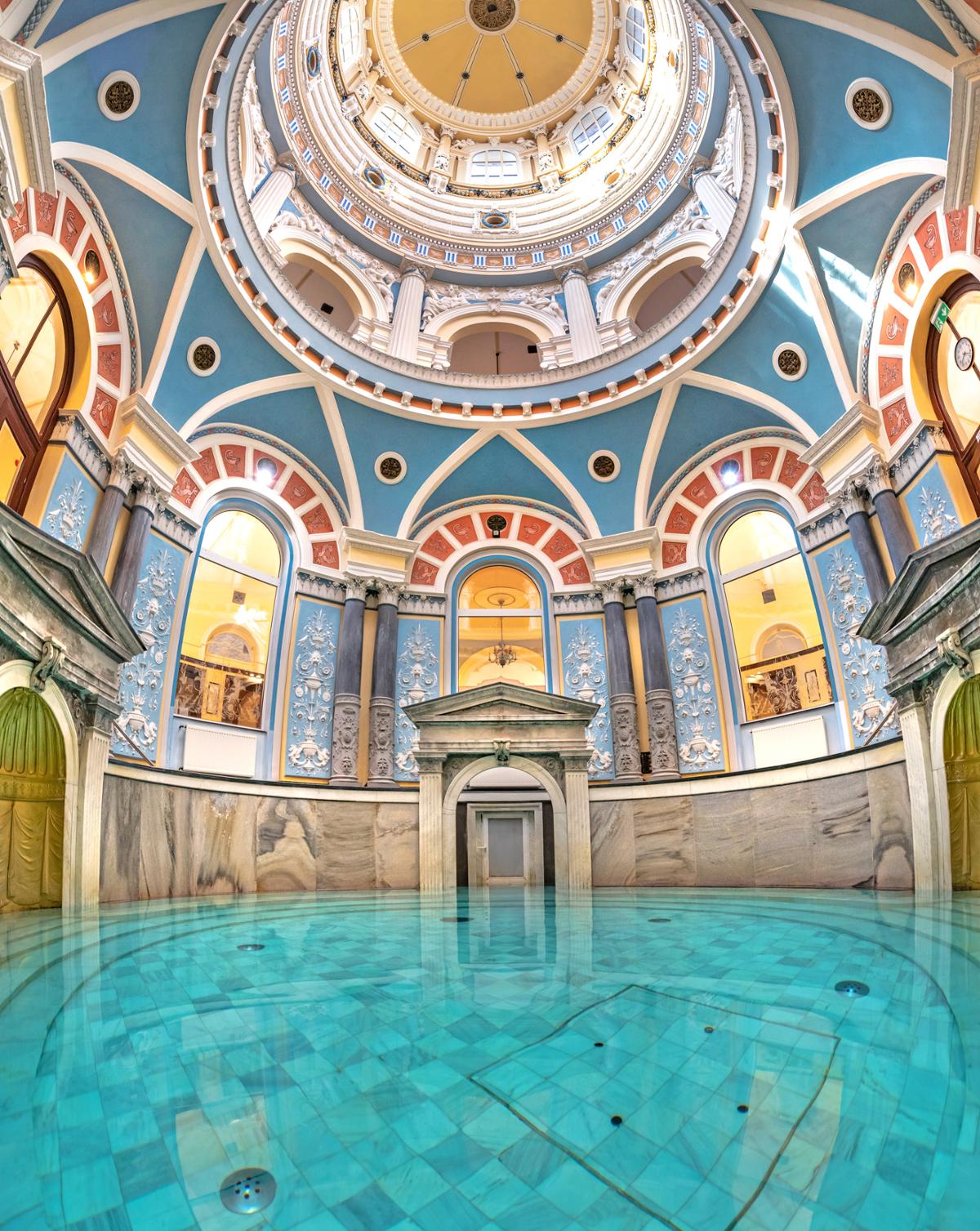
Making spa towns great again Then in 2021, GSTE, which represents Europe’s most iconic spa towns, gained World Heritage status from UNESCO following a 10-year process and 1,200 pages of documentation. The 11 famous thermal locales in seven countries (see p53) are a ‘serial transnational’ World Heritage Site which “deserve global recognition as a phenomenon which helped to shape the Europe we know today”.
Chiara Ronchini, the new secretary general of GSTE, says: “Together, these 11 locations represent excellence in terms of spa towns with a living tradition. Individually they were picked because they all showcase outstanding examples of spa architecture, infrastructure and urban form. There was a really long process of selection – we started with over 40, then narrowed it down to 16 and finally to 11 – so these are the top, top, top. They have to be representative of excellence.”
Zagrodnik explains further: “If someone wants to experience the phenomenon of a thermal town or a spa town, the first in line is GSTE because they are all pearls – the crème de la crème. But if someone wants to experience more, the Cultural Route has a broader range in terms of small villages and thermal regions.”
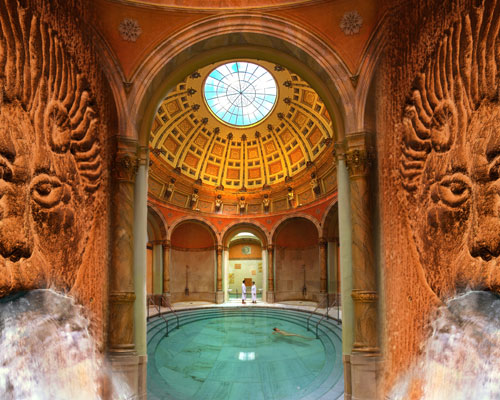
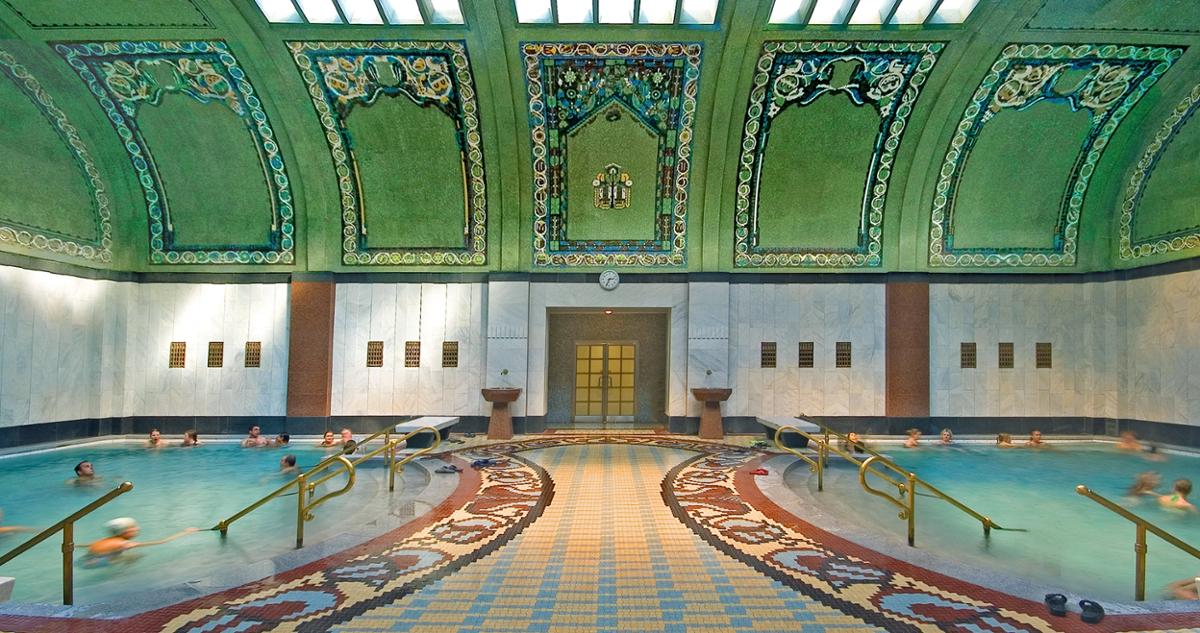
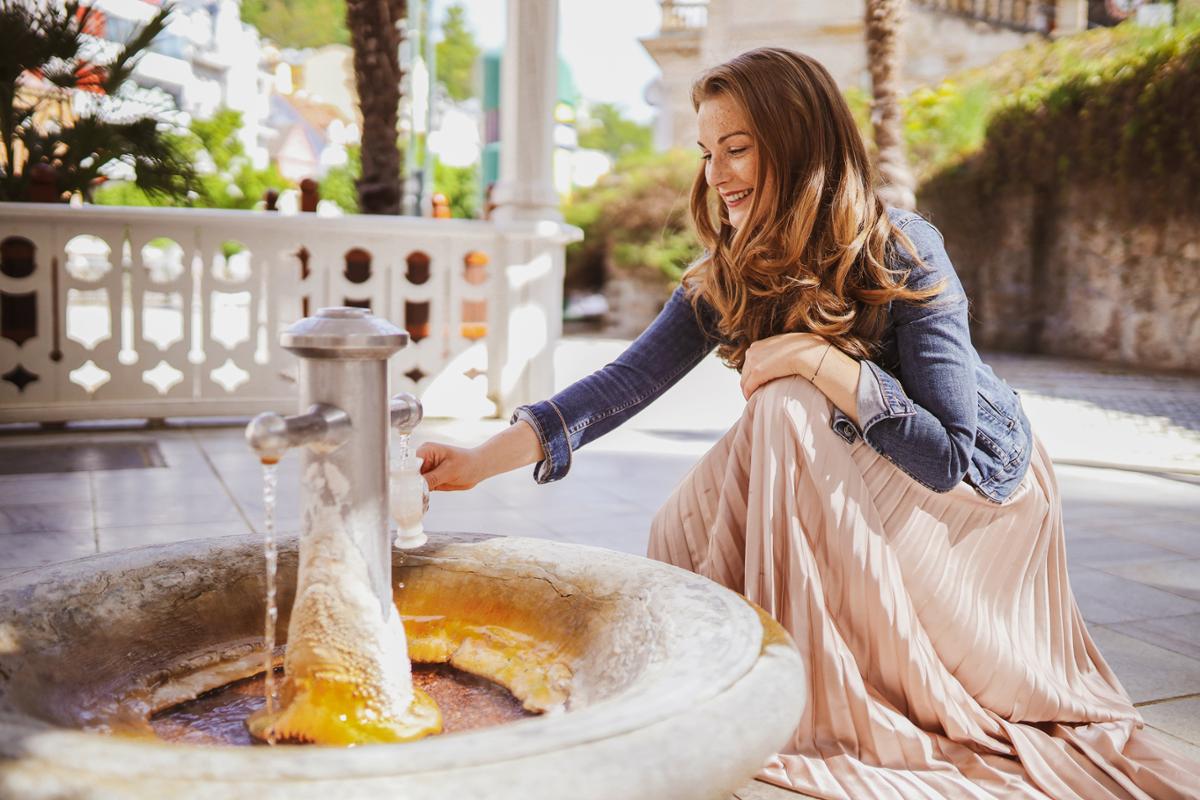
Each GSTE location has multiple features in common that unite them. From the springs themselves and surrounding architecture to the parks and gardens and leisure institutions – such as opera halls – to some of the oldest sports facilities in the world. But many of the spa towns in the EHTTA also share some, if not all, of those attributes.
Being a serial transnational World Heritage Site means that all 11 GSTE work together as one while retaining their individual identities. The management board then brings additional support, including cultural programmes, conservation, regeneration, investment and education in each spa town. Being a part of a World Heritage Site also brings responsibilities in terms of protecting each spa town’s features and keeping it safe for future generations.
“It’s important to stress that these are towns and municipalities – not individual sites,” says Zagrodnik. “That is the challenge for both organisations. We represent towns, municipalities, destinations, not a single Roman bath or historic building.”
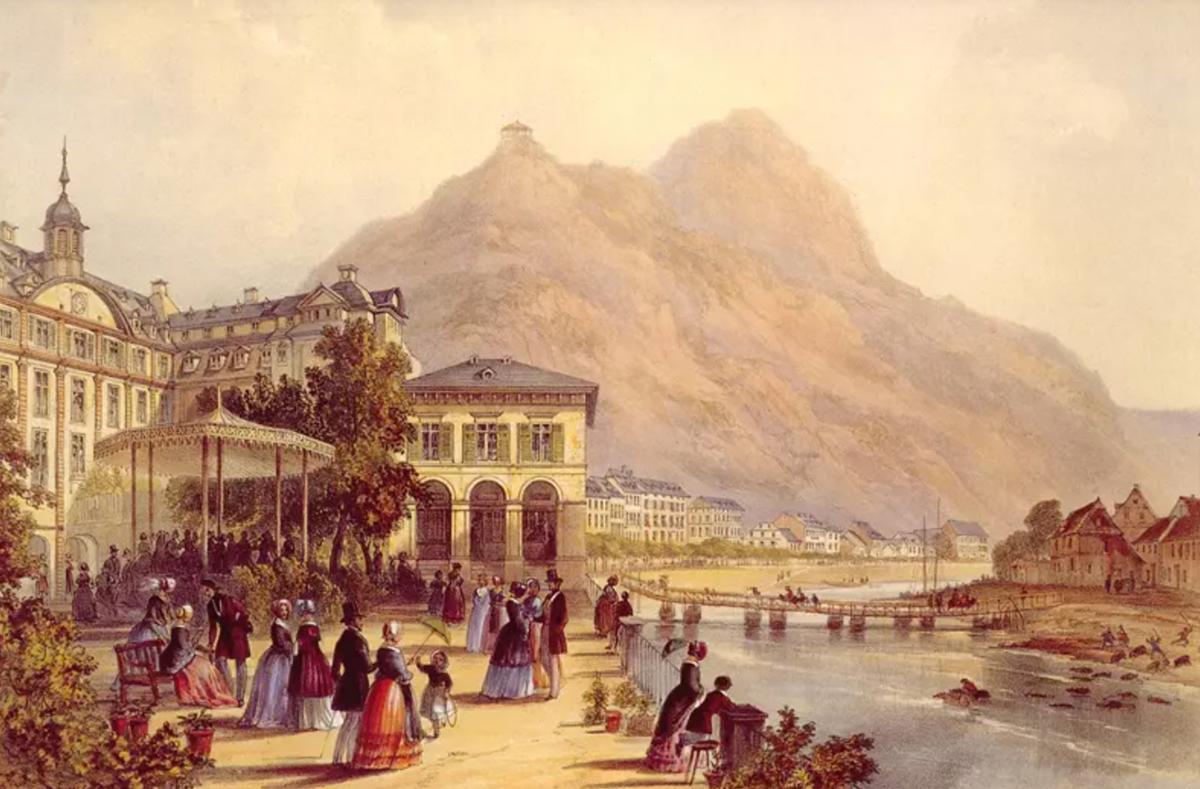
Wellbeing landscape The landscape that surrounds spa towns is incredibly important to the overall sense of wellbeing, with most incorporating a planned promenade to walk along – and to see and be seen. This was a vital part of a spa town’s appeal in its heyday – a sort of 18th-century social media, where you might spot a queen or a prince or a musician rubbing elbows with members of regular society.
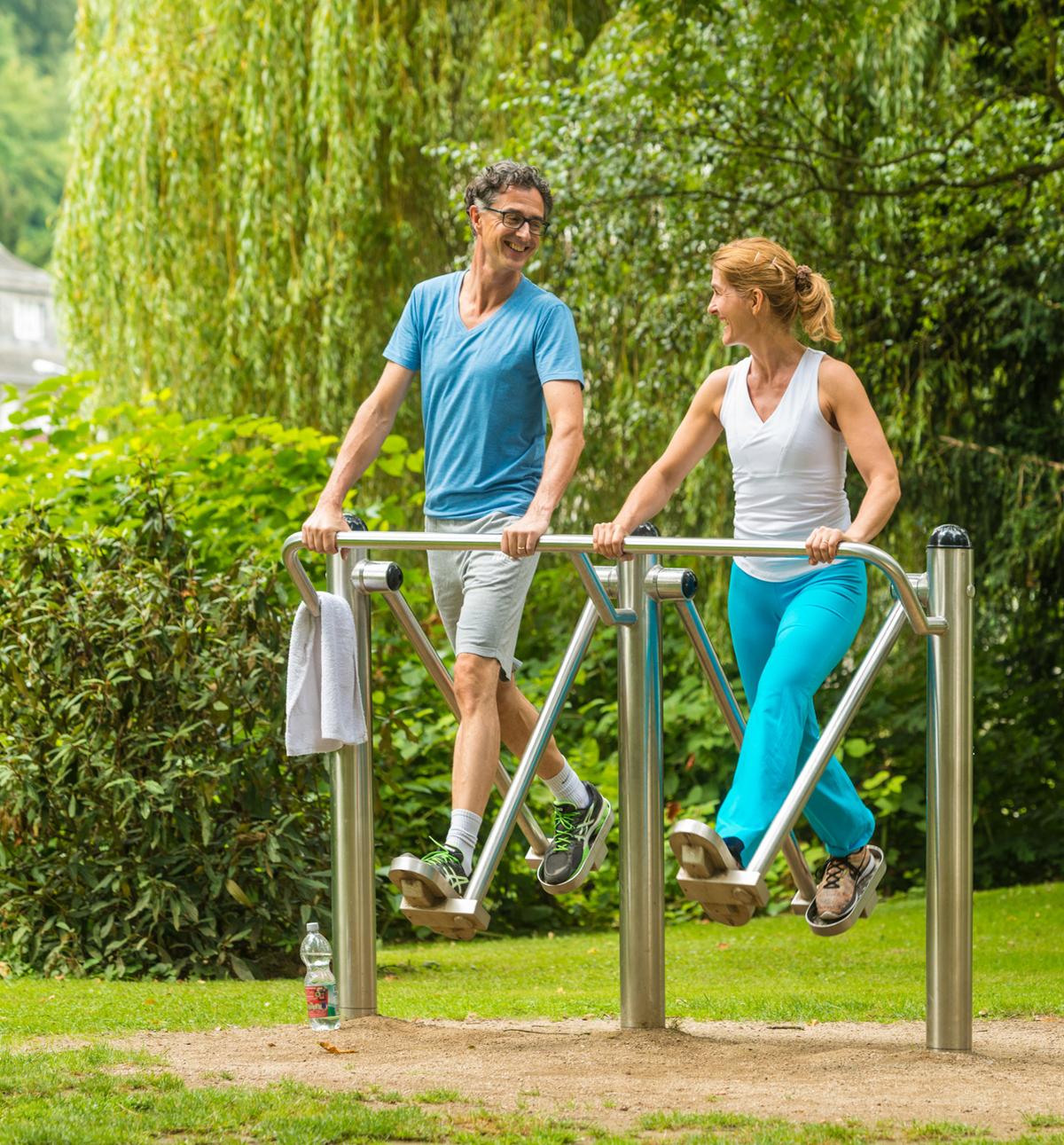
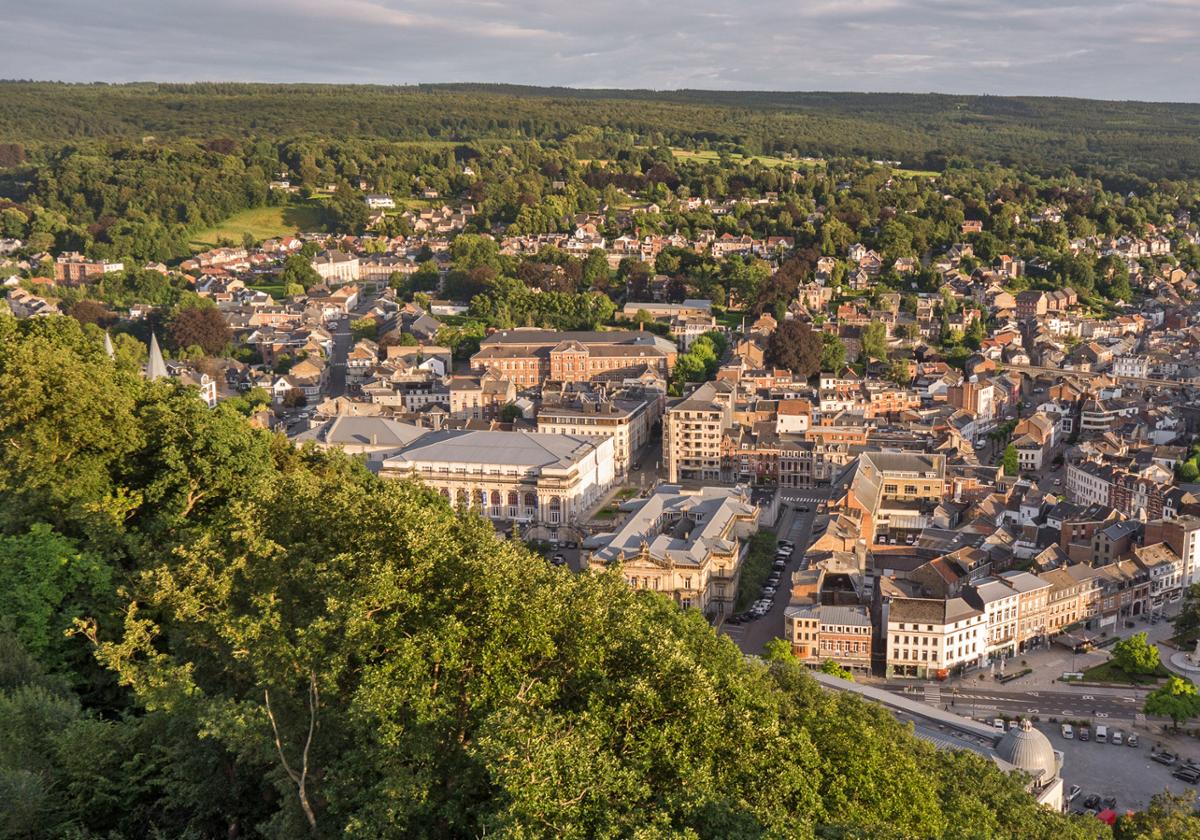
The spa parks and gardens provide essential green space within the towns, but surrounding forests and landscapes with trails for exercise have also been an important part of the wider cure associated with the waters as well. Many towns took advantage of picturesque views, with funicular railways transporting visitors to higher-up vistas.
Local restaurants traditionally served healthy food and in many areas, the thermal water was (and is) part of the cuisine. In Caldes de Montbui in Spain, for instance, the Sanmartí company has been making pasta with thermal water since 1700, local craft beer is brewed with thermal water and in the summer months, gazpacho is made from local tomatoes (irrigated with cooled thermal water) and thermal water.
“All spa towns offer a mix of wellness, culture, relaxation and outdoor activities,” says Ronchini. “We want to make sure that that diversification of offer is truly sustainable through the promotion of locally sourced produce, walking and cycling routes and the sustainable use and re-use of water.”
Since COVID-19, she’s noticed a particular growing interest in slower, greener tourism and in people seeking quality rather than quantity. “Spa towns are the perfect destination for this, having been conceived as a whole with the surrounding therapeutic landscape,” she says. “This really forms part of the experience, with the spa treatments coupled with walks or cycles in the forest, panoramic views and natural springs in the wild.”
Member benefits The mayors of the 11 GSTE pay an annual membership fee based on each town’s population, which ranges from 5,500 people to 88,500. Benefits of having World Heritage Site recognition can include new investment in infrastructure, transportation and visitor facilities, but disadvantages can include over-crowding and stress on local communities.
“The objectives of the Council of Europe [representing EHTTA as a Cultural Route] and UNESCO [where GSTE is a World Heritage Site] are really quite different,” says Simons. “UNESCO ultimately focuses on protecting a unique global heritage. Tourism is not one of its objectives.”
Ronchini explains that at their pinnacle the GSTE generated incredible cultural and artistic initiatives – and they still do today. “We’ve got festivals, music, art, literature and all that is related to medicine, balneology and other spa-related disciplines,” she says. “There’s a vibrant, dynamic living element that you can only have in an urban setting.”
Simons says that some GSTE members don’t want more tourists – they have enough already. Their goal, instead, is to encourage higher spending and longer stays. By contrast, the smaller towns in EHTTA want to use the Cultural Route to entice more visitors.
“We have to spread our influence and help the lesser-known places benefit from the bigger places,” explains Simons. “GSTE can use its influence to diversify the impact from places that are possibly already experiencing over-tourism and help some of the less popular towns. So there’s a great synergy there to work together.”
As for future plans, GSTE’s Ronchini wants to focus on responsible tourism and climate action, while Zagrodnik wants to expand EHTTA’s membership, especially in eastern and south-eastern Europe.
Zagrodnik concludes: “Europe’s spa towns are not known with the depth that they should be. I want to create more attention and awareness and make a lot of noise on an international level. There’s so much potential for us to share what we are.”
Spa towns by rail
Member benefits of EHTTA include press and familiarisation trips. Most recently, the association collaborated with Eurail to take select VIPs – including Spa Business’ Jane Kitchen – on a tour of some of Europe’s best and most famous spa towns.
They travelled via train – the wellness tourist’s transport of choice back in the day – to Spa in Belgium, Bad Ems in Germany, Baden bei Wien in Austria and Budapest in Hungary. The trip also marked the 50th anniversary of the iconic Interrail Pass.
The Great
Spa Towns of Europe
• Baden bei Wien, AUSTRIA
• Spa, BELGIUM
• Františkovy Lázně, CZECH REPUBLIC
• Karlovy Vary, CZECH REPUBLIC
• Mariánské Lázně, CZECH REPUBLIC
• Vichy, FRANCE
• Bad Ems, GERMANY
• Bad Kissingen, GERMANY
• Baden-Baden, GERMANY
• Montecatini Terme, ITALY
• Bath, UK
photo: Santiago Arribas Peña
"We started with 40 possible great spa towns and narrowed them down to 11 – so these are the top, top, top" – GSTE’s Chiara Ronchin
photo: EHTTA
“The association is the backbone – the organisational and institutional frame – but the Cultural Route, this is where you can really play up the cultural tourism and health tourism aspects” -EHTTA’s Simone Zagrodnik
Read more from this issue of Attractions Management magazine
View contents of Attractions Management 2023 issue 4
Sponsored: Highest French distinction for RKF's CEO
After receiving the highest civilian award for services to the French nation, Riadh Bouaziz, CEO of RKF Luxury Linen, reflects on his company’s many achievements and considers what lies ahead
Association focus: Thermal Heritage
Jane Kitchen finds out how two key associations – the European Historic Thermal Towns Association and the Great Spa Towns of Europe – are protecting and promoting the unique cultural relevances of Europe’s spa towns
Interview: Paul Simons
As he retires from the Great Spa Towns of Europe, the industry leader reflects on his long and esteemed career
Sponsored: New ways with water
Working globally with architects and interior designers allows Myrtha Wellness to embrace the latest trends in the international hospitality sector, as director Stefano Cattaneo explains
Sponsored: Cutting edge
Ara Patterson from Equinox Hotels talks about a partnership with
Gharieni that’s delivering ROI and innovative treatments for guests
Interview: Niamh O'Connell
What does Jumeirah’s first vice president of wellbeing have planned for the Middle East-based hospitality group?
Sponsored: Lasse Eriksen on contrast therapy
Contrast therapy is gaining attention for its healing effects. We ask aufguss and sauna expert Lasse Eriksen to share his views on the perfect experience
Nature spas: Tree of life
Lisa Starr discovers two retreats in Austria and Italy which base their wellbeing concepts on forests
Sponsored: Spirit of Excellence
Rupert Schmid and Pierre-Louis Delapalme, owners of Biologique Recherche, discuss the global rollout of its ‘Ambassade’ flagship spas
Sponsored: Outstanding performance
Bicester Hotel & Spa is working with Matrix Fitness to enable wellness guests to train like athletes with a unique offering
The unique cultural relevance of European spa towns is being protected,
celebrated and promoted through two organisations: the European
Historic Thermal Towns Association and the Great Spa Towns of
Europe. Jane Kitchen talks to the people heading up both associations
Europe has an incredibly rich and deep history when it comes to spas, with much of it dating back more than 2,000 years. The Romans built cities around natural thermal springs which now sit at the epicentre of countries such as England, Germany, Greece, Hungary, Portugal, France, Serbia and Bulgaria.
By the 10th century, many European spas had been taken over by monasteries, which held spiritual beliefs around the healing qualities of water. But in the 18th and 19th centuries, a new kind of spa town was emerging. These locations combined therapeutic and natural landscapes, high culture and fashionable resorts, casinos and sports halls. And the railways brought the people there.
“The European spa towns were the original tourism destinations,” explains Paul Simons, retired secretary general of the Great Spa Towns of Europe (GSTE). “After [the railroads] connected capital cities and the great industrial areas, they didn’t go to the seaside – they went to spa towns. Spa towns were the prototype of what are now resorts in the modern tourism business.”
Europe’s royalty gathered in the towns and artists, writers and composers – including Mozart and Beethoven – sought patronage as well as peace and quiet while ‘taking the cure’ and producing new work. By the 19th century, more than 600 spa towns existed across Europe. Today, over 400 of them remain, many of which still have a strong tradition of wellbeing and culture.
A cultural route In 2009, a group of six historic thermal towns came together to create an organisation to celebrate their unique offering. The European Historic Thermal Towns Association (EHTTA), which today includes 50 member spa towns across 18 countries, is a political representation of its member towns, lobbying on their behalf and connecting them to other European institutions. Its mission is to enhance, promote and protect thermal tourism and thermal heritage in Europe.
On top of this, EHTTA also serves as, and manages, one of 48 Cultural Routes created by the Council of Europe. These routes encourage visitors to take “a journey through space and time” to understand Europe’s shared and living heritage and provide marketing and communication to consumers.
“The association is the backbone – the organisational and institutional frame,” explains Simone Zagrodnik, executive director of EHTTA. “But the Cultural Route – this is where you can really play up the cultural tourism and health tourism aspects.”
Towns or municipalities pay a membership fee to be part of EHTTA and there’s also funding from sponsorship and other projects. In addition to sharing knowledge, expertise and best practices, members benefit from marketing efforts as well as press trips and travel agent familiarisation excursions (see p50). This is something many of the smaller spa towns could never accomplish on their own.
Making spa towns great again Then in 2021, GSTE, which represents Europe’s most iconic spa towns, gained World Heritage status from UNESCO following a 10-year process and 1,200 pages of documentation. The 11 famous thermal locales in seven countries (see p53) are a ‘serial transnational’ World Heritage Site which “deserve global recognition as a phenomenon which helped to shape the Europe we know today”.
Chiara Ronchini, the new secretary general of GSTE, says: “Together, these 11 locations represent excellence in terms of spa towns with a living tradition. Individually they were picked because they all showcase outstanding examples of spa architecture, infrastructure and urban form. There was a really long process of selection – we started with over 40, then narrowed it down to 16 and finally to 11 – so these are the top, top, top. They have to be representative of excellence.”
Zagrodnik explains further: “If someone wants to experience the phenomenon of a thermal town or a spa town, the first in line is GSTE because they are all pearls – the crème de la crème. But if someone wants to experience more, the Cultural Route has a broader range in terms of small villages and thermal regions.”
Each GSTE location has multiple features in common that unite them. From the springs themselves and surrounding architecture to the parks and gardens and leisure institutions – such as opera halls – to some of the oldest sports facilities in the world. But many of the spa towns in the EHTTA also share some, if not all, of those attributes.
Being a serial transnational World Heritage Site means that all 11 GSTE work together as one while retaining their individual identities. The management board then brings additional support, including cultural programmes, conservation, regeneration, investment and education in each spa town. Being a part of a World Heritage Site also brings responsibilities in terms of protecting each spa town’s features and keeping it safe for future generations.
“It’s important to stress that these are towns and municipalities – not individual sites,” says Zagrodnik. “That is the challenge for both organisations. We represent towns, municipalities, destinations, not a single Roman bath or historic building.”
Wellbeing landscape The landscape that surrounds spa towns is incredibly important to the overall sense of wellbeing, with most incorporating a planned promenade to walk along – and to see and be seen. This was a vital part of a spa town’s appeal in its heyday – a sort of 18th-century social media, where you might spot a queen or a prince or a musician rubbing elbows with members of regular society.
The spa parks and gardens provide essential green space within the towns, but surrounding forests and landscapes with trails for exercise have also been an important part of the wider cure associated with the waters as well. Many towns took advantage of picturesque views, with funicular railways transporting visitors to higher-up vistas.
Local restaurants traditionally served healthy food and in many areas, the thermal water was (and is) part of the cuisine. In Caldes de Montbui in Spain, for instance, the Sanmartí company has been making pasta with thermal water since 1700, local craft beer is brewed with thermal water and in the summer months, gazpacho is made from local tomatoes (irrigated with cooled thermal water) and thermal water.
“All spa towns offer a mix of wellness, culture, relaxation and outdoor activities,” says Ronchini. “We want to make sure that that diversification of offer is truly sustainable through the promotion of locally sourced produce, walking and cycling routes and the sustainable use and re-use of water.”
Since COVID-19, she’s noticed a particular growing interest in slower, greener tourism and in people seeking quality rather than quantity. “Spa towns are the perfect destination for this, having been conceived as a whole with the surrounding therapeutic landscape,” she says. “This really forms part of the experience, with the spa treatments coupled with walks or cycles in the forest, panoramic views and natural springs in the wild.”
Member benefits The mayors of the 11 GSTE pay an annual membership fee based on each town’s population, which ranges from 5,500 people to 88,500. Benefits of having World Heritage Site recognition can include new investment in infrastructure, transportation and visitor facilities, but disadvantages can include over-crowding and stress on local communities.
“The objectives of the Council of Europe [representing EHTTA as a Cultural Route] and UNESCO [where GSTE is a World Heritage Site] are really quite different,” says Simons. “UNESCO ultimately focuses on protecting a unique global heritage. Tourism is not one of its objectives.”
Ronchini explains that at their pinnacle the GSTE generated incredible cultural and artistic initiatives – and they still do today. “We’ve got festivals, music, art, literature and all that is related to medicine, balneology and other spa-related disciplines,” she says. “There’s a vibrant, dynamic living element that you can only have in an urban setting.”
Simons says that some GSTE members don’t want more tourists – they have enough already. Their goal, instead, is to encourage higher spending and longer stays. By contrast, the smaller towns in EHTTA want to use the Cultural Route to entice more visitors.
“We have to spread our influence and help the lesser-known places benefit from the bigger places,” explains Simons. “GSTE can use its influence to diversify the impact from places that are possibly already experiencing over-tourism and help some of the less popular towns. So there’s a great synergy there to work together.”
As for future plans, GSTE’s Ronchini wants to focus on responsible tourism and climate action, while Zagrodnik wants to expand EHTTA’s membership, especially in eastern and south-eastern Europe.
Zagrodnik concludes: “Europe’s spa towns are not known with the depth that they should be. I want to create more attention and awareness and make a lot of noise on an international level. There’s so much potential for us to share what we are.”
Spa towns by rail
Member benefits of EHTTA include press and familiarisation trips. Most recently, the association collaborated with Eurail to take select VIPs – including Spa Business’ Jane Kitchen – on a tour of some of Europe’s best and most famous spa towns.
They travelled via train – the wellness tourist’s transport of choice back in the day – to Spa in Belgium, Bad Ems in Germany, Baden bei Wien in Austria and Budapest in Hungary. The trip also marked the 50th anniversary of the iconic Interrail Pass.
The Great
Spa Towns of Europe
• Baden bei Wien, AUSTRIA
• Spa, BELGIUM
• Františkovy Lázně, CZECH REPUBLIC
• Karlovy Vary, CZECH REPUBLIC
• Mariánské Lázně, CZECH REPUBLIC
• Vichy, FRANCE
• Bad Ems, GERMANY
• Bad Kissingen, GERMANY
• Baden-Baden, GERMANY
• Montecatini Terme, ITALY
• Bath, UK
photo: Santiago Arribas Peña
"We started with 40 possible great spa towns and narrowed them down to 11 – so these are the top, top, top" – GSTE’s Chiara Ronchin
photo: EHTTA
“The association is the backbone – the organisational and institutional frame – but the Cultural Route, this is where you can really play up the cultural tourism and health tourism aspects” -EHTTA’s Simone Zagrodnik
Read more from this issue of Attractions Management magazine
View contents of Attractions Management 2023 issue 4
Sponsored: Highest French distinction for RKF's CEO
After receiving the highest civilian award for services to the French nation, Riadh Bouaziz, CEO of RKF Luxury Linen, reflects on his company’s many achievements and considers what lies ahead
Association focus: Thermal Heritage
Jane Kitchen finds out how two key associations – the European Historic Thermal Towns Association and the Great Spa Towns of Europe – are protecting and promoting the unique cultural relevances of Europe’s spa towns
Interview: Paul Simons
As he retires from the Great Spa Towns of Europe, the industry leader reflects on his long and esteemed career
Sponsored: New ways with water
Working globally with architects and interior designers allows Myrtha Wellness to embrace the latest trends in the international hospitality sector, as director Stefano Cattaneo explains
Sponsored: Cutting edge
Ara Patterson from Equinox Hotels talks about a partnership with
Gharieni that’s delivering ROI and innovative treatments for guests
Interview: Niamh O'Connell
What does Jumeirah’s first vice president of wellbeing have planned for the Middle East-based hospitality group?
Sponsored: Lasse Eriksen on contrast therapy
Contrast therapy is gaining attention for its healing effects. We ask aufguss and sauna expert Lasse Eriksen to share his views on the perfect experience
Nature spas: Tree of life
Lisa Starr discovers two retreats in Austria and Italy which base their wellbeing concepts on forests
Sponsored: Spirit of Excellence
Rupert Schmid and Pierre-Louis Delapalme, owners of Biologique Recherche, discuss the global rollout of its ‘Ambassade’ flagship spas
Sponsored: Outstanding performance
Bicester Hotel & Spa is working with Matrix Fitness to enable wellness guests to train like athletes with a unique offering
A US$50 million (£44.2 million, €51.2 million) transformation of Chicago's historic McCormick
Mansion has created a new destination that combines live magic, immersive theatre, dining and
private membership under one roof.
The Montana Historical Society has officially celebrated the opening of its new Montana
Heritage
Center, a US$107 million (£79 million, €92 million) destination that combines immersive
storytelling with cutting-edge audiovisual technology to bring the sta
San Antonio Zoo has reported a US$283 million economic impact for 2025, following a decade-
long transformation programme that has seen almost US$200 million invested into the Texas
attraction.
Plans for the AU$180 million redevelopment of Reef HQ Aquarium in Townsville, Australia, are
progressing, with the project set to transform the attraction into a global centre for reef
education and conservation.
Abu Dhabi-based investment firm Mubadala Capital has made a binding, fully financed
€1 billion
offer to acquire Pierre and Vacances SA, the European holiday resort operator behind the
continental European Center Parcs business.
Disney has reaffirmed its commitment to investing US$30 billion in its US parks and cruise
business by 2033, using new America250 celebrations to underline the role its attractions play
in supporting jobs, tourism and economic growth.
Expo 2030 Riyadh is being planned as a permanent visitor destination, with organisers
confirming the six-million-square-metre site will become a Global Village after the event closes.
The owner of one of Australia's best-known waterparks has acquired a major competitor,
creating a new attractions business spanning two of the country's largest visitor destinations.
The Toverland theme park in the Netherlands has announced a €98m expansion programme
that will add a resort, new attractions and staff facilities as it pursues plans to become a multi-
day destination.
Hotel de France, located on the British Isle of Jersey, has created a wellness retreat package
that includes a hot yoga session that will take place in Jersey Zoo’s butterfly sanctuary.
+ More news
COMPANY PROFILES
Sally Corporation Our services include: Dark ride design & build; Redevelopment of existing attractions; High-quality [more...]
Simworx Ltd The company was initially established
in 1997. Terry Monkton and Andrew
Roberts are the key stakeh [more...]