Could asking customers to pay only what they can afford for
spa retreats and services be a way to widen access, while still
looking after the bottom line? Kath Hudson investigates
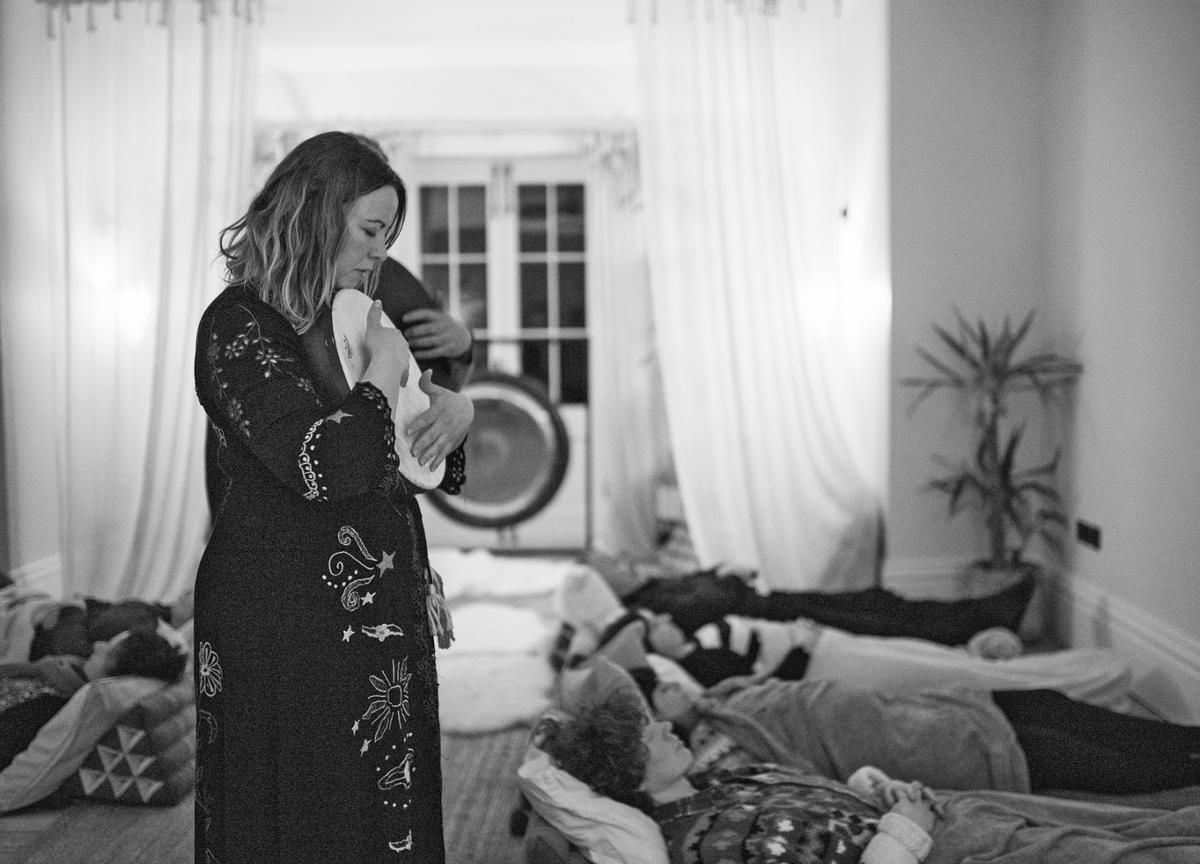
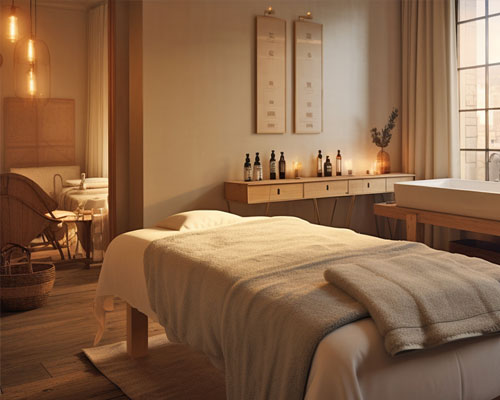
Charlotte Church’s retreat offers places based on what people can afford / photo: Elliot Cooper
Pay what you can and pay it forward are already established models in other sectors. The waste food café movement invites people to pay what they can spare and opens up the eating-out experience to those on less or no income. Some in the arts sector, for example, Battersea Arts Centre in London, offer pay-what-you-can tickets for performances and encourage those with more money to pay above the standard ticket price. This is a move which has had a great impact on allowing different demographics to access its shows, it reports.
The wellness sector is a great fit for egalitarian principles and spas are starting to take note. The Dreaming, a Welsh retreat opened by celebrity singer Charlotte Church, is offering one place on each package on a pay-what-you-can basis to make it more inclusive.
Could pay-what-you-can work as a way of broadening access to the wellness industry? And would it be able to do this while still turning a profit? What else might be a feasible way for the industry to be more inclusive – especially given the cost of living crisis – to those who can’t currently afford to pay full price? We take a closer look…
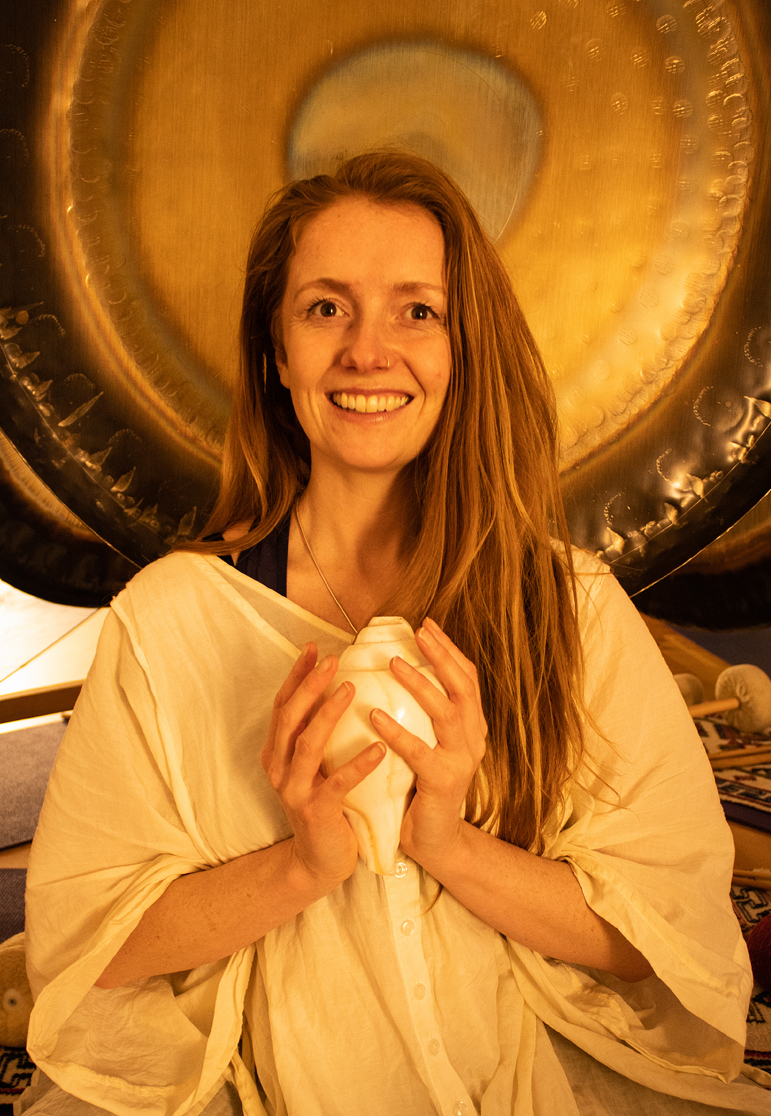
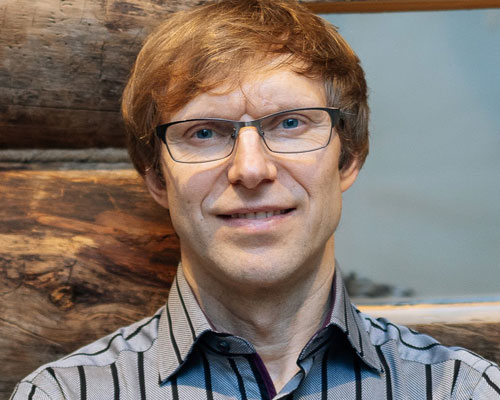
Ali Gunning founder
Resonant Being
photo: Ali Gunning
I’d like all types of wellness to be open to everyone, regardless of their financial and life circumstances. I run a variety of sound healing events with different pricing, which means there’s usually an opportunity which is accessible to everyone.
Concessions are planned into my offerings, so I don’t regard them as a financial hit. On top of this, two spaces are available for people who cannot afford any financial contribution and I also offer the option of exchanging a place for helping me pack up. I’ve noticed other practitioners invite participants to pay extra, if they can, to support people who can’t pay full price.
I don’t ask for any proof of what people can afford, they just choose the option which is right and applicable for them. Some people might have had a hard month and attend for free, but pay full price the following month. For me, trust and adaptability are central to a wellbeing business.
All businesses have different overheads and responsibilities, but I feel generosity is a spontaneous quality and it shows you have confidence in your offering. Being of service is part of a spiritual path which doesn’t have to be separate from running a business. That doesn’t have to mean doing everything for free, but it may mean thinking about working in ways which benefit a wider range of people.
Going forward, I think we will see more creativity in pricing options as interest in self-care grows.
Generosity is a spontaneous
quality which shows you have
confidence in your offering
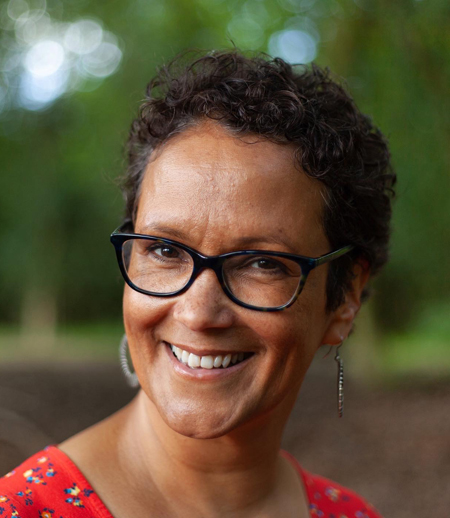
Lauren Moloney
CEO and founder, The Spa Collaborative
photo: The Spa Collaborative
It feels possible spas could experiment with a pay-what-you-can-afford approach, although if it’s adopted it would likely be challenging to operationalise. Any spa interested in initiating this type of offer should first establish its key objective. If any part of the objective is to generate PR citing charity or altruism it could be seen as cause-related marketing and ultimately devalue and derail any real benefit.
A more feasible, transparent and realistic option to broaden access to wellness would be to implement strategic dynamic pricing or clear charitable initiatives. This could include mid-week rates or morning rates, which offer a base entry-level option for guests during times when the spa has availability. Another option could be organising mobile spa excursions to care homes, hospitals, or youth centres.
To truly expand the benefit of spa experiences to those who may not be able to afford the listed price, it’s important to clearly define the target group and then research and understand this demographic and how your business can best address their needs. It’s not a spa’s role to determine what individuals can or cannot afford, nor should we judge their wealth or worthiness. Instead, a simple, targeted and transparent approach is the best way to deliver this type of endeavour.
Dynamic pricing is a more
feasible, transparent and realistic
option than pay-what-you-can
Donna Lancaster
Founder, Deepening into Life
photo: Chris Brock
Ioffer pay-what-you-can slots at my personal development and healing workshops. The amount of these varies – if a workshop doesn’t sell out, I offer the remaining spaces as free or pay-what-you-can. I also hold regular pay-what-you-can events, like Circle of Grace, which are specifically for people who can’t afford to access my other workshops but want to do inner work. On average I’d say there are five to 10 people who come on free or discounted places at my one-day workshops.
Coming from a very poor background myself, I know only too well how hard it can be to access health and wellbeing resources. In my view, retreats are not a luxury but a necessity for physical, emotional, intellectual and spiritual wellbeing. Frankly, those who struggle the most financially – like many single mums – deserve a retreat and I don’t like the idea of them being limited to wealthy, privileged people.
I find that most people who can pay a little more do and this helps mop up some of the financial losses. But I’m also okay with working for free at events sometimes so people can still access my services. If someone can’t afford to pay anything at all, they can help in other ways, like setting out chairs, making tea or even bringing cakes. It’s important they feel like they’re contributing in some way as lack of money comes with a lot of shame for many.
I don’t ask for proof that people can’t pay much, I trust them and I’ve never really experienced people taking advantage. I simply make it clear in my promotions/website that places will be made available for free or pay-what-you-can, for those who need it. I also make it clear that these slots are not for people who have the money but are simply not willing to invest in themselves.
It feels good and right, kind and loving to offer pay-what-you-can and the world needs more of this! There are more important things than making a profit. Often the benefits are just as much for those who offer the pay-what-you-can places, as for those who receive them. It’s a win-win for the heart and soul.
Coming from a very poor background,
I know how hard it can be to
access wellbeing resources
Roger Allen
CEO, RLA Global
photo: RLA Global
Successful brands want to be seen as making a positive contribution to society and as a gesture and intention, the pay-what-you-can option is of tremendous value. However, how operators sustain it is specific to the brand, the offering and the market segmentation.
It also needs to be taken into consideration that flexible pricing of services requires buy-in from multiple stakeholders, including front-line staff who need to administer it. In addition, brands have to be conscious of how to offer it so that consumers who can afford the experience do not take advantage of the initiative.
In some industries, flexible pricing is easier to control and manage. Take Pret A Manger for example, the hugely successful sandwich franchise was able to apply lower product pricing in its shops in neighbourhoods which have a lower income bracket. This is a manageable and controllable solution for discounting and a way of targeting a particular segment with a charitable intention.
With a singular outlet, allowing people to pay what they can afford is open to abuse. But it could work for those who can apply discretion in their pricing, such as people who are self-employed, one-person or small businesses.
In some industries, flexible pricing
is easier to control and manage
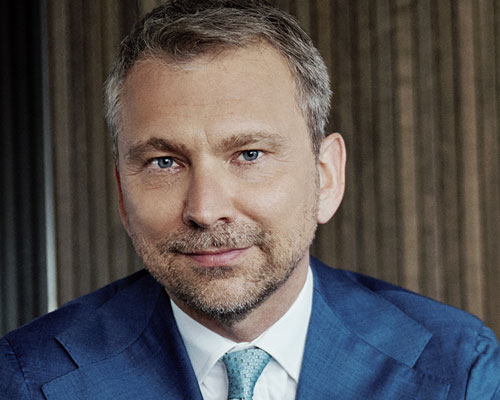
Ingo Schweder
CEO, GOCO Hospitality
photo: GOCO Hospitality
Even when the wellness industry was booming pre-pandemic concerns were being raised about it focusing on wealthy customers, while global inequality increased and the world’s poorest – who are most likely to suffer from sickness, depression and premature death – were unable to access the benefits. And since COVID-19, many have even less disposable income.
Going forward, the importance of balancing health with financial subsistence will become an increasingly mainstream topic of discussion. The wellness industry must acknowledge this narrative and address a growing number of guests with more moderate budgets. This may lead to diversification and a natural shift towards greater democratisation, manifesting in more provision of mid-range wellness offerings and increasing accessibility.
During the pandemic, we opened Glen Ivy Hot Springs up to people on a pay-what-you-can-afford basis, as we wanted to do good and be emotionally close to regulars during a time of global stress. Some people were outright cheap and took full advantage, only paying 10 per cent of the real costs, while others were more mindful. However, we’ve experienced a substantial interest in the growth of a more democratised wellness model and have created, and are developing, more offers aimed at the wide middle class. I firmly believe the greater population needs to partake in more, often rather simple, wellness regimes and be exposed to the many offerings available to get healthier, feel better and function more consciously.
Some people took full advantage, only
paying 10 per cent of the real costs
Glen Ivy Hot Springs offered a pay-what-you-can package in the pandemic / photo: Glen Ivy
Read more from this issue of Attractions Management magazine
View contents of Attractions Management 2023 issue 4
Sponsored: Highest French distinction for RKF's CEO
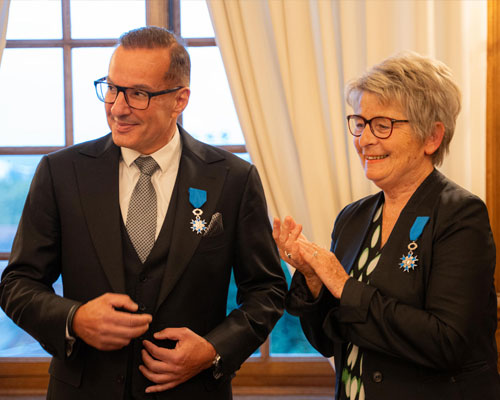
After receiving the highest civilian award for services to the French nation, Riadh Bouaziz, CEO of RKF Luxury Linen, reflects on his company’s many achievements and considers what lies ahead
Association focus: Thermal Heritage
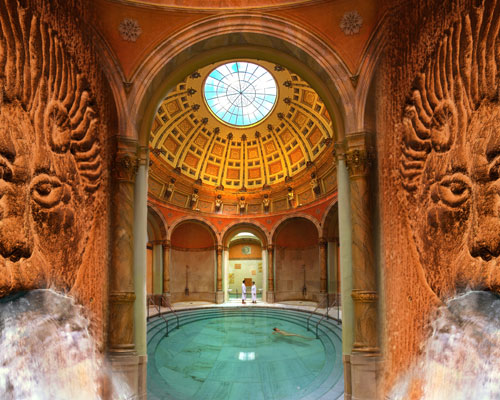
Jane Kitchen finds out how two key associations – the European Historic Thermal Towns Association and the Great Spa Towns of Europe – are protecting and promoting the unique cultural relevances of Europe’s spa towns
Interview: Paul Simons
As he retires from the Great Spa Towns of Europe, the industry leader reflects on his long and esteemed career
Sponsored: New ways with water
Working globally with architects and interior designers allows Myrtha Wellness to embrace the latest trends in the international hospitality sector, as director Stefano Cattaneo explains
Sponsored: Cutting edge
Ara Patterson from Equinox Hotels talks about a partnership with
Gharieni that’s delivering ROI and innovative treatments for guests
Interview: Niamh O'Connell
What does Jumeirah’s first vice president of wellbeing have planned for the Middle East-based hospitality group?
Sponsored: Lasse Eriksen on contrast therapy
Contrast therapy is gaining attention for its healing effects. We ask aufguss and sauna expert Lasse Eriksen to share his views on the perfect experience
Nature spas: Tree of life
Lisa Starr discovers two retreats in Austria and Italy which base their wellbeing concepts on forests
Sponsored: Spirit of Excellence
Rupert Schmid and Pierre-Louis Delapalme, owners of Biologique Recherche, discuss the global rollout of its ‘Ambassade’ flagship spas
Sponsored: Outstanding performance
Bicester Hotel & Spa is working with Matrix Fitness to enable wellness guests to train like athletes with a unique offering
Could asking customers to pay only what they can afford for
spa retreats and services be a way to widen access, while still
looking after the bottom line? Kath Hudson investigates
Charlotte Church’s retreat offers places based on what people can afford / photo: Elliot Cooper
Pay what you can and pay it forward are already established models in other sectors. The waste food café movement invites people to pay what they can spare and opens up the eating-out experience to those on less or no income. Some in the arts sector, for example, Battersea Arts Centre in London, offer pay-what-you-can tickets for performances and encourage those with more money to pay above the standard ticket price. This is a move which has had a great impact on allowing different demographics to access its shows, it reports.
The wellness sector is a great fit for egalitarian principles and spas are starting to take note. The Dreaming, a Welsh retreat opened by celebrity singer Charlotte Church, is offering one place on each package on a pay-what-you-can basis to make it more inclusive.
Could pay-what-you-can work as a way of broadening access to the wellness industry? And would it be able to do this while still turning a profit? What else might be a feasible way for the industry to be more inclusive – especially given the cost of living crisis – to those who can’t currently afford to pay full price? We take a closer look…
Ali Gunning founder
Resonant Being
photo: Ali Gunning
I’d like all types of wellness to be open to everyone, regardless of their financial and life circumstances. I run a variety of sound healing events with different pricing, which means there’s usually an opportunity which is accessible to everyone.
Concessions are planned into my offerings, so I don’t regard them as a financial hit. On top of this, two spaces are available for people who cannot afford any financial contribution and I also offer the option of exchanging a place for helping me pack up. I’ve noticed other practitioners invite participants to pay extra, if they can, to support people who can’t pay full price.
I don’t ask for any proof of what people can afford, they just choose the option which is right and applicable for them. Some people might have had a hard month and attend for free, but pay full price the following month. For me, trust and adaptability are central to a wellbeing business.
All businesses have different overheads and responsibilities, but I feel generosity is a spontaneous quality and it shows you have confidence in your offering. Being of service is part of a spiritual path which doesn’t have to be separate from running a business. That doesn’t have to mean doing everything for free, but it may mean thinking about working in ways which benefit a wider range of people.
Going forward, I think we will see more creativity in pricing options as interest in self-care grows.
Generosity is a spontaneous
quality which shows you have
confidence in your offering
Lauren Moloney
CEO and founder, The Spa Collaborative
photo: The Spa Collaborative
It feels possible spas could experiment with a pay-what-you-can-afford approach, although if it’s adopted it would likely be challenging to operationalise. Any spa interested in initiating this type of offer should first establish its key objective. If any part of the objective is to generate PR citing charity or altruism it could be seen as cause-related marketing and ultimately devalue and derail any real benefit.
A more feasible, transparent and realistic option to broaden access to wellness would be to implement strategic dynamic pricing or clear charitable initiatives. This could include mid-week rates or morning rates, which offer a base entry-level option for guests during times when the spa has availability. Another option could be organising mobile spa excursions to care homes, hospitals, or youth centres.
To truly expand the benefit of spa experiences to those who may not be able to afford the listed price, it’s important to clearly define the target group and then research and understand this demographic and how your business can best address their needs. It’s not a spa’s role to determine what individuals can or cannot afford, nor should we judge their wealth or worthiness. Instead, a simple, targeted and transparent approach is the best way to deliver this type of endeavour.
Dynamic pricing is a more
feasible, transparent and realistic
option than pay-what-you-can
Donna Lancaster
Founder, Deepening into Life
photo: Chris Brock
Ioffer pay-what-you-can slots at my personal development and healing workshops. The amount of these varies – if a workshop doesn’t sell out, I offer the remaining spaces as free or pay-what-you-can. I also hold regular pay-what-you-can events, like Circle of Grace, which are specifically for people who can’t afford to access my other workshops but want to do inner work. On average I’d say there are five to 10 people who come on free or discounted places at my one-day workshops.
Coming from a very poor background myself, I know only too well how hard it can be to access health and wellbeing resources. In my view, retreats are not a luxury but a necessity for physical, emotional, intellectual and spiritual wellbeing. Frankly, those who struggle the most financially – like many single mums – deserve a retreat and I don’t like the idea of them being limited to wealthy, privileged people.
I find that most people who can pay a little more do and this helps mop up some of the financial losses. But I’m also okay with working for free at events sometimes so people can still access my services. If someone can’t afford to pay anything at all, they can help in other ways, like setting out chairs, making tea or even bringing cakes. It’s important they feel like they’re contributing in some way as lack of money comes with a lot of shame for many.
I don’t ask for proof that people can’t pay much, I trust them and I’ve never really experienced people taking advantage. I simply make it clear in my promotions/website that places will be made available for free or pay-what-you-can, for those who need it. I also make it clear that these slots are not for people who have the money but are simply not willing to invest in themselves.
It feels good and right, kind and loving to offer pay-what-you-can and the world needs more of this! There are more important things than making a profit. Often the benefits are just as much for those who offer the pay-what-you-can places, as for those who receive them. It’s a win-win for the heart and soul.
Coming from a very poor background,
I know how hard it can be to
access wellbeing resources
Roger Allen
CEO, RLA Global
photo: RLA Global
Successful brands want to be seen as making a positive contribution to society and as a gesture and intention, the pay-what-you-can option is of tremendous value. However, how operators sustain it is specific to the brand, the offering and the market segmentation.
It also needs to be taken into consideration that flexible pricing of services requires buy-in from multiple stakeholders, including front-line staff who need to administer it. In addition, brands have to be conscious of how to offer it so that consumers who can afford the experience do not take advantage of the initiative.
In some industries, flexible pricing is easier to control and manage. Take Pret A Manger for example, the hugely successful sandwich franchise was able to apply lower product pricing in its shops in neighbourhoods which have a lower income bracket. This is a manageable and controllable solution for discounting and a way of targeting a particular segment with a charitable intention.
With a singular outlet, allowing people to pay what they can afford is open to abuse. But it could work for those who can apply discretion in their pricing, such as people who are self-employed, one-person or small businesses.
In some industries, flexible pricing
is easier to control and manage
Ingo Schweder
CEO, GOCO Hospitality
photo: GOCO Hospitality
Even when the wellness industry was booming pre-pandemic concerns were being raised about it focusing on wealthy customers, while global inequality increased and the world’s poorest – who are most likely to suffer from sickness, depression and premature death – were unable to access the benefits. And since COVID-19, many have even less disposable income.
Going forward, the importance of balancing health with financial subsistence will become an increasingly mainstream topic of discussion. The wellness industry must acknowledge this narrative and address a growing number of guests with more moderate budgets. This may lead to diversification and a natural shift towards greater democratisation, manifesting in more provision of mid-range wellness offerings and increasing accessibility.
During the pandemic, we opened Glen Ivy Hot Springs up to people on a pay-what-you-can-afford basis, as we wanted to do good and be emotionally close to regulars during a time of global stress. Some people were outright cheap and took full advantage, only paying 10 per cent of the real costs, while others were more mindful. However, we’ve experienced a substantial interest in the growth of a more democratised wellness model and have created, and are developing, more offers aimed at the wide middle class. I firmly believe the greater population needs to partake in more, often rather simple, wellness regimes and be exposed to the many offerings available to get healthier, feel better and function more consciously.
Some people took full advantage, only
paying 10 per cent of the real costs
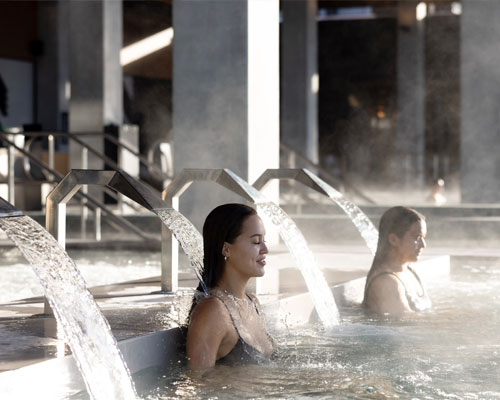
Glen Ivy Hot Springs offered a pay-what-you-can package in the pandemic / photo: Glen Ivy
Read more from this issue of Attractions Management magazine
View contents of Attractions Management 2023 issue 4
Sponsored: Highest French distinction for RKF's CEO
After receiving the highest civilian award for services to the French nation, Riadh Bouaziz, CEO of RKF Luxury Linen, reflects on his company’s many achievements and considers what lies ahead
Association focus: Thermal Heritage
Jane Kitchen finds out how two key associations – the European Historic Thermal Towns Association and the Great Spa Towns of Europe – are protecting and promoting the unique cultural relevances of Europe’s spa towns
Interview: Paul Simons
As he retires from the Great Spa Towns of Europe, the industry leader reflects on his long and esteemed career
Sponsored: New ways with water
Working globally with architects and interior designers allows Myrtha Wellness to embrace the latest trends in the international hospitality sector, as director Stefano Cattaneo explains
Sponsored: Cutting edge
Ara Patterson from Equinox Hotels talks about a partnership with
Gharieni that’s delivering ROI and innovative treatments for guests
Interview: Niamh O'Connell
What does Jumeirah’s first vice president of wellbeing have planned for the Middle East-based hospitality group?
Sponsored: Lasse Eriksen on contrast therapy
Contrast therapy is gaining attention for its healing effects. We ask aufguss and sauna expert Lasse Eriksen to share his views on the perfect experience
Nature spas: Tree of life
Lisa Starr discovers two retreats in Austria and Italy which base their wellbeing concepts on forests
Sponsored: Spirit of Excellence
Rupert Schmid and Pierre-Louis Delapalme, owners of Biologique Recherche, discuss the global rollout of its ‘Ambassade’ flagship spas
Sponsored: Outstanding performance
Bicester Hotel & Spa is working with Matrix Fitness to enable wellness guests to train like athletes with a unique offering
A US$50 million (£44.2 million, €51.2 million) transformation of Chicago's historic McCormick
Mansion has created a new destination that combines live magic, immersive theatre, dining and
private membership under one roof.
The Montana Historical Society has officially celebrated the opening of its new Montana
Heritage
Center, a US$107 million (£79 million, €92 million) destination that combines immersive
storytelling with cutting-edge audiovisual technology to bring the sta
San Antonio Zoo has reported a US$283 million economic impact for 2025, following a decade-
long transformation programme that has seen almost US$200 million invested into the Texas
attraction.
Plans for the AU$180 million redevelopment of Reef HQ Aquarium in Townsville, Australia, are
progressing, with the project set to transform the attraction into a global centre for reef
education and conservation.
Abu Dhabi-based investment firm Mubadala Capital has made a binding, fully financed
€1 billion
offer to acquire Pierre and Vacances SA, the European holiday resort operator behind the
continental European Center Parcs business.
Disney has reaffirmed its commitment to investing US$30 billion in its US parks and cruise
business by 2033, using new America250 celebrations to underline the role its attractions play
in supporting jobs, tourism and economic growth.
Expo 2030 Riyadh is being planned as a permanent visitor destination, with organisers
confirming the six-million-square-metre site will become a Global Village after the event closes.
The owner of one of Australia's best-known waterparks has acquired a major competitor,
creating a new attractions business spanning two of the country's largest visitor destinations.
The Toverland theme park in the Netherlands has announced a €98m expansion programme
that will add a resort, new attractions and staff facilities as it pursues plans to become a multi-
day destination.
Hotel de France, located on the British Isle of Jersey, has created a wellness retreat package
that includes a hot yoga session that will take place in Jersey Zoo’s butterfly sanctuary.
+ More news
COMPANY PROFILES
Holovis Holovis is a privately owned company
established in 2004 by CEO Stuart
Hetherington. [more...]
Clip 'n Climb Clip ‘n Climb currently offers facility owners and
investors more than 40 colourful and unique
Cha [more...]
Painting With Light By combining lighting, video, scenic and architectural elements, sound and special effects we tell s [more...]
DJW David & Lynn Willrich started the Company
over thirty years ago, from the Audio Visual
Department [more...]