Visitors are demanding evermore participatory attractions. In response, museums are evolving from passive experiences to immersive, interactive adventures
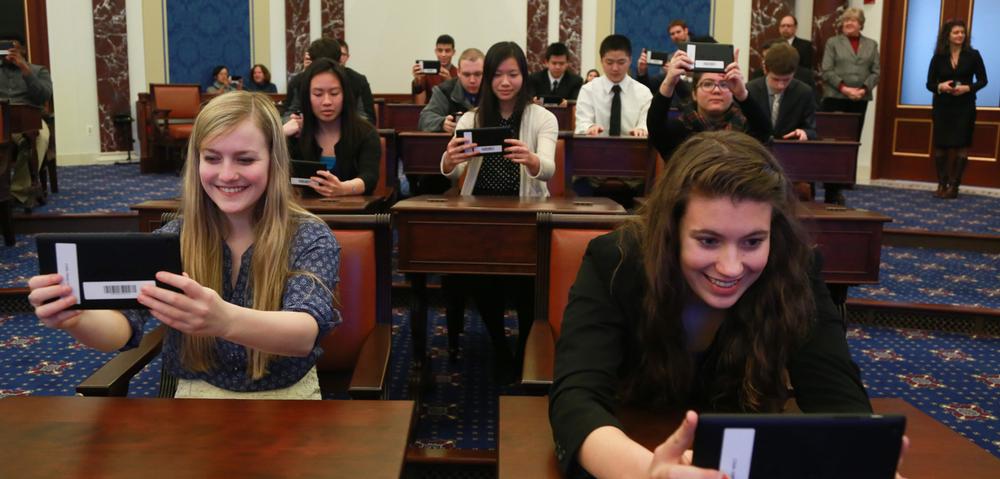
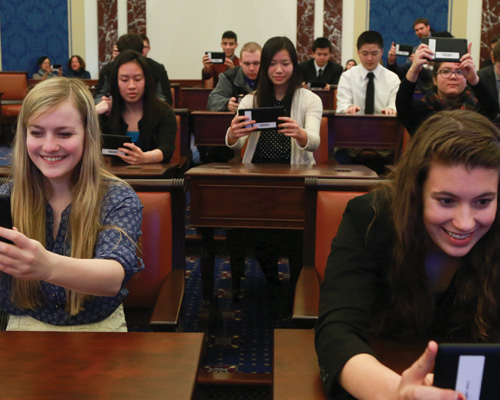
Students roleplay political debates in
a live simulation experience at Edward
M Kennedy Institute for the US Senate / PHOTOS: ESI DESIGN
After debating the pros and cons of new legislation that would restrict immigration to the US, a 17-year-old stands at a podium in front of 99 fellow students to defend her position. Then they cast their votes on the proposed law.
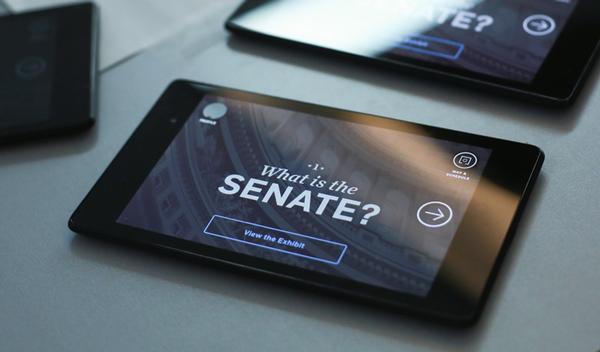
This kind of scene unfolds daily at the Edward M Kennedy Institute for the United States Senate, where visitors don’t just learn about senators, they are senators. One hundred visitors at a time can roleplay a senator for a day in a live-action simulation called the Senate Immersion Module (SIM). It’s a perfect illustration of how museums and institutions are evolving from passive exhibits to immersive, interactive adventures.
The museum world has undergone dramatic shifts in recent years, reflecting larger societal changes in how we interact with one another, driven in part by new technologies. For centuries, curators would gather artefacts and artworks to present in museums with a single-voiced authoritative narrative. Visitors simply walked through the exhibits, learning passively. But now audiences want participation, personal relevance and social interaction, and museums have been reinventing themselves to meet these new expectations.
First-person narratives ESI Design founder Edwin Schlossberg was hired 40 years ago to reimagine the Brooklyn Children’s Museum as a collection of participatory experiences, where kids could discover the relationship between themselves and the natural world.
The number of interactive museum exhibits has increased exponentially since then. Thanks to ever-improving technology and a wave of forward-thinking designers within the attractions industry, museums are now creating more robust content that’s not only participatory, but also tells stories from different perspectives.
An example of such multi-voiced storytelling is Louisiana’s Whitney Plantation, a museum where slavery is the central focus, which lets guests choose from a dozen walking tours presented from the dramatically different perspectives of the plantation’s enslaved people. Similarly, we designed exhibits for The Peopling of America Center at the Ellis Island National Museum of Immigration, which allow visitors to choose from a variety of videos of real immigrants sharing their first-hand accounts of arriving and living in the US, reminding visitors that people come to this country for many different reasons and face many different challenges.
Such first-person narratives offer an added benefit: putting visitors in other people’s shoes sparks empathy, helping them gain an intimate understanding of experiences much different from their own. This is something that more and more museums are making part of their mission.
As they continue to push the boundaries of participation, museums are taking advantage of social media and other digital platforms to invite visitors not only to interact with their exhibits, but also to collaborate on them, contributing their own perspectives to the stories being presented. Whereas participation once amounted only to visitors playing a game or performing an activity according to specific instructions dictated by the institution, visitors can now often contribute to an exhibit’s actual content.
Crowd-sourced content Sometimes visitors are invited to contribute – through an online photo competition, for example – helping to create a genuinely community-driven experience. There are many ways exhibits can invite contribution during or after a visit to better engage the audience and keep the content fresh, giving visitors deeper involvement and a sense of ownership. The SIM at Edward M Kennedy Institute has an open software developer kit (SDK), which allows local schools and colleges to create new topics or modules for the Senate chamber to debate. Another example of this kind of co-created experience is the Museum of Broken Relationships, an entirely crowd-sourced collection of first-person narratives recounting, yes, broken relationships. While anyone can share their story online, the museum also has two physical locations – one in Croatia and the other in Los Angeles, California – where contributors can send material mementos of lost loves, family members, homelands or any other person or group from which they’ve been severed.
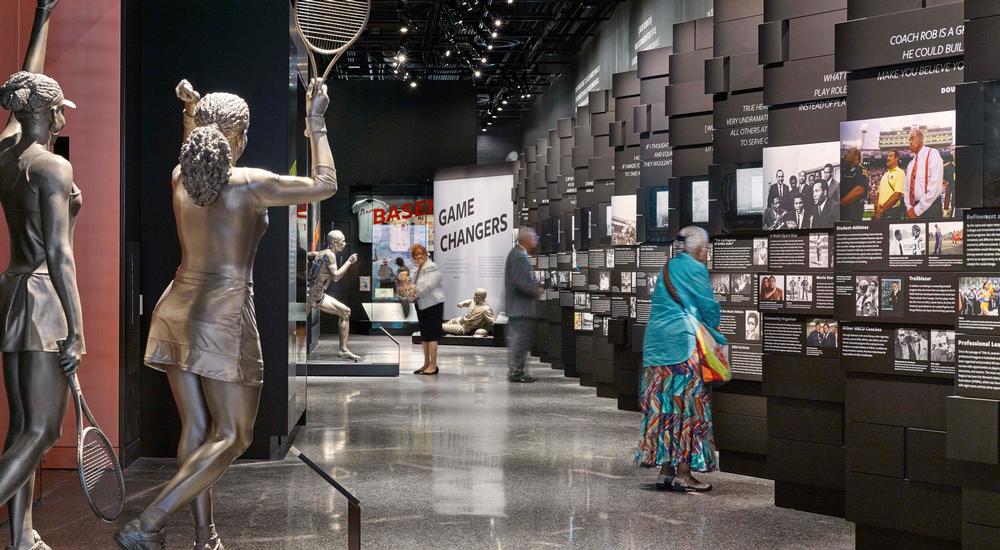
Even more conventional institutions are discovering the rewards of crowd-sourcing. The Smithsonian’s new National Museum of African American History amassed its collection by inviting the public to contribute family heirlooms and artefacts. Along with enhancing audience engagement by involving the public in the museum’s creation, the immediacy of the personal stories of the objects on display powerfully reinforces empathy for visitors.
Institutions that solicit public contributions need to be strategic, ensuring that crowd-sourced content is appropriate as well as factually accurate. A few tips for museums: provide explicit instructions and criteria on what you are seeking; partner with specific organisations whose networks are likely to have appropriate contributions rather than wide-open calls for submissions; and set up a system for monitoring content as it comes by using a combination of technology and moderators.
Multi-layered experiences Another growing trend is multi-layered experiences. It’s a given that every museum visitor arrives with their own interests and expectations: they might be explorers who want to sample every exhibit, or experts who want to dig down into one subject; some are spiritual wanderers looking to soak up the vibe, while others seek a social experience to share with family and friends.
To accommodate them, museums are designing exhibits that allow the same content to be experienced in different ways – an effective, low-cost method of appealing to a broad spectrum of interests while also offering a richer experience for each individual. A novel approach to this is Museum Hack, which has helped museums throughout the US reactivate existing exhibits without renovating them, by inventing playful, quirky tours or scavenger hunts as a new way to explore them.
The American Museum of Natural History has used short, easy games to enliven its dinosaur exhibit, broadening its appeal to kids. Examples include Dinoccupation, where players learn about a particular dinosaur’s behaviour and diet and then imagine which modern occupation it might be best suited for, and Photo Tag, in which players snap photos of different dinosaur parts to learn about comparative anatomy.
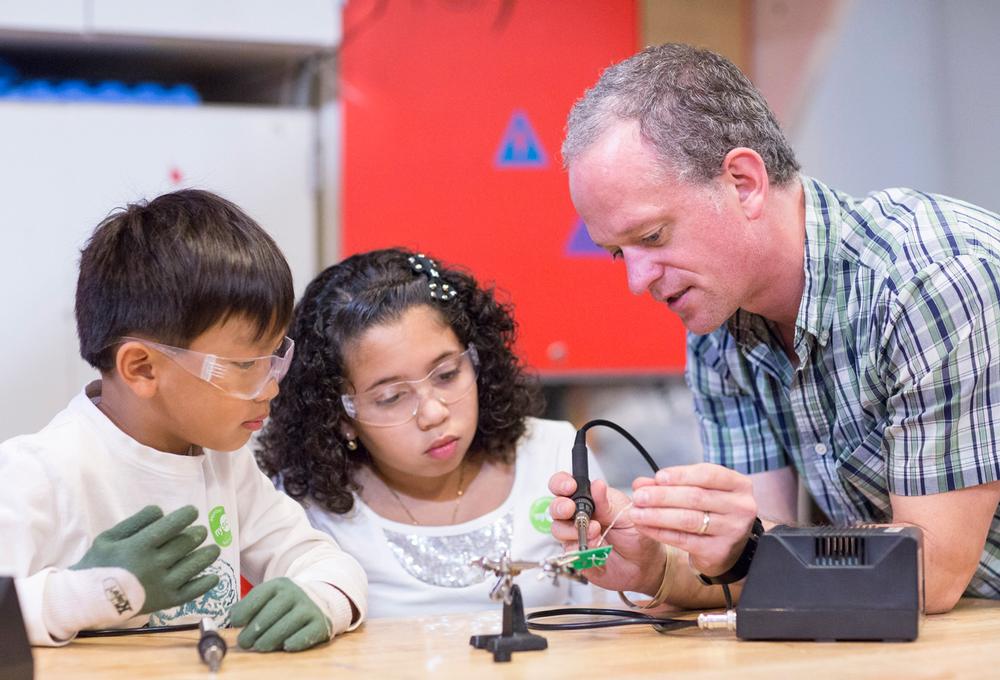
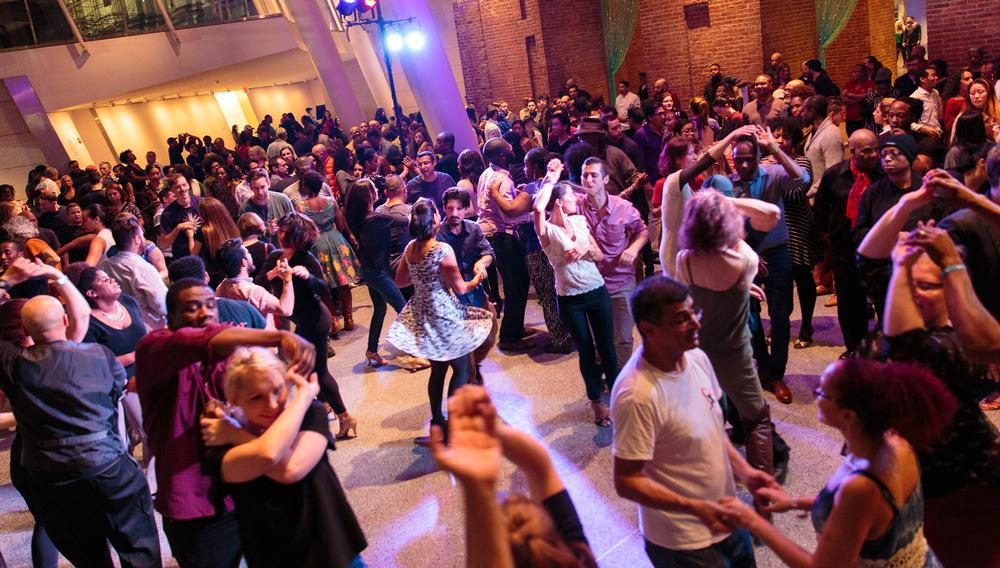
All of these new directions contribute to one final trend we see transforming museums. Many institutions are recognising that they can expand their audiences by positioning themselves as community hubs that offer much more than just exhibits. Today’s museums are reinforcing ties with the public through workshops, performing arts events, sleepovers, and other activities that establish them as social spaces. At the New York Hall of Science, Maker Space workshops invite families to tinker, design and create together, while many museums, such as the Brooklyn Museum of Art, now host regular dance parties, musical concerts and lunchtime conversations.
Appropriate strategies Of course, all of these innovations, while effective at bringing in patrons, come with challenges. It’s important not to try doing too much, especially when it comes to technology. VR can enhance an exhibit if it works with the existing narrative. Large, immersive digital displays can make some spaces more dynamic. But making considered decisions about what technology to use is crucial to strategy.
Understanding how the audience experiences the physical space will help to determine the scale and nature of the content to be displayed. Technology also comes with risks: external data feeds can go down, hardware can fail and equipment can become obsolete. Strategise and prepare for various circumstances and use cases. Ask yourself if you have the resources to handle the extra effort required to operate and maintain new tech-centred experiences and exhibits.
It can seem daunting to keep up with all these changes, and even harder to gauge which ones will best serve any given institution. While most museums now strive to be more interactive and participatory, it’s important to understand what methods are most appropriate to the context. Crowd-sourcing works better with an American history exhibit than a display of Renaissance art. Games that involve deeper focus and time might be better for teens and adults, while shorter games may be better for families with young children.
One basic tenet holds true for all innovations. Your first consideration should always be the story you’re telling. Before incorporating any new trend, think about what you want visitors to take away from it. Remember that museums are storytellers whose goal is to enlighten and entertain. The best exhibits make visitors excited to learn something new and inspire them to continue their journey of discovery.
Read more from this issue of Attractions Management magazine
View contents of Attractions Management 2017 issue 4
Interview: Jane Cooper
We talked to Jane Cooper, COO
and president of Herschend Family
Entertainment, about the company
portfolio and all things Dollywood
Yuri Sunahara, director of creative technology, and Debra Everett-Lane, director of content and activity design, are colleagues at ESI Design, a New York City-based design firm which specialises in transforming places into experiences that engage audiences, solve complex challenges, and deliver lasting results. ESI Design has worked on Brooklyn Children’s Museum, the Statue of Liberty-Ellis Island Foundation and the Edward M Kennedy Institute for the US Senate.
Students roleplay political debates in
a live simulation experience at Edward
M Kennedy Institute for the US Senate / PHOTOS: ESI DESIGN
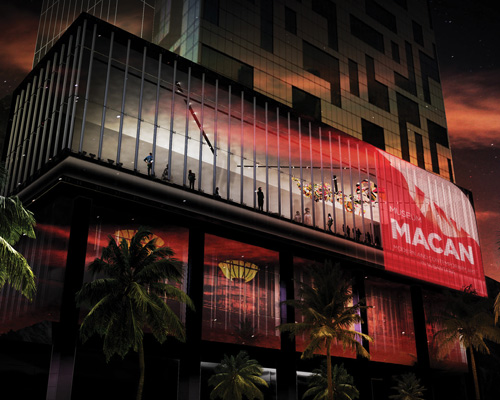
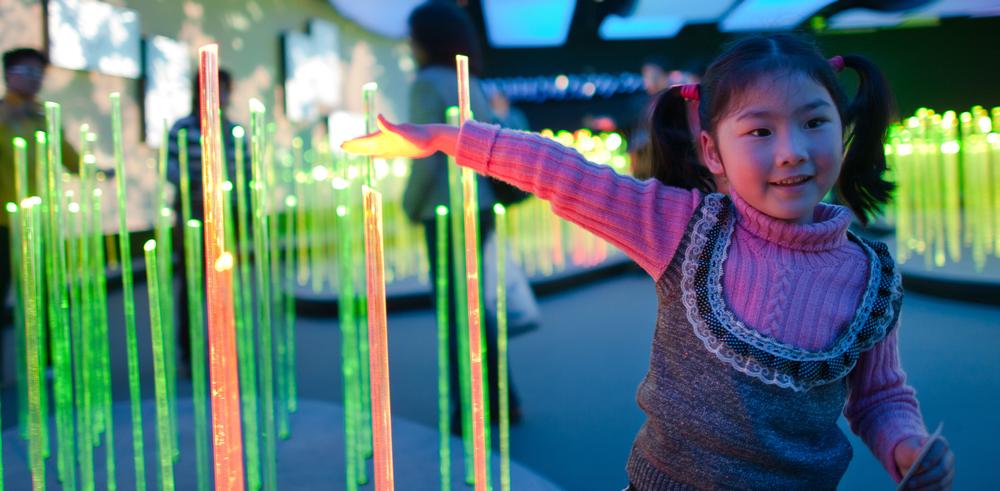
Dream Cube at Shanghai Expo displayed 80,000 visitor photos / PHOTOS: ESI DESIGN
Visitors are demanding evermore participatory attractions. In response, museums are evolving from passive experiences to immersive, interactive adventures
Students roleplay political debates in
a live simulation experience at Edward
M Kennedy Institute for the US Senate / PHOTOS: ESI DESIGN
After debating the pros and cons of new legislation that would restrict immigration to the US, a 17-year-old stands at a podium in front of 99 fellow students to defend her position. Then they cast their votes on the proposed law.
This kind of scene unfolds daily at the Edward M Kennedy Institute for the United States Senate, where visitors don’t just learn about senators, they are senators. One hundred visitors at a time can roleplay a senator for a day in a live-action simulation called the Senate Immersion Module (SIM). It’s a perfect illustration of how museums and institutions are evolving from passive exhibits to immersive, interactive adventures.
The museum world has undergone dramatic shifts in recent years, reflecting larger societal changes in how we interact with one another, driven in part by new technologies. For centuries, curators would gather artefacts and artworks to present in museums with a single-voiced authoritative narrative. Visitors simply walked through the exhibits, learning passively. But now audiences want participation, personal relevance and social interaction, and museums have been reinventing themselves to meet these new expectations.
First-person narratives ESI Design founder Edwin Schlossberg was hired 40 years ago to reimagine the Brooklyn Children’s Museum as a collection of participatory experiences, where kids could discover the relationship between themselves and the natural world.
The number of interactive museum exhibits has increased exponentially since then. Thanks to ever-improving technology and a wave of forward-thinking designers within the attractions industry, museums are now creating more robust content that’s not only participatory, but also tells stories from different perspectives.
An example of such multi-voiced storytelling is Louisiana’s Whitney Plantation, a museum where slavery is the central focus, which lets guests choose from a dozen walking tours presented from the dramatically different perspectives of the plantation’s enslaved people. Similarly, we designed exhibits for The Peopling of America Center at the Ellis Island National Museum of Immigration, which allow visitors to choose from a variety of videos of real immigrants sharing their first-hand accounts of arriving and living in the US, reminding visitors that people come to this country for many different reasons and face many different challenges.
Such first-person narratives offer an added benefit: putting visitors in other people’s shoes sparks empathy, helping them gain an intimate understanding of experiences much different from their own. This is something that more and more museums are making part of their mission.
As they continue to push the boundaries of participation, museums are taking advantage of social media and other digital platforms to invite visitors not only to interact with their exhibits, but also to collaborate on them, contributing their own perspectives to the stories being presented. Whereas participation once amounted only to visitors playing a game or performing an activity according to specific instructions dictated by the institution, visitors can now often contribute to an exhibit’s actual content.
Crowd-sourced content Sometimes visitors are invited to contribute – through an online photo competition, for example – helping to create a genuinely community-driven experience. There are many ways exhibits can invite contribution during or after a visit to better engage the audience and keep the content fresh, giving visitors deeper involvement and a sense of ownership. The SIM at Edward M Kennedy Institute has an open software developer kit (SDK), which allows local schools and colleges to create new topics or modules for the Senate chamber to debate. Another example of this kind of co-created experience is the Museum of Broken Relationships, an entirely crowd-sourced collection of first-person narratives recounting, yes, broken relationships. While anyone can share their story online, the museum also has two physical locations – one in Croatia and the other in Los Angeles, California – where contributors can send material mementos of lost loves, family members, homelands or any other person or group from which they’ve been severed.
Even more conventional institutions are discovering the rewards of crowd-sourcing. The Smithsonian’s new National Museum of African American History amassed its collection by inviting the public to contribute family heirlooms and artefacts. Along with enhancing audience engagement by involving the public in the museum’s creation, the immediacy of the personal stories of the objects on display powerfully reinforces empathy for visitors.
Institutions that solicit public contributions need to be strategic, ensuring that crowd-sourced content is appropriate as well as factually accurate. A few tips for museums: provide explicit instructions and criteria on what you are seeking; partner with specific organisations whose networks are likely to have appropriate contributions rather than wide-open calls for submissions; and set up a system for monitoring content as it comes by using a combination of technology and moderators.
Multi-layered experiences Another growing trend is multi-layered experiences. It’s a given that every museum visitor arrives with their own interests and expectations: they might be explorers who want to sample every exhibit, or experts who want to dig down into one subject; some are spiritual wanderers looking to soak up the vibe, while others seek a social experience to share with family and friends.
To accommodate them, museums are designing exhibits that allow the same content to be experienced in different ways – an effective, low-cost method of appealing to a broad spectrum of interests while also offering a richer experience for each individual. A novel approach to this is Museum Hack, which has helped museums throughout the US reactivate existing exhibits without renovating them, by inventing playful, quirky tours or scavenger hunts as a new way to explore them.
The American Museum of Natural History has used short, easy games to enliven its dinosaur exhibit, broadening its appeal to kids. Examples include Dinoccupation, where players learn about a particular dinosaur’s behaviour and diet and then imagine which modern occupation it might be best suited for, and Photo Tag, in which players snap photos of different dinosaur parts to learn about comparative anatomy.
All of these new directions contribute to one final trend we see transforming museums. Many institutions are recognising that they can expand their audiences by positioning themselves as community hubs that offer much more than just exhibits. Today’s museums are reinforcing ties with the public through workshops, performing arts events, sleepovers, and other activities that establish them as social spaces. At the New York Hall of Science, Maker Space workshops invite families to tinker, design and create together, while many museums, such as the Brooklyn Museum of Art, now host regular dance parties, musical concerts and lunchtime conversations.
Appropriate strategies Of course, all of these innovations, while effective at bringing in patrons, come with challenges. It’s important not to try doing too much, especially when it comes to technology. VR can enhance an exhibit if it works with the existing narrative. Large, immersive digital displays can make some spaces more dynamic. But making considered decisions about what technology to use is crucial to strategy.
Understanding how the audience experiences the physical space will help to determine the scale and nature of the content to be displayed. Technology also comes with risks: external data feeds can go down, hardware can fail and equipment can become obsolete. Strategise and prepare for various circumstances and use cases. Ask yourself if you have the resources to handle the extra effort required to operate and maintain new tech-centred experiences and exhibits.
It can seem daunting to keep up with all these changes, and even harder to gauge which ones will best serve any given institution. While most museums now strive to be more interactive and participatory, it’s important to understand what methods are most appropriate to the context. Crowd-sourcing works better with an American history exhibit than a display of Renaissance art. Games that involve deeper focus and time might be better for teens and adults, while shorter games may be better for families with young children.
One basic tenet holds true for all innovations. Your first consideration should always be the story you’re telling. Before incorporating any new trend, think about what you want visitors to take away from it. Remember that museums are storytellers whose goal is to enlighten and entertain. The best exhibits make visitors excited to learn something new and inspire them to continue their journey of discovery.
Read more from this issue of Attractions Management magazine
View contents of Attractions Management 2017 issue 4
Interview: Jane Cooper
We talked to Jane Cooper, COO
and president of Herschend Family
Entertainment, about the company
portfolio and all things Dollywood
Yuri Sunahara, director of creative technology, and Debra Everett-Lane, director of content and activity design, are colleagues at ESI Design, a New York City-based design firm which specialises in transforming places into experiences that engage audiences, solve complex challenges, and deliver lasting results. ESI Design has worked on Brooklyn Children’s Museum, the Statue of Liberty-Ellis Island Foundation and the Edward M Kennedy Institute for the US Senate.
Students roleplay political debates in
a live simulation experience at Edward
M Kennedy Institute for the US Senate / PHOTOS: ESI DESIGN
Dream Cube at Shanghai Expo displayed 80,000 visitor photos / PHOTOS: ESI DESIGN
London Museum will open four new food and drink destinations when it launches its new home
at Smithfield on 28 November, making hospitality a central part of the visitor experience at one
of the capital's biggest cultural openings of the year.
OMA has completed a major transformation of New York's New Museum, creating a larger
cultural campus that combines expanded exhibition spaces with learning, performance,
hospitality and public programming.
A US$50 million (£44.2 million, €51.2 million) transformation of Chicago's historic McCormick
Mansion has created a new destination that combines live magic, immersive theatre, dining and
private membership under one roof.
The Montana Historical Society has officially celebrated the opening of its new Montana
Heritage
Center, a US$107 million (£79 million, €92 million) destination that combines immersive
storytelling with cutting-edge audiovisual technology to bring the sta
San Antonio Zoo has reported a US$283 million economic impact for 2025, following a decade-
long transformation programme that has seen almost US$200 million invested into the Texas
attraction.
Plans for the AU$180 million redevelopment of Reef HQ Aquarium in Townsville, Australia, are
progressing, with the project set to transform the attraction into a global centre for reef
education and conservation.
Abu Dhabi-based investment firm Mubadala Capital has made a binding, fully financed
€1 billion
offer to acquire Pierre and Vacances SA, the European holiday resort operator behind the
continental European Center Parcs business.
Disney has reaffirmed its commitment to investing US$30 billion in its US parks and cruise
business by 2033, using new America250 celebrations to underline the role its attractions play
in supporting jobs, tourism and economic growth.
Expo 2030 Riyadh is being planned as a permanent visitor destination, with organisers
confirming the six-million-square-metre site will become a Global Village after the event closes.
The owner of one of Australia's best-known waterparks has acquired a major competitor,
creating a new attractions business spanning two of the country's largest visitor destinations.