An important figure in the European spa industry for the past 30 years, Paul Simons has retired from GSTE. Spa Business sat down with him to hear about his long and esteemed career
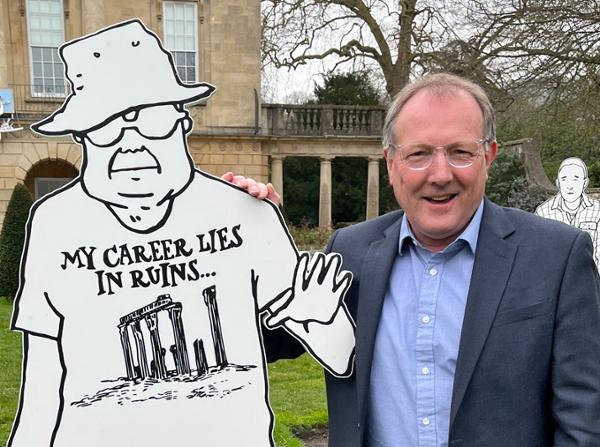
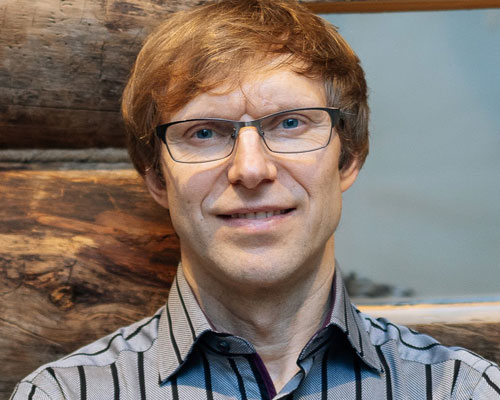
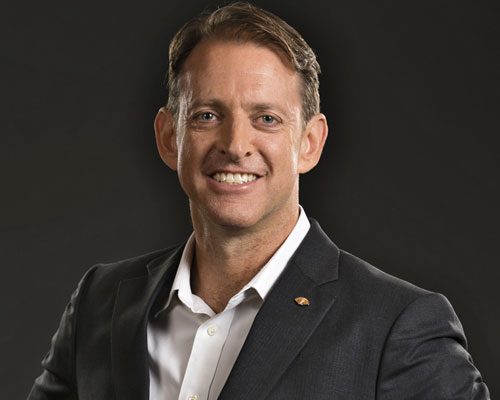
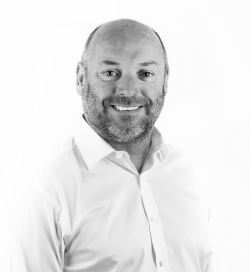
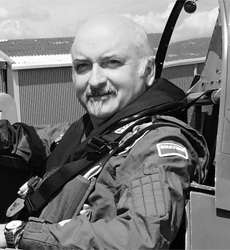
Simons has been a key figure in several spa associations in Europe / photo: Paul Simons
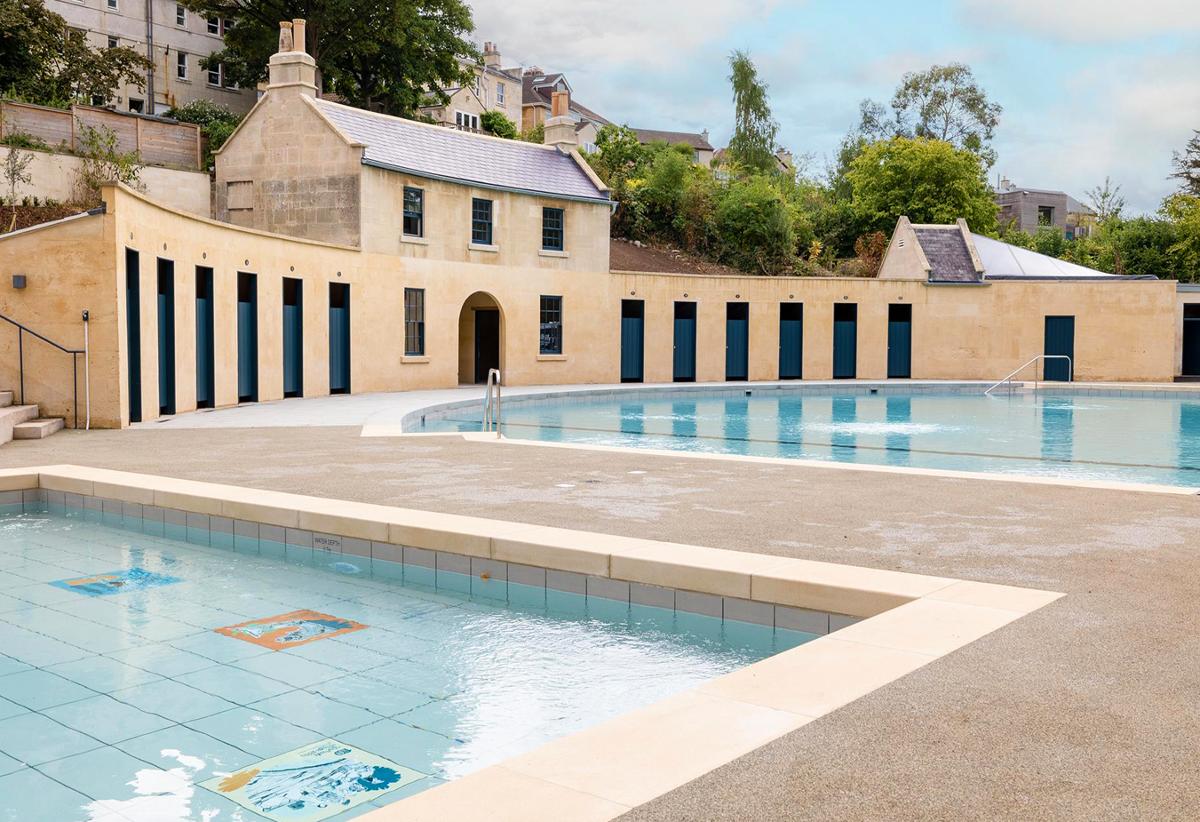
An architect by training, Paul Simons has been an influential figure in the preservation and promotion of European spa towns for the past 30 years. While he has retired this year from his day-to-day duties in his position as secretary general of the Great Spa Towns of Europe (GSTE), he will remain involved in an advisory role on many projects, including the recently restored Cleveland Pools in Bath, England – the UK’s oldest outdoor public swimming pool.
How did you first get involved in spas? I’m an architect who specialises in the conservation of historic buildings and I know that the solution to any historical building is to identify its use and its future use. I’ve been involved in bringing cultural life back into city centres and so I became involved in tourism. In 1994, I was named director of tourism in Bath, England. Nobody told me about the spa – it had closed down in the 1970s and we had a lot of empty buildings associated with the spa.
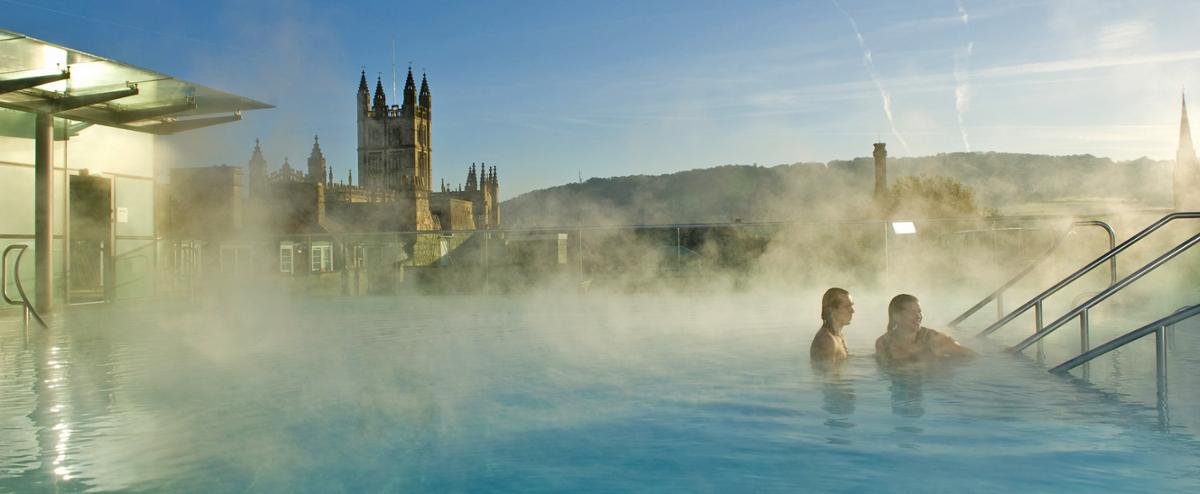
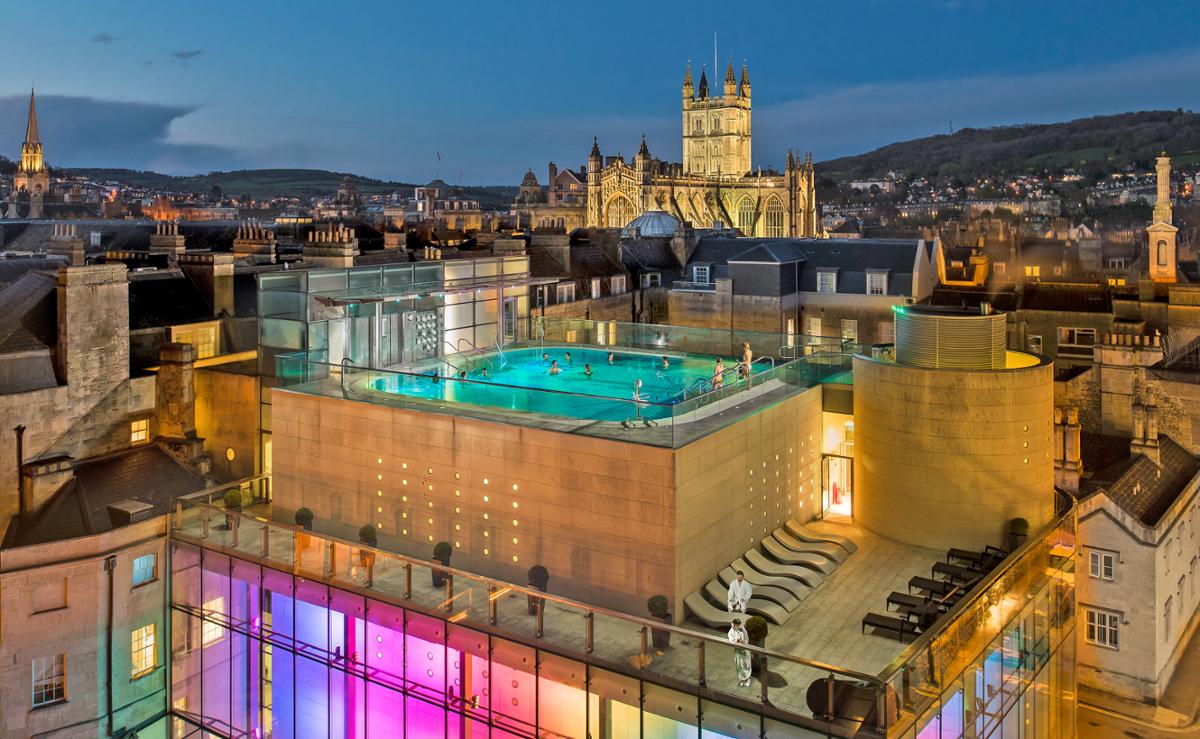
At around this time, the advent of budget airlines meant that our city break heritage business was instead going to Amsterdam and Barcelona for the weekend. So I said ‘let’s do a major project to have tourists not only visit our Roman baths and stare at the thermal waters in the historical site, but let’s let them bathe in them again.’ I was able to convince the local authority, Bath and North East Somerset Council (BANES), to give me money and then we raised money through a government fund to resurrect the thermal baths in a modern building in the centre of the town. That was Thermae Bath Spa, which I was the project director for. The operator says up to 280,000 people visit the property a year and estimates that they also spend an additional £13.5 million (US$16.4 million, €15.5 million) locally.
How did your career evolve after that? BANES sent me all over the world to look at spa towns – which is a pretty good job – and I suddenly became incredibly fascinated with the concept of spa and health and wellbeing and what it could be in the future. They are places dedicated to health, hospitality and welcoming and looking after people. In all the books on urban planning globally, nobody defined spa towns, but it is a very specific use. We realised we were sitting on a gold mine in many ways and it all goes back to hot springs, mineral waters and natural resources.
In the last 20-odd years since building Thermae Bath Spa, I’ve been involved in what was the British Spas Federation and the European Spas Association, as well as GSTE and the European Historic Thermal Towns Association (EHTTA). My focus has been the preservation of spa architecture, promoting the importance of thermalism and balneology and its significance for the future. And I’ve left a mark on the city of Bath that I’m very proud of.
Why are spa towns important? Spa towns created what we in the West call national health services (NHS). The rich and the famous visiting the these towns – who could afford to go to the opera when they weren’t bathing in the water or drinking it – also set up charities so that the ill and the elderly and the infirm could access the water for their health. And way back in the 18th century that created the concept for what would become the NHS in the UK and others in Europe. Spa towns were at the fundamental centre of the democratisation of health.
We’ve realised that significance now. Spa towns are significant architecturally, urban-planning-wise and in terms of landscape, but they’re also key to governmental responsibility towards people’s health and wellbeing and vital to the core of health across Europe.
Read more from this issue of Attractions Management magazine
View contents of Attractions Management 2023 issue 4
Sponsored: Highest French distinction for RKF's CEO
After receiving the highest civilian award for services to the French nation, Riadh Bouaziz, CEO of RKF Luxury Linen, reflects on his company’s many achievements and considers what lies ahead
Association focus: Thermal Heritage
Jane Kitchen finds out how two key associations – the European Historic Thermal Towns Association and the Great Spa Towns of Europe – are protecting and promoting the unique cultural relevances of Europe’s spa towns
Interview: Paul Simons
As he retires from the Great Spa Towns of Europe, the industry leader reflects on his long and esteemed career
Sponsored: New ways with water
Working globally with architects and interior designers allows Myrtha Wellness to embrace the latest trends in the international hospitality sector, as director Stefano Cattaneo explains
Sponsored: Cutting edge
Ara Patterson from Equinox Hotels talks about a partnership with
Gharieni that’s delivering ROI and innovative treatments for guests
Interview: Niamh O'Connell
What does Jumeirah’s first vice president of wellbeing have planned for the Middle East-based hospitality group?
Sponsored: Lasse Eriksen on contrast therapy
Contrast therapy is gaining attention for its healing effects. We ask aufguss and sauna expert Lasse Eriksen to share his views on the perfect experience
Nature spas: Tree of life
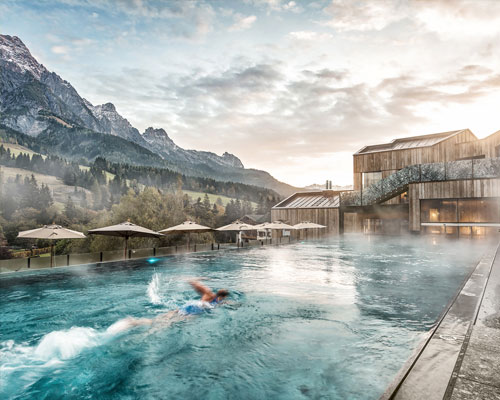
Lisa Starr discovers two retreats in Austria and Italy which base their wellbeing concepts on forests
Sponsored: Spirit of Excellence
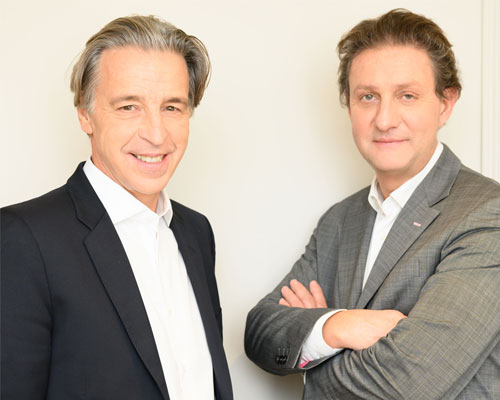
Rupert Schmid and Pierre-Louis Delapalme, owners of Biologique Recherche, discuss the global rollout of its ‘Ambassade’ flagship spas
Sponsored: Outstanding performance
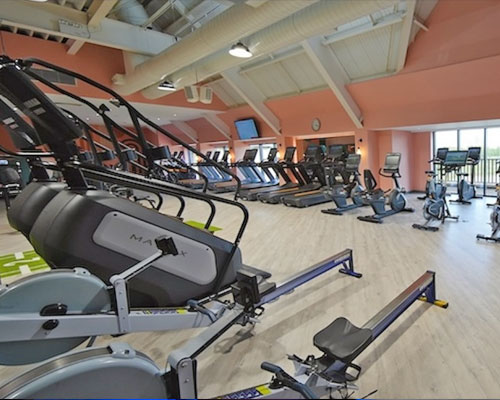
Bicester Hotel & Spa is working with Matrix Fitness to enable wellness guests to train like athletes with a unique offering
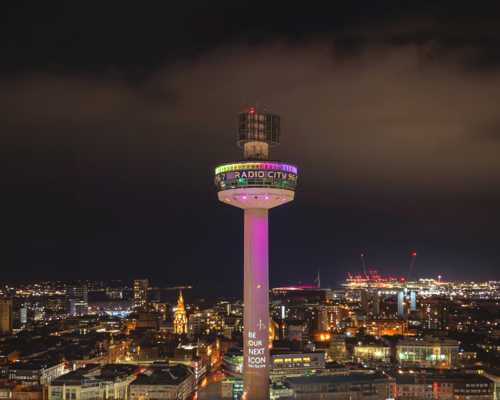
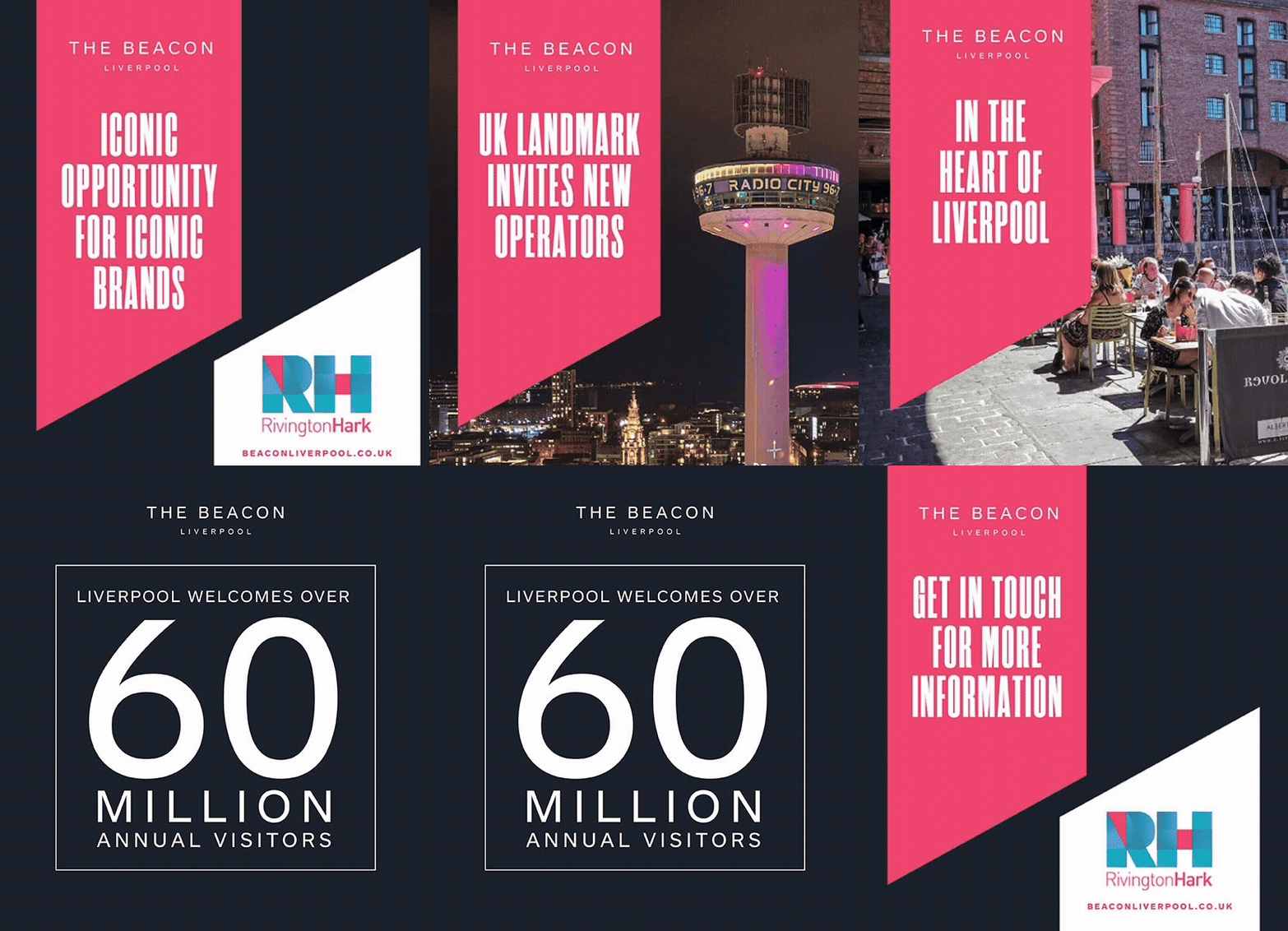
An opportunity to reimagine one of the UK’s most recognisable towers has been formally
opened by Rivington Hark, as St Johns Beacon invites operators and partners to shape its
next phase. [more...]
An important figure in the European spa industry for the past 30 years, Paul Simons has retired from GSTE. Spa Business sat down with him to hear about his long and esteemed career
Simons has been a key figure in several spa associations in Europe / photo: Paul Simons
An architect by training, Paul Simons has been an influential figure in the preservation and promotion of European spa towns for the past 30 years. While he has retired this year from his day-to-day duties in his position as secretary general of the Great Spa Towns of Europe (GSTE), he will remain involved in an advisory role on many projects, including the recently restored Cleveland Pools in Bath, England – the UK’s oldest outdoor public swimming pool.
How did you first get involved in spas? I’m an architect who specialises in the conservation of historic buildings and I know that the solution to any historical building is to identify its use and its future use. I’ve been involved in bringing cultural life back into city centres and so I became involved in tourism. In 1994, I was named director of tourism in Bath, England. Nobody told me about the spa – it had closed down in the 1970s and we had a lot of empty buildings associated with the spa.
At around this time, the advent of budget airlines meant that our city break heritage business was instead going to Amsterdam and Barcelona for the weekend. So I said ‘let’s do a major project to have tourists not only visit our Roman baths and stare at the thermal waters in the historical site, but let’s let them bathe in them again.’ I was able to convince the local authority, Bath and North East Somerset Council (BANES), to give me money and then we raised money through a government fund to resurrect the thermal baths in a modern building in the centre of the town. That was Thermae Bath Spa, which I was the project director for. The operator says up to 280,000 people visit the property a year and estimates that they also spend an additional £13.5 million (US$16.4 million, €15.5 million) locally.
How did your career evolve after that? BANES sent me all over the world to look at spa towns – which is a pretty good job – and I suddenly became incredibly fascinated with the concept of spa and health and wellbeing and what it could be in the future. They are places dedicated to health, hospitality and welcoming and looking after people. In all the books on urban planning globally, nobody defined spa towns, but it is a very specific use. We realised we were sitting on a gold mine in many ways and it all goes back to hot springs, mineral waters and natural resources.
In the last 20-odd years since building Thermae Bath Spa, I’ve been involved in what was the British Spas Federation and the European Spas Association, as well as GSTE and the European Historic Thermal Towns Association (EHTTA). My focus has been the preservation of spa architecture, promoting the importance of thermalism and balneology and its significance for the future. And I’ve left a mark on the city of Bath that I’m very proud of.
Why are spa towns important? Spa towns created what we in the West call national health services (NHS). The rich and the famous visiting the these towns – who could afford to go to the opera when they weren’t bathing in the water or drinking it – also set up charities so that the ill and the elderly and the infirm could access the water for their health. And way back in the 18th century that created the concept for what would become the NHS in the UK and others in Europe. Spa towns were at the fundamental centre of the democratisation of health.
We’ve realised that significance now. Spa towns are significant architecturally, urban-planning-wise and in terms of landscape, but they’re also key to governmental responsibility towards people’s health and wellbeing and vital to the core of health across Europe.
Read more from this issue of Attractions Management magazine
View contents of Attractions Management 2023 issue 4
Sponsored: Highest French distinction for RKF's CEO
After receiving the highest civilian award for services to the French nation, Riadh Bouaziz, CEO of RKF Luxury Linen, reflects on his company’s many achievements and considers what lies ahead
Association focus: Thermal Heritage
Jane Kitchen finds out how two key associations – the European Historic Thermal Towns Association and the Great Spa Towns of Europe – are protecting and promoting the unique cultural relevances of Europe’s spa towns
Interview: Paul Simons
As he retires from the Great Spa Towns of Europe, the industry leader reflects on his long and esteemed career
Sponsored: New ways with water
Working globally with architects and interior designers allows Myrtha Wellness to embrace the latest trends in the international hospitality sector, as director Stefano Cattaneo explains
Sponsored: Cutting edge
Ara Patterson from Equinox Hotels talks about a partnership with
Gharieni that’s delivering ROI and innovative treatments for guests
Interview: Niamh O'Connell
What does Jumeirah’s first vice president of wellbeing have planned for the Middle East-based hospitality group?
Sponsored: Lasse Eriksen on contrast therapy
Contrast therapy is gaining attention for its healing effects. We ask aufguss and sauna expert Lasse Eriksen to share his views on the perfect experience
Nature spas: Tree of life
Lisa Starr discovers two retreats in Austria and Italy which base their wellbeing concepts on forests
Sponsored: Spirit of Excellence
Rupert Schmid and Pierre-Louis Delapalme, owners of Biologique Recherche, discuss the global rollout of its ‘Ambassade’ flagship spas
Sponsored: Outstanding performance
Bicester Hotel & Spa is working with Matrix Fitness to enable wellness guests to train like athletes with a unique offering
Experience design company, BRC Imagination Arts, has completed a transition that sees founder
Bob Rogers pass ownership of the business to four long-serving senior executives, while
remaining actively involved with the company.
Movie Park Germany has opened a new Paramount Pictures-themed attraction as part of its 30th
anniversary celebrations, using immersive storytelling and adaptive reuse to reinforce the park’s
longstanding “Hollywood in Germany” positioning.
Therme Manchester’s 28-acre development, which will include interconnected glass pavilions
that measure 65,000sq m, will be the largest bathing and wellbeing attraction in the world once
complete, according to prof David Russell, CEO of Therme UK.
Efteling has opened Hooghmoed, a new family drop tower designed to broaden the appeal of its
recently launched Sirene Island themed area and introduce younger visitors to thrill attractions.
A proposed Puy du Fou development near Bicester and Universal Destinations and Experiences’
planned resort in Bedford are emerging as part of a wider transformation of the Oxford–
Cambridge Growth Corridor into a major centre for UK leisure and tourism inv
Shedd Aquarium has opened the Immersion Theater developed in partnership with SimEx-
Iwerks, as part of a wider strategy to enhance the guest experience and create additional
revenue opportunities.
The UK government has announced a temporary reduction in VAT on visitor attractions and
children’s meals as part of a summer cost-of-living support package designed to stimulate the
visitor economy and encourage family days out.
As designer Yinka Ilori prepares for his first solo gallery show in London, he speaks exclusively
to CLADmag about his mission to spread joy, the power of play, and his bold approach to using
colour (including the colours you won’t see in his work).
The government of Thailand is exploring plans for a THB300bn (£6.3bn, US$8.3bn)
entertainment complex in the country’s Eastern Economic Corridor (EEC), with officials
proposing a large-scale theme park and sports destination as part of a broader tourism and
economic development strategy.
Royal Caribbean has revealed its Hero of the Seas cruise ship, home to the most pools at sea
(nine), and a record-breaking 28 dining venues, as well as attractions including a waterpark
with two new family raft slides.
+ More news
COMPANY PROFILES
Taylor Made Designs Founded in 1993, Taylor Made
Designs supply corporate clothing
and brand-enhancing merchandise
to [more...]
RMA Ltd RMA Ltd is a one-stop global company
that can design, build and produce from a
greenfield site upw [more...]
An opportunity to reimagine one of the UK’s most recognisable towers has been formally
opened by Rivington Hark, as St Johns Beacon invites operators and partners to shape its
next phase. [more...]