Opening a safari spa seven years ago, Ronleigh Gordon could hardly
have envisioned the growing spa empire she currently manages.
Lisa Starr pays a visit to the original Amani African Spa
By Lisa Starr | Published in Spa Business 2013 issue 4
South Africa is a country of great diversity. It has 11 official languages and given its location at the confluence of the Atlantic and Indian Oceans, there’s also great natural biodiversity. Such a range of climates, cultures and people can be a barrier to business growth, making it difficult to market appropriately across the spectrum.
Yet in just seven years Ronleigh Gordon, the owner of Amani African Spas, has created the second-largest spa company in the country. She has a workforce of 120 spread over 18 facilities ranging from safari and city spas to mobile and airport offerings.
So, how did she build up her business and what are challenges and opportunities in this emerging spa market?
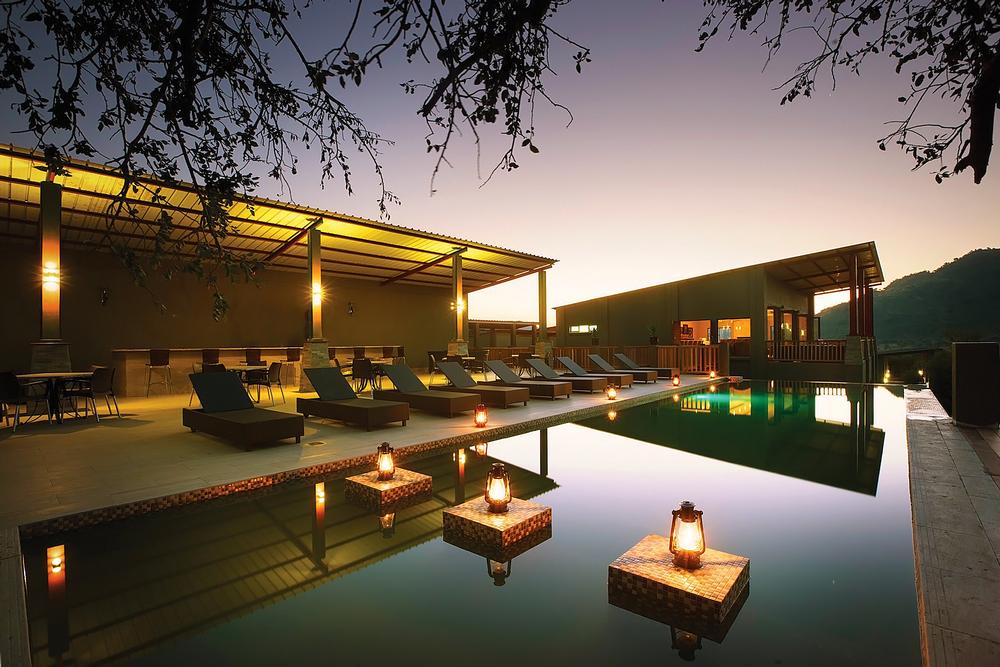
Safari so good In 2004, Gordon became a minority shareholder in South Africa’s five-star Ivory Tree Game Lodge in the Pilanesberg Game Reserve and immediately thought a luxury spa would be a natural fit. However, it took her two years to convince the board to let her give it a try, and even then some believed it would be a failure. She proved them wrong. Taking inspiration from the word Amani, which means ‘peace’ in the local Kiswahili language, Gordon created a business focused on resorting harmony of the mind, body and spirit; and just a year after its 2006 launch, the spa concept received its first of four awards from national industry magazine Les Nouvelles Esthetique for its unique offering. Soon after, other lodges began asking Gordon to create or refurbish spas in their properties and own and operate them autonomously.
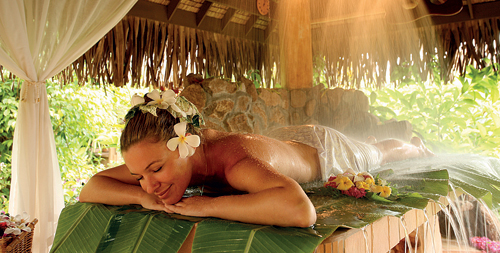
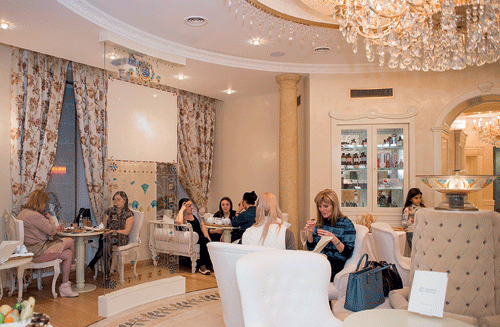
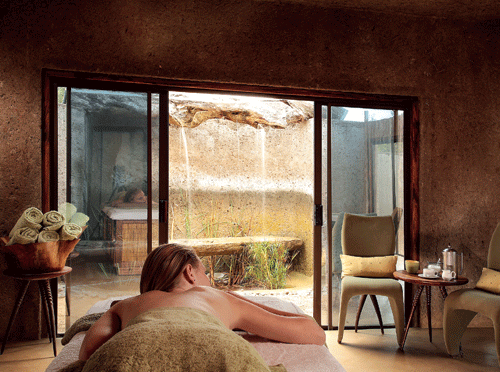
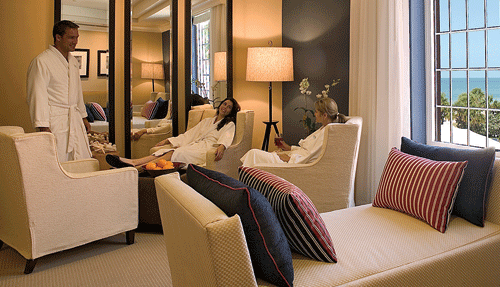
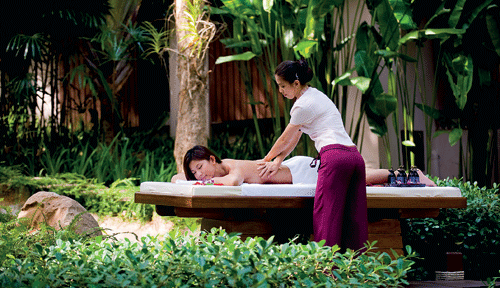
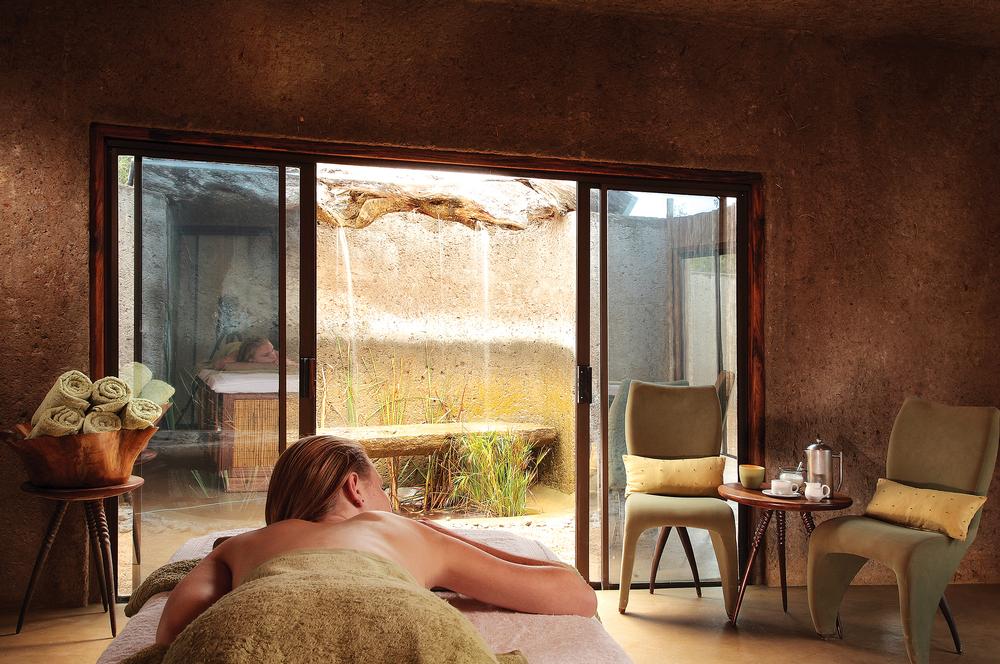
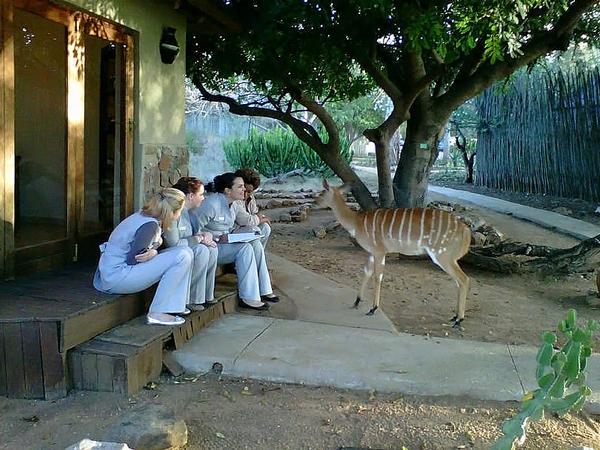
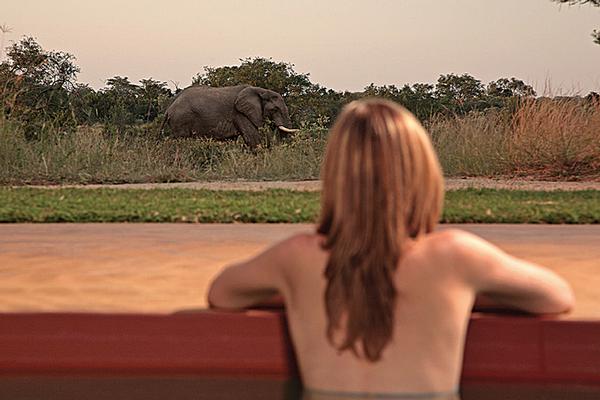
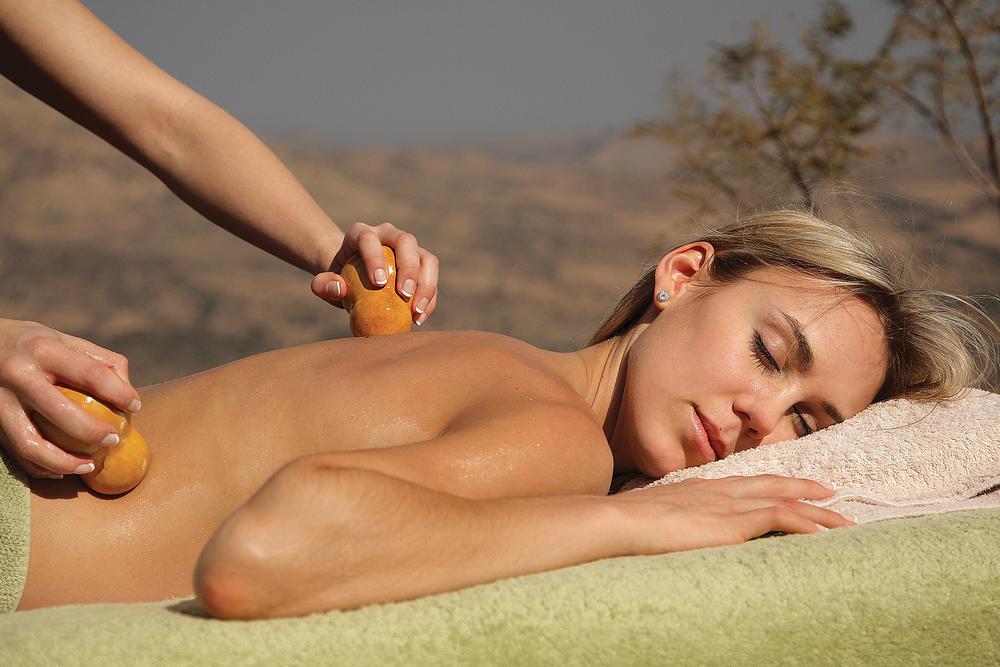
While the Amani Spa model has diversified over the years, safari spas are still core to the business – accounting for seven facilities. Most feature three to four treatment rooms and, unlike typical dimly-lit therapy spaces, are equipped with large windows that let in sunlight and beautiful bushveld views to provide a unique African experience. It’s not unusual for a guest to enjoy a treatment while watching an elephant wander by – something that can’t be duplicated in many places! The harmonising and pampering treatments, priced at around ZAR560 (US$55, €41, £35) for a 60-minute massage, incorporate South Africa’s MatsiMela range and international brands Babor and Mama Mio.
Anyone who’s visited a safari lodge can attest to the operating peculiarities that an on-site spa faces. Locations are generally remote and aren’t usually open to outside guests. That said, it’s unlikely that lodge guests will leave the property save for the morning (6.30-9am) and afternoon (4-7pm) game drives. Therefore the hours in-between are prime for spa-going and Amani makes sure there’s one therapist available for every treatment room to optimise room utilisation. During down time, staff work on duties such as stock counts, cleaning and retail and self-development training. What can be a challenge, says Gordon, is for management to co-ordinate leave cycles – therapists typically work six weeks on, two weeks off – to ensure these staff levels.
Seasonality can be another obstacle in attracting employees, and in business. Gordon says Amani has side-stepped the first by building up its reputation for investing in and training its therapists. And the full-board provided by lodges is also attractive. In terms of business, she admits that the spa’s performance can be affected by lodge occupancy but not as much as you’d think – some even provide an ROI that rivals or exceeds that of Amani’s city spa locations.
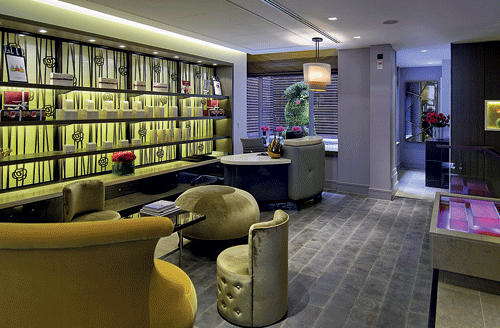
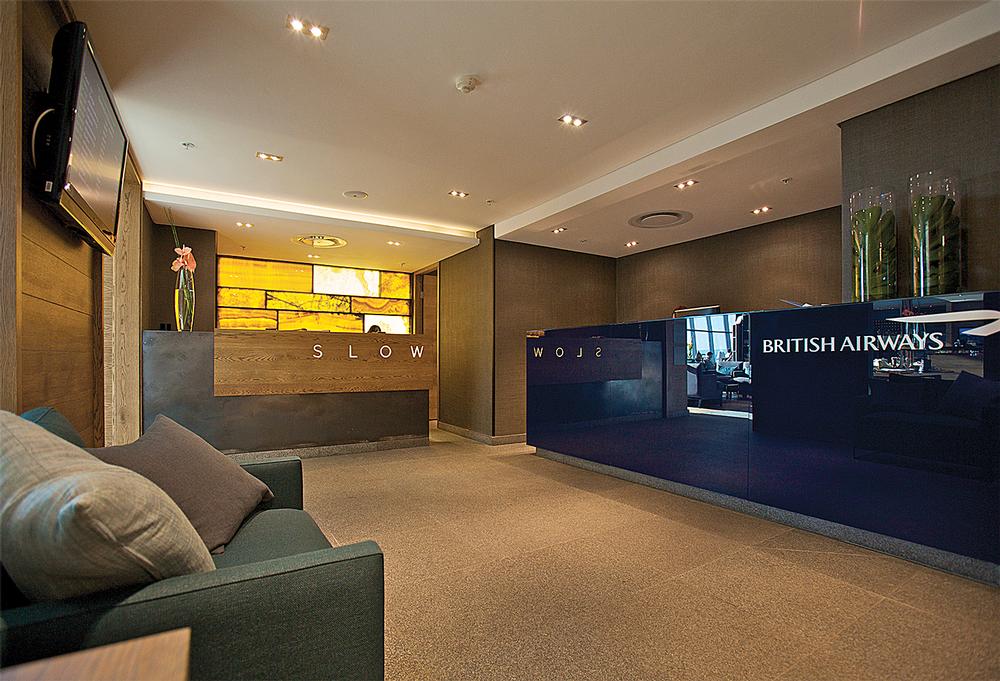
National footprint As well as the safari spas, Amani African Spas owns and operators four facilities in urban hotels in affluent locations such as Cape Town’s Waterfront and the Sandton business district in Johannesburg.
Having diverse locations has helped Gordon to grow the brand, she says. Although international guests are a core target, several lodges attract 50 per cent of business from South African guests visiting for the weekend, or for an event such as a wedding or as part of a conference. Those guests then become regular Amani customers once they return home. “The beauty of a national footprint is that different locations have different business cycles,” says Gordon. “As one’s slowing down another will be on the upswing, so the peaks and valleys in performance are minimised.”
Overall, the company’s management structure has been tailored to suit the portfolio. Gordon is assisted by nine staff at head office including a national operations director and a training director. The four city spas each have a manager, and the safari spas are helmed by a senior therapist. The operations director visits each location at least every eight weeks and regular visits are also made by the training director whose sessions focus on life skills, personal development and business skills, as well as practical and theoretical training. This role is vital, says Gordon: “Improving staff communication skills has helped to create a happy workplace, resulting in enhanced cross-functional co-operation and efficiency.”
Employee empowerment The importance of training takes on another meaning, when Gordon reveals that in every location Amani opens, it employs local women with disadvantaged backgrounds. They’re given extensive personal development and life skills coaching so they can grow to become therapists. She says: “The majority couldn’t find a job, and those that did have one have tripled their earnings at Amani.”
Gordon has also just concluded a deal with the National Empowerment Fund (NEF), a government organisation supporting black economic participation, which has bought a 20 per cent share in the business to set up an employee trust for disadvantaged individuals. She says: “I hope the trust will assist with staff retention – give individuals a sense of belonging, self-pride and motivation to work towards a common goal – which in turn will build a strong team to improve productivity, performance and our long-term sustainability.”
‘Black people’ is a generic term in South Africa which refers to African, Indian, coloured and indigenous people and as well as the NEF, the government enforces a Broad-Based Black Economic Empowerment (BBBEE) law. Under this law, every company in South Africa is measured on its black empowerment activities – from ownership of the business and the number of black employees through to socio-economic development initiatives. It’s a stringent process, but businesses with higher ratings have a competitive advantage when taking part in government tenders and other business opportunities. Significantly, Amani’s just been certified as BBBEE Status Level 1 – the highest of the eight levels a company can achieve.
In addition to managing legal requirements, high labour costs and disputes are, unfortunately, a way of life and ending an employee contract is a lengthy process. But in spite of all these challenges, Gordon sees both South Africa and the African continent more broadly as being full of opportunity.
Room for growth Economic indicators certainly point to a market that’s ripe for development. South Africa has been identified as one of the CIVETS nations – an acronym for a new batch of emerging economic powerhouses. Meanwhile in July, the African Development Bank revealed that its economy is growing faster than any other continent. One-third of African countries have a GDP growth rate of more than 6 per cent, the cost of starting a business has fallen by two-thirds and it has a rapid growing middle class. Gordon feels the burgeoning middle classes, particularly in countries such as Nigeria, Angola, Ghana and Tanzania, is significant for the spa industry. Amani is receiving numerous franchise requests from businesses in these countries on a weekly basis, and has recently sold its first franchise to a lodge in Kenya. The spa sector in South Africa is a healthy one says Gordon – at last count there were 350 spa establishments according to the South African Spa Association. Yet she feels there’s still room for growth. Aside from franchising, Gordon’s looking to expand into the corporate wellness market. Amani has launched a range of employee wellbeing packages such as a mobile spa visit, wellness getaway or day spa programme ranging from ZAR15,000-ZAR100,000 (US$1,500-US$9,900, €1,100-€7,300, £950-£6,200) a year. The packages, which corporations can use to incentivise and motivate staff, incorporate lifestyle and wellness experiences to help improve employee wellbeing leading to performance optimisation.
When you meet Gordon, you get a sense of the power and purpose that guides her – building a company in a still developing country has not always been easy, but she’s not looked back once. “I enjoy the innovations and challenges and the excitement that comes with growing a business,” she says. “But it’s the satisfaction of touching the lives of so many in need that pushes to continue. I want to take Amani to the next level so we can empower many more women, but on a much larger scale.”
Read more from this issue of Attractions Management magazine
View contents of Attractions Management 2013 issue 4
Interview: Helene Goetzelmann
L'Occitane's international spa director tells Rhianon Howells how the consumer retail company has become a spa operator with 60 facilities
Ask an expert: Profit & Loss
Hotel spas need to fight capital expenditure allocation said an investor panel at this year's Global Spa & Wellness Summit
Research: All rise
There's been an increase in the five top key performance indicators in the US spa industry shows the 2013 ISPA study
Company Profile Promotion: ESPA promotion
As ESPA's 20th
anniversary year draws
to a close, founder and
CEO Sue Harmsworth
explains how and why the
company is still evolving
Safari Spa: Animal instinct
Safari spas are the staple for Amani, one of South Africa's largest spa chains. Lisa Starr talks to MD Ronleigh Gordon
Trends: Brief encounters
We take a look at some of the most innovative spa pop-ups, a growing trend across the leisure sector
Interview: Paul Smyth
Something & Son designer shares his insights on creating pop-up spa facilities. Magali Robathan reports
Summit review: Upping the ante
Katie Barnes reveals the takeaway messages from the 2013 Global Spa & Wellness Summit in New Delhi, India, attended by 375 industry leaders
Research: Local news
Domestic travellers dominate the global wellness tourism market which has an economic impact of US$1.3 trillion. SRI's Ophelia Yeung reports
Research: Thai up
Prantik Bordoloi analyses a 2013 Thai spa industry study based on both spa consumer and spa operator opinions
Software news: Tech talk
The latest developments and news from spa software suppliers from around the world
Opening a safari spa seven years ago, Ronleigh Gordon could hardly
have envisioned the growing spa empire she currently manages.
Lisa Starr pays a visit to the original Amani African Spa
By Lisa Starr | Published in Spa Business 2013 issue 4
South Africa is a country of great diversity. It has 11 official languages and given its location at the confluence of the Atlantic and Indian Oceans, there’s also great natural biodiversity. Such a range of climates, cultures and people can be a barrier to business growth, making it difficult to market appropriately across the spectrum.
Yet in just seven years Ronleigh Gordon, the owner of Amani African Spas, has created the second-largest spa company in the country. She has a workforce of 120 spread over 18 facilities ranging from safari and city spas to mobile and airport offerings.
So, how did she build up her business and what are challenges and opportunities in this emerging spa market?
Safari so good In 2004, Gordon became a minority shareholder in South Africa’s five-star Ivory Tree Game Lodge in the Pilanesberg Game Reserve and immediately thought a luxury spa would be a natural fit. However, it took her two years to convince the board to let her give it a try, and even then some believed it would be a failure. She proved them wrong. Taking inspiration from the word Amani, which means ‘peace’ in the local Kiswahili language, Gordon created a business focused on resorting harmony of the mind, body and spirit; and just a year after its 2006 launch, the spa concept received its first of four awards from national industry magazine Les Nouvelles Esthetique for its unique offering. Soon after, other lodges began asking Gordon to create or refurbish spas in their properties and own and operate them autonomously.
While the Amani Spa model has diversified over the years, safari spas are still core to the business – accounting for seven facilities. Most feature three to four treatment rooms and, unlike typical dimly-lit therapy spaces, are equipped with large windows that let in sunlight and beautiful bushveld views to provide a unique African experience. It’s not unusual for a guest to enjoy a treatment while watching an elephant wander by – something that can’t be duplicated in many places! The harmonising and pampering treatments, priced at around ZAR560 (US$55, €41, £35) for a 60-minute massage, incorporate South Africa’s MatsiMela range and international brands Babor and Mama Mio.
Anyone who’s visited a safari lodge can attest to the operating peculiarities that an on-site spa faces. Locations are generally remote and aren’t usually open to outside guests. That said, it’s unlikely that lodge guests will leave the property save for the morning (6.30-9am) and afternoon (4-7pm) game drives. Therefore the hours in-between are prime for spa-going and Amani makes sure there’s one therapist available for every treatment room to optimise room utilisation. During down time, staff work on duties such as stock counts, cleaning and retail and self-development training. What can be a challenge, says Gordon, is for management to co-ordinate leave cycles – therapists typically work six weeks on, two weeks off – to ensure these staff levels.
Seasonality can be another obstacle in attracting employees, and in business. Gordon says Amani has side-stepped the first by building up its reputation for investing in and training its therapists. And the full-board provided by lodges is also attractive. In terms of business, she admits that the spa’s performance can be affected by lodge occupancy but not as much as you’d think – some even provide an ROI that rivals or exceeds that of Amani’s city spa locations.
National footprint As well as the safari spas, Amani African Spas owns and operators four facilities in urban hotels in affluent locations such as Cape Town’s Waterfront and the Sandton business district in Johannesburg.
Having diverse locations has helped Gordon to grow the brand, she says. Although international guests are a core target, several lodges attract 50 per cent of business from South African guests visiting for the weekend, or for an event such as a wedding or as part of a conference. Those guests then become regular Amani customers once they return home. “The beauty of a national footprint is that different locations have different business cycles,” says Gordon. “As one’s slowing down another will be on the upswing, so the peaks and valleys in performance are minimised.”
Overall, the company’s management structure has been tailored to suit the portfolio. Gordon is assisted by nine staff at head office including a national operations director and a training director. The four city spas each have a manager, and the safari spas are helmed by a senior therapist. The operations director visits each location at least every eight weeks and regular visits are also made by the training director whose sessions focus on life skills, personal development and business skills, as well as practical and theoretical training. This role is vital, says Gordon: “Improving staff communication skills has helped to create a happy workplace, resulting in enhanced cross-functional co-operation and efficiency.”
Employee empowerment The importance of training takes on another meaning, when Gordon reveals that in every location Amani opens, it employs local women with disadvantaged backgrounds. They’re given extensive personal development and life skills coaching so they can grow to become therapists. She says: “The majority couldn’t find a job, and those that did have one have tripled their earnings at Amani.”
Gordon has also just concluded a deal with the National Empowerment Fund (NEF), a government organisation supporting black economic participation, which has bought a 20 per cent share in the business to set up an employee trust for disadvantaged individuals. She says: “I hope the trust will assist with staff retention – give individuals a sense of belonging, self-pride and motivation to work towards a common goal – which in turn will build a strong team to improve productivity, performance and our long-term sustainability.”
‘Black people’ is a generic term in South Africa which refers to African, Indian, coloured and indigenous people and as well as the NEF, the government enforces a Broad-Based Black Economic Empowerment (BBBEE) law. Under this law, every company in South Africa is measured on its black empowerment activities – from ownership of the business and the number of black employees through to socio-economic development initiatives. It’s a stringent process, but businesses with higher ratings have a competitive advantage when taking part in government tenders and other business opportunities. Significantly, Amani’s just been certified as BBBEE Status Level 1 – the highest of the eight levels a company can achieve.
In addition to managing legal requirements, high labour costs and disputes are, unfortunately, a way of life and ending an employee contract is a lengthy process. But in spite of all these challenges, Gordon sees both South Africa and the African continent more broadly as being full of opportunity.
Room for growth Economic indicators certainly point to a market that’s ripe for development. South Africa has been identified as one of the CIVETS nations – an acronym for a new batch of emerging economic powerhouses. Meanwhile in July, the African Development Bank revealed that its economy is growing faster than any other continent. One-third of African countries have a GDP growth rate of more than 6 per cent, the cost of starting a business has fallen by two-thirds and it has a rapid growing middle class. Gordon feels the burgeoning middle classes, particularly in countries such as Nigeria, Angola, Ghana and Tanzania, is significant for the spa industry. Amani is receiving numerous franchise requests from businesses in these countries on a weekly basis, and has recently sold its first franchise to a lodge in Kenya. The spa sector in South Africa is a healthy one says Gordon – at last count there were 350 spa establishments according to the South African Spa Association. Yet she feels there’s still room for growth. Aside from franchising, Gordon’s looking to expand into the corporate wellness market. Amani has launched a range of employee wellbeing packages such as a mobile spa visit, wellness getaway or day spa programme ranging from ZAR15,000-ZAR100,000 (US$1,500-US$9,900, €1,100-€7,300, £950-£6,200) a year. The packages, which corporations can use to incentivise and motivate staff, incorporate lifestyle and wellness experiences to help improve employee wellbeing leading to performance optimisation.
When you meet Gordon, you get a sense of the power and purpose that guides her – building a company in a still developing country has not always been easy, but she’s not looked back once. “I enjoy the innovations and challenges and the excitement that comes with growing a business,” she says. “But it’s the satisfaction of touching the lives of so many in need that pushes to continue. I want to take Amani to the next level so we can empower many more women, but on a much larger scale.”
Read more from this issue of Attractions Management magazine
View contents of Attractions Management 2013 issue 4
Interview: Helene Goetzelmann
L'Occitane's international spa director tells Rhianon Howells how the consumer retail company has become a spa operator with 60 facilities
Ask an expert: Profit & Loss
Hotel spas need to fight capital expenditure allocation said an investor panel at this year's Global Spa & Wellness Summit
Research: All rise
There's been an increase in the five top key performance indicators in the US spa industry shows the 2013 ISPA study
Company Profile Promotion: ESPA promotion
As ESPA's 20th
anniversary year draws
to a close, founder and
CEO Sue Harmsworth
explains how and why the
company is still evolving
Safari Spa: Animal instinct
Safari spas are the staple for Amani, one of South Africa's largest spa chains. Lisa Starr talks to MD Ronleigh Gordon
Trends: Brief encounters
We take a look at some of the most innovative spa pop-ups, a growing trend across the leisure sector
Interview: Paul Smyth
Something & Son designer shares his insights on creating pop-up spa facilities. Magali Robathan reports
Summit review: Upping the ante
Katie Barnes reveals the takeaway messages from the 2013 Global Spa & Wellness Summit in New Delhi, India, attended by 375 industry leaders
Research: Local news
Domestic travellers dominate the global wellness tourism market which has an economic impact of US$1.3 trillion. SRI's Ophelia Yeung reports
Research: Thai up
Prantik Bordoloi analyses a 2013 Thai spa industry study based on both spa consumer and spa operator opinions
Software news: Tech talk
The latest developments and news from spa software suppliers from around the world
Abu Dhabi-based investment firm Mubadala Capital has made a binding, fully financed
€1 billion
offer to acquire Pierre and Vacances SA, the European holiday resort operator behind the
continental European Center Parcs business.
Disney has reaffirmed its commitment to investing US$30 billion in its US parks and cruise
business by 2033, using new America250 celebrations to underline the role its attractions play
in supporting jobs, tourism and economic growth.
Expo 2030 Riyadh is being planned as a permanent visitor destination, with organisers
confirming the six-million-square-metre site will become a Global Village after the event closes.
The owner of one of Australia's best-known waterparks has acquired a major competitor,
creating a new attractions business spanning two of the country's largest visitor destinations.
The Toverland theme park in the Netherlands has announced a €98m expansion programme
that will add a resort, new attractions and staff facilities as it pursues plans to become a multi-
day destination.
Hotel de France, located on the British Isle of Jersey, has created a wellness retreat package
that includes a hot yoga session that will take place in Jersey Zoo’s butterfly sanctuary.
A new immersive attraction designed to transport visitors into the final hours of ancient Pompeii
is preparing to open near the world-famous archaeological site in southern Italy.
Experience design company, BRC Imagination Arts, has completed a transition that sees founder
Bob Rogers pass ownership of the business to four long-serving senior executives, while
remaining actively involved with the company.
Movie Park Germany has opened a new Paramount Pictures-themed attraction as part of its 30th
anniversary celebrations, using immersive storytelling and adaptive reuse to reinforce the park’s
longstanding “Hollywood in Germany” positioning.
Therme Manchester’s 28-acre development, which will include interconnected glass pavilions
that measure 65,000sq m, will be the largest bathing and wellbeing attraction in the world once
complete, according to prof David Russell, CEO of Therme UK.
+ More news
COMPANY PROFILES
Sally Corporation Our services include: Dark ride design & build; Redevelopment of existing attractions; High-quality [more...]