Is there a best time to exercise based on our internal body clock? And should spas consider this when putting together wellness programmes and scheduling fitness classes?
By Kate Cracknell | Published in Spa Business 2013 issue 4
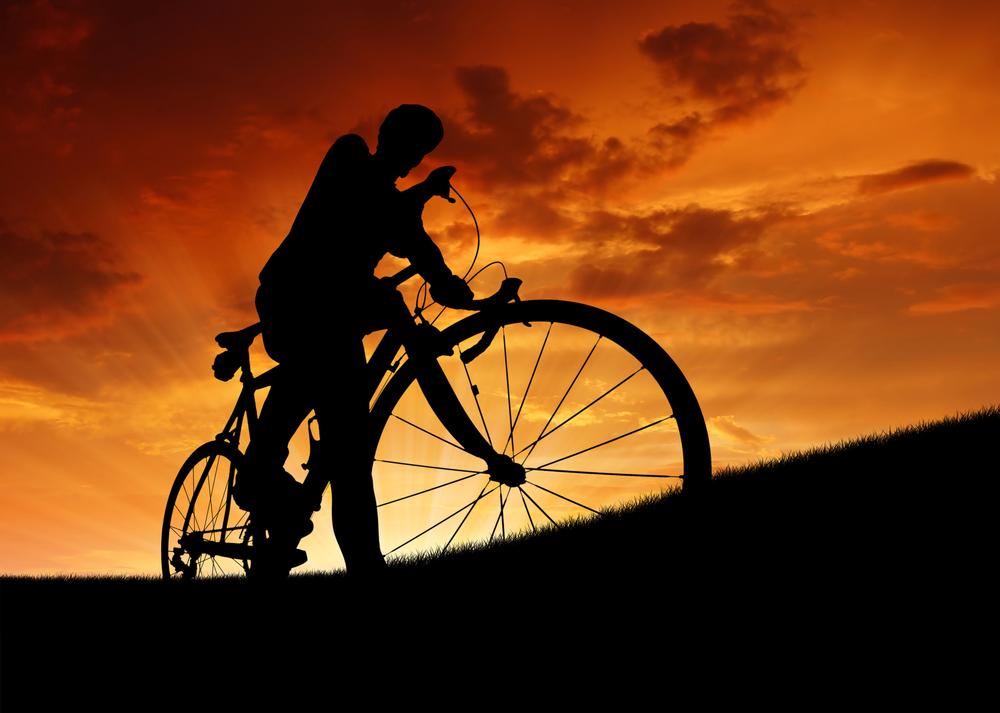
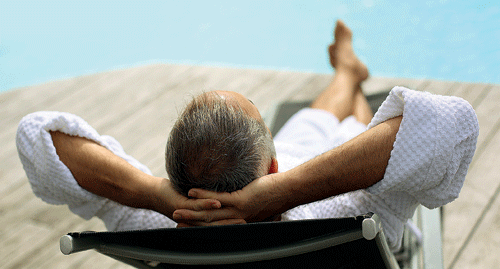
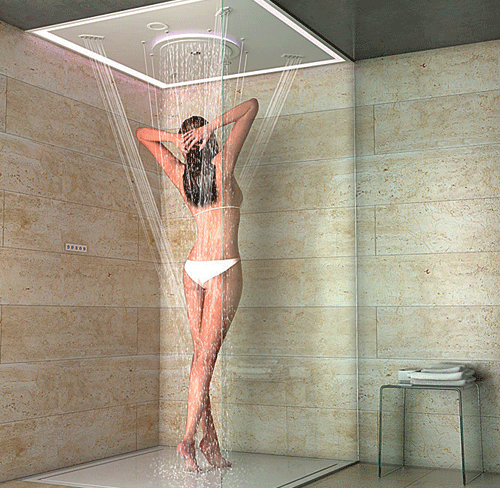
Scientists believe the best time for physical activity is 2pm-6pm rather than later / shutterstock.com
Research shows that organising daily schedules around the body’s natural clocks – our circadian rhythms – can lead to improved mental alertness and healthier immune systems. Equally, when these rhythms are disrupted, by work deadlines, school timetables or even the artificial light that’s prevalent in today’s society, our inner clocks are thrown out of synch.
With spas increasingly embracing fitness – whether in wellness programmes, in partnership with external companies or on-site classes – it could be time to take a closer look at when exercise is timetabled. Is there a time of day when people get more benefits from a certain activity? And if so, is that correct time universal or specific to individuals?
Broken body clocks In an article in The Wall Street Journal in late 2012, Dr Steve Kay, a professor of molecular and computational biology at the University of Southern California, observed that a disruption of circadian rhythms has been linked to problems such as diabetes, depression, dementia and obesity. Kay said that when the body’s master clock can synchronise the functioning of all its metabolic, CV and behavioural rhythms in response to light and other natural stimuli, it gives people “an edge in daily life”.
The article also looked specifically at how to select the ‘correct’ time of day to exercise, quoting a number of sports science experts. Michael Smolensky, an adjunct professor of biomedical engineering at the University of Texas, pointed to 3pm-6pm as the best time for physical performance, as well as the lowest risk of injury. Muscle strength was said to peak between 2pm-6pm, at levels as much as 6 per cent above the day’s lows, while joints and muscles were reported to be 20 per cent more flexible in the evening. In addition, a study of 4,756 patients led by Boris Medarov, an assistant professor of medicine at Albany Medical College in New York, suggested that the lungs function 17.6 per cent more efficiently at 5pm than at midday.
Meanwhile, another article in The New York Times (published around the same time) asked whether exercise can influence the body’s internal clock. Our bodies and therefore our health are ruled by rhythms, explained the article, quoting Christopher Colwell, a professor of psychiatry at the University of California: “The heart, the liver, the brain – all are controlled by an endogenous circadian rhythm.” As with Kay, Colwell noted the potential for serious health consequences resulting from a disruption in circadian rhythm, from obesity to certain types of cancer. He and his team therefore set out to investigate whether it was possible to fix a broken clock, specifically looking at exercise as a possible solution.
The studies – published in the Journal of Physiology in December 2012 – were conducted on mice. However, the findings suggest exercise does affect circadian rhythms, and that the effect may be most beneficial if physical activity is undertaken in the afternoon. This was, says Colwell, a surprise; he and his colleagues had expected morning exercise to be most productive.
However, Colwell acknowledged that the implications for humans aren’t yet clear, and that it’s impossible to say at this point whether we should favour afternoon exercise over a morning workout. All he could say with certainty was that it’s good idea to exercise if you want to avoid health problems linked to a disrupted circadian rhythm; further research might show afternoon workouts lead to better results, but any exercise was likely to be better than none.
Spa Business has investigated further by asking health and fitness experts from around the world for their thoughts on the question: is there a correct time to exercise?
Read more from this issue of Attractions Management magazine
View contents of Attractions Management 2013 issue 4
Interview: Helene Goetzelmann
L'Occitane's international spa director tells Rhianon Howells how the consumer retail company has become a spa operator with 60 facilities
Ask an expert: Profit & Loss
Hotel spas need to fight capital expenditure allocation said an investor panel at this year's Global Spa & Wellness Summit
Research: All rise
There's been an increase in the five top key performance indicators in the US spa industry shows the 2013 ISPA study
Company Profile Promotion: ESPA promotion
As ESPA's 20th
anniversary year draws
to a close, founder and
CEO Sue Harmsworth
explains how and why the
company is still evolving
Safari Spa: Animal instinct
Safari spas are the staple for Amani, one of South Africa's largest spa chains. Lisa Starr talks to MD Ronleigh Gordon
Trends: Brief encounters
We take a look at some of the most innovative spa pop-ups, a growing trend across the leisure sector
Interview: Paul Smyth
Something & Son designer shares his insights on creating pop-up spa facilities. Magali Robathan reports
Summit review: Upping the ante
Katie Barnes reveals the takeaway messages from the 2013 Global Spa & Wellness Summit in New Delhi, India, attended by 375 industry leaders
Research: Local news
Domestic travellers dominate the global wellness tourism market which has an economic impact of US$1.3 trillion. SRI's Ophelia Yeung reports
Research: Thai up
Prantik Bordoloi analyses a 2013 Thai spa industry study based on both spa consumer and spa operator opinions
Software news: Tech talk
The latest developments and news from spa software suppliers from around the world
Expert opinion: is there a correct time to exercise?
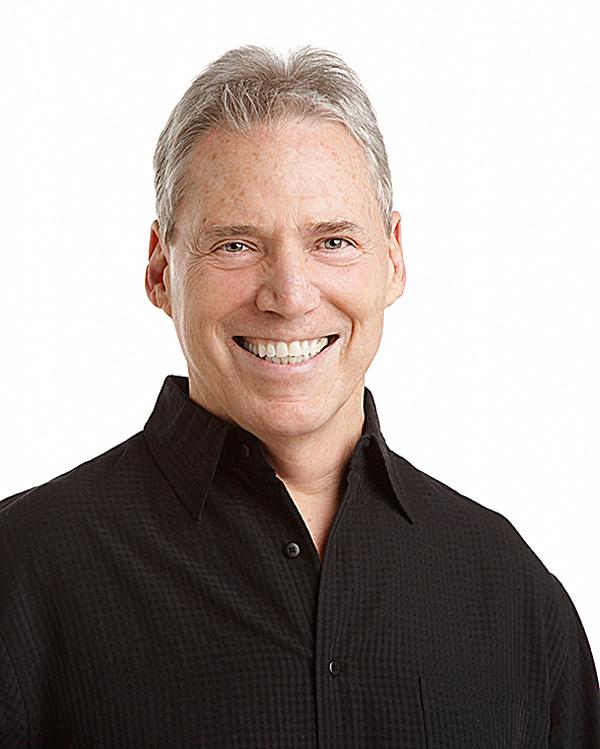
Dr Chris Beedie
Dr Chris BeedieHead of ukactive Research Institute and senior lecturerDepartment of Sport & Exercise Science, Aberystwyth University – UK
Is there a correct time to exercise? It’s a good question and the answer – as with so many of life’s big questions – is ‘yes, but...’
It’s highly likely that, for a range of reasons, there’s an optimum time to exercise for each person. What time of day that is, however, will depend on such a large number of factors that it’s likely that – for anyone but the elite athlete, competitive bodybuilder or exercise obsessive – identification of the time in question is more trouble than it’s worth.
For example, while research suggests that the lungs function best late in the day, certain hormones that regulate response and adaptation to exercise peak in the morning. Likewise, while muscle force might peak in the evening, motor co-ordination and concentration are way past their best by this time, as is pain tolerance.
If you know the exact balance of physiological, cognitive, emotional and performance variables required to perform at your best and to recover optimally, you might be able to identify the optimal time for specific goals. But you probably can’t rely on the published research to do so. Research conducted on large populations rarely generalises to individuals, meaning that you will have to use a lot of trial and error to identify the optimal times for each variable for yourself. To make things even worse, there’s a strong chance that relationships between time of day and performance variables might change with the season, temperature, stress and a number of other factors.
Train when you can as best you can. If you feel better training in the morning, if you see results and if it works for your lifestyle, that’s the time to train, irrespective of what the research says. If you want to be a champion, you may need to look deeper into your internal rhythms, but be prepared for a complex journey!
If you feel better training in the morning, if you see results and if it works for your lifestyle, that’s the time to train, irrespective of what the research says
Jan De JongCEOVital Balance Group – The Netherlands
Jan De Jong
The ideal training time is different for each muscle group. According to the Chinese Organ Clock philosophy, each muscle is associated with an internal organ in the body, and each organ has a circadian rhythm that includes daily phases of elevated activity (ideal training time) and recuperation (unfavourable training time). While muscles are improved by physical activity and sports, the state of organ function is therefore co-responsible for muscle health.
This is valuable information for drawing up personalised training schedules, as it means there are ideal times to train each muscle group. For example, avoid isolated training of hamstrings and biceps femoris between 5pm-7pm (recovery phase of connected large intestines) and train abdominal and quadriceps muscles between 1pm-3pm (optimal time for small intestine).
If a person has muscular problems, this may be due to injury, but it might also be related to hidden problems with the organ associated with that muscle. Problematic muscle regions should be trained gently and at the right times: if function-impaired muscles are stressed by inappropriate training, then (besides poor results) negative repercussions in the associated organ system cannot be ruled out.
Of course, it isn’t always possible to train at the ideal time for each individual muscle. In this case, when working out at less favourable training times, the training should support the muscle’s recuperation through stretching and light, steady work designed primarily to stimulate metabolic exchange.
Jim GavinProfessor of Applied Human SciencesConcordia University – Canada
Jim Gavin
The best answer is: ‘it depends.’ Humans are both complex and adaptive. We have diverse patterns and personalities and we’re constantly adjusting to shifting life conditions. Time is only one factor to consider in relation to exercising. I dislike evening exercise, yet that’s when my aikido classes are. Will I give up my beloved aikido because of its timing? Never. For people who have a particular practice or sport, time is not the pivotal factor.
Let’s consider personality. My research shows that we gravitate toward activities that mirror our psychology. If you’re extroverted and a thrill-seeker, you want to be social and stimulated. Your biological clock may urge you to exercise at 2pm, but friends you ‘play’ with aren’t around then, and the exercise world at that time looks like a treadmill. So you’ll need to apologise to your internal clock and exercise when the racquet court – and your preferred partner – are available.
Here’s another thought: exercise has many faces. No matter what, I cannot get myself to reliably tie on my running shoes at 6am, but I do exercise in the morning. I do yoga and, in the summer, I eagerly leap into the lake for a half-hour swim. However, I don’t think I’ve ever pumped iron before breakfast. Some movement forms feel better to us at different times of day, and these can slide in seamlessly at appropriate moments.
Final comment: is your life schedule predictable and totally under your control? If so, you’re in a distinct minority. It’s increasingly a 24/7 world that we have to navigate as best we can. Embrace diversity and broaden your definition of exercise.
Kate Cracknell is the editor of Health Club Management, the sister magazine to Spa Business Email: [email protected] Twitter: @HealthClubKate
Research suggests that lungs function 17.6 per cent more efficiently at 5pm than at midday / shutterstock.com/Vaclav Volrab
COMPANY PROFILES
Taylor Made Designs
Founded in 1993, Taylor Made
Designs supply corporate clothing
and brand-enhancing merchandise
to [more...]
Polin Waterparks
Polin was founded in Istanbul in 1976. Polin
has since grown into a leading company in
the waterpa [more...]
Is there a best time to exercise based on our internal body clock? And should spas consider this when putting together wellness programmes and scheduling fitness classes?
By Kate Cracknell | Published in Spa Business 2013 issue 4
Scientists believe the best time for physical activity is 2pm-6pm rather than later / shutterstock.com
Research shows that organising daily schedules around the body’s natural clocks – our circadian rhythms – can lead to improved mental alertness and healthier immune systems. Equally, when these rhythms are disrupted, by work deadlines, school timetables or even the artificial light that’s prevalent in today’s society, our inner clocks are thrown out of synch.
With spas increasingly embracing fitness – whether in wellness programmes, in partnership with external companies or on-site classes – it could be time to take a closer look at when exercise is timetabled. Is there a time of day when people get more benefits from a certain activity? And if so, is that correct time universal or specific to individuals?
Broken body clocks In an article in The Wall Street Journal in late 2012, Dr Steve Kay, a professor of molecular and computational biology at the University of Southern California, observed that a disruption of circadian rhythms has been linked to problems such as diabetes, depression, dementia and obesity. Kay said that when the body’s master clock can synchronise the functioning of all its metabolic, CV and behavioural rhythms in response to light and other natural stimuli, it gives people “an edge in daily life”.
The article also looked specifically at how to select the ‘correct’ time of day to exercise, quoting a number of sports science experts. Michael Smolensky, an adjunct professor of biomedical engineering at the University of Texas, pointed to 3pm-6pm as the best time for physical performance, as well as the lowest risk of injury. Muscle strength was said to peak between 2pm-6pm, at levels as much as 6 per cent above the day’s lows, while joints and muscles were reported to be 20 per cent more flexible in the evening. In addition, a study of 4,756 patients led by Boris Medarov, an assistant professor of medicine at Albany Medical College in New York, suggested that the lungs function 17.6 per cent more efficiently at 5pm than at midday.
Meanwhile, another article in The New York Times (published around the same time) asked whether exercise can influence the body’s internal clock. Our bodies and therefore our health are ruled by rhythms, explained the article, quoting Christopher Colwell, a professor of psychiatry at the University of California: “The heart, the liver, the brain – all are controlled by an endogenous circadian rhythm.” As with Kay, Colwell noted the potential for serious health consequences resulting from a disruption in circadian rhythm, from obesity to certain types of cancer. He and his team therefore set out to investigate whether it was possible to fix a broken clock, specifically looking at exercise as a possible solution.
The studies – published in the Journal of Physiology in December 2012 – were conducted on mice. However, the findings suggest exercise does affect circadian rhythms, and that the effect may be most beneficial if physical activity is undertaken in the afternoon. This was, says Colwell, a surprise; he and his colleagues had expected morning exercise to be most productive.
However, Colwell acknowledged that the implications for humans aren’t yet clear, and that it’s impossible to say at this point whether we should favour afternoon exercise over a morning workout. All he could say with certainty was that it’s good idea to exercise if you want to avoid health problems linked to a disrupted circadian rhythm; further research might show afternoon workouts lead to better results, but any exercise was likely to be better than none.
Spa Business has investigated further by asking health and fitness experts from around the world for their thoughts on the question: is there a correct time to exercise?
Read more from this issue of Attractions Management magazine
View contents of Attractions Management 2013 issue 4
Interview: Helene Goetzelmann
L'Occitane's international spa director tells Rhianon Howells how the consumer retail company has become a spa operator with 60 facilities
Ask an expert: Profit & Loss
Hotel spas need to fight capital expenditure allocation said an investor panel at this year's Global Spa & Wellness Summit
Research: All rise
There's been an increase in the five top key performance indicators in the US spa industry shows the 2013 ISPA study
Company Profile Promotion: ESPA promotion
As ESPA's 20th
anniversary year draws
to a close, founder and
CEO Sue Harmsworth
explains how and why the
company is still evolving
Safari Spa: Animal instinct
Safari spas are the staple for Amani, one of South Africa's largest spa chains. Lisa Starr talks to MD Ronleigh Gordon
Trends: Brief encounters
We take a look at some of the most innovative spa pop-ups, a growing trend across the leisure sector
Interview: Paul Smyth
Something & Son designer shares his insights on creating pop-up spa facilities. Magali Robathan reports
Summit review: Upping the ante
Katie Barnes reveals the takeaway messages from the 2013 Global Spa & Wellness Summit in New Delhi, India, attended by 375 industry leaders
Research: Local news
Domestic travellers dominate the global wellness tourism market which has an economic impact of US$1.3 trillion. SRI's Ophelia Yeung reports
Research: Thai up
Prantik Bordoloi analyses a 2013 Thai spa industry study based on both spa consumer and spa operator opinions
Software news: Tech talk
The latest developments and news from spa software suppliers from around the world
Expert opinion: is there a correct time to exercise?
Dr Chris Beedie
Dr Chris BeedieHead of ukactive Research Institute and senior lecturerDepartment of Sport & Exercise Science, Aberystwyth University – UK
Is there a correct time to exercise? It’s a good question and the answer – as with so many of life’s big questions – is ‘yes, but...’
It’s highly likely that, for a range of reasons, there’s an optimum time to exercise for each person. What time of day that is, however, will depend on such a large number of factors that it’s likely that – for anyone but the elite athlete, competitive bodybuilder or exercise obsessive – identification of the time in question is more trouble than it’s worth.
For example, while research suggests that the lungs function best late in the day, certain hormones that regulate response and adaptation to exercise peak in the morning. Likewise, while muscle force might peak in the evening, motor co-ordination and concentration are way past their best by this time, as is pain tolerance.
If you know the exact balance of physiological, cognitive, emotional and performance variables required to perform at your best and to recover optimally, you might be able to identify the optimal time for specific goals. But you probably can’t rely on the published research to do so. Research conducted on large populations rarely generalises to individuals, meaning that you will have to use a lot of trial and error to identify the optimal times for each variable for yourself. To make things even worse, there’s a strong chance that relationships between time of day and performance variables might change with the season, temperature, stress and a number of other factors.
Train when you can as best you can. If you feel better training in the morning, if you see results and if it works for your lifestyle, that’s the time to train, irrespective of what the research says. If you want to be a champion, you may need to look deeper into your internal rhythms, but be prepared for a complex journey!
If you feel better training in the morning, if you see results and if it works for your lifestyle, that’s the time to train, irrespective of what the research says
Jan De JongCEOVital Balance Group – The Netherlands
Jan De Jong
The ideal training time is different for each muscle group. According to the Chinese Organ Clock philosophy, each muscle is associated with an internal organ in the body, and each organ has a circadian rhythm that includes daily phases of elevated activity (ideal training time) and recuperation (unfavourable training time). While muscles are improved by physical activity and sports, the state of organ function is therefore co-responsible for muscle health.
This is valuable information for drawing up personalised training schedules, as it means there are ideal times to train each muscle group. For example, avoid isolated training of hamstrings and biceps femoris between 5pm-7pm (recovery phase of connected large intestines) and train abdominal and quadriceps muscles between 1pm-3pm (optimal time for small intestine).
If a person has muscular problems, this may be due to injury, but it might also be related to hidden problems with the organ associated with that muscle. Problematic muscle regions should be trained gently and at the right times: if function-impaired muscles are stressed by inappropriate training, then (besides poor results) negative repercussions in the associated organ system cannot be ruled out.
Of course, it isn’t always possible to train at the ideal time for each individual muscle. In this case, when working out at less favourable training times, the training should support the muscle’s recuperation through stretching and light, steady work designed primarily to stimulate metabolic exchange.
Jim GavinProfessor of Applied Human SciencesConcordia University – Canada
Jim Gavin
The best answer is: ‘it depends.’ Humans are both complex and adaptive. We have diverse patterns and personalities and we’re constantly adjusting to shifting life conditions. Time is only one factor to consider in relation to exercising. I dislike evening exercise, yet that’s when my aikido classes are. Will I give up my beloved aikido because of its timing? Never. For people who have a particular practice or sport, time is not the pivotal factor.
Let’s consider personality. My research shows that we gravitate toward activities that mirror our psychology. If you’re extroverted and a thrill-seeker, you want to be social and stimulated. Your biological clock may urge you to exercise at 2pm, but friends you ‘play’ with aren’t around then, and the exercise world at that time looks like a treadmill. So you’ll need to apologise to your internal clock and exercise when the racquet court – and your preferred partner – are available.
Here’s another thought: exercise has many faces. No matter what, I cannot get myself to reliably tie on my running shoes at 6am, but I do exercise in the morning. I do yoga and, in the summer, I eagerly leap into the lake for a half-hour swim. However, I don’t think I’ve ever pumped iron before breakfast. Some movement forms feel better to us at different times of day, and these can slide in seamlessly at appropriate moments.
Final comment: is your life schedule predictable and totally under your control? If so, you’re in a distinct minority. It’s increasingly a 24/7 world that we have to navigate as best we can. Embrace diversity and broaden your definition of exercise.
Kate Cracknell is the editor of Health Club Management, the sister magazine to Spa Business Email: [email protected] Twitter: @HealthClubKate
Research suggests that lungs function 17.6 per cent more efficiently at 5pm than at midday / shutterstock.com/Vaclav Volrab
Abu Dhabi-based investment firm Mubadala Capital has made a binding, fully financed
€1 billion
offer to acquire Pierre and Vacances SA, the European holiday resort operator behind the
continental European Center Parcs business.
Disney has reaffirmed its commitment to investing US$30 billion in its US parks and cruise
business by 2033, using new America250 celebrations to underline the role its attractions play
in supporting jobs, tourism and economic growth.
Expo 2030 Riyadh is being planned as a permanent visitor destination, with organisers
confirming the six-million-square-metre site will become a Global Village after the event closes.
The owner of one of Australia's best-known waterparks has acquired a major competitor,
creating a new attractions business spanning two of the country's largest visitor destinations.
The Toverland theme park in the Netherlands has announced a €98m expansion programme
that will add a resort, new attractions and staff facilities as it pursues plans to become a multi-
day destination.
Hotel de France, located on the British Isle of Jersey, has created a wellness retreat package
that includes a hot yoga session that will take place in Jersey Zoo’s butterfly sanctuary.
A new immersive attraction designed to transport visitors into the final hours of ancient Pompeii
is preparing to open near the world-famous archaeological site in southern Italy.
Experience design company, BRC Imagination Arts, has completed a transition that sees founder
Bob Rogers pass ownership of the business to four long-serving senior executives, while
remaining actively involved with the company.
Movie Park Germany has opened a new Paramount Pictures-themed attraction as part of its 30th
anniversary celebrations, using immersive storytelling and adaptive reuse to reinforce the park’s
longstanding “Hollywood in Germany” positioning.
Therme Manchester’s 28-acre development, which will include interconnected glass pavilions
that measure 65,000sq m, will be the largest bathing and wellbeing attraction in the world once
complete, according to prof David Russell, CEO of Therme UK.
+ More news
COMPANY PROFILES
Taylor Made Designs Founded in 1993, Taylor Made
Designs supply corporate clothing
and brand-enhancing merchandise
to [more...]
Polin Waterparks Polin was founded in Istanbul in 1976. Polin
has since grown into a leading company in
the waterpa [more...]