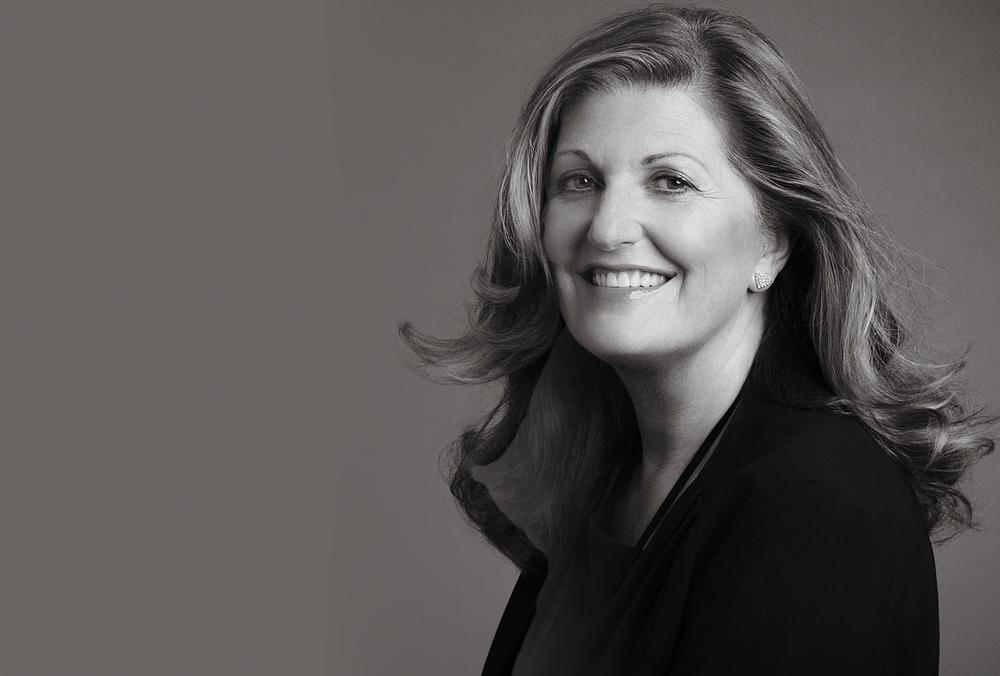
In many ways, the trajectory of ESPA encapsulates the history of the spa industry itself, from grass roots movement to global economy. Founded by industry pioneer Sue Harmsworth in 1993, the business has grown from a small UK-based concern offering consultancy services and a modest natural product line to a global spa management and product powerhouse, with more than 350 spas in almost 60 countries and clients ranging from Peninsula Hotels and One & Only Resorts to Ritz-Carlton and Mandarin Oriental.
But although these credentials are impressive, there are others that tell us more about what kind of company ESPA really is. After 20 years, this is still a family-run business, and including Harmsworth and her two sons – Michael, managing director, and Charlie, brand director – every member of the senior management team has been with the company at least 14 years and risen through the ranks. Moreover, all of the company’s 200 employees around the world, from sales people to trainers, have cut their teeth in operations, giving them a unique ability to offer clients rounded solutions to the challenges of running a successful spa business.
While ESPA’s heritage and expertise are enviable, however, the company has never made the mistake of resting on its laurels. Here, Harmsworth explains why the drive to innovate that inspired her to launch the business is just as important today.
How would you sum up your business model? We’re an authentic, solutions-led spa company that offers its business partners a full range of services, from original concept and customer journey design, commercial business planning and budgeting, pre-opening and brand standards, recruitment, training and treatments right through to ongoing spa management. Our spa heritage and knowledge combined with our natural ingredient intelligence gives us a unique business edge, both commercially and operationally.
However, over the past few years, our business model has become much more flexible, meaning that alongside our spa design/development and management accounts, our portfolio now includes select product-only partnerships with spas and hotels that we feel share our stringent brand standards.
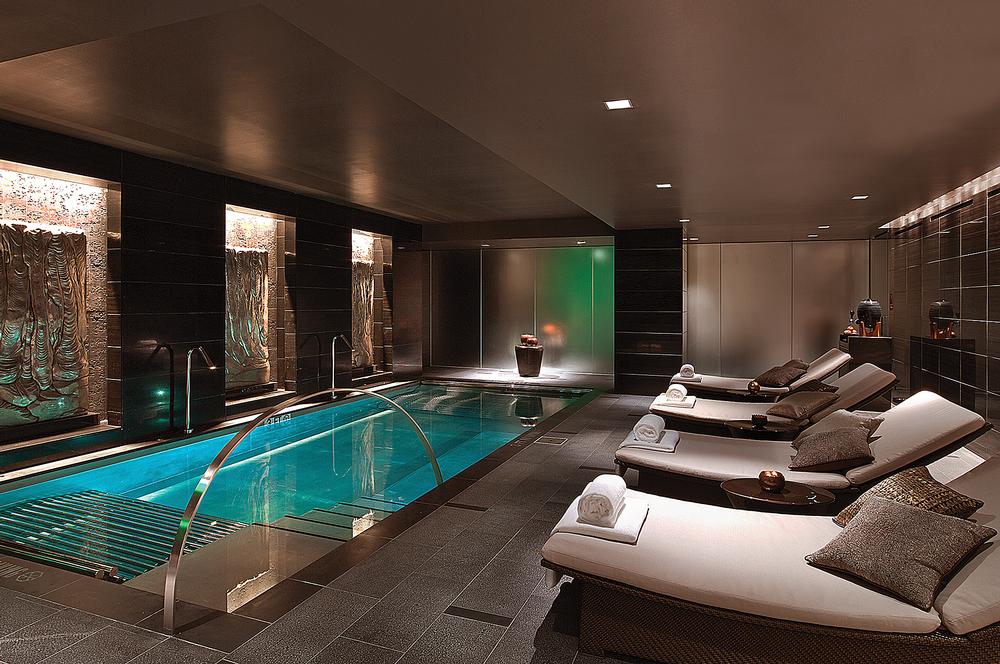
What we can promise is that every experiential encounter with ESPA will provide award-winning treatments, the finest quality natural products and a memorable, luxurious customer journey in a beautiful and relaxing environment.
What makes ESPA products unique? I developed the ESPA product range while I was working as a spa consultant in the early 1990s for the simple reason that I couldn’t find the products I needed. Instead, I was forced to use a combination of clinical aromatherapy oils, bucket-loads of seaweed and skincare products that were really quite synthetic. So I set out to create a skincare line that was elegant and natural and covered everything needed for spas in a single range – and that’s still the case today.
However, since the launch of our own factory in Somerset, UK, in 2009, our product development has reached a whole new level. The factory is accredited by the Soil Association, Ecocert, the Organic Food Federation and the Fairtrade Foundation and, while our products have always been of extremely high quality, we’re now able to keep even tighter control over quality standards and respond even more quickly to our customers’ needs.
All of our products are made up of 95-100 per cent natural ingredients and are free from synthetic colour and fragrance, parabens, phthalates, DEA, TEA, SLS, SLES, silicone, propylene glycol and petrolatum. Every formula contains exceptionally potent natural actives and has been developed by our in-house chemists using cutting edge technology to deliver unrivalled results.
What kind of testing do you do? I take an active role in the development process for every new product, working alongside our chemists to ensure that only the most effective products are brought to market. In addition, every product undergoes third-party efficacy testing, and must also pass staff, therapist and client forums. As a result, only 60 per cent of new products ever make it into the range.
Once a product is out there, we pay close attention to every comment that comes back from our spa partners, therapists and consumers. This continual feedback informs both our reformulations and new product introductions, helping us maintain our competitive advantage. Unlike many other spa brands, which make most of their revenue from just 20 per cent of their products, we make 60 per cent of our revenue from 40 per cent of our products, which we believe is partly down to the constant evaluation and reformulation of our range to ensure it’s as effective and results-oriented as it can be.
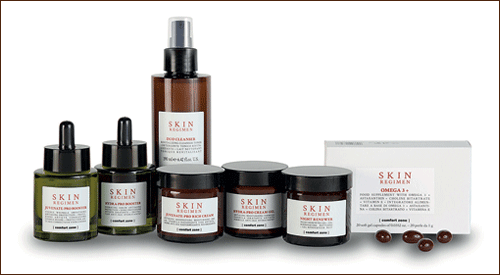
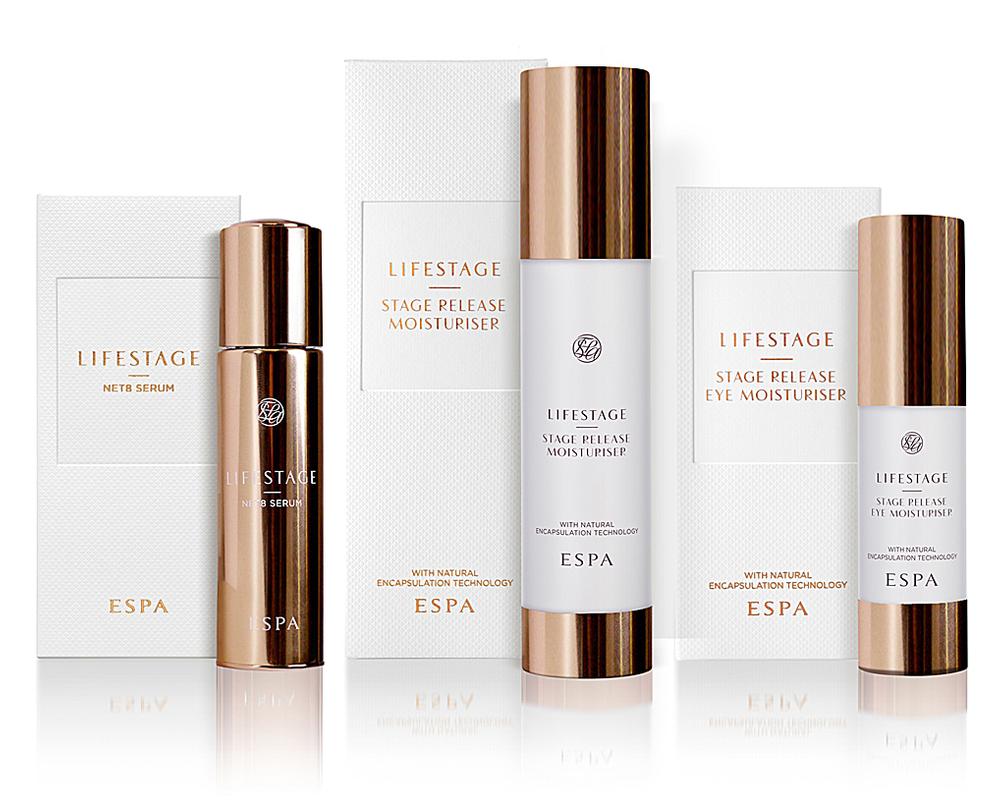
Can you tell us about your most recent product launches? One of our most exciting launches this year has been our Lifestage range, which includes the Lifestage NET8 Serum, Lifestage Stage Release Moisturiser and Lifestage Stage Release Eye Moisturiser. Developed for women over the age of 45, Lifestage targets all the most visible signs of ageing in a single formula, using the very latest advances in skincare science – natural encapsulation and stage release technology – to deliver dramatic results.
In all honesty, I developed this range for me. When women reach the menopause, they start to suffer from all sorts of skin problems they haven’t experienced before, from open pores, redness and hyper-pigmentation to wrinkles and loss of elasticity. A few years ago, I started to find that I was using one serum for this and another serum for that, and it became confusing – I wanted everything I needed to be available in just one product.
The Lifestage formula contains 10 natural actives that together tackle all of these age-related issues. But what really makes it unique is the delivery system, known as natural encapsulation technology, which had previously only been used in medicines. The system consists of multiple microspheres, each of which holds a blend of the 10 actives, suspended in a capsule of salicylic acid. When the product is applied to the skin, the capsules punch through the epidermis rather than spreading evenly, and the microspheres burst – but because they’re different sizes they burst at intervals. This is known as stage release technology. The end result is that this very powerful formula is not only delivered deep into the skin but remains active for eight hours.
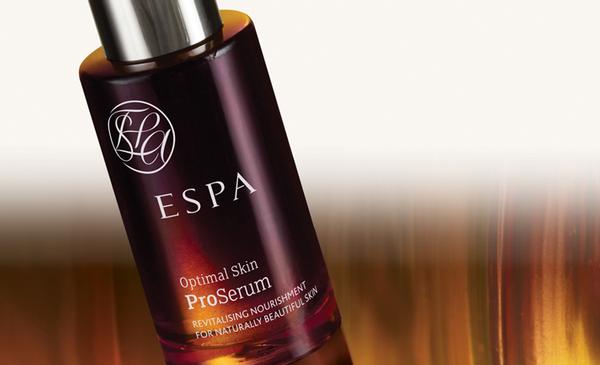
We’ve also just launched Optimal Skin ProSerum, which combines the benefits of a super-serum with those of an aromatherapy face treatment oil – that’s been so popular that we ran out of stock after three weeks and have had to quadruple our manufacturing quota. Other new products include our ESPA Bath and Body Essentials range and our 100 per cent natural Mandarin Lip Balm.
Your latest concept for managed spas is ESPA Life – can you tell us more about this? We launched ESPA Life in 2011 in response to the growing demand among consumers for a more wellness-oriented spa experience, incorporating services such as complementary medicine, nutrition, weight loss programmes, sleep health programmes and so on. At the same time, we felt an offering like this could be a good solution for some of our hotel clients, many of who are still struggling with occupancy issues in this economic climate.
Wellness is a big topic in the spa industry at the moment, but it needs to be delivered with integrity. The danger is that the term ‘wellness’, like the word ‘spa’, ends up being over-used and everyone who has a nutritionist claims to be offering wellness – that could be very damaging to people’s health and wellbeing. By contrast, we take the responsibility very seriously. As a minimum, every ESPA Life has a naturopath, an acupuncturist, an osteopath, a nutritionist, high-level personal trainers and remedial sports masseurs, and we also do functional medical testing, including blood tests, if appropriate.
So far, we’ve launched ESPA Life at Corinthia, London, and ESPA Life at Gleneagles, Scotland, as well as a host of non-branded wellness programmes at Resorts World Sentosa in Singapore. We’re currently putting the concept into a number of other properties, and we’re also in the process of developing a flexible ESPA Life model for clients that only want to offer it in low season.
What’s next for ESPA? Since the introduction of ESPA Life and our more flexible business model, the growth potential of our business is exceptionally strong. We’ve got lots of new spa developments in progress, including branded accounts, managed accounts and product-only partnerships, and 2013-14 will see us moving into several new countries, including Azerbaijan and Saudi Arabia. We’ve got numerous new products in the pipeline, and we’ve also just launched an in-room product range for hotels, which we believe will further enhance the guest experience. Ultimately, we’re still one of only a few companies that provide a complete spa offering, and with our constant commitment to evaluation and improvement, you can be sure that we will continue to lead the industry rather than follow.
Read more from this issue of Attractions Management magazine
View contents of Attractions Management 2013 issue 4
Interview: Helene Goetzelmann
L'Occitane's international spa director tells Rhianon Howells how the consumer retail company has become a spa operator with 60 facilities
Ask an expert: Profit & Loss
Hotel spas need to fight capital expenditure allocation said an investor panel at this year's Global Spa & Wellness Summit
Research: All rise
There's been an increase in the five top key performance indicators in the US spa industry shows the 2013 ISPA study
Company Profile Promotion: ESPA promotion
As ESPA's 20th
anniversary year draws
to a close, founder and
CEO Sue Harmsworth
explains how and why the
company is still evolving
Safari Spa: Animal instinct
Safari spas are the staple for Amani, one of South Africa's largest spa chains. Lisa Starr talks to MD Ronleigh Gordon
Trends: Brief encounters
We take a look at some of the most innovative spa pop-ups, a growing trend across the leisure sector
Interview: Paul Smyth
Something & Son designer shares his insights on creating pop-up spa facilities. Magali Robathan reports
Summit review: Upping the ante
Katie Barnes reveals the takeaway messages from the 2013 Global Spa & Wellness Summit in New Delhi, India, attended by 375 industry leaders
Research: Local news
Domestic travellers dominate the global wellness tourism market which has an economic impact of US$1.3 trillion. SRI's Ophelia Yeung reports
Research: Thai up
Prantik Bordoloi analyses a 2013 Thai spa industry study based on both spa consumer and spa operator opinions
Software news: Tech talk
The latest developments and news from spa software suppliers from around the world
In many ways, the trajectory of ESPA encapsulates the history of the spa industry itself, from grass roots movement to global economy. Founded by industry pioneer Sue Harmsworth in 1993, the business has grown from a small UK-based concern offering consultancy services and a modest natural product line to a global spa management and product powerhouse, with more than 350 spas in almost 60 countries and clients ranging from Peninsula Hotels and One & Only Resorts to Ritz-Carlton and Mandarin Oriental.
But although these credentials are impressive, there are others that tell us more about what kind of company ESPA really is. After 20 years, this is still a family-run business, and including Harmsworth and her two sons – Michael, managing director, and Charlie, brand director – every member of the senior management team has been with the company at least 14 years and risen through the ranks. Moreover, all of the company’s 200 employees around the world, from sales people to trainers, have cut their teeth in operations, giving them a unique ability to offer clients rounded solutions to the challenges of running a successful spa business.
While ESPA’s heritage and expertise are enviable, however, the company has never made the mistake of resting on its laurels. Here, Harmsworth explains why the drive to innovate that inspired her to launch the business is just as important today.
How would you sum up your business model? We’re an authentic, solutions-led spa company that offers its business partners a full range of services, from original concept and customer journey design, commercial business planning and budgeting, pre-opening and brand standards, recruitment, training and treatments right through to ongoing spa management. Our spa heritage and knowledge combined with our natural ingredient intelligence gives us a unique business edge, both commercially and operationally.
However, over the past few years, our business model has become much more flexible, meaning that alongside our spa design/development and management accounts, our portfolio now includes select product-only partnerships with spas and hotels that we feel share our stringent brand standards.
What we can promise is that every experiential encounter with ESPA will provide award-winning treatments, the finest quality natural products and a memorable, luxurious customer journey in a beautiful and relaxing environment.
What makes ESPA products unique? I developed the ESPA product range while I was working as a spa consultant in the early 1990s for the simple reason that I couldn’t find the products I needed. Instead, I was forced to use a combination of clinical aromatherapy oils, bucket-loads of seaweed and skincare products that were really quite synthetic. So I set out to create a skincare line that was elegant and natural and covered everything needed for spas in a single range – and that’s still the case today.
However, since the launch of our own factory in Somerset, UK, in 2009, our product development has reached a whole new level. The factory is accredited by the Soil Association, Ecocert, the Organic Food Federation and the Fairtrade Foundation and, while our products have always been of extremely high quality, we’re now able to keep even tighter control over quality standards and respond even more quickly to our customers’ needs.
All of our products are made up of 95-100 per cent natural ingredients and are free from synthetic colour and fragrance, parabens, phthalates, DEA, TEA, SLS, SLES, silicone, propylene glycol and petrolatum. Every formula contains exceptionally potent natural actives and has been developed by our in-house chemists using cutting edge technology to deliver unrivalled results.
What kind of testing do you do? I take an active role in the development process for every new product, working alongside our chemists to ensure that only the most effective products are brought to market. In addition, every product undergoes third-party efficacy testing, and must also pass staff, therapist and client forums. As a result, only 60 per cent of new products ever make it into the range.
Once a product is out there, we pay close attention to every comment that comes back from our spa partners, therapists and consumers. This continual feedback informs both our reformulations and new product introductions, helping us maintain our competitive advantage. Unlike many other spa brands, which make most of their revenue from just 20 per cent of their products, we make 60 per cent of our revenue from 40 per cent of our products, which we believe is partly down to the constant evaluation and reformulation of our range to ensure it’s as effective and results-oriented as it can be.
Can you tell us about your most recent product launches? One of our most exciting launches this year has been our Lifestage range, which includes the Lifestage NET8 Serum, Lifestage Stage Release Moisturiser and Lifestage Stage Release Eye Moisturiser. Developed for women over the age of 45, Lifestage targets all the most visible signs of ageing in a single formula, using the very latest advances in skincare science – natural encapsulation and stage release technology – to deliver dramatic results.
In all honesty, I developed this range for me. When women reach the menopause, they start to suffer from all sorts of skin problems they haven’t experienced before, from open pores, redness and hyper-pigmentation to wrinkles and loss of elasticity. A few years ago, I started to find that I was using one serum for this and another serum for that, and it became confusing – I wanted everything I needed to be available in just one product.
The Lifestage formula contains 10 natural actives that together tackle all of these age-related issues. But what really makes it unique is the delivery system, known as natural encapsulation technology, which had previously only been used in medicines. The system consists of multiple microspheres, each of which holds a blend of the 10 actives, suspended in a capsule of salicylic acid. When the product is applied to the skin, the capsules punch through the epidermis rather than spreading evenly, and the microspheres burst – but because they’re different sizes they burst at intervals. This is known as stage release technology. The end result is that this very powerful formula is not only delivered deep into the skin but remains active for eight hours.
We’ve also just launched Optimal Skin ProSerum, which combines the benefits of a super-serum with those of an aromatherapy face treatment oil – that’s been so popular that we ran out of stock after three weeks and have had to quadruple our manufacturing quota. Other new products include our ESPA Bath and Body Essentials range and our 100 per cent natural Mandarin Lip Balm.
Your latest concept for managed spas is ESPA Life – can you tell us more about this? We launched ESPA Life in 2011 in response to the growing demand among consumers for a more wellness-oriented spa experience, incorporating services such as complementary medicine, nutrition, weight loss programmes, sleep health programmes and so on. At the same time, we felt an offering like this could be a good solution for some of our hotel clients, many of who are still struggling with occupancy issues in this economic climate.
Wellness is a big topic in the spa industry at the moment, but it needs to be delivered with integrity. The danger is that the term ‘wellness’, like the word ‘spa’, ends up being over-used and everyone who has a nutritionist claims to be offering wellness – that could be very damaging to people’s health and wellbeing. By contrast, we take the responsibility very seriously. As a minimum, every ESPA Life has a naturopath, an acupuncturist, an osteopath, a nutritionist, high-level personal trainers and remedial sports masseurs, and we also do functional medical testing, including blood tests, if appropriate.
So far, we’ve launched ESPA Life at Corinthia, London, and ESPA Life at Gleneagles, Scotland, as well as a host of non-branded wellness programmes at Resorts World Sentosa in Singapore. We’re currently putting the concept into a number of other properties, and we’re also in the process of developing a flexible ESPA Life model for clients that only want to offer it in low season.
What’s next for ESPA? Since the introduction of ESPA Life and our more flexible business model, the growth potential of our business is exceptionally strong. We’ve got lots of new spa developments in progress, including branded accounts, managed accounts and product-only partnerships, and 2013-14 will see us moving into several new countries, including Azerbaijan and Saudi Arabia. We’ve got numerous new products in the pipeline, and we’ve also just launched an in-room product range for hotels, which we believe will further enhance the guest experience. Ultimately, we’re still one of only a few companies that provide a complete spa offering, and with our constant commitment to evaluation and improvement, you can be sure that we will continue to lead the industry rather than follow.
Read more from this issue of Attractions Management magazine
View contents of Attractions Management 2013 issue 4
Interview: Helene Goetzelmann
L'Occitane's international spa director tells Rhianon Howells how the consumer retail company has become a spa operator with 60 facilities
Ask an expert: Profit & Loss
Hotel spas need to fight capital expenditure allocation said an investor panel at this year's Global Spa & Wellness Summit
Research: All rise
There's been an increase in the five top key performance indicators in the US spa industry shows the 2013 ISPA study
Company Profile Promotion: ESPA promotion
As ESPA's 20th
anniversary year draws
to a close, founder and
CEO Sue Harmsworth
explains how and why the
company is still evolving
Safari Spa: Animal instinct
Safari spas are the staple for Amani, one of South Africa's largest spa chains. Lisa Starr talks to MD Ronleigh Gordon
Trends: Brief encounters
We take a look at some of the most innovative spa pop-ups, a growing trend across the leisure sector
Interview: Paul Smyth
Something & Son designer shares his insights on creating pop-up spa facilities. Magali Robathan reports
Summit review: Upping the ante
Katie Barnes reveals the takeaway messages from the 2013 Global Spa & Wellness Summit in New Delhi, India, attended by 375 industry leaders
Research: Local news
Domestic travellers dominate the global wellness tourism market which has an economic impact of US$1.3 trillion. SRI's Ophelia Yeung reports
Research: Thai up
Prantik Bordoloi analyses a 2013 Thai spa industry study based on both spa consumer and spa operator opinions
Software news: Tech talk
The latest developments and news from spa software suppliers from around the world
Abu Dhabi-based investment firm Mubadala Capital has made a binding, fully financed
€1 billion
offer to acquire Pierre and Vacances SA, the European holiday resort operator behind the
continental European Center Parcs business.
Disney has reaffirmed its commitment to investing US$30 billion in its US parks and cruise
business by 2033, using new America250 celebrations to underline the role its attractions play
in supporting jobs, tourism and economic growth.
Expo 2030 Riyadh is being planned as a permanent visitor destination, with organisers
confirming the six-million-square-metre site will become a Global Village after the event closes.
The owner of one of Australia's best-known waterparks has acquired a major competitor,
creating a new attractions business spanning two of the country's largest visitor destinations.
The Toverland theme park in the Netherlands has announced a €98m expansion programme
that will add a resort, new attractions and staff facilities as it pursues plans to become a multi-
day destination.
Hotel de France, located on the British Isle of Jersey, has created a wellness retreat package
that includes a hot yoga session that will take place in Jersey Zoo’s butterfly sanctuary.
A new immersive attraction designed to transport visitors into the final hours of ancient Pompeii
is preparing to open near the world-famous archaeological site in southern Italy.
Experience design company, BRC Imagination Arts, has completed a transition that sees founder
Bob Rogers pass ownership of the business to four long-serving senior executives, while
remaining actively involved with the company.
Movie Park Germany has opened a new Paramount Pictures-themed attraction as part of its 30th
anniversary celebrations, using immersive storytelling and adaptive reuse to reinforce the park’s
longstanding “Hollywood in Germany” positioning.
Therme Manchester’s 28-acre development, which will include interconnected glass pavilions
that measure 65,000sq m, will be the largest bathing and wellbeing attraction in the world once
complete, according to prof David Russell, CEO of Therme UK.
+ More news
COMPANY PROFILES
Holovis Holovis is a privately owned company
established in 2004 by CEO Stuart
Hetherington. [more...]
Sally Corporation Our services include: Dark ride design & build; Redevelopment of existing attractions; High-quality [more...]