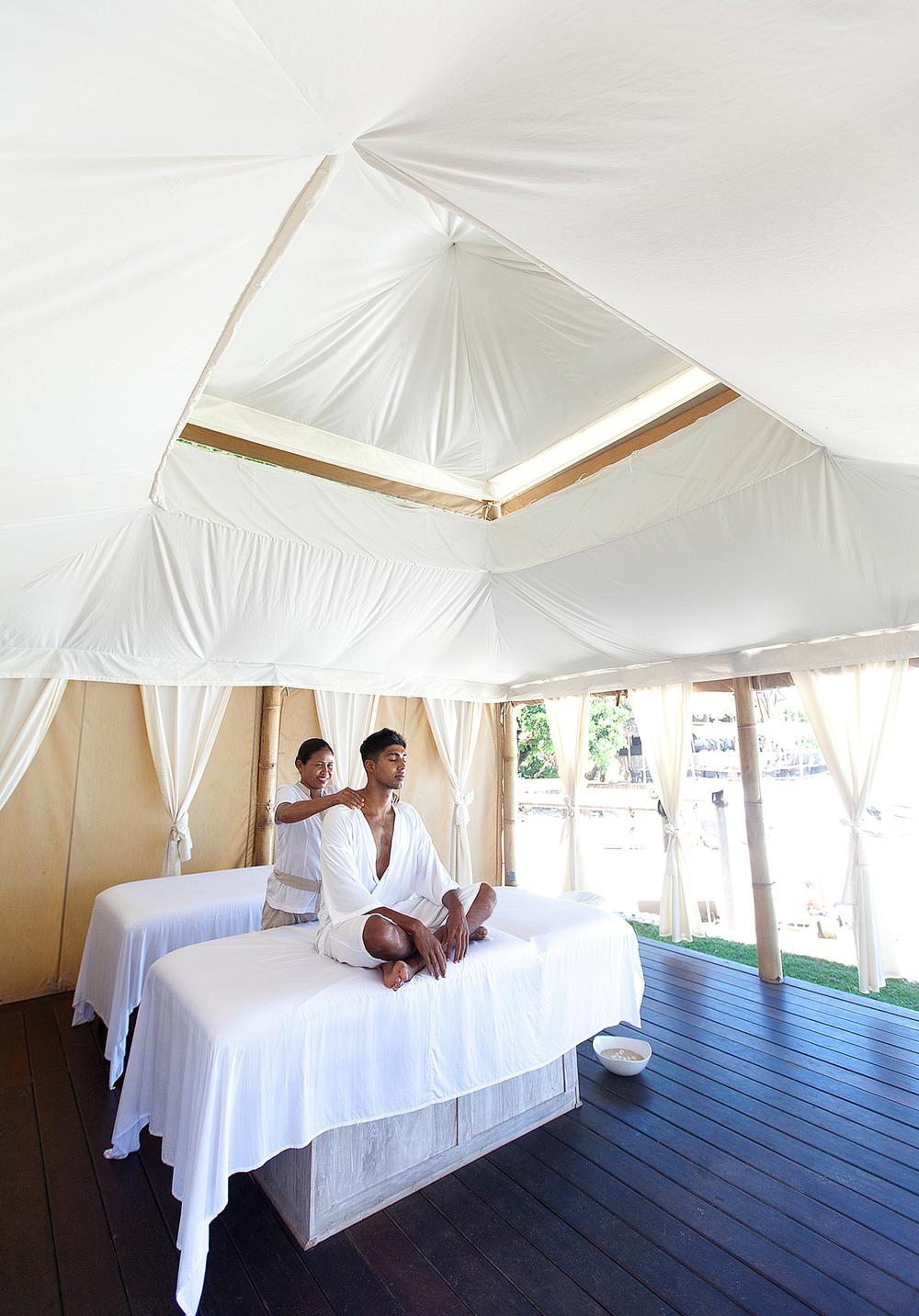
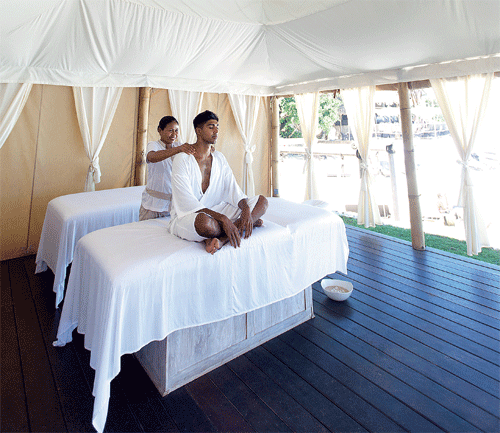
Pop-up tents help Karma fit in more guests when its main spas are at full capacity
The time-limited operations, based in temporary structures or filling existing, unused spaces are being used to test new markets and locations with innovative, creative, playful concepts in a low-risk way.
Free from the expense of infrastructure and building, pop-ups are thriving in the retail and leisure industry – from shops and hotels to restaurants and cinemas (see Leisure Management, issue 2, 2013 p42).
The spa market is getting in on the act too. Mostly, it’s the professional skincare companies which are using pop-ups to kick-start their entries into new markets. However, operators are beginning to realise that they’re a low-cost way to raise awareness of their brand and attract new audiences in a very tangible way off-site, or to trial a concept on-site to keep their offer fresh and interesting.
Here’s a selection of initiatives that illustrate how to tap into this hot new trend.
Read more from this issue of Attractions Management magazine
View contents of Attractions Management 2013 issue 4
Interview: Helene Goetzelmann
L'Occitane's international spa director tells Rhianon Howells how the consumer retail company has become a spa operator with 60 facilities
Ask an expert: Profit & Loss
Hotel spas need to fight capital expenditure allocation said an investor panel at this year's Global Spa & Wellness Summit
Research: All rise
There's been an increase in the five top key performance indicators in the US spa industry shows the 2013 ISPA study
Company Profile Promotion: ESPA promotion
As ESPA's 20th
anniversary year draws
to a close, founder and
CEO Sue Harmsworth
explains how and why the
company is still evolving
Safari Spa: Animal instinct
Safari spas are the staple for Amani, one of South Africa's largest spa chains. Lisa Starr talks to MD Ronleigh Gordon
Trends: Brief encounters
We take a look at some of the most innovative spa pop-ups, a growing trend across the leisure sector
Interview: Paul Smyth
Something & Son designer shares his insights on creating pop-up spa facilities. Magali Robathan reports
Summit review: Upping the ante
Katie Barnes reveals the takeaway messages from the 2013 Global Spa & Wellness Summit in New Delhi, India, attended by 375 industry leaders
Research: Local news
Domestic travellers dominate the global wellness tourism market which has an economic impact of US$1.3 trillion. SRI's Ophelia Yeung reports
Research: Thai up
Prantik Bordoloi analyses a 2013 Thai spa industry study based on both spa consumer and spa operator opinions
Software news: Tech talk
The latest developments and news from spa software suppliers from around the world
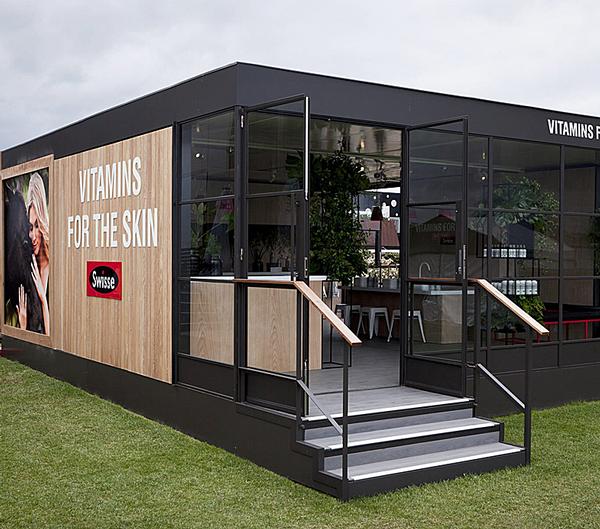
Design brief Australian skincare retailer Swisse teamed up with design firm Gloss Creative to develop a glass-fronted pop-up – with raw timber walls, black metal framework and lush green foliage – for Melbourne Spring Racing Carnival. Over the two months, it attracted 5,000 visitors and distributed more than 20,000 product samples.
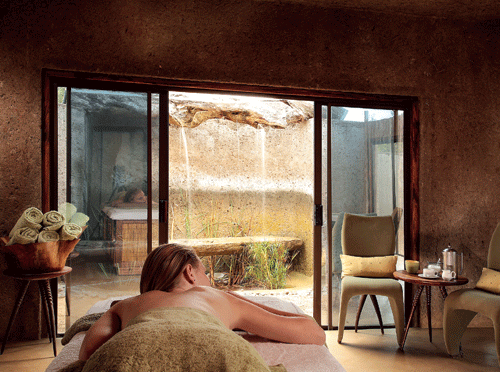
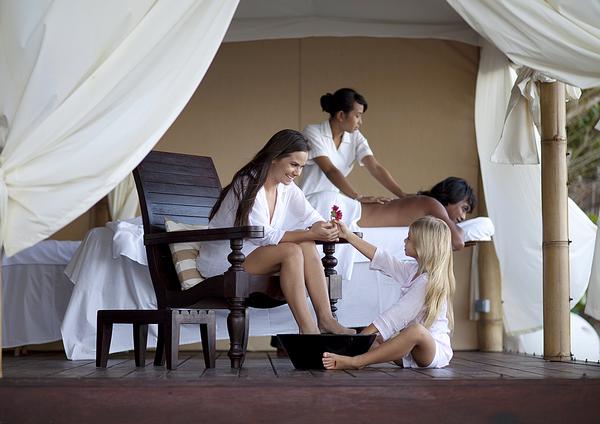
Material world “I love the pop-up spa culture and see massive potential for it within our business,” says Judy Chapman, the spa curator for Karma Resorts which is based in Bali but has 19 resorts worldwide. While the company already has permanent Karma Spas at most of its resorts, it offers ‘spa tents’ elsewhere on-site too, such as by the sea or pool. It has seven tents in total across its portfolio and another two on the way.
Chapman explains: “They’re an excellent solution for us when the spa is at full capacity and some clients even prefer to take their treatment in a spa tent next to the lapping waves. At Karma Kandara, our flagship property in Bali, the spa tent attracts masses of outside guests who then book treatments at the spa – so it feeds revenue to that too.” She adds that the tents are also very popular at beach club facilities which it runs at its own properties and for other operators such as at the Wyndham Hotel in Fiji.
The spa tents are from Esprit Nomade, a Bali-based company run by Dutch eco, luxury designer Anneke van Waesberghe. A bamboo frame supports draped linen and mosquito nets in an elegant, yet lightweight (25kg) design. Costing only US$20,000 (€14,800, £12,500) a tent, it takes just four months to see a return on investment, says Chapman. They key, she says, is getting staff to circulate with guests offering 10-minute complimentary massages and then upselling once they’re in the tent. “Another reason I like the pop-up spa is that it’s all very relaxed and easy going – sometimes people just want a great massage without dealing with all the formalities”.
Elsewhere, Chapman is using the pop-up concept to trial a medi-spa offering. For two days a week, the spa at Karma Kandara offers non-invasive services, such as colonic hydrotherapy, infrared light facials, microdermabrasion and Botox, in collaboration with local business Cocoon Medical Spa.
While Karma supplies the room, Cocoon brings the equipment and supplies the expert therapists and the revenue is then split 50/50. “It’s our way of gently testing the market,” says Chapman. “We’ve been considering medi-spa services for a while, as it fits our customer profile, but felt reluctant to heavily invest in it. This is an excellent and stress-free way of providing top-notch medical services, plus, as Cocoon is a day spa facility, it recommends its own clients – who are on three, five and seven-night packages – to stay with us.”
Details: www.karmaspas.com
It only takes four months to see an return on investment with pop-up spa tents
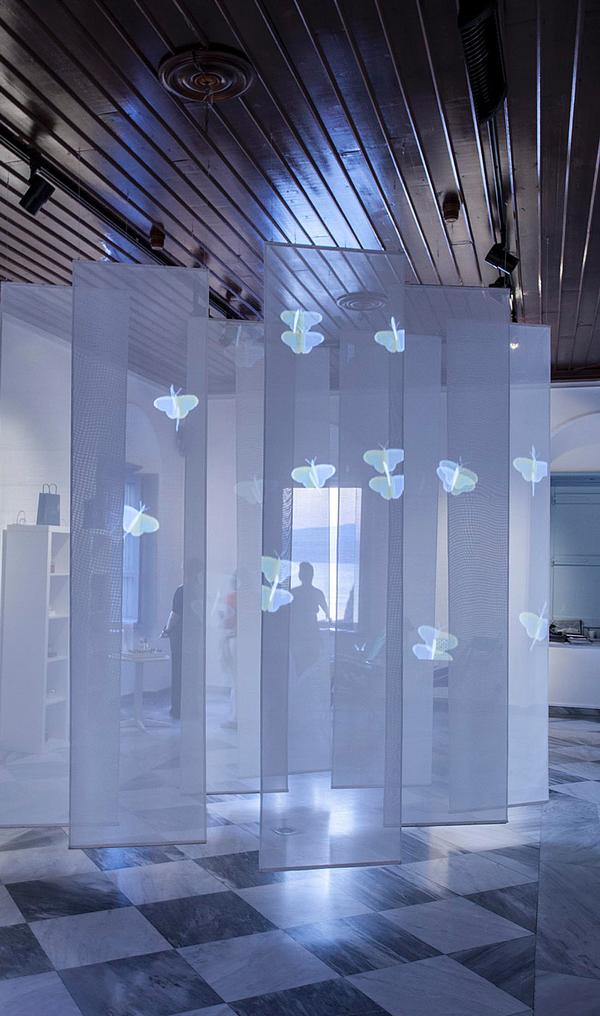
Social butterfly Swiss skincare brand Valmont teamed up with Catalan artist Isao Artigas to create its pop-up spa concept in 2011. Inspired by the fluttering movements used in Valmont’s facials, Artigas created a film of flying butterflies which can be projected onto transparent fabric screens to create a simple, yet atmospheric temporary spa setting.
Valmont likes to partner with venues and prestigious public events, such as the Cannes Film Festival and Austrian Fashion Week, for its pop-ups. Most recently, it spent 15 days at the Blue Palace in Elounda on the island of Crete, in celebration of the resort’s 10th anniversary.
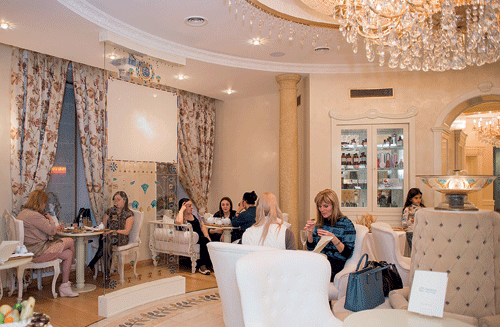
From 10-24 August, Valmont offered guests a complimentary 20-minute skin analysis and 30-minute facial. While the pop-up only took up 30sq m (323sq ft) in the hotel’s lobby, plus a corner in the hotel’s boutique shop, it created a great deal of interest – it had around 10 bookings a day and sold around 80 products. Alexandra Moulin, Valmont’s trade marketing manager says that, in comparison, even the big spas that stock its products sell no more than 30 a month. “For some guests it really was a nice surprise and as it was the holiday season, so they weren’t in a hurry and were more open to proposals,” says Moulin, adding that being culturally aware of their clientele helped. “We knew the main customers would be Russian and that they like to be addressed in their own language. Fortunately our therapist speaks Russian and also helped translate our invitations and marketing material.”
Valmont has various other pop-ups planned to coincide with special events such as Christmas and Valentine’s day.
Details: www.evalmont.com; www.bluepalace.gr
The latest pop-up in Greece
Butterflies projected on a screen form part of Valmont’s pop-up
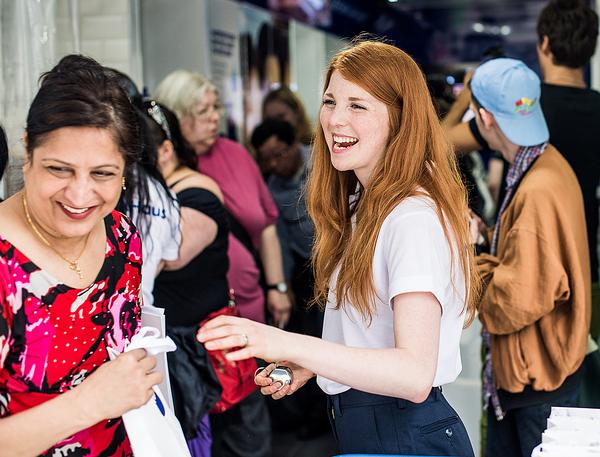
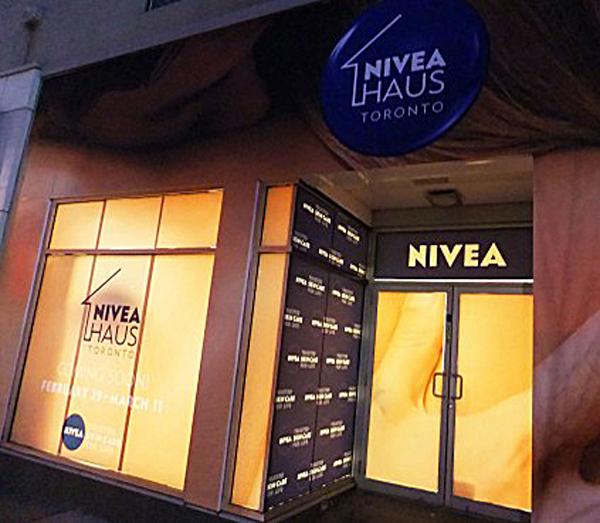
House Hold Consumer skincare brand Nivea has been using pop-up spas in Canada for the last three years. It launched the concept in 2011, in celebration of Nivea’s 100 year anniversary, by taking over a store on Toronto’s popular Queen Street for two weeks. The pop-up was based on Nivea Haus – the brand’s flagship day spa in Hamburg, Germany – and, says Larry LaPorta, general manager, of Beiersdorf Canada “we turned it into a place where consumers could interact with the brand – get their skin analysed and receive skincare and product advice and free products.”
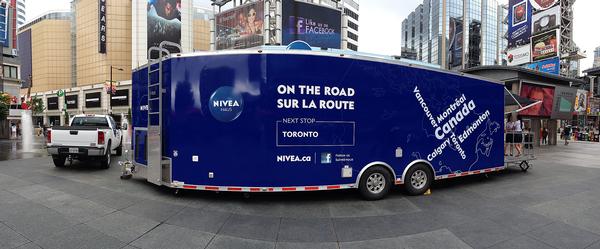
In 2012, it took the pop-up to Toronto and Montreal (two of its biggest markets in Canada) for two weeks. “However, there were still many more Canadian consumers we weren’t reaching,” says LaPorta. So in 2013 it created a mobile pop-up centre which members of the public could visit for a professional skin analysis, advice on products and skincare routines and to receive complimentary samples. Kicking off in Toronto on 11 June, Nivea Haus Mobile travelled across Canada and made stops in Calgary, Edmonton and Vancouver before wrapping up in Montreal on 16 August. It was backed by a multi-faceted communications strategy – from multiple PR events and social media campaigns to radio and TV adverts, coupon redemption and competitions. “It was a great success,” says LaPorta. “Over the two months we had more than 24,000 visitors and distributed over 24,000 gift bags, 1,600 full-size products and close to 220,000 samples/coupons/products.
“Although significant planning goes into each Nivea Haus activation, the benefits far outweigh any challenges. Given how successful its been over the past three years, bringing the Haus back in 2014 is definitely something we’ll be considering.”
Details: www.nivea.ca
The pop-up attracted more than 24,000 visitors over the course of two months
In previous years, Nivea Haus recreated a pop-up based on its flagship spa in Germany and took over stores in popular shopping districts
This year Nivea
Haus had a mobile pop-up which toured around Canada
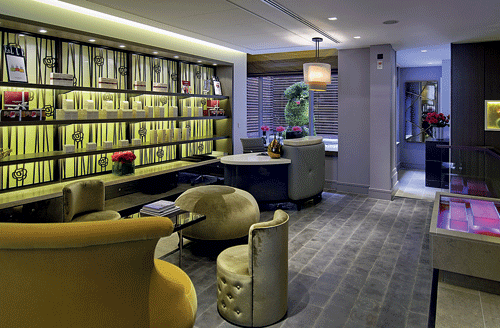
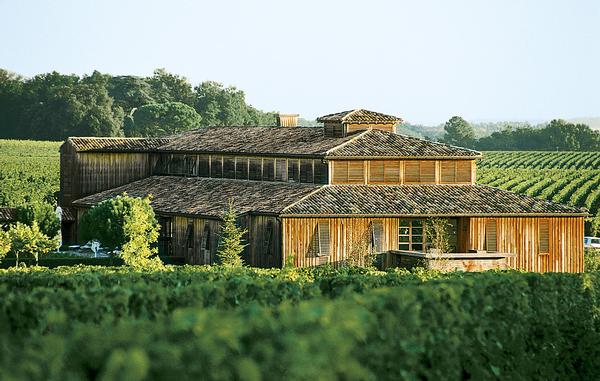
Vine Tuning “We had more than 40 beauty journalists try our treatments because of our pop-up,” says Jean-Christophe Samyn, Caudalie’s director for the UK and Ireland. The French vinotherapy brand debuted in UK last year and to mark its arrival took over the Urban Retreat – the day spa in London department store Harrods – with a pop-up spa inspired by its flagship Vinothérapie Spa in the Château Smith Haut Lafitte vineyard in Bordeaux.
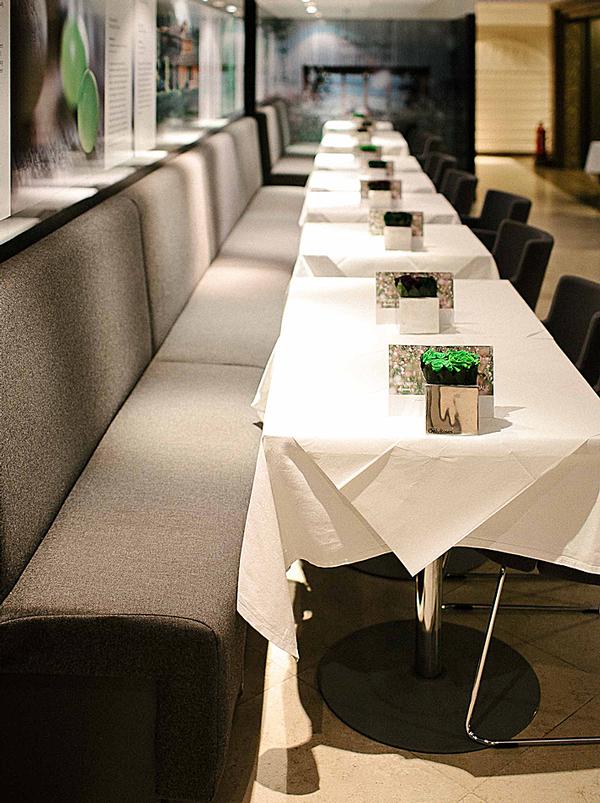
From June to July, Urban Retreat featured giant Caudalie visuals and displays throughout, trellises and podiums were planted with vines and signature Caudalie treatments, ranging from 30-90 minutes and £50-£130 (US$80-US$209, €59-€153) were on offer.
“Pop-ups create a lot of buzz and are relatively risk-free,” says Samyn, explaining that they paid Harrods a fixed, but undisclosed, fee for the space. “For us it was purely about brand awareness and the only challenge was trying to accommodate everyone as we had so many treatment requests.”
The Urban Retreat has been presenting pop-up spas since 2008, partnering with operators of destination spas such as Forte Village in Sardinia and Pangkor Laut in Malaysia. They’re seen as a quick, easy and cost-effective way to keep the offer fresh and to give customers a chance to experience treatments from around the world. Jo Harris, head of beauty at Urban Retreat says: “We provide the location and manage the communication strategy, which helps us build our own reputation and recognition globally and domestically with customers who are more focused on travel than beauty.”
Details: www.caudalie.com; www.urbanretreat.co.uk
It took over Harrods’ spa for two months
Caudalie modelled its pop-up on its flagship spa in Bordeaux
Food for thought The US natural grocer chain Whole Foods Market used Facebook to spread the word about its one-day pop-up spa at its Evanston store in Illinois in August. The Whole Body mini-spa included demonstrations on products, a free massage and goody bags.
The pop-up is an interesting move for the brand following reports that it’s in the process of developing its own dedicated health-focused resort and spa concept (see Spa Business Handbook 2013, p25).
Details: www.wholefoodsmarket.com
Please see page 66 for our interview with pop-up spa designer Paul Smyth
Katie Barnes is the managing editor of Spa Business magazine E: [email protected] Twitter: @SpaBusinessKB
COMPANY PROFILES
RMA Ltd
RMA Ltd is a one-stop global company
that can design, build and produce from a
greenfield site upw [more...]
DJW
David & Lynn Willrich started the Company
over thirty years ago, from the Audio Visual
Department [more...]
IDEATTACK
IDEATTACK is a full-service planning and
design company with headquarters in
Los Angeles. [more...]
Pop-up tents help Karma fit in more guests when its main spas are at full capacity
The time-limited operations, based in temporary structures or filling existing, unused spaces are being used to test new markets and locations with innovative, creative, playful concepts in a low-risk way.
Free from the expense of infrastructure and building, pop-ups are thriving in the retail and leisure industry – from shops and hotels to restaurants and cinemas (see Leisure Management, issue 2, 2013 p42).
The spa market is getting in on the act too. Mostly, it’s the professional skincare companies which are using pop-ups to kick-start their entries into new markets. However, operators are beginning to realise that they’re a low-cost way to raise awareness of their brand and attract new audiences in a very tangible way off-site, or to trial a concept on-site to keep their offer fresh and interesting.
Here’s a selection of initiatives that illustrate how to tap into this hot new trend.
Read more from this issue of Attractions Management magazine
View contents of Attractions Management 2013 issue 4
Interview: Helene Goetzelmann
L'Occitane's international spa director tells Rhianon Howells how the consumer retail company has become a spa operator with 60 facilities
Ask an expert: Profit & Loss
Hotel spas need to fight capital expenditure allocation said an investor panel at this year's Global Spa & Wellness Summit
Research: All rise
There's been an increase in the five top key performance indicators in the US spa industry shows the 2013 ISPA study
Company Profile Promotion: ESPA promotion
As ESPA's 20th
anniversary year draws
to a close, founder and
CEO Sue Harmsworth
explains how and why the
company is still evolving
Safari Spa: Animal instinct
Safari spas are the staple for Amani, one of South Africa's largest spa chains. Lisa Starr talks to MD Ronleigh Gordon
Trends: Brief encounters
We take a look at some of the most innovative spa pop-ups, a growing trend across the leisure sector
Interview: Paul Smyth
Something & Son designer shares his insights on creating pop-up spa facilities. Magali Robathan reports
Summit review: Upping the ante
Katie Barnes reveals the takeaway messages from the 2013 Global Spa & Wellness Summit in New Delhi, India, attended by 375 industry leaders
Research: Local news
Domestic travellers dominate the global wellness tourism market which has an economic impact of US$1.3 trillion. SRI's Ophelia Yeung reports
Research: Thai up
Prantik Bordoloi analyses a 2013 Thai spa industry study based on both spa consumer and spa operator opinions
Software news: Tech talk
The latest developments and news from spa software suppliers from around the world
Design brief Australian skincare retailer Swisse teamed up with design firm Gloss Creative to develop a glass-fronted pop-up – with raw timber walls, black metal framework and lush green foliage – for Melbourne Spring Racing Carnival. Over the two months, it attracted 5,000 visitors and distributed more than 20,000 product samples.
Material world “I love the pop-up spa culture and see massive potential for it within our business,” says Judy Chapman, the spa curator for Karma Resorts which is based in Bali but has 19 resorts worldwide. While the company already has permanent Karma Spas at most of its resorts, it offers ‘spa tents’ elsewhere on-site too, such as by the sea or pool. It has seven tents in total across its portfolio and another two on the way.
Chapman explains: “They’re an excellent solution for us when the spa is at full capacity and some clients even prefer to take their treatment in a spa tent next to the lapping waves. At Karma Kandara, our flagship property in Bali, the spa tent attracts masses of outside guests who then book treatments at the spa – so it feeds revenue to that too.” She adds that the tents are also very popular at beach club facilities which it runs at its own properties and for other operators such as at the Wyndham Hotel in Fiji.
The spa tents are from Esprit Nomade, a Bali-based company run by Dutch eco, luxury designer Anneke van Waesberghe. A bamboo frame supports draped linen and mosquito nets in an elegant, yet lightweight (25kg) design. Costing only US$20,000 (€14,800, £12,500) a tent, it takes just four months to see a return on investment, says Chapman. They key, she says, is getting staff to circulate with guests offering 10-minute complimentary massages and then upselling once they’re in the tent. “Another reason I like the pop-up spa is that it’s all very relaxed and easy going – sometimes people just want a great massage without dealing with all the formalities”.
Elsewhere, Chapman is using the pop-up concept to trial a medi-spa offering. For two days a week, the spa at Karma Kandara offers non-invasive services, such as colonic hydrotherapy, infrared light facials, microdermabrasion and Botox, in collaboration with local business Cocoon Medical Spa.
While Karma supplies the room, Cocoon brings the equipment and supplies the expert therapists and the revenue is then split 50/50. “It’s our way of gently testing the market,” says Chapman. “We’ve been considering medi-spa services for a while, as it fits our customer profile, but felt reluctant to heavily invest in it. This is an excellent and stress-free way of providing top-notch medical services, plus, as Cocoon is a day spa facility, it recommends its own clients – who are on three, five and seven-night packages – to stay with us.”
Details: www.karmaspas.com
It only takes four months to see an return on investment with pop-up spa tents
Social butterfly Swiss skincare brand Valmont teamed up with Catalan artist Isao Artigas to create its pop-up spa concept in 2011. Inspired by the fluttering movements used in Valmont’s facials, Artigas created a film of flying butterflies which can be projected onto transparent fabric screens to create a simple, yet atmospheric temporary spa setting.
Valmont likes to partner with venues and prestigious public events, such as the Cannes Film Festival and Austrian Fashion Week, for its pop-ups. Most recently, it spent 15 days at the Blue Palace in Elounda on the island of Crete, in celebration of the resort’s 10th anniversary.
From 10-24 August, Valmont offered guests a complimentary 20-minute skin analysis and 30-minute facial. While the pop-up only took up 30sq m (323sq ft) in the hotel’s lobby, plus a corner in the hotel’s boutique shop, it created a great deal of interest – it had around 10 bookings a day and sold around 80 products. Alexandra Moulin, Valmont’s trade marketing manager says that, in comparison, even the big spas that stock its products sell no more than 30 a month. “For some guests it really was a nice surprise and as it was the holiday season, so they weren’t in a hurry and were more open to proposals,” says Moulin, adding that being culturally aware of their clientele helped. “We knew the main customers would be Russian and that they like to be addressed in their own language. Fortunately our therapist speaks Russian and also helped translate our invitations and marketing material.”
Valmont has various other pop-ups planned to coincide with special events such as Christmas and Valentine’s day.
Details: www.evalmont.com; www.bluepalace.gr
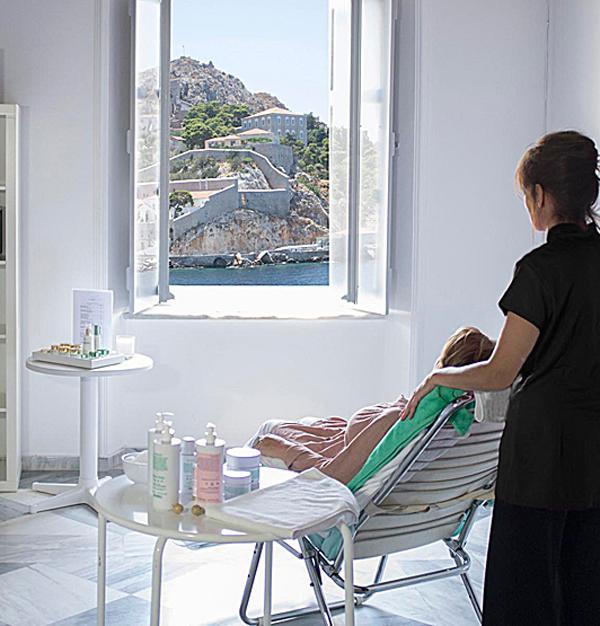
The latest pop-up in Greece
Butterflies projected on a screen form part of Valmont’s pop-up
House Hold Consumer skincare brand Nivea has been using pop-up spas in Canada for the last three years. It launched the concept in 2011, in celebration of Nivea’s 100 year anniversary, by taking over a store on Toronto’s popular Queen Street for two weeks. The pop-up was based on Nivea Haus – the brand’s flagship day spa in Hamburg, Germany – and, says Larry LaPorta, general manager, of Beiersdorf Canada “we turned it into a place where consumers could interact with the brand – get their skin analysed and receive skincare and product advice and free products.”
In 2012, it took the pop-up to Toronto and Montreal (two of its biggest markets in Canada) for two weeks. “However, there were still many more Canadian consumers we weren’t reaching,” says LaPorta. So in 2013 it created a mobile pop-up centre which members of the public could visit for a professional skin analysis, advice on products and skincare routines and to receive complimentary samples. Kicking off in Toronto on 11 June, Nivea Haus Mobile travelled across Canada and made stops in Calgary, Edmonton and Vancouver before wrapping up in Montreal on 16 August. It was backed by a multi-faceted communications strategy – from multiple PR events and social media campaigns to radio and TV adverts, coupon redemption and competitions. “It was a great success,” says LaPorta. “Over the two months we had more than 24,000 visitors and distributed over 24,000 gift bags, 1,600 full-size products and close to 220,000 samples/coupons/products.
“Although significant planning goes into each Nivea Haus activation, the benefits far outweigh any challenges. Given how successful its been over the past three years, bringing the Haus back in 2014 is definitely something we’ll be considering.”
Details: www.nivea.ca
The pop-up attracted more than 24,000 visitors over the course of two months
In previous years, Nivea Haus recreated a pop-up based on its flagship spa in Germany and took over stores in popular shopping districts
This year Nivea
Haus had a mobile pop-up which toured around Canada
Vine Tuning “We had more than 40 beauty journalists try our treatments because of our pop-up,” says Jean-Christophe Samyn, Caudalie’s director for the UK and Ireland. The French vinotherapy brand debuted in UK last year and to mark its arrival took over the Urban Retreat – the day spa in London department store Harrods – with a pop-up spa inspired by its flagship Vinothérapie Spa in the Château Smith Haut Lafitte vineyard in Bordeaux.
From June to July, Urban Retreat featured giant Caudalie visuals and displays throughout, trellises and podiums were planted with vines and signature Caudalie treatments, ranging from 30-90 minutes and £50-£130 (US$80-US$209, €59-€153) were on offer.
“Pop-ups create a lot of buzz and are relatively risk-free,” says Samyn, explaining that they paid Harrods a fixed, but undisclosed, fee for the space. “For us it was purely about brand awareness and the only challenge was trying to accommodate everyone as we had so many treatment requests.”
The Urban Retreat has been presenting pop-up spas since 2008, partnering with operators of destination spas such as Forte Village in Sardinia and Pangkor Laut in Malaysia. They’re seen as a quick, easy and cost-effective way to keep the offer fresh and to give customers a chance to experience treatments from around the world. Jo Harris, head of beauty at Urban Retreat says: “We provide the location and manage the communication strategy, which helps us build our own reputation and recognition globally and domestically with customers who are more focused on travel than beauty.”
Details: www.caudalie.com; www.urbanretreat.co.uk
It took over Harrods’ spa for two months
Caudalie modelled its pop-up on its flagship spa in Bordeaux
Food for thought The US natural grocer chain Whole Foods Market used Facebook to spread the word about its one-day pop-up spa at its Evanston store in Illinois in August. The Whole Body mini-spa included demonstrations on products, a free massage and goody bags.
The pop-up is an interesting move for the brand following reports that it’s in the process of developing its own dedicated health-focused resort and spa concept (see Spa Business Handbook 2013, p25).
Details: www.wholefoodsmarket.com
Please see page 66 for our interview with pop-up spa designer Paul Smyth
Katie Barnes is the managing editor of Spa Business magazine E: [email protected] Twitter: @SpaBusinessKB
Abu Dhabi-based investment firm Mubadala Capital has made a binding, fully financed
€1 billion
offer to acquire Pierre and Vacances SA, the European holiday resort operator behind the
continental European Center Parcs business.
Disney has reaffirmed its commitment to investing US$30 billion in its US parks and cruise
business by 2033, using new America250 celebrations to underline the role its attractions play
in supporting jobs, tourism and economic growth.
Expo 2030 Riyadh is being planned as a permanent visitor destination, with organisers
confirming the six-million-square-metre site will become a Global Village after the event closes.
The owner of one of Australia's best-known waterparks has acquired a major competitor,
creating a new attractions business spanning two of the country's largest visitor destinations.
The Toverland theme park in the Netherlands has announced a €98m expansion programme
that will add a resort, new attractions and staff facilities as it pursues plans to become a multi-
day destination.
Hotel de France, located on the British Isle of Jersey, has created a wellness retreat package
that includes a hot yoga session that will take place in Jersey Zoo’s butterfly sanctuary.
A new immersive attraction designed to transport visitors into the final hours of ancient Pompeii
is preparing to open near the world-famous archaeological site in southern Italy.
Experience design company, BRC Imagination Arts, has completed a transition that sees founder
Bob Rogers pass ownership of the business to four long-serving senior executives, while
remaining actively involved with the company.
Movie Park Germany has opened a new Paramount Pictures-themed attraction as part of its 30th
anniversary celebrations, using immersive storytelling and adaptive reuse to reinforce the park’s
longstanding “Hollywood in Germany” positioning.
Therme Manchester’s 28-acre development, which will include interconnected glass pavilions
that measure 65,000sq m, will be the largest bathing and wellbeing attraction in the world once
complete, according to prof David Russell, CEO of Therme UK.
+ More news
COMPANY PROFILES
RMA Ltd RMA Ltd is a one-stop global company
that can design, build and produce from a
greenfield site upw [more...]
DJW David & Lynn Willrich started the Company
over thirty years ago, from the Audio Visual
Department [more...]
IDEATTACK IDEATTACK is a full-service planning and
design company with headquarters in
Los Angeles. [more...]