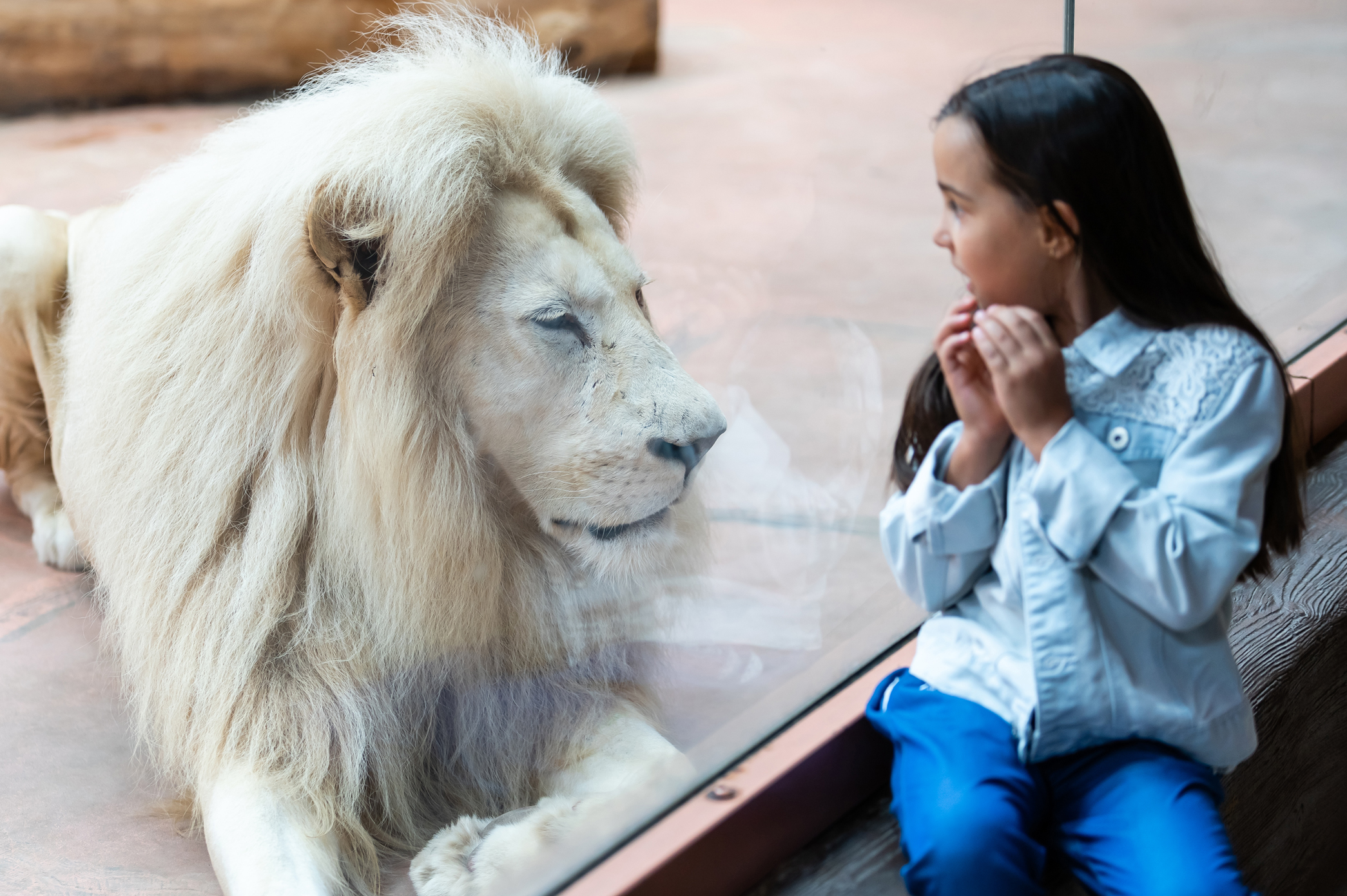
Quieter zoos could encourage deeper connections to the animals, suggests the study / Shutterstock/BarboraChr
Encouraging quietness during zoo trips can help visitors better appreciate their inhabitants and lead to more fulfilling, respectful and informative experiences, a new paper argues.
More opportunities for silence would allow people to better notice the natural world and the behaviour of the animals, researchers from the University of Exeter and the University of St Andrews say, and could encourage visitors to care more about the work of zoos to protect species.
The paper, entitled Why We Should Keep Quiet at the Zoo, is by Alexander Badman-King, Tom Rice, Samantha Hurn and Paul Rose from the University of Exeter and Adam Reed from the University of St Andrews in the UK. It is based on earlier research by the same team, in which they conducted experimental silent zoo visits in the south west of the UK. A high proportion of those who took part suggested that they would be willing to pay a premium to gain access to the zoo for designated quiet visiting times.
Participants in the silent and quiet visits run as part of the Listening to the Zoo: Challenging Zoo Visiting Conventions project frequently mentioned feeling that being quiet made their experience of the zoo conducive to meditation, mindfulness and relaxation. The visits allowed them to engage with the zoo environments in ways which they felt enhanced their wellbeing.
Quiet appreciation Exploring comparisons between zoos and other public spaces that encourage hush – such as libraries, art galleries, theatres and memorial sites – the new paper argues that quiet is more appropriate than being noisy in zoos.
“The central premise here, drawing upon theories of attention and love, is that noise involves a certain kind of outward expression, which leaves less room for the appreciation of, and attention to, the animals and information that the zoo provides,” say the authors.
The paper was partly inspired by the effect of lockdowns on zoos. While the COVID-19 pandemic’s effect on the financial sustainability of the zoo and aquaria sector was devastating, it showed how a quieter environment might benefit the animals, and offered a look at how zoos might function differently.
“Quietness is best suited to the learning and conservation aims of zoos,” says Dr Badman-King.
“If we say ‘here are some animals which we’re keeping in captivity so that you can come and appreciate them in a respectful way and learn about the plight of their wild counterparts’, then we’re engaging in a very different kind of activity from the more conventional ‘fun day out’ way of thinking about zoo visits.
“Zookeepers pay close and quiet attention to both individual animals and species more generally. They can provide an example of the kind of appreciation towards which this culture shift should point.”
Keeping it fun “It’s important not to misconstrue this suggestion as being an oddly macabre insistence that everyone should be miserable when they visit zoos,” Dr Badman-King adds. “During quiet appreciation, people can still experience enjoyment, even fun.
“Zoos must and should communicate some unpleasant facts, but they also show us profound beauty, the almost unfathomable wonder of the natural world, and yes, the funny, cute and intimidating forms and behaviour of these animals.
“An attitude of appreciation, one which is coterminous with being quiet, fits this complex mixture of experiences far better than a culture of zoo-going which regards noise as normal.”
The study says encouraging more quietness in zoos could help to partially restore their original purpose as restorative retreats for calming overstimulated minds, with related benefits in terms of health and wellbeing for human visitors, as well as the non-human residents of the zoo.
Making a change Several different suggestions were made for strategies that zoos might use to create quieter conditions, for instance, requesting quiet in small parts of their sites and then gradually expanding these or asking for quiet at designated hours or periods of the day. Listening walks could be offered, and visitors encouraged to be more aware of the effect of sound on the animals.
It was proposed that zoos could provide maps showing areas that are typically quiet, and also provide information on when they are least busy (one such map was produced as part of the Listening to the Zoo project). In the context of the listening visits, participants seemed to feel that being quieter and more receptive could be mutually beneficial for human visitors and for the animals.
“Being inspired by the wonder, majesty, thrill and endearing qualities of various species encountered in person, is undoubtedly a noble and compelling way to achieve a kind of environmental education… that foundation, already common in zoos, can be deepened and enriched by understanding the role of quietness in our experiences,” the papers’ authors argue.
“By encouraging and allowing visitors to direct their attention more fully at the animals, plants, environments and information in zoos, these places can offer us all something far richer and more valuable than they already do.”
The research
A set of 90-minute-long guided visits were carried out at two UK zoos – Paignton Zoo and Bristol Zoo Gardens. Guides led groups of 10 volunteers through key areas of the zoo, carrying out exercises designed to encourage them to consciously engage with sound and foreground it in their zoo visiting experience. These included asking visitors to close their eyes and listen, and then asking a series of questions about what they could hear, as well as walking in silence while being invited to reflect on how the animals might hear sound in their enclosure and in the zoo more generally.
Afterwards, the participants were interviewed about their experiences. Key quotes include:
• "There is a sort of therapy in respect to sitting and listening and picking up on all the other things that are going on around in relation to the sound … it does give you that calming effect"
• "I come to the zoo probably once a week, as I’m a season ticket holder, and I bring my little niece. I’ve never experienced the zoo like I have this morning. It’s been a very relaxing, lovely, chilling [calming] experience"
• "I would pay to come and just have this kind of experience"
• "I felt it was more authentic than just seeing a zoo, because the way that things are presented to you in the zoo … There are loads of signs everywhere, really bright colours, and you don’t actually see a lot of the animals. But when you’re forced just to listen, you’re actually getting the real experience of the animals. It’s not necessarily entertainment, more that you are a part of it"
• "I felt the more I listened, the more I looked. So, I think the listening improved the looking"
The study’s authors suggest various strategies for creating quieter conditions / Shutterstock/Andrew Angelov
Read more from this issue of Attractions Management magazine
View contents of Attractions Management 2025 issue 1
Editor's letter: A fresh perspective
As a new report argues that silence can help visitors better appreciate zoos, Magali Robathan explores a different way of operating
People: Marian Lee
As Netflix announces the launch of immersive attraction Netflix House, we hear about the plans from the company’s CMO
People: Frida Escobedo
The first woman to design a wing at the Metropolitan Museum of Art shares her vision for a more usable and welcoming space for modern and contemporary art
People: Delta Kay
Indigenous experiences are important for fostering respect, and must not be co-opted by non Indigenous operators, says Aboriginal tour guide Delta Kay
Theme parks: Bob Weis
The former president of Imagineering pulls back the curtain to give a behind the scenes look at how some of Disney’s biggest projects took shape
Museums: Space to learn
From the world’s first AI art museum to the latest cultural institution transforming a rural Japanese island... We check out some intriguing museums taking shape across the globe
Technology: Guiding light
Genell Zuciya, creator of attractions for Disney and Meow Wolf, explores the transformative power of lighting
Theme parks: Block party
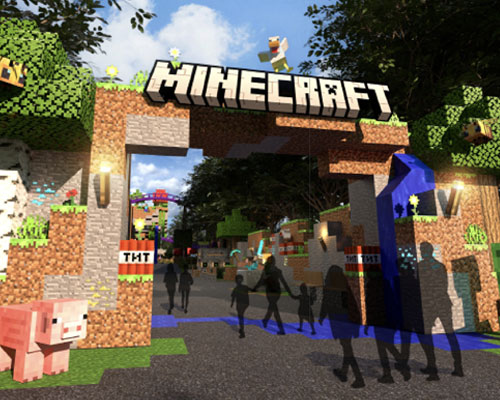
Merlin meets Minecraft in a $85m deal set to bring the world’s biggest selling video game to life. Could this be Merlin’s most significant partnership?
Museums: A new dawn
The first phase of a ground-breaking new museum campus has opened in Benin City, Nigeria. Is this the future for post-colonial institutions?
Research: Quiet zoos
Could a quieter zoo environment restore zoos’ original purpose as restorative retreats for overstimulated minds? The authors of a new research paper certainly think so
Quieter zoos could encourage deeper connections to the animals, suggests the study / Shutterstock/BarboraChr
Encouraging quietness during zoo trips can help visitors better appreciate their inhabitants and lead to more fulfilling, respectful and informative experiences, a new paper argues.
More opportunities for silence would allow people to better notice the natural world and the behaviour of the animals, researchers from the University of Exeter and the University of St Andrews say, and could encourage visitors to care more about the work of zoos to protect species.
The paper, entitled Why We Should Keep Quiet at the Zoo, is by Alexander Badman-King, Tom Rice, Samantha Hurn and Paul Rose from the University of Exeter and Adam Reed from the University of St Andrews in the UK. It is based on earlier research by the same team, in which they conducted experimental silent zoo visits in the south west of the UK. A high proportion of those who took part suggested that they would be willing to pay a premium to gain access to the zoo for designated quiet visiting times.
Participants in the silent and quiet visits run as part of the Listening to the Zoo: Challenging Zoo Visiting Conventions project frequently mentioned feeling that being quiet made their experience of the zoo conducive to meditation, mindfulness and relaxation. The visits allowed them to engage with the zoo environments in ways which they felt enhanced their wellbeing.
Quiet appreciation Exploring comparisons between zoos and other public spaces that encourage hush – such as libraries, art galleries, theatres and memorial sites – the new paper argues that quiet is more appropriate than being noisy in zoos.
“The central premise here, drawing upon theories of attention and love, is that noise involves a certain kind of outward expression, which leaves less room for the appreciation of, and attention to, the animals and information that the zoo provides,” say the authors.
The paper was partly inspired by the effect of lockdowns on zoos. While the COVID-19 pandemic’s effect on the financial sustainability of the zoo and aquaria sector was devastating, it showed how a quieter environment might benefit the animals, and offered a look at how zoos might function differently.
“Quietness is best suited to the learning and conservation aims of zoos,” says Dr Badman-King.
“If we say ‘here are some animals which we’re keeping in captivity so that you can come and appreciate them in a respectful way and learn about the plight of their wild counterparts’, then we’re engaging in a very different kind of activity from the more conventional ‘fun day out’ way of thinking about zoo visits.
“Zookeepers pay close and quiet attention to both individual animals and species more generally. They can provide an example of the kind of appreciation towards which this culture shift should point.”
Keeping it fun “It’s important not to misconstrue this suggestion as being an oddly macabre insistence that everyone should be miserable when they visit zoos,” Dr Badman-King adds. “During quiet appreciation, people can still experience enjoyment, even fun.
“Zoos must and should communicate some unpleasant facts, but they also show us profound beauty, the almost unfathomable wonder of the natural world, and yes, the funny, cute and intimidating forms and behaviour of these animals.
“An attitude of appreciation, one which is coterminous with being quiet, fits this complex mixture of experiences far better than a culture of zoo-going which regards noise as normal.”
The study says encouraging more quietness in zoos could help to partially restore their original purpose as restorative retreats for calming overstimulated minds, with related benefits in terms of health and wellbeing for human visitors, as well as the non-human residents of the zoo.
Making a change Several different suggestions were made for strategies that zoos might use to create quieter conditions, for instance, requesting quiet in small parts of their sites and then gradually expanding these or asking for quiet at designated hours or periods of the day. Listening walks could be offered, and visitors encouraged to be more aware of the effect of sound on the animals.
It was proposed that zoos could provide maps showing areas that are typically quiet, and also provide information on when they are least busy (one such map was produced as part of the Listening to the Zoo project). In the context of the listening visits, participants seemed to feel that being quieter and more receptive could be mutually beneficial for human visitors and for the animals.
“Being inspired by the wonder, majesty, thrill and endearing qualities of various species encountered in person, is undoubtedly a noble and compelling way to achieve a kind of environmental education… that foundation, already common in zoos, can be deepened and enriched by understanding the role of quietness in our experiences,” the papers’ authors argue.
“By encouraging and allowing visitors to direct their attention more fully at the animals, plants, environments and information in zoos, these places can offer us all something far richer and more valuable than they already do.”
The research
A set of 90-minute-long guided visits were carried out at two UK zoos – Paignton Zoo and Bristol Zoo Gardens. Guides led groups of 10 volunteers through key areas of the zoo, carrying out exercises designed to encourage them to consciously engage with sound and foreground it in their zoo visiting experience. These included asking visitors to close their eyes and listen, and then asking a series of questions about what they could hear, as well as walking in silence while being invited to reflect on how the animals might hear sound in their enclosure and in the zoo more generally.
Afterwards, the participants were interviewed about their experiences. Key quotes include:
• "There is a sort of therapy in respect to sitting and listening and picking up on all the other things that are going on around in relation to the sound … it does give you that calming effect"
• "I come to the zoo probably once a week, as I’m a season ticket holder, and I bring my little niece. I’ve never experienced the zoo like I have this morning. It’s been a very relaxing, lovely, chilling [calming] experience"
• "I would pay to come and just have this kind of experience"
• "I felt it was more authentic than just seeing a zoo, because the way that things are presented to you in the zoo … There are loads of signs everywhere, really bright colours, and you don’t actually see a lot of the animals. But when you’re forced just to listen, you’re actually getting the real experience of the animals. It’s not necessarily entertainment, more that you are a part of it"
• "I felt the more I listened, the more I looked. So, I think the listening improved the looking"
The study’s authors suggest various strategies for creating quieter conditions / Shutterstock/Andrew Angelov
Read more from this issue of Attractions Management magazine
View contents of Attractions Management 2025 issue 1
Editor's letter: A fresh perspective
As a new report argues that silence can help visitors better appreciate zoos, Magali Robathan explores a different way of operating
People: Marian Lee
As Netflix announces the launch of immersive attraction Netflix House, we hear about the plans from the company’s CMO
People: Frida Escobedo
The first woman to design a wing at the Metropolitan Museum of Art shares her vision for a more usable and welcoming space for modern and contemporary art
People: Delta Kay
Indigenous experiences are important for fostering respect, and must not be co-opted by non Indigenous operators, says Aboriginal tour guide Delta Kay
Theme parks: Bob Weis
The former president of Imagineering pulls back the curtain to give a behind the scenes look at how some of Disney’s biggest projects took shape
Museums: Space to learn
From the world’s first AI art museum to the latest cultural institution transforming a rural Japanese island... We check out some intriguing museums taking shape across the globe
Technology: Guiding light
Genell Zuciya, creator of attractions for Disney and Meow Wolf, explores the transformative power of lighting
Theme parks: Block party
Merlin meets Minecraft in a $85m deal set to bring the world’s biggest selling video game to life. Could this be Merlin’s most significant partnership?
Museums: A new dawn
The first phase of a ground-breaking new museum campus has opened in Benin City, Nigeria. Is this the future for post-colonial institutions?
Research: Quiet zoos
Could a quieter zoo environment restore zoos’ original purpose as restorative retreats for overstimulated minds? The authors of a new research paper certainly think so
OMA has completed a major transformation of New York's New Museum, creating a larger
cultural campus that combines expanded exhibition spaces with learning, performance,
hospitality and public programming.
A US$50 million (£44.2 million, €51.2 million) transformation of Chicago's historic McCormick
Mansion has created a new destination that combines live magic, immersive theatre, dining and
private membership under one roof.
The Montana Historical Society has officially celebrated the opening of its new Montana
Heritage
Center, a US$107 million (£79 million, €92 million) destination that combines immersive
storytelling with cutting-edge audiovisual technology to bring the sta
San Antonio Zoo has reported a US$283 million economic impact for 2025, following a decade-
long transformation programme that has seen almost US$200 million invested into the Texas
attraction.
Plans for the AU$180 million redevelopment of Reef HQ Aquarium in Townsville, Australia, are
progressing, with the project set to transform the attraction into a global centre for reef
education and conservation.
Abu Dhabi-based investment firm Mubadala Capital has made a binding, fully financed
€1 billion
offer to acquire Pierre and Vacances SA, the European holiday resort operator behind the
continental European Center Parcs business.
Disney has reaffirmed its commitment to investing US$30 billion in its US parks and cruise
business by 2033, using new America250 celebrations to underline the role its attractions play
in supporting jobs, tourism and economic growth.
Expo 2030 Riyadh is being planned as a permanent visitor destination, with organisers
confirming the six-million-square-metre site will become a Global Village after the event closes.
The owner of one of Australia's best-known waterparks has acquired a major competitor,
creating a new attractions business spanning two of the country's largest visitor destinations.
The Toverland theme park in the Netherlands has announced a €98m expansion programme
that will add a resort, new attractions and staff facilities as it pursues plans to become a multi-
day destination.
+ More news
COMPANY PROFILES
IDEATTACK IDEATTACK is a full-service planning and
design company with headquarters in
Los Angeles. [more...]