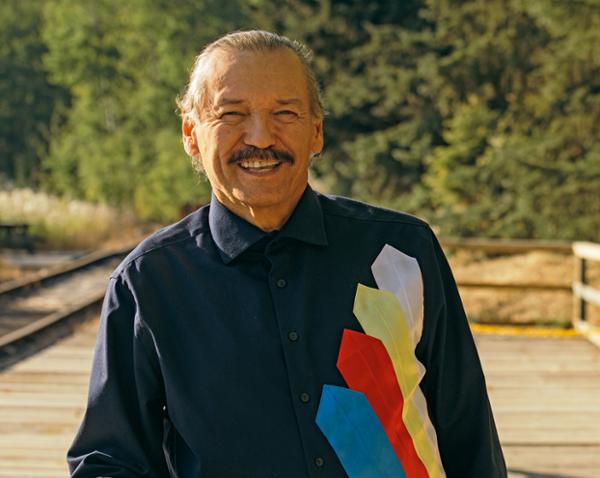
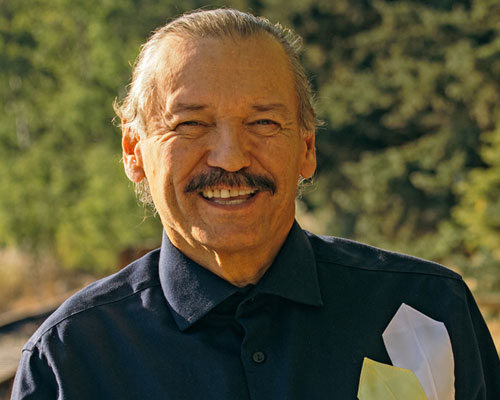
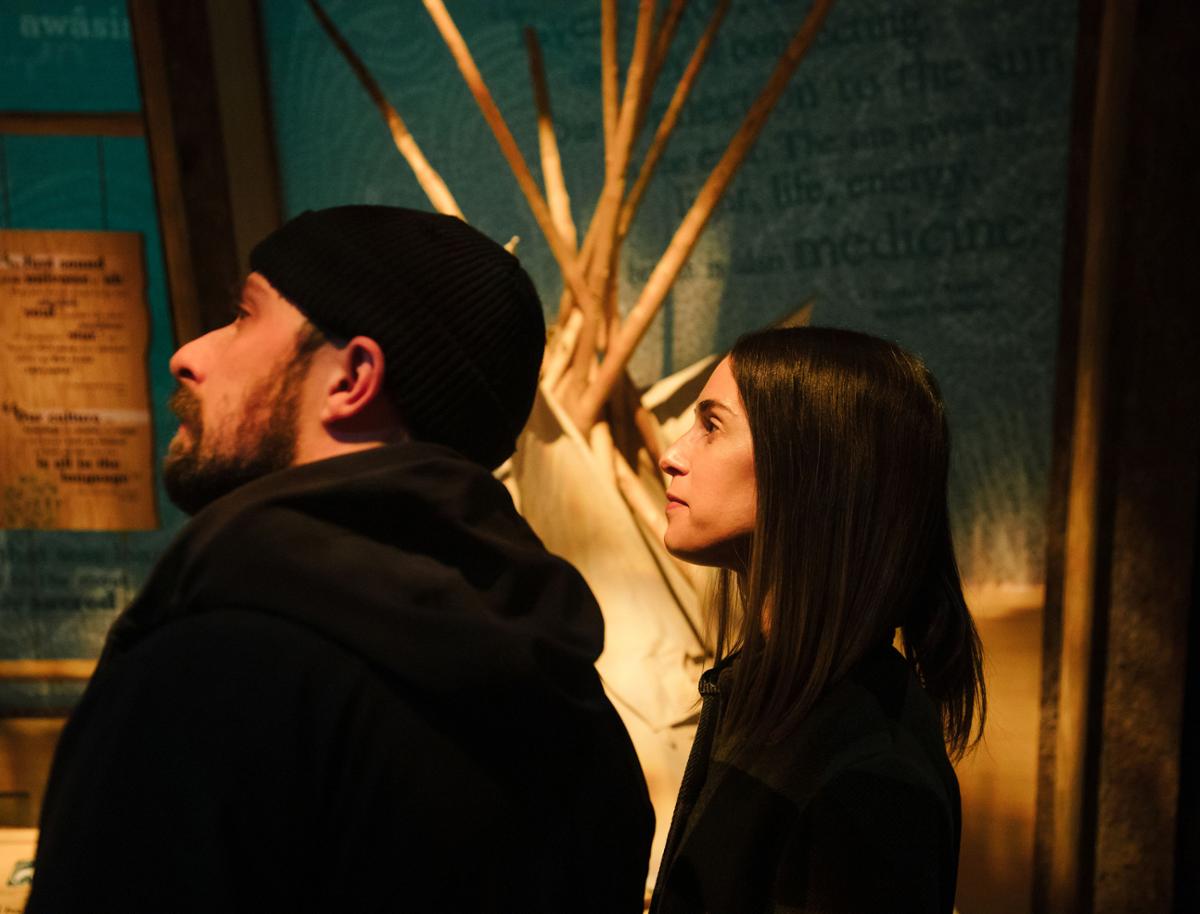
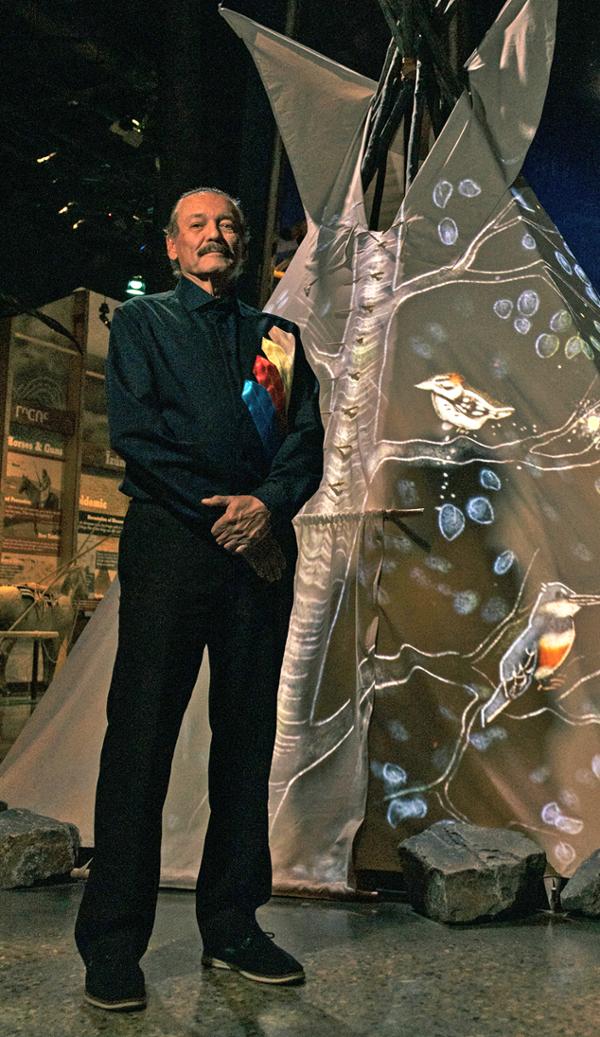
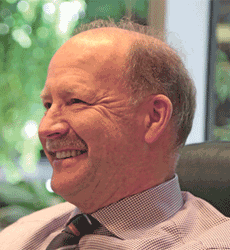
Evert Poor has worked at Fort Edmonton Park since 2000 / PHOTO: Jordan Hillinger
This summer, Canada’s Prime Minister Justin Trudeau visited the Indigenous Peoples Experience at Ford Edmonton Park in Alberta, Canada, along with several other government ministers.
After the visit, Trudeau said: “The Indigenous Peoples Experience showcases the long, intricate histories of First Nation and Métis culture. The exhibit was created to share with us the stories and teachings from local elders and community members that have been passed down from generation to generation. Being able to showcase your language and culture is critical to self-determination and advancing reconciliation.”
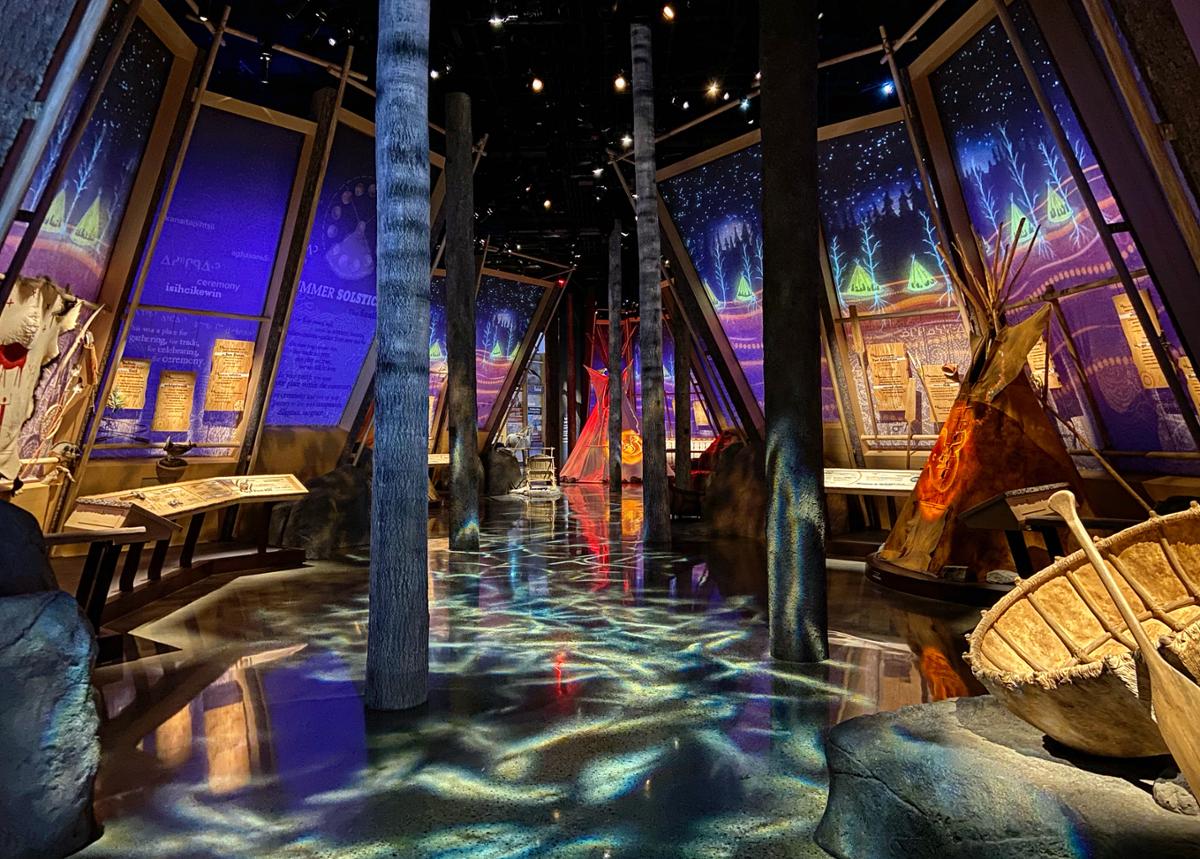
Opened in July 2021, the Indigenous Peoples Experience aims to educate visitors about Indigenous history and culture via stories, music, artwork and immersive exhibits, gathered through engagement with local Indigenous communities and historical documents. It was developed in collaboration with the Métis Nation of Alberta and the Confederacy of Treaty Six First Nations, alongside elders and community members, Fort Edmonton Management Company, and the City of Edmonton.
Since opening, the Indigenous Peoples Experience has won the Thea Award for Outstanding Achievement – Heritage Center; and the Urban Land Institute (ULI) Americas Award for Excellence.
Here Evert Poor, Indigenous narratives supervisor at Fort Edmonton Park, tells Attractions Management about Trudeau’s visit, and the aims and plans of the centre.
What did Justin Trudeau’s visit mean for the Indigenous Peoples Experience? The Prime Minister’s visit offered the opportunity to present our community’s stories, history, and culture.
This is significant as we speak to history from our perspective, sharing what we as a people have experienced. This covers what contact with Europeans meant to us as a people and as a culture – we speak to the lasting and residual impacts of these historical events on Indigenous peoples today. A good example is the negative impacts of Residential Schools that still resonate within our communities now.
It was important for me personally to be allowed to share my perspective on these impacts. My mother was a Residential School survivor – one of my obligations in life is to share her story and the story of the devastating impacts of Residential Schools more widely.
I was pleased that the Prime Minister and the ministers representing the government of Canada in their dealings with the Indigenous peoples were also present – they spent significant time with us and were engaged and interested in what we shared.
I was also pleased that the Prime Minster had the opportunity to engage with other members of my team, who are all of Indigenous ancestry, meaning they can share their own experiences and connection to the artefacts, stories and historical events explored in this space. This is important and offered a valuable opportunity for the Prime Minster and his team to interact on a personal level with a cross-section of the local Indigenous community.
The visit also spoke to the importance of the Indigenous Peoples Experience – a place that is totally about the Indigenous narrative.
It is our story, by our people. Visiting this centre and listening to our stories is one step toward reconciliation.
What is the aim of the Indigenous Peoples Experience? The Indigenous peoples’ story has been missing or misrepresented in North American dialogue. The colonial narrative inferred that real history began with the arrival of the Europeans. Indigenous peoples are portrayed as lacking history or culture. The Hollywood version has romanticised our people, making some believe that we have disappeared from the world.
The Indigenous Peoples Experience tells the true Indigenous story from our perspective as told by our people. One aim is to tell non-Indigenous people that we have always been here and are still here, which begins the process of decolonising the history and the narrative.
Another aim is to address Indigenous underrepresentation. When living history museum Fort Edmonton Park opened in 1974, there wasn’t a defined area focusing on Indigenous history and culture, and there were few employees of Indigenous ancestry. The opening of the Indigenous Peoples Experience in 2021 saw a significant increase in the number of Indigenous employees, growing the visibility of Indigenous history and culture.
Canada’s Indigenous Truth and Reconciliation Commission resulted in 94 calls to action. These are calls to action for governments, businesses, and education that impact the treatment of Indigenous peoples. There are action items that called for museums and archives to make changes. One of the aims of the Indigenous Peoples Experience is to take action toward reconciliation.
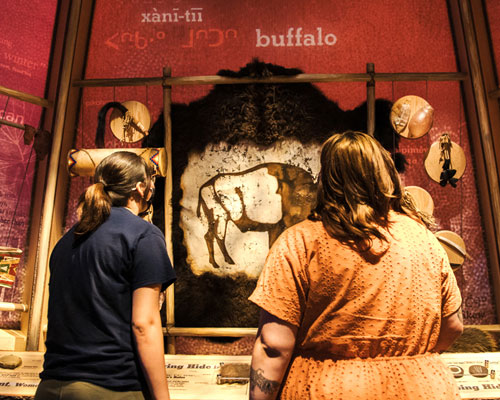
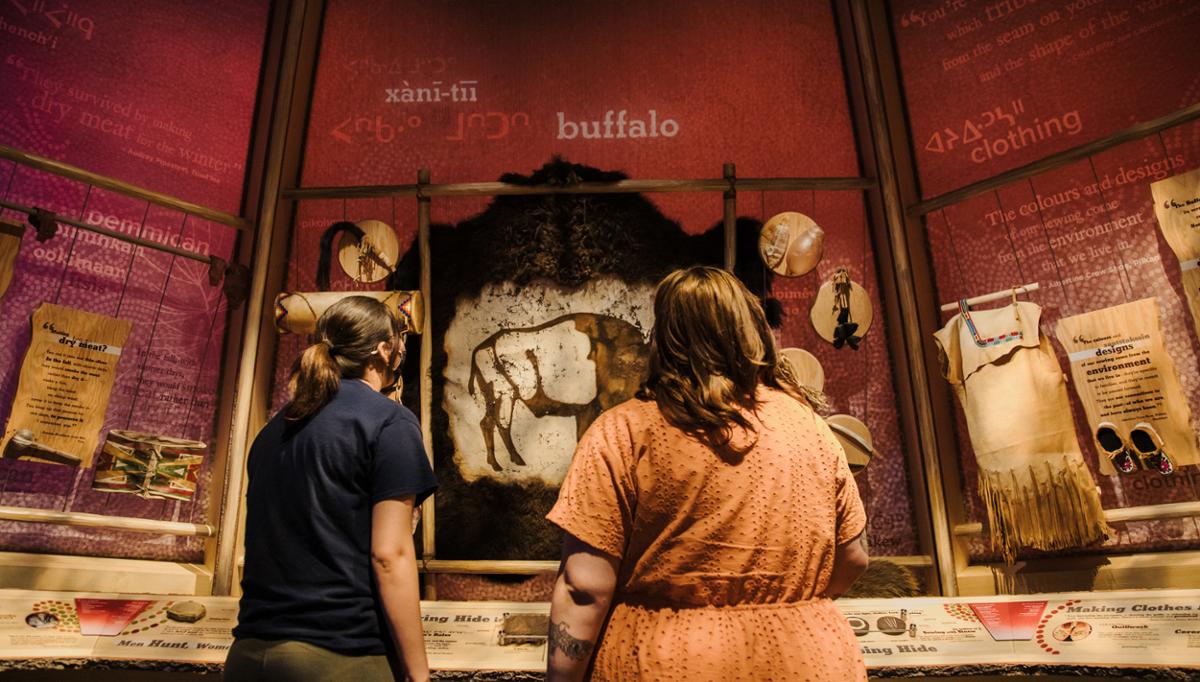
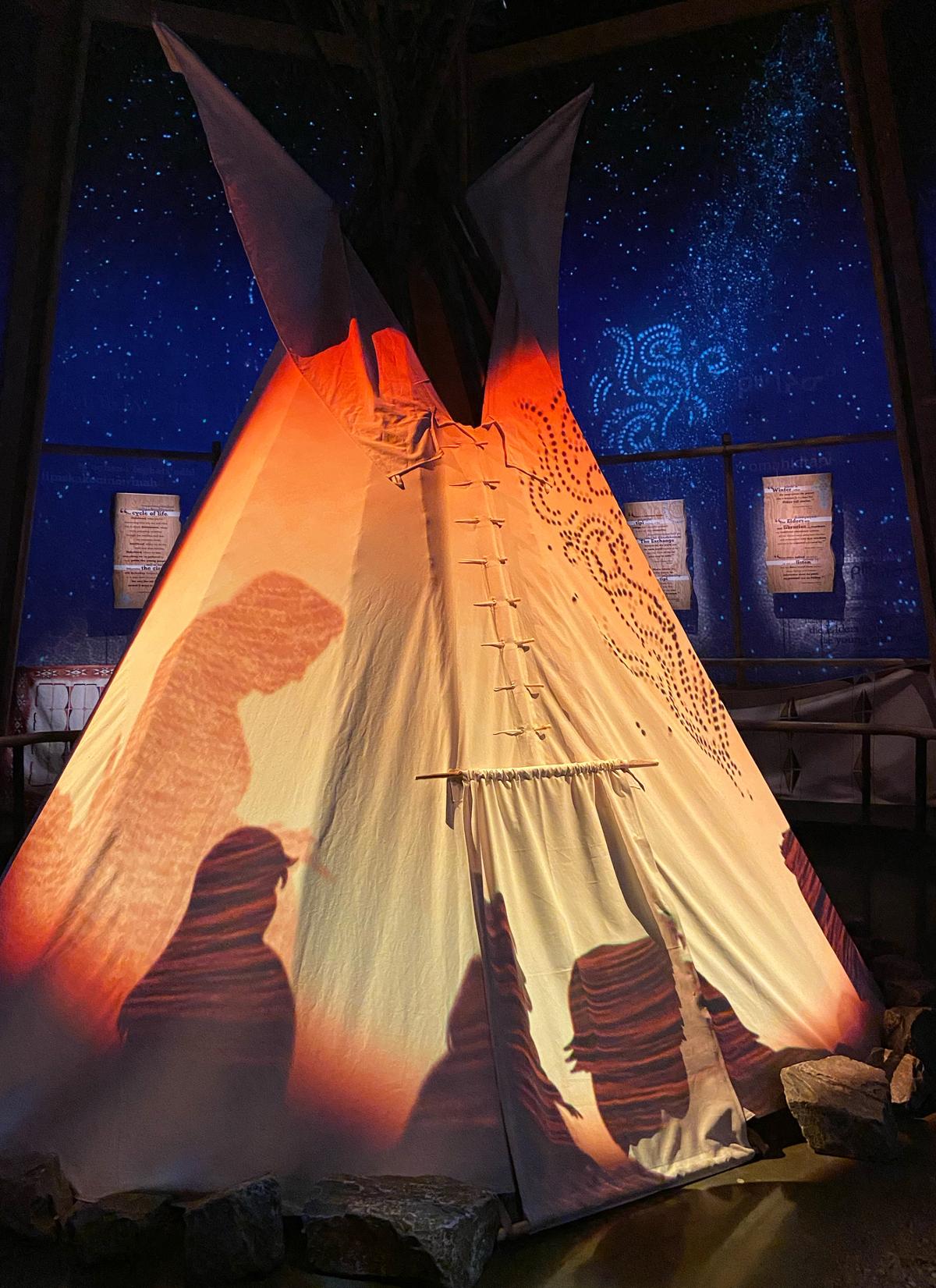
How are the histories and stories of the Indigenous peoples of Canada shared within this experience? Visitors to the Indigenous Peoples Experience often say that it’s not what they expected. The sound, lighting and video presentations offer an immersive experience that’s quite different from other museums. Individual quotes and stories are associated with the artefacts. These stories result from more than 50 interviews with Indigenous elders, knowledge keepers and educators. The artefacts and displays are the work of many local Indigenous artisans who used the process handed down from their ancestors to create the works.
The history and stories are all presented from the perspective of the Indigenous peoples, and all of the staff in this space are Indigenous. The stories and interpretation could be their family history or based on their personal experience, meaning that visitors have the opportunity to have unique and personal discussions with team members.
Why is it so important to share these stories and histories? There exists a great deal of discrimination, underrepresentation, poverty and racism directed toward Indigenous people in Canada. Sharing our stories and histories offers a true insight into the Indigenous peoples of western Canada. It tells our stories in our voices.
We share the impacts of colonisation on our populations historically and speak to the legacy of these events in today’s terms. The hope is that non-Indigenous people begin to see us differently and to understand our history and social and family structures, as well as the fact that our culture was strongly guided by our language and connection to nature.
We hope that we can educate others to begin to see our way of being and its value to the world.
What do you hope visitors will take away from their visit to the museum? We hope that people walk out of the Indigenous Peoples Experience with an understanding that we’ve always been here and are still here.
Our relationship with the newcomers to our world was one of sharing and goodwill. We entered a treaty relationship with the Crown and the peoples of Canada that we viewed as a covenant. We were willing to share the land, respect their laws and live in peace with those that came to this land. In return, we asked for our culture, beliefs, way of knowing and who we are as a people to be respected. It was not a sale of land but an offer to share the land.
As one of our Chiefs stated: “As long as the sun shines, the grass grows, and rivers flow, we will live as relations.” This awareness, I feel, will reframe what the relationship with Indigenous peoples should be today.
Read more from this issue of Attractions Management magazine
View contents of Attractions Management 2022 issue 4
Letters: Write to reply
Gordon Hartman, dad and founder of Morgan’s Wonderland on inclusion-centric thinking and action and Merlin Entertainments' Fiona Eastwood on inclusion and diversity...
People: Es Devlin
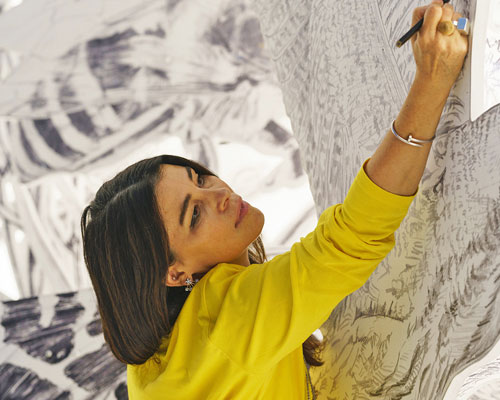
Known for her large scale public art installations, the designer and stage director has been awarded a CBE
People: Evert Poor
On what the Canadian Prime Minister’s visit meant for the Indigenous Peoples Experience
Interview: Ramona Bass
Half way thought a $130m masterplan and with conservation projects in 30 countries, Fort Worth Zoo is thinking big, its co-chair tells Magali Robathan
Research: Tough times
The cost of living crisis is already seeing the public cut its leisure spend, but these steps will help attractions keep visitors coming, says Jon Young
Innovation: Ars Electronica
Linz in Austria has reinvented itself as a city of innovation, with the future facing Ars Electronica Center at its heart
Tech: Emotional reward
Scientists have found a way to tweak video game difficulty according to player emotion, and it has huge potential for visitor attractions
Profile: Margaret Kerrison
The former Disney Imagineer is determined to share what she’s learned about creating absorbing worlds for visitors
Preview: Bird Paradise
Singapore is bringing its nature attractions together to help drive conservation and improve the visitor experience
Interview: Graham MacVoy
How the team behind Boomtown Festival harnessed their brand of creativity to build a unique permanent attraction
Scientific research: Under the sea
A new Red Sea scientific research centre and marine life attraction will offer visitors AR experiences, underwater walks, submarine dives and more
Tech: Getting personal
These operators are getting clever with technology, using digital companions to personalise the guest experience, creating opportunities for deeper connections
An opportunity to reimagine one of the UK’s most recognisable towers has been formally
opened by Rivington Hark, as St Johns Beacon invites operators and partners to shape its
next phase. [more...]
Evert Poor has worked at Fort Edmonton Park since 2000 / PHOTO: Jordan Hillinger
This summer, Canada’s Prime Minister Justin Trudeau visited the Indigenous Peoples Experience at Ford Edmonton Park in Alberta, Canada, along with several other government ministers.
After the visit, Trudeau said: “The Indigenous Peoples Experience showcases the long, intricate histories of First Nation and Métis culture. The exhibit was created to share with us the stories and teachings from local elders and community members that have been passed down from generation to generation. Being able to showcase your language and culture is critical to self-determination and advancing reconciliation.”
Opened in July 2021, the Indigenous Peoples Experience aims to educate visitors about Indigenous history and culture via stories, music, artwork and immersive exhibits, gathered through engagement with local Indigenous communities and historical documents. It was developed in collaboration with the Métis Nation of Alberta and the Confederacy of Treaty Six First Nations, alongside elders and community members, Fort Edmonton Management Company, and the City of Edmonton.
Since opening, the Indigenous Peoples Experience has won the Thea Award for Outstanding Achievement – Heritage Center; and the Urban Land Institute (ULI) Americas Award for Excellence.
Here Evert Poor, Indigenous narratives supervisor at Fort Edmonton Park, tells Attractions Management about Trudeau’s visit, and the aims and plans of the centre.
What did Justin Trudeau’s visit mean for the Indigenous Peoples Experience? The Prime Minister’s visit offered the opportunity to present our community’s stories, history, and culture.
This is significant as we speak to history from our perspective, sharing what we as a people have experienced. This covers what contact with Europeans meant to us as a people and as a culture – we speak to the lasting and residual impacts of these historical events on Indigenous peoples today. A good example is the negative impacts of Residential Schools that still resonate within our communities now.
It was important for me personally to be allowed to share my perspective on these impacts. My mother was a Residential School survivor – one of my obligations in life is to share her story and the story of the devastating impacts of Residential Schools more widely.
I was pleased that the Prime Minister and the ministers representing the government of Canada in their dealings with the Indigenous peoples were also present – they spent significant time with us and were engaged and interested in what we shared.
I was also pleased that the Prime Minster had the opportunity to engage with other members of my team, who are all of Indigenous ancestry, meaning they can share their own experiences and connection to the artefacts, stories and historical events explored in this space. This is important and offered a valuable opportunity for the Prime Minster and his team to interact on a personal level with a cross-section of the local Indigenous community.
The visit also spoke to the importance of the Indigenous Peoples Experience – a place that is totally about the Indigenous narrative.
It is our story, by our people. Visiting this centre and listening to our stories is one step toward reconciliation.
What is the aim of the Indigenous Peoples Experience? The Indigenous peoples’ story has been missing or misrepresented in North American dialogue. The colonial narrative inferred that real history began with the arrival of the Europeans. Indigenous peoples are portrayed as lacking history or culture. The Hollywood version has romanticised our people, making some believe that we have disappeared from the world.
The Indigenous Peoples Experience tells the true Indigenous story from our perspective as told by our people. One aim is to tell non-Indigenous people that we have always been here and are still here, which begins the process of decolonising the history and the narrative.
Another aim is to address Indigenous underrepresentation. When living history museum Fort Edmonton Park opened in 1974, there wasn’t a defined area focusing on Indigenous history and culture, and there were few employees of Indigenous ancestry. The opening of the Indigenous Peoples Experience in 2021 saw a significant increase in the number of Indigenous employees, growing the visibility of Indigenous history and culture.
Canada’s Indigenous Truth and Reconciliation Commission resulted in 94 calls to action. These are calls to action for governments, businesses, and education that impact the treatment of Indigenous peoples. There are action items that called for museums and archives to make changes. One of the aims of the Indigenous Peoples Experience is to take action toward reconciliation.
How are the histories and stories of the Indigenous peoples of Canada shared within this experience? Visitors to the Indigenous Peoples Experience often say that it’s not what they expected. The sound, lighting and video presentations offer an immersive experience that’s quite different from other museums. Individual quotes and stories are associated with the artefacts. These stories result from more than 50 interviews with Indigenous elders, knowledge keepers and educators. The artefacts and displays are the work of many local Indigenous artisans who used the process handed down from their ancestors to create the works.
The history and stories are all presented from the perspective of the Indigenous peoples, and all of the staff in this space are Indigenous. The stories and interpretation could be their family history or based on their personal experience, meaning that visitors have the opportunity to have unique and personal discussions with team members.
Why is it so important to share these stories and histories? There exists a great deal of discrimination, underrepresentation, poverty and racism directed toward Indigenous people in Canada. Sharing our stories and histories offers a true insight into the Indigenous peoples of western Canada. It tells our stories in our voices.
We share the impacts of colonisation on our populations historically and speak to the legacy of these events in today’s terms. The hope is that non-Indigenous people begin to see us differently and to understand our history and social and family structures, as well as the fact that our culture was strongly guided by our language and connection to nature.
We hope that we can educate others to begin to see our way of being and its value to the world.
What do you hope visitors will take away from their visit to the museum? We hope that people walk out of the Indigenous Peoples Experience with an understanding that we’ve always been here and are still here.
Our relationship with the newcomers to our world was one of sharing and goodwill. We entered a treaty relationship with the Crown and the peoples of Canada that we viewed as a covenant. We were willing to share the land, respect their laws and live in peace with those that came to this land. In return, we asked for our culture, beliefs, way of knowing and who we are as a people to be respected. It was not a sale of land but an offer to share the land.
As one of our Chiefs stated: “As long as the sun shines, the grass grows, and rivers flow, we will live as relations.” This awareness, I feel, will reframe what the relationship with Indigenous peoples should be today.
Read more from this issue of Attractions Management magazine
View contents of Attractions Management 2022 issue 4
Letters: Write to reply
Gordon Hartman, dad and founder of Morgan’s Wonderland on inclusion-centric thinking and action and Merlin Entertainments' Fiona Eastwood on inclusion and diversity...
People: Es Devlin
Known for her large scale public art installations, the designer and stage director has been awarded a CBE
People: Evert Poor
On what the Canadian Prime Minister’s visit meant for the Indigenous Peoples Experience
Interview: Ramona Bass
Half way thought a $130m masterplan and with conservation projects in 30 countries, Fort Worth Zoo is thinking big, its co-chair tells Magali Robathan
Research: Tough times
The cost of living crisis is already seeing the public cut its leisure spend, but these steps will help attractions keep visitors coming, says Jon Young
Innovation: Ars Electronica
Linz in Austria has reinvented itself as a city of innovation, with the future facing Ars Electronica Center at its heart
Tech: Emotional reward
Scientists have found a way to tweak video game difficulty according to player emotion, and it has huge potential for visitor attractions
Profile: Margaret Kerrison
The former Disney Imagineer is determined to share what she’s learned about creating absorbing worlds for visitors
Preview: Bird Paradise
Singapore is bringing its nature attractions together to help drive conservation and improve the visitor experience
Interview: Graham MacVoy
How the team behind Boomtown Festival harnessed their brand of creativity to build a unique permanent attraction
Scientific research: Under the sea
A new Red Sea scientific research centre and marine life attraction will offer visitors AR experiences, underwater walks, submarine dives and more
Tech: Getting personal
These operators are getting clever with technology, using digital companions to personalise the guest experience, creating opportunities for deeper connections
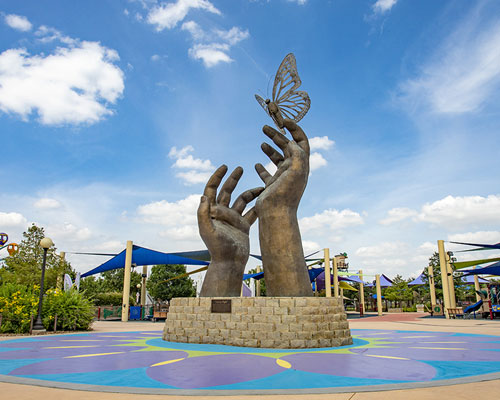
Hotel de France, located on the British Isle of Jersey, has created a wellness retreat package
that includes a hot yoga session that will take place in Jersey Zoo’s butterfly sanctuary.
A new immersive attraction designed to transport visitors into the final hours of ancient Pompeii
is preparing to open near the world-famous archaeological site in southern Italy.
Experience design company, BRC Imagination Arts, has completed a transition that sees founder
Bob Rogers pass ownership of the business to four long-serving senior executives, while
remaining actively involved with the company.
Movie Park Germany has opened a new Paramount Pictures-themed attraction as part of its 30th
anniversary celebrations, using immersive storytelling and adaptive reuse to reinforce the park’s
longstanding “Hollywood in Germany” positioning.
Therme Manchester’s 28-acre development, which will include interconnected glass pavilions
that measure 65,000sq m, will be the largest bathing and wellbeing attraction in the world once
complete, according to prof David Russell, CEO of Therme UK.
Efteling has opened Hooghmoed, a new family drop tower designed to broaden the appeal of its
recently launched Sirene Island themed area and introduce younger visitors to thrill attractions.
A proposed Puy du Fou development near Bicester and Universal Destinations and Experiences’
planned resort in Bedford are emerging as part of a wider transformation of the Oxford–
Cambridge Growth Corridor into a major centre for UK leisure and tourism inv
Shedd Aquarium has opened the Immersion Theater developed in partnership with SimEx-
Iwerks, as part of a wider strategy to enhance the guest experience and create additional
revenue opportunities.
The UK government has announced a temporary reduction in VAT on visitor attractions and
children’s meals as part of a summer cost-of-living support package designed to stimulate the
visitor economy and encourage family days out.
As designer Yinka Ilori prepares for his first solo gallery show in London, he speaks exclusively
to CLADmag about his mission to spread joy, the power of play, and his bold approach to using
colour (including the colours you won’t see in his work).
The government of Thailand is exploring plans for a THB300bn (£6.3bn, US$8.3bn)
entertainment complex in the country’s Eastern Economic Corridor (EEC), with officials
proposing a large-scale theme park and sports destination as part of a broader tourism and
economic development strategy.
+ More news
COMPANY PROFILES
TechnoAlpin Indoor TechnoAlpin is the world leader for snowmaking systems. With the Indoor snow division, TechnoAlpin c [more...]
An opportunity to reimagine one of the UK’s most recognisable towers has been formally
opened by Rivington Hark, as St Johns Beacon invites operators and partners to shape its
next phase. [more...]