Scientists have developed a video game that adjusts
difficulty based on player emotions, with applications
for visitor attractions, as Tom Walker reports
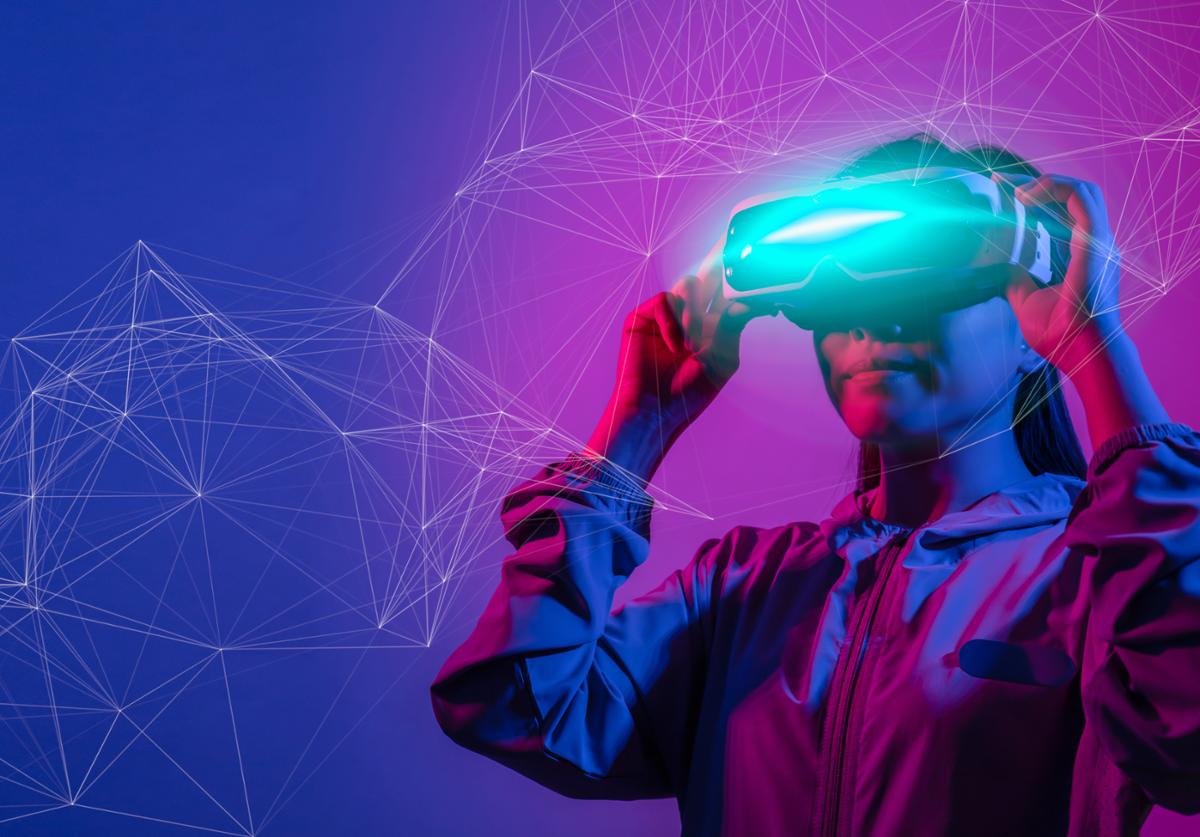
The new technique to adjust difficulty levels could have a major impact on tech-based entertainment and simulation-type rides at visitor attractions / Photo: Fit Ztudio/shutterstock
Korean scientists have developed a dynamic way of adjusting the difficulty of video games – by estimating the players’ emotions based on in-game data. The new technology has important applications for the visitor attractions sector.
A team at the Gwangju Institute of Science and Technology (GIST) have created a model in which the difficulty level is tweaked to maximise player satisfaction.
Until now, most developers have relied on dynamic difficulty adjustment (DDA) to crack the tough nut of appropriately balancing a videogame’s difficulty – something deemed essential to provide players with a pleasant experience.
Using DDA, the difficulty of a game adjusts in real-time according to player performance. If a player’s performance exceeds the developer’s expectations for a given difficulty level, the game’s DDA agent automatically raises the difficulty to increase the challenge presented to the player.
While DDA is useful, it’s limited, as the level of difficulty is adjusted simply on player performance – not on how much fun they are having.
Therefore, the team at GIST decided to put a twist on the DDA approach.
A different focus Instead of focusing on the player’s performance, they developed DDA agents that adjusted the game’s difficulty to maximise one of four different aspects related to a player’s satisfaction: challenge, competence, flow, and valence (positivity or negativity).
The DDA agents were trained via machine learning using data gathered from actual human players, who played a fighting game against various artificial intelligence (AI) systems and then answered a questionnaire about their experience.
Using an algorithm called Monte-Carlo tree search, each DDA agent employed actual game data and simulated data to tune the opposing AI’s fighting style in a way that maximised a specific emotion, or ‘affective state.’
The team verified – through an experiment with 20 volunteers – that the proposed DDA agents could produce AIs that improved the players’ overall experience, no matter their preference.
This marks the first time that affective states have been incorporated directly into DDA agents, which could be useful for commercial games.
Major impact The new technique to adjust difficulty levels could have a major impact on tech-based entertainment and simulation-type rides at visitor attractions.
It also has potential for other fields that can be ‘gamified’ – including physical activity and exercise.
Professor Kyung-Joong Kim, who led the study at GIST, said: “One advantage of our approach over other emotion-centred methods is that it doesn’t rely on external sensors, such as electroencephalography.
“Once trained, our model can estimate player states using in-game features only.
“Commercial game companies already have huge amounts of player data. They can exploit these data to model the players and solve various issues related to game balancing using our approach,” he said.
Read more from this issue of Attractions Management magazine
View contents of Attractions Management 2022 issue 4
Letters: Write to reply
Gordon Hartman, dad and founder of Morgan’s Wonderland on inclusion-centric thinking and action and Merlin Entertainments' Fiona Eastwood on inclusion and diversity...
People: Es Devlin
Known for her large scale public art installations, the designer and stage director has been awarded a CBE
People: Evert Poor
On what the Canadian Prime Minister’s visit meant for the Indigenous Peoples Experience
Interview: Ramona Bass
Half way thought a $130m masterplan and with conservation projects in 30 countries, Fort Worth Zoo is thinking big, its co-chair tells Magali Robathan
Research: Tough times
The cost of living crisis is already seeing the public cut its leisure spend, but these steps will help attractions keep visitors coming, says Jon Young
Innovation: Ars Electronica
Linz in Austria has reinvented itself as a city of innovation, with the future facing Ars Electronica Center at its heart
Tech: Emotional reward
Scientists have found a way to tweak video game difficulty according to player emotion, and it has huge potential for visitor attractions
Profile: Margaret Kerrison
The former Disney Imagineer is determined to share what she’s learned about creating absorbing worlds for visitors
Preview: Bird Paradise
Singapore is bringing its nature attractions together to help drive conservation and improve the visitor experience
Interview: Graham MacVoy
How the team behind Boomtown Festival harnessed their brand of creativity to build a unique permanent attraction
Scientific research: Under the sea
A new Red Sea scientific research centre and marine life attraction will offer visitors AR experiences, underwater walks, submarine dives and more
Tech: Getting personal
These operators are getting clever with technology, using digital companions to personalise the guest experience, creating opportunities for deeper connections
Scientists have developed a video game that adjusts
difficulty based on player emotions, with applications
for visitor attractions, as Tom Walker reports
The new technique to adjust difficulty levels could have a major impact on tech-based entertainment and simulation-type rides at visitor attractions / Photo: Fit Ztudio/shutterstock
Korean scientists have developed a dynamic way of adjusting the difficulty of video games – by estimating the players’ emotions based on in-game data. The new technology has important applications for the visitor attractions sector.
A team at the Gwangju Institute of Science and Technology (GIST) have created a model in which the difficulty level is tweaked to maximise player satisfaction.
Until now, most developers have relied on dynamic difficulty adjustment (DDA) to crack the tough nut of appropriately balancing a videogame’s difficulty – something deemed essential to provide players with a pleasant experience.
Using DDA, the difficulty of a game adjusts in real-time according to player performance. If a player’s performance exceeds the developer’s expectations for a given difficulty level, the game’s DDA agent automatically raises the difficulty to increase the challenge presented to the player.
While DDA is useful, it’s limited, as the level of difficulty is adjusted simply on player performance – not on how much fun they are having.
Therefore, the team at GIST decided to put a twist on the DDA approach.
A different focus Instead of focusing on the player’s performance, they developed DDA agents that adjusted the game’s difficulty to maximise one of four different aspects related to a player’s satisfaction: challenge, competence, flow, and valence (positivity or negativity).
The DDA agents were trained via machine learning using data gathered from actual human players, who played a fighting game against various artificial intelligence (AI) systems and then answered a questionnaire about their experience.
Using an algorithm called Monte-Carlo tree search, each DDA agent employed actual game data and simulated data to tune the opposing AI’s fighting style in a way that maximised a specific emotion, or ‘affective state.’
The team verified – through an experiment with 20 volunteers – that the proposed DDA agents could produce AIs that improved the players’ overall experience, no matter their preference.
This marks the first time that affective states have been incorporated directly into DDA agents, which could be useful for commercial games.
Major impact The new technique to adjust difficulty levels could have a major impact on tech-based entertainment and simulation-type rides at visitor attractions.
It also has potential for other fields that can be ‘gamified’ – including physical activity and exercise.
Professor Kyung-Joong Kim, who led the study at GIST, said: “One advantage of our approach over other emotion-centred methods is that it doesn’t rely on external sensors, such as electroencephalography.
“Once trained, our model can estimate player states using in-game features only.
“Commercial game companies already have huge amounts of player data. They can exploit these data to model the players and solve various issues related to game balancing using our approach,” he said.
Read more from this issue of Attractions Management magazine
View contents of Attractions Management 2022 issue 4
Letters: Write to reply
Gordon Hartman, dad and founder of Morgan’s Wonderland on inclusion-centric thinking and action and Merlin Entertainments' Fiona Eastwood on inclusion and diversity...
People: Es Devlin
Known for her large scale public art installations, the designer and stage director has been awarded a CBE
People: Evert Poor
On what the Canadian Prime Minister’s visit meant for the Indigenous Peoples Experience
Interview: Ramona Bass
Half way thought a $130m masterplan and with conservation projects in 30 countries, Fort Worth Zoo is thinking big, its co-chair tells Magali Robathan
Research: Tough times
The cost of living crisis is already seeing the public cut its leisure spend, but these steps will help attractions keep visitors coming, says Jon Young
Innovation: Ars Electronica
Linz in Austria has reinvented itself as a city of innovation, with the future facing Ars Electronica Center at its heart
Tech: Emotional reward
Scientists have found a way to tweak video game difficulty according to player emotion, and it has huge potential for visitor attractions
Profile: Margaret Kerrison
The former Disney Imagineer is determined to share what she’s learned about creating absorbing worlds for visitors
Preview: Bird Paradise
Singapore is bringing its nature attractions together to help drive conservation and improve the visitor experience
Interview: Graham MacVoy
How the team behind Boomtown Festival harnessed their brand of creativity to build a unique permanent attraction
Scientific research: Under the sea
A new Red Sea scientific research centre and marine life attraction will offer visitors AR experiences, underwater walks, submarine dives and more
Tech: Getting personal
These operators are getting clever with technology, using digital companions to personalise the guest experience, creating opportunities for deeper connections
London Museum will open four new food and drink destinations when it launches its new home
at Smithfield on 28 November, making hospitality a central part of the visitor experience at one
of the capital's biggest cultural openings of the year.
OMA has completed a major transformation of New York's New Museum, creating a larger
cultural campus that combines expanded exhibition spaces with learning, performance,
hospitality and public programming.
A US$50 million (£44.2 million, €51.2 million) transformation of Chicago's historic McCormick
Mansion has created a new destination that combines live magic, immersive theatre, dining and
private membership under one roof.
The Montana Historical Society has officially celebrated the opening of its new Montana
Heritage
Center, a US$107 million (£79 million, €92 million) destination that combines immersive
storytelling with cutting-edge audiovisual technology to bring the sta
San Antonio Zoo has reported a US$283 million economic impact for 2025, following a decade-
long transformation programme that has seen almost US$200 million invested into the Texas
attraction.
Plans for the AU$180 million redevelopment of Reef HQ Aquarium in Townsville, Australia, are
progressing, with the project set to transform the attraction into a global centre for reef
education and conservation.
Abu Dhabi-based investment firm Mubadala Capital has made a binding, fully financed
€1 billion
offer to acquire Pierre and Vacances SA, the European holiday resort operator behind the
continental European Center Parcs business.
Disney has reaffirmed its commitment to investing US$30 billion in its US parks and cruise
business by 2033, using new America250 celebrations to underline the role its attractions play
in supporting jobs, tourism and economic growth.
Expo 2030 Riyadh is being planned as a permanent visitor destination, with organisers
confirming the six-million-square-metre site will become a Global Village after the event closes.
The owner of one of Australia's best-known waterparks has acquired a major competitor,
creating a new attractions business spanning two of the country's largest visitor destinations.