Percival Lowell used the famous Clark Telescope to observe Venus and Mars / Photo: Raymond Dake Photography/Lowell Observatory
Best known for the discovery of Pluto, as well as for the detection of the first evidence of the expanding universe, Lowell Observatory in Flagstaff, Arizona has been connecting people to the skies since its establishment in 1894.
Since the 1950s, Lowell Observatory has worked with Flagstaff City Council to preserve the dark skies of Flagstaff and northern Arizona, and in 2001, Flagstaff was designated the world’s first International Dark Sky City.
All of this makes Flagstaff something of a Mecca for stargazers. Now, with the opening of Lowell Observatory’s new $53m Kempel and Ethel Marley Foundation Astronomy Discovery Center, it will become even more of a draw.
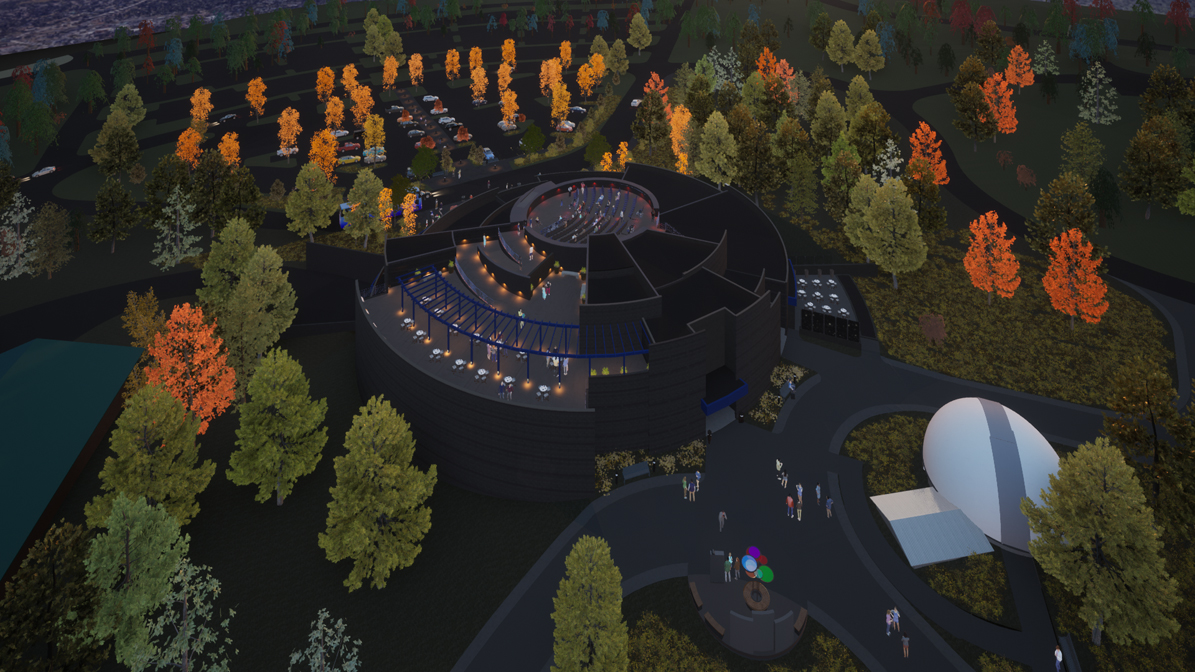
The 40,000sq ft facility is spread over three floors, and features a rooftop open-sky planetarium, an interactive children’s science museum and the ultramodern Lowell Universe Theater.
A sense of wonder “Every component of the ADC is built with the purpose of communicating the awesome and unexpected wonders of the universe,” says Dr Jeffrey Hall, executive director, Lowell Observatory.
“At Lowell Observatory, we believe in the power of education to transform lives. The Astronomy Discovery Center adds to Lowell’s mission to be an incredibly accessible and exciting place for people of all ages to discover the universe, and we hope it will ignite lifelong curiosity in everyone who comes through its doors.”
The 180-seat Lowell Universe Theater features a two-storey 160° curved 16K LED screen and a stage for interactive presentations from astrophysicists and other scientists. This will enable the centre to combine elements of a planetarium with live shows to bring astronomy alive for guests.
It’s the Dark Sky Planetarium that sets the ADC apart from most astronomy centres – instead of using an indoor planetarium with a dome, the centre uses Flagstaff’s dark skies as a natural planetarium. Visitors sit in heated, slanted seats and look up at the night sky, while Lowell educators talk them through the stars, planets and constellations in live presentations.
The centre features three main galleries: the Origins Gallery, featuring a dramatic suspended centrepiece exploring the evolution of the universe; the Astronomy Gallery – Stardust Lab, with interactive exhibits for adults and older children, and the Orbits Curiosity Zone, which aims to bring astronomy to life for younger children with interactive displays and exhibits.
“The Astronomy Discovery Center embodies the spirit of exploration and discovery that has been at the heart of Lowell Observatory for more than a century,” says Lowell Observatory’s COO, Dr Amanda Bosh. “This centre will inspire awe and curiosity in visitors of all ages.”
“This new facility will be a gateway to critical thinking through study of the cosmos with the goal of increasing scientific literacy,” says Dr Stephen Levine, director of education at Lowell Observatory. “By engaging visitors in hands-on activities and immersive presentations, we aim to ignite a lifelong passion for science and exploration.”
The design team
The ADC design team was led by Lowell Observatory staff members Samantha Gorney, deputy director for education, and David Sawyer, technical project manager.
Interpretive planning & design partner: Kei Space Design
Architecture: JWA Architects
Construction management: BEC Southwest
Executive director Dr Jeffery Hall; COO Dr Armand Bosh; and director of education Dr Stephen Levine / Image: Lowell Observatory
• LOWELL UNIVERSE THEATER
180-seats, 16K, 160° curved LED screen, stage for
interactive presentations
People: Jess French
The children’s author sees her fantastical creations brought to life at Chester Zoo
Interview: Peter Slavenburg
As Drents Museum in the Netherlands launches a radically new collection presentation, we speak to the designer about doing things differently
Talking point: A helping hand
Attractions industry workers need support more than ever, but is enough being done? We speak to some experts putting wellness and mental health first
Planetarium: Looking up
Bringing people together under the dark skies of Arizona, Lowell Observatory’s new Astronomy Discovery Center is truly unique
Waterpark: Desert Oasis: Qiddiya Aquarabia
The largest waterpark in the Middle East is set to open in Saudi Arabia in 2026, and it’s going to be huge. We speak to the team behind this epic development
Museums: Nintendo Museum: Play on
Giant controllers, consoles operated by visitors’ shadows and a game based on Japanese poems... The Nintendo Museum opens in Kyoto
Technology: Kyle Morrand: The power of play
The CEO of 302 Interactive is using AR, VR and other technologies to solve real world problems, and transform the attractions industry. He shares his game plan
Interview: Dominic Jones
From a game-changing partnership to getting creative with budget technologies, the CEO of the Mary Rose Trust is bringing his commercial nous to the museum world
Research: In the heart of it
City centre attractions are transforming to meet the needs of experience-hungry visitors, but where are they headed next?
Percival Lowell used the famous Clark Telescope to observe Venus and Mars / Photo: Raymond Dake Photography/Lowell Observatory
Best known for the discovery of Pluto, as well as for the detection of the first evidence of the expanding universe, Lowell Observatory in Flagstaff, Arizona has been connecting people to the skies since its establishment in 1894.
Since the 1950s, Lowell Observatory has worked with Flagstaff City Council to preserve the dark skies of Flagstaff and northern Arizona, and in 2001, Flagstaff was designated the world’s first International Dark Sky City.
All of this makes Flagstaff something of a Mecca for stargazers. Now, with the opening of Lowell Observatory’s new $53m Kempel and Ethel Marley Foundation Astronomy Discovery Center, it will become even more of a draw.
The 40,000sq ft facility is spread over three floors, and features a rooftop open-sky planetarium, an interactive children’s science museum and the ultramodern Lowell Universe Theater.
A sense of wonder “Every component of the ADC is built with the purpose of communicating the awesome and unexpected wonders of the universe,” says Dr Jeffrey Hall, executive director, Lowell Observatory.
“At Lowell Observatory, we believe in the power of education to transform lives. The Astronomy Discovery Center adds to Lowell’s mission to be an incredibly accessible and exciting place for people of all ages to discover the universe, and we hope it will ignite lifelong curiosity in everyone who comes through its doors.”
The 180-seat Lowell Universe Theater features a two-storey 160° curved 16K LED screen and a stage for interactive presentations from astrophysicists and other scientists. This will enable the centre to combine elements of a planetarium with live shows to bring astronomy alive for guests.
It’s the Dark Sky Planetarium that sets the ADC apart from most astronomy centres – instead of using an indoor planetarium with a dome, the centre uses Flagstaff’s dark skies as a natural planetarium. Visitors sit in heated, slanted seats and look up at the night sky, while Lowell educators talk them through the stars, planets and constellations in live presentations.
The centre features three main galleries: the Origins Gallery, featuring a dramatic suspended centrepiece exploring the evolution of the universe; the Astronomy Gallery – Stardust Lab, with interactive exhibits for adults and older children, and the Orbits Curiosity Zone, which aims to bring astronomy to life for younger children with interactive displays and exhibits.
“The Astronomy Discovery Center embodies the spirit of exploration and discovery that has been at the heart of Lowell Observatory for more than a century,” says Lowell Observatory’s COO, Dr Amanda Bosh. “This centre will inspire awe and curiosity in visitors of all ages.”
“This new facility will be a gateway to critical thinking through study of the cosmos with the goal of increasing scientific literacy,” says Dr Stephen Levine, director of education at Lowell Observatory. “By engaging visitors in hands-on activities and immersive presentations, we aim to ignite a lifelong passion for science and exploration.”
The design team
The ADC design team was led by Lowell Observatory staff members Samantha Gorney, deputy director for education, and David Sawyer, technical project manager.
Interpretive planning & design partner: Kei Space Design
Architecture: JWA Architects
Construction management: BEC Southwest
Executive director Dr Jeffery Hall; COO Dr Armand Bosh; and director of education Dr Stephen Levine / Image: Lowell Observatory
• LOWELL UNIVERSE THEATER
180-seats, 16K, 160° curved LED screen, stage for
interactive presentations
People: Jess French
The children’s author sees her fantastical creations brought to life at Chester Zoo
Interview: Peter Slavenburg
As Drents Museum in the Netherlands launches a radically new collection presentation, we speak to the designer about doing things differently
Talking point: A helping hand
Attractions industry workers need support more than ever, but is enough being done? We speak to some experts putting wellness and mental health first
Planetarium: Looking up
Bringing people together under the dark skies of Arizona, Lowell Observatory’s new Astronomy Discovery Center is truly unique
Waterpark: Desert Oasis: Qiddiya Aquarabia
The largest waterpark in the Middle East is set to open in Saudi Arabia in 2026, and it’s going to be huge. We speak to the team behind this epic development
Museums: Nintendo Museum: Play on
Giant controllers, consoles operated by visitors’ shadows and a game based on Japanese poems... The Nintendo Museum opens in Kyoto
Technology: Kyle Morrand: The power of play
The CEO of 302 Interactive is using AR, VR and other technologies to solve real world problems, and transform the attractions industry. He shares his game plan
Interview: Dominic Jones
From a game-changing partnership to getting creative with budget technologies, the CEO of the Mary Rose Trust is bringing his commercial nous to the museum world
Research: In the heart of it
City centre attractions are transforming to meet the needs of experience-hungry visitors, but where are they headed next?
Expo 2030 Riyadh is being planned as a permanent visitor destination, with organisers
confirming the six-million-square-metre site will become a Global Village after the event closes.
The owner of one of Australia's best-known waterparks has acquired a major competitor,
creating a new attractions business spanning two of the country's largest visitor destinations.
The Toverland theme park in the Netherlands has announced a €98m expansion programme
that will add a resort, new attractions and staff facilities as it pursues plans to become a multi-
day destination.
Hotel de France, located on the British Isle of Jersey, has created a wellness retreat package
that includes a hot yoga session that will take place in Jersey Zoo’s butterfly sanctuary.
A new immersive attraction designed to transport visitors into the final hours of ancient Pompeii
is preparing to open near the world-famous archaeological site in southern Italy.
Experience design company, BRC Imagination Arts, has completed a transition that sees founder
Bob Rogers pass ownership of the business to four long-serving senior executives, while
remaining actively involved with the company.
Movie Park Germany has opened a new Paramount Pictures-themed attraction as part of its 30th
anniversary celebrations, using immersive storytelling and adaptive reuse to reinforce the park’s
longstanding “Hollywood in Germany” positioning.
Therme Manchester’s 28-acre development, which will include interconnected glass pavilions
that measure 65,000sq m, will be the largest bathing and wellbeing attraction in the world once
complete, according to prof David Russell, CEO of Therme UK.
Efteling has opened Hooghmoed, a new family drop tower designed to broaden the appeal of its
recently launched Sirene Island themed area and introduce younger visitors to thrill attractions.
A proposed Puy du Fou development near Bicester and Universal Destinations and Experiences’
planned resort in Bedford are emerging as part of a wider transformation of the Oxford–
Cambridge Growth Corridor into a major centre for UK leisure and tourism inv
+ More news
COMPANY PROFILES
IDEATTACK IDEATTACK is a full-service planning and
design company with headquarters in
Los Angeles. [more...]
instantprint We’re a Yorkshire-based online printer, founded
in 2009 by Adam Carnell and James Kinsella. [more...]
Sally Corporation Our services include: Dark ride design & build; Redevelopment of existing attractions; High-quality [more...]
DJW David & Lynn Willrich started the Company
over thirty years ago, from the Audio Visual
Department [more...]