With a background in themed entertainment, the CEO of
the Mary Rose Trust has brought his commercial nous to the
job, introducing a game-changing partnership and innovative
technologies on a budget. Magali Robathan finds out more
When I visit the Mary Rose with my family, we enter Portsmouth Historic Dockyard (PHD) via an entrance shared by the Mary Rose, the HMS Victory and HMS Warrior ships, where we’re welcomed by Mary Rose and National Museum of the Royal Navy staff working side by side. We pick up our tickets – which allow us access to all three ships, as well as to a range of other dockyard attractions – from a central visitor centre, and grab a coffee from the shared café.
Marketing is shared, with recent creative campaigns including a race across the UK’s south coast between Henry VIII, Queen Victoria and Admiral Lord Nelson – and the website shows how the timeline of the ships fits together to help tell the story of British maritime history.
This joined up approach is thanks to an award-winning joint partnership between the Mary Rose Trust and the National Museum of the Royal Navy introduced in 2020.
“Combining the stability of a national museum with the entrepreneurial drive of an independent museum has been a huge success,” says Jones. “We haven’t looked back.”
Going it alone It hasn’t always been like this. When Jones joined the Mary Rose Trust from Merlin Entertainments in November 2018 (as COO), there was fierce competition between the Mary Rose and the National Museum of the Royal Navy. Jones joined other staff members hustling for business out on the docks, shoving leaflets into potential visitors’ hands and jumping onto coaches to try and persuade tourists to choose their museum.
“It was stressful for customers and tough for us,” Jones tells me. “Working in partnership provides a much better experience for visitors, and it has bought us financial stability.”
The joint partnership is just one of the changes initiated by Jones, who has used his commercial background to help drive visitor numbers, attract new audiences and introduce a range of technologies to better tell the story of Henry VIII’s flagship, which sank in 1545, and was brought to the surface 437 years later in a televised salvage operation watched by an estimated 60 million people worldwide.
A new approach “I’m not your traditional museum person. The fact I got the job was a miracle,” Jones says. “Most of the people I meet came up through the curatorial ranks, and they tend to have studied at Oxford or Cambridge.”
Jones, in contrast, went to a college in Swansea – “which I loved” – and started his career working on a placement at Walt Disney World in Florida, US. He went on to receive a Mousters certificate as part of Disney’s international college programme before taking a job as a ride operator at Thorpe Park in the UK.
“Some of my friends saw operating the teacups at Thorpe Park as a real waste of my degree, but I knew I wanted to run a theme park, and it was important to learn how everything worked,” he says.
Jones achieved his aim, going on to run several theme parks – including Thorpe Park – and his career also saw him working as customer services manager for Madame Tussauds, holding various positions at Merlin including regional general manager for Europe, and spending eight years working in senior positions for Virgin Atlantic Airways.
With this varied background, Jones was able to bring a different – and arguably more commercial – approach to the Mary Rose.
“Moving into heritage has been a steep learning curve, but one that’s been full of opportunities to take the theme park and commercial visitor attraction model and bring it into the heritage world,” he says.
Turning things around Jones was appointed chief executive of the Mary Rose Trust in March 2021, during the COVID-19 pandemic.
“At that point, it was all about survival,” he says. “The Mary Rose is an independent museum; we don’t get any government or public funding – 84 per cent of our money comes from ticket sales, and the rest from private donations, trusts and foundations. Like many museums, we were struggling financially.
“We realised that the only way we could ensure the future of the Mary Rose was to change our approach to a more collaborative one.”
This realisation led to an innovative joint venture between the National Museum of the Royal Navy and the Mary Rose Trust, which sees Portsmouth Historic Dockyard’s attractions jointly operated and marketed.
“It was a win for everyone,” says Jones. “The National Museum of the Royal Navy was amazing, and they have the advantages of being a national museum. Meanwhile, as an independent museum, we were quite nimble and commercial, and we could add value to them.”
“We introduced decoy pricing, tracked our audiences in new ways and changed our marketing strategy – all of these things were different to the way the National Museum of the Royal Navy had previously operated.”
Since launching the partnership, Portsmouth Historic Dockyard has seen a steady increase in visitor numbers year on year, attracting more than 870,000 visitors in 2023, up 21 per cent from the previous year. Last year, the Dockyard was named as one of the top three visited paid attractions in the UK outside London, after Stonehenge and the Roman Baths. And in May 2024, Portsmouth Historic Dockyard won Partnership of the Year at the Museum + Heritage Awards.
“We beat Bletchley Park Trust and their Rishi Sunak’s partnership – can you believe it?” says Jones, clearly delighted. “I was blown away to get that award.”
Getting creative Having worked for Disney and Merlin, Jones was familiar with the techniques employed by the themed entertainment industry, and keen to use what he’d learned to attract more visitors to the Mary Rose. The budget didn’t stretch to the more expensive technologies he was used to, however, meaning the team had to get creative.
Jones and the team developed Experience 1545 during lockdown, with the aim of setting the scene as visitors enter the Mary Rose, and helping them to better understand the history before seeing the ruins of the ship and the genuine Tudor artefacts displayed.
“Lots of people thought that the Mary Rose sank during its maiden voyage, like the Titanic. In fact it was a very successful warship, serving for 34 years. It was one of Henry VIII’s favourite ships, and it represented the start of the Royal Navy.
“We wanted to find a way to get all of that across. Initially I suggested doing a hologram but we couldn’t afford it. Instead, we got an actor to play Henry VIII and screened it on the biggest tv we could find. It really works – you get the same effect as a hologram but without the cost.
“We pulled out all the stops with Experience 1545,” he adds. “Dame Judi Dench did the voiceover at the start of the experience for free, which meant that we got a load of PR. We spent money on the latest technology to create an immersive experience giving visitors a taste of what it might have been like to be on the Mary Rose when it sank. We did product launches and customer engagement nights – we even got some of the people from Love Island to come down to the experience.”
4D theatre The next big launch came in 2023, with the introduction of a new 4D theatre experience, Dive the Mary Rose 4D.
“We have an amazing museum, with more than 19,000 genuine artefacts,” says Jones. “We tell the story of everyday Tudor life really well, but we hadn’t told the modern day story of the finding, excavation and raising of the Mary Rose.
“I wanted to create a 4D theatre; not a gimmicky theme park one – which I also love, by the way – but one that has authenticity and that tells a real story.”
Dive the Mary Rose 4D launched in Easter 2023, using 3D cinema and the latest gaming technology, with smell, sound and movement used to enhance the experience.
“I’m incredibly proud of that experience,” says Jones. “It was a real passion project, and it has real authenticity.”
Authentic stories Authenticity is a key priority for Jones and for the Mary Rose, and it was vital for the team to make the 4D experience feel as real as possible.
“We’re custodians of authenticity,” says Jones. “It’s our USP. We’re not interpreting what we think Tudor life on the Mary Rose would have been like – we have the actual artefacts, we’ve done the research. We believe the carpenter was Spanish because we’ve done isotope analysis on him, we know that he played backgammon. Everything is authentic.
“We’d come up with this concept of the importance of being custodians of authenticity as we were about to launch the 4D theatre. We had to stop and check ourselves – to ask whether it really was authentic.
“The launch poster was blue, but actually, the Solent is green. We spent three days getting the colour green right.
“We engaged with 160 of the original 500 divers, and we got actors to voice their commentary. When we got the footage back, it just didn’t feel right, so we delayed the launch and recut it with the authentic voices of the real divers.”
This attention to detail paid off, with the experience attracting new audiences. It won Best New Use of Technology at the 2024 Museum + Heritage Awards.
“I love everything about the Mary Rose Museum, but the 4D theatre is probably my favourite part, because I’m so proud of it,” says Jones. “Divers like it, the rollercoaster community likes it, my kids like it. I watched it with an 85-year-old veteran and he loved it.
“It was a real passion project and it shows how museums can tell stories to new audiences in new ways while still keeping their integrity and authenticity.”
Looking ahead “We’re at the start of a new journey,” says Jones. “Our first three year strategy was about surviving the pandemic.
“The next five year plan is all about lasting financial sustainability. We’ve developed some key strategic objectives, which include building our significance, locally, nationally and internationally; delivering innovative and effective outreach programmes; and embedding environmental sustainability into everything we do.
“We’re looking at lots of ideas to help us deliver these objectives.”
As I talk to Jones, the ideas burst out of him. “We’re working on putting together touring exhibitions – both in the UK, and we’re in talks with Australia and America,” he says.
“We’re working on an exhibition called Pop Goes the Mary Rose, looking at the Mary Rose’s influence in popular culture, from Blue Peter and Only Fools and Horses to Lego.
“We’ve got loads of ideas for that – we’ve commissioned a local graffiti artist to get involved. It’ll be colourful, vibrant, different.
“In 2026, it’s the centenary of Portsmouth being a city. We want to bring the city of Tudor Portsmouth to life – that will allow us to tell lots of different stories, including more female stories,” he adds.
“In the longer term, we’re working on what we’re calling Mary Rose 2.0. It’s all about opening up the starboard side (the complete side of the ship), so our guests can look at the other side. That will take a few years. In the meantime, we’ll relaunch our science gallery, which will become the entrance to the starboard side.”
At one point he takes a breath and says, laughing: “Can you tell I love the Mary Rose?”
I can. Jones’ passion for the museum is very clear, and it’s also clear that the story of the Mary Rose is far from over. The ship may be old, but her story continues to be told in new and exciting ways.
The Many
Faces of Tudor England
New ways
of telling
stories
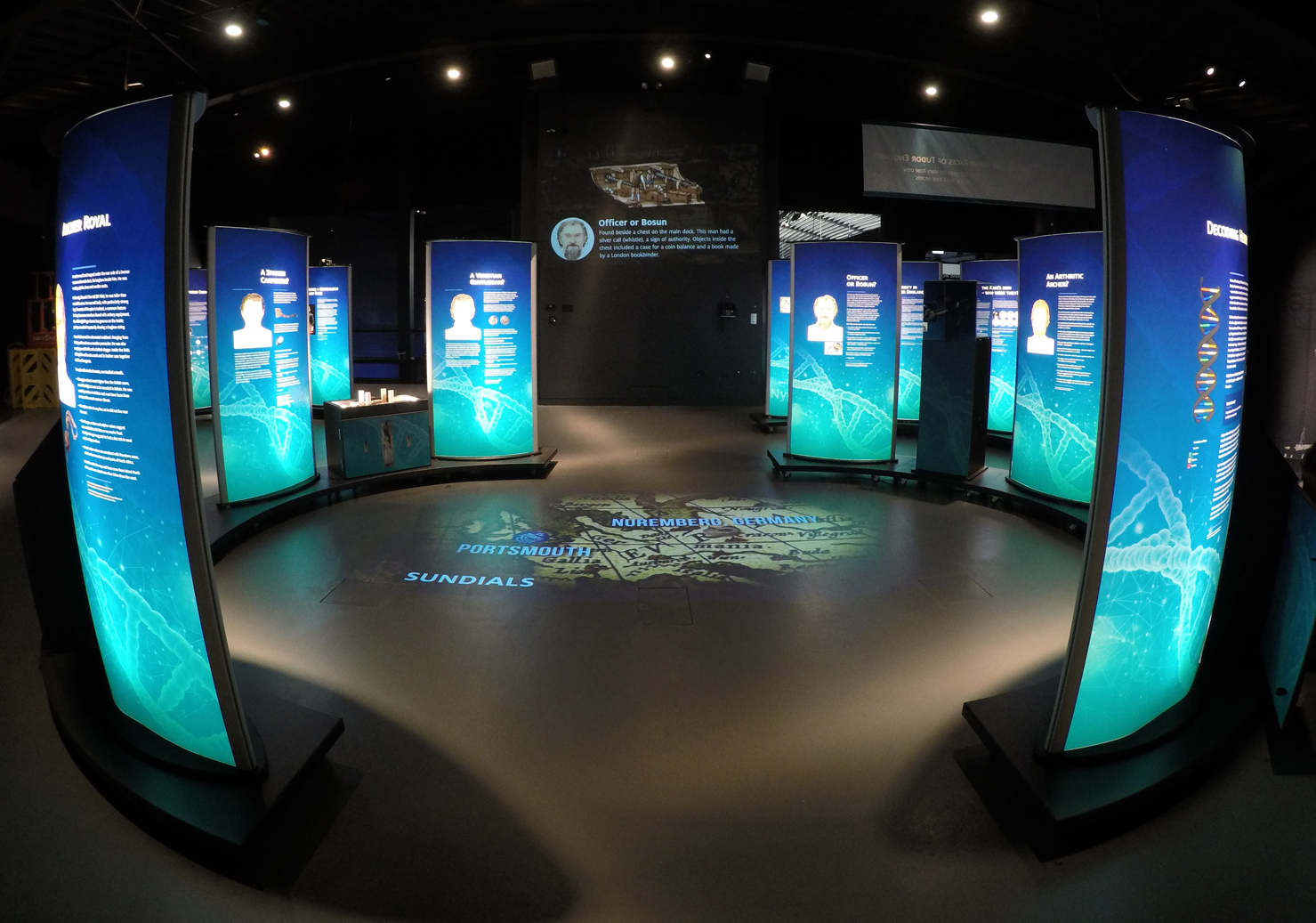
The Many Faces of Tudor England explored the diversity of the crew on board the Mary Rose.
The exhibition showcased research from a team including archaeologists, biochemists, chemists, geneticists, genealogists, geologists, historians and sculptors, who undertook forensic examinations of eight of the crew.
Using multi-isotype analysis to study their teeth, researchers were able to suggest where these individuals spent their early years. Food and water consumed in childhood leaves chemical signatures within the teeth, providing information on climate, underlying geology and the type of food consumed.
The research showed as many as three of the eight crew may have originated from more southerly climates than Britain, including the southern Mediterranean, Iberia and North Africa. Researchers say the remaining five crew members were likely to have been born in Britain. Analysis of the DNA extracted from one of these indicates that although he was born in Britain, his father was from North Africa or the near East.
The Mary Rose Museum is currently exploring the idea of creating a travelling exhibition of the Many Faces of Tudor England.
People: Jess French
The children’s author sees her fantastical creations brought to life at Chester Zoo
Interview: Peter Slavenburg
As Drents Museum in the Netherlands launches a radically new collection presentation, we speak to the designer about doing things differently
Talking point: A helping hand
Attractions industry workers need support more than ever, but is enough being done? We speak to some experts putting wellness and mental health first
Planetarium: Looking up
Bringing people together under the dark skies of Arizona, Lowell Observatory’s new Astronomy Discovery Center is truly unique
Waterpark: Desert Oasis: Qiddiya Aquarabia
The largest waterpark in the Middle East is set to open in Saudi Arabia in 2026, and it’s going to be huge. We speak to the team behind this epic development
Museums: Nintendo Museum: Play on
Giant controllers, consoles operated by visitors’ shadows and a game based on Japanese poems... The Nintendo Museum opens in Kyoto
Technology: Kyle Morrand: The power of play
The CEO of 302 Interactive is using AR, VR and other technologies to solve real world problems, and transform the attractions industry. He shares his game plan
Interview: Dominic Jones
From a game-changing partnership to getting creative with budget technologies, the CEO of the Mary Rose Trust is bringing his commercial nous to the museum world
Research: In the heart of it
City centre attractions are transforming to meet the needs of experience-hungry visitors, but where are they headed next?
With a background in themed entertainment, the CEO of
the Mary Rose Trust has brought his commercial nous to the
job, introducing a game-changing partnership and innovative
technologies on a budget. Magali Robathan finds out more
When I visit the Mary Rose with my family, we enter Portsmouth Historic Dockyard (PHD) via an entrance shared by the Mary Rose, the HMS Victory and HMS Warrior ships, where we’re welcomed by Mary Rose and National Museum of the Royal Navy staff working side by side. We pick up our tickets – which allow us access to all three ships, as well as to a range of other dockyard attractions – from a central visitor centre, and grab a coffee from the shared café.
Marketing is shared, with recent creative campaigns including a race across the UK’s south coast between Henry VIII, Queen Victoria and Admiral Lord Nelson – and the website shows how the timeline of the ships fits together to help tell the story of British maritime history.
This joined up approach is thanks to an award-winning joint partnership between the Mary Rose Trust and the National Museum of the Royal Navy introduced in 2020.
“Combining the stability of a national museum with the entrepreneurial drive of an independent museum has been a huge success,” says Jones. “We haven’t looked back.”
Going it alone It hasn’t always been like this. When Jones joined the Mary Rose Trust from Merlin Entertainments in November 2018 (as COO), there was fierce competition between the Mary Rose and the National Museum of the Royal Navy. Jones joined other staff members hustling for business out on the docks, shoving leaflets into potential visitors’ hands and jumping onto coaches to try and persuade tourists to choose their museum.
“It was stressful for customers and tough for us,” Jones tells me. “Working in partnership provides a much better experience for visitors, and it has bought us financial stability.”
The joint partnership is just one of the changes initiated by Jones, who has used his commercial background to help drive visitor numbers, attract new audiences and introduce a range of technologies to better tell the story of Henry VIII’s flagship, which sank in 1545, and was brought to the surface 437 years later in a televised salvage operation watched by an estimated 60 million people worldwide.
A new approach “I’m not your traditional museum person. The fact I got the job was a miracle,” Jones says. “Most of the people I meet came up through the curatorial ranks, and they tend to have studied at Oxford or Cambridge.”
Jones, in contrast, went to a college in Swansea – “which I loved” – and started his career working on a placement at Walt Disney World in Florida, US. He went on to receive a Mousters certificate as part of Disney’s international college programme before taking a job as a ride operator at Thorpe Park in the UK.
“Some of my friends saw operating the teacups at Thorpe Park as a real waste of my degree, but I knew I wanted to run a theme park, and it was important to learn how everything worked,” he says.
Jones achieved his aim, going on to run several theme parks – including Thorpe Park – and his career also saw him working as customer services manager for Madame Tussauds, holding various positions at Merlin including regional general manager for Europe, and spending eight years working in senior positions for Virgin Atlantic Airways.
With this varied background, Jones was able to bring a different – and arguably more commercial – approach to the Mary Rose.
“Moving into heritage has been a steep learning curve, but one that’s been full of opportunities to take the theme park and commercial visitor attraction model and bring it into the heritage world,” he says.
Turning things around Jones was appointed chief executive of the Mary Rose Trust in March 2021, during the COVID-19 pandemic.
“At that point, it was all about survival,” he says. “The Mary Rose is an independent museum; we don’t get any government or public funding – 84 per cent of our money comes from ticket sales, and the rest from private donations, trusts and foundations. Like many museums, we were struggling financially.
“We realised that the only way we could ensure the future of the Mary Rose was to change our approach to a more collaborative one.”
This realisation led to an innovative joint venture between the National Museum of the Royal Navy and the Mary Rose Trust, which sees Portsmouth Historic Dockyard’s attractions jointly operated and marketed.
“It was a win for everyone,” says Jones. “The National Museum of the Royal Navy was amazing, and they have the advantages of being a national museum. Meanwhile, as an independent museum, we were quite nimble and commercial, and we could add value to them.”
“We introduced decoy pricing, tracked our audiences in new ways and changed our marketing strategy – all of these things were different to the way the National Museum of the Royal Navy had previously operated.”
Since launching the partnership, Portsmouth Historic Dockyard has seen a steady increase in visitor numbers year on year, attracting more than 870,000 visitors in 2023, up 21 per cent from the previous year. Last year, the Dockyard was named as one of the top three visited paid attractions in the UK outside London, after Stonehenge and the Roman Baths. And in May 2024, Portsmouth Historic Dockyard won Partnership of the Year at the Museum + Heritage Awards.
“We beat Bletchley Park Trust and their Rishi Sunak’s partnership – can you believe it?” says Jones, clearly delighted. “I was blown away to get that award.”
Getting creative Having worked for Disney and Merlin, Jones was familiar with the techniques employed by the themed entertainment industry, and keen to use what he’d learned to attract more visitors to the Mary Rose. The budget didn’t stretch to the more expensive technologies he was used to, however, meaning the team had to get creative.
Jones and the team developed Experience 1545 during lockdown, with the aim of setting the scene as visitors enter the Mary Rose, and helping them to better understand the history before seeing the ruins of the ship and the genuine Tudor artefacts displayed.
“Lots of people thought that the Mary Rose sank during its maiden voyage, like the Titanic. In fact it was a very successful warship, serving for 34 years. It was one of Henry VIII’s favourite ships, and it represented the start of the Royal Navy.
“We wanted to find a way to get all of that across. Initially I suggested doing a hologram but we couldn’t afford it. Instead, we got an actor to play Henry VIII and screened it on the biggest tv we could find. It really works – you get the same effect as a hologram but without the cost.
“We pulled out all the stops with Experience 1545,” he adds. “Dame Judi Dench did the voiceover at the start of the experience for free, which meant that we got a load of PR. We spent money on the latest technology to create an immersive experience giving visitors a taste of what it might have been like to be on the Mary Rose when it sank. We did product launches and customer engagement nights – we even got some of the people from Love Island to come down to the experience.”
4D theatre The next big launch came in 2023, with the introduction of a new 4D theatre experience, Dive the Mary Rose 4D.
“We have an amazing museum, with more than 19,000 genuine artefacts,” says Jones. “We tell the story of everyday Tudor life really well, but we hadn’t told the modern day story of the finding, excavation and raising of the Mary Rose.
“I wanted to create a 4D theatre; not a gimmicky theme park one – which I also love, by the way – but one that has authenticity and that tells a real story.”
Dive the Mary Rose 4D launched in Easter 2023, using 3D cinema and the latest gaming technology, with smell, sound and movement used to enhance the experience.
“I’m incredibly proud of that experience,” says Jones. “It was a real passion project, and it has real authenticity.”
Authentic stories Authenticity is a key priority for Jones and for the Mary Rose, and it was vital for the team to make the 4D experience feel as real as possible.
“We’re custodians of authenticity,” says Jones. “It’s our USP. We’re not interpreting what we think Tudor life on the Mary Rose would have been like – we have the actual artefacts, we’ve done the research. We believe the carpenter was Spanish because we’ve done isotope analysis on him, we know that he played backgammon. Everything is authentic.
“We’d come up with this concept of the importance of being custodians of authenticity as we were about to launch the 4D theatre. We had to stop and check ourselves – to ask whether it really was authentic.
“The launch poster was blue, but actually, the Solent is green. We spent three days getting the colour green right.
“We engaged with 160 of the original 500 divers, and we got actors to voice their commentary. When we got the footage back, it just didn’t feel right, so we delayed the launch and recut it with the authentic voices of the real divers.”
This attention to detail paid off, with the experience attracting new audiences. It won Best New Use of Technology at the 2024 Museum + Heritage Awards.
“I love everything about the Mary Rose Museum, but the 4D theatre is probably my favourite part, because I’m so proud of it,” says Jones. “Divers like it, the rollercoaster community likes it, my kids like it. I watched it with an 85-year-old veteran and he loved it.
“It was a real passion project and it shows how museums can tell stories to new audiences in new ways while still keeping their integrity and authenticity.”
Looking ahead “We’re at the start of a new journey,” says Jones. “Our first three year strategy was about surviving the pandemic.
“The next five year plan is all about lasting financial sustainability. We’ve developed some key strategic objectives, which include building our significance, locally, nationally and internationally; delivering innovative and effective outreach programmes; and embedding environmental sustainability into everything we do.
“We’re looking at lots of ideas to help us deliver these objectives.”
As I talk to Jones, the ideas burst out of him. “We’re working on putting together touring exhibitions – both in the UK, and we’re in talks with Australia and America,” he says.
“We’re working on an exhibition called Pop Goes the Mary Rose, looking at the Mary Rose’s influence in popular culture, from Blue Peter and Only Fools and Horses to Lego.
“We’ve got loads of ideas for that – we’ve commissioned a local graffiti artist to get involved. It’ll be colourful, vibrant, different.
“In 2026, it’s the centenary of Portsmouth being a city. We want to bring the city of Tudor Portsmouth to life – that will allow us to tell lots of different stories, including more female stories,” he adds.
“In the longer term, we’re working on what we’re calling Mary Rose 2.0. It’s all about opening up the starboard side (the complete side of the ship), so our guests can look at the other side. That will take a few years. In the meantime, we’ll relaunch our science gallery, which will become the entrance to the starboard side.”
At one point he takes a breath and says, laughing: “Can you tell I love the Mary Rose?”
I can. Jones’ passion for the museum is very clear, and it’s also clear that the story of the Mary Rose is far from over. The ship may be old, but her story continues to be told in new and exciting ways.
The Many
Faces of Tudor England
New ways
of telling
stories
The Many Faces of Tudor England explored the diversity of the crew on board the Mary Rose.
The exhibition showcased research from a team including archaeologists, biochemists, chemists, geneticists, genealogists, geologists, historians and sculptors, who undertook forensic examinations of eight of the crew.
Using multi-isotype analysis to study their teeth, researchers were able to suggest where these individuals spent their early years. Food and water consumed in childhood leaves chemical signatures within the teeth, providing information on climate, underlying geology and the type of food consumed.
The research showed as many as three of the eight crew may have originated from more southerly climates than Britain, including the southern Mediterranean, Iberia and North Africa. Researchers say the remaining five crew members were likely to have been born in Britain. Analysis of the DNA extracted from one of these indicates that although he was born in Britain, his father was from North Africa or the near East.
The Mary Rose Museum is currently exploring the idea of creating a travelling exhibition of the Many Faces of Tudor England.
People: Jess French
The children’s author sees her fantastical creations brought to life at Chester Zoo
Interview: Peter Slavenburg
As Drents Museum in the Netherlands launches a radically new collection presentation, we speak to the designer about doing things differently
Talking point: A helping hand
Attractions industry workers need support more than ever, but is enough being done? We speak to some experts putting wellness and mental health first
Planetarium: Looking up
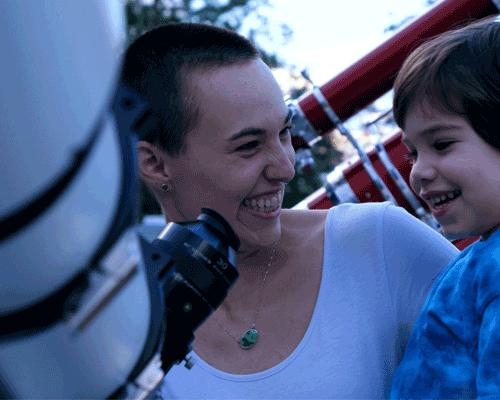
Bringing people together under the dark skies of Arizona, Lowell Observatory’s new Astronomy Discovery Center is truly unique
Waterpark: Desert Oasis: Qiddiya Aquarabia
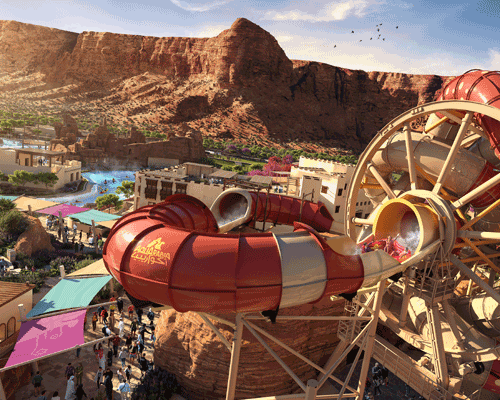
The largest waterpark in the Middle East is set to open in Saudi Arabia in 2026, and it’s going to be huge. We speak to the team behind this epic development
Museums: Nintendo Museum: Play on
Giant controllers, consoles operated by visitors’ shadows and a game based on Japanese poems... The Nintendo Museum opens in Kyoto
Technology: Kyle Morrand: The power of play
The CEO of 302 Interactive is using AR, VR and other technologies to solve real world problems, and transform the attractions industry. He shares his game plan
Interview: Dominic Jones
From a game-changing partnership to getting creative with budget technologies, the CEO of the Mary Rose Trust is bringing his commercial nous to the museum world
Research: In the heart of it
City centre attractions are transforming to meet the needs of experience-hungry visitors, but where are they headed next?
Expo 2030 Riyadh is being planned as a permanent visitor destination, with organisers
confirming the six-million-square-metre site will become a Global Village after the event closes.
The owner of one of Australia's best-known waterparks has acquired a major competitor,
creating a new attractions business spanning two of the country's largest visitor destinations.
The Toverland theme park in the Netherlands has announced a €98m expansion programme
that will add a resort, new attractions and staff facilities as it pursues plans to become a multi-
day destination.
Hotel de France, located on the British Isle of Jersey, has created a wellness retreat package
that includes a hot yoga session that will take place in Jersey Zoo’s butterfly sanctuary.
A new immersive attraction designed to transport visitors into the final hours of ancient Pompeii
is preparing to open near the world-famous archaeological site in southern Italy.
Experience design company, BRC Imagination Arts, has completed a transition that sees founder
Bob Rogers pass ownership of the business to four long-serving senior executives, while
remaining actively involved with the company.
Movie Park Germany has opened a new Paramount Pictures-themed attraction as part of its 30th
anniversary celebrations, using immersive storytelling and adaptive reuse to reinforce the park’s
longstanding “Hollywood in Germany” positioning.
Therme Manchester’s 28-acre development, which will include interconnected glass pavilions
that measure 65,000sq m, will be the largest bathing and wellbeing attraction in the world once
complete, according to prof David Russell, CEO of Therme UK.
Efteling has opened Hooghmoed, a new family drop tower designed to broaden the appeal of its
recently launched Sirene Island themed area and introduce younger visitors to thrill attractions.
A proposed Puy du Fou development near Bicester and Universal Destinations and Experiences’
planned resort in Bedford are emerging as part of a wider transformation of the Oxford–
Cambridge Growth Corridor into a major centre for UK leisure and tourism inv
+ More news
COMPANY PROFILES
Simworx Ltd The company was initially established
in 1997. Terry Monkton and Andrew
Roberts are the key stakeh [more...]
RMA Ltd RMA Ltd is a one-stop global company
that can design, build and produce from a
greenfield site upw [more...]
Alterface Alterface’s Creative Division team is
seasoned in concept and ride development,
as well as storyte [more...]
Clip 'n Climb Clip ‘n Climb currently offers facility owners and
investors more than 40 colourful and unique
Cha [more...]