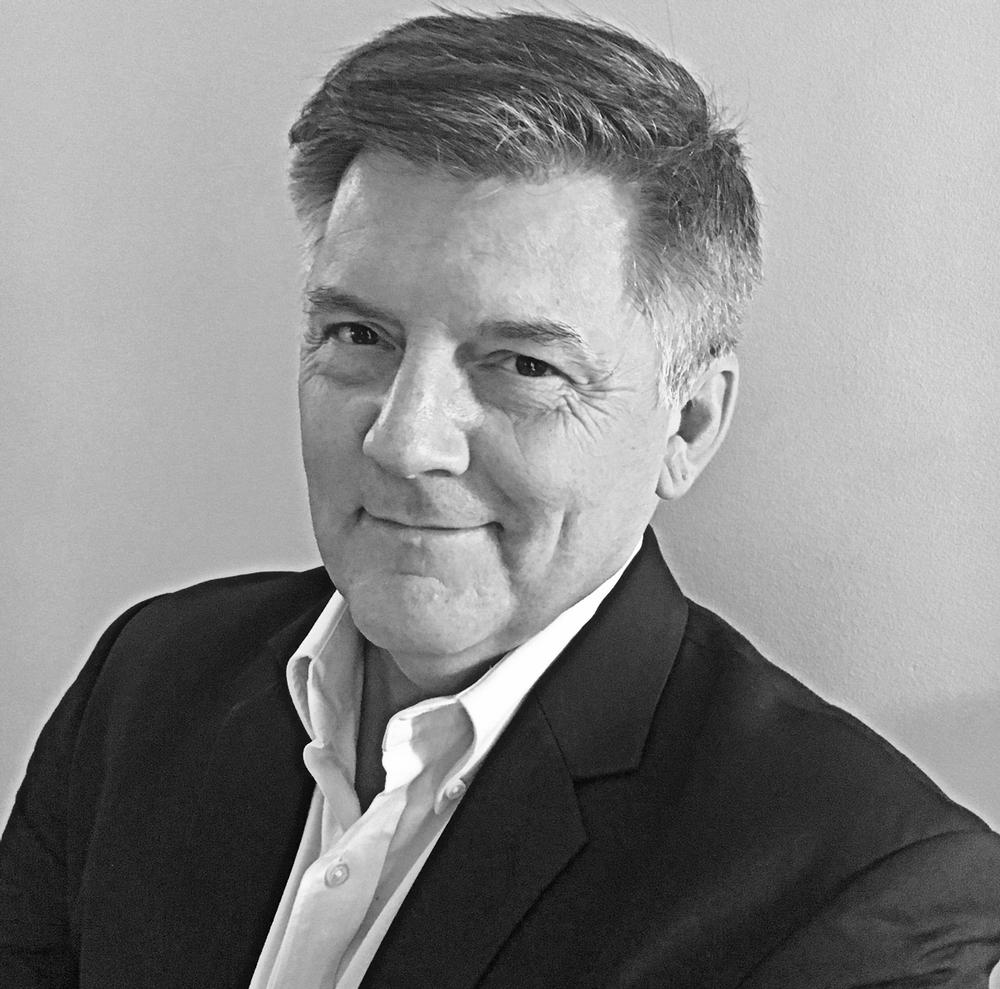
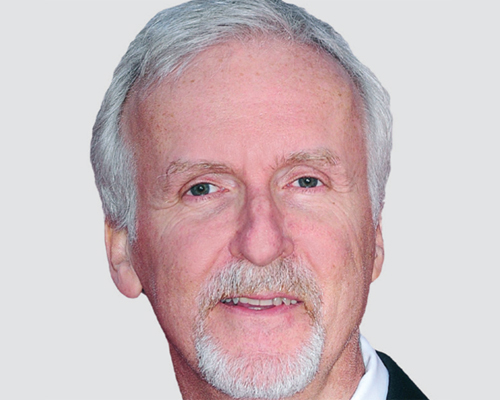
Meet Doug Cress, a bold and passionate conservationist who has just taken the reins at the WAZA. And he has an unequivocal message for zoos and aquariums: “our time is now”
By Alice Davis | Published in Attractions Management 2017 issue 2
In March, the World Association of Zoos and Aquariums (WAZA), which oversees more than 300 accredited member zoos and aquariums, appointed a new CEO. His name is Doug Cress, and his aim is to lead the association and its members to the next level in the fight to save animals and their habitats from extinction, raising the profile of zoos and the work they do, and pushing them forward as an evermore vital cog in the machine.
“WAZA is progressive and forward-thinking,” says Cress. “This is a global body that has already positioned itself to be a leader in conservation and a leader in animal welfare standards.”
Cress joins WAZA from the United Nations. During his time there, he often worked with the zoos association and had a good relationship with former CEO Gerald Dick. He says he never thought about working for WAZA; it happened serendipitously. But now he’s here, he’s not sitting back, eyeing the organisation’s Annual Conference – in Berlin, in October – as a platform for galvanising its members.
“The theme is ‘our time is now’. We’re not looking back. We’re looking forward. We’re 10 years down the line thinking about how we solve these problems.”
Cress talks about the vast amount of data zoos and aquariums have worked hard to gather over the past few decades, the breeding programmes, the long-term genetic banks and genetic strategies, the conservation work that’s quietly done in every corner of the planet and, of course, the fact that none of that comes for free.
“How can you be one of the largest funders of global conservation and keep so quiet about it?” he says. “Zoos and aquariums are the third-largest financial contributor to global conservation – and that’s virtually unknown. We should be at the table and we should be setting the standards. We have a voice and we have the expertise. We know how to do this. And we will do it now, frankly.”
ZOO POWER Zoos and aquariums reach some 700 million people worldwide every year, people who are learning about the exhibits and their habitats in evermore innovative and memorable ways. When it comes to educating the next generations about how we preserve threatened and endangered species, and the importance of doing so, there is no other platform that can compete with this huge network.
Leading zoos and aquariums go much further than this. Far from just educating, the money they generate from visitors goes towards actively saving and protecting species in the wild, and there have been some incredible success stories.
“Part of the problem is that zoos and aquariums still feel guilty,” says Cress. “They feel guilty about the 20th century, carrying around this tradition of iron bars and imprisonment and punishment, essentially, on species, when in fact if you look at the record, they are the ones who have saved species from extinction and who are reintroducing species to the wild.
“And, they have taken some of the bolder steps to save iconic species.”
Cress cites, as one example, the work of San Diego Zoo Safari Park and Los Angeles Zoo to save the California condor from extinction. Thirty years ago, when there were less than 30 condors left in the world, the two zoos captured the birds and began a breeding programme that would restore the population to 435 at last count.
“You don’t pull the last remaining condors out of the wild without taking a huge risk,” he says. “But they did. And now there are hundreds of condors. It’s happened with all kinds of species. I find that sort of risk-taking and leadership very inspiring.
“I think zoos will wind up being the real leaders in conservation. Zoos have all the pieces: the public; the expertise; the animals we need to replenish wild stocks; and, the income-generating machine, something NGOs just don’t have. In the next 10 years, we’ll find zoos and aquariums being the answer to many of the major questions facing conservation, wild spaces and protected areas.”
ADDED VALUE At the UN, Cress led the Great Apes Survival Partnership (GRASP). GRASP, which was established in 2001, works to conserve chimpanzees, gorillas, bonobos and orangutans in their habitats.
Though appointing someone from outside of the zoos community was surprising to some, Cress’s move to WAZA was a natural step in his career. Prior to the UN, he was managing a network of 23 primate sanctuaries across Africa and working with relevant parties to battle the illegal wildlife trade and encourage sustainable development to protect local ecosystems.
He joined the UN’s great apes initiative in 2011, a role that involved handling large-scale partnerships and leveraging sometimes hundreds of other organisations, NGOs and governments to focus on specific causes. He was also charged with seeking out partners and overseeing design and implementation, fundraising and public awareness projects. It’s experience that should come in useful.
“With WAZA, as with all the partnerships, there has to be a reason to be together,” he says. “There has to be an added value that makes the organisation necessary. They’ve got to be stronger as a unit than they are individually. That’s key, providing the extra something that keeps everybody together.”
WELFARE FOCUS Cress hopes the power of the whole can be made to work harder to promote what zoos and aquariums do. Like other visitor attractions, zoos have been subject to bad press because of a number of incidents that have upset the general public. Stories like that of Harambe, the gorilla who was shot in 2016 at Cincinnati Zoo, Ohio, after a child climbed into his enclosure, imply to some people that zoos don’t take care of their animals. Cress says it’s up to zoos to counter this kind of bad publicity.
“The animal welfare issue is always one that trips zoos up, because often it’s a cheap win. It’s easy to get everybody angry when a keeper hits an elephant and the video goes viral. But does that really reflect the industry? Of course not,” says Cress.
“My job is to accentuate the positives, so I will be putting a real focus on welfare. Of course, when things like that happen, we don’t want to overlook them. We want to pool our resources and focus on making sure that it doesn’t happen again.”
He’s taking immediate action on that front, hiring, for the first time at WAZA, a dedicated animal welfare director to manage any complaints or crises that arise, but also be tasked with ensuring that any member failing to meet standards gets the training or resources they need to improve.
“We want to make sure that when we have a bad day or a video goes viral or an accident happens, we don’t let the entire industry be pulled down. Those incidents are regrettable. They happen, but they don’t reflect the industry every single day. Harambe was not shot because zoos exist.
“Anticipating where those problems might come up but also having an overwhelming number of examples of the good work that zoos and aquariums do is important. That’s going to be a real focus.”
TELLING STORIES Cress, who was born in Portland, Oregon, has always been passionate about animals. As a child, his house was full of them – not just pets, but a variety of animals thanks to his grandfather, who owned a zoo. The family moved overseas and his parents’ work took them to different parts of Africa and Asia. Cress continued to live abroad, including in Tanzania, South Africa and Kenya. “We lived in a lot of different places and wildlife has always been there.”
Cress was a journalist before he came to conservation. He was following a story about an illegally traded chimpanzee that had been confiscated and was going to be re-housed at a sanctuary in Zambia.
“I flew to Zambia to find out about this little chimpanzee. The sanctuary had a fascinating story so I wrote a book with the founder, Sheila Siddle. It got me going.”
The book was published in 2003, In My Family Tree: A Life with Chimpanzees, and part of its effect was to reveal to Cress the importance of storytelling in conservation.
“You can do all the great work in the world, but if no one knows about it, it is a silent scream,” he says. “I realised that my storytelling and media skills could do good.
“And that still holds true of storytelling. There are zoos and aquariums doing fantastic conservation work, scientific work and research and their stories aren’t told or aren’t told well enough. That’s not their primary focus and you can’t fault them, but unfortunately it’s one of the things that holds us back on the major issues. If you can’t tell a story in 20 or 30 seconds and change opinions and get people inspired, then it’s not going to happen.”
BUILDING DIALOGUES As CEO of WAZA, it’s Cress’s mission to help member zoos tell their conservation stories in an impactful way that underlines the role they play in society, especially as the role becomes evermore crucial to the survival of species and their habitats.
“I think you’ll see, by the end of this year, zoos and aquariums embracing that sense of moving forward,” he says. “We cannot be stuck in the past. History is not something we need to carry round like a scar.”
Cress is also open to working with other organisations on finding solutions, including activist groups like PETA or Born Free. “You can’t simply close all zoos and aquariums, it doesn’t work that way. And you can’t simply put all the animals back in the wild, it doesn’t work that way either. We are where we are. So let’s figure this out. I am interested in dialogues with anybody who has good ideas.”
The growth of the human population and its need for space and resources is at the centre of this “terrible equation” but there are reasons to be optimistic, Cress says. New species are being discovered, presumed extinct species are being spotted – recently, the night parrot in Australia, and possibly the Tasmania tiger (thylacine) – and, after an intensive and far-reaching conservation and breeding program, pandas were taken off the endangered list in 2016.
“However, with somewhat unstable leadership in the world right now, it’s concerning that in the blink of an eye a lot of our work could be swept away by wildly irrational choices and decisions. We have major global problems and zoos are not a niche. They’re part of the fabric of these issues and can be part of the solutions.”
And zoos and aquariums are solving problems, Cress says. They have a role to play in ending the illegal wildlife trade. They have a role to play in addressing climate change. They have evolved dramatically and many facilities have found areas of expertise outside of the zoo walls and are excelling in what they do. As Cress says, it’s about continuing to move forward.
“I don’t think you need to be a zoo expert to run the World Association of Zoos and Aquariums,” Cress says. “But you do need to be somebody who can help this community reach the next level. That’s all I’m trying to do here. And I give them marks for stepping outside of their normal world. They didn’t stay inside the community of aquariums and zoos, they stepped outside. And I find that encouraging.”
Read more from this issue of Attractions Management magazine
View contents of Attractions Management 2017 issue 2
Promotional feature: IDEATTACK
IDEATTACK is working on a magical destination resort in Hunan Province, China.
Founders Natasha Varnica and Dan Thomas walk us through the fairytale experience
Science centres: Sparks Fly
The Wolf Museum of Exploration +
Innovation (MOXI) is a brand new science
centre in Santa Barbara, with a refreshing
approach. CEO Steve Hinkley tells all
Theme parks: Speed Demons
PortAventura’s COO Mark Robinson on the
company’s latest investment – Ferrari Land
Promotional feature: Simworx
UK-based attractions manufacturer Simworx is building on its global
portfolio with a range of new projects in Dubai, China and Spain
Attractions: That’s the Spirit
Jameson’s visitor experience centre has
been revamped by BRC Imagination
Arts. Tom Anstey went to Dublin and
talked to the team about the project
Promotional feature: FORREC
FORREC has worked with some of the world’s
most recognisable characters and IPs. Here Steven Rhys
shares some tips on bringing those cherished worlds to life
The World Association of Zoos and Aquariums (WAZA) was established in 1935 by a small group of zoos and aquariums. Today WAZA is a global community dedicated to helping its 340 members play a role in conservation, education and animal welfare.
WAZA’s recent strategies lay out its commitment to animal conservation and welfare. Conservation - The World Zoo and Aquarium Conservation Strategy and Caring for Wildlife - The World Zoo and Aquarium Animal Welfare Strategy can be found at waza.org
WAZA has a network of 340 accredited zoo and aquarium members
Taking risks: zoos took drastic action in order to save the California condor
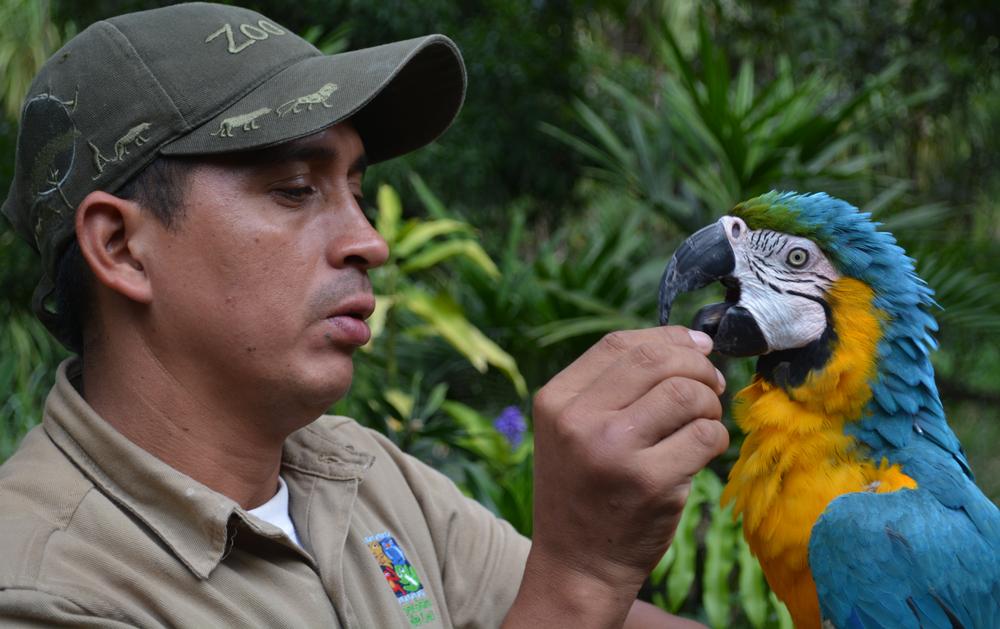
Cress wants to educate the public about the work zoos do in welfare and conservation
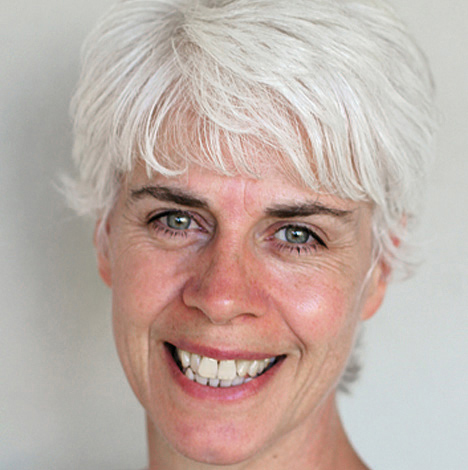
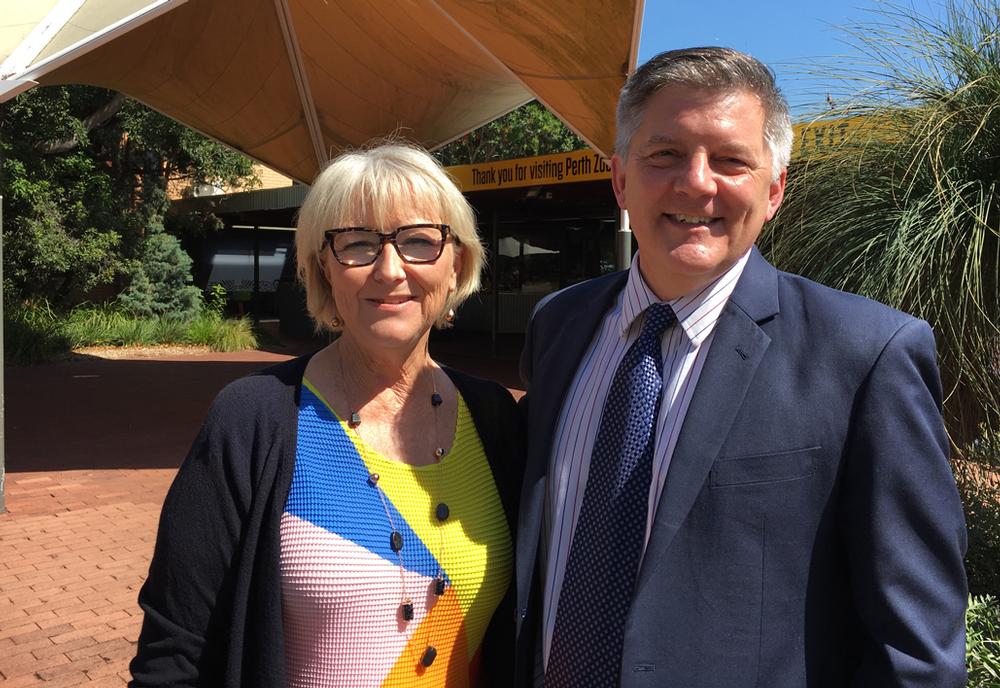
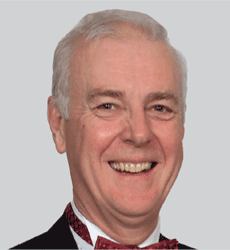
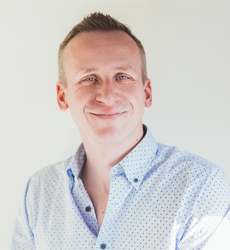
Doug Cress is pictured with WAZA chair and CEO of Perth Zoo in Australia, Susan Hunt
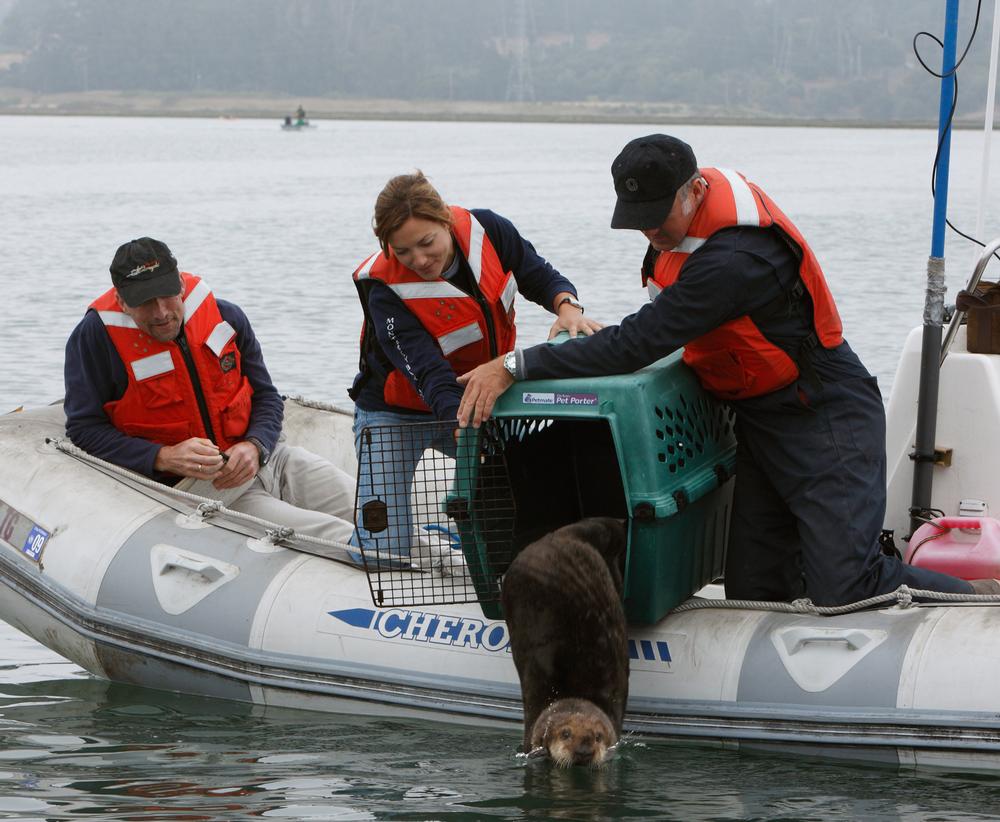
Monterey Bay Aquarium staff release a southern sea otter into the wild
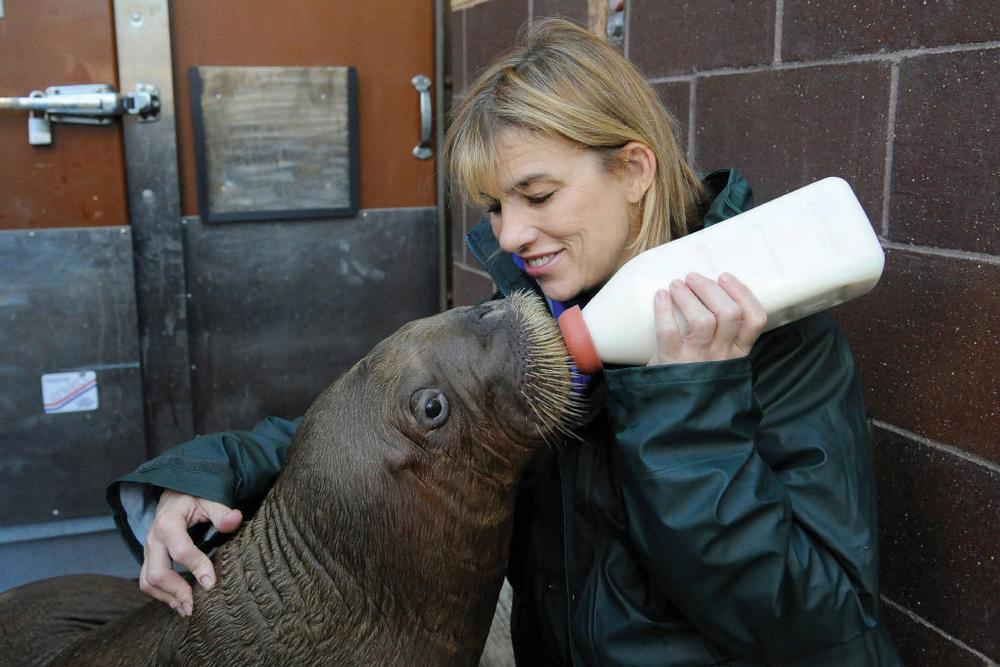
A walrus is rescued by
New York Aquarium after it was abandoned by its herd
COMPANY PROFILES
DJW
David & Lynn Willrich started the Company
over thirty years ago, from the Audio Visual
Department [more...]
Painting With Light
By combining lighting, video, scenic and architectural elements, sound and special effects we tell s [more...]
TechnoAlpin Indoor
TechnoAlpin is the world leader for snowmaking systems. With the Indoor snow division, TechnoAlpin c [more...]
Meet Doug Cress, a bold and passionate conservationist who has just taken the reins at the WAZA. And he has an unequivocal message for zoos and aquariums: “our time is now”
By Alice Davis | Published in Attractions Management 2017 issue 2
In March, the World Association of Zoos and Aquariums (WAZA), which oversees more than 300 accredited member zoos and aquariums, appointed a new CEO. His name is Doug Cress, and his aim is to lead the association and its members to the next level in the fight to save animals and their habitats from extinction, raising the profile of zoos and the work they do, and pushing them forward as an evermore vital cog in the machine.
“WAZA is progressive and forward-thinking,” says Cress. “This is a global body that has already positioned itself to be a leader in conservation and a leader in animal welfare standards.”
Cress joins WAZA from the United Nations. During his time there, he often worked with the zoos association and had a good relationship with former CEO Gerald Dick. He says he never thought about working for WAZA; it happened serendipitously. But now he’s here, he’s not sitting back, eyeing the organisation’s Annual Conference – in Berlin, in October – as a platform for galvanising its members.
“The theme is ‘our time is now’. We’re not looking back. We’re looking forward. We’re 10 years down the line thinking about how we solve these problems.”
Cress talks about the vast amount of data zoos and aquariums have worked hard to gather over the past few decades, the breeding programmes, the long-term genetic banks and genetic strategies, the conservation work that’s quietly done in every corner of the planet and, of course, the fact that none of that comes for free.
“How can you be one of the largest funders of global conservation and keep so quiet about it?” he says. “Zoos and aquariums are the third-largest financial contributor to global conservation – and that’s virtually unknown. We should be at the table and we should be setting the standards. We have a voice and we have the expertise. We know how to do this. And we will do it now, frankly.”
ZOO POWER Zoos and aquariums reach some 700 million people worldwide every year, people who are learning about the exhibits and their habitats in evermore innovative and memorable ways. When it comes to educating the next generations about how we preserve threatened and endangered species, and the importance of doing so, there is no other platform that can compete with this huge network.
Leading zoos and aquariums go much further than this. Far from just educating, the money they generate from visitors goes towards actively saving and protecting species in the wild, and there have been some incredible success stories.
“Part of the problem is that zoos and aquariums still feel guilty,” says Cress. “They feel guilty about the 20th century, carrying around this tradition of iron bars and imprisonment and punishment, essentially, on species, when in fact if you look at the record, they are the ones who have saved species from extinction and who are reintroducing species to the wild.
“And, they have taken some of the bolder steps to save iconic species.”
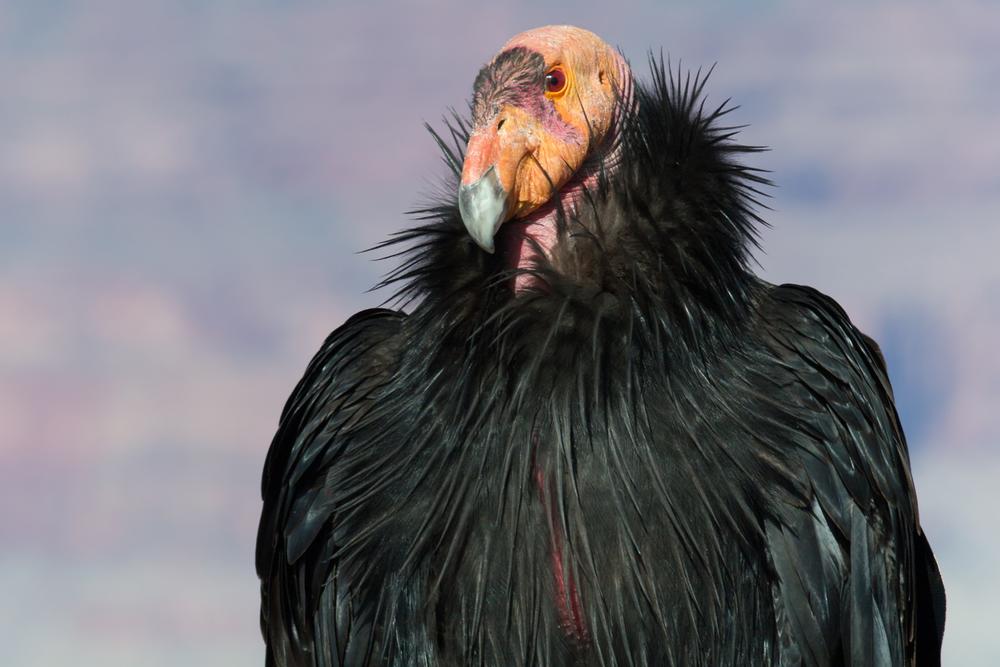
Cress cites, as one example, the work of San Diego Zoo Safari Park and Los Angeles Zoo to save the California condor from extinction. Thirty years ago, when there were less than 30 condors left in the world, the two zoos captured the birds and began a breeding programme that would restore the population to 435 at last count.
“You don’t pull the last remaining condors out of the wild without taking a huge risk,” he says. “But they did. And now there are hundreds of condors. It’s happened with all kinds of species. I find that sort of risk-taking and leadership very inspiring.
“I think zoos will wind up being the real leaders in conservation. Zoos have all the pieces: the public; the expertise; the animals we need to replenish wild stocks; and, the income-generating machine, something NGOs just don’t have. In the next 10 years, we’ll find zoos and aquariums being the answer to many of the major questions facing conservation, wild spaces and protected areas.”
ADDED VALUE At the UN, Cress led the Great Apes Survival Partnership (GRASP). GRASP, which was established in 2001, works to conserve chimpanzees, gorillas, bonobos and orangutans in their habitats.
Though appointing someone from outside of the zoos community was surprising to some, Cress’s move to WAZA was a natural step in his career. Prior to the UN, he was managing a network of 23 primate sanctuaries across Africa and working with relevant parties to battle the illegal wildlife trade and encourage sustainable development to protect local ecosystems.
He joined the UN’s great apes initiative in 2011, a role that involved handling large-scale partnerships and leveraging sometimes hundreds of other organisations, NGOs and governments to focus on specific causes. He was also charged with seeking out partners and overseeing design and implementation, fundraising and public awareness projects. It’s experience that should come in useful.
“With WAZA, as with all the partnerships, there has to be a reason to be together,” he says. “There has to be an added value that makes the organisation necessary. They’ve got to be stronger as a unit than they are individually. That’s key, providing the extra something that keeps everybody together.”
WELFARE FOCUS Cress hopes the power of the whole can be made to work harder to promote what zoos and aquariums do. Like other visitor attractions, zoos have been subject to bad press because of a number of incidents that have upset the general public. Stories like that of Harambe, the gorilla who was shot in 2016 at Cincinnati Zoo, Ohio, after a child climbed into his enclosure, imply to some people that zoos don’t take care of their animals. Cress says it’s up to zoos to counter this kind of bad publicity.
“The animal welfare issue is always one that trips zoos up, because often it’s a cheap win. It’s easy to get everybody angry when a keeper hits an elephant and the video goes viral. But does that really reflect the industry? Of course not,” says Cress.
“My job is to accentuate the positives, so I will be putting a real focus on welfare. Of course, when things like that happen, we don’t want to overlook them. We want to pool our resources and focus on making sure that it doesn’t happen again.”
He’s taking immediate action on that front, hiring, for the first time at WAZA, a dedicated animal welfare director to manage any complaints or crises that arise, but also be tasked with ensuring that any member failing to meet standards gets the training or resources they need to improve.
“We want to make sure that when we have a bad day or a video goes viral or an accident happens, we don’t let the entire industry be pulled down. Those incidents are regrettable. They happen, but they don’t reflect the industry every single day. Harambe was not shot because zoos exist.
“Anticipating where those problems might come up but also having an overwhelming number of examples of the good work that zoos and aquariums do is important. That’s going to be a real focus.”
TELLING STORIES Cress, who was born in Portland, Oregon, has always been passionate about animals. As a child, his house was full of them – not just pets, but a variety of animals thanks to his grandfather, who owned a zoo. The family moved overseas and his parents’ work took them to different parts of Africa and Asia. Cress continued to live abroad, including in Tanzania, South Africa and Kenya. “We lived in a lot of different places and wildlife has always been there.”
Cress was a journalist before he came to conservation. He was following a story about an illegally traded chimpanzee that had been confiscated and was going to be re-housed at a sanctuary in Zambia.
“I flew to Zambia to find out about this little chimpanzee. The sanctuary had a fascinating story so I wrote a book with the founder, Sheila Siddle. It got me going.”
The book was published in 2003, In My Family Tree: A Life with Chimpanzees, and part of its effect was to reveal to Cress the importance of storytelling in conservation.
“You can do all the great work in the world, but if no one knows about it, it is a silent scream,” he says. “I realised that my storytelling and media skills could do good.
“And that still holds true of storytelling. There are zoos and aquariums doing fantastic conservation work, scientific work and research and their stories aren’t told or aren’t told well enough. That’s not their primary focus and you can’t fault them, but unfortunately it’s one of the things that holds us back on the major issues. If you can’t tell a story in 20 or 30 seconds and change opinions and get people inspired, then it’s not going to happen.”
BUILDING DIALOGUES As CEO of WAZA, it’s Cress’s mission to help member zoos tell their conservation stories in an impactful way that underlines the role they play in society, especially as the role becomes evermore crucial to the survival of species and their habitats.
“I think you’ll see, by the end of this year, zoos and aquariums embracing that sense of moving forward,” he says. “We cannot be stuck in the past. History is not something we need to carry round like a scar.”
Cress is also open to working with other organisations on finding solutions, including activist groups like PETA or Born Free. “You can’t simply close all zoos and aquariums, it doesn’t work that way. And you can’t simply put all the animals back in the wild, it doesn’t work that way either. We are where we are. So let’s figure this out. I am interested in dialogues with anybody who has good ideas.”
The growth of the human population and its need for space and resources is at the centre of this “terrible equation” but there are reasons to be optimistic, Cress says. New species are being discovered, presumed extinct species are being spotted – recently, the night parrot in Australia, and possibly the Tasmania tiger (thylacine) – and, after an intensive and far-reaching conservation and breeding program, pandas were taken off the endangered list in 2016.
“However, with somewhat unstable leadership in the world right now, it’s concerning that in the blink of an eye a lot of our work could be swept away by wildly irrational choices and decisions. We have major global problems and zoos are not a niche. They’re part of the fabric of these issues and can be part of the solutions.”
And zoos and aquariums are solving problems, Cress says. They have a role to play in ending the illegal wildlife trade. They have a role to play in addressing climate change. They have evolved dramatically and many facilities have found areas of expertise outside of the zoo walls and are excelling in what they do. As Cress says, it’s about continuing to move forward.
“I don’t think you need to be a zoo expert to run the World Association of Zoos and Aquariums,” Cress says. “But you do need to be somebody who can help this community reach the next level. That’s all I’m trying to do here. And I give them marks for stepping outside of their normal world. They didn’t stay inside the community of aquariums and zoos, they stepped outside. And I find that encouraging.”
Read more from this issue of Attractions Management magazine
View contents of Attractions Management 2017 issue 2
Promotional feature: IDEATTACK
IDEATTACK is working on a magical destination resort in Hunan Province, China.
Founders Natasha Varnica and Dan Thomas walk us through the fairytale experience
Science centres: Sparks Fly
The Wolf Museum of Exploration +
Innovation (MOXI) is a brand new science
centre in Santa Barbara, with a refreshing
approach. CEO Steve Hinkley tells all
Theme parks: Speed Demons
PortAventura’s COO Mark Robinson on the
company’s latest investment – Ferrari Land
Promotional feature: Simworx
UK-based attractions manufacturer Simworx is building on its global
portfolio with a range of new projects in Dubai, China and Spain
Attractions: That’s the Spirit
Jameson’s visitor experience centre has
been revamped by BRC Imagination
Arts. Tom Anstey went to Dublin and
talked to the team about the project
Promotional feature: FORREC
FORREC has worked with some of the world’s
most recognisable characters and IPs. Here Steven Rhys
shares some tips on bringing those cherished worlds to life
The World Association of Zoos and Aquariums (WAZA) was established in 1935 by a small group of zoos and aquariums. Today WAZA is a global community dedicated to helping its 340 members play a role in conservation, education and animal welfare.
WAZA’s recent strategies lay out its commitment to animal conservation and welfare. Conservation - The World Zoo and Aquarium Conservation Strategy and Caring for Wildlife - The World Zoo and Aquarium Animal Welfare Strategy can be found at waza.org
WAZA has a network of 340 accredited zoo and aquarium members
Taking risks: zoos took drastic action in order to save the California condor
Cress wants to educate the public about the work zoos do in welfare and conservation
Doug Cress is pictured with WAZA chair and CEO of Perth Zoo in Australia, Susan Hunt
Monterey Bay Aquarium staff release a southern sea otter into the wild
A walrus is rescued by
New York Aquarium after it was abandoned by its herd
Expo 2030 Riyadh is being planned as a permanent visitor destination, with organisers
confirming the six-million-square-metre site will become a Global Village after the event closes.
The owner of one of Australia's best-known waterparks has acquired a major competitor,
creating a new attractions business spanning two of the country's largest visitor destinations.
The Toverland theme park in the Netherlands has announced a €98m expansion programme
that will add a resort, new attractions and staff facilities as it pursues plans to become a multi-
day destination.
Hotel de France, located on the British Isle of Jersey, has created a wellness retreat package
that includes a hot yoga session that will take place in Jersey Zoo’s butterfly sanctuary.
A new immersive attraction designed to transport visitors into the final hours of ancient Pompeii
is preparing to open near the world-famous archaeological site in southern Italy.
Experience design company, BRC Imagination Arts, has completed a transition that sees founder
Bob Rogers pass ownership of the business to four long-serving senior executives, while
remaining actively involved with the company.
Movie Park Germany has opened a new Paramount Pictures-themed attraction as part of its 30th
anniversary celebrations, using immersive storytelling and adaptive reuse to reinforce the park’s
longstanding “Hollywood in Germany” positioning.
Therme Manchester’s 28-acre development, which will include interconnected glass pavilions
that measure 65,000sq m, will be the largest bathing and wellbeing attraction in the world once
complete, according to prof David Russell, CEO of Therme UK.
Efteling has opened Hooghmoed, a new family drop tower designed to broaden the appeal of its
recently launched Sirene Island themed area and introduce younger visitors to thrill attractions.
A proposed Puy du Fou development near Bicester and Universal Destinations and Experiences’
planned resort in Bedford are emerging as part of a wider transformation of the Oxford–
Cambridge Growth Corridor into a major centre for UK leisure and tourism inv
+ More news
COMPANY PROFILES
DJW David & Lynn Willrich started the Company
over thirty years ago, from the Audio Visual
Department [more...]
Painting With Light By combining lighting, video, scenic and architectural elements, sound and special effects we tell s [more...]
TechnoAlpin Indoor TechnoAlpin is the world leader for snowmaking systems. With the Indoor snow division, TechnoAlpin c [more...]