Promotional feature: IDEATTACK
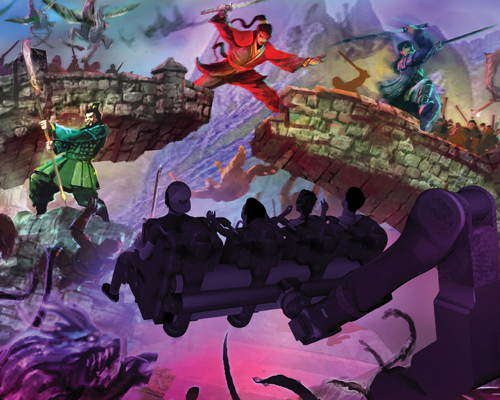
IDEATTACK is working on a magical destination resort in Hunan Province, China.
Founders Natasha Varnica and Dan Thomas walk us through the fairytale experience
Science centres: Sparks Fly
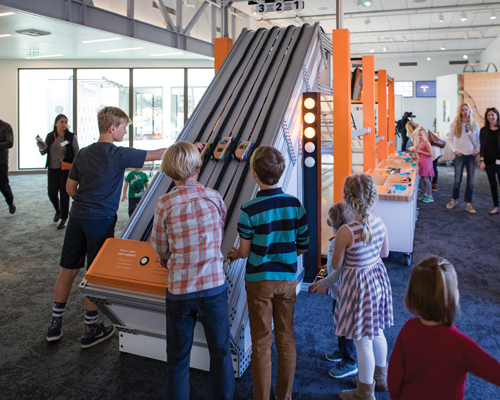
The Wolf Museum of Exploration +
Innovation (MOXI) is a brand new science
centre in Santa Barbara, with a refreshing
approach. CEO Steve Hinkley tells all
Theme parks: Speed Demons
PortAventura’s COO Mark Robinson on the
company’s latest investment – Ferrari Land
Promotional feature: Simworx
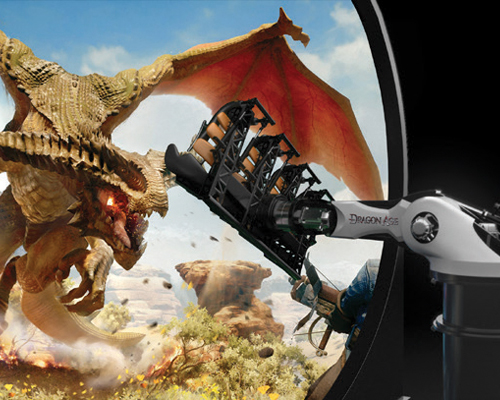
UK-based attractions manufacturer Simworx is building on its global
portfolio with a range of new projects in Dubai, China and Spain
Attractions: That’s the Spirit
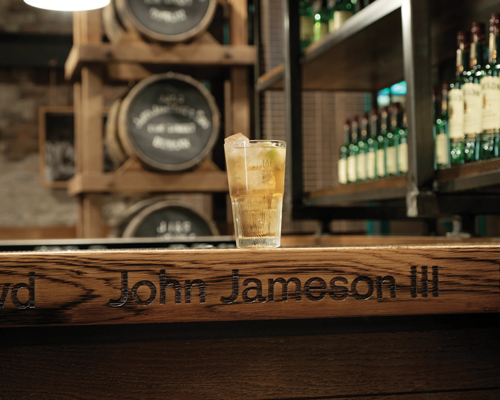
Jameson’s visitor experience centre has
been revamped by BRC Imagination
Arts. Tom Anstey went to Dublin and
talked to the team about the project
Promotional feature: FORREC
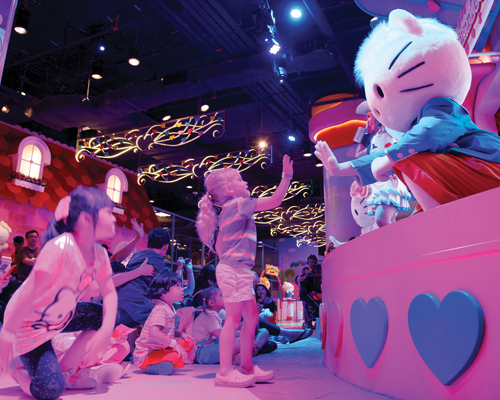
FORREC has worked with some of the world’s
most recognisable characters and IPs. Here Steven Rhys
shares some tips on bringing those cherished worlds to life
New Smartify app brings visitors closer to their favourite artworks, explains Anna Lowe
Anna Lowe, Smartify
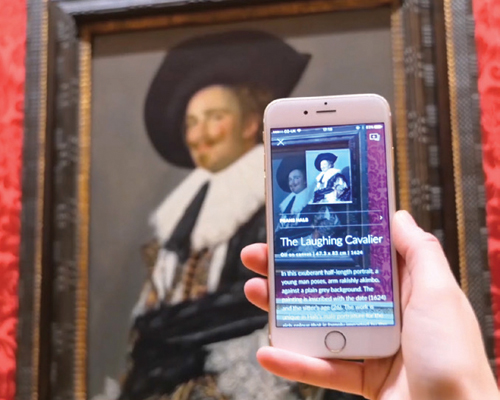
Smartify is an app that allows gallery visitors to use their mobile phone to identify an artwork and unlock a wealth of information and content about it.
“When visiting museums, galleries or art fairs, we all see artworks we are curious about but then struggle to access more information or to remember the artwork afterwards,” says Smartify’s Anna Lowe. “Smartify was founded by a team who all encountered the same problem when visiting these attractions. Our goal is to make the rich stories about every artwork more accessible, and to support art venues financially and in reaching new audiences.”
The app uses advanced image recognition and AR to scan the painting and release a variety of audio, text and video insights. The user can save artworks to a personal library.
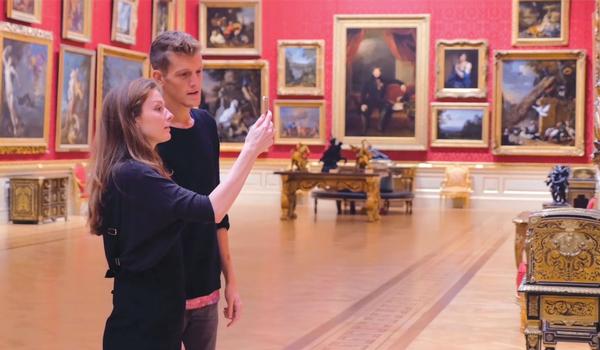
Smartify is already working with partner museums – including the Met, The Wallace Collection, Rijksmuseum and the Royal Academy of Arts – to supply tailor-made digital visitor guides. Smartify’s founders want to “democratise access to art” by putting the information the visitor wants directly in their hands.
The social enterprise initiative – a UK-government funded Community Interest Company – a UK-government funded social enterprise – was founded by tech experts Thanos Kokkiniotis and Nick Mueller, mobile solutions specialist Ron Vrijmoet, and arts education project manager Lowe.
“We work in partnership with museums or galleries globally to make artworks and information available on the platform, and then provide data analytics on the audiences visiting and scanning artworks,” Lowe says. “The service is completely free to the partners and we actively encourage them to advise us on future development and new features for the app.”
“We believe nothing beats the physical experience of visiting a museum or gallery and want to make it easy to discover, remember and share art.”
attractions-kit keyword: Smartify
“When visiting museums, galleries or art fairs, we all see artworks we are curious about but then struggle to access more information or to remember the artwork afterwards,”
Smartify has partnered with London’s Wallace Collection, putting a personal interactive art guide in the visitor’s hand
Holovis’s Amy Steele opens the door to the Mystic Timbers shed
Amy Steele, Holovis
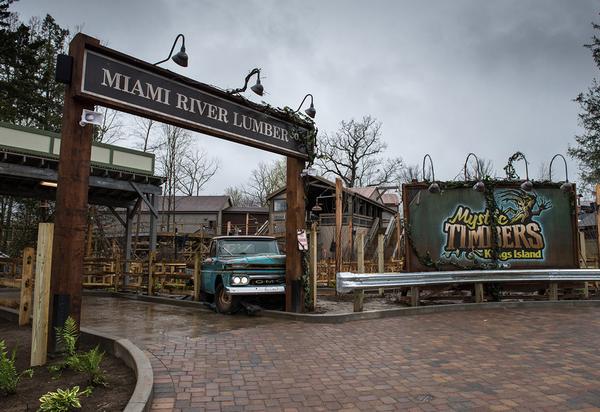
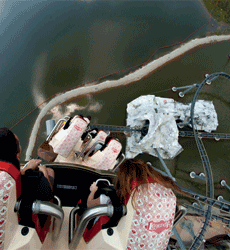
At Cedar Fair’s Kings Island, Holovis has created a multi-layered story-driven pre-show for the newly opened wooden coaster, Mystic Timbers, with the possibility guests will see a different outcome each time.
“This project sets a trend for rollercoasters going forward,” says Amy Steele, vice president of development at Holovis.
The multimedia queue line experience invites visitors to delve into the story of the lumber mill where Mystic Timbers – built by Great Coasters International – is situated.
The mill, property of the Miami River Lumber Company, was abandoned in 1983, but no one knows the reason why. Seemingly, the answer is in the shed.
“We took compelling and immersive storytelling and combined it with an incredible wooden coaster. That mix created something truly special and shows how storytelling can be as integral a part of the experience as the coaster itself,” says Steele
The detailed backstory begins in the queue line and ends with the shed, a multimedia experience with cutting-edge audiovisual, multimedia and animation effects.
“Every detail alludes to why the mill has been abandoned for so long,” Steele says. “But they’ll never discover all of its secrets. The experience changes, playing out different scenarios so guests are unlikely to see the same show twice. Multiple rides are essential to truly discover ‘what’s in the shed’.”
attractions-kit keyword: HOLOVIS
“This project sets a trend for rollercoasters going forward,”
Holovis’s queue line experience tells a multi-layered, multimedia story
MULTMEDIA?/AV CASE STUDY
Christie articulates Richard Mosse’s thermographic art
Richard Mosse, artist
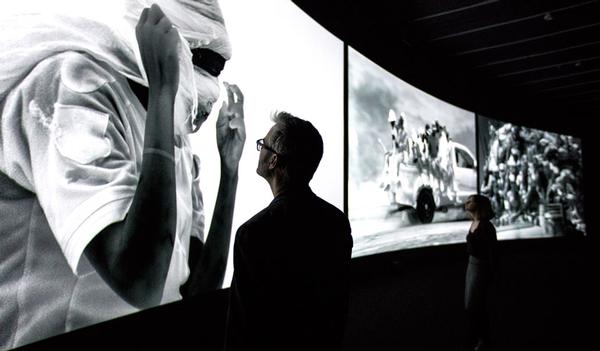
A recent exhibition at the Barbican, London, featured footage taken by a long-range infrared thermographic camera capable of detecting body heat some 30km (19 miles) away.
The filmmaker and artist Richard Mosse took video and images of refugees arriving in Europe using the military-grade technology for an art installation called Incoming. The camera blurs the faces of the subjects and makes it impossible to tell what they look like or what their origin is, both dehumanising them and simultaneously showing there is no difference between people.
“This camera technology is a very special, unique way of imaging the world,” says Mosse. “It’s not a particularly hi-res camera, only one megapixel, and it’s monochrome. It’s a heat signature of relative temperature difference. It’s showing us the contours of relative heat difference within a given scene, so it’s about contrast.”
To display the works at the Barbican, Christie M Series 3DLP projectors were used for their ability to show the luminous quality and tiny details of the footage on a large-scale projection. Three HD10K-M 11,000 lumen projectors took the tiniest details – as small as human hairs, which were filmed from hundreds of metres away – and displayed them on 8x5-metre screens around the Barbican’s curved walls.
“The high-end projection technology married to this very unusual military surveillance technology created an experience that felt entirely new, shockingly unfamiliar, and beautifully articulated,” said Mosse.
“The Christie projectors provide enormous scale and staggering level of detail, very crisp and sharp, and an extraordinary intensity of luminosity. Christie was also able to adjust focus on a curving arc. The articulation of the original image is far beyond our wildest expectations.”
Cinematographer Trevor Tweeten and composer Ben Frost worked with Mosse on the project.
attractions-kit keyword: Christie
“This camera technology is a very special, unique way of imaging the world,”
The projections were displayed along the Barbican’s curved wall
Promotional feature: IDEATTACK
IDEATTACK is working on a magical destination resort in Hunan Province, China.
Founders Natasha Varnica and Dan Thomas walk us through the fairytale experience
Science centres: Sparks Fly
The Wolf Museum of Exploration +
Innovation (MOXI) is a brand new science
centre in Santa Barbara, with a refreshing
approach. CEO Steve Hinkley tells all
Theme parks: Speed Demons
PortAventura’s COO Mark Robinson on the
company’s latest investment – Ferrari Land
Promotional feature: Simworx
UK-based attractions manufacturer Simworx is building on its global
portfolio with a range of new projects in Dubai, China and Spain
Attractions: That’s the Spirit
Jameson’s visitor experience centre has
been revamped by BRC Imagination
Arts. Tom Anstey went to Dublin and
talked to the team about the project
Promotional feature: FORREC
FORREC has worked with some of the world’s
most recognisable characters and IPs. Here Steven Rhys
shares some tips on bringing those cherished worlds to life
New Smartify app brings visitors closer to their favourite artworks, explains Anna Lowe
Anna Lowe, Smartify
Smartify is an app that allows gallery visitors to use their mobile phone to identify an artwork and unlock a wealth of information and content about it.
“When visiting museums, galleries or art fairs, we all see artworks we are curious about but then struggle to access more information or to remember the artwork afterwards,” says Smartify’s Anna Lowe. “Smartify was founded by a team who all encountered the same problem when visiting these attractions. Our goal is to make the rich stories about every artwork more accessible, and to support art venues financially and in reaching new audiences.”
The app uses advanced image recognition and AR to scan the painting and release a variety of audio, text and video insights. The user can save artworks to a personal library.
Smartify is already working with partner museums – including the Met, The Wallace Collection, Rijksmuseum and the Royal Academy of Arts – to supply tailor-made digital visitor guides. Smartify’s founders want to “democratise access to art” by putting the information the visitor wants directly in their hands.
The social enterprise initiative – a UK-government funded Community Interest Company – a UK-government funded social enterprise – was founded by tech experts Thanos Kokkiniotis and Nick Mueller, mobile solutions specialist Ron Vrijmoet, and arts education project manager Lowe.
“We work in partnership with museums or galleries globally to make artworks and information available on the platform, and then provide data analytics on the audiences visiting and scanning artworks,” Lowe says. “The service is completely free to the partners and we actively encourage them to advise us on future development and new features for the app.”
“We believe nothing beats the physical experience of visiting a museum or gallery and want to make it easy to discover, remember and share art.”
attractions-kit keyword: Smartify
“When visiting museums, galleries or art fairs, we all see artworks we are curious about but then struggle to access more information or to remember the artwork afterwards,”
Smartify has partnered with London’s Wallace Collection, putting a personal interactive art guide in the visitor’s hand
Holovis’s Amy Steele opens the door to the Mystic Timbers shed
Amy Steele, Holovis
At Cedar Fair’s Kings Island, Holovis has created a multi-layered story-driven pre-show for the newly opened wooden coaster, Mystic Timbers, with the possibility guests will see a different outcome each time.
“This project sets a trend for rollercoasters going forward,” says Amy Steele, vice president of development at Holovis.
The multimedia queue line experience invites visitors to delve into the story of the lumber mill where Mystic Timbers – built by Great Coasters International – is situated.
The mill, property of the Miami River Lumber Company, was abandoned in 1983, but no one knows the reason why. Seemingly, the answer is in the shed.
“We took compelling and immersive storytelling and combined it with an incredible wooden coaster. That mix created something truly special and shows how storytelling can be as integral a part of the experience as the coaster itself,” says Steele
The detailed backstory begins in the queue line and ends with the shed, a multimedia experience with cutting-edge audiovisual, multimedia and animation effects.
“Every detail alludes to why the mill has been abandoned for so long,” Steele says. “But they’ll never discover all of its secrets. The experience changes, playing out different scenarios so guests are unlikely to see the same show twice. Multiple rides are essential to truly discover ‘what’s in the shed’.”
attractions-kit keyword: HOLOVIS
“This project sets a trend for rollercoasters going forward,”
Holovis’s queue line experience tells a multi-layered, multimedia story
MULTMEDIA?/AV CASE STUDY
Christie articulates Richard Mosse’s thermographic art
Richard Mosse, artist
A recent exhibition at the Barbican, London, featured footage taken by a long-range infrared thermographic camera capable of detecting body heat some 30km (19 miles) away.
The filmmaker and artist Richard Mosse took video and images of refugees arriving in Europe using the military-grade technology for an art installation called Incoming. The camera blurs the faces of the subjects and makes it impossible to tell what they look like or what their origin is, both dehumanising them and simultaneously showing there is no difference between people.
“This camera technology is a very special, unique way of imaging the world,” says Mosse. “It’s not a particularly hi-res camera, only one megapixel, and it’s monochrome. It’s a heat signature of relative temperature difference. It’s showing us the contours of relative heat difference within a given scene, so it’s about contrast.”
To display the works at the Barbican, Christie M Series 3DLP projectors were used for their ability to show the luminous quality and tiny details of the footage on a large-scale projection. Three HD10K-M 11,000 lumen projectors took the tiniest details – as small as human hairs, which were filmed from hundreds of metres away – and displayed them on 8x5-metre screens around the Barbican’s curved walls.
“The high-end projection technology married to this very unusual military surveillance technology created an experience that felt entirely new, shockingly unfamiliar, and beautifully articulated,” said Mosse.
“The Christie projectors provide enormous scale and staggering level of detail, very crisp and sharp, and an extraordinary intensity of luminosity. Christie was also able to adjust focus on a curving arc. The articulation of the original image is far beyond our wildest expectations.”
Cinematographer Trevor Tweeten and composer Ben Frost worked with Mosse on the project.
attractions-kit keyword: Christie
“This camera technology is a very special, unique way of imaging the world,”
The projections were displayed along the Barbican’s curved wall
Abu Dhabi-based investment firm Mubadala Capital has made a binding, fully financed
€1 billion
offer to acquire Pierre and Vacances SA, the European holiday resort operator behind the
continental European Center Parcs business.
Expo 2030 Riyadh is being planned as a permanent visitor destination, with organisers
confirming the six-million-square-metre site will become a Global Village after the event closes.
The owner of one of Australia's best-known waterparks has acquired a major competitor,
creating a new attractions business spanning two of the country's largest visitor destinations.
The Toverland theme park in the Netherlands has announced a €98m expansion programme
that will add a resort, new attractions and staff facilities as it pursues plans to become a multi-
day destination.
Hotel de France, located on the British Isle of Jersey, has created a wellness retreat package
that includes a hot yoga session that will take place in Jersey Zoo’s butterfly sanctuary.
A new immersive attraction designed to transport visitors into the final hours of ancient Pompeii
is preparing to open near the world-famous archaeological site in southern Italy.
Experience design company, BRC Imagination Arts, has completed a transition that sees founder
Bob Rogers pass ownership of the business to four long-serving senior executives, while
remaining actively involved with the company.
Movie Park Germany has opened a new Paramount Pictures-themed attraction as part of its 30th
anniversary celebrations, using immersive storytelling and adaptive reuse to reinforce the park’s
longstanding “Hollywood in Germany” positioning.
Therme Manchester’s 28-acre development, which will include interconnected glass pavilions
that measure 65,000sq m, will be the largest bathing and wellbeing attraction in the world once
complete, according to prof David Russell, CEO of Therme UK.
Efteling has opened Hooghmoed, a new family drop tower designed to broaden the appeal of its
recently launched Sirene Island themed area and introduce younger visitors to thrill attractions.