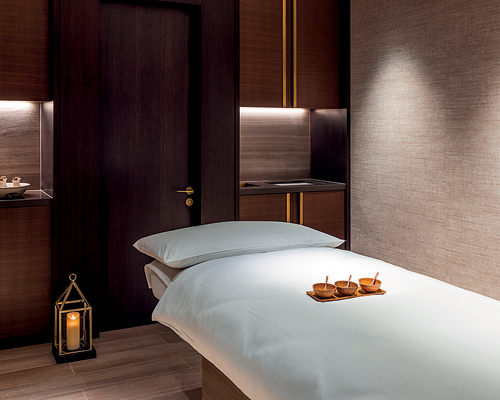
Spas could use the findings to help guests cope with their emotions / Africa Studio/shutterstock
Spa operators could help guests reduce feelings of sadness, successfully make healthy eating choices and improve self-control and discipline, using learnings from new research published in the Journal of Consumer Psychology.
Called When Sadness Comes Alive, Will it be Less Painful? The Effects of Anthropomorphic Thinking on Sadness Regulation and Consumption, the research found that thinking of sadness as a ‘person’ – what psychologists call anthropomorphising – can reduce its effects, according to teams at the University of Austin, Texas, Hong Kong Polytechnic University and Hong Kong Baptist University.
With mental wellness interventions and programmes becoming increasingly popular in the spa and wellness industry, this research and its approach could inform future treatments and help equip guests to take control of their emotions.
Previous studies have shown that someone feeling sad exhibits a desire for urgent reward and little willpower, such as succumbing to hedonic temptations or engaging in impulsive purchases. The new research explores how anthropomorphic thinking influences people’s feelings and subsequent behaviour.
The research included six test studies involving 1,059 participants, 56 per cent of whom were female and 44 per cent were male. Each test involved subjects rating their level of sadness following prompts designed to induce sadness, such as writing about a sad event which had happened to them. Participants were then asked to imagine sadness as a person and describe their characteristics and concluded by rating their levels of sadness again. All six studies demonstrated that anthropomorphising sadness reduces its severity and changes behaviour.
Lead author Li Yang explains: “We found that anthropomorphic thinking enables individuals to view sadness as an independent human being that is separate from them and consequently creates a feeling of detachment.
“As a result, an individual who anthropomorphises sadness will feel less sad and will also tend to display better self-control in subsequent decisions about consumption.”
In one study participants anthropomorphised their sadness and chose either a healthy food option (salad) or an unhealthy one (cheesecake). Evidence highlighted that those who humanised sadness were less likely to indulge in the unhealthy choice because as their sadness reduced so did their self-indulgent behaviour.
Read more from this issue of Attractions Management magazine
View contents of Attractions Management 2020 issue 1
Editor's letter: Time to shine
As spas reach peak revenues, now’s the time for our industry to act as a catalyst in working out how we measure the impact of an experience and the ‘return on wellness’ says Spa Business' editor Katie Barnes
Promotional feature: TechnoAlpin
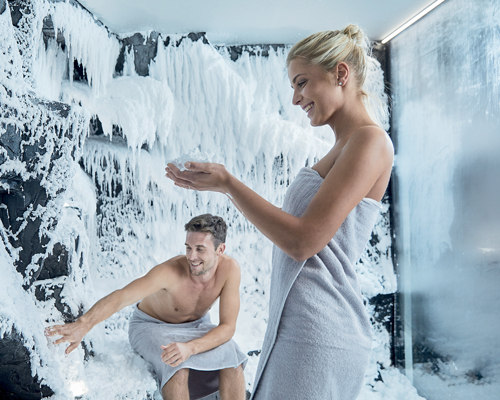
If you want to deliver a hot and cold experience as part of your wellness programme, adding a snowroom will introduce a delightful and more gentle form of cold therapy, as Sara Brenninger explains
Trends: Spa Foresight™
Climate emergency, gen alpha and brain optimisation are among Spa Business’ latest trend predictions
Promotional feature: The Wellness
Investing in children’s facilities gives a spa and wellness offering a competitive edge, as well as helping the next generation achieve their potential, explains Mohammed Ibrahim, CEO of industry design and consultancy practice, The Wellness
Promotional feature: RKF Luxury Linen
As a symbol of luxury, innovation and quality in the world of spa and hospitality, much of RKF Luxury Linen’s success comes from its highly client-centric design process, says CEO Riadh Bouaziz
Design: Heat of the moment
From giant golden eggs and converted ski lifts to rustic, hand-crafted huts, we showcase the latest in heat experience design and innovations
Spas could use the findings to help guests cope with their emotions / Africa Studio/shutterstock
Spa operators could help guests reduce feelings of sadness, successfully make healthy eating choices and improve self-control and discipline, using learnings from new research published in the Journal of Consumer Psychology.
Called When Sadness Comes Alive, Will it be Less Painful? The Effects of Anthropomorphic Thinking on Sadness Regulation and Consumption, the research found that thinking of sadness as a ‘person’ – what psychologists call anthropomorphising – can reduce its effects, according to teams at the University of Austin, Texas, Hong Kong Polytechnic University and Hong Kong Baptist University.
With mental wellness interventions and programmes becoming increasingly popular in the spa and wellness industry, this research and its approach could inform future treatments and help equip guests to take control of their emotions.
Previous studies have shown that someone feeling sad exhibits a desire for urgent reward and little willpower, such as succumbing to hedonic temptations or engaging in impulsive purchases. The new research explores how anthropomorphic thinking influences people’s feelings and subsequent behaviour.
The research included six test studies involving 1,059 participants, 56 per cent of whom were female and 44 per cent were male. Each test involved subjects rating their level of sadness following prompts designed to induce sadness, such as writing about a sad event which had happened to them. Participants were then asked to imagine sadness as a person and describe their characteristics and concluded by rating their levels of sadness again. All six studies demonstrated that anthropomorphising sadness reduces its severity and changes behaviour.
Lead author Li Yang explains: “We found that anthropomorphic thinking enables individuals to view sadness as an independent human being that is separate from them and consequently creates a feeling of detachment.
“As a result, an individual who anthropomorphises sadness will feel less sad and will also tend to display better self-control in subsequent decisions about consumption.”
In one study participants anthropomorphised their sadness and chose either a healthy food option (salad) or an unhealthy one (cheesecake). Evidence highlighted that those who humanised sadness were less likely to indulge in the unhealthy choice because as their sadness reduced so did their self-indulgent behaviour.
Read more from this issue of Attractions Management magazine
View contents of Attractions Management 2020 issue 1
Editor's letter: Time to shine
As spas reach peak revenues, now’s the time for our industry to act as a catalyst in working out how we measure the impact of an experience and the ‘return on wellness’ says Spa Business' editor Katie Barnes
Promotional feature: TechnoAlpin
If you want to deliver a hot and cold experience as part of your wellness programme, adding a snowroom will introduce a delightful and more gentle form of cold therapy, as Sara Brenninger explains
Trends: Spa Foresight™
Climate emergency, gen alpha and brain optimisation are among Spa Business’ latest trend predictions
Promotional feature: The Wellness
Investing in children’s facilities gives a spa and wellness offering a competitive edge, as well as helping the next generation achieve their potential, explains Mohammed Ibrahim, CEO of industry design and consultancy practice, The Wellness
Promotional feature: RKF Luxury Linen
As a symbol of luxury, innovation and quality in the world of spa and hospitality, much of RKF Luxury Linen’s success comes from its highly client-centric design process, says CEO Riadh Bouaziz
Design: Heat of the moment
From giant golden eggs and converted ski lifts to rustic, hand-crafted huts, we showcase the latest in heat experience design and innovations
Abu Dhabi-based investment firm Mubadala Capital has made a binding, fully financed
€1 billion
offer to acquire Pierre and Vacances SA, the European holiday resort operator behind the
continental European Center Parcs business.
Disney has reaffirmed its commitment to investing US$30 billion in its US parks and cruise
business by 2033, using new America250 celebrations to underline the role its attractions play
in supporting jobs, tourism and economic growth.
Expo 2030 Riyadh is being planned as a permanent visitor destination, with organisers
confirming the six-million-square-metre site will become a Global Village after the event closes.
The owner of one of Australia's best-known waterparks has acquired a major competitor,
creating a new attractions business spanning two of the country's largest visitor destinations.
The Toverland theme park in the Netherlands has announced a €98m expansion programme
that will add a resort, new attractions and staff facilities as it pursues plans to become a multi-
day destination.
Hotel de France, located on the British Isle of Jersey, has created a wellness retreat package
that includes a hot yoga session that will take place in Jersey Zoo’s butterfly sanctuary.
A new immersive attraction designed to transport visitors into the final hours of ancient Pompeii
is preparing to open near the world-famous archaeological site in southern Italy.
Experience design company, BRC Imagination Arts, has completed a transition that sees founder
Bob Rogers pass ownership of the business to four long-serving senior executives, while
remaining actively involved with the company.
Movie Park Germany has opened a new Paramount Pictures-themed attraction as part of its 30th
anniversary celebrations, using immersive storytelling and adaptive reuse to reinforce the park’s
longstanding “Hollywood in Germany” positioning.
Therme Manchester’s 28-acre development, which will include interconnected glass pavilions
that measure 65,000sq m, will be the largest bathing and wellbeing attraction in the world once
complete, according to prof David Russell, CEO of Therme UK.
+ More news
COMPANY PROFILES
instantprint We’re a Yorkshire-based online printer, founded
in 2009 by Adam Carnell and James Kinsella. [more...]
TechnoAlpin Indoor TechnoAlpin is the world leader for snowmaking systems. With the Indoor snow division, TechnoAlpin c [more...]
Simworx Ltd The company was initially established
in 1997. Terry Monkton and Andrew
Roberts are the key stakeh [more...]
Taylor Made Designs Founded in 1993, Taylor Made
Designs supply corporate clothing
and brand-enhancing merchandise
to [more...]