Molitor, the iconic and historic Parisian lido, is a popular haunt for
locals following a stylish renovation and addition of a hotel, club
and Clarins spa. Magali Robathan dips in to find out more
By Magali Robathan | Published in Spa Business 2020 issue 1
As a teenager, my Parisian mother used to go to Molitor on hot days to swim, sunbathe and eye up the other teenagers. Like many, the iconic art deco pool held a special place in her heart, which is why I was excited to visit it in its latest incarnation, more than half a century later.
The Molitor pool complex was inaugurated in 1929 by Olympic swimmer Johnny Weissmuller, who worked there as a lifeguard that summer and later starred as Tarzan in the Hollywood movies of the 1930s and 1940s.
In the years that followed, the swimming club – which consisted of a 46m outdoor lido and a 33m indoor pool – became the place to see and be seen. It hosted fashion shows and attracted celebrities, but also acted as a respite from the city for ordinary Parisians like my mother.
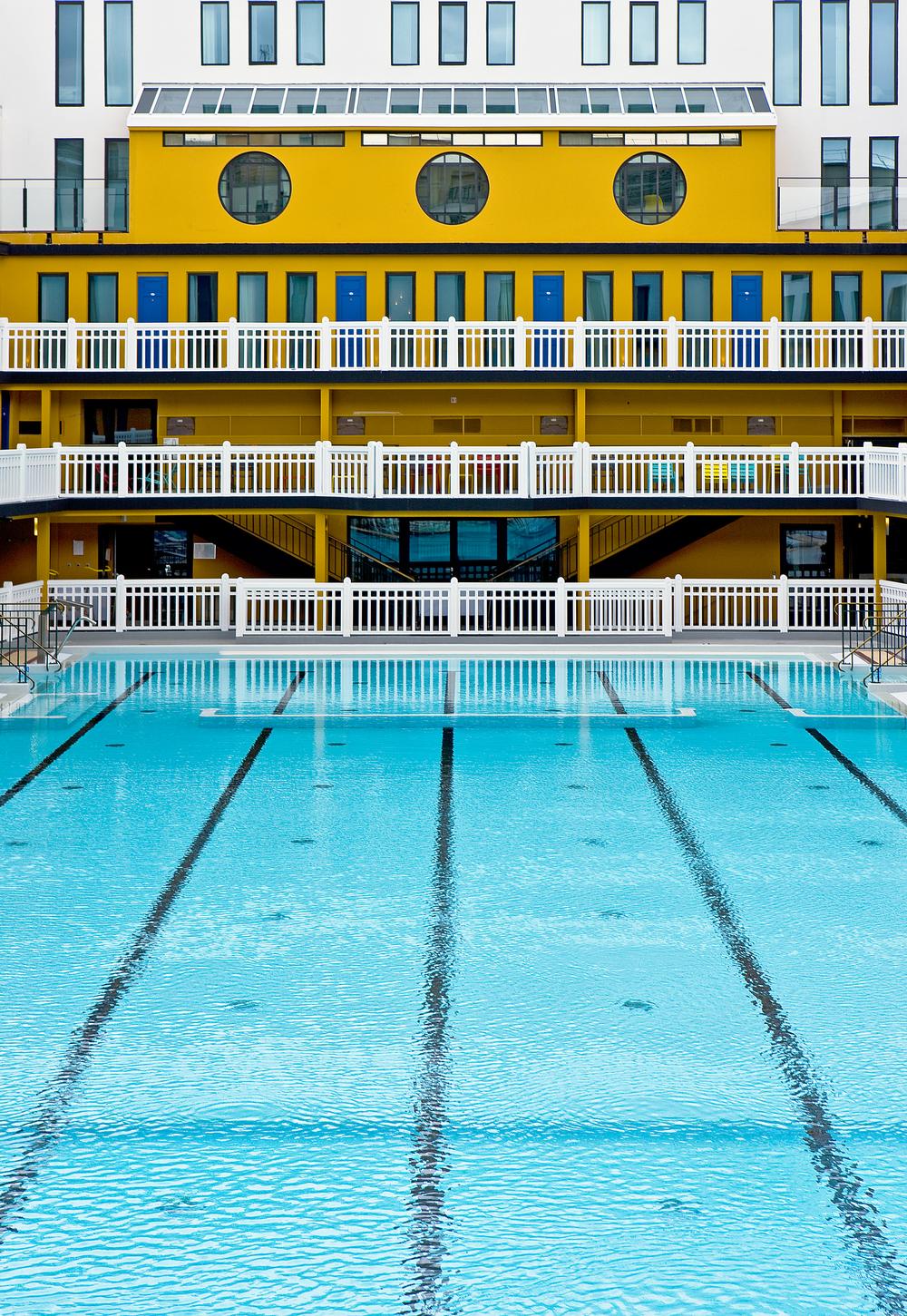
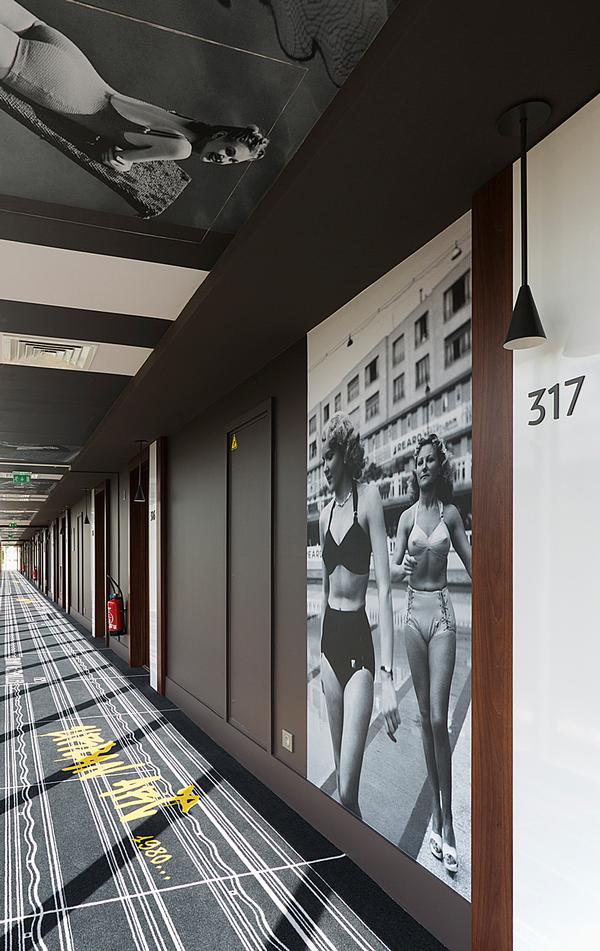
Molitor was designed by architect Lucien Pollet, who employed the finest craftspeople to create the ironwork, terrazzo floors, mosaics, portholes and white railings that contributed to its cruise liner feel. The outdoor pool was surrounded by sun loungers, sandy ‘beaches’ and brightly coloured parasols. Bathing beauty contests and artist’s galas were held there and in 1946, French designer Louis Reard famously launched the first modern bikini there.
It began to fall into disrepair in the 1970s as renovations became more expensive and in 1989 the keys were returned to Paris City Council. The complex remained closed for two decades until Colony Capital, associated with Bouygues Construction and Accorhotels, was awarded a tender for its restoration – one that would respect its unique history but also bring in a contemporary style in a nod to the edgy street artists who gathered there when it shut down.
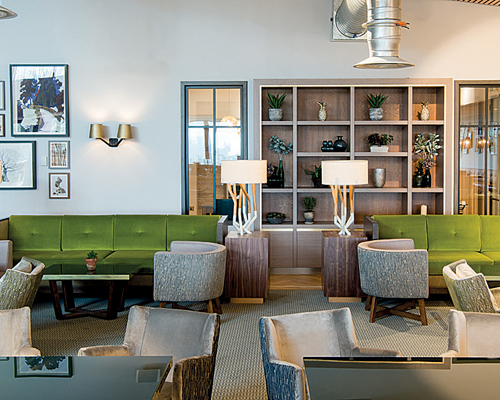
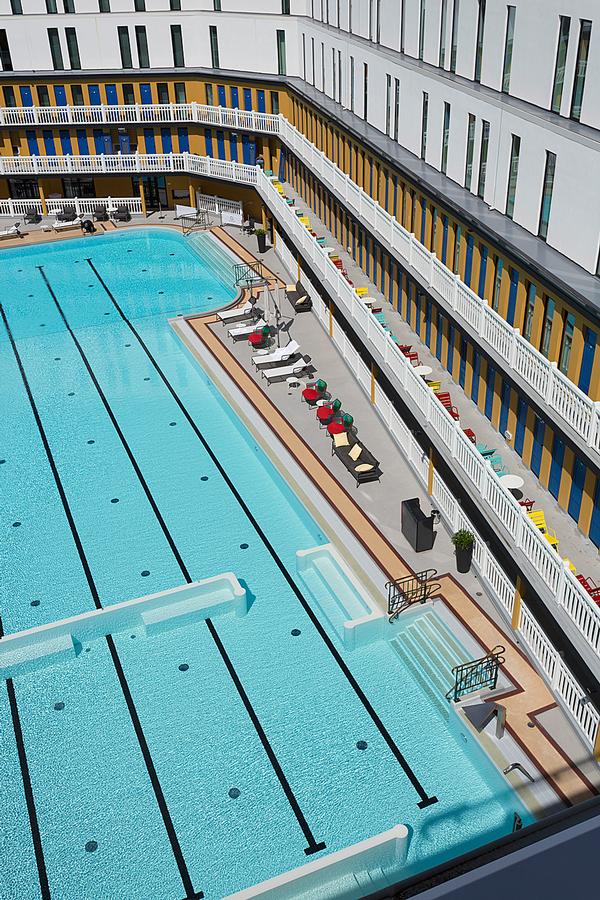
In 2014, the complex reopened under Accor’s MGallery brand. The pools had been demolished and rebuilt true to original designs and with colours, mosaics and balustrades all faithfully rerendered. In addition, was a new 124-bed hotel with a restaurant, bright and open rooftop bar offering views of the famous pool and a chic and dramatic fitness club and 1,700sq m Clarins spa.
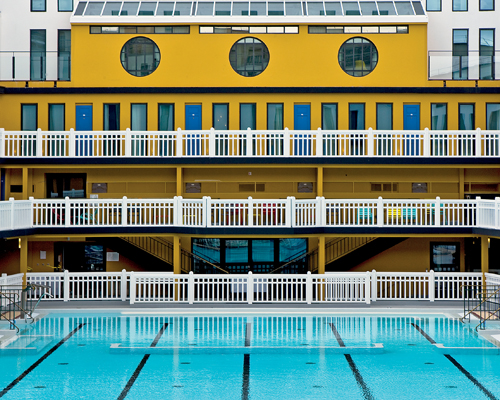
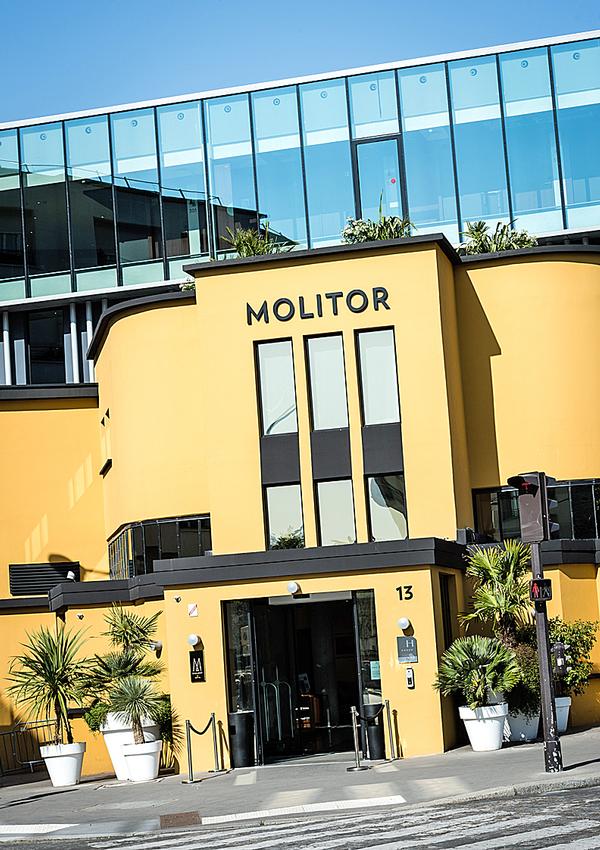
Sense of arrival I arrived at Molitor after a busy day travelling around Paris to various meetings. It’s location in the 16th arrondissement is slightly out of the way and it took me longer than expected to walk from the Metro station, so the sight of the building’s iconic warm yellow facade was a welcome sight.
Club Molitor has its own entrance and reception; as I walked in from the busy city street I felt a real sense that I’d arrived at a destination. Everything about the place feels exclusive and very cool – the Jean-Philippe Nuel-designed interiors are bold and graphic, with navy walls, geometric patterns and flashes of the original ‘tango yellow’ facade picked up in the furnishings.
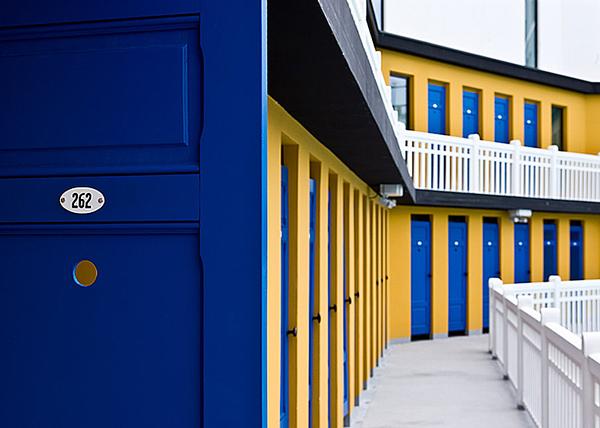
From the club’s lounge area, you look out onto the iconic outdoor pool – heated to 28 degrees all year round – and it’s an impressive sight. It was dark when I visited, and the pool was lit up, making it glow a vibrant turquoise. In the winter pool opposite, several swimmers were doing calm lengths, barely rippling the water’s surface. Around the winter pool, the old changing cabins have been turned into mini art galleries, with a different contemporary artist given free reign to transform each one.
The pools, spa and fitness area are available for use by hotel guests, Club Molitor members and members of the public who have booked an Escale Molitor package at the Spa by Clarins – which starts at €280 (US$312, £237) and includes a one hour treatment and access to the facilities. It’s obviously a popular club; a steady stream of members arrived to check in while I was there, and the spotless, well-designed changing rooms were filled with people dressing and undressing and chatting quietly.
Lido-inspired spa A lift takes you down to the subterranean Molitor Spa by Clarins, where the geometric vintage-style flooring in the spa’s entrance creates a dramatic first impression.
This 1,700sq m facility, is one of the largest hotel spas in Paris. It has 13 treatment rooms, with beds by Gharieni, a hammam, sauna, sensory showers, a relaxation room, tea salon, hairdressers and barber shop.
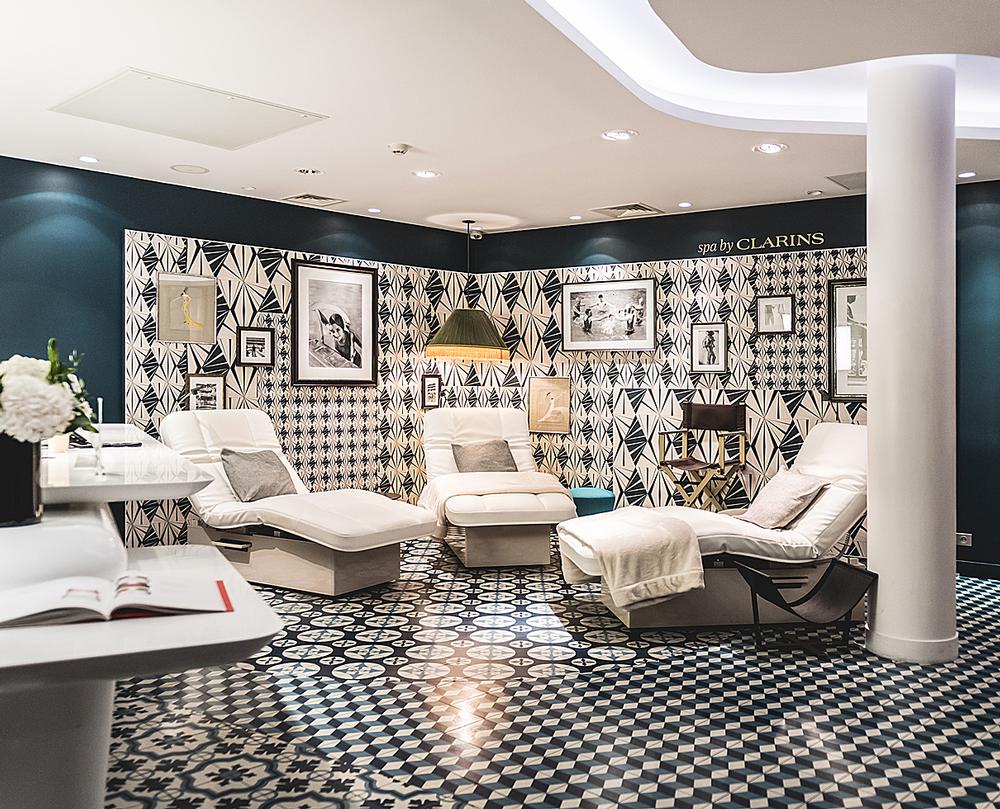
Sport and swimming are at the heart of the club, and this carries through to the spa both in terms of the design – with black and white photos of bathers from Molitor’s heyday and lido-inspired murals – and the treatments. A range of specially designed, one-hour sports massages, which cost €150 (US$167, £127) on weekdays and €160 (US$178, £136) on weekends, is based on running, skiing, boxing, tennis, golf and – of course – swimming. Each has been created together with a ‘high-level sports ambassador’ and targets specific muscles. The swimming massage, for example, focuses on the shoulders and was developed with French ex competitive swimmer Camille Lacourt.
I’d opted for the signature Massage Equilibre, a one-hour, €150/160 rebalancing massage with essential oils, using Clarins’ Tonic Oil to stimulate the body and senses.
On arriving at the spa, I was welcomed in true Parisian style – polite, professional, but perhaps not as warmly as it could have been. In the spacious Tea Lounge, I relaxed with a detoxing tea taking in the stylish crisp navy and cream colour scheme, turquoise chairs and dramatic flooring continuing on from reception.
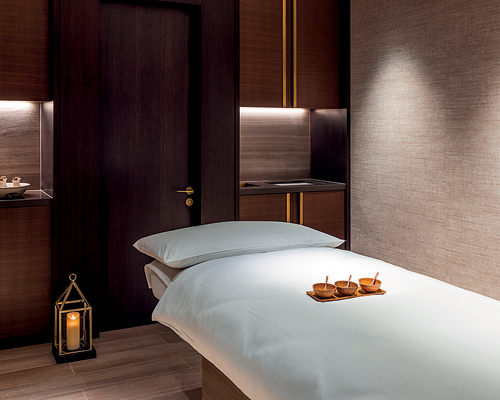
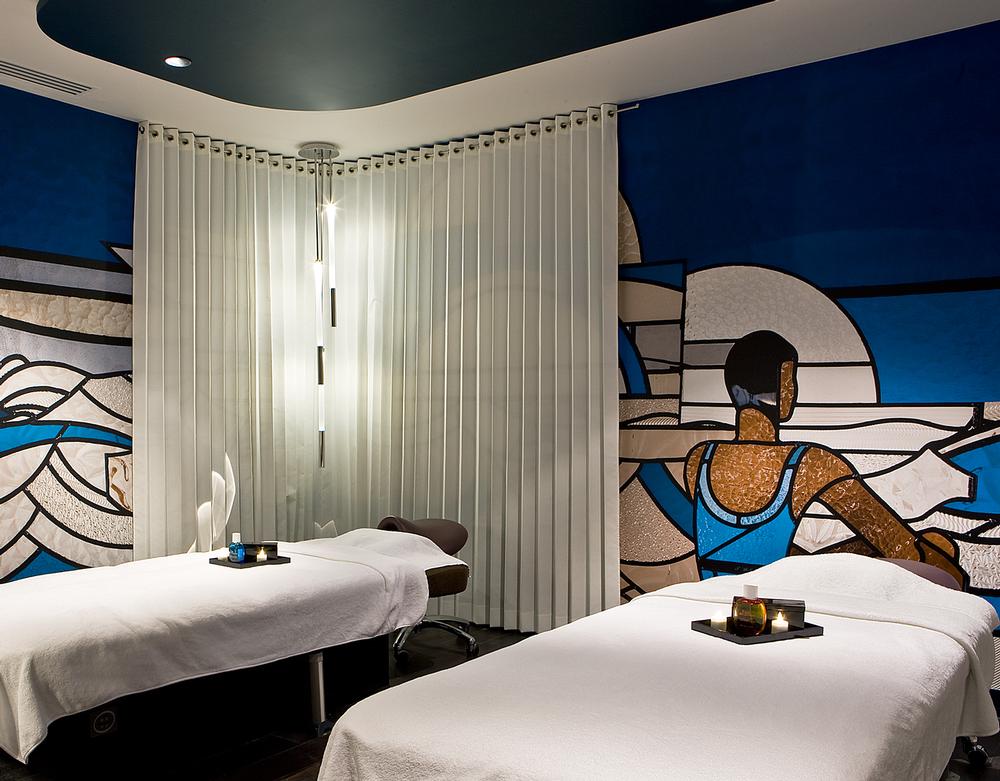
A friendlier therapist came to greet me and led me to my treatment room, which was also decorated in blue and white, with a lido-inspired mural-type wall covering. She immediately put me at ease, asking me lots of questions about whether the room was warm enough, where I hold tension, any injuries and what I was hoping for from the session.
She left me to get undressed and lie on the massage table, and when she returned she again checked that I was comfortable. The treatment began with hot flannels on my feet, and then a full body massage using warmed oils. My therapist was very attentive – checking if I wanted the table to be heated and what sort of pressure I wanted. She spent extra time on areas that needed more work, including my neck and shoulders – which get very tight from too much computer work – and the tops of my legs, which she told me afterwards had some water retention.
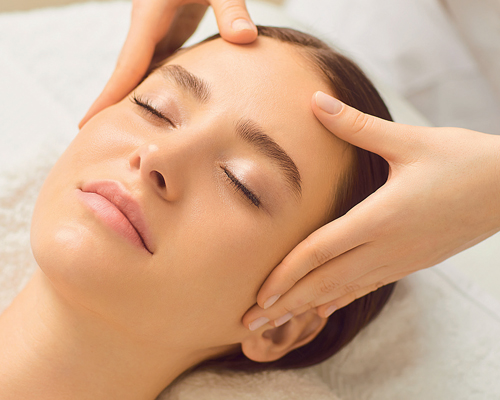
The treatment finished with a highly relaxing head massage and I was gently brought back round with some water before being led back to the reception area where I was given advice about aftercare. I felt lighter and energised – definitely needed after my long day in Paris.
In summary, my massage was extremely good, and the huge spa impressed me with its design and spacious feel, but it’s the magical pool at the heart of Molitor that really steals the show and makes you feel you are somewhere special.
Read more from this issue of Attractions Management magazine
View contents of Attractions Management 2020 issue 1
Editor's letter: Time to shine
As spas reach peak revenues, now’s the time for our industry to act as a catalyst in working out how we measure the impact of an experience and the ‘return on wellness’ says Spa Business' editor Katie Barnes
Promotional feature: TechnoAlpin
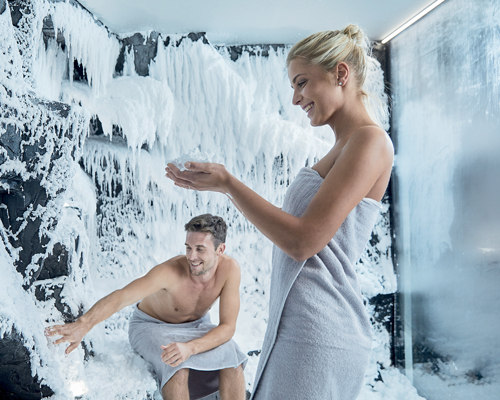
If you want to deliver a hot and cold experience as part of your wellness programme, adding a snowroom will introduce a delightful and more gentle form of cold therapy, as Sara Brenninger explains
Trends: Spa Foresight™
Climate emergency, gen alpha and brain optimisation are among Spa Business’ latest trend predictions
Promotional feature: The Wellness
Investing in children’s facilities gives a spa and wellness offering a competitive edge, as well as helping the next generation achieve their potential, explains Mohammed Ibrahim, CEO of industry design and consultancy practice, The Wellness
Promotional feature: RKF Luxury Linen
As a symbol of luxury, innovation and quality in the world of spa and hospitality, much of RKF Luxury Linen’s success comes from its highly client-centric design process, says CEO Riadh Bouaziz
Design: Heat of the moment
From giant golden eggs and converted ski lifts to rustic, hand-crafted huts, we showcase the latest in heat experience design and innovations
Molitor, the iconic and historic Parisian lido, is a popular haunt for
locals following a stylish renovation and addition of a hotel, club
and Clarins spa. Magali Robathan dips in to find out more
By Magali Robathan | Published in Spa Business 2020 issue 1
As a teenager, my Parisian mother used to go to Molitor on hot days to swim, sunbathe and eye up the other teenagers. Like many, the iconic art deco pool held a special place in her heart, which is why I was excited to visit it in its latest incarnation, more than half a century later.
The Molitor pool complex was inaugurated in 1929 by Olympic swimmer Johnny Weissmuller, who worked there as a lifeguard that summer and later starred as Tarzan in the Hollywood movies of the 1930s and 1940s.
In the years that followed, the swimming club – which consisted of a 46m outdoor lido and a 33m indoor pool – became the place to see and be seen. It hosted fashion shows and attracted celebrities, but also acted as a respite from the city for ordinary Parisians like my mother.
Molitor was designed by architect Lucien Pollet, who employed the finest craftspeople to create the ironwork, terrazzo floors, mosaics, portholes and white railings that contributed to its cruise liner feel. The outdoor pool was surrounded by sun loungers, sandy ‘beaches’ and brightly coloured parasols. Bathing beauty contests and artist’s galas were held there and in 1946, French designer Louis Reard famously launched the first modern bikini there.
It began to fall into disrepair in the 1970s as renovations became more expensive and in 1989 the keys were returned to Paris City Council. The complex remained closed for two decades until Colony Capital, associated with Bouygues Construction and Accorhotels, was awarded a tender for its restoration – one that would respect its unique history but also bring in a contemporary style in a nod to the edgy street artists who gathered there when it shut down.
In 2014, the complex reopened under Accor’s MGallery brand. The pools had been demolished and rebuilt true to original designs and with colours, mosaics and balustrades all faithfully rerendered. In addition, was a new 124-bed hotel with a restaurant, bright and open rooftop bar offering views of the famous pool and a chic and dramatic fitness club and 1,700sq m Clarins spa.
Sense of arrival I arrived at Molitor after a busy day travelling around Paris to various meetings. It’s location in the 16th arrondissement is slightly out of the way and it took me longer than expected to walk from the Metro station, so the sight of the building’s iconic warm yellow facade was a welcome sight.
Club Molitor has its own entrance and reception; as I walked in from the busy city street I felt a real sense that I’d arrived at a destination. Everything about the place feels exclusive and very cool – the Jean-Philippe Nuel-designed interiors are bold and graphic, with navy walls, geometric patterns and flashes of the original ‘tango yellow’ facade picked up in the furnishings.
From the club’s lounge area, you look out onto the iconic outdoor pool – heated to 28 degrees all year round – and it’s an impressive sight. It was dark when I visited, and the pool was lit up, making it glow a vibrant turquoise. In the winter pool opposite, several swimmers were doing calm lengths, barely rippling the water’s surface. Around the winter pool, the old changing cabins have been turned into mini art galleries, with a different contemporary artist given free reign to transform each one.
The pools, spa and fitness area are available for use by hotel guests, Club Molitor members and members of the public who have booked an Escale Molitor package at the Spa by Clarins – which starts at €280 (US$312, £237) and includes a one hour treatment and access to the facilities. It’s obviously a popular club; a steady stream of members arrived to check in while I was there, and the spotless, well-designed changing rooms were filled with people dressing and undressing and chatting quietly.
Lido-inspired spa A lift takes you down to the subterranean Molitor Spa by Clarins, where the geometric vintage-style flooring in the spa’s entrance creates a dramatic first impression.
This 1,700sq m facility, is one of the largest hotel spas in Paris. It has 13 treatment rooms, with beds by Gharieni, a hammam, sauna, sensory showers, a relaxation room, tea salon, hairdressers and barber shop.
Sport and swimming are at the heart of the club, and this carries through to the spa both in terms of the design – with black and white photos of bathers from Molitor’s heyday and lido-inspired murals – and the treatments. A range of specially designed, one-hour sports massages, which cost €150 (US$167, £127) on weekdays and €160 (US$178, £136) on weekends, is based on running, skiing, boxing, tennis, golf and – of course – swimming. Each has been created together with a ‘high-level sports ambassador’ and targets specific muscles. The swimming massage, for example, focuses on the shoulders and was developed with French ex competitive swimmer Camille Lacourt.
I’d opted for the signature Massage Equilibre, a one-hour, €150/160 rebalancing massage with essential oils, using Clarins’ Tonic Oil to stimulate the body and senses.
On arriving at the spa, I was welcomed in true Parisian style – polite, professional, but perhaps not as warmly as it could have been. In the spacious Tea Lounge, I relaxed with a detoxing tea taking in the stylish crisp navy and cream colour scheme, turquoise chairs and dramatic flooring continuing on from reception.
A friendlier therapist came to greet me and led me to my treatment room, which was also decorated in blue and white, with a lido-inspired mural-type wall covering. She immediately put me at ease, asking me lots of questions about whether the room was warm enough, where I hold tension, any injuries and what I was hoping for from the session.
She left me to get undressed and lie on the massage table, and when she returned she again checked that I was comfortable. The treatment began with hot flannels on my feet, and then a full body massage using warmed oils. My therapist was very attentive – checking if I wanted the table to be heated and what sort of pressure I wanted. She spent extra time on areas that needed more work, including my neck and shoulders – which get very tight from too much computer work – and the tops of my legs, which she told me afterwards had some water retention.
The treatment finished with a highly relaxing head massage and I was gently brought back round with some water before being led back to the reception area where I was given advice about aftercare. I felt lighter and energised – definitely needed after my long day in Paris.
In summary, my massage was extremely good, and the huge spa impressed me with its design and spacious feel, but it’s the magical pool at the heart of Molitor that really steals the show and makes you feel you are somewhere special.
Read more from this issue of Attractions Management magazine
View contents of Attractions Management 2020 issue 1
Editor's letter: Time to shine
As spas reach peak revenues, now’s the time for our industry to act as a catalyst in working out how we measure the impact of an experience and the ‘return on wellness’ says Spa Business' editor Katie Barnes
Promotional feature: TechnoAlpin
If you want to deliver a hot and cold experience as part of your wellness programme, adding a snowroom will introduce a delightful and more gentle form of cold therapy, as Sara Brenninger explains
Trends: Spa Foresight™
Climate emergency, gen alpha and brain optimisation are among Spa Business’ latest trend predictions
Promotional feature: The Wellness
Investing in children’s facilities gives a spa and wellness offering a competitive edge, as well as helping the next generation achieve their potential, explains Mohammed Ibrahim, CEO of industry design and consultancy practice, The Wellness
Promotional feature: RKF Luxury Linen
As a symbol of luxury, innovation and quality in the world of spa and hospitality, much of RKF Luxury Linen’s success comes from its highly client-centric design process, says CEO Riadh Bouaziz
Design: Heat of the moment
From giant golden eggs and converted ski lifts to rustic, hand-crafted huts, we showcase the latest in heat experience design and innovations
Abu Dhabi-based investment firm Mubadala Capital has made a binding, fully financed
€1 billion
offer to acquire Pierre and Vacances SA, the European holiday resort operator behind the
continental European Center Parcs business.
Disney has reaffirmed its commitment to investing US$30 billion in its US parks and cruise
business by 2033, using new America250 celebrations to underline the role its attractions play
in supporting jobs, tourism and economic growth.
Expo 2030 Riyadh is being planned as a permanent visitor destination, with organisers
confirming the six-million-square-metre site will become a Global Village after the event closes.
The owner of one of Australia's best-known waterparks has acquired a major competitor,
creating a new attractions business spanning two of the country's largest visitor destinations.
The Toverland theme park in the Netherlands has announced a €98m expansion programme
that will add a resort, new attractions and staff facilities as it pursues plans to become a multi-
day destination.
Hotel de France, located on the British Isle of Jersey, has created a wellness retreat package
that includes a hot yoga session that will take place in Jersey Zoo’s butterfly sanctuary.
A new immersive attraction designed to transport visitors into the final hours of ancient Pompeii
is preparing to open near the world-famous archaeological site in southern Italy.
Experience design company, BRC Imagination Arts, has completed a transition that sees founder
Bob Rogers pass ownership of the business to four long-serving senior executives, while
remaining actively involved with the company.
Movie Park Germany has opened a new Paramount Pictures-themed attraction as part of its 30th
anniversary celebrations, using immersive storytelling and adaptive reuse to reinforce the park’s
longstanding “Hollywood in Germany” positioning.
Therme Manchester’s 28-acre development, which will include interconnected glass pavilions
that measure 65,000sq m, will be the largest bathing and wellbeing attraction in the world once
complete, according to prof David Russell, CEO of Therme UK.
+ More news
COMPANY PROFILES
Taylor Made Designs Founded in 1993, Taylor Made
Designs supply corporate clothing
and brand-enhancing merchandise
to [more...]
Polin Waterparks Polin was founded in Istanbul in 1976. Polin
has since grown into a leading company in
the waterpa [more...]
Simworx Ltd The company was initially established
in 1997. Terry Monkton and Andrew
Roberts are the key stakeh [more...]
Sally Corporation Our services include: Dark ride design & build; Redevelopment of existing attractions; High-quality [more...]