Italian skin innovator, Comfort Zone, launched its sustainable factory
in 2018 and has now followed with the opening of a botanical garden
to reinforce its commitment to environmentalism and nature. Founder
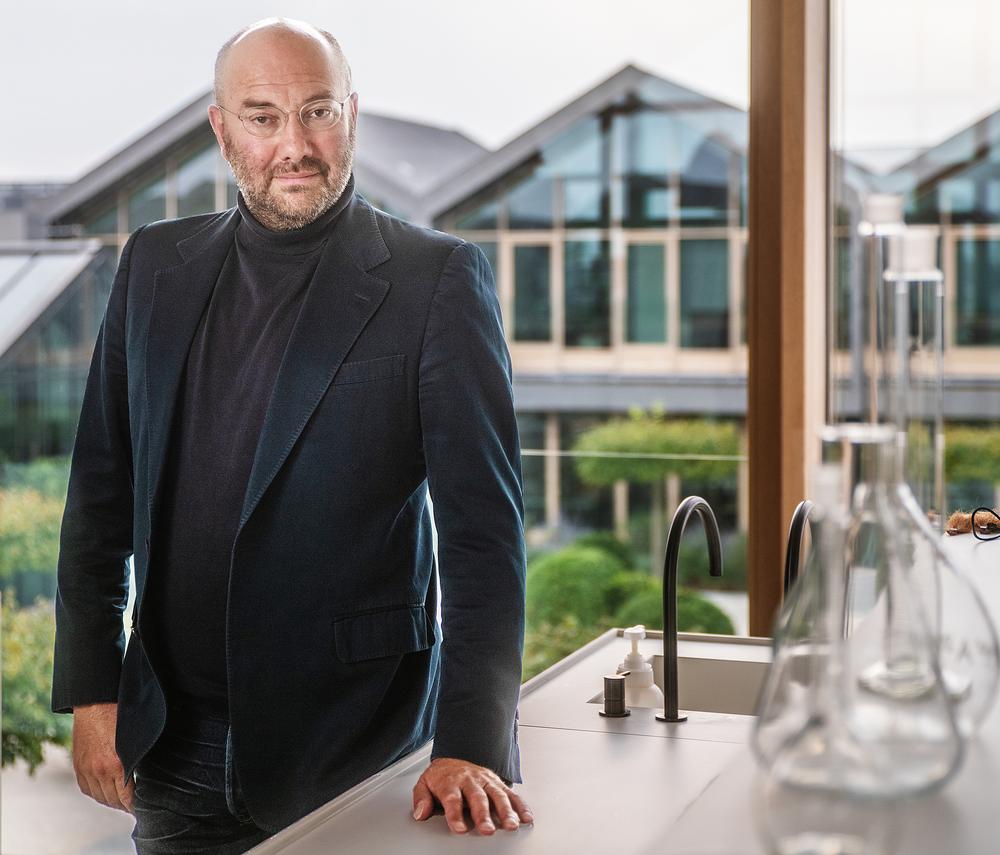
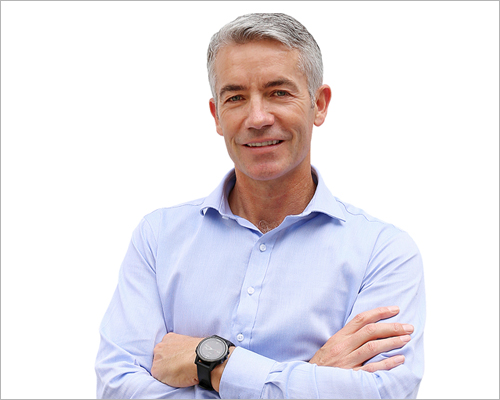
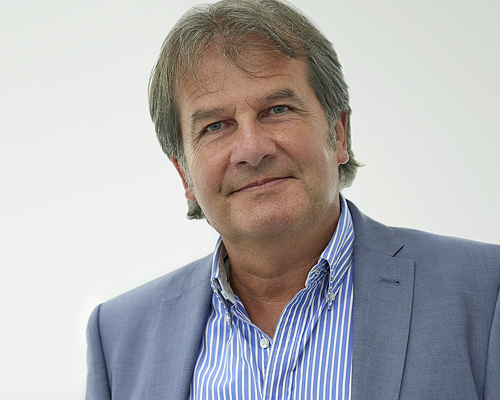
and president Dr Davide Bollati shares his vision with Liz Terry
By Liz Terry | Published in Spa Business 2019 issue 3
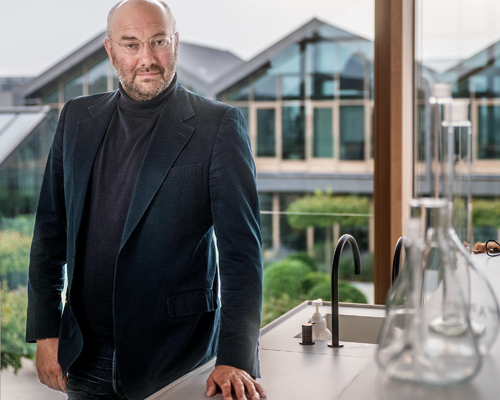
Bollati has built his business on the fusion of science, nature and sustainability
Last year, you launched your Davines Village. Now you’ve opened a garden to complete it. What’s your vision? A strong belief that nature is more than a resource: it’s the essence of our own life as humans, of our beauty and happiness. We need to learn from it day after day – from its endless variety, as well as its constant evolution and capacity to adapt, survive and thrive.
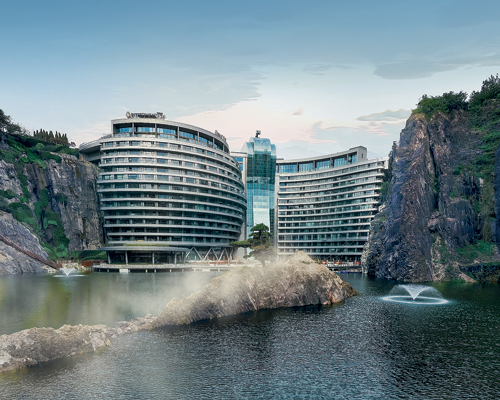
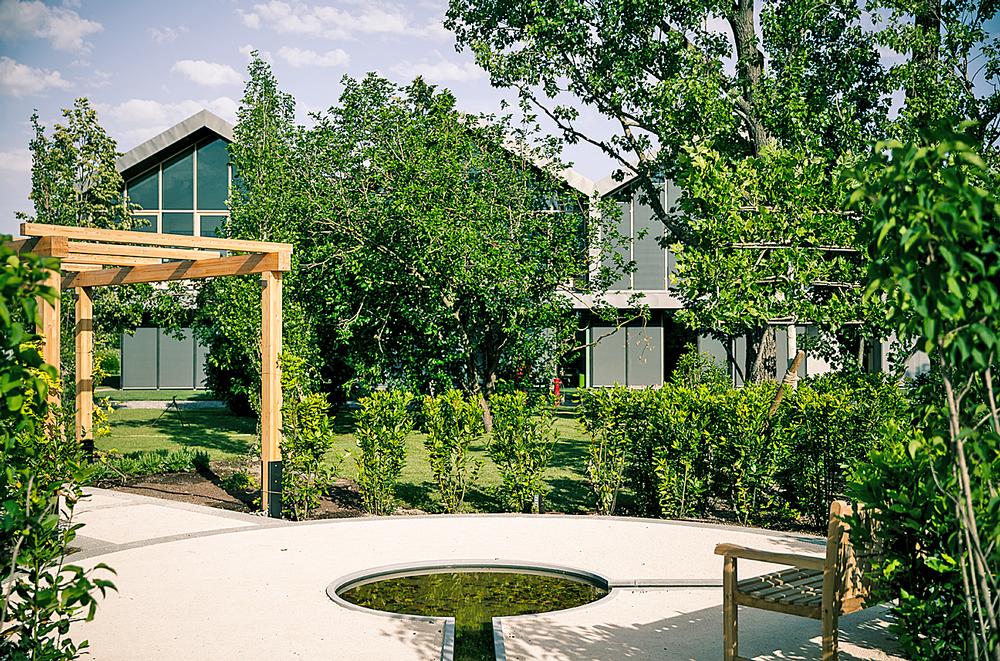
This is why I wanted to see the amazing Davines Village by Matteo Thun completed with a Botanical Garden.
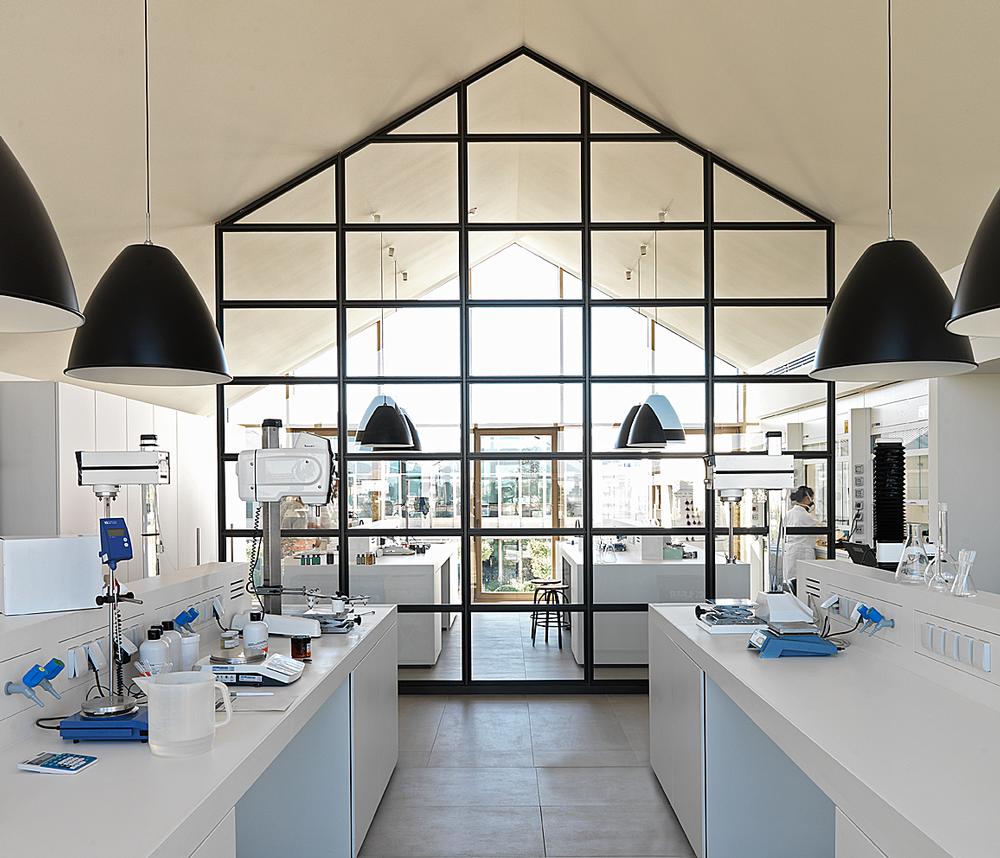
It has many characteristics. It’s an open-air lab, able to recall ancient traditions. It inspires cutting-edge, high-performing formulae and it also reminds us about sustainable lifestyles through its functional and aesthetic dimensions.
The idea of a botanical garden dedicated to scientific research has always been in my mind. Science and nature – the two souls of our brands – can co-exist, enabling us to offer sustainable, clean beauty.
Why are plants so important to you? They represent an endless source of inspiration and knowledge: they teach us the meaning of beauty and through their ‘clever’ organisation, they teach us the value of interconnection, which is more vital than ever for our existence, our society and our planet.
Nature is truly able to mesmerize us and encourage us to get in contact with something deeper than what we see before us. Unfortunately, modern society has taken it for granted and exploited it in a blind, ruthless way: I strongly believe we need to commit ourselves to regenerating nature and always including it in our lives, in our work and in our projects for the sake of our future.
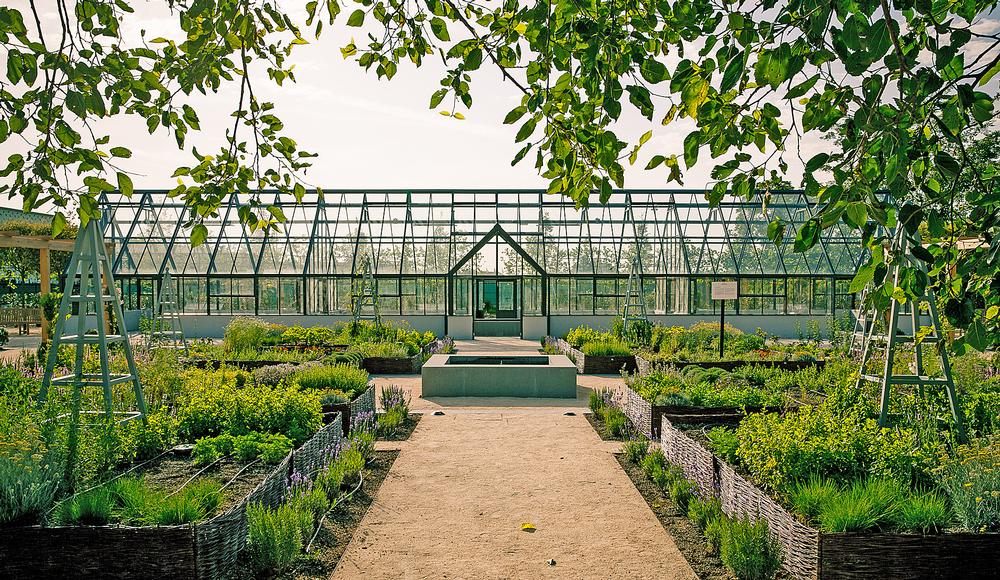
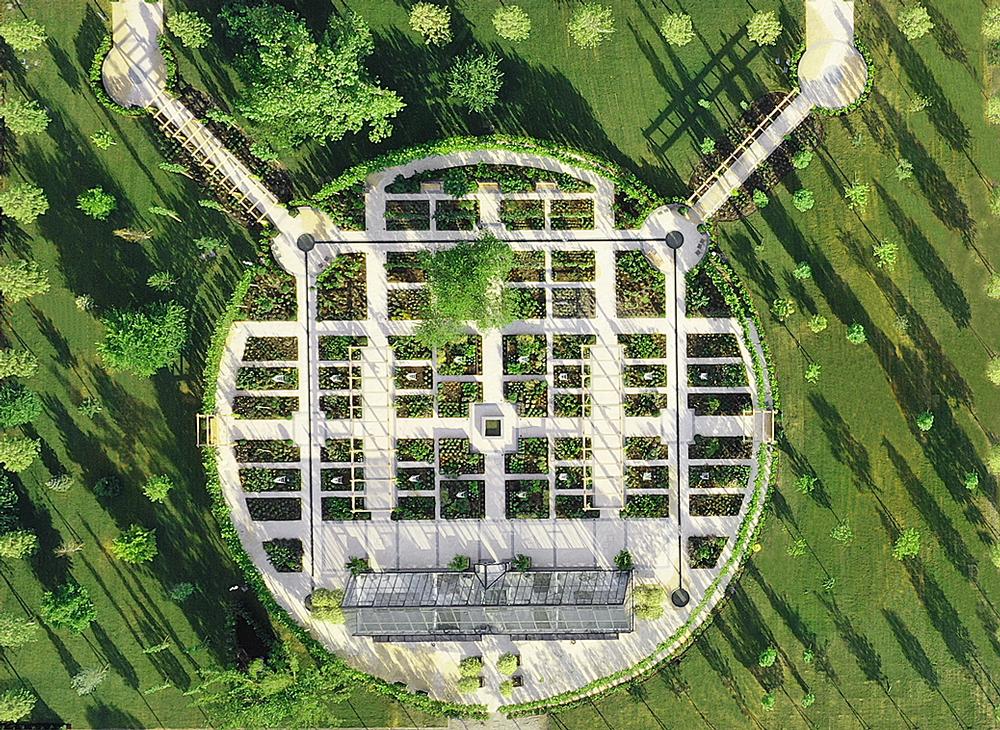
You chose landscape designers del Buono Gazerwitz to design the garden. What was their brief? I asked them to include areas dedicated to specific plants, according to their function – such as cosmetic, edible, ornamental – in a harmonious, distinctive and beautiful layout.
The dream was to make it easy for the experts from our R&D team to access it, while also being restorative and inspiring for members of our team, who can walk or work there.
I also envisioned it as an enjoyable, educational experience of wellbeing and recharging that we can offer guests.
How was the plant selection done? What were the criteria for selection? Our garden includes over 6,000 herbaceous plants, shrubs and fruit trees from all over the world.
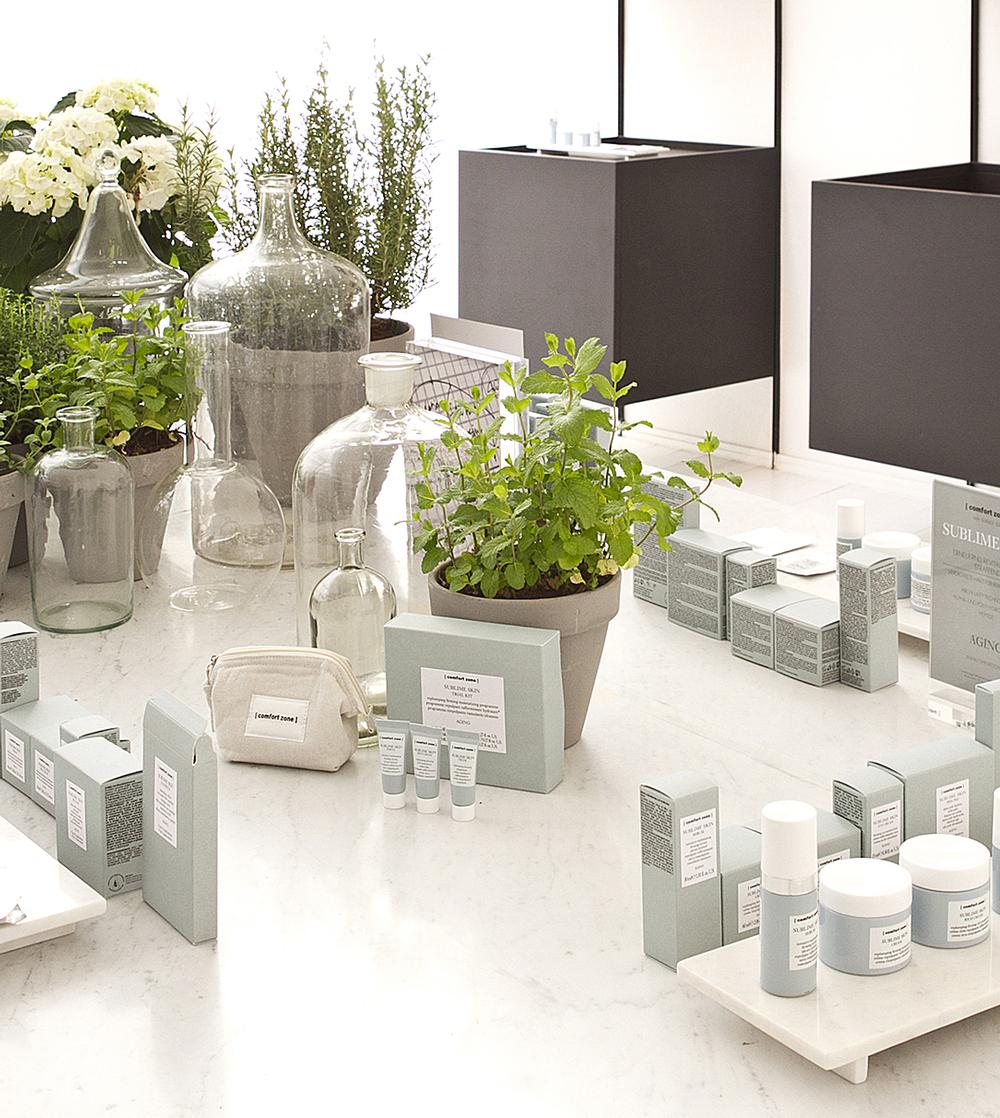
The selection of the varieties is the result of cooperation between the Davines Laboratories and the University of Florence: together they identified the properties of the various species that were relevant for the development of products by Davines, Comfort Zone and Skin Regimen – our brands which are dedicated to haircare and skincare.
Priority was given to species with antioxidant properties, such as Cornel tree and Osmanthus; anti-inflammatory properties, such as hibiscus, and boosters of micro-circulation, such as yarrow.
We also have an arboretum with trees of the countries where our brands are distributed, to celebrate the interconnection we have with our partners and their local landscapes and communities.
How will you use the garden? The scientific Botanical Garden, along with the Green Courtyards, are unique spaces where we will study, work, gather and relax and they are dedicated to our team.
They’re also a testament to inclusiveness and are open to visitors who want to come and learn more about our vision. They represent a key opportunity to meet and share with our partners, our experts and our guests from all over the world.
You’ve set the garden up with power supplies so the team can work in it. Do you see this as a trend? The digital era has made it possible to work anywhere and be in touch with people all around the world, but at the same time, we’re often deprived of contact with nature and our siblings.
Working in a garden addresses a vital and very modern need: to have the freedom to work where we feel we can perform at our best and also enjoy every moment of it.
Besides, studies prove that although it feels a luxury, enabling them to be in nature is the best investment we can make as entrepreneurs in our staff’s productivity and satisfaction.
Will the theme of the garden influence your product development and CSR work? From next year, we’ll launch products which contain ingredients from plants which grow in our Botanical Garden. We’ll also keep welcoming guests from around the world who want to understand more about the concept of Sustainable Beauty.
The garden will be one of the sites included in the #parma2020 celebrations, when our city will be Capital of Culture for Italy.
The spirit of the garden will also inspire other social projects that are designed to regenerate nature and society, such as the 2030 Summit for Responsible Leaders which will cover climate action, innovative growth and social happiness.
One of our CSR projects is The Green Kilometer – an 11 km section of one of the busiest highway in Italy. A number of companies have committed to greening it and Davines is the first to complete its portion, with over 400 trees planted.
With the Climate Emergency a concern, do you think all companies should commit to creating greenspace? I don’t think every company can have a garden, but I believe every company can find meaningful ways to protect nature, to support re-forestation and the use of clean energy, as well as ensuring the people who work with and for them are educated to respect and benefit from it in a sustainable way.
Read more from this issue of Attractions Management magazine
View contents of Attractions Management 2019 issue 3
Spa Programmes: On the menu
Energy medicine at Six Senses; aroma retreat on Croatia’s Island of Vitality and menopause programming all feature in our spa menu round-up
Top team: Rosewood
Jane Kitchen talks to the wellness team behind Rosewood, and its forward-thinking spa concepts, as CEO Sonia Cheng leads a vigorous global rollout
Everyone’s talking about: CBD
Are CBD treatments and products an unregulated fad, or a serious business proposition? Spa Business investigates
Promotional feature: The Madison Collection
Innovation of form and function in robes and towels is a vital part of attracting the next generation of wellness consumers. Charmaine T Lang from The Madison Collection explains how her company consistently maintains its successful point of difference
Interview: Markus Engel
The CEO of Asia’s Urban Resort Concepts talks to Spa Business about positive disruption in the hospitality and spa sector
Promotional feature: The Wellness
A beautiful pool can be the standout feature that draws new customers. It can also cut your running costs if it’s designed to be sustainable. Mohammed Ibrahim, CEO of The Wellness, explains
Interview: Davide Bollati
Liz Terry speaks to the founder of Comfort Zone about the group’s new botanical garden and ongoing commitment to environmentalism
Research: Generation gap
A new consumer study by ISPA uncovers spa-goer preferences and habits across different age groups
Promotional feature: Phytomer
Formulating the ultimate universal product to heal and defend the skin has taken three years of R&D for Phytomer, the French luxury marine skincare brand. The company’s scientific director tells Spa Business about the launch of the groundbreaking Prebioforce serum
Event Report: APSWC Round Table
Industry leaders contribute to APSWC’s third white paper at annual gathering. Catharine Nicol reports from Malaysia
Family spa: Play time
Spa Business takes a look at innovative spa programmes for children and families
Eco spa: Going green
Joanna Roche and Bonnie Baker share their ambitions for the Green Spa Network
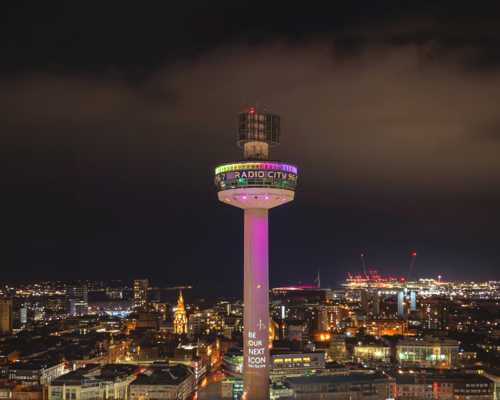
An opportunity to reimagine one of the UK’s most recognisable towers has been formally
opened by Rivington Hark, as St Johns Beacon invites operators and partners to shape its
next phase. [more...]
Italian skin innovator, Comfort Zone, launched its sustainable factory
in 2018 and has now followed with the opening of a botanical garden
to reinforce its commitment to environmentalism and nature. Founder
and president Dr Davide Bollati shares his vision with Liz Terry
By Liz Terry | Published in Spa Business 2019 issue 3
Bollati has built his business on the fusion of science, nature and sustainability
Last year, you launched your Davines Village. Now you’ve opened a garden to complete it. What’s your vision? A strong belief that nature is more than a resource: it’s the essence of our own life as humans, of our beauty and happiness. We need to learn from it day after day – from its endless variety, as well as its constant evolution and capacity to adapt, survive and thrive.
This is why I wanted to see the amazing Davines Village by Matteo Thun completed with a Botanical Garden.
It has many characteristics. It’s an open-air lab, able to recall ancient traditions. It inspires cutting-edge, high-performing formulae and it also reminds us about sustainable lifestyles through its functional and aesthetic dimensions.
The idea of a botanical garden dedicated to scientific research has always been in my mind. Science and nature – the two souls of our brands – can co-exist, enabling us to offer sustainable, clean beauty.
Why are plants so important to you? They represent an endless source of inspiration and knowledge: they teach us the meaning of beauty and through their ‘clever’ organisation, they teach us the value of interconnection, which is more vital than ever for our existence, our society and our planet.
Nature is truly able to mesmerize us and encourage us to get in contact with something deeper than what we see before us. Unfortunately, modern society has taken it for granted and exploited it in a blind, ruthless way: I strongly believe we need to commit ourselves to regenerating nature and always including it in our lives, in our work and in our projects for the sake of our future.
You chose landscape designers del Buono Gazerwitz to design the garden. What was their brief? I asked them to include areas dedicated to specific plants, according to their function – such as cosmetic, edible, ornamental – in a harmonious, distinctive and beautiful layout.
The dream was to make it easy for the experts from our R&D team to access it, while also being restorative and inspiring for members of our team, who can walk or work there.
I also envisioned it as an enjoyable, educational experience of wellbeing and recharging that we can offer guests.
How was the plant selection done? What were the criteria for selection? Our garden includes over 6,000 herbaceous plants, shrubs and fruit trees from all over the world.
The selection of the varieties is the result of cooperation between the Davines Laboratories and the University of Florence: together they identified the properties of the various species that were relevant for the development of products by Davines, Comfort Zone and Skin Regimen – our brands which are dedicated to haircare and skincare.
Priority was given to species with antioxidant properties, such as Cornel tree and Osmanthus; anti-inflammatory properties, such as hibiscus, and boosters of micro-circulation, such as yarrow.
We also have an arboretum with trees of the countries where our brands are distributed, to celebrate the interconnection we have with our partners and their local landscapes and communities.
How will you use the garden? The scientific Botanical Garden, along with the Green Courtyards, are unique spaces where we will study, work, gather and relax and they are dedicated to our team.
They’re also a testament to inclusiveness and are open to visitors who want to come and learn more about our vision. They represent a key opportunity to meet and share with our partners, our experts and our guests from all over the world.
You’ve set the garden up with power supplies so the team can work in it. Do you see this as a trend? The digital era has made it possible to work anywhere and be in touch with people all around the world, but at the same time, we’re often deprived of contact with nature and our siblings.
Working in a garden addresses a vital and very modern need: to have the freedom to work where we feel we can perform at our best and also enjoy every moment of it.
Besides, studies prove that although it feels a luxury, enabling them to be in nature is the best investment we can make as entrepreneurs in our staff’s productivity and satisfaction.
Will the theme of the garden influence your product development and CSR work? From next year, we’ll launch products which contain ingredients from plants which grow in our Botanical Garden. We’ll also keep welcoming guests from around the world who want to understand more about the concept of Sustainable Beauty.
The garden will be one of the sites included in the #parma2020 celebrations, when our city will be Capital of Culture for Italy.
The spirit of the garden will also inspire other social projects that are designed to regenerate nature and society, such as the 2030 Summit for Responsible Leaders which will cover climate action, innovative growth and social happiness.
One of our CSR projects is The Green Kilometer – an 11 km section of one of the busiest highway in Italy. A number of companies have committed to greening it and Davines is the first to complete its portion, with over 400 trees planted.
With the Climate Emergency a concern, do you think all companies should commit to creating greenspace? I don’t think every company can have a garden, but I believe every company can find meaningful ways to protect nature, to support re-forestation and the use of clean energy, as well as ensuring the people who work with and for them are educated to respect and benefit from it in a sustainable way.
Read more from this issue of Attractions Management magazine
View contents of Attractions Management 2019 issue 3
Spa Programmes: On the menu
Energy medicine at Six Senses; aroma retreat on Croatia’s Island of Vitality and menopause programming all feature in our spa menu round-up
Top team: Rosewood
Jane Kitchen talks to the wellness team behind Rosewood, and its forward-thinking spa concepts, as CEO Sonia Cheng leads a vigorous global rollout
Everyone’s talking about: CBD
Are CBD treatments and products an unregulated fad, or a serious business proposition? Spa Business investigates
Promotional feature: The Madison Collection
Innovation of form and function in robes and towels is a vital part of attracting the next generation of wellness consumers. Charmaine T Lang from The Madison Collection explains how her company consistently maintains its successful point of difference
Interview: Markus Engel
The CEO of Asia’s Urban Resort Concepts talks to Spa Business about positive disruption in the hospitality and spa sector
Promotional feature: The Wellness
A beautiful pool can be the standout feature that draws new customers. It can also cut your running costs if it’s designed to be sustainable. Mohammed Ibrahim, CEO of The Wellness, explains
Interview: Davide Bollati
Liz Terry speaks to the founder of Comfort Zone about the group’s new botanical garden and ongoing commitment to environmentalism
Research: Generation gap
A new consumer study by ISPA uncovers spa-goer preferences and habits across different age groups
Promotional feature: Phytomer
Formulating the ultimate universal product to heal and defend the skin has taken three years of R&D for Phytomer, the French luxury marine skincare brand. The company’s scientific director tells Spa Business about the launch of the groundbreaking Prebioforce serum
Event Report: APSWC Round Table
Industry leaders contribute to APSWC’s third white paper at annual gathering. Catharine Nicol reports from Malaysia
Family spa: Play time
Spa Business takes a look at innovative spa programmes for children and families
Eco spa: Going green
Joanna Roche and Bonnie Baker share their ambitions for the Green Spa Network
A new immersive attraction designed to transport visitors into the final hours of ancient Pompeii
is preparing to open near the world-famous archaeological site in southern Italy.
Experience design company, BRC Imagination Arts, has completed a transition that sees founder
Bob Rogers pass ownership of the business to four long-serving senior executives, while
remaining actively involved with the company.
Movie Park Germany has opened a new Paramount Pictures-themed attraction as part of its 30th
anniversary celebrations, using immersive storytelling and adaptive reuse to reinforce the park’s
longstanding “Hollywood in Germany” positioning.
Therme Manchester’s 28-acre development, which will include interconnected glass pavilions
that measure 65,000sq m, will be the largest bathing and wellbeing attraction in the world once
complete, according to prof David Russell, CEO of Therme UK.
Efteling has opened Hooghmoed, a new family drop tower designed to broaden the appeal of its
recently launched Sirene Island themed area and introduce younger visitors to thrill attractions.
A proposed Puy du Fou development near Bicester and Universal Destinations and Experiences’
planned resort in Bedford are emerging as part of a wider transformation of the Oxford–
Cambridge Growth Corridor into a major centre for UK leisure and tourism inv
Shedd Aquarium has opened the Immersion Theater developed in partnership with SimEx-
Iwerks, as part of a wider strategy to enhance the guest experience and create additional
revenue opportunities.
The UK government has announced a temporary reduction in VAT on visitor attractions and
children’s meals as part of a summer cost-of-living support package designed to stimulate the
visitor economy and encourage family days out.
As designer Yinka Ilori prepares for his first solo gallery show in London, he speaks exclusively
to CLADmag about his mission to spread joy, the power of play, and his bold approach to using
colour (including the colours you won’t see in his work).
The government of Thailand is exploring plans for a THB300bn (£6.3bn, US$8.3bn)
entertainment complex in the country’s Eastern Economic Corridor (EEC), with officials
proposing a large-scale theme park and sports destination as part of a broader tourism and
economic development strategy.
An opportunity to reimagine one of the UK’s most recognisable towers has been formally
opened by Rivington Hark, as St Johns Beacon invites operators and partners to shape its
next phase. [more...]