Do you have a strong opinion, or disagree with somebody else’s point of view on topics related to the spa industry? If so, Spa Business would love to hear from you. Email your letters, thoughts and suggestions to [email protected]
Promotional feature: Oakworks
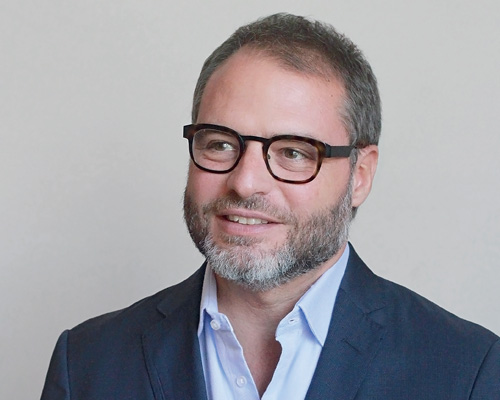
Dafne Berlanga, vice president of international business
development of Oakworks, discusses the importance of sustainability
Mike Wallace, hot springs and medical spa consultant
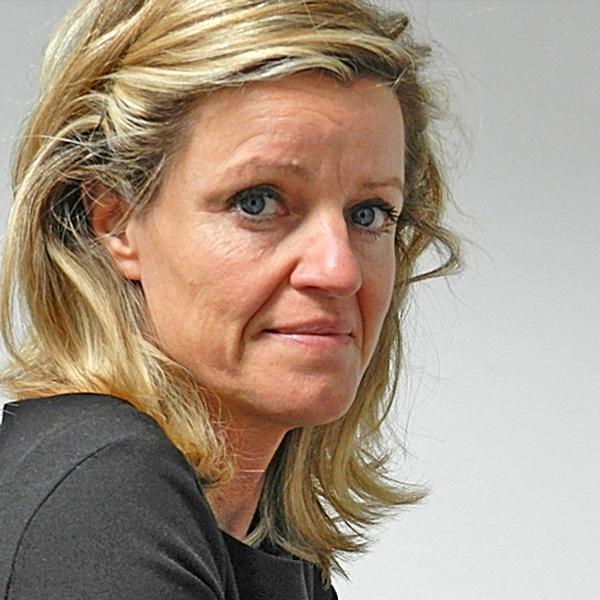
Mike Wallace
It’s interesting to read how cold therapies are all the rage (see SB17/4 pages 44-46), but in fact they are nothing new. European spas were based on the belief that exposure to water – in particular contrasting hot and cold water – could effectively treat disease. In the 19th century, at the height of the hydrotherapy revolution, spas even promoted themselves as being able to cure tuberculosis and syphilis!
Kick-started by Vincenz Priessnitz and Sebastian Kneipp, the concept of applying hot and cold water onto the body has left us with treatments that are still around today. Kneipp baths – walking barefoot in shallow hot and cold foot baths filled with pebbles – are commonplace in European spas. There is also the ‘Scottish spray’, where high-powered jets of water are fired at your naked body from a distance of 3 to 4 meters, first at the deceptively comfortable temperature of 38oC, then after 30 seconds, a sinister lever is pulled and the temperature drops to 16oC for 10 seconds. This is repeated several times – and is not for the fainthearted.
So why has cold-water therapy stood the test of time? In heat, the blood vessels dilate and the blood pressure reduces. If the body is then exposed to extreme cold, these vessels react with an aggressive constriction that pushes out the blood to the ‘twig ends’ of the blood vessels (the extremities of the capillaries) – hence that wonderful tingling sensation you feel after jumping into a plunge pool after a sauna, which is a natural circulation boost.
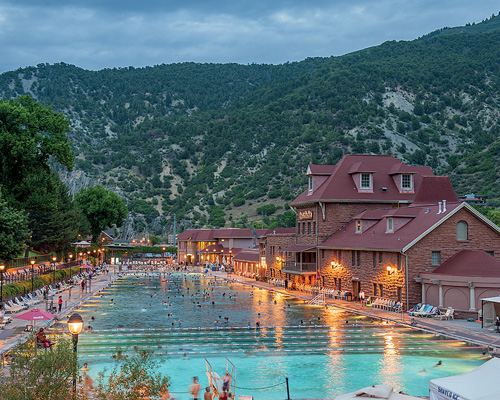
Cold therapies are now coming into vogue in spas; however, in Europe they never went away. I regularly use the old Turkish thermal baths in Budapest, first the unbearably hot pool at 42oC for as long as I can stand, then I drift off after in the cool 32oC pool feeling as if I have been tranquilized – unbeatable!
"Cold therapies are now coming into vogue in spas; however, in Europe they never went away"
Mike Wallace
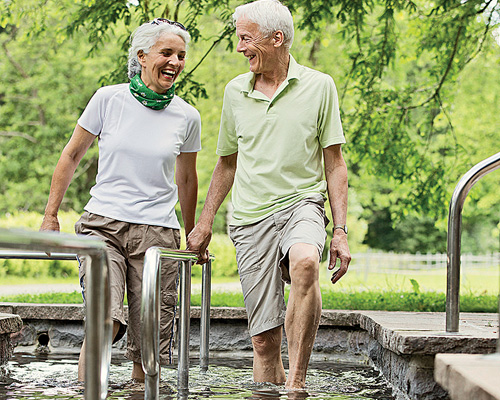
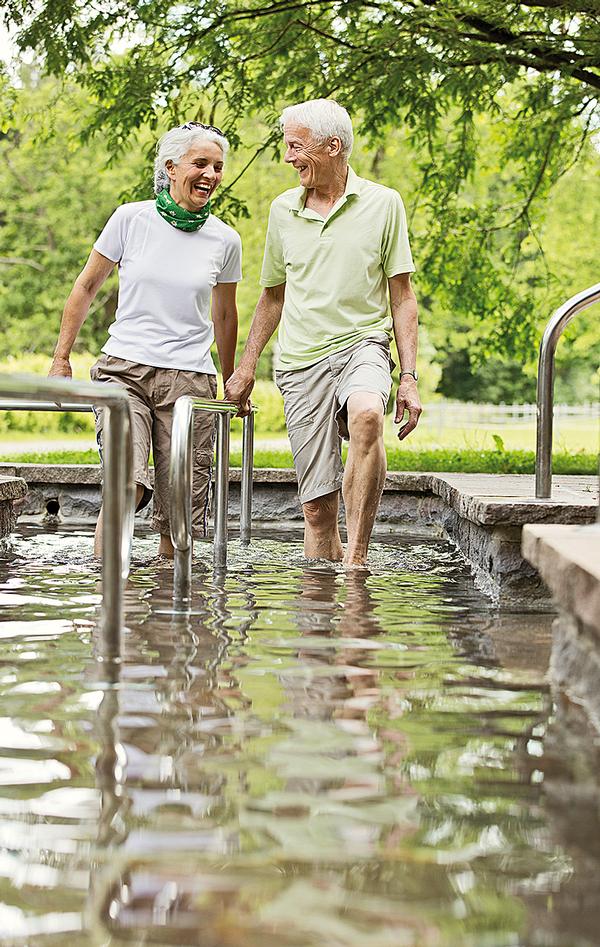
Kneipp baths are commonplace in many European spas
Wellness will become healing
Anne Biging, founder, Healing Hotels of the World and the Healing Summit
Anne Biging
Does anyone remember the world before the word ‘wellness’ existed? One could almost say that wellness is the more modern and softer version of the European system of ‘cure’ – and now healing is the evolution of wellness. In this evolutionary process, people become more and more aware of their true needs. Healing implies change and learning, whereas wellness is more about pampering your status quo.
Healing is an active process to change for better health and a better life. For true healing, you have to learn what is necessary to improve your state of wellbeing, both physically and mentally. It is the learning that makes healing sustainable.
Many hotels offering healing can cater for specific health issues, as long as they are not severe medical problems. In many cases, their offerings in the realm of alternative, natural and ancient medicine can be more effective than allopathic medicine – especially in the case of lifestyle-related diseases.
Today there are many non-invasive and highly effective diagnostic tools available, so the healing journey can begin with a thorough diagnosis as a foundation for a personalised consultancy. This leads to a tailor-made healing plan, which can include nutrition, movement, therapeutic treatments, and more. At the end of a healing holiday, there is a perceptible improvement of one’s health – a mental and spiritual growth that comes from learning and understanding how to live a better, more purposeful and meaningful life.
"For true healing, you have to learn what is necessary to improve your state of wellbeing, both physically and mentally"
lzf/shutterstock
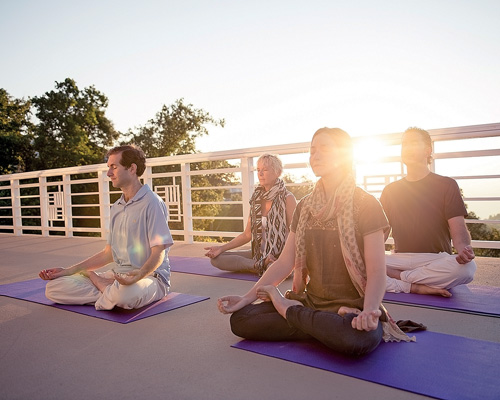
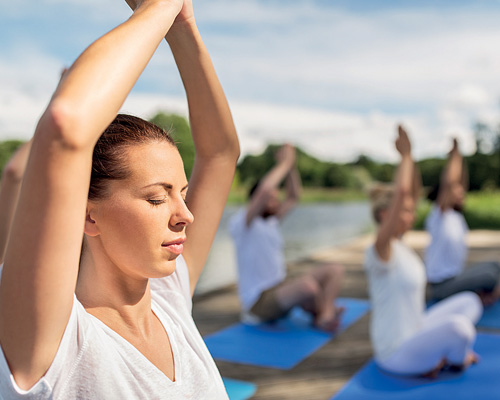
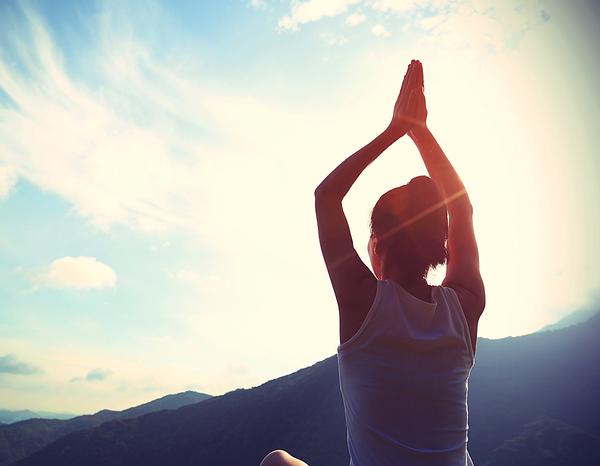
Healing holidays include mental and spiritual growth
A disturbing reality in spa
Jannita Mossel, founder, SpaTree
Jannita Mossel
With great interest I have read Liz Terry’s article on the existential threat in the world of spa, dealing with allegations of sexual abuse of customers by spa therapists (see SB17/4). These recent revelations from spa visitors about their abuse have been shocking and chilling. How on earth could this happen? How could these ‘therapists’ be allowed to go on and stay in the business? More importantly, what is the professional background of these ‘spa predators’?
Besides an urgent need for the spa industry to establish policies and codes of conduct, it is of great importance to look at the aspect of professionalism in the spa market.
Are spa owners willing to invest in well-educated therapists who study hard and have gone through strict exams? Or is money the first factor in decision-making?
There are many ambitious spa students who invest in their future – both financially and by studying hard. The spa market, however, sees them as expensive labour. This results in attracting people who jump into the market without a professional background or a formal spa diploma.
I don’t have insight into the background of the accused spa therapists, but regardless, the spa industry needs to see the importance of educated students with an accredited diploma – and to pay them well. And before appointing a therapist, background screening is mandatory in such a sensitive market as spa.
"The spa industry needs to see the importance of educated students – and to pay them well"
UlianaG/shutterstock
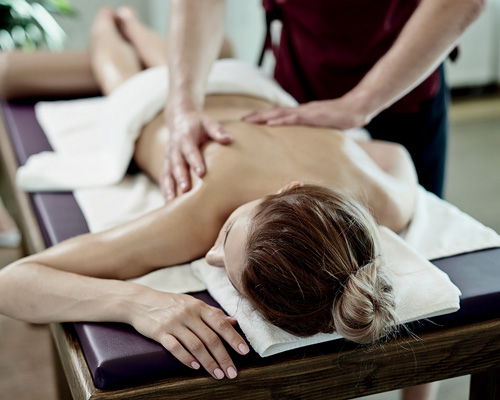
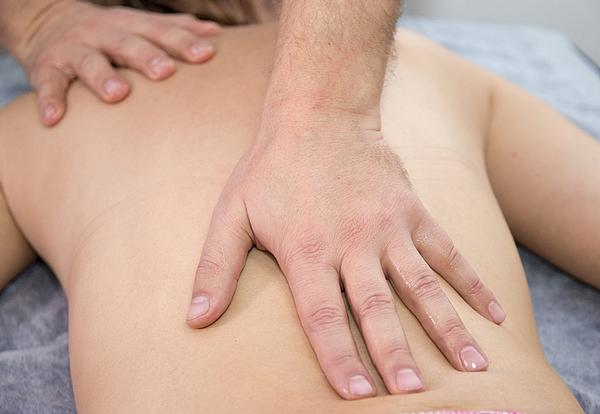
Background screening is mandatory before hiring therapists
COMPANY PROFILES
Holovis
Holovis is a privately owned company
established in 2004 by CEO Stuart
Hetherington. [more...]
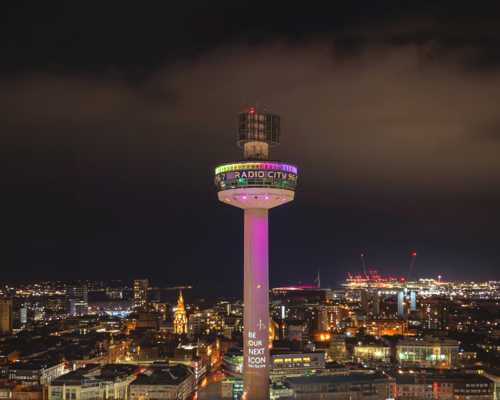
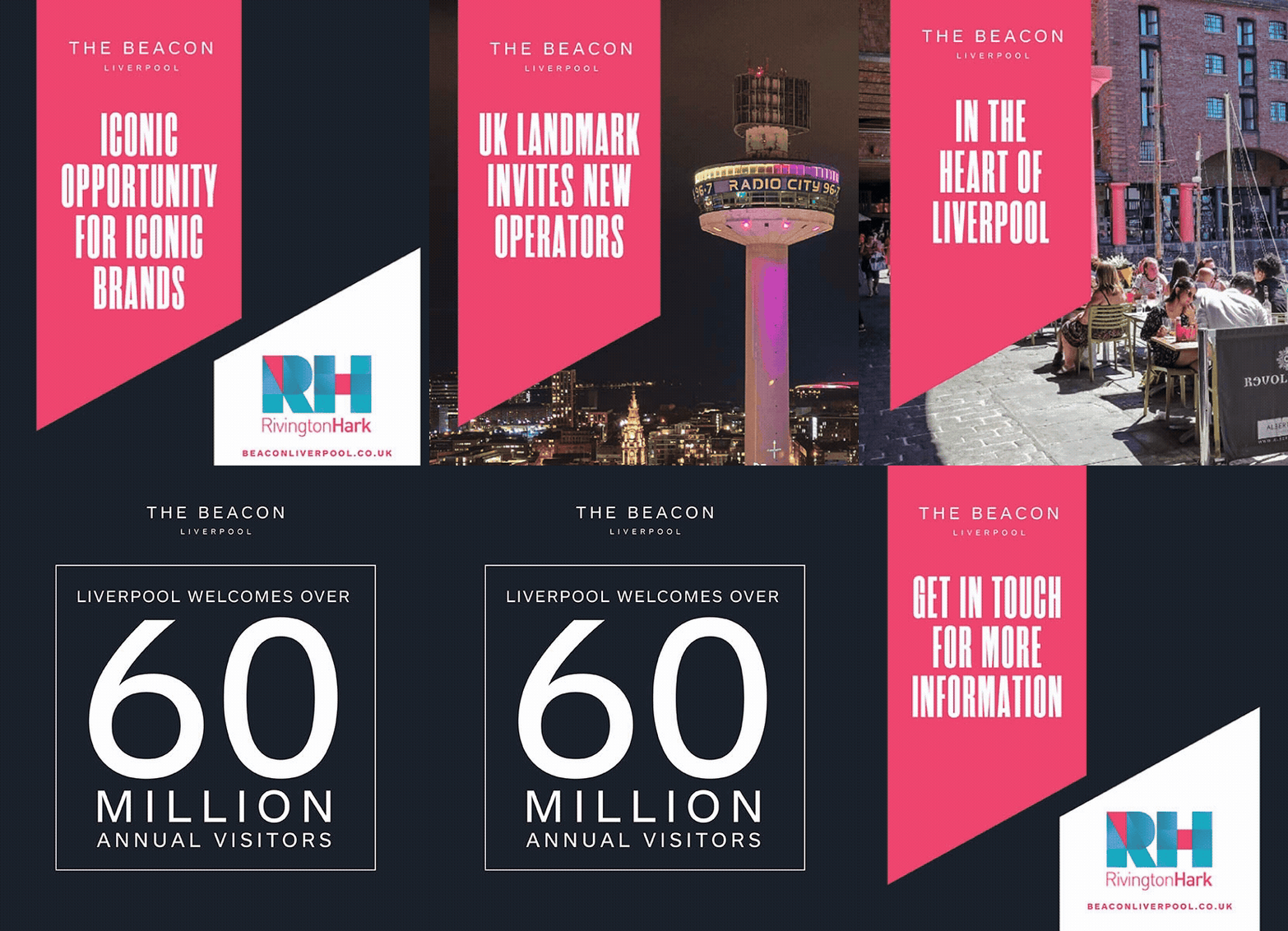
An opportunity to reimagine one of the UK’s most recognisable towers has been formally
opened by Rivington Hark, as St Johns Beacon invites operators and partners to shape its
next phase. [more...]
Do you have a strong opinion, or disagree with somebody else’s point of view on topics related to the spa industry? If so, Spa Business would love to hear from you. Email your letters, thoughts and suggestions to [email protected]
Promotional feature: Oakworks
Dafne Berlanga, vice president of international business
development of Oakworks, discusses the importance of sustainability
Mike Wallace, hot springs and medical spa consultant
Mike Wallace
It’s interesting to read how cold therapies are all the rage (see SB17/4 pages 44-46), but in fact they are nothing new. European spas were based on the belief that exposure to water – in particular contrasting hot and cold water – could effectively treat disease. In the 19th century, at the height of the hydrotherapy revolution, spas even promoted themselves as being able to cure tuberculosis and syphilis!
Kick-started by Vincenz Priessnitz and Sebastian Kneipp, the concept of applying hot and cold water onto the body has left us with treatments that are still around today. Kneipp baths – walking barefoot in shallow hot and cold foot baths filled with pebbles – are commonplace in European spas. There is also the ‘Scottish spray’, where high-powered jets of water are fired at your naked body from a distance of 3 to 4 meters, first at the deceptively comfortable temperature of 38oC, then after 30 seconds, a sinister lever is pulled and the temperature drops to 16oC for 10 seconds. This is repeated several times – and is not for the fainthearted.
So why has cold-water therapy stood the test of time? In heat, the blood vessels dilate and the blood pressure reduces. If the body is then exposed to extreme cold, these vessels react with an aggressive constriction that pushes out the blood to the ‘twig ends’ of the blood vessels (the extremities of the capillaries) – hence that wonderful tingling sensation you feel after jumping into a plunge pool after a sauna, which is a natural circulation boost.
Cold therapies are now coming into vogue in spas; however, in Europe they never went away. I regularly use the old Turkish thermal baths in Budapest, first the unbearably hot pool at 42oC for as long as I can stand, then I drift off after in the cool 32oC pool feeling as if I have been tranquilized – unbeatable!
"Cold therapies are now coming into vogue in spas; however, in Europe they never went away"
Mike Wallace
Kneipp baths are commonplace in many European spas
Wellness will become healing
Anne Biging, founder, Healing Hotels of the World and the Healing Summit
Anne Biging
Does anyone remember the world before the word ‘wellness’ existed? One could almost say that wellness is the more modern and softer version of the European system of ‘cure’ – and now healing is the evolution of wellness. In this evolutionary process, people become more and more aware of their true needs. Healing implies change and learning, whereas wellness is more about pampering your status quo.
Healing is an active process to change for better health and a better life. For true healing, you have to learn what is necessary to improve your state of wellbeing, both physically and mentally. It is the learning that makes healing sustainable.
Many hotels offering healing can cater for specific health issues, as long as they are not severe medical problems. In many cases, their offerings in the realm of alternative, natural and ancient medicine can be more effective than allopathic medicine – especially in the case of lifestyle-related diseases.
Today there are many non-invasive and highly effective diagnostic tools available, so the healing journey can begin with a thorough diagnosis as a foundation for a personalised consultancy. This leads to a tailor-made healing plan, which can include nutrition, movement, therapeutic treatments, and more. At the end of a healing holiday, there is a perceptible improvement of one’s health – a mental and spiritual growth that comes from learning and understanding how to live a better, more purposeful and meaningful life.
"For true healing, you have to learn what is necessary to improve your state of wellbeing, both physically and mentally"
lzf/shutterstock
Healing holidays include mental and spiritual growth
A disturbing reality in spa
Jannita Mossel, founder, SpaTree
Jannita Mossel
With great interest I have read Liz Terry’s article on the existential threat in the world of spa, dealing with allegations of sexual abuse of customers by spa therapists (see SB17/4). These recent revelations from spa visitors about their abuse have been shocking and chilling. How on earth could this happen? How could these ‘therapists’ be allowed to go on and stay in the business? More importantly, what is the professional background of these ‘spa predators’?
Besides an urgent need for the spa industry to establish policies and codes of conduct, it is of great importance to look at the aspect of professionalism in the spa market.
Are spa owners willing to invest in well-educated therapists who study hard and have gone through strict exams? Or is money the first factor in decision-making?
There are many ambitious spa students who invest in their future – both financially and by studying hard. The spa market, however, sees them as expensive labour. This results in attracting people who jump into the market without a professional background or a formal spa diploma.
I don’t have insight into the background of the accused spa therapists, but regardless, the spa industry needs to see the importance of educated students with an accredited diploma – and to pay them well. And before appointing a therapist, background screening is mandatory in such a sensitive market as spa.
"The spa industry needs to see the importance of educated students – and to pay them well"
UlianaG/shutterstock
Background screening is mandatory before hiring therapists
Hotel de France, located on the British Isle of Jersey, has created a wellness retreat package
that includes a hot yoga session that will take place in Jersey Zoo’s butterfly sanctuary.
A new immersive attraction designed to transport visitors into the final hours of ancient Pompeii
is preparing to open near the world-famous archaeological site in southern Italy.
Experience design company, BRC Imagination Arts, has completed a transition that sees founder
Bob Rogers pass ownership of the business to four long-serving senior executives, while
remaining actively involved with the company.
Movie Park Germany has opened a new Paramount Pictures-themed attraction as part of its 30th
anniversary celebrations, using immersive storytelling and adaptive reuse to reinforce the park’s
longstanding “Hollywood in Germany” positioning.
Therme Manchester’s 28-acre development, which will include interconnected glass pavilions
that measure 65,000sq m, will be the largest bathing and wellbeing attraction in the world once
complete, according to prof David Russell, CEO of Therme UK.
Efteling has opened Hooghmoed, a new family drop tower designed to broaden the appeal of its
recently launched Sirene Island themed area and introduce younger visitors to thrill attractions.
A proposed Puy du Fou development near Bicester and Universal Destinations and Experiences’
planned resort in Bedford are emerging as part of a wider transformation of the Oxford–
Cambridge Growth Corridor into a major centre for UK leisure and tourism inv
Shedd Aquarium has opened the Immersion Theater developed in partnership with SimEx-
Iwerks, as part of a wider strategy to enhance the guest experience and create additional
revenue opportunities.
The UK government has announced a temporary reduction in VAT on visitor attractions and
children’s meals as part of a summer cost-of-living support package designed to stimulate the
visitor economy and encourage family days out.
As designer Yinka Ilori prepares for his first solo gallery show in London, he speaks exclusively
to CLADmag about his mission to spread joy, the power of play, and his bold approach to using
colour (including the colours you won’t see in his work).
The government of Thailand is exploring plans for a THB300bn (£6.3bn, US$8.3bn)
entertainment complex in the country’s Eastern Economic Corridor (EEC), with officials
proposing a large-scale theme park and sports destination as part of a broader tourism and
economic development strategy.
+ More news
COMPANY PROFILES
Holovis Holovis is a privately owned company
established in 2004 by CEO Stuart
Hetherington. [more...]
An opportunity to reimagine one of the UK’s most recognisable towers has been formally
opened by Rivington Hark, as St Johns Beacon invites operators and partners to shape its
next phase. [more...]