Italy’s Grotta Giusti boasts Europe’s biggest underground thermal cave, with healing waters said to aid respiratory, circulatory and skin disorders. Jane Kitchen heads underground to see what it’s like
By Jane Kitchen | Published in Spa Business 2018 issue 1
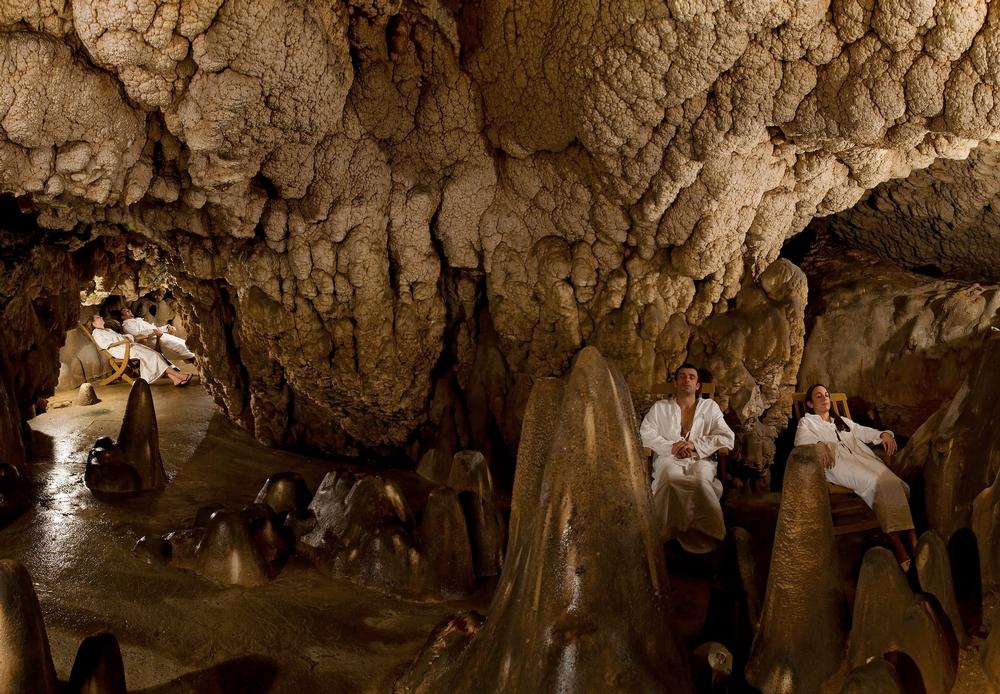
At the Grotta Giusti in the spa town of Montecatini Terme, Italy, an ancient thermal cave that acts as a natural steamroom has been attracting visitors for more than 150 years. The underground cave – thought to be 130 million years old – was first discovered in 1849, and was quickly expanded into a spa retreat once the water’s healing powers were realised. Composer Giuseppe Verdi was a regular visitor, and regarded it as “the eighth wonder of the world”.
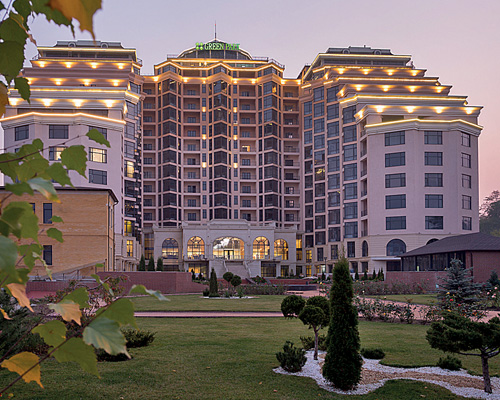
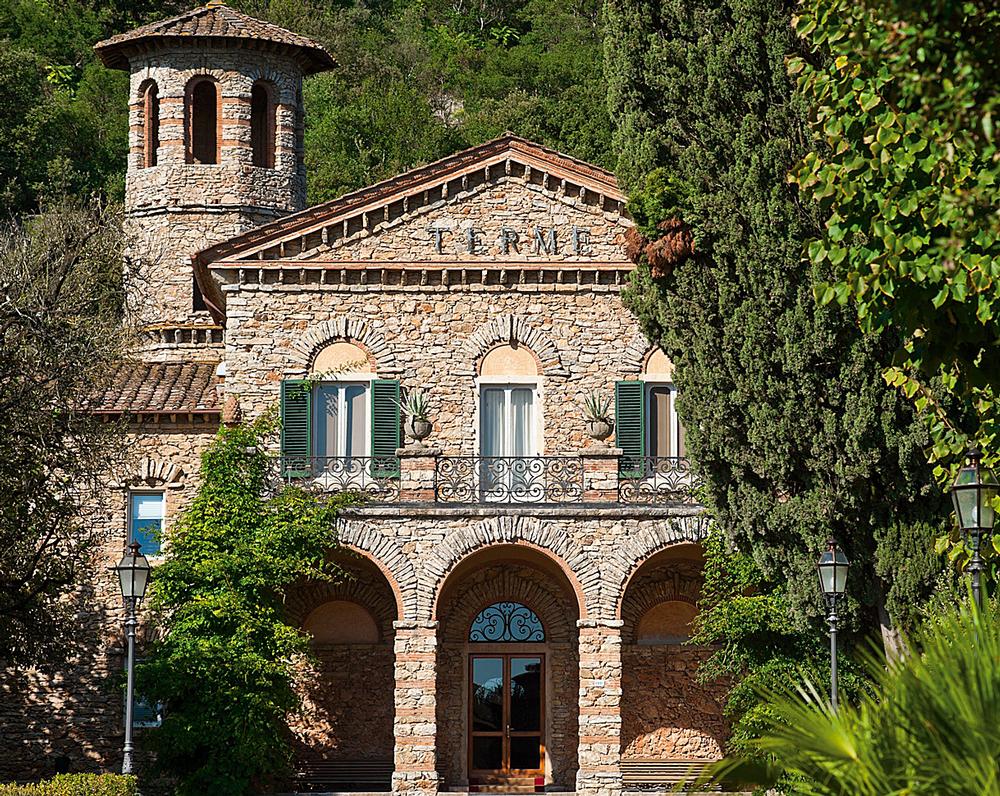
Part of the Italian Hospitality Collection – which operates three other thermal hotels in the country – the 64-bedroom Grotta Giusti hotel is a 19th-century stone villa with delicately hand-painted ceiling frescoes and period decorations in the common areas.
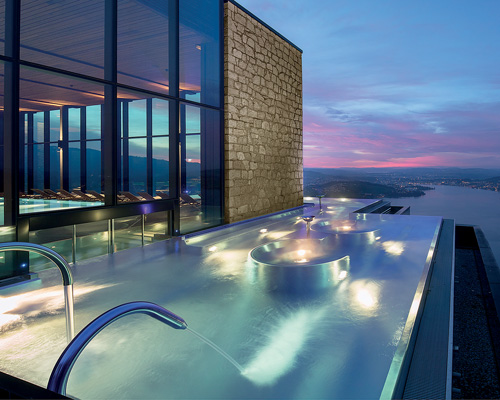
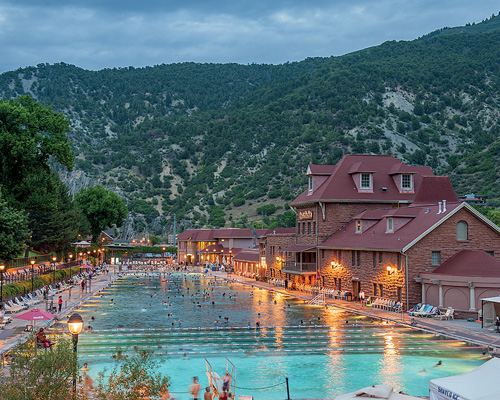
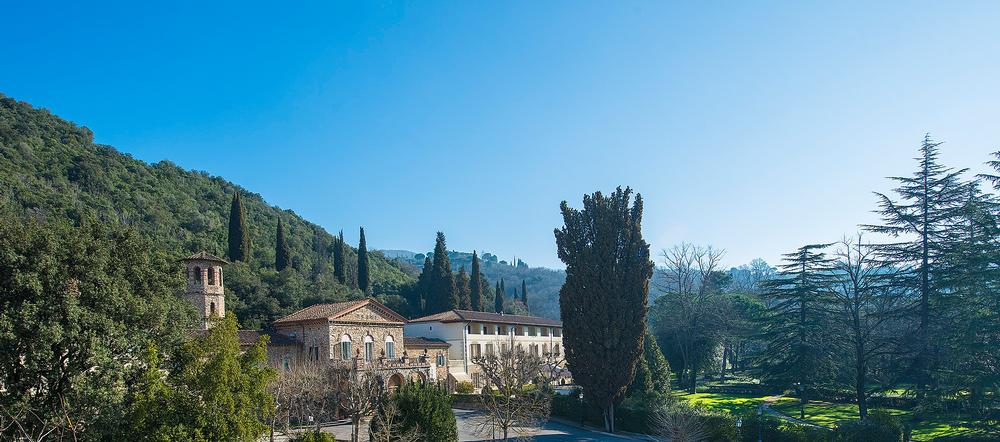
The hotel’s outdoor thermal pool, set amidst slender cypress trees in the tranquil Tuscan countryside, is a pleasant 34 degrees Celsius. At one end of the pool, locals leisurely enjoy the hydrotherapy circuit, moving through a series of 40 hydro-massage stations. Everyone wears the required red-and-white swimming caps. From across the pool, their heads bob above the water like some strange insects, while the buzz from the low murmur of Italian reaches us in waves. The activity is relaxed and social in a way that I imagine has been passed on through generations. Every so often, everyone moves on to the next station.
These day spa guests are big part of Grotta Giusti’s business – 80,000 people each year pay the day rate to bathe in the pool’s mineral-rich waters – but the star here is the ancient underground cave, said to be the largest in Europe. Hotel guests pay an extra €20 for entrance to the cave, and day guests pay €40, but that doesn’t appear to be a deterrent.
“All guests in Grotta Giusti hotel pay for the grotto,” says Dr Nicola Angelo Fortunati, the hotel’s health expert. “The thermal cave is unique in Europe and people come to Grotta Giusti especially to experience it.”
Journey to the Inferno This is precisely why I’ve come, stopping here between a day trip to Cinque Terre and our final destination in southern Tuscany. So, after basking in the outdoor thermal pools for a few hours, I head for the cave. At the entrance, I trade my cosy terrycloth spa robe for a thinner, hooded pullover version, designed to keep me more comfortable in the humid air. The hooded robe does the double-duty of making me feel like I’ve donned a monk’s habit or a Jedi robe and stepped into another time and place – a sense that is reinforced once I’m inside the otherworldly cave itself.
My pilgrimage to the cave’s inner belly begins along a well-lit path, which leads me underground down a gentle slope as I enter the first of three areas. Three regions referencing Dante’s Divine Comedy are each maintained at a different temperature: Paradiso (heaven) is the balmiest of the three; Purgatorio (purgatory) includes a Limbo pool at medium temperature, and Inferno (hell) reaches 98 per cent humidity.
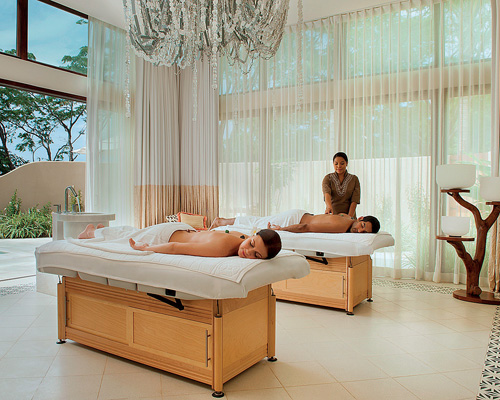
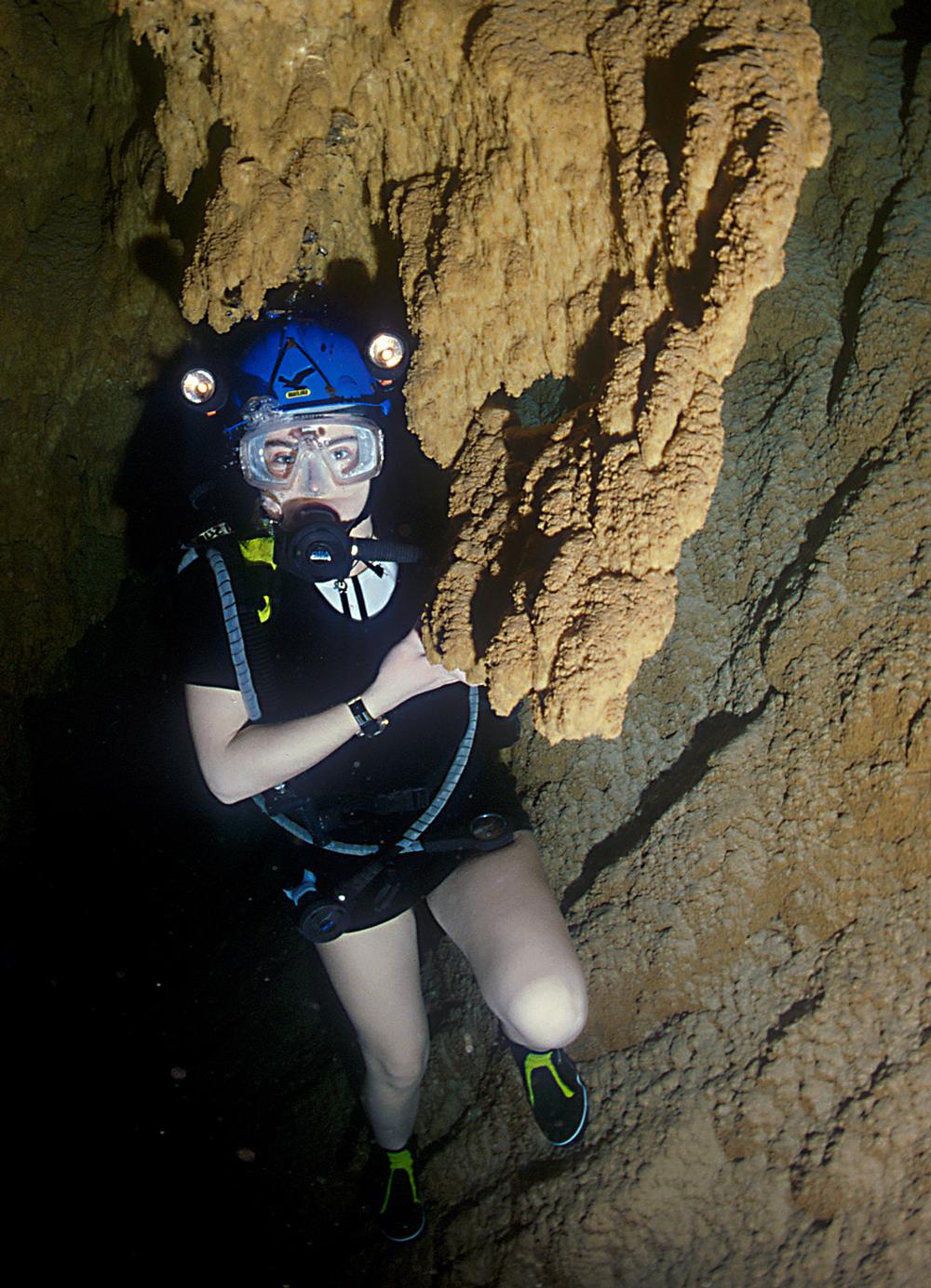
Guests travel through the three realms in an underground wellness circuit that lasts around 50 minutes, slowly easing their way deeper into the heat and humidity. The cave also has a lake deep enough to swim and scuba dive. For an extra €100, guests can experience a floating watsu-style therapy that incorporates stretches and flexes in the thermal water, and the hotel’s spa also uses mud baths, inhalations, sprays and aerosol treatments, all of which incorporate thermal water and mud from the grotto.
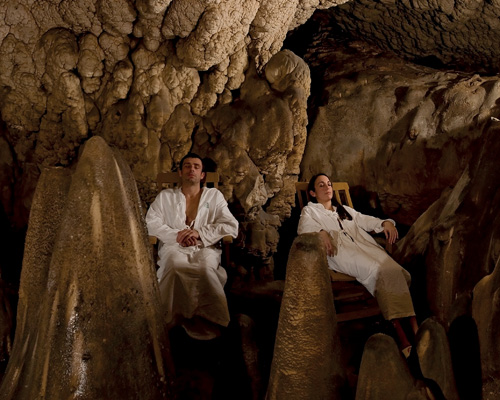
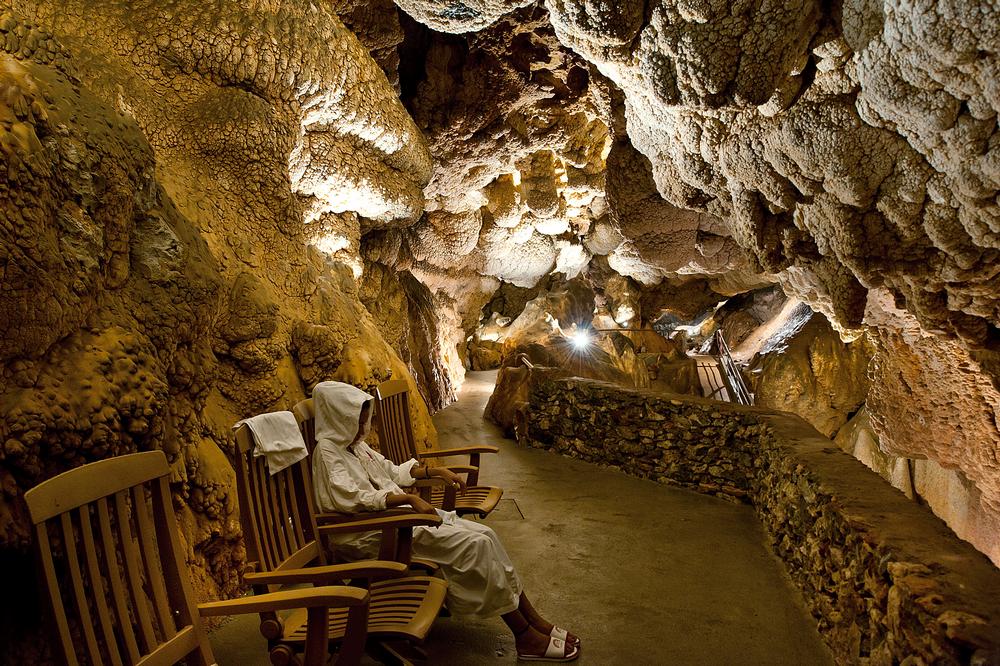
The cave’s walls are rounded and dimpled like overgrown cauliflower and punctuated with stalactites and stalagmites – evidence of the mineral-rich waters within – but the path is even and well-lit and the rooms are high enough to stand in comfortably. The effect of the natural architecture, combined with the hazy steam and the shadowy light of the spotlights, is stunning. Along the way, loungers are placed to encourage you to sit and relax, which I do, adjusting slowly to the heat and the quiet, dim space before descending to the ultimate destination: the Inferno.
A truly mindful state The Inferno is actually much more pleasant than the name implies – though I’m a Miami girl at heart and love a dose of heat and humidity. Signs at the entrance read ‘Il silenzio aiuta il relax – Silence helps relaxation’ and the cave draws into itself here, with a lower ceiling and smaller nooks, creating a sense of intimacy and privacy.
My fellow Jedi remain shrouded beneath their robe hoods to stay protected from the dripping condensation, and seem to take their instructions seriously: only the occasional whisper hangs in the soupy air, creating a church-like quiet. The silence, the monk robes and muted lighting combine to create a feeling of hushed reverence. Reclining chairs are situated throughout the room, and I settle into one, relaxing as the vapours enter my lungs. The density of the air means it’s virtually impossible to do anything but slow down my breathing, which instantly calms my mind, and the only sound is the rhythmic, hypnotic dripping of the moisture pooling off the cave’s walls.
While I don’t spend the full 50 minutes on the circuit, I spend more time in my meditative state underground than I would in a traditional steamroom, simply relaxing in a quiet, serene space. The dimly lit Inferno and the cavernous silence have taken me to a truly mindful state.
I’ve been told the cave has a high concentration of negative ions, and the aerosolized water running through the cave is rich in calcium, bicarbonate, sulphur and magnesium, said to ease inflammatory respiratory diseases as well as osteoarthritis and skin disorders, such as eczema. I suffer from neither, but my husband’s mild eczema was miraculously milder – in fact, almost non-existent – after our visit.
When I emerge from the depths of the cave, I feel I’ve been transported – my skin is dewy with thermal moisture and my eyes take a few seconds to adjust to the real world. An achy shoulder that normally nags me has gone silent, and I’m quite sure the magnesium has seeped through my pores and given me an energy and mood boost as well. Either that – or maybe I’m just feeling slightly euphoric at having made the trip through heaven and purgatory, and to the gates of hell and back.
Read more from this issue of Attractions Management magazine
View contents of Attractions Management 2018 issue 1
Promotional feature: Oakworks
Dafne Berlanga, vice president of international business
development of Oakworks, discusses the importance of sustainability
Grotta Giusti recently underwent a renovation, adding high-tech touches to the 19th-century villa, as well as creating dog-friendly rooms and connecting rooms for families – an important market segment for the hotel.
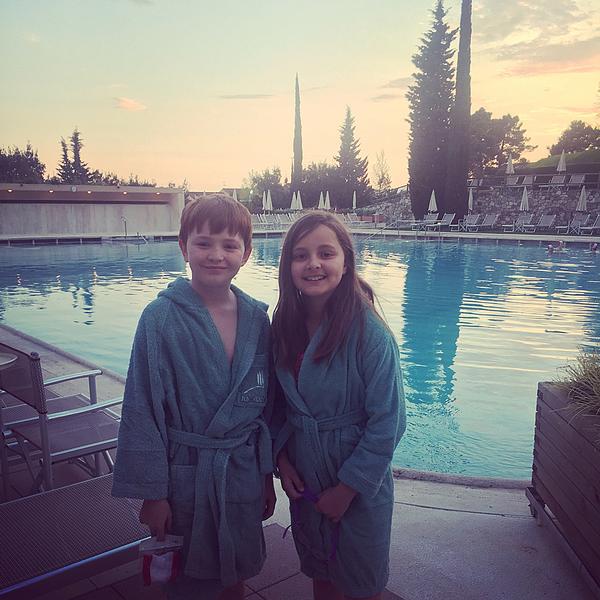
The thermal pools are all family-friendly, and children are well-catered for here, receiving their own mini spa slippers and kid-sized robes – a gesture my 9-year-old daughter and 11-year-old son loved – so that the generations can experience wellness together. And while not designed specifically for kids – there are no slides or other distractions at the pools here – the balmy waters kept my two happy for hours.
The thermal cave, however, remains for adults only – much to the dismay of my geology-loving son – ensuring that the peace, quiet and tranquility remain intact.
Children are kitted out in their own mini spa robes and slippers
Kitchen, left, with her family – husband Christian,
and children Henry (11) and Sophie (9) – at Grotta Giusti
Dr Nicola Angelo Fortunati, the hotel’s health expert, says guests come to Grotta Giusti especially to experience the cave
The underground cave has a lake deep enough to swim and scuba dive in
The hooded robe does the double-duty of making me feel like I’ve donned a monk’s habit
Grotta Giusti hotel is a 19th-century
stone villa that once belonged to a poet
Tuscan countryside surrounds Grotta Giusti, in Montecatini Terme
COMPANY PROFILES
Painting With Light
By combining lighting, video, scenic and architectural elements, sound and special effects we tell s [more...]
Taylor Made Designs
Founded in 1993, Taylor Made
Designs supply corporate clothing
and brand-enhancing merchandise
to [more...]
QubicaAMF UK
QubicaAMF is the largest and most
innovative bowling equipment provider with
600 employees worldwi [more...]
DJW
David & Lynn Willrich started the Company
over thirty years ago, from the Audio Visual
Department [more...]
An opportunity to reimagine one of the UK’s most recognisable towers has been formally
opened by Rivington Hark, as St Johns Beacon invites operators and partners to shape its
next phase. [more...]
Italy’s Grotta Giusti boasts Europe’s biggest underground thermal cave, with healing waters said to aid respiratory, circulatory and skin disorders. Jane Kitchen heads underground to see what it’s like
By Jane Kitchen | Published in Spa Business 2018 issue 1
At the Grotta Giusti in the spa town of Montecatini Terme, Italy, an ancient thermal cave that acts as a natural steamroom has been attracting visitors for more than 150 years. The underground cave – thought to be 130 million years old – was first discovered in 1849, and was quickly expanded into a spa retreat once the water’s healing powers were realised. Composer Giuseppe Verdi was a regular visitor, and regarded it as “the eighth wonder of the world”.
Part of the Italian Hospitality Collection – which operates three other thermal hotels in the country – the 64-bedroom Grotta Giusti hotel is a 19th-century stone villa with delicately hand-painted ceiling frescoes and period decorations in the common areas.
The hotel’s outdoor thermal pool, set amidst slender cypress trees in the tranquil Tuscan countryside, is a pleasant 34 degrees Celsius. At one end of the pool, locals leisurely enjoy the hydrotherapy circuit, moving through a series of 40 hydro-massage stations. Everyone wears the required red-and-white swimming caps. From across the pool, their heads bob above the water like some strange insects, while the buzz from the low murmur of Italian reaches us in waves. The activity is relaxed and social in a way that I imagine has been passed on through generations. Every so often, everyone moves on to the next station.
These day spa guests are big part of Grotta Giusti’s business – 80,000 people each year pay the day rate to bathe in the pool’s mineral-rich waters – but the star here is the ancient underground cave, said to be the largest in Europe. Hotel guests pay an extra €20 for entrance to the cave, and day guests pay €40, but that doesn’t appear to be a deterrent.
“All guests in Grotta Giusti hotel pay for the grotto,” says Dr Nicola Angelo Fortunati, the hotel’s health expert. “The thermal cave is unique in Europe and people come to Grotta Giusti especially to experience it.”
Journey to the Inferno This is precisely why I’ve come, stopping here between a day trip to Cinque Terre and our final destination in southern Tuscany. So, after basking in the outdoor thermal pools for a few hours, I head for the cave. At the entrance, I trade my cosy terrycloth spa robe for a thinner, hooded pullover version, designed to keep me more comfortable in the humid air. The hooded robe does the double-duty of making me feel like I’ve donned a monk’s habit or a Jedi robe and stepped into another time and place – a sense that is reinforced once I’m inside the otherworldly cave itself.
My pilgrimage to the cave’s inner belly begins along a well-lit path, which leads me underground down a gentle slope as I enter the first of three areas. Three regions referencing Dante’s Divine Comedy are each maintained at a different temperature: Paradiso (heaven) is the balmiest of the three; Purgatorio (purgatory) includes a Limbo pool at medium temperature, and Inferno (hell) reaches 98 per cent humidity.
Guests travel through the three realms in an underground wellness circuit that lasts around 50 minutes, slowly easing their way deeper into the heat and humidity. The cave also has a lake deep enough to swim and scuba dive. For an extra €100, guests can experience a floating watsu-style therapy that incorporates stretches and flexes in the thermal water, and the hotel’s spa also uses mud baths, inhalations, sprays and aerosol treatments, all of which incorporate thermal water and mud from the grotto.
The cave’s walls are rounded and dimpled like overgrown cauliflower and punctuated with stalactites and stalagmites – evidence of the mineral-rich waters within – but the path is even and well-lit and the rooms are high enough to stand in comfortably. The effect of the natural architecture, combined with the hazy steam and the shadowy light of the spotlights, is stunning. Along the way, loungers are placed to encourage you to sit and relax, which I do, adjusting slowly to the heat and the quiet, dim space before descending to the ultimate destination: the Inferno.
A truly mindful state The Inferno is actually much more pleasant than the name implies – though I’m a Miami girl at heart and love a dose of heat and humidity. Signs at the entrance read ‘Il silenzio aiuta il relax – Silence helps relaxation’ and the cave draws into itself here, with a lower ceiling and smaller nooks, creating a sense of intimacy and privacy.
My fellow Jedi remain shrouded beneath their robe hoods to stay protected from the dripping condensation, and seem to take their instructions seriously: only the occasional whisper hangs in the soupy air, creating a church-like quiet. The silence, the monk robes and muted lighting combine to create a feeling of hushed reverence. Reclining chairs are situated throughout the room, and I settle into one, relaxing as the vapours enter my lungs. The density of the air means it’s virtually impossible to do anything but slow down my breathing, which instantly calms my mind, and the only sound is the rhythmic, hypnotic dripping of the moisture pooling off the cave’s walls.
While I don’t spend the full 50 minutes on the circuit, I spend more time in my meditative state underground than I would in a traditional steamroom, simply relaxing in a quiet, serene space. The dimly lit Inferno and the cavernous silence have taken me to a truly mindful state.
I’ve been told the cave has a high concentration of negative ions, and the aerosolized water running through the cave is rich in calcium, bicarbonate, sulphur and magnesium, said to ease inflammatory respiratory diseases as well as osteoarthritis and skin disorders, such as eczema. I suffer from neither, but my husband’s mild eczema was miraculously milder – in fact, almost non-existent – after our visit.
When I emerge from the depths of the cave, I feel I’ve been transported – my skin is dewy with thermal moisture and my eyes take a few seconds to adjust to the real world. An achy shoulder that normally nags me has gone silent, and I’m quite sure the magnesium has seeped through my pores and given me an energy and mood boost as well. Either that – or maybe I’m just feeling slightly euphoric at having made the trip through heaven and purgatory, and to the gates of hell and back.
Read more from this issue of Attractions Management magazine
View contents of Attractions Management 2018 issue 1
Promotional feature: Oakworks
Dafne Berlanga, vice president of international business
development of Oakworks, discusses the importance of sustainability
Grotta Giusti recently underwent a renovation, adding high-tech touches to the 19th-century villa, as well as creating dog-friendly rooms and connecting rooms for families – an important market segment for the hotel.
The thermal pools are all family-friendly, and children are well-catered for here, receiving their own mini spa slippers and kid-sized robes – a gesture my 9-year-old daughter and 11-year-old son loved – so that the generations can experience wellness together. And while not designed specifically for kids – there are no slides or other distractions at the pools here – the balmy waters kept my two happy for hours.
The thermal cave, however, remains for adults only – much to the dismay of my geology-loving son – ensuring that the peace, quiet and tranquility remain intact.
Children are kitted out in their own mini spa robes and slippers
Kitchen, left, with her family – husband Christian,
and children Henry (11) and Sophie (9) – at Grotta Giusti
Dr Nicola Angelo Fortunati, the hotel’s health expert, says guests come to Grotta Giusti especially to experience the cave
The underground cave has a lake deep enough to swim and scuba dive in
The hooded robe does the double-duty of making me feel like I’ve donned a monk’s habit
Grotta Giusti hotel is a 19th-century
stone villa that once belonged to a poet
Tuscan countryside surrounds Grotta Giusti, in Montecatini Terme
Hotel de France, located on the British Isle of Jersey, has created a wellness retreat package
that includes a hot yoga session that will take place in Jersey Zoo’s butterfly sanctuary.
A new immersive attraction designed to transport visitors into the final hours of ancient Pompeii
is preparing to open near the world-famous archaeological site in southern Italy.
Experience design company, BRC Imagination Arts, has completed a transition that sees founder
Bob Rogers pass ownership of the business to four long-serving senior executives, while
remaining actively involved with the company.
Movie Park Germany has opened a new Paramount Pictures-themed attraction as part of its 30th
anniversary celebrations, using immersive storytelling and adaptive reuse to reinforce the park’s
longstanding “Hollywood in Germany” positioning.
Therme Manchester’s 28-acre development, which will include interconnected glass pavilions
that measure 65,000sq m, will be the largest bathing and wellbeing attraction in the world once
complete, according to prof David Russell, CEO of Therme UK.
Efteling has opened Hooghmoed, a new family drop tower designed to broaden the appeal of its
recently launched Sirene Island themed area and introduce younger visitors to thrill attractions.
A proposed Puy du Fou development near Bicester and Universal Destinations and Experiences’
planned resort in Bedford are emerging as part of a wider transformation of the Oxford–
Cambridge Growth Corridor into a major centre for UK leisure and tourism inv
Shedd Aquarium has opened the Immersion Theater developed in partnership with SimEx-
Iwerks, as part of a wider strategy to enhance the guest experience and create additional
revenue opportunities.
The UK government has announced a temporary reduction in VAT on visitor attractions and
children’s meals as part of a summer cost-of-living support package designed to stimulate the
visitor economy and encourage family days out.
As designer Yinka Ilori prepares for his first solo gallery show in London, he speaks exclusively
to CLADmag about his mission to spread joy, the power of play, and his bold approach to using
colour (including the colours you won’t see in his work).
The government of Thailand is exploring plans for a THB300bn (£6.3bn, US$8.3bn)
entertainment complex in the country’s Eastern Economic Corridor (EEC), with officials
proposing a large-scale theme park and sports destination as part of a broader tourism and
economic development strategy.
+ More news
COMPANY PROFILES
Painting With Light By combining lighting, video, scenic and architectural elements, sound and special effects we tell s [more...]
Taylor Made Designs Founded in 1993, Taylor Made
Designs supply corporate clothing
and brand-enhancing merchandise
to [more...]
QubicaAMF UK QubicaAMF is the largest and most
innovative bowling equipment provider with
600 employees worldwi [more...]
DJW David & Lynn Willrich started the Company
over thirty years ago, from the Audio Visual
Department [more...]
An opportunity to reimagine one of the UK’s most recognisable towers has been formally
opened by Rivington Hark, as St Johns Beacon invites operators and partners to shape its
next phase. [more...]