How should the attractions industry take advantage of AI?
What ethical issues are there? What are the issues with
copyright? Crafted CEO Ian Miller answers our questions
AI-powered technologies are already changing the attractions industry / jamesteohart/shutterstock
While artificial intelligence (AI) has huge potential for the visitor attractions industry, it’s early days, and most of us are still getting our heads around the challenges and opportunities it presents.
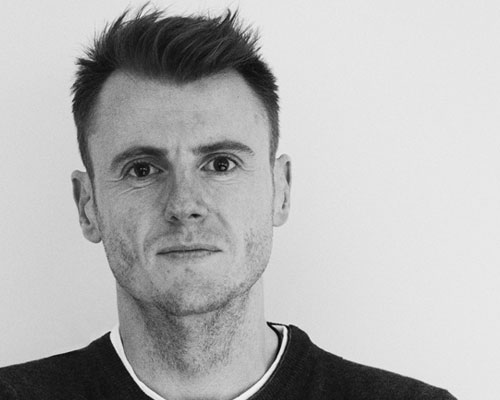
Following his recent talk on AI at the Visitor Attractions Conference (VAC) in London, we sat down with Ian Miller, CEO of digital marketing agency Crafted, to get answers to some of our questions. Crafted works to discover new trends within the attractions sector, with clients including the Natural History Museum, English National Ballet and the British Museum.
What is AI? Artificial Intelligence, AI, in its simplest form is a simulation of humans’ abilities and intelligence performed by a machine. However, it’s not one singular thing. You can’t just say ‘I’ll use a computer for that.’ AI is a huge toolbox and the number of applications for AI is increasing at an astonishing rate.
We’re currently in the phase of Artificial Narrow Intelligence, where a computer learns how to master a certain task (eg beating a human at chess, chat support or filtering spam email), but not doing multiple things at the same time. The broad uses of AI today are as a text interface (ChatGPT), conversational tool (Alexa), as a way of creating visual images (Lensa/Midjourney), generating ideas and automating repetitive tasks.
How can the attractions industry get the most out of AI? This question will no doubt be on the minds of many people working in this space. AI is already being used by museums and attractions in a number of ways, and has huge potential to increase audience engagement and visitor numbers. It can be used to generate, extract, classify and summarise the large amounts of data that attractions have to work with.
Data generated from the way customers interact with attractions (eg peak hours for visiting, how people move through an attraction and heat maps showing the length of time spent at each exhibit or room) can be used to improve the user experience. This data can help refine ‘plan your visit’ itineraries published on official websites or apps, for example, and crowd management strategies.
People will hopefully always be better curators than machines – but that’s not to say that AI can’t make the visitor experience more personalised or memorable. Exhibit descriptions and interpretation could be tailored to an individual’s age, language or interests, translating information and creating child-friendly explanations on the spot as visitors move through an attraction.
What are the ethical issues and challenges of using AI? This is an area that can often be overlooked when thinking of AI. What we would say to attractions is to use AI for tasks, but not to hand over all responsibility to it. Organisations need to be aware of data security and what they are giving away to machines.
There will always be an inherent bias in the results produced by AI, because it has been trained on a certain data set with human bias fed into it. It’s also important to note that not all AI uses live data, so be aware of the accuracy. The text an AI outputs currently lacks the human element that a living, breathing writer or curator would be able to produce from the same information, even though AI may be able to ape a certain tone of voice or style prompt.
And what about data set usage and copyright issues? Content created by AI is not owned by anyone, even if it is based on copyrighted data (such as images).
Copyright law is gradually coming to terms with AI, and we would expect to see changes, but it remains something of a grey area. Recently, there has been a rise in people using AI to replicate real brands and characters. With IP licensing being such an integral commercial element in the attractions industry, this is where I’d exercise caution with the use of AI.
How is AI likely to evolve over the coming years? The pace of development in AI is startling, and at the moment it seems like everything is everywhere all at once. The difference AI will make to our daily lives is likely to be on a flatter curve. Bill Gates said that “we always overestimate the change that will occur in the next two years and underestimate the change that will occur in the next 10”, and I would expect to see something similar with AI.
It’s important to remember that AI will be built into everything. Microsoft recently launched Copilot, their own AI tool, and has since embedded the product in its Office 365 packages. ChatGPT-like conversational searches will transform the search landscape when they go live globally on Google.
So, is AI a friend or foe? That really depends on the expectations you set for it. As a data wrangling, task automation, idea generation tool, AI is definitely a positive development for visitor attractions. Its power can be harnessed to improve business performance and meet customer expectations about choice, interactivity and personalisation.
But AI is not perfect. Use it to focus on the needs of customers, and keep your people’s creativity at the centre of everything you do.
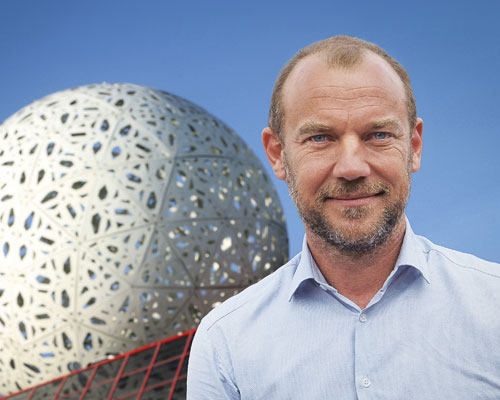
Photo courtesy of Crafted
"AI has huge potential to
increase audience engagement
and visitor numbers" – Ian Miller, CEO of Crafted
Read more from this issue of Attractions Management magazine
View contents of Attractions Management 2024 issue 1
Interview: Fons Jurgens
Big changes are coming for much-loved Dutch theme park Efteling, with the launch of a Grand Hotel and major new attraction. Its CEO lets us into the plans
Museums: Ones to watch
Some seriously exciting new museums are taking shape across the globe. We highlight some of our favourites
Museums: Josh Kirk
As Copenhagen’s Home of Carlsberg relaunches after a five year revamp, the project design lead tells us how ground-breaking technology was used to bring the brand to life
Technology: AI – friend or foe?
How can attractions best exploit AI technologies? What are the dangers? What does the future hold? We get an expert opinion
Technology: Future shock
What can we learn from operators currently using AI? Lesley Morisetti gets some tips from early adopters
Museums: Jacqueline Springer
V&A East Museum will celebrate Black British music in its first exhibition. Its curator tells us more
How should the attractions industry take advantage of AI?
What ethical issues are there? What are the issues with
copyright? Crafted CEO Ian Miller answers our questions
AI-powered technologies are already changing the attractions industry / jamesteohart/shutterstock
While artificial intelligence (AI) has huge potential for the visitor attractions industry, it’s early days, and most of us are still getting our heads around the challenges and opportunities it presents.
Following his recent talk on AI at the Visitor Attractions Conference (VAC) in London, we sat down with Ian Miller, CEO of digital marketing agency Crafted, to get answers to some of our questions. Crafted works to discover new trends within the attractions sector, with clients including the Natural History Museum, English National Ballet and the British Museum.
What is AI? Artificial Intelligence, AI, in its simplest form is a simulation of humans’ abilities and intelligence performed by a machine. However, it’s not one singular thing. You can’t just say ‘I’ll use a computer for that.’ AI is a huge toolbox and the number of applications for AI is increasing at an astonishing rate.
We’re currently in the phase of Artificial Narrow Intelligence, where a computer learns how to master a certain task (eg beating a human at chess, chat support or filtering spam email), but not doing multiple things at the same time. The broad uses of AI today are as a text interface (ChatGPT), conversational tool (Alexa), as a way of creating visual images (Lensa/Midjourney), generating ideas and automating repetitive tasks.
How can the attractions industry get the most out of AI? This question will no doubt be on the minds of many people working in this space. AI is already being used by museums and attractions in a number of ways, and has huge potential to increase audience engagement and visitor numbers. It can be used to generate, extract, classify and summarise the large amounts of data that attractions have to work with.
Data generated from the way customers interact with attractions (eg peak hours for visiting, how people move through an attraction and heat maps showing the length of time spent at each exhibit or room) can be used to improve the user experience. This data can help refine ‘plan your visit’ itineraries published on official websites or apps, for example, and crowd management strategies.
People will hopefully always be better curators than machines – but that’s not to say that AI can’t make the visitor experience more personalised or memorable. Exhibit descriptions and interpretation could be tailored to an individual’s age, language or interests, translating information and creating child-friendly explanations on the spot as visitors move through an attraction.
What are the ethical issues and challenges of using AI? This is an area that can often be overlooked when thinking of AI. What we would say to attractions is to use AI for tasks, but not to hand over all responsibility to it. Organisations need to be aware of data security and what they are giving away to machines.
There will always be an inherent bias in the results produced by AI, because it has been trained on a certain data set with human bias fed into it. It’s also important to note that not all AI uses live data, so be aware of the accuracy. The text an AI outputs currently lacks the human element that a living, breathing writer or curator would be able to produce from the same information, even though AI may be able to ape a certain tone of voice or style prompt.
And what about data set usage and copyright issues? Content created by AI is not owned by anyone, even if it is based on copyrighted data (such as images).
Copyright law is gradually coming to terms with AI, and we would expect to see changes, but it remains something of a grey area. Recently, there has been a rise in people using AI to replicate real brands and characters. With IP licensing being such an integral commercial element in the attractions industry, this is where I’d exercise caution with the use of AI.
How is AI likely to evolve over the coming years? The pace of development in AI is startling, and at the moment it seems like everything is everywhere all at once. The difference AI will make to our daily lives is likely to be on a flatter curve. Bill Gates said that “we always overestimate the change that will occur in the next two years and underestimate the change that will occur in the next 10”, and I would expect to see something similar with AI.
It’s important to remember that AI will be built into everything. Microsoft recently launched Copilot, their own AI tool, and has since embedded the product in its Office 365 packages. ChatGPT-like conversational searches will transform the search landscape when they go live globally on Google.
So, is AI a friend or foe? That really depends on the expectations you set for it. As a data wrangling, task automation, idea generation tool, AI is definitely a positive development for visitor attractions. Its power can be harnessed to improve business performance and meet customer expectations about choice, interactivity and personalisation.
But AI is not perfect. Use it to focus on the needs of customers, and keep your people’s creativity at the centre of everything you do.
Photo courtesy of Crafted
"AI has huge potential to
increase audience engagement
and visitor numbers" – Ian Miller, CEO of Crafted
Read more from this issue of Attractions Management magazine
View contents of Attractions Management 2024 issue 1
Interview: Fons Jurgens
Big changes are coming for much-loved Dutch theme park Efteling, with the launch of a Grand Hotel and major new attraction. Its CEO lets us into the plans
Museums: Ones to watch
Some seriously exciting new museums are taking shape across the globe. We highlight some of our favourites
Museums: Josh Kirk
As Copenhagen’s Home of Carlsberg relaunches after a five year revamp, the project design lead tells us how ground-breaking technology was used to bring the brand to life
Technology: AI – friend or foe?
How can attractions best exploit AI technologies? What are the dangers? What does the future hold? We get an expert opinion
Technology: Future shock
What can we learn from operators currently using AI? Lesley Morisetti gets some tips from early adopters
Museums: Jacqueline Springer
V&A East Museum will celebrate Black British music in its first exhibition. Its curator tells us more
Expo 2030 Riyadh is being planned as a permanent visitor destination, with organisers
confirming the six-million-square-metre site will become a Global Village after the event closes.
The owner of one of Australia's best-known waterparks has acquired a major competitor,
creating a new attractions business spanning two of the country's largest visitor destinations.
The Toverland theme park in the Netherlands has announced a €98m expansion programme
that will add a resort, new attractions and staff facilities as it pursues plans to become a multi-
day destination.
Hotel de France, located on the British Isle of Jersey, has created a wellness retreat package
that includes a hot yoga session that will take place in Jersey Zoo’s butterfly sanctuary.
A new immersive attraction designed to transport visitors into the final hours of ancient Pompeii
is preparing to open near the world-famous archaeological site in southern Italy.
Experience design company, BRC Imagination Arts, has completed a transition that sees founder
Bob Rogers pass ownership of the business to four long-serving senior executives, while
remaining actively involved with the company.
Movie Park Germany has opened a new Paramount Pictures-themed attraction as part of its 30th
anniversary celebrations, using immersive storytelling and adaptive reuse to reinforce the park’s
longstanding “Hollywood in Germany” positioning.
Therme Manchester’s 28-acre development, which will include interconnected glass pavilions
that measure 65,000sq m, will be the largest bathing and wellbeing attraction in the world once
complete, according to prof David Russell, CEO of Therme UK.
Efteling has opened Hooghmoed, a new family drop tower designed to broaden the appeal of its
recently launched Sirene Island themed area and introduce younger visitors to thrill attractions.
A proposed Puy du Fou development near Bicester and Universal Destinations and Experiences’
planned resort in Bedford are emerging as part of a wider transformation of the Oxford–
Cambridge Growth Corridor into a major centre for UK leisure and tourism inv
+ More news
COMPANY PROFILES
Holovis Holovis is a privately owned company
established in 2004 by CEO Stuart
Hetherington. [more...]
Clip 'n Climb Clip ‘n Climb currently offers facility owners and
investors more than 40 colourful and unique
Cha [more...]