The father of modern surf parks revolutionised the
market with the FlowRider and Wave House. Now he’s
chasing a lifelong dream, as Magali Robathan discovers
Tom Lochtefeld founded FlowRider / Photo: Jay Lorenzano
When mad keen surfer, Tom Lochtefeld, sold his FlowRider technology to Whitewater West in 2014, he could have kicked back and spent the rest of his days at the beach.
Instead, Lochtefeld – the inventor of the Sheetflow technology that had revolutionised surfing attractions and the brains behind FlowRider and the Wave House surf venue brand – went back to square one, driven by a passion to create a new evolution in artificial surfing waves.
“Ever since I got into waterparks in the 80s I’ve had a mission,” he tells me, talking from his home in California. “I sold FlowRider because I wanted to focus on pure surf. I had a vision for a product line that would be commercially viable and create the most epic surfing waves in the world. I wanted to go for gold, so that’s what I decided to do,” he says.
The day after selling FlowRider, Lochtefeld announced the launch of Surf Loch, a new company dedicated to creating something he’s been focused on since the early days – a true deep-water wave.
At the time, a lack of certain pieces of technology meant the concept wasn’t immediately viable, but after years of trial and error, Lochtefeld and his team have finally created the Surf Loch Surf Pool, and he’s confident it will revolutionise the industry.
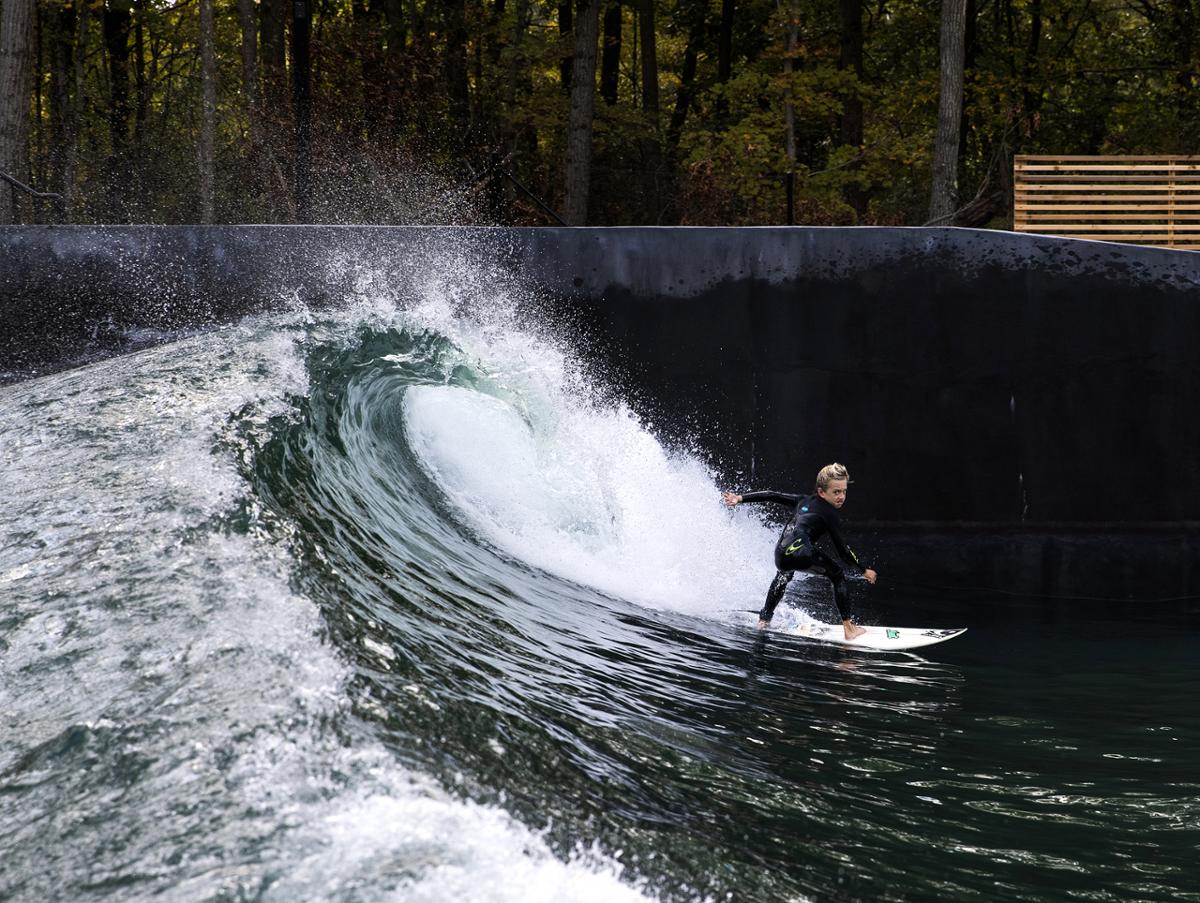
The new wave technology – developed together with Siemens – uses pressurised air within custom-designed concrete chambers to create surfable waves. “Quantum level improvement in computer processing with a corresponding reduction in cost has enabled us to generate pretty much any wave that occurs in the ocean using pneumatics,” says Lochtefeld.
Under construction Now Surf Loch has 10 wave pools in development, with construction underway for a major park in Rotterdam, the Netherlands, due to open in spring 2024 – and a ‘new style wave park’ featuring Surf Loch technology due to open in Palm Springs, California this year.
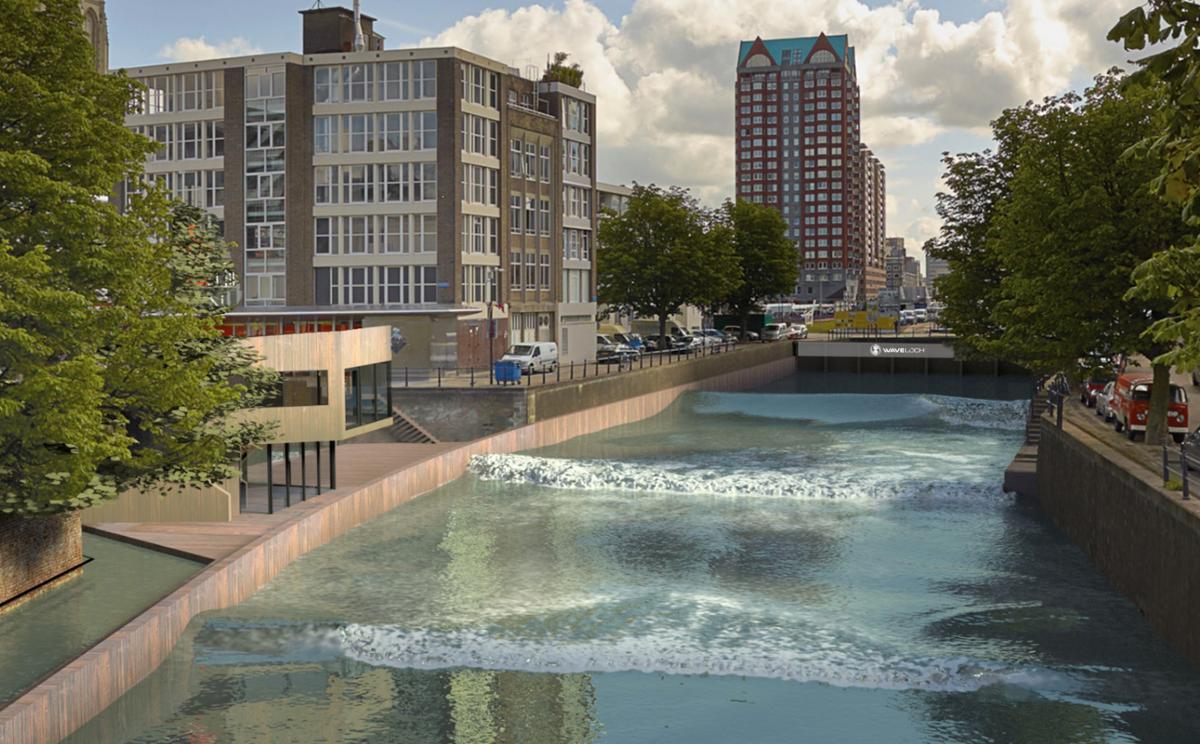
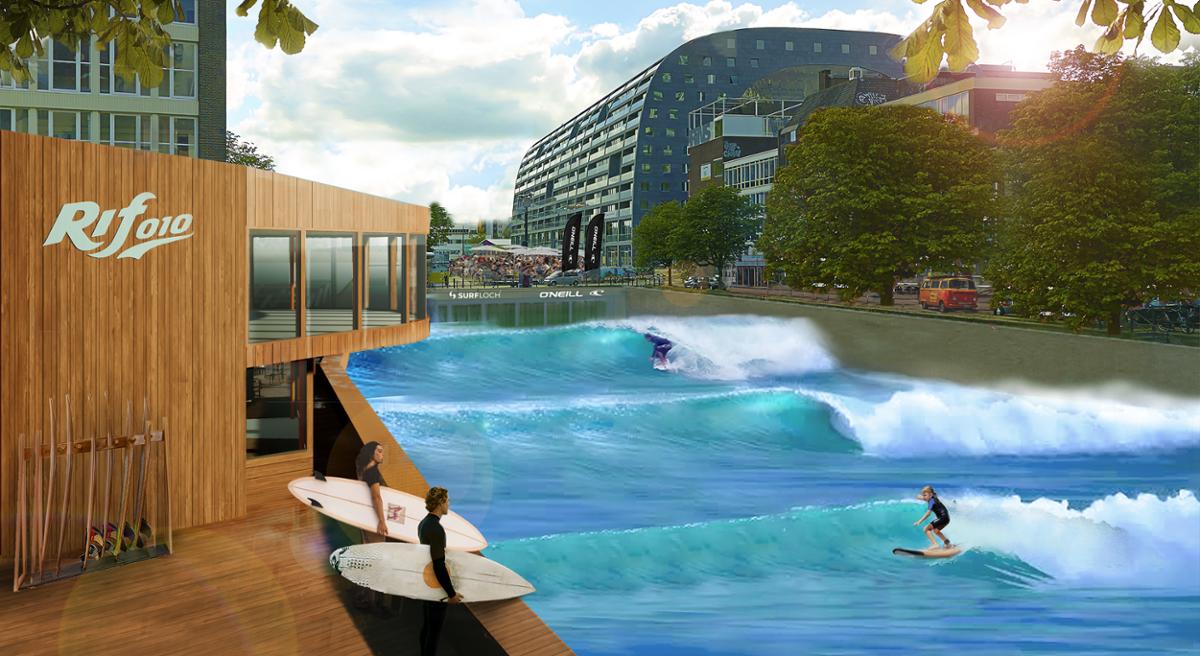
The Rotterdam attraction, called RiF010, will be an urban wave pool featuring Surf Loch waves in a disused 12th century canal in the centre of the city. Capable of generating a wave every seven seconds, it will be suitable for surfers of all abilities, as well as kayakers and bodyboarders.
The origins of the Palm Springs project go back to 2018 when Lochtefeld entered Escrow to purchase the defunct Wet ‘n’ Wild waterpark in Palm Springs. Arranging to sell to outside investor, Pono Partners, Lochtefeld reserved the right to build a 16-caisson surf pool (three times larger than the original wavepool) featuring overhead barrels to appeal to the best surfers in Southern California. Newly named, the Palm Springs Surf Club, this revamped facility is set to open in summer 2023.
BITTEN BY THE BUG Growing up in La Jolla, California, Lochtefeld caught the surfing bug early. “It’s kind of a big deal to me,” he says, in what feels like something of an understatement.
“That experience of the wave – in my life there’s been nothing more compelling than taking that initial drop, then feeling your ability to control, carve and manoeuvre your board on a moving dynamic wave face,” he says. “Once you get bitten by that bug, it’s a real driver.”
A talented athlete, Lochtefeld was offered a football scholarship at Stanford University, but decided to go where the waves were, studying first at the University of California, Berkeley and then the University of San Diego Law School.
In the 1970s, Lochtefeld worked in real estate in San Diego, but he always knew he wanted to make a career out of his passion for surfing.
“The most practical way to get into that market was through waterparks,” he says. “I joined forces with [developer] Bryant Morris, and we created the Raging Waters waterpark in LA.
“I was so excited when we opened the wave pool there – I brought my surfboard, all fired up, but when I tried to surf it, I couldn’t believe it – it was a piece of garbage. You couldn’t catch the wave at all. I just said, ‘are you kidding me? This is such a waste’.
“The technology wasn’t there to enable a surfing attraction at that time, so I said to myself, ‘OK, now I’ve got a mission to create the perfect wave’.”
Back to the drawing board Lochtefeld’s vision was to bring the joy and passion of surfing to as many people as possible, no matter where they were. He sold his share in Raging Waters in 1987 and spent the next few years studying waves, experimenting with wave machines and developing patents.
While it soon became apparent that the technology wasn’t yet available to create an economically viable deep water surf pool, Lochtefeld realised that a surfer only actually needs the surface of the wave to ride on.
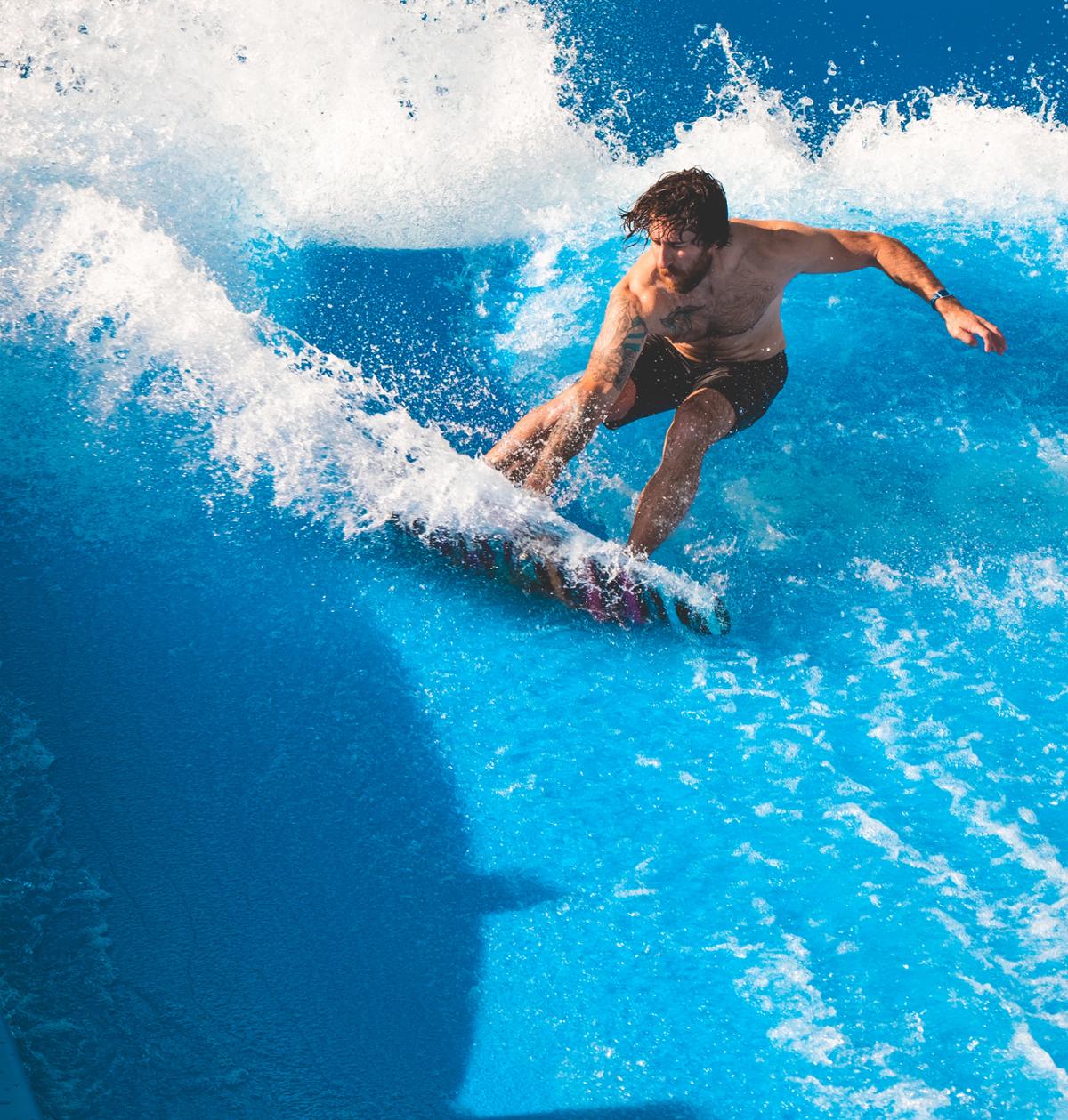
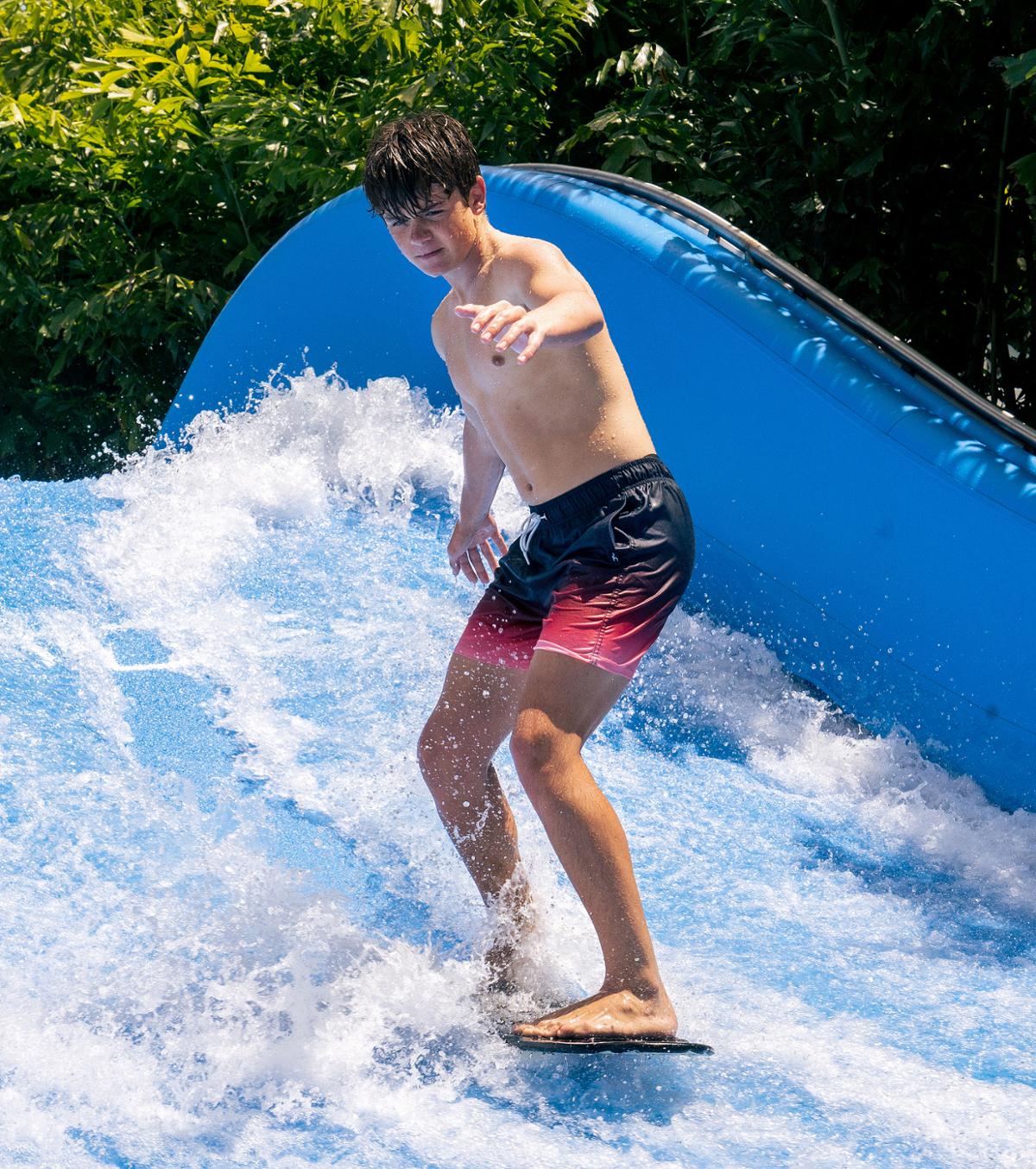
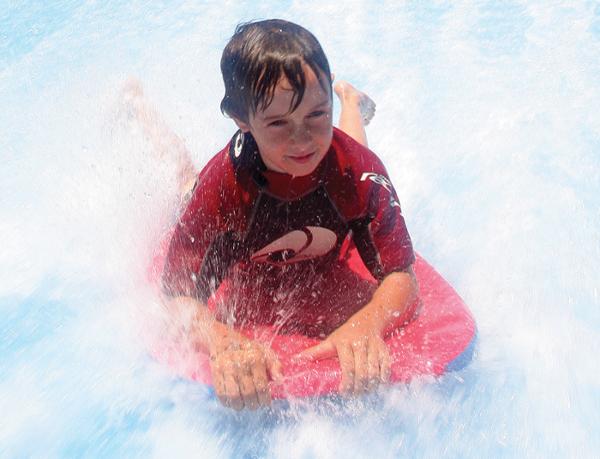
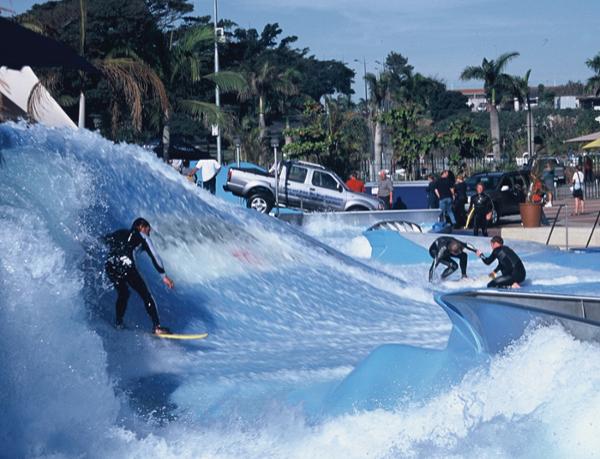
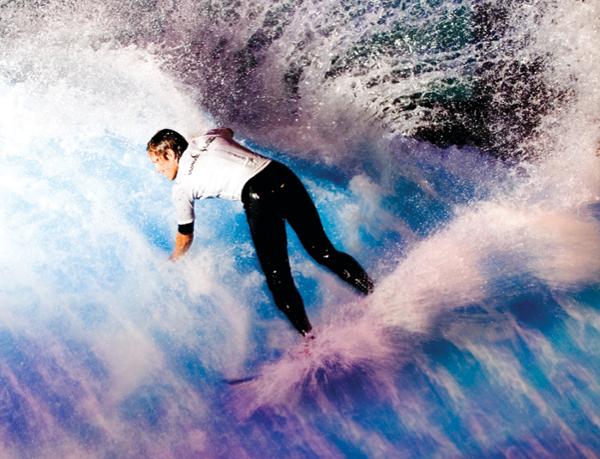
He teamed up with the hydraulics lab at Scripps Institution of Oceanography in San Diego to create the FlowRider, a ‘sheet wave’ surf simulator that pumps thousands of gallons of water a minute across a small area to create a stationary wave with a curling lip.
The first FlowRider was launched at the Schlitterbahn waterpark in New Braunfels, Texas, in 1991, followed by the launch of the FlowBarrel sheet wave at Summerland Resort in Norway two years later.
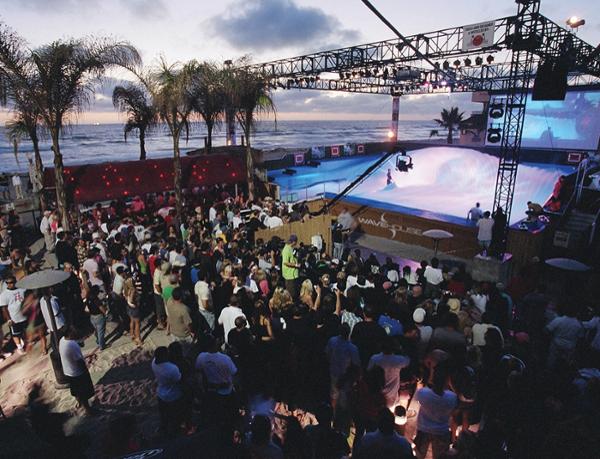
A huge tour with Swatch and Siemens FlowTours introduced the sport of flowboarding to a global audience, with pro board athletes including Kelly Slater, Tony Hawk and Terje Hakonsen helping to raise its profile.
“It was a blast,” says Lochtefeld. “We went to nine different venues around the world – it was just this massive party. They spent $2m on each event – we had mega rock and roll concerts, millions of people would come by. All the surfers were blown away.”
The tour proved what Lochtefeld knew – that the value of the wave was more than just the throughput of people riding it. “I knew that there was a visual spectator component that needed to be counted and also there was additional revenue – F&B, retail, events – that could go with it,” he says.
Lochtefeld developed the Wave House entertainment venues as a showcase for his surf technologies. A mix of California surf-inspired sport, music, entertainment, food, drink and retail, with the FlowRider and FlowBarrel as the centrepiece attractions, the first Wave House launched in 2001 in Durban, and the concept quickly gained popularity around the world.
“Wave House was such a show,” says Lochtefeld. “We made a lot of money – Wave House San Diego was turning over US$7m in F&B alone in a four month period. It was great business experience and we had so much fun doing it.”
Facing the competition It’s fair to say that Lochtefeld has lost none of his drive, and while he enjoys reminiscing about the past, his focus is firmly on what’s ahead. When he started out, there was no surf pool market – now the global market is substantial and growing all the time.
He doesn’t seem phased by the presence of other suppliers, saying. “Competition is the most positive thing you could have. It drives innovation and if there’s other tech out there that’s better than ours, then those companies absolutely deserve to succeed, but I also have 100 per cent confidence in our products.”
Adding residential As for the future of the sector as a whole, Lochtefeld likens it to the evolution of the golf and ski resort markets. “It’s going to be very similar,” he says. “A surf pool is much physically smaller and the capital cost is equal to or less than a golf or ski resort, yet you can get the same lifestyle benefit that ties into ancillary revenue streams – F&B and retail – and the residential component, which is going to be a big element going forward.
“Adding residential changes the whole dynamic. The surf pool isn’t the be all and end all – it becomes an amenity to anchor a much bigger development. That’s the direction this market will go in,” he concludes.
Photo: R Lochtefeld
"There’s been nothing more compelling in my life than the feeling of catching a wave" – Tom Lochtefeld
Making waves – the technology
Surf Loch creates waves using pressurised air within concrete chambers called caissons.
The timing, sequence, and force with which each caisson releases wave energy determines the size, shape, and behaviour of the wave. This level of control allows the creation of an infinite variety of wave types within the same pool using software, rather than by doing so mechanically, as used to happen with older wave pools.
Surf legend Cheyne Magnusson, an investor in the Palm Springs waterpark, works on wave design at Surf Loch, with Lochtefeld telling Beach Grit: “He is a phenomenal wave composer, a virtuoso on our equipment.”
Read more from this issue of Attractions Management magazine
View contents of Attractions Management 2023 issue 1
Editor's letter: The power of stories
We think we understand the value of storytelling, but do we really? It’s important to be clear on what it contributes to our industry, says Magali Robathan
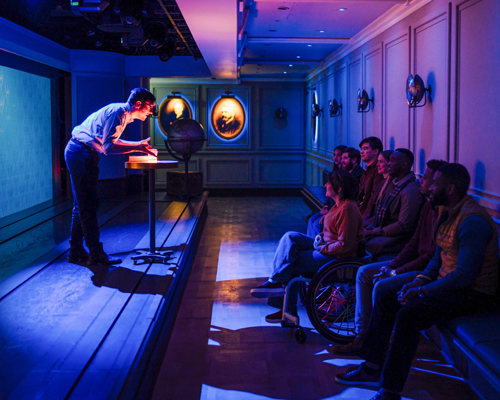
People: Simon Daniels
The director of the Handel & Hendrix in London attraction on the £3m revamp aiming to bring visitors closer to the musicians
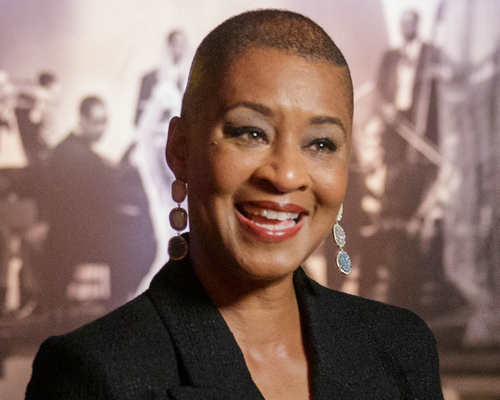
People: Jacqueline Stewart
The president of the Academy Museum of Motion Pictures on honouring the stars of Black cinema
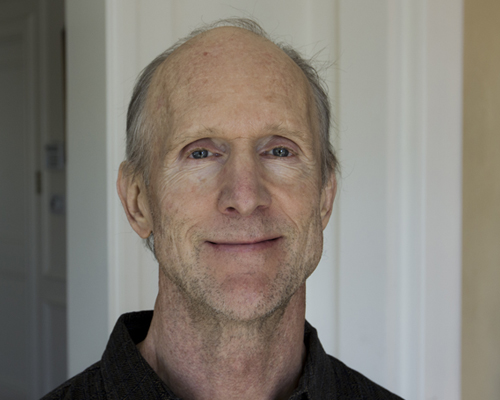
Interview: Tom Lochtefeld
The ‘father of artificial surf parks’ changed the industry with his pioneering sheet waves. Now he’s back to shake things up again with new deep water wave technology
Talking point: Storytime
How can we use the power of story to connect to guests and create better attractions? We ask the experts
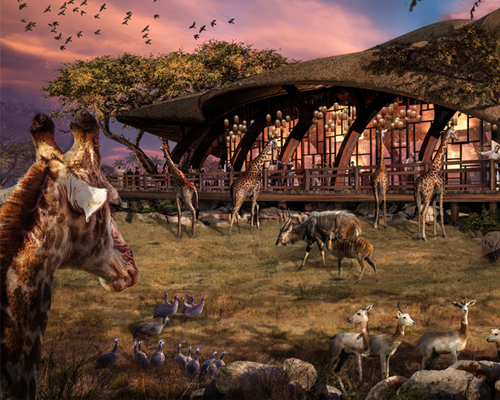
Interview: Brian Zimmerman
The world’s fifth biggest zoo closed its doors in September 2022. We go behind the scenes of the Bristol Zoological Society to find out what happens next
Sponsored: No matter the venue aquatic play delivers
Aquatic play helps keep kids happy,
resulting in higher spend from families.
WhiteWater’s Cassidy Newman shares some
of the attractions using aquatic play to
bring in more visitors and increase spend
Science centre: Eureka!
How the new science centre consulted with young people and industry to bring a quirky sense of fun to STEAM
Museums: New museums
From a Bangalore photography and art museum to the Grand Egyptian Museum in Cairo, we review some exciting openings for 2023
Marketing: Screaming for screening
With its edgy brand and young visitor base, Merlin’s London Dungeon was a natural choice for an innovative marketing campaign aiming to take the stigma out of STI testing
Research: On the right track
After a rollercoaster ride, US theme parks are bouncing back, with opportunities for growth driven by gaming IPs, says Mintel
Visitor centre: Fish tale
A floating visitor attraction in Norway has been designed to promote fish farming, as Magali Robathan discovered
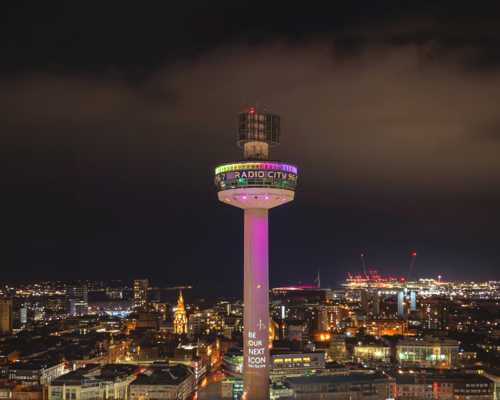
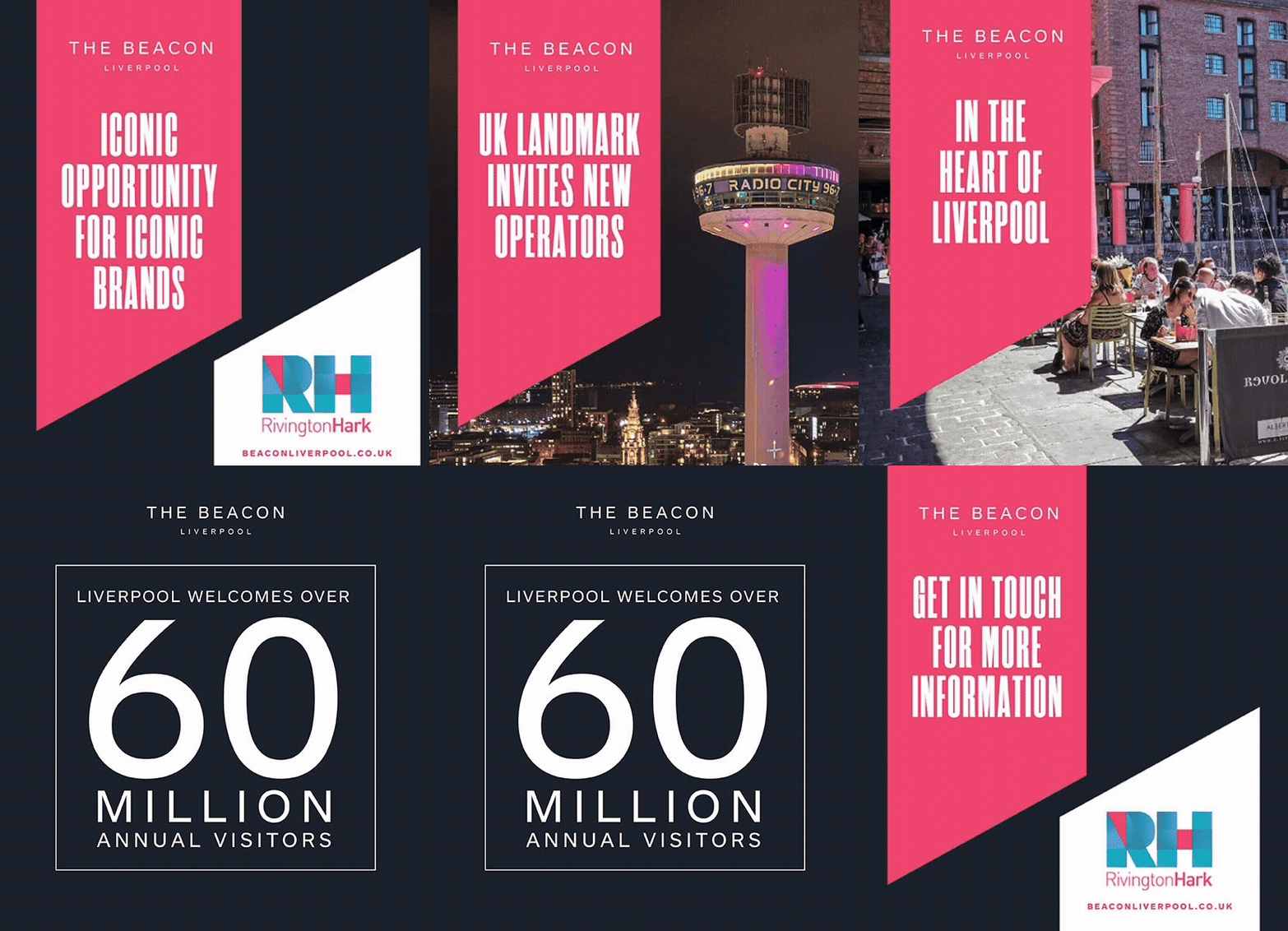
An opportunity to reimagine one of the UK’s most recognisable towers has been formally
opened by Rivington Hark, as St Johns Beacon invites operators and partners to shape its
next phase. [more...]
The father of modern surf parks revolutionised the
market with the FlowRider and Wave House. Now he’s
chasing a lifelong dream, as Magali Robathan discovers
Tom Lochtefeld founded FlowRider / Photo: Jay Lorenzano
When mad keen surfer, Tom Lochtefeld, sold his FlowRider technology to Whitewater West in 2014, he could have kicked back and spent the rest of his days at the beach.
Instead, Lochtefeld – the inventor of the Sheetflow technology that had revolutionised surfing attractions and the brains behind FlowRider and the Wave House surf venue brand – went back to square one, driven by a passion to create a new evolution in artificial surfing waves.
“Ever since I got into waterparks in the 80s I’ve had a mission,” he tells me, talking from his home in California. “I sold FlowRider because I wanted to focus on pure surf. I had a vision for a product line that would be commercially viable and create the most epic surfing waves in the world. I wanted to go for gold, so that’s what I decided to do,” he says.
The day after selling FlowRider, Lochtefeld announced the launch of Surf Loch, a new company dedicated to creating something he’s been focused on since the early days – a true deep-water wave.
At the time, a lack of certain pieces of technology meant the concept wasn’t immediately viable, but after years of trial and error, Lochtefeld and his team have finally created the Surf Loch Surf Pool, and he’s confident it will revolutionise the industry.
The new wave technology – developed together with Siemens – uses pressurised air within custom-designed concrete chambers to create surfable waves. “Quantum level improvement in computer processing with a corresponding reduction in cost has enabled us to generate pretty much any wave that occurs in the ocean using pneumatics,” says Lochtefeld.
Under construction Now Surf Loch has 10 wave pools in development, with construction underway for a major park in Rotterdam, the Netherlands, due to open in spring 2024 – and a ‘new style wave park’ featuring Surf Loch technology due to open in Palm Springs, California this year.
The Rotterdam attraction, called RiF010, will be an urban wave pool featuring Surf Loch waves in a disused 12th century canal in the centre of the city. Capable of generating a wave every seven seconds, it will be suitable for surfers of all abilities, as well as kayakers and bodyboarders.
The origins of the Palm Springs project go back to 2018 when Lochtefeld entered Escrow to purchase the defunct Wet ‘n’ Wild waterpark in Palm Springs. Arranging to sell to outside investor, Pono Partners, Lochtefeld reserved the right to build a 16-caisson surf pool (three times larger than the original wavepool) featuring overhead barrels to appeal to the best surfers in Southern California. Newly named, the Palm Springs Surf Club, this revamped facility is set to open in summer 2023.
BITTEN BY THE BUG Growing up in La Jolla, California, Lochtefeld caught the surfing bug early. “It’s kind of a big deal to me,” he says, in what feels like something of an understatement.
“That experience of the wave – in my life there’s been nothing more compelling than taking that initial drop, then feeling your ability to control, carve and manoeuvre your board on a moving dynamic wave face,” he says. “Once you get bitten by that bug, it’s a real driver.”
A talented athlete, Lochtefeld was offered a football scholarship at Stanford University, but decided to go where the waves were, studying first at the University of California, Berkeley and then the University of San Diego Law School.
In the 1970s, Lochtefeld worked in real estate in San Diego, but he always knew he wanted to make a career out of his passion for surfing.
“The most practical way to get into that market was through waterparks,” he says. “I joined forces with [developer] Bryant Morris, and we created the Raging Waters waterpark in LA.
“I was so excited when we opened the wave pool there – I brought my surfboard, all fired up, but when I tried to surf it, I couldn’t believe it – it was a piece of garbage. You couldn’t catch the wave at all. I just said, ‘are you kidding me? This is such a waste’.
“The technology wasn’t there to enable a surfing attraction at that time, so I said to myself, ‘OK, now I’ve got a mission to create the perfect wave’.”
Back to the drawing board Lochtefeld’s vision was to bring the joy and passion of surfing to as many people as possible, no matter where they were. He sold his share in Raging Waters in 1987 and spent the next few years studying waves, experimenting with wave machines and developing patents.
While it soon became apparent that the technology wasn’t yet available to create an economically viable deep water surf pool, Lochtefeld realised that a surfer only actually needs the surface of the wave to ride on.
He teamed up with the hydraulics lab at Scripps Institution of Oceanography in San Diego to create the FlowRider, a ‘sheet wave’ surf simulator that pumps thousands of gallons of water a minute across a small area to create a stationary wave with a curling lip.
The first FlowRider was launched at the Schlitterbahn waterpark in New Braunfels, Texas, in 1991, followed by the launch of the FlowBarrel sheet wave at Summerland Resort in Norway two years later.
A huge tour with Swatch and Siemens FlowTours introduced the sport of flowboarding to a global audience, with pro board athletes including Kelly Slater, Tony Hawk and Terje Hakonsen helping to raise its profile.
“It was a blast,” says Lochtefeld. “We went to nine different venues around the world – it was just this massive party. They spent $2m on each event – we had mega rock and roll concerts, millions of people would come by. All the surfers were blown away.”
The tour proved what Lochtefeld knew – that the value of the wave was more than just the throughput of people riding it. “I knew that there was a visual spectator component that needed to be counted and also there was additional revenue – F&B, retail, events – that could go with it,” he says.
Lochtefeld developed the Wave House entertainment venues as a showcase for his surf technologies. A mix of California surf-inspired sport, music, entertainment, food, drink and retail, with the FlowRider and FlowBarrel as the centrepiece attractions, the first Wave House launched in 2001 in Durban, and the concept quickly gained popularity around the world.
“Wave House was such a show,” says Lochtefeld. “We made a lot of money – Wave House San Diego was turning over US$7m in F&B alone in a four month period. It was great business experience and we had so much fun doing it.”
Facing the competition It’s fair to say that Lochtefeld has lost none of his drive, and while he enjoys reminiscing about the past, his focus is firmly on what’s ahead. When he started out, there was no surf pool market – now the global market is substantial and growing all the time.
He doesn’t seem phased by the presence of other suppliers, saying. “Competition is the most positive thing you could have. It drives innovation and if there’s other tech out there that’s better than ours, then those companies absolutely deserve to succeed, but I also have 100 per cent confidence in our products.”
Adding residential As for the future of the sector as a whole, Lochtefeld likens it to the evolution of the golf and ski resort markets. “It’s going to be very similar,” he says. “A surf pool is much physically smaller and the capital cost is equal to or less than a golf or ski resort, yet you can get the same lifestyle benefit that ties into ancillary revenue streams – F&B and retail – and the residential component, which is going to be a big element going forward.
“Adding residential changes the whole dynamic. The surf pool isn’t the be all and end all – it becomes an amenity to anchor a much bigger development. That’s the direction this market will go in,” he concludes.
Photo: R Lochtefeld
"There’s been nothing more compelling in my life than the feeling of catching a wave" – Tom Lochtefeld
Making waves – the technology
Surf Loch creates waves using pressurised air within concrete chambers called caissons.
The timing, sequence, and force with which each caisson releases wave energy determines the size, shape, and behaviour of the wave. This level of control allows the creation of an infinite variety of wave types within the same pool using software, rather than by doing so mechanically, as used to happen with older wave pools.
Surf legend Cheyne Magnusson, an investor in the Palm Springs waterpark, works on wave design at Surf Loch, with Lochtefeld telling Beach Grit: “He is a phenomenal wave composer, a virtuoso on our equipment.”
Read more from this issue of Attractions Management magazine
View contents of Attractions Management 2023 issue 1
Editor's letter: The power of stories
We think we understand the value of storytelling, but do we really? It’s important to be clear on what it contributes to our industry, says Magali Robathan
People: Simon Daniels
The director of the Handel & Hendrix in London attraction on the £3m revamp aiming to bring visitors closer to the musicians
People: Jacqueline Stewart
The president of the Academy Museum of Motion Pictures on honouring the stars of Black cinema
Interview: Tom Lochtefeld
The ‘father of artificial surf parks’ changed the industry with his pioneering sheet waves. Now he’s back to shake things up again with new deep water wave technology
Talking point: Storytime
How can we use the power of story to connect to guests and create better attractions? We ask the experts
Interview: Brian Zimmerman
The world’s fifth biggest zoo closed its doors in September 2022. We go behind the scenes of the Bristol Zoological Society to find out what happens next
Sponsored: No matter the venue aquatic play delivers
Aquatic play helps keep kids happy,
resulting in higher spend from families.
WhiteWater’s Cassidy Newman shares some
of the attractions using aquatic play to
bring in more visitors and increase spend
Science centre: Eureka!
How the new science centre consulted with young people and industry to bring a quirky sense of fun to STEAM
Museums: New museums
From a Bangalore photography and art museum to the Grand Egyptian Museum in Cairo, we review some exciting openings for 2023
Marketing: Screaming for screening
With its edgy brand and young visitor base, Merlin’s London Dungeon was a natural choice for an innovative marketing campaign aiming to take the stigma out of STI testing
Research: On the right track
After a rollercoaster ride, US theme parks are bouncing back, with opportunities for growth driven by gaming IPs, says Mintel
Visitor centre: Fish tale
A floating visitor attraction in Norway has been designed to promote fish farming, as Magali Robathan discovered
Hotel de France, located on the British Isle of Jersey, has created a wellness retreat package
that includes a hot yoga session that will take place in Jersey Zoo’s butterfly sanctuary.
A new immersive attraction designed to transport visitors into the final hours of ancient Pompeii
is preparing to open near the world-famous archaeological site in southern Italy.
Experience design company, BRC Imagination Arts, has completed a transition that sees founder
Bob Rogers pass ownership of the business to four long-serving senior executives, while
remaining actively involved with the company.
Movie Park Germany has opened a new Paramount Pictures-themed attraction as part of its 30th
anniversary celebrations, using immersive storytelling and adaptive reuse to reinforce the park’s
longstanding “Hollywood in Germany” positioning.
Therme Manchester’s 28-acre development, which will include interconnected glass pavilions
that measure 65,000sq m, will be the largest bathing and wellbeing attraction in the world once
complete, according to prof David Russell, CEO of Therme UK.
Efteling has opened Hooghmoed, a new family drop tower designed to broaden the appeal of its
recently launched Sirene Island themed area and introduce younger visitors to thrill attractions.
A proposed Puy du Fou development near Bicester and Universal Destinations and Experiences’
planned resort in Bedford are emerging as part of a wider transformation of the Oxford–
Cambridge Growth Corridor into a major centre for UK leisure and tourism inv
Shedd Aquarium has opened the Immersion Theater developed in partnership with SimEx-
Iwerks, as part of a wider strategy to enhance the guest experience and create additional
revenue opportunities.
The UK government has announced a temporary reduction in VAT on visitor attractions and
children’s meals as part of a summer cost-of-living support package designed to stimulate the
visitor economy and encourage family days out.
As designer Yinka Ilori prepares for his first solo gallery show in London, he speaks exclusively
to CLADmag about his mission to spread joy, the power of play, and his bold approach to using
colour (including the colours you won’t see in his work).
The government of Thailand is exploring plans for a THB300bn (£6.3bn, US$8.3bn)
entertainment complex in the country’s Eastern Economic Corridor (EEC), with officials
proposing a large-scale theme park and sports destination as part of a broader tourism and
economic development strategy.
+ More news
COMPANY PROFILES
Clip 'n Climb Clip ‘n Climb currently offers facility owners and
investors more than 40 colourful and unique
Cha [more...]
Polin Waterparks Polin was founded in Istanbul in 1976. Polin
has since grown into a leading company in
the waterpa [more...]
Alterface Alterface’s Creative Division team is
seasoned in concept and ride development,
as well as storyte [more...]
instantprint We’re a Yorkshire-based online printer, founded
in 2009 by Adam Carnell and James Kinsella. [more...]
An opportunity to reimagine one of the UK’s most recognisable towers has been formally
opened by Rivington Hark, as St Johns Beacon invites operators and partners to shape its
next phase. [more...]