Spa consultancy Resense has teamed up with online
training provider Lobster Ink to create a web-based training
program for multiple spa roles. But what does it
cover and why is it so needed in the industry?
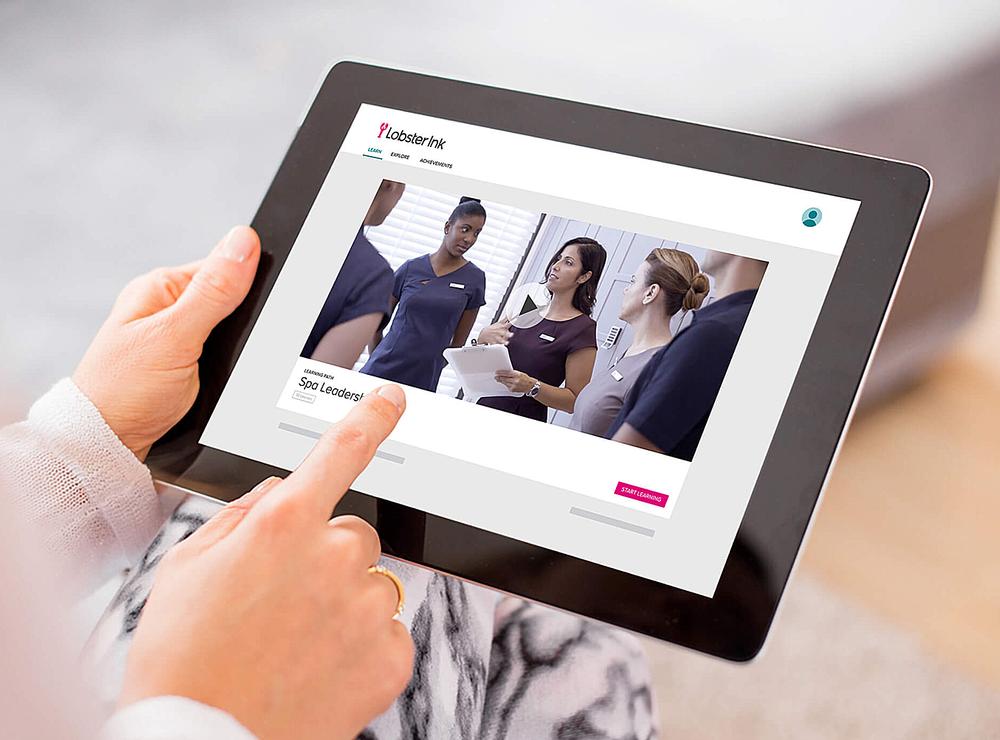
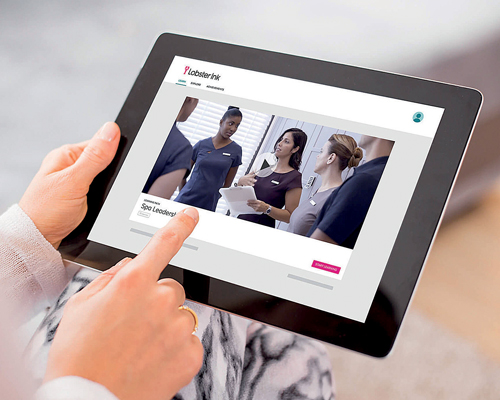
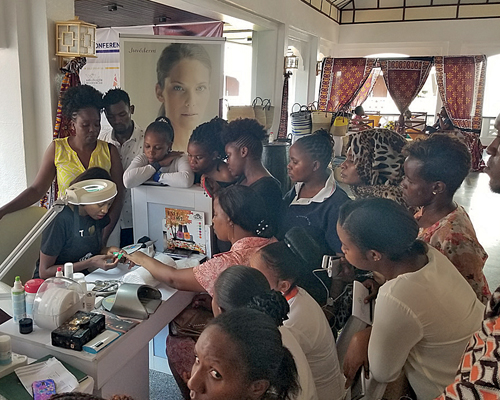
Lobster has filmed best practice examples in various spas
The lack of skilled management and qualified spa staff has been a well-known industry threat for many years and now that wellbeing is in the spotlight, the pressure on spa teams will deepen,” says Kasha Shillington, CEO of spa consultancy and management company Resense. So when Lobster Ink, an online learning specialist whose clients include the likes of Marriott, Hilton and Kempinski, approached Resense to help guide the content and strategy behind a comprehensive web-based program for those working in wellness it saw a great opportunity.
Four years on and Lobster Ink has just launched Spa Professional, an online training program designed to equip employees with the skills needed to provide superior guest experiences while improving profitability. “We hope to solve a real industry challenge,” Shillington says.
Addressing mistakes Resense has worked on over 90 spa projects worldwide and currently manages 52 facilities. During this time, it’s seen spas make a common set of errors time and again, even in high-profile properties. Lobster has developed the Spa Professional curriculum to tackle these head-on.
One course, for example, is dedicated to inventory management. “Everyone knows the words, yet every spa we audit seems to have a challenge with this,” says Shillington. “Expensive products, in particular, anti-ageing and facial products, are not always affiliated with the most popular treatment which elevates the need to critically balance supply and demand. Spa Professional teaches the necessary skills, knowledge and behaviours to address this and has specialist training for spa leaders who need to take it to the next level by connecting it to their ordering routines and P&L.”
Another course focuses on booking optimisation. “While most spa staff have been trained to suggest treatment time slots to fill non-peak periods, the majority are not practising this simple step and are still handing guests a menu and asking them when they’d like to visit,” explains Shillington. The Spa Professional approach is to break down the booking process into manageable and memorable tasks so the “learner cannot imagine doing it any other way”.
Overall the idea is to inject the general business acumen which is so often lacking in spas and to pay special attention to the visitor experience and engaging with guests, something which underpins all successful facilities.
All spa roles While some web-based spa therapist or management training programs already exist (see p62), Spa Professional claims to stand out because it covers all four main roles – attendants, receptionists, therapists and managers/directors.
“It’s essential to cover all roles because every person is vital in caring for a guest throughout their spa journey,” explains Shillington. Imagine a guest who dislikes their treatment and is planning to leave quietly and not return. In this case, the program teaches all spa team members, including receptionists, how to pick up on body language, tone and expression and gives them tips on how to turn a dissatisfied customer into a happy, loyal guest while still remaining professional and respectful to their therapist colleague.
Learning path outline Training for the four spa roles – what Lobster refers to as ‘learning paths’ – is broken down into courses which cover everything from looking after the spa to caring for the guest and a range of spa management fundamentals. There are 10 courses in total (see above) and each of these comprises lessons that deliver on very specific outcomes.
Importantly, the learning paths are made up of a mix of these courses, so the focus is on skills rather than duties, as Shillington explains. “Due to increased labour costs nowadays, less spas employ attendants so these duties are often completed by other team members.”
Each learning path includes 8-10 hours of training, but the intention is not for employees to work through all of the material in one sitting. The curriculum has been designed to enable learning on the job – learn a lesson, apply it on your next shift and revisit if necessary. Once a course is complete, employees face theory and practical assessments and they must achieve a mark of 80 per cent or more to receive their certificate of completion.
Embedded learning Spa Professional is different from other web-based industry training, because it ‘embeds’ learning. Trainees don’t just watch a presenter speak or study text-heavy presentations. Instead, Lobster uses a mix of animation, videos of different scenarios filmed in spas and other interactive approaches. “Animation is a great way of bringing a booking schedule or P&L lesson to life,” says Shillington. “Filming also makes it easier to educate. We show the wrong way and the right way of doing something which makes it easier to comprehend – especially with potentially sensitive subjects like how to handle guest misconduct.”
The learning methodology Lobster has honed over the last 15 years also employs contemporary cognitive understanding and behavioural science techniques. These include ‘managing cognitive load’ by paying attention to the length of a lesson, the speed of a voice-over, camera angle, music etc which all affect how information is absorbed and transferred into memory. Behavioural science studies show that up to 80 per cent of knowledge is lost within 30 days unless that knowledge is applied, practiced or reinforced, which is why Lobster takes a learn, apply and revisit approach for each lesson.
The value of training Currently, Spa Professional is available in two packages and pricing structures – Spa Professional for Business, for independent or smaller spa groups looking to train less than 60 associates; and Spa Professional for Enterprise for groups looking to train over 60 associates. The minimum package includes five licenses – a least one manager learning path and any four associate learning paths – which, altogether, cost US$1,885 (€1,711, £1,469) a year with volume discounts being applied to larger packages and multi-year agreements.
“It was important to Lobster to ensure pricing is affordable,” says Shillington. “If you compare it to what spas pay for a trainer to visit for five days, plus flights and accommodation, this course is much less and covers many more aspects.”
It’s no secret that many spas are reluctant to allocate a training budget, but this is a short-sighted approach given the value it can bring to a business, she concludes. “We defined the [Spa Professional] curriculum based on training we’ve conducted in the spas we manage. Existing spa operations have experienced on average 112 per cent increase in departmental profit in the first year after takeover. Many of these spas achieved significant revenue increases as well, however, the largest impact was on profit, demonstrating that managing the business better [with better training] will minimise costs, thus increasing your margin.”
What does the training cover?
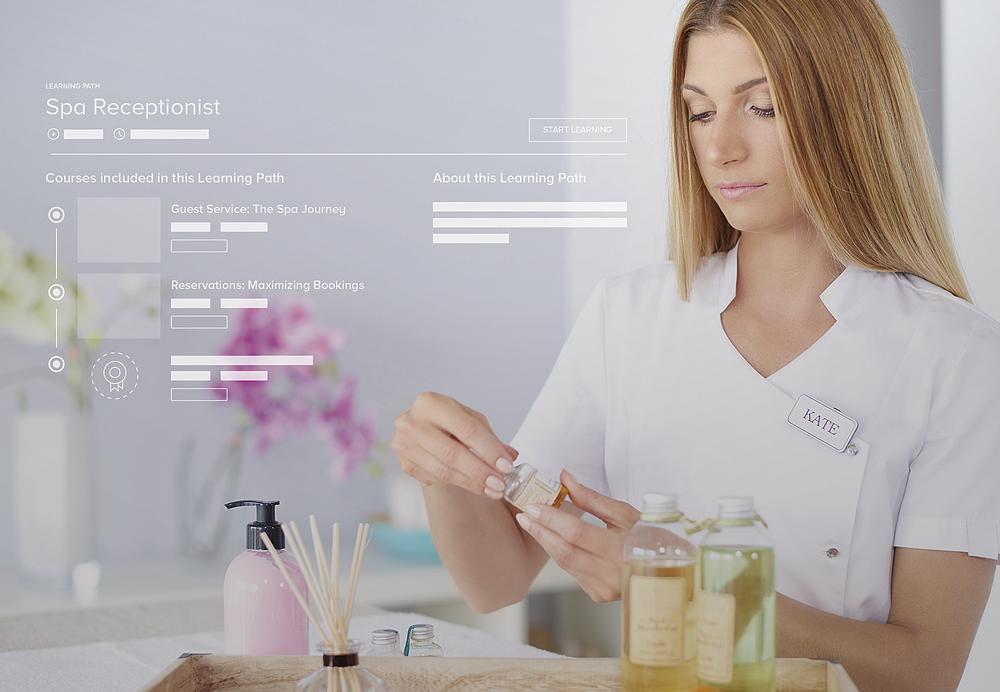
Spa Professional covers four spa learning paths: attendant, receptionist, therapist and leader (for managers/directors). Each learning path is made up of some or all of the following courses, with the level of knowledge adapted accordingly:
Guest Service: The Spa Journey
Reservations: Maximizing Bookings
Spa Therapy: Caring for the Guest
Spa Attendants: Caring for the Spa
Retail: Enhancing the Guest’s Experiences
Inventory: Effective Management
Spa Management Fundamentals: Inventory Management
Spa Management Fundamentals: Operations
Spa Management Fundamentals: Marketing
Spa Management Fundamentals: Finance
The program is currently available in English but versions in Chinese, German and Spanish are in development
Other online spa training
A number of other companies and organisations offer online spa training for various roles. Some are exclusively web-based, while others include a mix of internet-based learning and classroom sessions. Examples include:
Glion Institute of Higher Learning (Excellence in Spa Operations)
FH Joanneum University of Applied Science (International Hospitality and Spa Management)
International Spa Association (Certified Spa Supervisor Program)
IST-Studienienstitut (Wellness and Spa Management Diploma)
Spa Business School (Online Business Accelerator and Management Development Platform)
Raison d’Etre (The Spa Management Online Program)
University of California, Irvine (Certificate of Spa and Hospitality Management)
Wynne Business (Spa Director’s Management Intensive Course)
Read more from this issue of Attractions Management magazine
View contents of Attractions Management 2019 issue 4
Editor's letter: Democratic wellness
To truly flourish, the spa industry needs to step outside its comfort zone and reach out to different markets with new and exciting business models, says Katie Barnes
Spa Programmes: On the menu
Boundary-pushing wellness in Iceland, self-care focus at Devarana and Civana’s equine retreat all feature in our spa menu round-up
Interview: Alexandre Cantin
Canada’s Groupe Nordik wants to open 10 nature spas, focusing on bathing and thermotherapy, by 2027. Katie Barnes talks to its VP of growth and strategy
Promotional feature: Starpool - Star quality
Wellness expert, Starpool, is known for offering complete wellness solutions with Italian design flair, enabling operators to create world class treatments and experiences
Training: Covering all bases
Resense joins forces with Lobster Ink to create an online training program for multiple spa roles
Promotional feature: Gharieni
Spa equipment innovator, Gharieni, is partnering with leading spas around the world to showcase its products to clients in real world settings, as CEO, Sammy Gharieni, explains
Research: Positive picture
ISPA’s latest US spa study shows continued growth across key metrics and pinpoints CBD and gen Z as trends. Russell Donaldson reports
Promotional feature: Zimmer MedizinSystems - Cool customer
Rainer Bolsinger, who heads up hotel and spa sales of icelab at Zimmer MedizinSystems, and icelab customer Chenot Group, explain how cryotherapy can be incorporated into your business
Promotional feature: Biologique Recherche - Skin deep
Biologique Recherche has spent the past 40 years developing technology and products to understand the skin on an individual level. Pierre-Louis Delapalme and Rupert Schmid tell Spa Business about the Parisian brand’s latest innovations
Research: On the move
The global physical activity market is now worth US$828bn according to a new GWI study. But what emerging trends do spas need to know about?
Promotional feature: SpaSoft - Onwards & upwards
The enhanced integration between SpaSoft and multiple PMS systems will help your team save time, remove the possibility of human error and create an elevated guest experience
Software: Monetising
How is software helping spas to navigate e-commerce and further monetise their relationship with clients
Spa consultancy Resense has teamed up with online
training provider Lobster Ink to create a web-based training
program for multiple spa roles. But what does it
cover and why is it so needed in the industry?
Lobster has filmed best practice examples in various spas
The lack of skilled management and qualified spa staff has been a well-known industry threat for many years and now that wellbeing is in the spotlight, the pressure on spa teams will deepen,” says Kasha Shillington, CEO of spa consultancy and management company Resense. So when Lobster Ink, an online learning specialist whose clients include the likes of Marriott, Hilton and Kempinski, approached Resense to help guide the content and strategy behind a comprehensive web-based program for those working in wellness it saw a great opportunity.
Four years on and Lobster Ink has just launched Spa Professional, an online training program designed to equip employees with the skills needed to provide superior guest experiences while improving profitability. “We hope to solve a real industry challenge,” Shillington says.
Addressing mistakes Resense has worked on over 90 spa projects worldwide and currently manages 52 facilities. During this time, it’s seen spas make a common set of errors time and again, even in high-profile properties. Lobster has developed the Spa Professional curriculum to tackle these head-on.
One course, for example, is dedicated to inventory management. “Everyone knows the words, yet every spa we audit seems to have a challenge with this,” says Shillington. “Expensive products, in particular, anti-ageing and facial products, are not always affiliated with the most popular treatment which elevates the need to critically balance supply and demand. Spa Professional teaches the necessary skills, knowledge and behaviours to address this and has specialist training for spa leaders who need to take it to the next level by connecting it to their ordering routines and P&L.”
Another course focuses on booking optimisation. “While most spa staff have been trained to suggest treatment time slots to fill non-peak periods, the majority are not practising this simple step and are still handing guests a menu and asking them when they’d like to visit,” explains Shillington. The Spa Professional approach is to break down the booking process into manageable and memorable tasks so the “learner cannot imagine doing it any other way”.
Overall the idea is to inject the general business acumen which is so often lacking in spas and to pay special attention to the visitor experience and engaging with guests, something which underpins all successful facilities.
All spa roles While some web-based spa therapist or management training programs already exist (see p62), Spa Professional claims to stand out because it covers all four main roles – attendants, receptionists, therapists and managers/directors.
“It’s essential to cover all roles because every person is vital in caring for a guest throughout their spa journey,” explains Shillington. Imagine a guest who dislikes their treatment and is planning to leave quietly and not return. In this case, the program teaches all spa team members, including receptionists, how to pick up on body language, tone and expression and gives them tips on how to turn a dissatisfied customer into a happy, loyal guest while still remaining professional and respectful to their therapist colleague.
Learning path outline Training for the four spa roles – what Lobster refers to as ‘learning paths’ – is broken down into courses which cover everything from looking after the spa to caring for the guest and a range of spa management fundamentals. There are 10 courses in total (see above) and each of these comprises lessons that deliver on very specific outcomes.
Importantly, the learning paths are made up of a mix of these courses, so the focus is on skills rather than duties, as Shillington explains. “Due to increased labour costs nowadays, less spas employ attendants so these duties are often completed by other team members.”
Each learning path includes 8-10 hours of training, but the intention is not for employees to work through all of the material in one sitting. The curriculum has been designed to enable learning on the job – learn a lesson, apply it on your next shift and revisit if necessary. Once a course is complete, employees face theory and practical assessments and they must achieve a mark of 80 per cent or more to receive their certificate of completion.
Embedded learning Spa Professional is different from other web-based industry training, because it ‘embeds’ learning. Trainees don’t just watch a presenter speak or study text-heavy presentations. Instead, Lobster uses a mix of animation, videos of different scenarios filmed in spas and other interactive approaches. “Animation is a great way of bringing a booking schedule or P&L lesson to life,” says Shillington. “Filming also makes it easier to educate. We show the wrong way and the right way of doing something which makes it easier to comprehend – especially with potentially sensitive subjects like how to handle guest misconduct.”
The learning methodology Lobster has honed over the last 15 years also employs contemporary cognitive understanding and behavioural science techniques. These include ‘managing cognitive load’ by paying attention to the length of a lesson, the speed of a voice-over, camera angle, music etc which all affect how information is absorbed and transferred into memory. Behavioural science studies show that up to 80 per cent of knowledge is lost within 30 days unless that knowledge is applied, practiced or reinforced, which is why Lobster takes a learn, apply and revisit approach for each lesson.
The value of training Currently, Spa Professional is available in two packages and pricing structures – Spa Professional for Business, for independent or smaller spa groups looking to train less than 60 associates; and Spa Professional for Enterprise for groups looking to train over 60 associates. The minimum package includes five licenses – a least one manager learning path and any four associate learning paths – which, altogether, cost US$1,885 (€1,711, £1,469) a year with volume discounts being applied to larger packages and multi-year agreements.
“It was important to Lobster to ensure pricing is affordable,” says Shillington. “If you compare it to what spas pay for a trainer to visit for five days, plus flights and accommodation, this course is much less and covers many more aspects.”
It’s no secret that many spas are reluctant to allocate a training budget, but this is a short-sighted approach given the value it can bring to a business, she concludes. “We defined the [Spa Professional] curriculum based on training we’ve conducted in the spas we manage. Existing spa operations have experienced on average 112 per cent increase in departmental profit in the first year after takeover. Many of these spas achieved significant revenue increases as well, however, the largest impact was on profit, demonstrating that managing the business better [with better training] will minimise costs, thus increasing your margin.”
What does the training cover?
Spa Professional covers four spa learning paths: attendant, receptionist, therapist and leader (for managers/directors). Each learning path is made up of some or all of the following courses, with the level of knowledge adapted accordingly:
Guest Service: The Spa Journey
Reservations: Maximizing Bookings
Spa Therapy: Caring for the Guest
Spa Attendants: Caring for the Spa
Retail: Enhancing the Guest’s Experiences
Inventory: Effective Management
Spa Management Fundamentals: Inventory Management
Spa Management Fundamentals: Operations
Spa Management Fundamentals: Marketing
Spa Management Fundamentals: Finance
The program is currently available in English but versions in Chinese, German and Spanish are in development
Other online spa training
A number of other companies and organisations offer online spa training for various roles. Some are exclusively web-based, while others include a mix of internet-based learning and classroom sessions. Examples include:
Glion Institute of Higher Learning (Excellence in Spa Operations)
FH Joanneum University of Applied Science (International Hospitality and Spa Management)
International Spa Association (Certified Spa Supervisor Program)
IST-Studienienstitut (Wellness and Spa Management Diploma)
Spa Business School (Online Business Accelerator and Management Development Platform)
Raison d’Etre (The Spa Management Online Program)
University of California, Irvine (Certificate of Spa and Hospitality Management)
Wynne Business (Spa Director’s Management Intensive Course)
Read more from this issue of Attractions Management magazine
View contents of Attractions Management 2019 issue 4
Editor's letter: Democratic wellness
To truly flourish, the spa industry needs to step outside its comfort zone and reach out to different markets with new and exciting business models, says Katie Barnes
Spa Programmes: On the menu
Boundary-pushing wellness in Iceland, self-care focus at Devarana and Civana’s equine retreat all feature in our spa menu round-up
Interview: Alexandre Cantin
Canada’s Groupe Nordik wants to open 10 nature spas, focusing on bathing and thermotherapy, by 2027. Katie Barnes talks to its VP of growth and strategy
Promotional feature: Starpool - Star quality
Wellness expert, Starpool, is known for offering complete wellness solutions with Italian design flair, enabling operators to create world class treatments and experiences
Training: Covering all bases
Resense joins forces with Lobster Ink to create an online training program for multiple spa roles
Promotional feature: Gharieni
Spa equipment innovator, Gharieni, is partnering with leading spas around the world to showcase its products to clients in real world settings, as CEO, Sammy Gharieni, explains
Research: Positive picture
ISPA’s latest US spa study shows continued growth across key metrics and pinpoints CBD and gen Z as trends. Russell Donaldson reports
Promotional feature: Zimmer MedizinSystems - Cool customer
Rainer Bolsinger, who heads up hotel and spa sales of icelab at Zimmer MedizinSystems, and icelab customer Chenot Group, explain how cryotherapy can be incorporated into your business
Promotional feature: Biologique Recherche - Skin deep
Biologique Recherche has spent the past 40 years developing technology and products to understand the skin on an individual level. Pierre-Louis Delapalme and Rupert Schmid tell Spa Business about the Parisian brand’s latest innovations
Research: On the move
The global physical activity market is now worth US$828bn according to a new GWI study. But what emerging trends do spas need to know about?
Promotional feature: SpaSoft - Onwards & upwards
The enhanced integration between SpaSoft and multiple PMS systems will help your team save time, remove the possibility of human error and create an elevated guest experience
Software: Monetising
How is software helping spas to navigate e-commerce and further monetise their relationship with clients
A US$50 million (£44.2 million, €51.2 million) transformation of Chicago's historic McCormick
Mansion has created a new destination that combines live magic, immersive theatre, dining and
private membership under one roof.
The Montana Historical Society has officially celebrated the opening of its new Montana
Heritage
Center, a US$107 million (£79 million, €92 million) destination that combines immersive
storytelling with cutting-edge audiovisual technology to bring the sta
San Antonio Zoo has reported a US$283 million economic impact for 2025, following a decade-
long transformation programme that has seen almost US$200 million invested into the Texas
attraction.
Plans for the AU$180 million redevelopment of Reef HQ Aquarium in Townsville, Australia, are
progressing, with the project set to transform the attraction into a global centre for reef
education and conservation.
Abu Dhabi-based investment firm Mubadala Capital has made a binding, fully financed
€1 billion
offer to acquire Pierre and Vacances SA, the European holiday resort operator behind the
continental European Center Parcs business.
Disney has reaffirmed its commitment to investing US$30 billion in its US parks and cruise
business by 2033, using new America250 celebrations to underline the role its attractions play
in supporting jobs, tourism and economic growth.
Expo 2030 Riyadh is being planned as a permanent visitor destination, with organisers
confirming the six-million-square-metre site will become a Global Village after the event closes.
The owner of one of Australia's best-known waterparks has acquired a major competitor,
creating a new attractions business spanning two of the country's largest visitor destinations.
The Toverland theme park in the Netherlands has announced a €98m expansion programme
that will add a resort, new attractions and staff facilities as it pursues plans to become a multi-
day destination.
Hotel de France, located on the British Isle of Jersey, has created a wellness retreat package
that includes a hot yoga session that will take place in Jersey Zoo’s butterfly sanctuary.
+ More news
COMPANY PROFILES
Taylor Made Designs Founded in 1993, Taylor Made
Designs supply corporate clothing
and brand-enhancing merchandise
to [more...]
IDEATTACK IDEATTACK is a full-service planning and
design company with headquarters in
Los Angeles. [more...]
Alterface Alterface’s Creative Division team is
seasoned in concept and ride development,
as well as storyte [more...]