Despite a last-minute change of venue, the Global Wellness Summit returns
to its roots in Asia – and looks ahead to a bright future. Jane Kitchen reports
By Jane Kitchen | Published in Spa Business 2019 issue 4
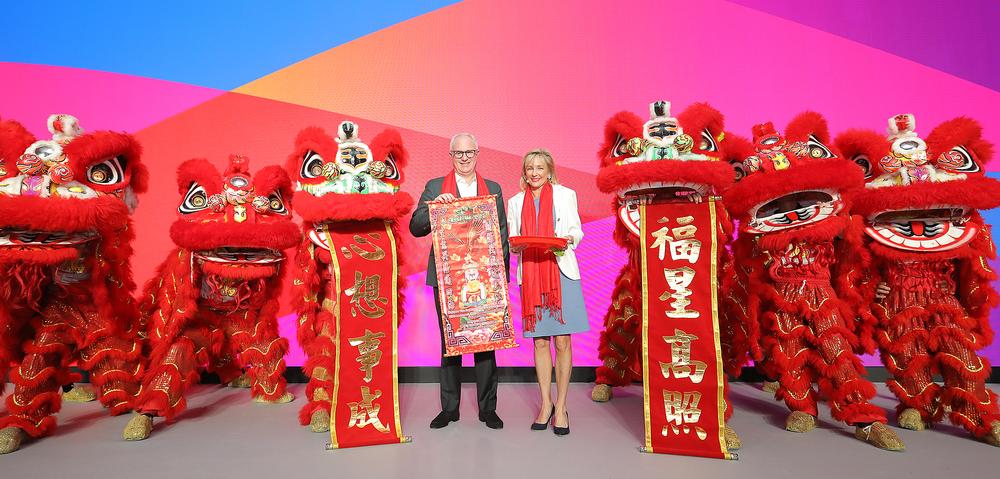
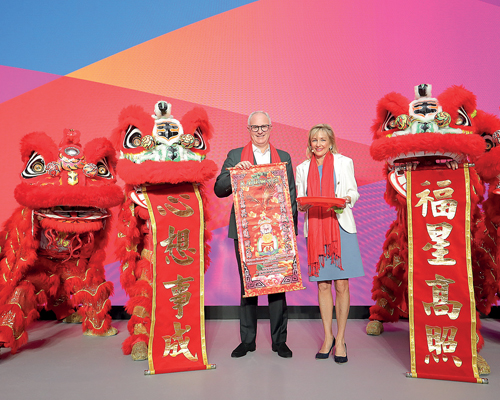
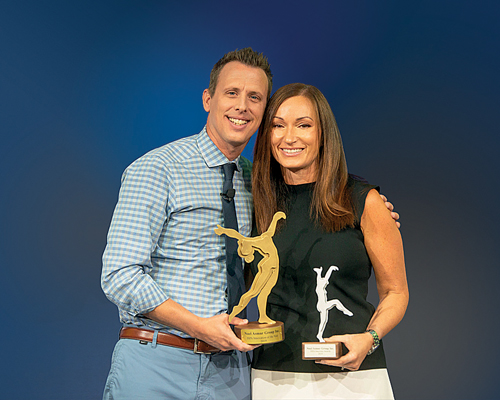
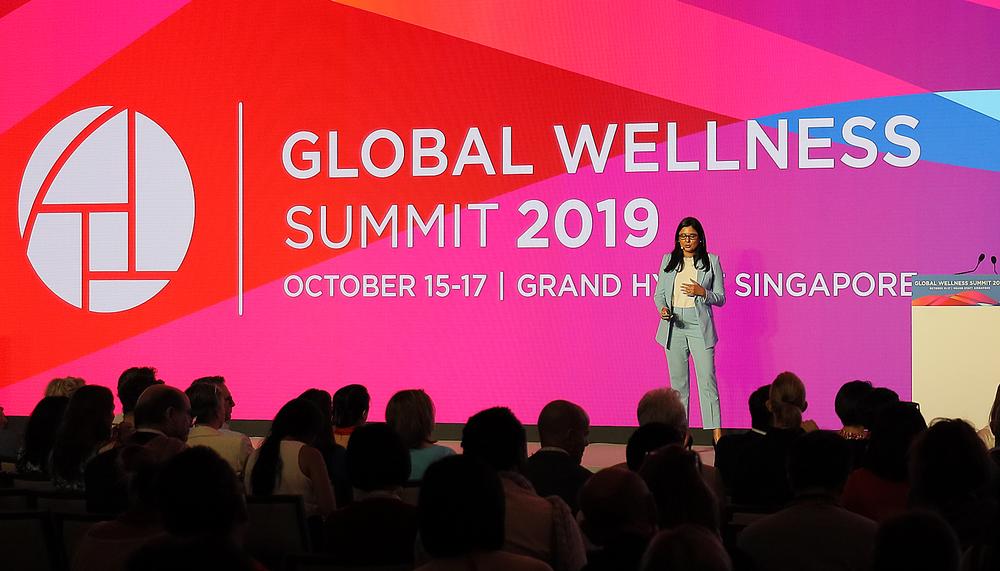
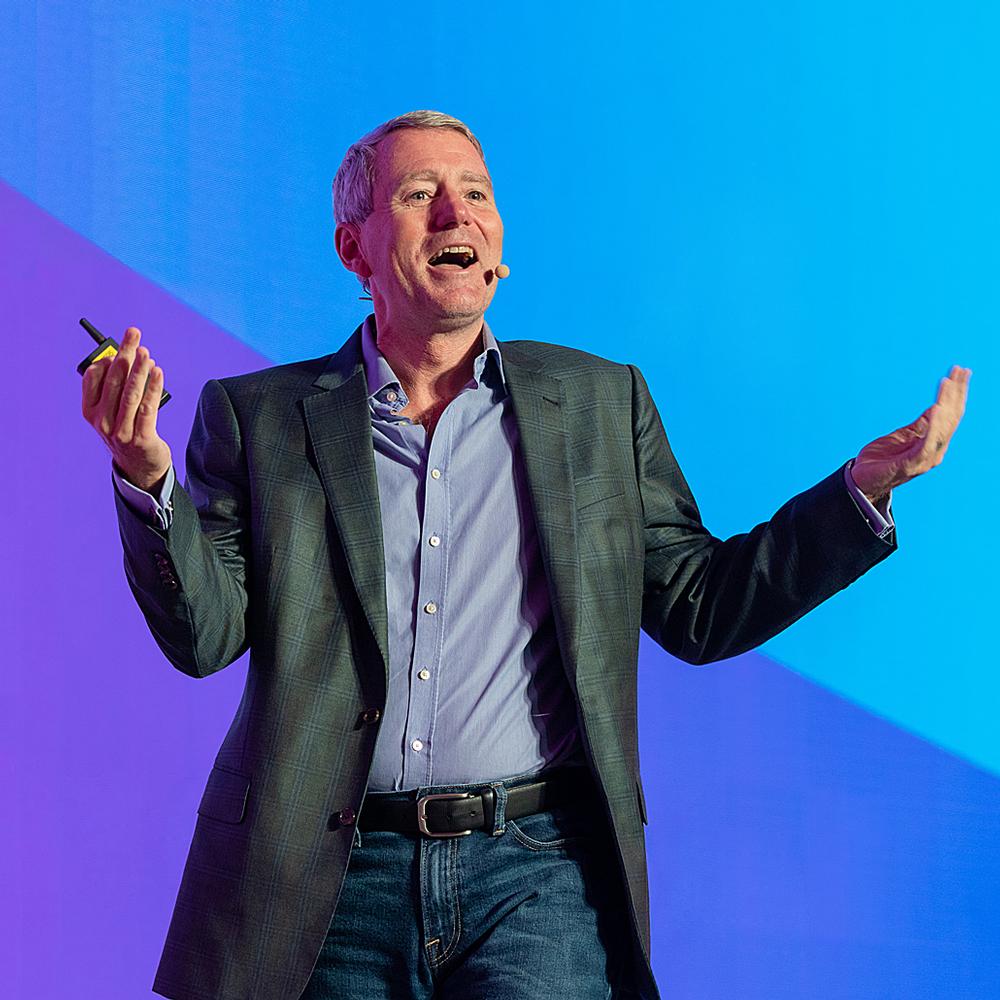
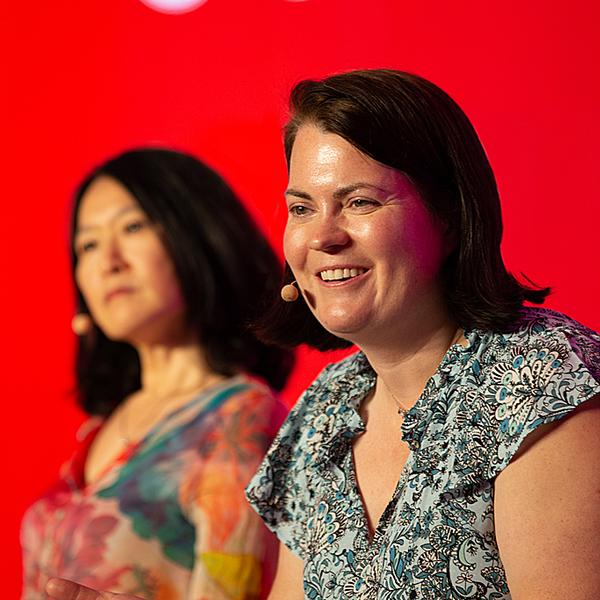
David Udell, group president of Hyatt Asia Pacific, and GWS chair Susie Ellis welcome delegates
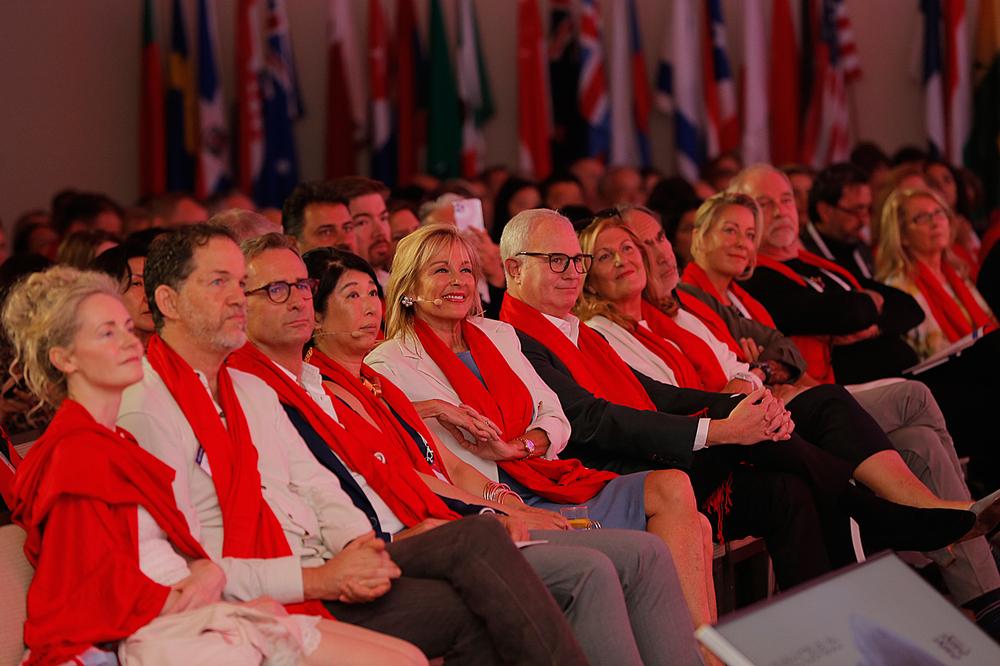
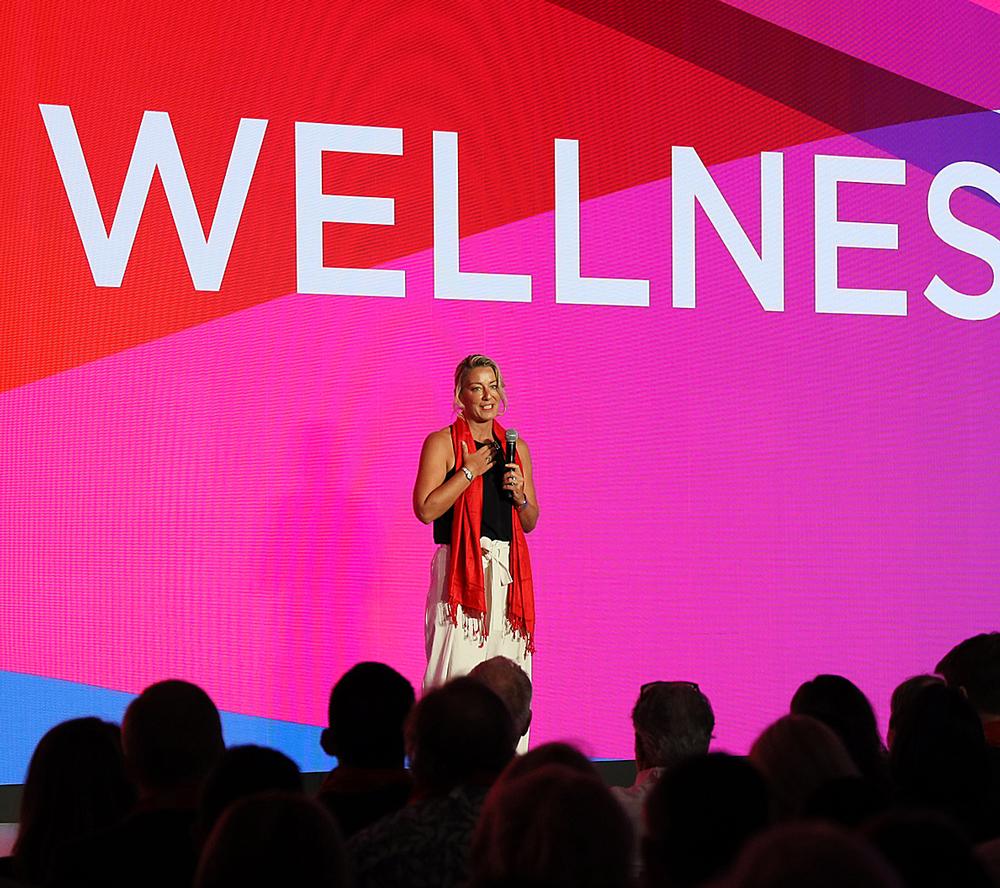
Delegates to the 13th annual Global Wellness Summit had red scarves draped around their necks as they entered the conference at the Hyatt Singapore, a welcome ceremony designed to bring luck. Inside, GWS chair Susie Ellis and David Udell, group president of Hyatt Asia Pacific, welcomed attendees as giant crimson and gold dragons danced and shook their fantastical heads on stage while a percussion group drummed a deafening beat. It was an auspicious beginning indeed.
We were not supposed to be here; unrest in Hong Kong had forced the GWS team to relocate the conference to Singapore just two months before. Hosting the conference there, however, was a return to its roots of sorts as the idea of the Global Wellness Summit was first born at a conference in Singapore in 2005, when Ellis and other key industry executives saw the need to bring the global spa industry together for an international event.
This year saw 86 flags line the hall, representing the number of countries with attendees at the summit. Four new flags – Bahrain, Panama, Nepal and the Bahamas – joined the movement, and half of all delegates were first-timers.
In 2007 – the year of the first summit in New York – there were no statistics on the value of the wellness industry, Ellis noted in her opening remarks. Now, she said, “because of the numbers and the research, we’ve really showcased the opportunity. We’ve created an industry, an economy, and a movement that’s unstoppable. We’ve made wellness something people are really out to learn about and embrace.”
That the event was held in Asia was no accident; with wellness tourism poised to reach US$1tn (€903.5bn, £771.7bn) globally by 2022, “no wellness tourism market is growing faster than Asia,” said Ellis. And while the GWS is international in scope, part of the remit for this year’s theme, ‘Shaping the Business of Wellness’, was to explore the ways in which the growing Asian wellness market will indeed change the way wellness business is done around the world.
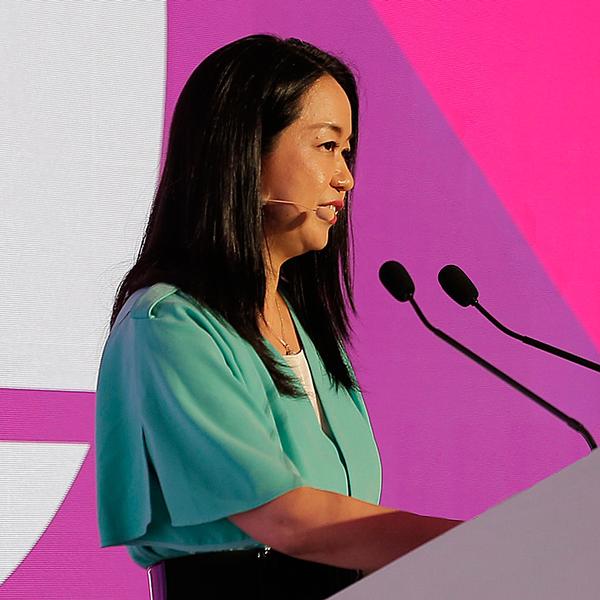
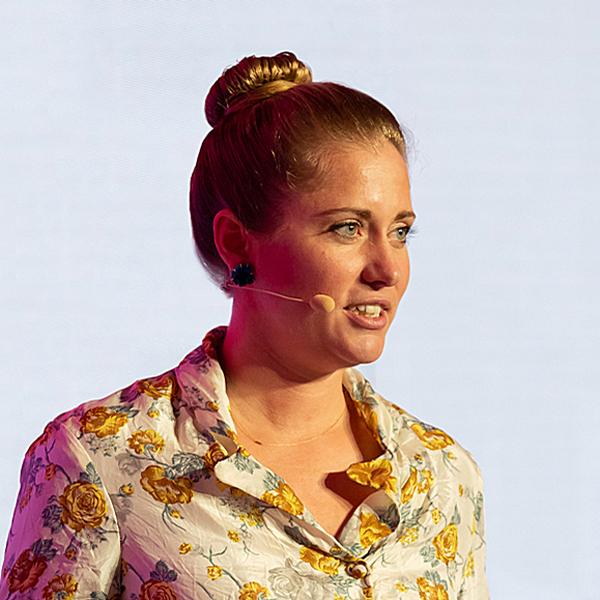
The Asian century Co-hosts Catherine Feliciano-Chon and Yoriko Soma each kicked off the conference with a keynote – Feliciano-Chon on the Asian Century, and Soma on the future of wellness in Japan. Feliciano-Chon slapped some eye-opening statistics on the table: Asia boasts 60 per cent of the world’s population, and by next year, will have 50 per cent of the world’s middle class. “It’s been reported that Asian economies are set to be larger than the rest of the world combined, and drive 40 per cent of the world’s consumption,” she said. “Simply said, Asia is on track to top 50 per cent of global GDP.” And Asia has the ideal conditions for a wellness boom to take place, Feliciano-Chon went on to explain: a swelling population, an ageing population, declining fertility rates, critical environmental issues, looming health crises, and dense cities. “While the ancient Greeks and Romans may lay claim to the origins of wellness, Asia’s ancient healing practices, our customs, our rich traditions, our youth, our modernity, our aspirations, and our ambitions will continue to influence the future of wellness,” she said. “If you look at modern wellness today, you are seeing it through the eyes of Asia.”
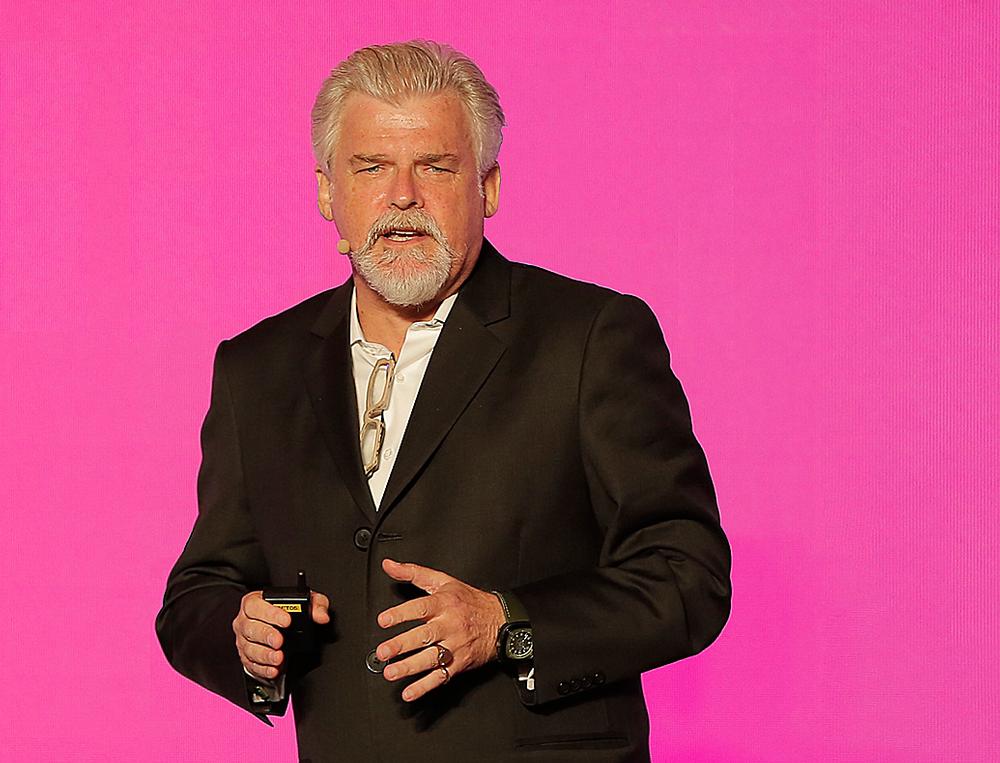
New frontiers Udell spoke about the business of wellness at Hyatt, which was the host sponsor of the event. “We’re working hard on making wellbeing a greater part of Hyatt’s DNA every day,” he said. “What we’ve learned from Mia Kyricos [global head of wellbeing at Hyatt], is that wellness is a road, and wellbeing is the destination – and our job is to partner with experts like all of you along the way.”
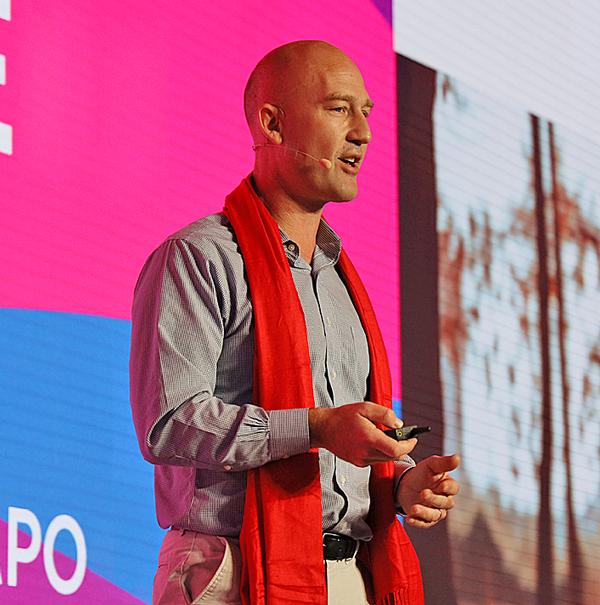
Partnering is key in the wellness industry, and one such partnership is that between Six Senses and Timeshifter, an app designed to fight jet lag. All delegates received a one-year subscription to the service in hopes that they’d trial it on their way to Singapore, and CEO Mickey Beyer-Clausen spoke to the audience about the long-term health implications of jet lag, which mirror those of shift workers. Beyer-Clausen said circadian neuroscience has come a long way in the past few years, and he predicts that soon we’ll see things like jet lag reduction areas in airport lounges, and jet lag intelligent in-flight entertainment and in-flight meals. There is opportunity here for spas, some of which are already addressing the issue of jet lag – at the Rome Cavalieri, guests can choose a jet lag butler, while the Spa on Arrival package at London’s Agua Spa is made specifically for jet-lagged guests.
Viome CEO Naveen Jain suggested that it’s not just jet lag services that are ready for change, but the entire healthcare system. “The healthcare system was designed at the time that we were dying from infectious diseases,” he explained. “Now, we’re dying from chronic diseases, the root of which is chronic inflammation.” He suggested looking at what causes people to have these chronic diseases, and how food can be a medicine. “We really are going back to the future, but now we have the science,” he said. “Ours is the generation that will solve this problem.” And spas have an opportunity to help with this; the newly opened Longevity Health and Wellness Hotel in Portugal, for instance, specialises in anti-inflammation treatments (see p34).
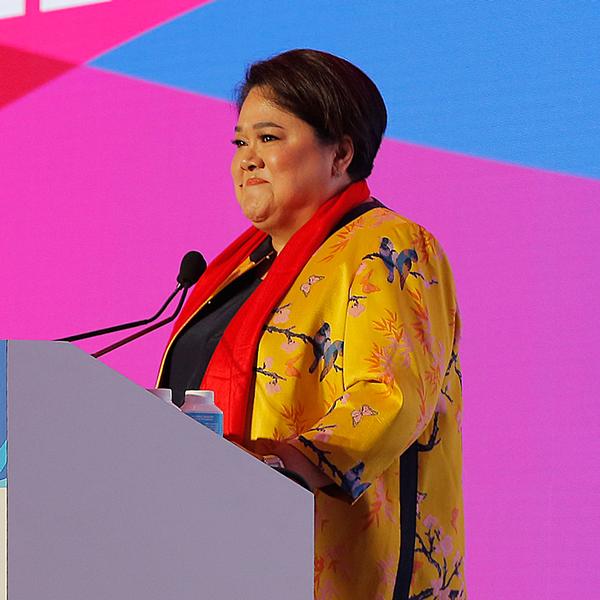
Solving problems was a recurring theme at the summit, with keynotes from John Wood, founder of nonprofit Room to Read, on ending illiteracy, as well as architect Bill Bensley on environmental preservation and building sustainably in Asia. Bensley spoke passionately about his love for animals and his mission to rethink hospitality design, and was moved to tears when he was presented with the award for Leader in Sustainability after his keynote.
A fashion show created by Sloane Jesse, daughter of BuDhaGirl CEO Jessica Jesse, focused on re-using clothes from other eras, in a bid to tackle the environmental damage done by the textile industry, and the amount of clothes that wind up in landfill, while Noel Asmar, CEO of the eponymous uniform company, announced a plan to recycle old hospitality textiles, including uniforms, towels and sheets (see p15).
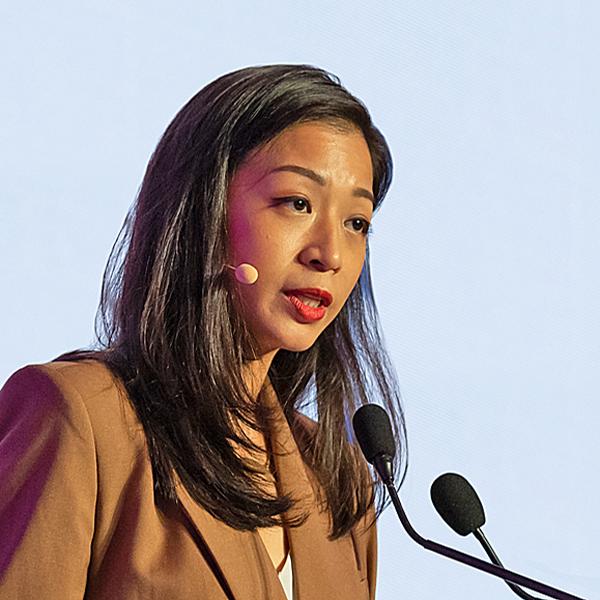
New numbers – new generations Always a highlight, GWI researchers Katherine Johnston and Ophelia Yeung presented their latest data on what they’ve come to call physical activity (see p92), a departure from the word ‘exercise’, as the research has now created multiple sub-categories that look at everything from sports and active recreation to fitness and mindful movement. As Yeung remarked: “For most of human history, we had to move to stay alive. Now, all of the unwanted physical activity we have unloaded onto machines. In less than 100 years, we went from harvesting potatoes to being potatoes.”
With updated numbers from the research, Johnston and Yeung now value the global wellness industry at US$4.5tn (€4.1tn, £3.5tn) and they also highlight numerous ways that spas and health clubs can encourage more people to get moving.
A presentation from Amrita Banta, managing director of Agility Research, featured new research on millennials and gen Z in China, prepared specifically for the summit. Banta revealed that for both generations, living a healthy life is a key priority – over money, career, personal enjoyment, finding love or having a family. “This is an audience that has already accepted the idea of a wellness lifestyle,” she said.
Irene Forte, group project director for Rocco Forte Hotels, led an inspiring panel on next-gen leaders, and was joined by six other women under 40 who are shaping the business of wellness.
The emerging 50+ And while many are paying attention to this new, younger demographic, older consumers were a focus of the summit as well. David Harry Stewart, CEO of Ageist, spoke about the new emerging 50+, calling them “the most powerful, most discerning consumer in human history”. Stewart said that because people today are living longer and investing in their personal wellness, “a 50-year-old can believe that they’re only halfway through life, and they can envision a 2.0 version of themselves.”
Dr Chris Renna, founder of LifeSpan Medicine, spoke about rejuvenation medicine, including fisetin, an inexpensive compound derived from plants that can help the body get rid of senescent cells – cells which have lost function as they’ve aged and can affect neighbouring cells by secreting pro-inflammatory molecules. He also detailed how nicotinamide adenine dinucleotide, or NAD+, can help increase energy inside the cells, which can help the ageing process. “Energy helps our dynamic system avoid entropy and keeps cells organised and efficient,” he explained. “The more energy we have, the more energy we can create, the more functional we will be – and if ageing is defined as the loss of function over time, the younger we will get.”
Dave McCaughan, founder of Bibliosexual, reported that nearly 600,000 people are projected to be centenarians by 2025, and that in every Asian country, the fastest-growing demographic is between 65 and 80.
Even aibo, the AI dog from Sony who paid a visit to the summit, is focused on being an electronic companion as people age. His creators have found that the companionship has a positive effect on the immune system of the elderly and those with dementia.
J-Wellness Soma opened the summit with a talk on ‘J-Beauty’ and ‘J-Wellness’ – a boom in Japanese wellness tourism due to a surge in inbound visitors and a renewed interest in the country’s hot springs and onsens. “J-Wellness is a bridge between new thinking and tradition, and between science and wellness,” she said.
The incredible benefits of the Japanese tradition of shinrin-yoku, or forest bathing, were revealed by Dr Qing Li, president of the Japanese Society for Forest Medicine at the Nippon Medical School. Dr Li led the audience through studies which have shown not just the many ways it has been proven to benefit anxiety, depression, anger and fatigue, but also forest bathing’s use in fighting hypertension, cardiovascular disease and stress. Some particularly impressive research Dr Li has done showed an increase in NK cells – or natural killer cells, known for their anti-cancer properties – that lasted 30 days after a forest bathing session.
Miwako Date, president and CEO of Mori Trust Company, which operates 100 properties in Asia, looked at the wellness investment climate in Japan. “There’s a shift and focus towards employee health management, and an understanding that business performance is influenced by employee wellbeing and satisfaction,” she said. “Caring for employees’ wellbeing and health is essential for productivity, and providing a comfortable workplace will encourage innovation and productivity.”
Mind, body and soul The spiritual side of wellness was also explored, through everything from shamanism and sacred geometry to gong healing. “People are wanting to go deeper than they ever have, to connect with something bigger,” said Anna Bjurstam, wellness pioneer for Six Senses, who spoke to delegates about her journey as a shaman. “We need wellness, but we also need energy medicine.”
Guests staying at the Hyatt could opt for an evening gong-healing session each night, but the entire audience was also treated to a session at the end of day 1 by Martha Collard, CEO of Red Doors Studio in Hong Kong.
Professor Martin Palmer – who advises the UK’s Prince Phillip on all things religious – spoke about the connection between faith and wellness. “We have these great traditions that feed into much of what you do as wellness, and it’s mind, body and soul,” he said. Palmer quoted from Daoism, the Upanishads, the Bible, the Torah and more, and also explored the relationship between faith and the environment.
Finding passion in wellness Passion stories throughout the summit had wellness industry icons sharing what was important to them personally in wellness. Marc Cohen, founder of the Extreme Wellness Institute, shared his story of redefining himself at age 55, while Melisse Gelula, co-founder of Well+Good, talked about the importance of taking a vacation from wellness. And Jeremy McCarthy, Mandarin Oriental’s group director of spa and wellness, read a letter he wrote to his two young sons on growing up well in Hong Kong, where he predicted: “The health challenges you face will most likely be diseases of affluence,” and worried about the effects of today’s fast-paced, digital age. “I can’t help but feel that my job is to shield you from this new digital landscape and instil in you the values of what it means to be a non-digital human,” he said. “I want you to learn how to use your mind and your heart as a human first, and then bring that humanity to the use of technology later.”
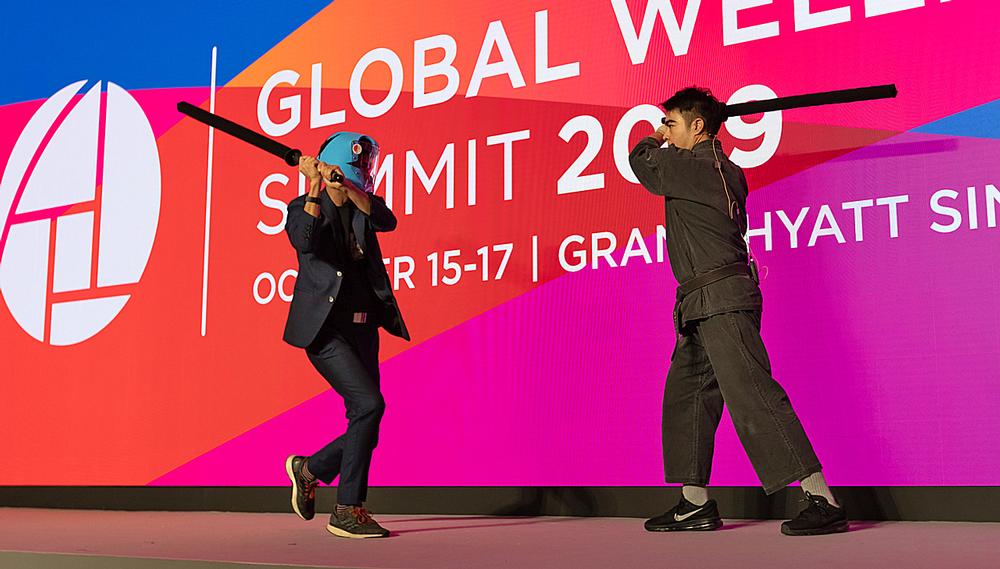
Delegates were also treated to a samurai presentation from Nash Siamwalla, founder of The Zen Solution. We’re all samurais he said, going on to remind us to take care of ourselves before we take care of others.
Peggy Chan, executive chef and founder of Grassroots Pantry, a vegan restaurant in Hong Kong, talked about the connection between food, health and sustainability, and how her passion for plant-based food and a desire to help the community led her to open her successful restaurant, which stands out as an example of high-end, healthy cuisine.
Conscious capitalism Veronica Schreibeis Smith, CEO of Veronica Iconica Architecture, invited us to demand more from our architecture. “We come from many cultures, but we’re all in this race together,” she said. “What we design better be good, and be good for us.”
The idea of doing good while doing good business was key throughout much of the conference, from Bill Bensley’s mission to put sustainability at the heart of all hospitality design, to Neil Jacobs discussing how Six Senses’ wellness programming was key to the brand’s recent sale to IHG for US$300m (€271m, £231.6m). Jacobs revealed Six Senses’ plans to have 50 hotels within the next five to six years, up from its current 19 in operation now. Six Senses Place will be the brand’s first urban club in New York when it opens next year, and will feature not just a spa and health club, but restaurants, bars and gathering places, all driven by wellness.
And Fred Tsao, founder of Octave Institute, which runs Sangha Retreat – part of China’s first wellness community – spoke about holistic wellness, the quantum world, and a new era of wellbeing. “There’s a silent wellness revolution in China that’s not showing up in the wellbeing market yet, but it’s happening in the leadership of China,” he said. “This industry can save the world, and the world is at a crossroad. They want it, they need it and they’re desperate for it. What we need is conscious capitalism.”
He called on those in the industry to help change the conversation. “It’s our responsibility to help people to understand – wellbeing is an alignment unification process. It’s a journey, not a destination. It’s a world view, and it’s a way of relating – especially inside ourselves.” Tsao urged all of the delegates to go on that journey themselves. “Be the industry we promote,” he said, “and we can change the world”.
Wellness leaders recognised
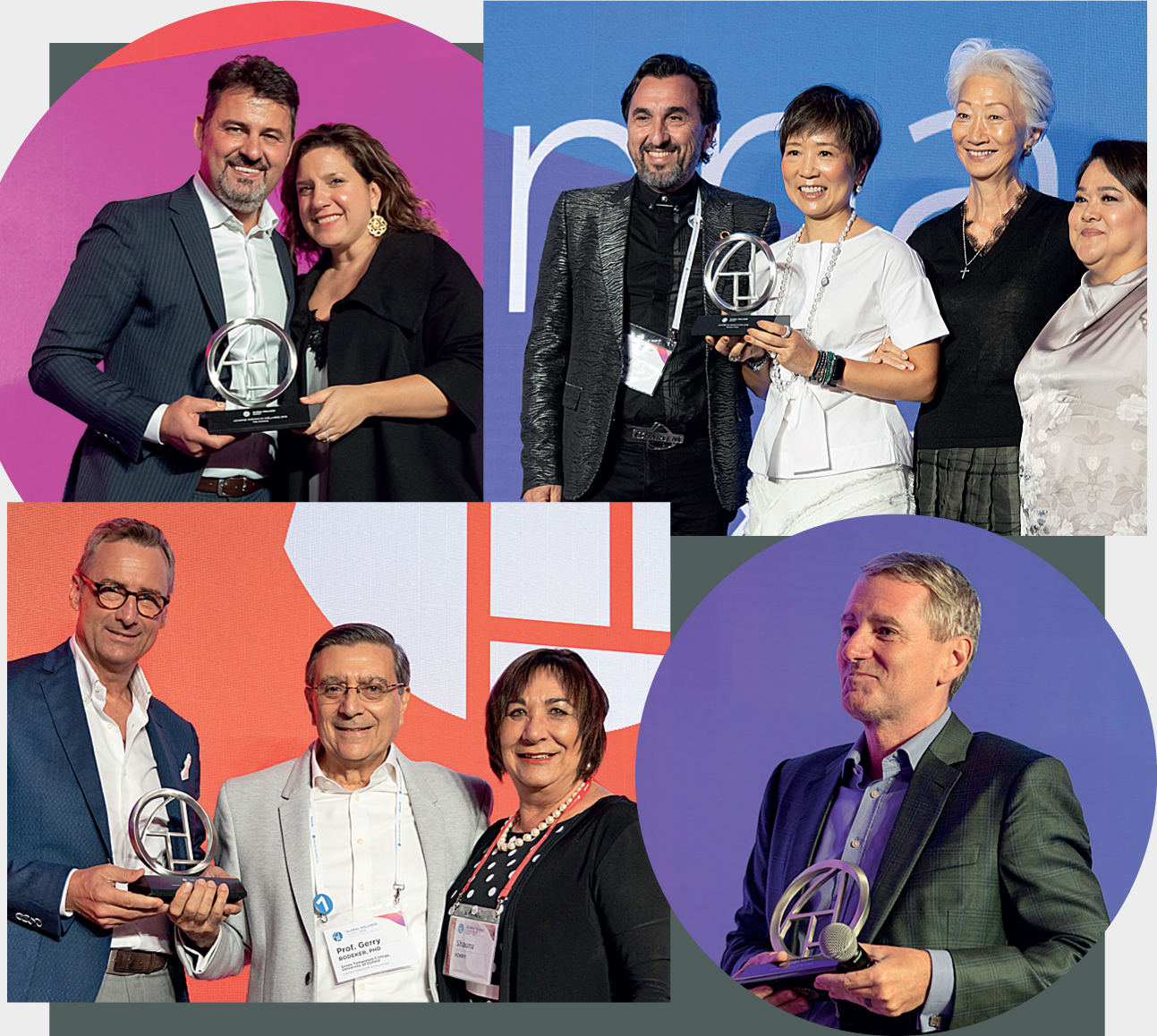
The GWS honoured five leaders who’ve made exceptional contributions to the wellness industry. Clockwise from far left: architect Bill Bensley, Leader in Sustainability; Mia Kyricos, Hyatt’s global head of wellbeing, Leading Woman in Wellness; Ronna Chao, chair of Novetex Textiles, Leader in Innovation; John Wood, Room to Read, Leader in Social Impact; Gerry Bodeker (centre of photo, bottom left), Leader in Furthering Mental Wellness.
Food and dancing: the other side of wellness
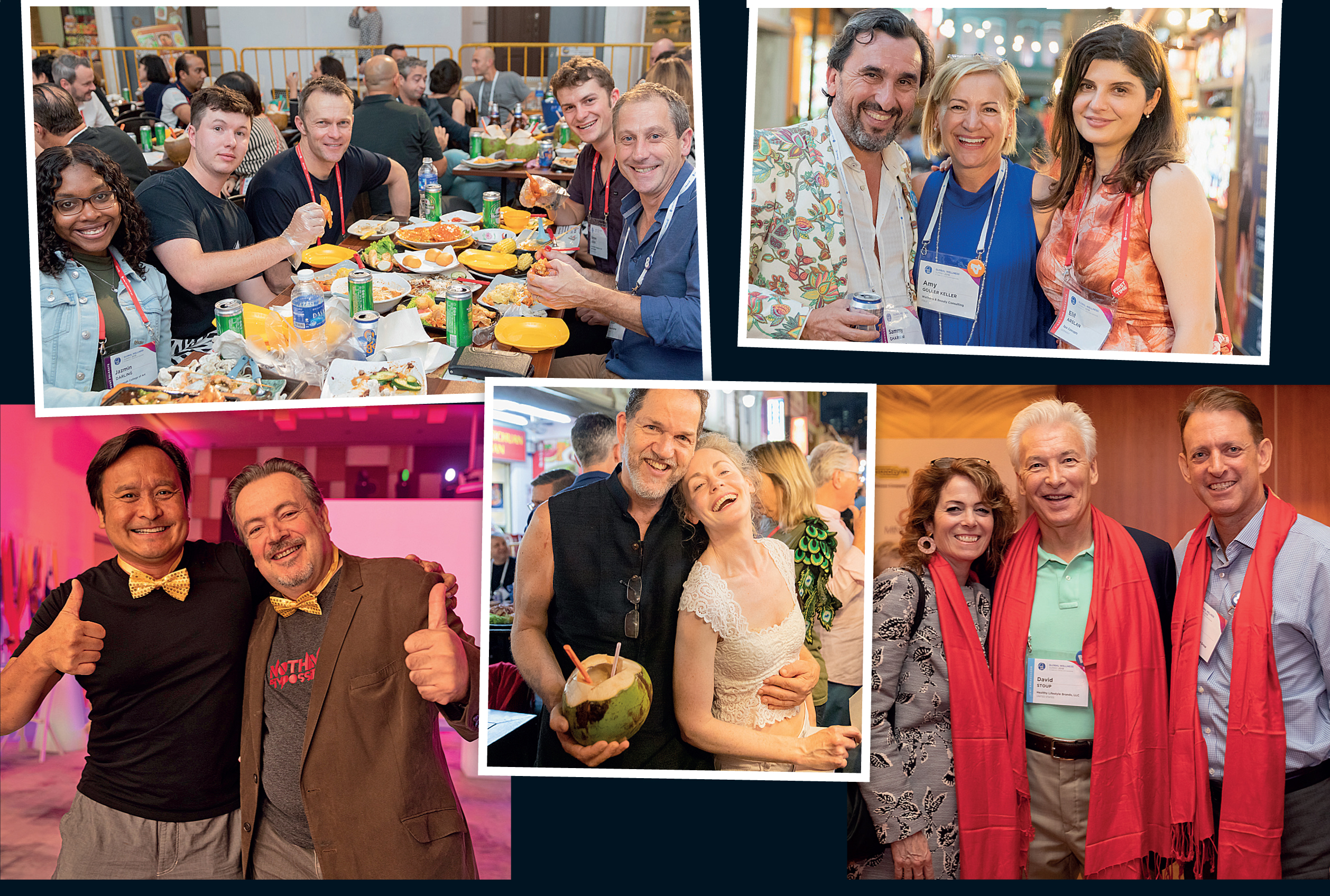
One of the most important facets of the Global Wellness Summit is the networking, and this year was no exception. In addition to the conference’s many networking breaks, delegates were treated to ‘Makan Mania’, an evening exploring Singapore’s hawker food scene, as well as a night of dancing in the Grand Hyatt Ballroom.
Next year’s Global Wellness Summit will be held in the Middle East for the first time in Tel Aviv, Israel on 10-13 November
Read more from this issue of Attractions Management magazine
View contents of Attractions Management 2019 issue 4
Editor's letter: Democratic wellness
To truly flourish, the spa industry needs to step outside its comfort zone and reach out to different markets with new and exciting business models, says Katie Barnes
Spa Programmes: On the menu
Boundary-pushing wellness in Iceland, self-care focus at Devarana and Civana’s equine retreat all feature in our spa menu round-up
Interview: Alexandre Cantin
Canada’s Groupe Nordik wants to open 10 nature spas, focusing on bathing and thermotherapy, by 2027. Katie Barnes talks to its VP of growth and strategy
Promotional feature: Starpool - Star quality
Wellness expert, Starpool, is known for offering complete wellness solutions with Italian design flair, enabling operators to create world class treatments and experiences
Training: Covering all bases
Resense joins forces with Lobster Ink to create an online training program for multiple spa roles
Promotional feature: Gharieni
Spa equipment innovator, Gharieni, is partnering with leading spas around the world to showcase its products to clients in real world settings, as CEO, Sammy Gharieni, explains
Research: Positive picture
ISPA’s latest US spa study shows continued growth across key metrics and pinpoints CBD and gen Z as trends. Russell Donaldson reports
Promotional feature: Zimmer MedizinSystems - Cool customer
Rainer Bolsinger, who heads up hotel and spa sales of icelab at Zimmer MedizinSystems, and icelab customer Chenot Group, explain how cryotherapy can be incorporated into your business
Promotional feature: Biologique Recherche - Skin deep
Biologique Recherche has spent the past 40 years developing technology and products to understand the skin on an individual level. Pierre-Louis Delapalme and Rupert Schmid tell Spa Business about the Parisian brand’s latest innovations
Research: On the move
The global physical activity market is now worth US$828bn according to a new GWI study. But what emerging trends do spas need to know about?
Promotional feature: SpaSoft - Onwards & upwards
The enhanced integration between SpaSoft and multiple PMS systems will help your team save time, remove the possibility of human error and create an elevated guest experience
Software: Monetising
How is software helping spas to navigate e-commerce and further monetise their relationship with clients
Despite a last-minute change of venue, the Global Wellness Summit returns
to its roots in Asia – and looks ahead to a bright future. Jane Kitchen reports
By Jane Kitchen | Published in Spa Business 2019 issue 4
David Udell, group president of Hyatt Asia Pacific, and GWS chair Susie Ellis welcome delegates
Delegates to the 13th annual Global Wellness Summit had red scarves draped around their necks as they entered the conference at the Hyatt Singapore, a welcome ceremony designed to bring luck. Inside, GWS chair Susie Ellis and David Udell, group president of Hyatt Asia Pacific, welcomed attendees as giant crimson and gold dragons danced and shook their fantastical heads on stage while a percussion group drummed a deafening beat. It was an auspicious beginning indeed.
We were not supposed to be here; unrest in Hong Kong had forced the GWS team to relocate the conference to Singapore just two months before. Hosting the conference there, however, was a return to its roots of sorts as the idea of the Global Wellness Summit was first born at a conference in Singapore in 2005, when Ellis and other key industry executives saw the need to bring the global spa industry together for an international event.
This year saw 86 flags line the hall, representing the number of countries with attendees at the summit. Four new flags – Bahrain, Panama, Nepal and the Bahamas – joined the movement, and half of all delegates were first-timers.
In 2007 – the year of the first summit in New York – there were no statistics on the value of the wellness industry, Ellis noted in her opening remarks. Now, she said, “because of the numbers and the research, we’ve really showcased the opportunity. We’ve created an industry, an economy, and a movement that’s unstoppable. We’ve made wellness something people are really out to learn about and embrace.”
That the event was held in Asia was no accident; with wellness tourism poised to reach US$1tn (€903.5bn, £771.7bn) globally by 2022, “no wellness tourism market is growing faster than Asia,” said Ellis. And while the GWS is international in scope, part of the remit for this year’s theme, ‘Shaping the Business of Wellness’, was to explore the ways in which the growing Asian wellness market will indeed change the way wellness business is done around the world.
The Asian century Co-hosts Catherine Feliciano-Chon and Yoriko Soma each kicked off the conference with a keynote – Feliciano-Chon on the Asian Century, and Soma on the future of wellness in Japan. Feliciano-Chon slapped some eye-opening statistics on the table: Asia boasts 60 per cent of the world’s population, and by next year, will have 50 per cent of the world’s middle class. “It’s been reported that Asian economies are set to be larger than the rest of the world combined, and drive 40 per cent of the world’s consumption,” she said. “Simply said, Asia is on track to top 50 per cent of global GDP.” And Asia has the ideal conditions for a wellness boom to take place, Feliciano-Chon went on to explain: a swelling population, an ageing population, declining fertility rates, critical environmental issues, looming health crises, and dense cities. “While the ancient Greeks and Romans may lay claim to the origins of wellness, Asia’s ancient healing practices, our customs, our rich traditions, our youth, our modernity, our aspirations, and our ambitions will continue to influence the future of wellness,” she said. “If you look at modern wellness today, you are seeing it through the eyes of Asia.”
New frontiers Udell spoke about the business of wellness at Hyatt, which was the host sponsor of the event. “We’re working hard on making wellbeing a greater part of Hyatt’s DNA every day,” he said. “What we’ve learned from Mia Kyricos [global head of wellbeing at Hyatt], is that wellness is a road, and wellbeing is the destination – and our job is to partner with experts like all of you along the way.”
Partnering is key in the wellness industry, and one such partnership is that between Six Senses and Timeshifter, an app designed to fight jet lag. All delegates received a one-year subscription to the service in hopes that they’d trial it on their way to Singapore, and CEO Mickey Beyer-Clausen spoke to the audience about the long-term health implications of jet lag, which mirror those of shift workers. Beyer-Clausen said circadian neuroscience has come a long way in the past few years, and he predicts that soon we’ll see things like jet lag reduction areas in airport lounges, and jet lag intelligent in-flight entertainment and in-flight meals. There is opportunity here for spas, some of which are already addressing the issue of jet lag – at the Rome Cavalieri, guests can choose a jet lag butler, while the Spa on Arrival package at London’s Agua Spa is made specifically for jet-lagged guests.
Viome CEO Naveen Jain suggested that it’s not just jet lag services that are ready for change, but the entire healthcare system. “The healthcare system was designed at the time that we were dying from infectious diseases,” he explained. “Now, we’re dying from chronic diseases, the root of which is chronic inflammation.” He suggested looking at what causes people to have these chronic diseases, and how food can be a medicine. “We really are going back to the future, but now we have the science,” he said. “Ours is the generation that will solve this problem.” And spas have an opportunity to help with this; the newly opened Longevity Health and Wellness Hotel in Portugal, for instance, specialises in anti-inflammation treatments (see p34).
Solving problems was a recurring theme at the summit, with keynotes from John Wood, founder of nonprofit Room to Read, on ending illiteracy, as well as architect Bill Bensley on environmental preservation and building sustainably in Asia. Bensley spoke passionately about his love for animals and his mission to rethink hospitality design, and was moved to tears when he was presented with the award for Leader in Sustainability after his keynote.
A fashion show created by Sloane Jesse, daughter of BuDhaGirl CEO Jessica Jesse, focused on re-using clothes from other eras, in a bid to tackle the environmental damage done by the textile industry, and the amount of clothes that wind up in landfill, while Noel Asmar, CEO of the eponymous uniform company, announced a plan to recycle old hospitality textiles, including uniforms, towels and sheets (see p15).
New numbers – new generations Always a highlight, GWI researchers Katherine Johnston and Ophelia Yeung presented their latest data on what they’ve come to call physical activity (see p92), a departure from the word ‘exercise’, as the research has now created multiple sub-categories that look at everything from sports and active recreation to fitness and mindful movement. As Yeung remarked: “For most of human history, we had to move to stay alive. Now, all of the unwanted physical activity we have unloaded onto machines. In less than 100 years, we went from harvesting potatoes to being potatoes.”
With updated numbers from the research, Johnston and Yeung now value the global wellness industry at US$4.5tn (€4.1tn, £3.5tn) and they also highlight numerous ways that spas and health clubs can encourage more people to get moving.
A presentation from Amrita Banta, managing director of Agility Research, featured new research on millennials and gen Z in China, prepared specifically for the summit. Banta revealed that for both generations, living a healthy life is a key priority – over money, career, personal enjoyment, finding love or having a family. “This is an audience that has already accepted the idea of a wellness lifestyle,” she said.
Irene Forte, group project director for Rocco Forte Hotels, led an inspiring panel on next-gen leaders, and was joined by six other women under 40 who are shaping the business of wellness.
The emerging 50+ And while many are paying attention to this new, younger demographic, older consumers were a focus of the summit as well. David Harry Stewart, CEO of Ageist, spoke about the new emerging 50+, calling them “the most powerful, most discerning consumer in human history”. Stewart said that because people today are living longer and investing in their personal wellness, “a 50-year-old can believe that they’re only halfway through life, and they can envision a 2.0 version of themselves.”
Dr Chris Renna, founder of LifeSpan Medicine, spoke about rejuvenation medicine, including fisetin, an inexpensive compound derived from plants that can help the body get rid of senescent cells – cells which have lost function as they’ve aged and can affect neighbouring cells by secreting pro-inflammatory molecules. He also detailed how nicotinamide adenine dinucleotide, or NAD+, can help increase energy inside the cells, which can help the ageing process. “Energy helps our dynamic system avoid entropy and keeps cells organised and efficient,” he explained. “The more energy we have, the more energy we can create, the more functional we will be – and if ageing is defined as the loss of function over time, the younger we will get.”
Dave McCaughan, founder of Bibliosexual, reported that nearly 600,000 people are projected to be centenarians by 2025, and that in every Asian country, the fastest-growing demographic is between 65 and 80.
Even aibo, the AI dog from Sony who paid a visit to the summit, is focused on being an electronic companion as people age. His creators have found that the companionship has a positive effect on the immune system of the elderly and those with dementia.
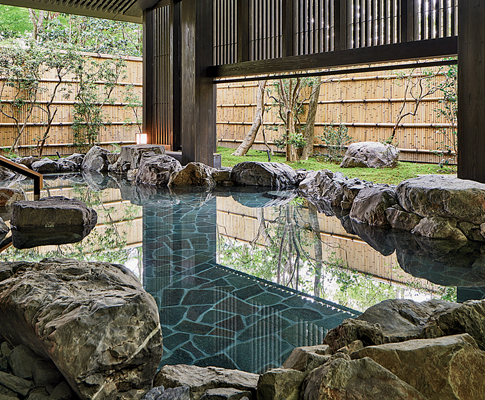
J-Wellness Soma opened the summit with a talk on ‘J-Beauty’ and ‘J-Wellness’ – a boom in Japanese wellness tourism due to a surge in inbound visitors and a renewed interest in the country’s hot springs and onsens. “J-Wellness is a bridge between new thinking and tradition, and between science and wellness,” she said.
The incredible benefits of the Japanese tradition of shinrin-yoku, or forest bathing, were revealed by Dr Qing Li, president of the Japanese Society for Forest Medicine at the Nippon Medical School. Dr Li led the audience through studies which have shown not just the many ways it has been proven to benefit anxiety, depression, anger and fatigue, but also forest bathing’s use in fighting hypertension, cardiovascular disease and stress. Some particularly impressive research Dr Li has done showed an increase in NK cells – or natural killer cells, known for their anti-cancer properties – that lasted 30 days after a forest bathing session.
Miwako Date, president and CEO of Mori Trust Company, which operates 100 properties in Asia, looked at the wellness investment climate in Japan. “There’s a shift and focus towards employee health management, and an understanding that business performance is influenced by employee wellbeing and satisfaction,” she said. “Caring for employees’ wellbeing and health is essential for productivity, and providing a comfortable workplace will encourage innovation and productivity.”
Mind, body and soul The spiritual side of wellness was also explored, through everything from shamanism and sacred geometry to gong healing. “People are wanting to go deeper than they ever have, to connect with something bigger,” said Anna Bjurstam, wellness pioneer for Six Senses, who spoke to delegates about her journey as a shaman. “We need wellness, but we also need energy medicine.”
Guests staying at the Hyatt could opt for an evening gong-healing session each night, but the entire audience was also treated to a session at the end of day 1 by Martha Collard, CEO of Red Doors Studio in Hong Kong.
Professor Martin Palmer – who advises the UK’s Prince Phillip on all things religious – spoke about the connection between faith and wellness. “We have these great traditions that feed into much of what you do as wellness, and it’s mind, body and soul,” he said. Palmer quoted from Daoism, the Upanishads, the Bible, the Torah and more, and also explored the relationship between faith and the environment.
Finding passion in wellness Passion stories throughout the summit had wellness industry icons sharing what was important to them personally in wellness. Marc Cohen, founder of the Extreme Wellness Institute, shared his story of redefining himself at age 55, while Melisse Gelula, co-founder of Well+Good, talked about the importance of taking a vacation from wellness. And Jeremy McCarthy, Mandarin Oriental’s group director of spa and wellness, read a letter he wrote to his two young sons on growing up well in Hong Kong, where he predicted: “The health challenges you face will most likely be diseases of affluence,” and worried about the effects of today’s fast-paced, digital age. “I can’t help but feel that my job is to shield you from this new digital landscape and instil in you the values of what it means to be a non-digital human,” he said. “I want you to learn how to use your mind and your heart as a human first, and then bring that humanity to the use of technology later.”
Delegates were also treated to a samurai presentation from Nash Siamwalla, founder of The Zen Solution. We’re all samurais he said, going on to remind us to take care of ourselves before we take care of others.
Peggy Chan, executive chef and founder of Grassroots Pantry, a vegan restaurant in Hong Kong, talked about the connection between food, health and sustainability, and how her passion for plant-based food and a desire to help the community led her to open her successful restaurant, which stands out as an example of high-end, healthy cuisine.
Conscious capitalism Veronica Schreibeis Smith, CEO of Veronica Iconica Architecture, invited us to demand more from our architecture. “We come from many cultures, but we’re all in this race together,” she said. “What we design better be good, and be good for us.”
The idea of doing good while doing good business was key throughout much of the conference, from Bill Bensley’s mission to put sustainability at the heart of all hospitality design, to Neil Jacobs discussing how Six Senses’ wellness programming was key to the brand’s recent sale to IHG for US$300m (€271m, £231.6m). Jacobs revealed Six Senses’ plans to have 50 hotels within the next five to six years, up from its current 19 in operation now. Six Senses Place will be the brand’s first urban club in New York when it opens next year, and will feature not just a spa and health club, but restaurants, bars and gathering places, all driven by wellness.
And Fred Tsao, founder of Octave Institute, which runs Sangha Retreat – part of China’s first wellness community – spoke about holistic wellness, the quantum world, and a new era of wellbeing. “There’s a silent wellness revolution in China that’s not showing up in the wellbeing market yet, but it’s happening in the leadership of China,” he said. “This industry can save the world, and the world is at a crossroad. They want it, they need it and they’re desperate for it. What we need is conscious capitalism.”
He called on those in the industry to help change the conversation. “It’s our responsibility to help people to understand – wellbeing is an alignment unification process. It’s a journey, not a destination. It’s a world view, and it’s a way of relating – especially inside ourselves.” Tsao urged all of the delegates to go on that journey themselves. “Be the industry we promote,” he said, “and we can change the world”.
Wellness leaders recognised
The GWS honoured five leaders who’ve made exceptional contributions to the wellness industry. Clockwise from far left: architect Bill Bensley, Leader in Sustainability; Mia Kyricos, Hyatt’s global head of wellbeing, Leading Woman in Wellness; Ronna Chao, chair of Novetex Textiles, Leader in Innovation; John Wood, Room to Read, Leader in Social Impact; Gerry Bodeker (centre of photo, bottom left), Leader in Furthering Mental Wellness.
Food and dancing: the other side of wellness
One of the most important facets of the Global Wellness Summit is the networking, and this year was no exception. In addition to the conference’s many networking breaks, delegates were treated to ‘Makan Mania’, an evening exploring Singapore’s hawker food scene, as well as a night of dancing in the Grand Hyatt Ballroom.
Next year’s Global Wellness Summit will be held in the Middle East for the first time in Tel Aviv, Israel on 10-13 November
Read more from this issue of Attractions Management magazine
View contents of Attractions Management 2019 issue 4
Editor's letter: Democratic wellness
To truly flourish, the spa industry needs to step outside its comfort zone and reach out to different markets with new and exciting business models, says Katie Barnes
Spa Programmes: On the menu
Boundary-pushing wellness in Iceland, self-care focus at Devarana and Civana’s equine retreat all feature in our spa menu round-up
Interview: Alexandre Cantin
Canada’s Groupe Nordik wants to open 10 nature spas, focusing on bathing and thermotherapy, by 2027. Katie Barnes talks to its VP of growth and strategy
Promotional feature: Starpool - Star quality
Wellness expert, Starpool, is known for offering complete wellness solutions with Italian design flair, enabling operators to create world class treatments and experiences
Training: Covering all bases
Resense joins forces with Lobster Ink to create an online training program for multiple spa roles
Promotional feature: Gharieni
Spa equipment innovator, Gharieni, is partnering with leading spas around the world to showcase its products to clients in real world settings, as CEO, Sammy Gharieni, explains
Research: Positive picture
ISPA’s latest US spa study shows continued growth across key metrics and pinpoints CBD and gen Z as trends. Russell Donaldson reports
Promotional feature: Zimmer MedizinSystems - Cool customer
Rainer Bolsinger, who heads up hotel and spa sales of icelab at Zimmer MedizinSystems, and icelab customer Chenot Group, explain how cryotherapy can be incorporated into your business
Promotional feature: Biologique Recherche - Skin deep
Biologique Recherche has spent the past 40 years developing technology and products to understand the skin on an individual level. Pierre-Louis Delapalme and Rupert Schmid tell Spa Business about the Parisian brand’s latest innovations
Research: On the move
The global physical activity market is now worth US$828bn according to a new GWI study. But what emerging trends do spas need to know about?
Promotional feature: SpaSoft - Onwards & upwards
The enhanced integration between SpaSoft and multiple PMS systems will help your team save time, remove the possibility of human error and create an elevated guest experience
Software: Monetising
How is software helping spas to navigate e-commerce and further monetise their relationship with clients
A US$50 million (£44.2 million, €51.2 million) transformation of Chicago's historic McCormick
Mansion has created a new destination that combines live magic, immersive theatre, dining and
private membership under one roof.
The Montana Historical Society has officially celebrated the opening of its new Montana
Heritage
Center, a US$107 million (£79 million, €92 million) destination that combines immersive
storytelling with cutting-edge audiovisual technology to bring the sta
San Antonio Zoo has reported a US$283 million economic impact for 2025, following a decade-
long transformation programme that has seen almost US$200 million invested into the Texas
attraction.
Plans for the AU$180 million redevelopment of Reef HQ Aquarium in Townsville, Australia, are
progressing, with the project set to transform the attraction into a global centre for reef
education and conservation.
Abu Dhabi-based investment firm Mubadala Capital has made a binding, fully financed
€1 billion
offer to acquire Pierre and Vacances SA, the European holiday resort operator behind the
continental European Center Parcs business.
Disney has reaffirmed its commitment to investing US$30 billion in its US parks and cruise
business by 2033, using new America250 celebrations to underline the role its attractions play
in supporting jobs, tourism and economic growth.
Expo 2030 Riyadh is being planned as a permanent visitor destination, with organisers
confirming the six-million-square-metre site will become a Global Village after the event closes.
The owner of one of Australia's best-known waterparks has acquired a major competitor,
creating a new attractions business spanning two of the country's largest visitor destinations.
The Toverland theme park in the Netherlands has announced a €98m expansion programme
that will add a resort, new attractions and staff facilities as it pursues plans to become a multi-
day destination.
Hotel de France, located on the British Isle of Jersey, has created a wellness retreat package
that includes a hot yoga session that will take place in Jersey Zoo’s butterfly sanctuary.
+ More news
COMPANY PROFILES
Simworx Ltd The company was initially established
in 1997. Terry Monkton and Andrew
Roberts are the key stakeh [more...]
Sally Corporation Our services include: Dark ride design & build; Redevelopment of existing attractions; High-quality [more...]
DJW David & Lynn Willrich started the Company
over thirty years ago, from the Audio Visual
Department [more...]
QubicaAMF UK QubicaAMF is the largest and most
innovative bowling equipment provider with
600 employees worldwi [more...]