With today’s travellers prioritising ‘extraordinary
experiences’, luxury operators are setting their sights on
the Arctic and Antarctic. But what role do spas have to play?
Leisure and tourism advisor Ben Martin takes a closer look
Are you feeling the ‘pull to the Poles’? If so, you’re in good company. Around 10 million tourists travelled north of the 66th parallel last year to visit Greenland, Alaska and the Arctic regions of Scandinavia and Canada, and this number has been increasing steadily. Heading to the Antarctic is altogether more time consuming, costly and challenging but in order of 45,000 visitors take the ‘penguin pilgrimage’ each year and this number is also rising.
These trips can be pricey, with a seven-day visit to South Pole setting you back around US$50,000 (€45,510, £40,790). The weather is unpredictable, accommodation options are decidedly limited, and trips often take us slightly outside our comfort zone – but maybe that’s what we’re looking for these days. Having explored the smorgasbord of coastal beach resorts on offer today and ticked-off our fair share of must-see cities on weekend breaks, more of us are looking to ‘experience the extraordinary’ and, if we’re honest, the likes of David Attenborough and National Geographic also bear some responsibility in the growing interest in remote locations.
Handful of trailblazers Iceland, which sits a few degrees outside the Arctic Circle, but still epitomises polar tourism, is one of the countries leading the way. Tourism numbers have quadrupled in the last decade to reach 2.3 million in 2018 as guests from all over the world descended on the island to experience its wild nature and rich heritage, or sign up for a super-jeep tour or whale watching. And then to really turbo-charge growth in the market you simply have to factor in the Northern Lights, which if we’re honest feature on everyone’s bucket list.
Predictions from travel specialist Virtuoso in its 2019 Luxe Report, must have brought a smile to the faces of destination marketeers in the Arctic region. The survey – which sees travel agencies analysing motivations for luxury travellers – included exploring new destinations; crossing-off bucket list items; seeking authentic experiences and staying in unconventional accommodation.
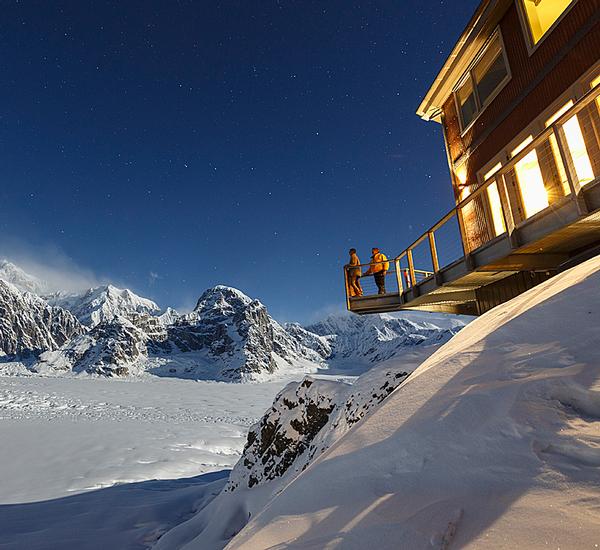
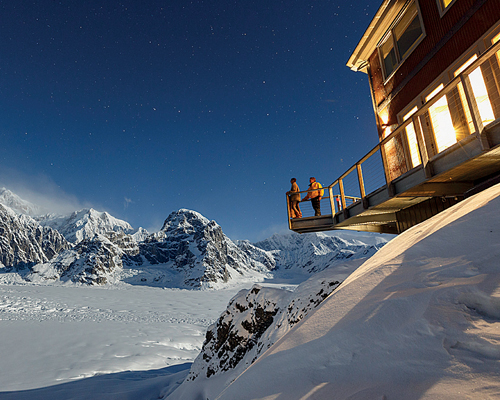
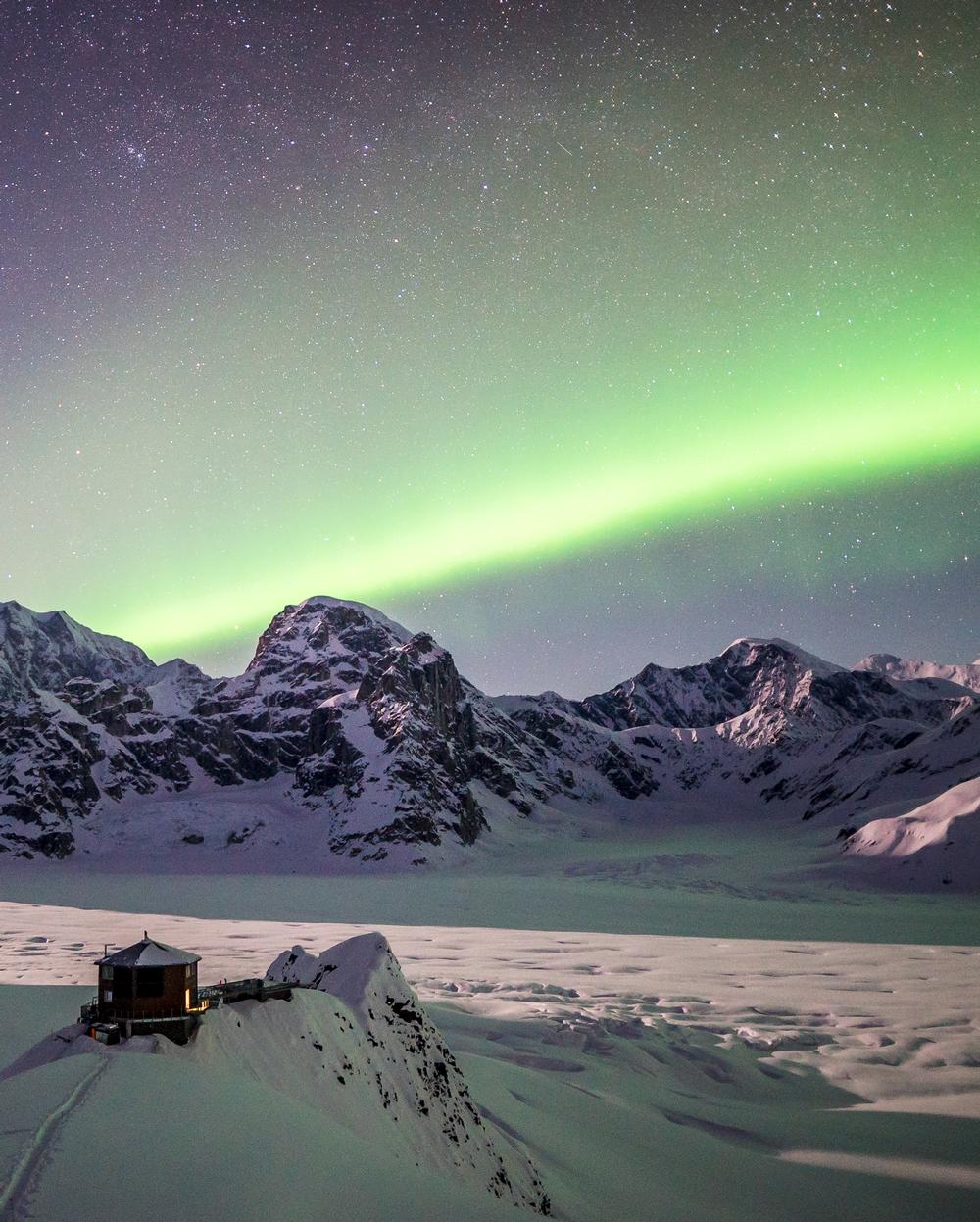
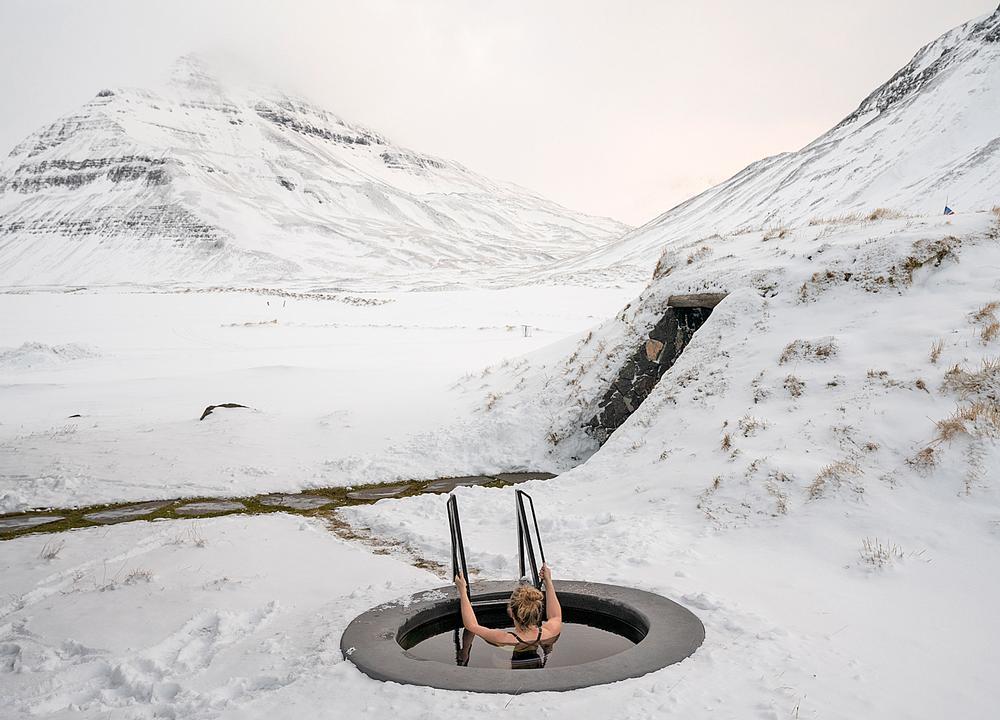
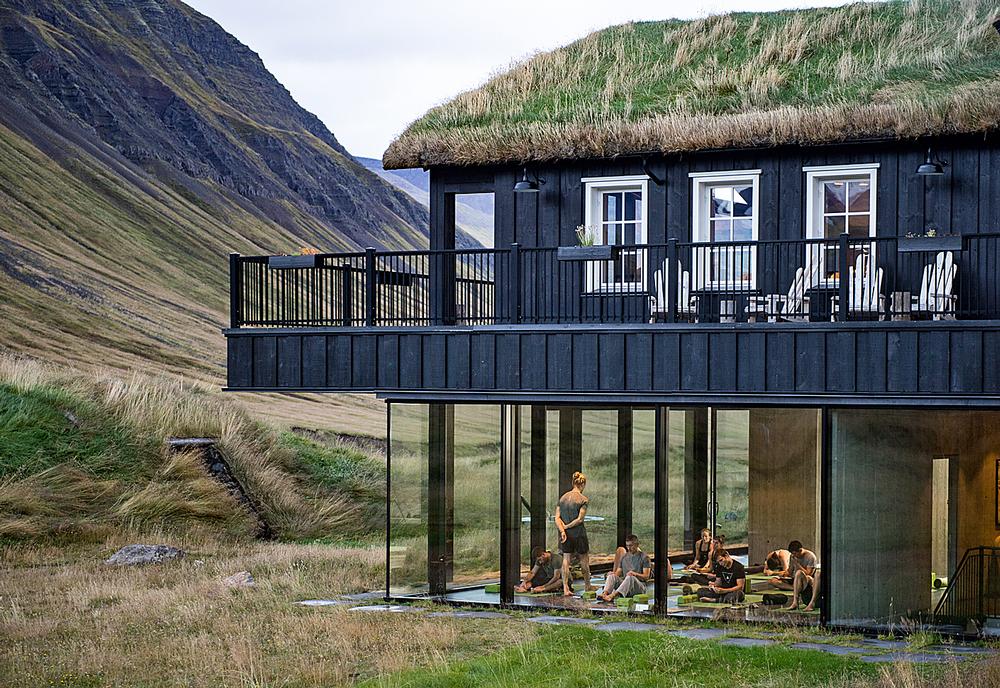
There are a handful of trailblazers in the lodging sector acting as catalysts for this trend. The Ice Hotel in Swedish Lapland launched a remarkable 30 years ago now, but continues to expand and reinvent itself. Other more recent additions include the low-key, but exquisitely isolated Deplar Farm in northern Iceland and Sheldon Chalet, which is located on a rocky outcrop in the interior wilderness of Alaska.
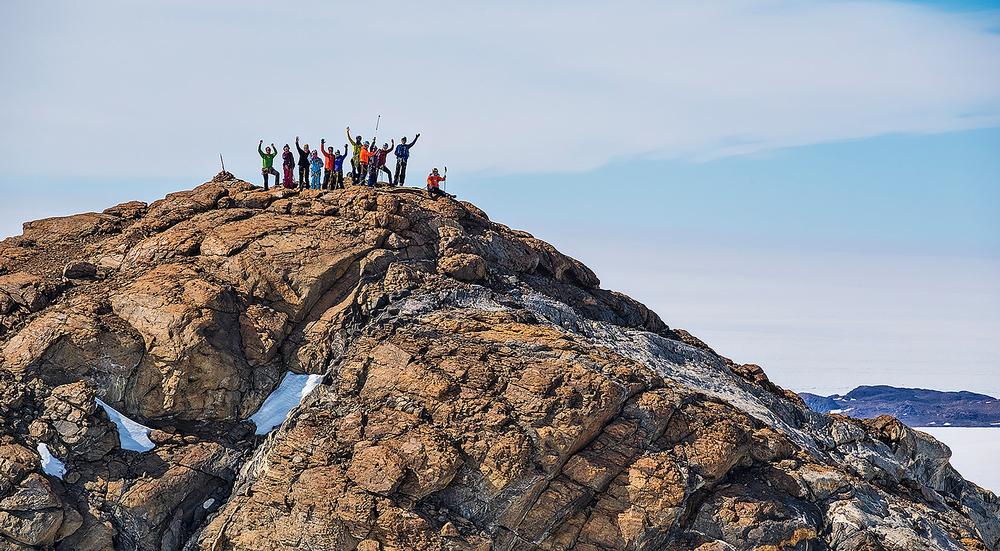
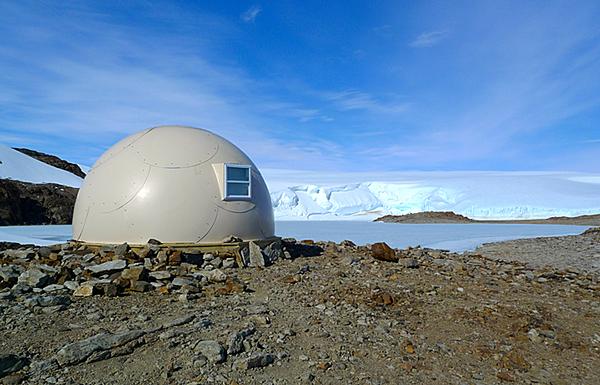
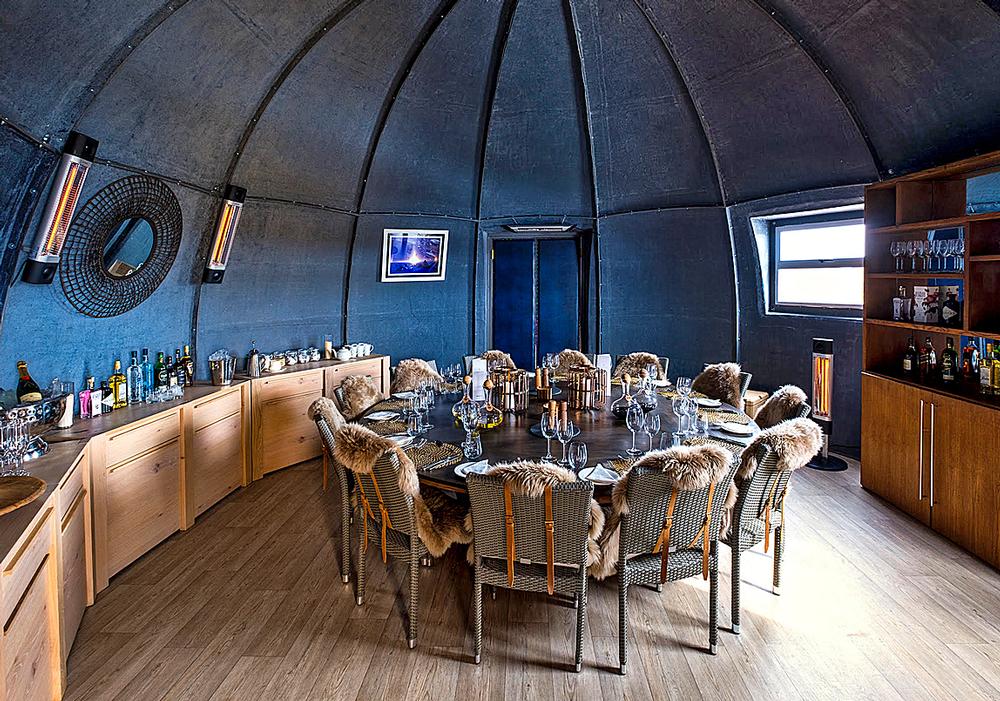
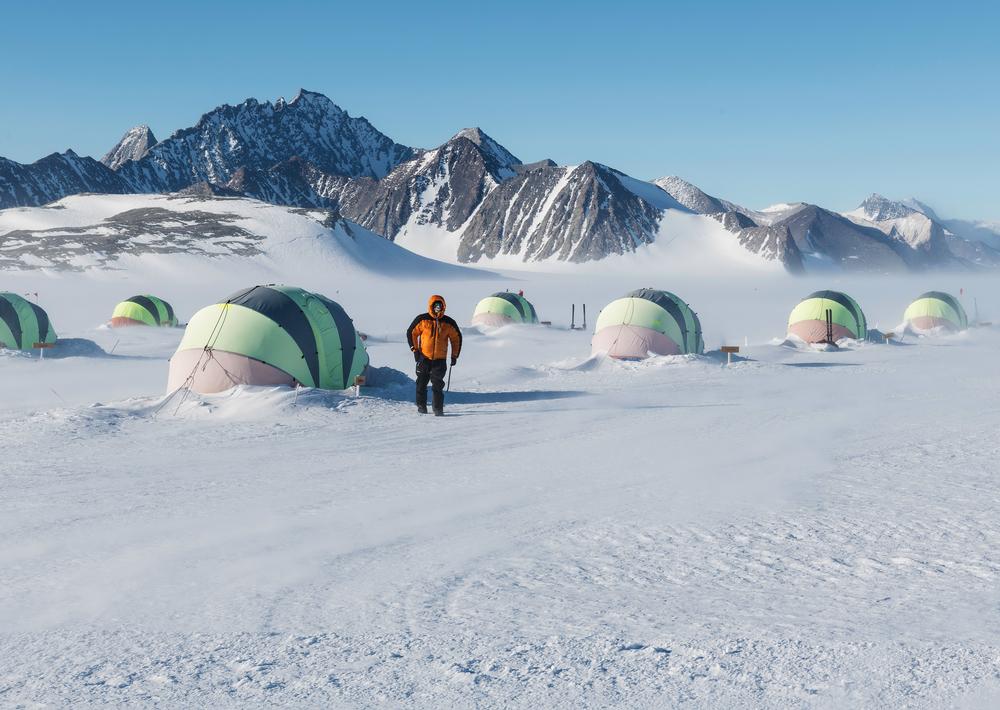
At the other end of the globe options sit the luxury pods of the White Desert resort which only hosts 100 or so visitors each year on a strict zero-impact basis; or the Union Glacier Camp just 1,000km away from the South Pole which only operates from November to January but can accommodate up to 70 guests in its two-person double-walled tents. Both these properties promise a thoroughly memorable, challenging and highly Instagrammable, visitor experience.
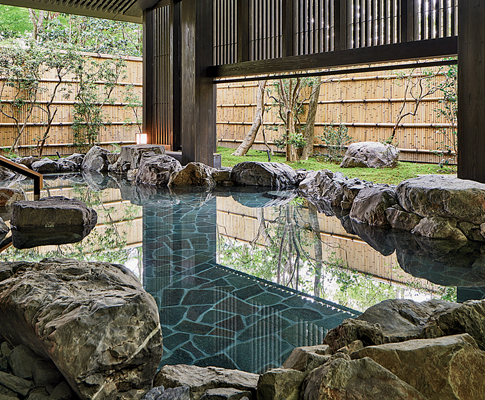
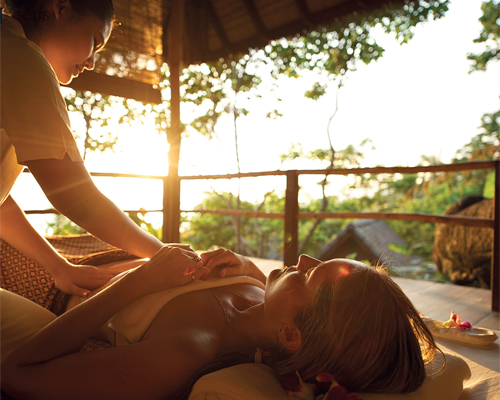
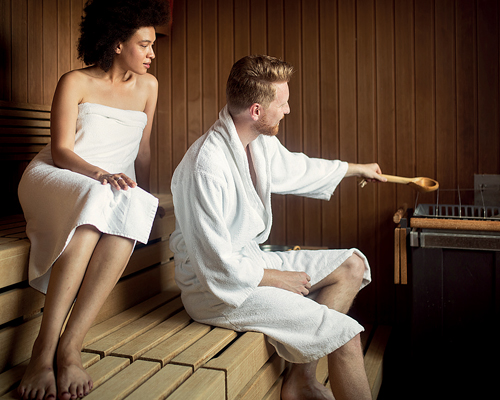
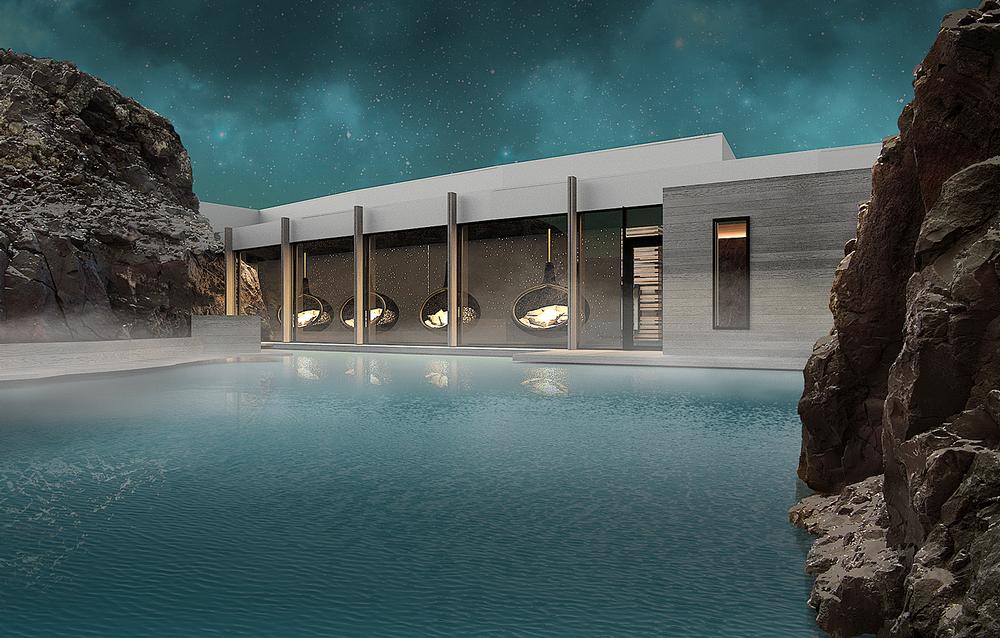
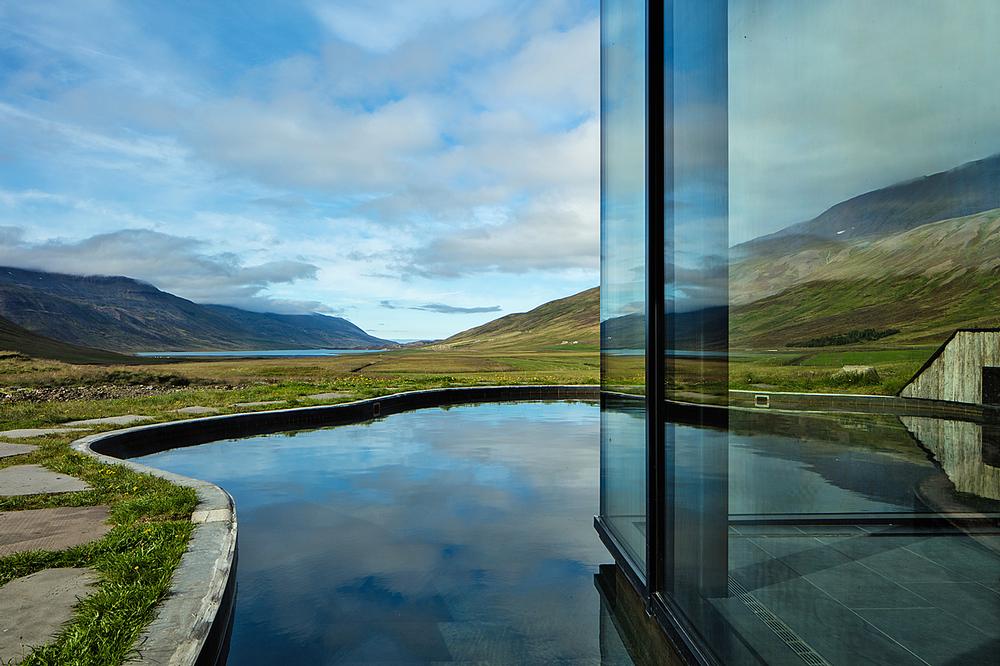
Arctic spas Interestingly, none of these establishments boasts a particularly remarkable spa offer. The general focus is on saunas and hot tubs that allow you to connect with the majestic natural setting. Iceland’s Blue Lagoon geothermal springs, attracting up to 1 million visitors a year, is ahead of the curve, having built a hotel and a subterranean lava spa last year (see SB18/2 p40). But as the sector matures, there are other intriguing schemes on the horizon with a stronger emphasis on spa. These include the Arctic Bath, a floating wellness hotel that’s scheduled to launch on the Lule River in Swedish Lapland in February 2020 and the recently announced Six Senses Össurá Valley, set on a 4,000 acre estate in south Iceland that’s expected in 2022.
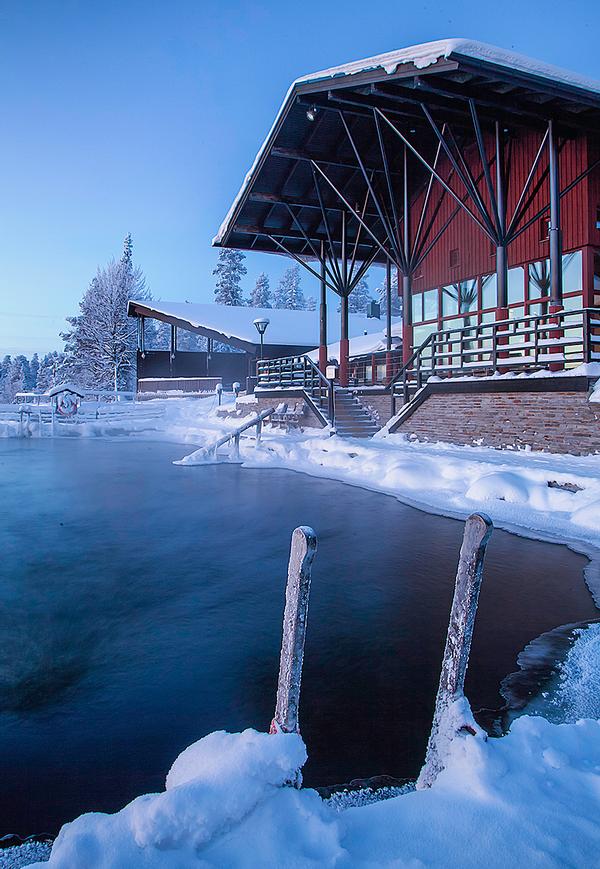
Some developments are tapping into local folklore. The eco-focused Arctic Elements Lakeside Spa, due to open in Finland’s far north in December 2019, will offer traditional shamanic wellbeing rituals and five saunas named after mythological Gods and Goddesses – including a two-storey panoramic heat experience dedicated to watching the Northern Lights. Meanwhile tales of trolls, elves, monsters and invisible men roaming Iceland’s spell-binding volcanic landscape inspired Johannes Torpe’s Red Mountain Resort design (see SB17/4 p36) – although, admittedly, this project seems to be more of an ‘idea’ than a reality at this stage.
The growing trend in cold spa therapies and extreme bathing plays right into the hands of the polar tourism market, inviting participants to explore the limits of hot and cold, breathing and breath retention, exertion and relaxation. It seems inevitable that the likes of Wim Hof (SB17/4 p22) and Dr Marc Cohen (see SB19/1 p46) will take the methods they’ve been evolving and work with local partners to apply them in spectacular settings.
In an interesting twist, Nordic wellness concepts – those focused on bathing and thermal circuits based on alternating hot and cold experiences – are also becoming a popular export. Raison d’Etre is championing this with its LivNordic offering on board Viking Cruise Ships and beyond. While Groupe Nordik’s stunning hot spring facilities (see p36) are a prime example of the Scandi spa influence in Canada.
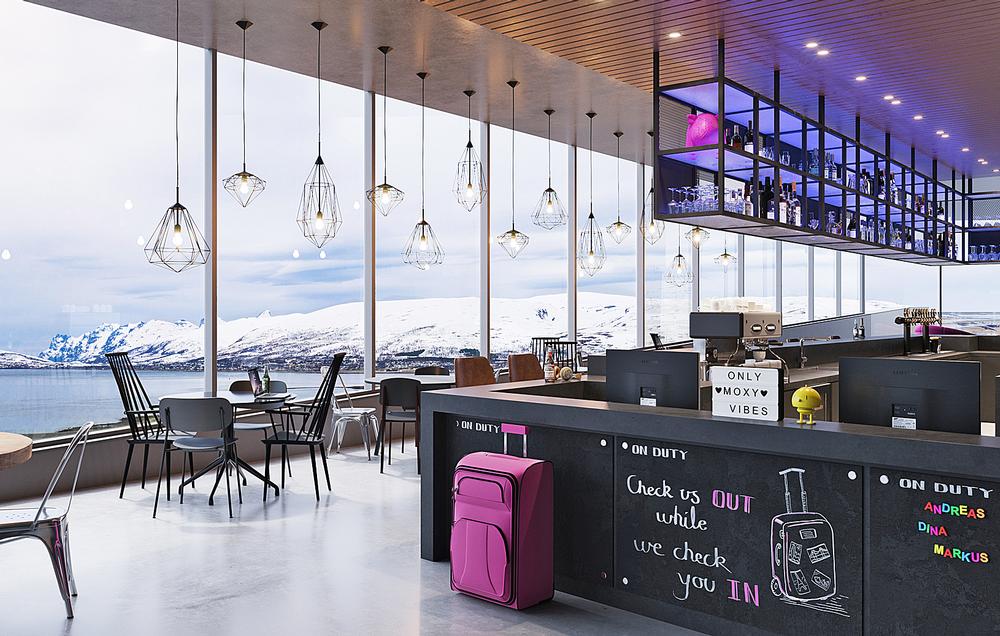
Polar potential With interest in polar tourism showing no signs of waning, I predict every leading luxury brand will have a ‘polar property’ in its portfolio in the next decade. Today, very few do, but Marriott is leading the charge having recently revealed plans for its most northerly property, a 200-room Moxy Hotel in Tromsø, Norway due to open in 2021, and with the design-led Edition under construction in Reykjavik, Iceland. Others will follow, it’s just a matter of time.
As they look around the Arctic Circle, there are three core product types for developers to focus on. The first are tried and tested city hotels, and the other two comprise nature-based resorts, often in a coastal setting, and the ‘winter wonderland’ option, which has witnessed the most growth recently.
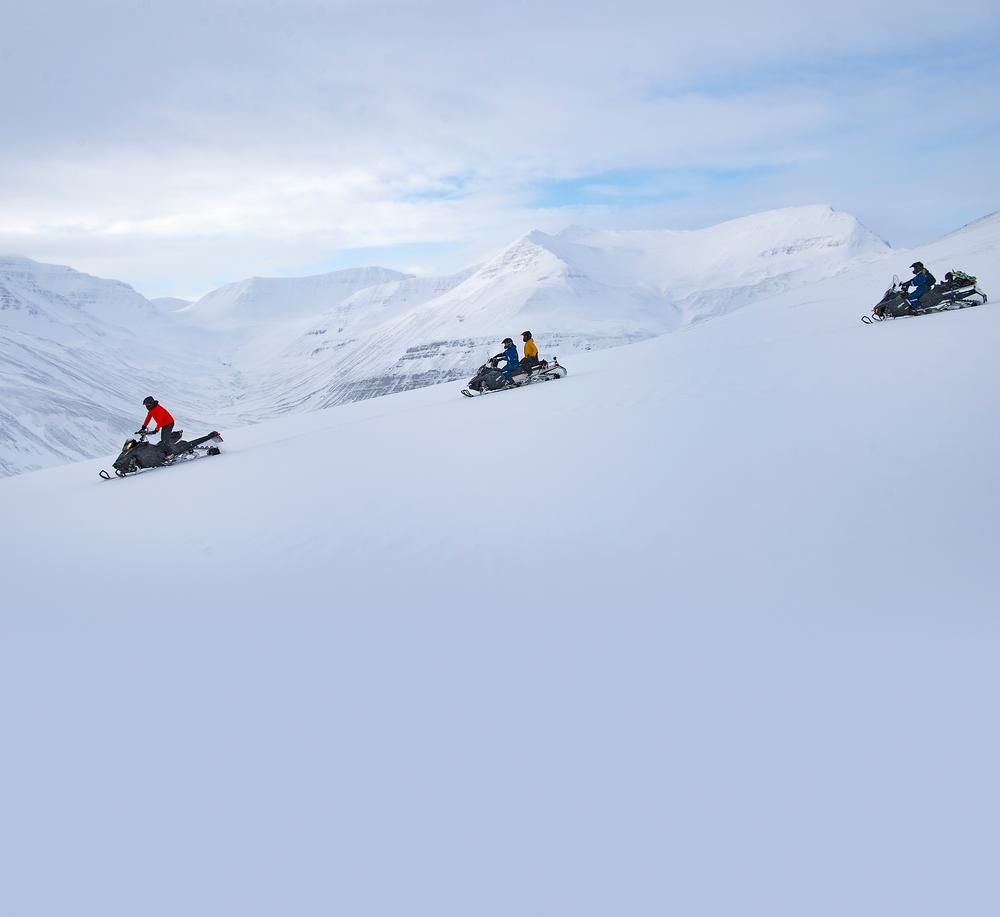
These hotels offer nights in igloos, some with glass roofs to ensure you never miss the Northern Lights, Ski-Doo and husky treks, reindeer herding and ice-hole fishing.
Demand peaks in the colder months and business in the summer can prove challenging, though the inclusion of a spa offering can help extend the season.
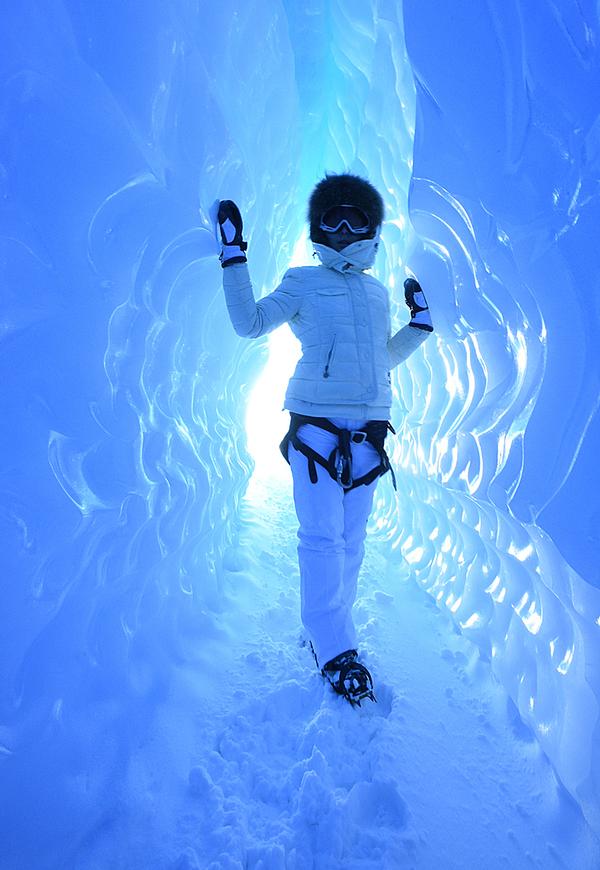
One principle that’s foundational to this new generation of polar properties is that of ‘challenge and reward’. Guests are equipped with the requisite kit and training allowing them to undertake an experience on the very edge of their comfort zone – think bouncing on a RIB boat between icebergs, or spending the night in an igloo – before being welcomed back to a roaring fire, excellent food and the opportunity to recount their adventure with fellow travellers (a dose of hygge, if you like).
A careful balance has to be struck, however. The ‘reward’ without the ‘challenge’ is a little pedestrian and less memorable and the ‘challenge’ without the ‘reward’ is a surefire way to destroy repeat business.
It’s easy to see how the emerging trend for cold spa therapies and extreme bathing fits into this notion. And Deplar Farm is certainly on point with its new ‘boundary-pushing wellness programme’.
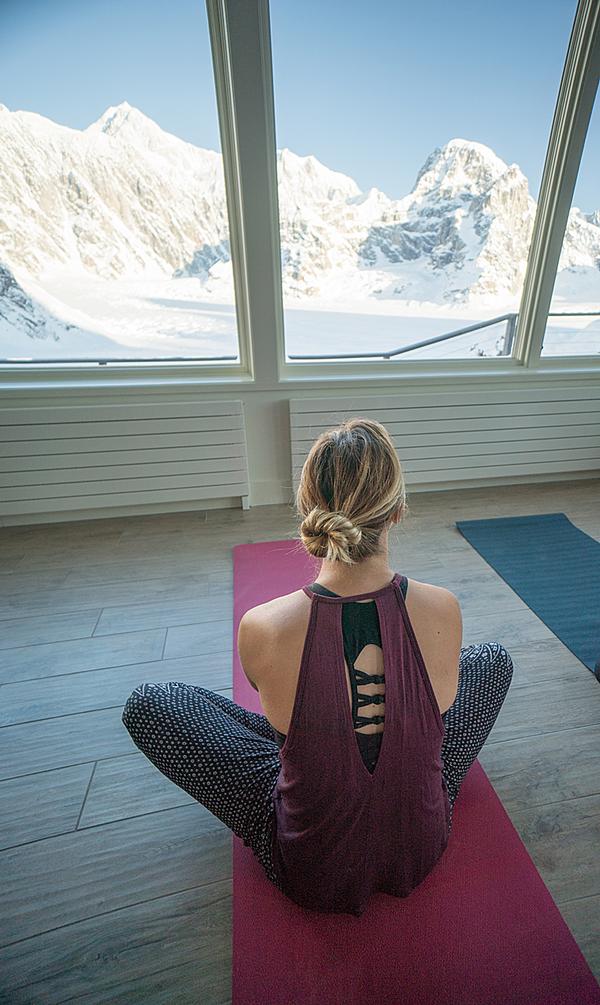
Eleven Life (see p30), delivered in partnership with adventure-specialists Eleven, offers a juxtaposing mix of adrenalin-pumping snow-mobile races, axe throwing and torch-free night walks under the Northern Lights, alongside yoga, spa therapies, sleep-inducing gong baths and Viking sauna sessions combining drumming, breathing techniques and hot and cold plunges to stimulate the immune system and test endurance.
Value over volume However, development in the polar regions is neither easy nor cheap. Quite rightly, environmental considerations and the looming threat of overtourism are taken very seriously, as these are pristine and delicate locations. As a consequence, securing permission or planning for a new camp, hotel or spa can take time and the whole construction process is inevitably a little protracted, given issues of accessibility and the unpredictability of the weather at certain times of the year. In addition, operating costs are comparatively high, given ambient salary levels, certainly in the Nordic countries.
For these reasons, this growing sector is likely to focus on ‘value’ rather than ‘volume’. A room at Deplar Farm is typically priced at well over US$2,000 (€1,830, £1,640) per night, for example, and it will cost you this much per person at Sheldon Chalet and each has a minimum length of stay.
Given the frequency with which exciting new polar camps, hotels and spas are being announced, designers are also being challenged to evolve projects worthy of the calibre of their extraordinary natural settings. Vanilla development simply won’t cut it in this context.
There’s no doubt that you’ll be hearing more news from the poles shortly. These are regions that continue to draw us in and get under our skin. Jean-Baptiste Charcot, a leader of French Antarctic expeditions in the early 1900s, was quoted saying “Why then do we feel this strange attraction to the polar regions, a feeling so powerful and lasting, that when we return home we forget the mental and physical hardships, and want nothing more than to return to them?” It’s all about challenge and reward, but the rewards live on within us while the challenge is temporary – and more of us are discovering this truth.
Ben Martin
Ben Martin leads the resort real estate practice for HKS Advisory Services
[email protected]
Read more from this issue of Attractions Management magazine
View contents of Attractions Management 2019 issue 4
Editor's letter: Democratic wellness
To truly flourish, the spa industry needs to step outside its comfort zone and reach out to different markets with new and exciting business models, says Katie Barnes
Spa Programmes: On the menu
Boundary-pushing wellness in Iceland, self-care focus at Devarana and Civana’s equine retreat all feature in our spa menu round-up
Interview: Alexandre Cantin
Canada’s Groupe Nordik wants to open 10 nature spas, focusing on bathing and thermotherapy, by 2027. Katie Barnes talks to its VP of growth and strategy
Promotional feature: Starpool - Star quality
Wellness expert, Starpool, is known for offering complete wellness solutions with Italian design flair, enabling operators to create world class treatments and experiences
Training: Covering all bases
Resense joins forces with Lobster Ink to create an online training program for multiple spa roles
Promotional feature: Gharieni
Spa equipment innovator, Gharieni, is partnering with leading spas around the world to showcase its products to clients in real world settings, as CEO, Sammy Gharieni, explains
Research: Positive picture
ISPA’s latest US spa study shows continued growth across key metrics and pinpoints CBD and gen Z as trends. Russell Donaldson reports
Promotional feature: Zimmer MedizinSystems - Cool customer
Rainer Bolsinger, who heads up hotel and spa sales of icelab at Zimmer MedizinSystems, and icelab customer Chenot Group, explain how cryotherapy can be incorporated into your business
Promotional feature: Biologique Recherche - Skin deep
Biologique Recherche has spent the past 40 years developing technology and products to understand the skin on an individual level. Pierre-Louis Delapalme and Rupert Schmid tell Spa Business about the Parisian brand’s latest innovations
Research: On the move
The global physical activity market is now worth US$828bn according to a new GWI study. But what emerging trends do spas need to know about?
Promotional feature: SpaSoft - Onwards & upwards
The enhanced integration between SpaSoft and multiple PMS systems will help your team save time, remove the possibility of human error and create an elevated guest experience
Software: Monetising
How is software helping spas to navigate e-commerce and further monetise their relationship with clients
With today’s travellers prioritising ‘extraordinary
experiences’, luxury operators are setting their sights on
the Arctic and Antarctic. But what role do spas have to play?
Leisure and tourism advisor Ben Martin takes a closer look
Are you feeling the ‘pull to the Poles’? If so, you’re in good company. Around 10 million tourists travelled north of the 66th parallel last year to visit Greenland, Alaska and the Arctic regions of Scandinavia and Canada, and this number has been increasing steadily. Heading to the Antarctic is altogether more time consuming, costly and challenging but in order of 45,000 visitors take the ‘penguin pilgrimage’ each year and this number is also rising.
These trips can be pricey, with a seven-day visit to South Pole setting you back around US$50,000 (€45,510, £40,790). The weather is unpredictable, accommodation options are decidedly limited, and trips often take us slightly outside our comfort zone – but maybe that’s what we’re looking for these days. Having explored the smorgasbord of coastal beach resorts on offer today and ticked-off our fair share of must-see cities on weekend breaks, more of us are looking to ‘experience the extraordinary’ and, if we’re honest, the likes of David Attenborough and National Geographic also bear some responsibility in the growing interest in remote locations.
Handful of trailblazers Iceland, which sits a few degrees outside the Arctic Circle, but still epitomises polar tourism, is one of the countries leading the way. Tourism numbers have quadrupled in the last decade to reach 2.3 million in 2018 as guests from all over the world descended on the island to experience its wild nature and rich heritage, or sign up for a super-jeep tour or whale watching. And then to really turbo-charge growth in the market you simply have to factor in the Northern Lights, which if we’re honest feature on everyone’s bucket list.
Predictions from travel specialist Virtuoso in its 2019 Luxe Report, must have brought a smile to the faces of destination marketeers in the Arctic region. The survey – which sees travel agencies analysing motivations for luxury travellers – included exploring new destinations; crossing-off bucket list items; seeking authentic experiences and staying in unconventional accommodation.
There are a handful of trailblazers in the lodging sector acting as catalysts for this trend. The Ice Hotel in Swedish Lapland launched a remarkable 30 years ago now, but continues to expand and reinvent itself. Other more recent additions include the low-key, but exquisitely isolated Deplar Farm in northern Iceland and Sheldon Chalet, which is located on a rocky outcrop in the interior wilderness of Alaska.
At the other end of the globe options sit the luxury pods of the White Desert resort which only hosts 100 or so visitors each year on a strict zero-impact basis; or the Union Glacier Camp just 1,000km away from the South Pole which only operates from November to January but can accommodate up to 70 guests in its two-person double-walled tents. Both these properties promise a thoroughly memorable, challenging and highly Instagrammable, visitor experience.
Arctic spas Interestingly, none of these establishments boasts a particularly remarkable spa offer. The general focus is on saunas and hot tubs that allow you to connect with the majestic natural setting. Iceland’s Blue Lagoon geothermal springs, attracting up to 1 million visitors a year, is ahead of the curve, having built a hotel and a subterranean lava spa last year (see SB18/2 p40). But as the sector matures, there are other intriguing schemes on the horizon with a stronger emphasis on spa. These include the Arctic Bath, a floating wellness hotel that’s scheduled to launch on the Lule River in Swedish Lapland in February 2020 and the recently announced Six Senses Össurá Valley, set on a 4,000 acre estate in south Iceland that’s expected in 2022.
Some developments are tapping into local folklore. The eco-focused Arctic Elements Lakeside Spa, due to open in Finland’s far north in December 2019, will offer traditional shamanic wellbeing rituals and five saunas named after mythological Gods and Goddesses – including a two-storey panoramic heat experience dedicated to watching the Northern Lights. Meanwhile tales of trolls, elves, monsters and invisible men roaming Iceland’s spell-binding volcanic landscape inspired Johannes Torpe’s Red Mountain Resort design (see SB17/4 p36) – although, admittedly, this project seems to be more of an ‘idea’ than a reality at this stage.
The growing trend in cold spa therapies and extreme bathing plays right into the hands of the polar tourism market, inviting participants to explore the limits of hot and cold, breathing and breath retention, exertion and relaxation. It seems inevitable that the likes of Wim Hof (SB17/4 p22) and Dr Marc Cohen (see SB19/1 p46) will take the methods they’ve been evolving and work with local partners to apply them in spectacular settings.
In an interesting twist, Nordic wellness concepts – those focused on bathing and thermal circuits based on alternating hot and cold experiences – are also becoming a popular export. Raison d’Etre is championing this with its LivNordic offering on board Viking Cruise Ships and beyond. While Groupe Nordik’s stunning hot spring facilities (see p36) are a prime example of the Scandi spa influence in Canada.
Polar potential With interest in polar tourism showing no signs of waning, I predict every leading luxury brand will have a ‘polar property’ in its portfolio in the next decade. Today, very few do, but Marriott is leading the charge having recently revealed plans for its most northerly property, a 200-room Moxy Hotel in Tromsø, Norway due to open in 2021, and with the design-led Edition under construction in Reykjavik, Iceland. Others will follow, it’s just a matter of time.
As they look around the Arctic Circle, there are three core product types for developers to focus on. The first are tried and tested city hotels, and the other two comprise nature-based resorts, often in a coastal setting, and the ‘winter wonderland’ option, which has witnessed the most growth recently.
These hotels offer nights in igloos, some with glass roofs to ensure you never miss the Northern Lights, Ski-Doo and husky treks, reindeer herding and ice-hole fishing.
Demand peaks in the colder months and business in the summer can prove challenging, though the inclusion of a spa offering can help extend the season.
One principle that’s foundational to this new generation of polar properties is that of ‘challenge and reward’. Guests are equipped with the requisite kit and training allowing them to undertake an experience on the very edge of their comfort zone – think bouncing on a RIB boat between icebergs, or spending the night in an igloo – before being welcomed back to a roaring fire, excellent food and the opportunity to recount their adventure with fellow travellers (a dose of hygge, if you like).
A careful balance has to be struck, however. The ‘reward’ without the ‘challenge’ is a little pedestrian and less memorable and the ‘challenge’ without the ‘reward’ is a surefire way to destroy repeat business.
It’s easy to see how the emerging trend for cold spa therapies and extreme bathing fits into this notion. And Deplar Farm is certainly on point with its new ‘boundary-pushing wellness programme’.
Eleven Life (see p30), delivered in partnership with adventure-specialists Eleven, offers a juxtaposing mix of adrenalin-pumping snow-mobile races, axe throwing and torch-free night walks under the Northern Lights, alongside yoga, spa therapies, sleep-inducing gong baths and Viking sauna sessions combining drumming, breathing techniques and hot and cold plunges to stimulate the immune system and test endurance.
Value over volume However, development in the polar regions is neither easy nor cheap. Quite rightly, environmental considerations and the looming threat of overtourism are taken very seriously, as these are pristine and delicate locations. As a consequence, securing permission or planning for a new camp, hotel or spa can take time and the whole construction process is inevitably a little protracted, given issues of accessibility and the unpredictability of the weather at certain times of the year. In addition, operating costs are comparatively high, given ambient salary levels, certainly in the Nordic countries.
For these reasons, this growing sector is likely to focus on ‘value’ rather than ‘volume’. A room at Deplar Farm is typically priced at well over US$2,000 (€1,830, £1,640) per night, for example, and it will cost you this much per person at Sheldon Chalet and each has a minimum length of stay.
Given the frequency with which exciting new polar camps, hotels and spas are being announced, designers are also being challenged to evolve projects worthy of the calibre of their extraordinary natural settings. Vanilla development simply won’t cut it in this context.
There’s no doubt that you’ll be hearing more news from the poles shortly. These are regions that continue to draw us in and get under our skin. Jean-Baptiste Charcot, a leader of French Antarctic expeditions in the early 1900s, was quoted saying “Why then do we feel this strange attraction to the polar regions, a feeling so powerful and lasting, that when we return home we forget the mental and physical hardships, and want nothing more than to return to them?” It’s all about challenge and reward, but the rewards live on within us while the challenge is temporary – and more of us are discovering this truth.
Ben Martin
Ben Martin leads the resort real estate practice for HKS Advisory Services
[email protected]
Read more from this issue of Attractions Management magazine
View contents of Attractions Management 2019 issue 4
Editor's letter: Democratic wellness
To truly flourish, the spa industry needs to step outside its comfort zone and reach out to different markets with new and exciting business models, says Katie Barnes
Spa Programmes: On the menu
Boundary-pushing wellness in Iceland, self-care focus at Devarana and Civana’s equine retreat all feature in our spa menu round-up
Interview: Alexandre Cantin
Canada’s Groupe Nordik wants to open 10 nature spas, focusing on bathing and thermotherapy, by 2027. Katie Barnes talks to its VP of growth and strategy
Promotional feature: Starpool - Star quality
Wellness expert, Starpool, is known for offering complete wellness solutions with Italian design flair, enabling operators to create world class treatments and experiences
Training: Covering all bases
Resense joins forces with Lobster Ink to create an online training program for multiple spa roles
Promotional feature: Gharieni
Spa equipment innovator, Gharieni, is partnering with leading spas around the world to showcase its products to clients in real world settings, as CEO, Sammy Gharieni, explains
Research: Positive picture
ISPA’s latest US spa study shows continued growth across key metrics and pinpoints CBD and gen Z as trends. Russell Donaldson reports
Promotional feature: Zimmer MedizinSystems - Cool customer
Rainer Bolsinger, who heads up hotel and spa sales of icelab at Zimmer MedizinSystems, and icelab customer Chenot Group, explain how cryotherapy can be incorporated into your business
Promotional feature: Biologique Recherche - Skin deep
Biologique Recherche has spent the past 40 years developing technology and products to understand the skin on an individual level. Pierre-Louis Delapalme and Rupert Schmid tell Spa Business about the Parisian brand’s latest innovations
Research: On the move
The global physical activity market is now worth US$828bn according to a new GWI study. But what emerging trends do spas need to know about?
Promotional feature: SpaSoft - Onwards & upwards
The enhanced integration between SpaSoft and multiple PMS systems will help your team save time, remove the possibility of human error and create an elevated guest experience
Software: Monetising
How is software helping spas to navigate e-commerce and further monetise their relationship with clients
A US$50 million (£44.2 million, €51.2 million) transformation of Chicago's historic McCormick
Mansion has created a new destination that combines live magic, immersive theatre, dining and
private membership under one roof.
The Montana Historical Society has officially celebrated the opening of its new Montana
Heritage
Center, a US$107 million (£79 million, €92 million) destination that combines immersive
storytelling with cutting-edge audiovisual technology to bring the sta
San Antonio Zoo has reported a US$283 million economic impact for 2025, following a decade-
long transformation programme that has seen almost US$200 million invested into the Texas
attraction.
Plans for the AU$180 million redevelopment of Reef HQ Aquarium in Townsville, Australia, are
progressing, with the project set to transform the attraction into a global centre for reef
education and conservation.
Abu Dhabi-based investment firm Mubadala Capital has made a binding, fully financed
€1 billion
offer to acquire Pierre and Vacances SA, the European holiday resort operator behind the
continental European Center Parcs business.
Disney has reaffirmed its commitment to investing US$30 billion in its US parks and cruise
business by 2033, using new America250 celebrations to underline the role its attractions play
in supporting jobs, tourism and economic growth.
Expo 2030 Riyadh is being planned as a permanent visitor destination, with organisers
confirming the six-million-square-metre site will become a Global Village after the event closes.
The owner of one of Australia's best-known waterparks has acquired a major competitor,
creating a new attractions business spanning two of the country's largest visitor destinations.
The Toverland theme park in the Netherlands has announced a €98m expansion programme
that will add a resort, new attractions and staff facilities as it pursues plans to become a multi-
day destination.
Hotel de France, located on the British Isle of Jersey, has created a wellness retreat package
that includes a hot yoga session that will take place in Jersey Zoo’s butterfly sanctuary.
+ More news
COMPANY PROFILES
Simworx Ltd The company was initially established
in 1997. Terry Monkton and Andrew
Roberts are the key stakeh [more...]
IAAPA EMEA IAAPA Expo Europe was established in 2006 and has grown to the largest international conference and [more...]
instantprint We’re a Yorkshire-based online printer, founded
in 2009 by Adam Carnell and James Kinsella. [more...]
RMA Ltd RMA Ltd is a one-stop global company
that can design, build and produce from a
greenfield site upw [more...]