Latest
issue
GET ATTRACTIONS MANAGEMENT
magazine
Yes! Send me the FREE digital edition of Attractions Management and the FREE weekly Attractions Management ezines and breaking news alerts!
Not right now, thanksclose this window I've already subscribed. I've already subscribed.
Get Attractions Management digital magazine FREE
Sign up here ▸
Jobs   News   Features   Products   Company profilesProfiles   Magazine   Handbook   Advertise    Subscribe  
Research
Common ground

Visitors co-create dark tourism experiences through social interaction, according to new research that challenges operators to design their exhibitions accordingly. The paper’s author Dr Rachael Ironside discusses the findings


Visits to dark heritage attractions are shaped less by exhibits, explanation panels and audio guides, and more by interactions with other visitors, according to recent research led by Dr Rachael Ironside at Aberdeen Business School, Robert Gordon University and funded by the British Academy.

The research project, entitled Talking about prisons: making sense of difficult heritage at Peterhead Prison Museum explored how people make sense of difficult histories by studying the way visitors experience exhibits at Peterhead Prison Museum, part of the Cove Group, in Scotland, UK.

The meaning of difficult exhibits is not fixed, according to the research, but is instead created moment by moment through conversations, empathy, curiosity, humour and shared reactions.

The findings challenge the idea that some heritage sites are inherently darker than others, arguing that the perceived darkness of an attraction is constantly shifting according to the dynamics of a particular visit, who is experiencing it and their relationship to the other visitors, as well as their cultural understanding of the subject matter.

The findings pose interesting questions about how much the visitor experience can be engineered via design, layout and interpretation, and suggests that operators should consider how their attraction mediates and supports visitor interaction.

“Visitors constantly look to one another to make sense of what they see,” says professor Dirk vom Lehn, professor of organisation and practice at King’s Business School. “These everyday interactions shape how dark an exhibit feels and what people take away. Exhibitions should be designed with social interaction in mind, not just individual reflection.”

One of the most surprising findings was how deeply social dark tourism is

“Dark heritage is not something people simply consume. It’s something they actively perform, negotiate and co-create with others,” says Dr Rachael Ironside, corresponding author and associate professor at Robert Gordon University. “Understanding this social dimension is essential for anyone seeking to present difficult histories responsibly.”

Here Dr Ironside talks us through the report’s main findings

What prompted this report?

This research was prompted by a gap in understanding in how people make sense of difficult heritage in real time. While prison museums and similar sites often aim to educate the public about justice, punishment and human rights, very little was known about how visitors interpret difficult histories as they move through dark sites, and the role of interaction in this. 

Studying these interactions matters because dark heritage sites play a growing role in shaping public narratives about difficult pasts. Understanding how meaning is made helps site operators to understand how their exhibits are being engaged with and whether the intended interpretation is achieved in practice. 

What were the headline findings? 

Our main findings illustrate that visitors co-produce their experience at difficult heritage sites together. Meaning emerges through conversation, joint interaction with artefacts, shared emotional responses and even jokes.

We also observed that the ‘darkness’ of a site isn’t fixed or necessarily determined by the exhibit’s design; rather what feels meaningful or potentially disturbing is negotiated through interaction and shared cultural understanding. It is often the subtle emotional and embodied responses which matter – as people lean in, step back, mimic how a form of punishment was used, gasp, laugh – that shapes how people interpret difficult exhibits. 

Did any of the findings surprise you?

One of the most surprising findings was how deeply social dark tourism is. We might assume that visitors process difficult heritage materials and artefacts individually, through personal reflection. Instead, people rely heavily on companions – and even strangers – to interpret what they’re seeing.

Another unexpected insight was the role of humour. Humour is complex in dark tourism, we know entertainment is a key motivator for visitors exploring dark sites, but it presents challenges when presenting difficult pasts. Our findings revealed that humour is often used by visitors, and while sometimes this did appear to dismiss the severity of an exhibit, on other occasions it instigated some deeply human moments, helping people to connect and negotiate difficult topics. 

How can museum and attractions operators use these findings to improve their offerings?

Our findings point to the need for dark attractions to design exhibits that foster interaction between visitors. We found in our case study site that the use of headsets for the whole experience, while of excellent quality, often hampered conversation and interaction between visitors. We also noticed that the presence and behaviour of strangers can be just as influential on visitor engagement as companions, especially in the way they approach and exit an exhibit space. Our findings may help museum professionals to design attractions that account for how people respond to each other, and support both personal contemplation and group interaction. 

How can operators support visitors in making sense of the content and dealing with their emotional reactions to it? 

Visitors often turn to each other to manage and share their own emotional response to an exhibit whether that is shock, sadness, discomfort or empathy. We also noticed that attractions staff can play an important role in helping visitors to understand and make sense of what they have seen, often resulting in quite difficult topics of conversation (such as talking about family members who were impacted by the issues on display).

Operators can support this by offering reflective prompts to help groups process and make sense of what they have seen together, design exhibits that make space for interaction, offer cues (if needed) that signal when a space contains distressing material and train staff to deal with difficult conversations that may emerge in these spaces. 

Do you have any suggestions about how they might respond to the fact that meaning is co-created at dark sites?

These findings highlight an opportunity, rather than a challenge, for dark heritage sites. They suggest that rather than being in complete control of interpretation, operators are facilitators of this process. Visitors bring their own histories, experiences, questions and emotions to dark sites and turn to each other to make sense of what they see. Operators may benefit from reviewing their current offering and observing visitor interactions to consider whether their exhibits account for this. Do they encourage conversation? Prompt reflection? Does the space at and between exhibits encourage this or hinder it?

Can you think of any museums that engage with the social dimension of meaning-making in an interesting way? 

I recently visited the National Prison Museum (Gevangenisemuseum) in Veenhuizen, Netherlands with my research colleague, Alona Roitershtein. We really enjoyed the exhibits that brought modern issues of crime and punishment forward with interactive exhibitions.

The prompt to interact wasn’t obvious, but the varied storytelling components, opportunity to pass judgement on the cases, and layout of the exhibition meant that we had some really interesting discussions, and we continued those conversations after our visit – we still speak about it now. I think the important lesson here is that prompts for interaction don’t need to be obvious; they can emerge through creative, novel layouts and designs that evoke curiosity. 

What’s next for the research?

We’re very keen to continue our research into other dark tourism attractions and beyond. We are currently working on a proposal to extend this initial case study into a UK-wide study of penal heritage attractions, however, we would also welcome collaboration or conversations with those working in attractions and would like to explore visitor interaction further. 

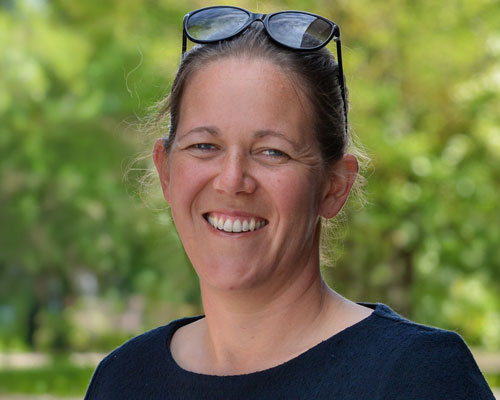
Dr Rachael Ironside
Rachael Ironside

"Dark heritage is not something people simply consume. It’s something they actively co-create with others" – Rachael Ironside 

Read more from this issue of Attractions Management magazine

View contents of Attractions Management 2026 issue 1
  • Editor's letter: Time to be bold
    This spring, the Eden Project turns 25. Its success shows the power of dreaming, and is a symbol of the ‘unquenchable optimism’ the world needs right now
  • AM People: Dr Frederic Bertley
    As the president of one of America’s top science centres wins a Thea Catalyst Award, he tells us why his mission is more urgent than ever
  • AM People: Vichayuth Meenaphant
    A radical zoo building planned for Poland’s Orientarium attraction will transform the way visitors interact with the animals, says its designer
  • AM People: Andy Jasper
    With construction starting on Eden Morecambe and celebrations underway in Cornwall, it’s an exciting time for the Eden Project
  • Theme parks: Guy Vassel
    As Parc Asterix embarks on its biggest ever development project and expands outside of France for the first time, its deputy director lets us in on the plans
  • Interview: Anna Warnecke
    Ahead of the opening of a major new time-travelling theme park in north east England, the CEO of Kynren shares the vision
  • Art museum: The art of stillness
    Thailand’s most anticipated art museum has been designed to foster slow, spiritual encounters with contemporary art
  • Museum: Story time
    More than a decade after filmmaker George Lucas pitched the idea of funding an art museum for the people, his $1bn institution is preparing to open in LA
  • Visitor attraction: In the spotlight
    Revered in South Africa, but branded a traitor in the UK, Victorian activist Emily Hobhouse is the subject of an award-winning Cornish museum. We speak to its founder
  • Immersive attractions: Nick Moran
    Wild West open world adventure Phantom Peak is embarking on a new era with a huge new venue and major expansion plans
  • Research: Common ground
    Visitors create their own experiences at dark tourism attractions - should operators focus less on design and more on supporting interaction?
Crowd in front of prison guard
Dark heritage attractions should be designed with social interactions in mind / Courtesy Peterhead Prison Museum
Family looking inside prison cell
Humour plays a complex role in dark tourism / Courtesy Peterhead Prison Museum
Woman looking at prisoner portraits
Attractions operators have long struggled with how to present difficult histories / Shutterstock/ProximaCentauri1
Dr Rachael Ironside
Dr Ironside’s research explores dark tourism, heritage and culture / Kami Thompson
Couples looking shocked
Children and adult looking at exhibit
Operators can support visitors in making sense of difficult subject matter / Shutterstock/Monkey Business Images
Crowd with headsets in museum
The research found that the use of headsets can hamper interaction / Shutterstock/Antonie de Rooji
COMPANY PROFILES
ProSlide Technology, Inc.

A former national ski team racer, ProSlide® CEO Rick Hunter’s goal has been to integrate the smoot [more...]
Holovis

Holovis is a privately owned company established in 2004 by CEO Stuart Hetherington. [more...]
Polin Waterparks

Polin was founded in Istanbul in 1976. Polin has since grown into a leading company in the waterpa [more...]
instantprint

We’re a Yorkshire-based online printer, founded in 2009 by Adam Carnell and James Kinsella. [more...]
+ More profiles  
FEATURED SUPPLIER

Iconic Liverpool attraction opens door to new operators
An opportunity to reimagine one of the UK’s most recognisable towers has been formally opened by Rivington Hark, as St Johns Beacon invites operators and partners to shape its next phase. [more...]
CATALOGUE GALLERY
 

+ More catalogues  
DIRECTORY
+ More directory  
DIARY


23-26 Aug 2026

Elevate Spa Riviera Maya Edition

The Riviera Maya Edition Kanai, Playa del Carmen, Mexico
29 Sep - 02 Oct 2026

Synergy - The Retreat Show

Pical Resort, Valamar Collection, Porec, Croatia
+ More diary  
LATEST ISSUES
+ View Magazine Archive

Attractions Management

2026 issue 1


View issue contents
View on turning pages
Download PDF
FREE digital subscription
Print subscription

Attractions Management

2025 issue 2


View issue contents
View on turning pages
Download PDF
FREE digital subscription
Print subscription

Attractions Management

2025 issue 1


View issue contents
View on turning pages
Download PDF
FREE digital subscription
Print subscription

Attractions Management

2024 issue 4


View issue contents
View on turning pages
Download PDF
FREE digital subscription
Print subscription

Attractions Management News

06 Apr 2020 issue 153


View on turning pages
Download PDF
View archive
FREE digital subscription
Print subscription

Attractions Handbook

2019


View issue contents
View on turning pages
Download PDF
FREE digital subscription
Print subscription
 
ABOUT LEISURE MEDIA
LEISURE MEDIA MAGAZINES
LEISURE MEDIA HANDBOOKS
LEISURE MEDIA WEBSITES
LEISURE MEDIA PRODUCT SEARCH
 
ATTRACTIONS MANAGEMENT
ATTRACTIONS MANAGEMENT NEWS
ATTRACTIONS HANDBOOK
PRINT SUBSCRIPTIONS
FREE DIGITAL SUBSCRIPTIONS
ADVERTISE . CONTACT US

Leisure Media
Tel: +44 (0)1462 431385

©Cybertrek 2026
Get Attractions Management digital magazine FREE
Sign up here ▸
Jobs    News   Products   Magazine   Subscribe
Research
Common ground

Visitors co-create dark tourism experiences through social interaction, according to new research that challenges operators to design their exhibitions accordingly. The paper’s author Dr Rachael Ironside discusses the findings


Visits to dark heritage attractions are shaped less by exhibits, explanation panels and audio guides, and more by interactions with other visitors, according to recent research led by Dr Rachael Ironside at Aberdeen Business School, Robert Gordon University and funded by the British Academy.

The research project, entitled Talking about prisons: making sense of difficult heritage at Peterhead Prison Museum explored how people make sense of difficult histories by studying the way visitors experience exhibits at Peterhead Prison Museum, part of the Cove Group, in Scotland, UK.

The meaning of difficult exhibits is not fixed, according to the research, but is instead created moment by moment through conversations, empathy, curiosity, humour and shared reactions.

The findings challenge the idea that some heritage sites are inherently darker than others, arguing that the perceived darkness of an attraction is constantly shifting according to the dynamics of a particular visit, who is experiencing it and their relationship to the other visitors, as well as their cultural understanding of the subject matter.

The findings pose interesting questions about how much the visitor experience can be engineered via design, layout and interpretation, and suggests that operators should consider how their attraction mediates and supports visitor interaction.

“Visitors constantly look to one another to make sense of what they see,” says professor Dirk vom Lehn, professor of organisation and practice at King’s Business School. “These everyday interactions shape how dark an exhibit feels and what people take away. Exhibitions should be designed with social interaction in mind, not just individual reflection.”

One of the most surprising findings was how deeply social dark tourism is

“Dark heritage is not something people simply consume. It’s something they actively perform, negotiate and co-create with others,” says Dr Rachael Ironside, corresponding author and associate professor at Robert Gordon University. “Understanding this social dimension is essential for anyone seeking to present difficult histories responsibly.”

Here Dr Ironside talks us through the report’s main findings

What prompted this report?

This research was prompted by a gap in understanding in how people make sense of difficult heritage in real time. While prison museums and similar sites often aim to educate the public about justice, punishment and human rights, very little was known about how visitors interpret difficult histories as they move through dark sites, and the role of interaction in this. 

Studying these interactions matters because dark heritage sites play a growing role in shaping public narratives about difficult pasts. Understanding how meaning is made helps site operators to understand how their exhibits are being engaged with and whether the intended interpretation is achieved in practice. 

What were the headline findings? 

Our main findings illustrate that visitors co-produce their experience at difficult heritage sites together. Meaning emerges through conversation, joint interaction with artefacts, shared emotional responses and even jokes.

We also observed that the ‘darkness’ of a site isn’t fixed or necessarily determined by the exhibit’s design; rather what feels meaningful or potentially disturbing is negotiated through interaction and shared cultural understanding. It is often the subtle emotional and embodied responses which matter – as people lean in, step back, mimic how a form of punishment was used, gasp, laugh – that shapes how people interpret difficult exhibits. 

Did any of the findings surprise you?

One of the most surprising findings was how deeply social dark tourism is. We might assume that visitors process difficult heritage materials and artefacts individually, through personal reflection. Instead, people rely heavily on companions – and even strangers – to interpret what they’re seeing.

Another unexpected insight was the role of humour. Humour is complex in dark tourism, we know entertainment is a key motivator for visitors exploring dark sites, but it presents challenges when presenting difficult pasts. Our findings revealed that humour is often used by visitors, and while sometimes this did appear to dismiss the severity of an exhibit, on other occasions it instigated some deeply human moments, helping people to connect and negotiate difficult topics. 

How can museum and attractions operators use these findings to improve their offerings?

Our findings point to the need for dark attractions to design exhibits that foster interaction between visitors. We found in our case study site that the use of headsets for the whole experience, while of excellent quality, often hampered conversation and interaction between visitors. We also noticed that the presence and behaviour of strangers can be just as influential on visitor engagement as companions, especially in the way they approach and exit an exhibit space. Our findings may help museum professionals to design attractions that account for how people respond to each other, and support both personal contemplation and group interaction. 

How can operators support visitors in making sense of the content and dealing with their emotional reactions to it? 

Visitors often turn to each other to manage and share their own emotional response to an exhibit whether that is shock, sadness, discomfort or empathy. We also noticed that attractions staff can play an important role in helping visitors to understand and make sense of what they have seen, often resulting in quite difficult topics of conversation (such as talking about family members who were impacted by the issues on display).

Operators can support this by offering reflective prompts to help groups process and make sense of what they have seen together, design exhibits that make space for interaction, offer cues (if needed) that signal when a space contains distressing material and train staff to deal with difficult conversations that may emerge in these spaces. 

Do you have any suggestions about how they might respond to the fact that meaning is co-created at dark sites?

These findings highlight an opportunity, rather than a challenge, for dark heritage sites. They suggest that rather than being in complete control of interpretation, operators are facilitators of this process. Visitors bring their own histories, experiences, questions and emotions to dark sites and turn to each other to make sense of what they see. Operators may benefit from reviewing their current offering and observing visitor interactions to consider whether their exhibits account for this. Do they encourage conversation? Prompt reflection? Does the space at and between exhibits encourage this or hinder it?

Can you think of any museums that engage with the social dimension of meaning-making in an interesting way? 

I recently visited the National Prison Museum (Gevangenisemuseum) in Veenhuizen, Netherlands with my research colleague, Alona Roitershtein. We really enjoyed the exhibits that brought modern issues of crime and punishment forward with interactive exhibitions.

The prompt to interact wasn’t obvious, but the varied storytelling components, opportunity to pass judgement on the cases, and layout of the exhibition meant that we had some really interesting discussions, and we continued those conversations after our visit – we still speak about it now. I think the important lesson here is that prompts for interaction don’t need to be obvious; they can emerge through creative, novel layouts and designs that evoke curiosity. 

What’s next for the research?

We’re very keen to continue our research into other dark tourism attractions and beyond. We are currently working on a proposal to extend this initial case study into a UK-wide study of penal heritage attractions, however, we would also welcome collaboration or conversations with those working in attractions and would like to explore visitor interaction further. 

Dr Rachael Ironside
Rachael Ironside

"Dark heritage is not something people simply consume. It’s something they actively co-create with others" – Rachael Ironside 

Read more from this issue of Attractions Management magazine

View contents of Attractions Management 2026 issue 1
  • Editor's letter: Time to be bold
    This spring, the Eden Project turns 25. Its success shows the power of dreaming, and is a symbol of the ‘unquenchable optimism’ the world needs right now
  • AM People: Dr Frederic Bertley
    As the president of one of America’s top science centres wins a Thea Catalyst Award, he tells us why his mission is more urgent than ever
  • AM People: Vichayuth Meenaphant
    A radical zoo building planned for Poland’s Orientarium attraction will transform the way visitors interact with the animals, says its designer
  • AM People: Andy Jasper
    With construction starting on Eden Morecambe and celebrations underway in Cornwall, it’s an exciting time for the Eden Project
  • Theme parks: Guy Vassel
    As Parc Asterix embarks on its biggest ever development project and expands outside of France for the first time, its deputy director lets us in on the plans
  • Interview: Anna Warnecke
    Ahead of the opening of a major new time-travelling theme park in north east England, the CEO of Kynren shares the vision
  • Art museum: The art of stillness
    Thailand’s most anticipated art museum has been designed to foster slow, spiritual encounters with contemporary art
  • Museum: Story time
    More than a decade after filmmaker George Lucas pitched the idea of funding an art museum for the people, his $1bn institution is preparing to open in LA
  • Visitor attraction: In the spotlight
    Revered in South Africa, but branded a traitor in the UK, Victorian activist Emily Hobhouse is the subject of an award-winning Cornish museum. We speak to its founder
  • Immersive attractions: Nick Moran
    Wild West open world adventure Phantom Peak is embarking on a new era with a huge new venue and major expansion plans
  • Research: Common ground
    Visitors create their own experiences at dark tourism attractions - should operators focus less on design and more on supporting interaction?
Crowd in front of prison guard
Dark heritage attractions should be designed with social interactions in mind / Courtesy Peterhead Prison Museum
Family looking inside prison cell
Humour plays a complex role in dark tourism / Courtesy Peterhead Prison Museum
Woman looking at prisoner portraits
Attractions operators have long struggled with how to present difficult histories / Shutterstock/ProximaCentauri1
Dr Rachael Ironside
Dr Ironside’s research explores dark tourism, heritage and culture / Kami Thompson
Couples looking shocked
Children and adult looking at exhibit
Operators can support visitors in making sense of difficult subject matter / Shutterstock/Monkey Business Images
Crowd with headsets in museum
The research found that the use of headsets can hamper interaction / Shutterstock/Antonie de Rooji
LATEST NEWS
Butterfly sanctuary to host hot yoga during retreat at Jersey Zoo for Hotel de France
Hotel de France, located on the British Isle of Jersey, has created a wellness retreat package that includes a hot yoga session that will take place in Jersey Zoo’s butterfly sanctuary.
Warner Bros Discovery collaborates on upcoming Pompeii attraction
A new immersive attraction designed to transport visitors into the final hours of ancient Pompeii is preparing to open near the world-famous archaeological site in southern Italy.
Bob Rogers hands BRC to long-serving leadership team
Experience design company, BRC Imagination Arts, has completed a transition that sees founder Bob Rogers pass ownership of the business to four long-serving senior executives, while remaining actively involved with the company.
Rainer Maelzer joins Therme Group as chief entertainment officer
Rainer Maelzer, an experiential entertainment innovator, has been appointed chief entertainment officer by Therme Group.
Movie Park Germany reveals new Paramount attraction as part of its 30th anniversary celebrations
Movie Park Germany has opened a new Paramount Pictures-themed attraction as part of its 30th anniversary celebrations, using immersive storytelling and adaptive reuse to reinforce the park’s longstanding “Hollywood in Germany” positioning.
Therme Manchester reveals 90:90 strategy – 90 per cent of the UK population within a 90-minute drive of a Therme
Therme Manchester’s 28-acre development, which will include interconnected glass pavilions that measure 65,000sq m, will be the largest bathing and wellbeing attraction in the world once complete, according to prof David Russell, CEO of Therme UK. 
Efteling expands family offer with new Hooghmoed drop tower
Efteling has opened Hooghmoed, a new family drop tower designed to broaden the appeal of its recently launched Sirene Island themed area and introduce younger visitors to thrill attractions.
Universal and Puy du Fou projects point to rise of Oxford–Cambridge corridor
A proposed Puy du Fou development near Bicester and Universal Destinations and Experiences’ planned resort in Bedford are emerging as part of a wider transformation of the Oxford– Cambridge Growth Corridor into a major centre for UK leisure and tourism inv
Shedd Aquarium upgrades its visitor experience with new Immersion Theater
Shedd Aquarium has opened the Immersion Theater developed in partnership with SimEx- Iwerks, as part of a wider strategy to enhance the guest experience and create additional revenue opportunities.
UK government cuts VAT on attractions to boost summer visitor economy
The UK government has announced a temporary reduction in VAT on visitor attractions and children’s meals as part of a summer cost-of-living support package designed to stimulate the visitor economy and encourage family days out.
Joy as a radical act: Yinka Ilori launches solo exhibition celebrating the rebellious power of spreading happiness
As designer Yinka Ilori prepares for his first solo gallery show in London, he speaks exclusively to CLADmag about his mission to spread joy, the power of play, and his bold approach to using colour (including the colours you won’t see in his work).
Government of Thailand reveals it is courting major theme park operators
The government of Thailand is exploring plans for a THB300bn (£6.3bn, US$8.3bn) entertainment complex in the country’s Eastern Economic Corridor (EEC), with officials proposing a large-scale theme park and sports destination as part of a broader tourism and economic development strategy.
+ More news   
 
COMPANY PROFILES
ProSlide Technology, Inc.

A former national ski team racer, ProSlide® CEO Rick Hunter’s goal has been to integrate the smoot [more...]
Holovis

Holovis is a privately owned company established in 2004 by CEO Stuart Hetherington. [more...]
Polin Waterparks

Polin was founded in Istanbul in 1976. Polin has since grown into a leading company in the waterpa [more...]
instantprint

We’re a Yorkshire-based online printer, founded in 2009 by Adam Carnell and James Kinsella. [more...]
+ More profiles  
FEATURED SUPPLIER

Iconic Liverpool attraction opens door to new operators
An opportunity to reimagine one of the UK’s most recognisable towers has been formally opened by Rivington Hark, as St Johns Beacon invites operators and partners to shape its next phase. [more...]
CATALOGUE GALLERY
+ More catalogues  
DIRECTORY
+ More directory  
DIARY


23-26 Aug 2026

Elevate Spa Riviera Maya Edition

The Riviera Maya Edition Kanai, Playa del Carmen, Mexico
29 Sep - 02 Oct 2026

Synergy - The Retreat Show

Pical Resort, Valamar Collection, Porec, Croatia
+ More diary  


ADVERTISE . CONTACT US

Leisure Media
Tel: +44 (0)1462 431385

©Cybertrek 2026

ABOUT LEISURE MEDIA
LEISURE MEDIA MAGAZINES
LEISURE MEDIA HANDBOOKS
LEISURE MEDIA WEBSITES
LEISURE MEDIA PRODUCT SEARCH
ATTRACTIONS MANAGEMENT NEWS
ATTRACTIONS HANDBOOK
PRINT SUBSCRIPTIONS
FREE DIGITAL SUBSCRIPTIONS