At the end of February 2026, the gates to the 30,000sq ft Wild West town Phantom Peak closed for the final time in Canada Water, east London.
Over the past three years, more than 160,000 visitors have explored this immersive world, embarking on quests and interacting with actors. With the storyline evolving every three to four months, and more mysteries than anyone could ever solve in one visit, the attraction has an impressive repeat rate of 25 per cent.
Now, backed by significant investment from European private equity firm Sensee, it is expanding into a massive new venue at Westfield Stratford City shopping centre, London, with more actors, more space to explore and new technology. The new multi-level venue is due to open in July 2026, and will feature three separate areas to explore: Old Town, the Lakeside and the Town Square.
Old Town is described as an underground industrial mining town at the heart of Phantom Peak’s industry. Town Square is a ‘more modern area with impressive, multi-floored buildings, including the town hall and the Thirsty Frontier Saloon Bar’. Lakeside is set around an indoor lake, with the Watermill water wheel at its heart.
Alongside the upgrades to the physical set of Phantom Peak, the new venue will bring technological upgrades to enhance the storytelling, and create a more customised experience. Custom-made ‘wingman’ units, designed by Tandem Set & Scenery, will allow actors to trigger lighting, sound, and physical effects within individual spaces, creating unique experiences for each group of guests.
A new three tier VIP experience is also being introduced, which will see guests take a seat on a train for a unique entry to the town. Everyone else will descend the stairs into the town, where they can explore freely.
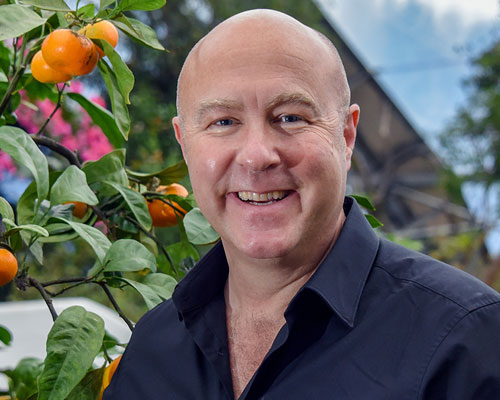
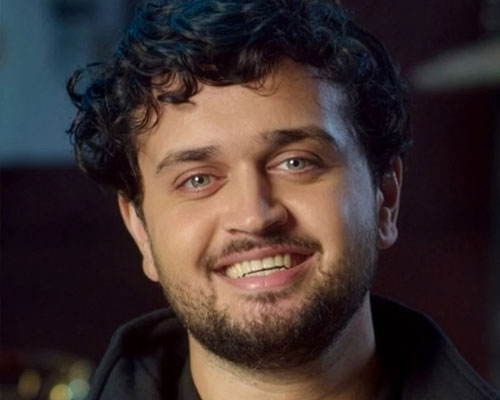
Before creating Phantom Peak, Nick Moran worked in the world of escape rooms, co-writing and creating experiences including The Celestial Chain and Sherlock – the Game is Now.
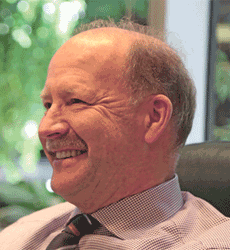
In 2023, he launched Phantom Peak in Canada Water, London with co-founder Glen Hughes, who has a background in set design for escape rooms and immersive theatre.
Here Moran offers us a peek into his world of imagination
What is the history of Phantom Peak?
Phantom Peak began life as an extremely ambitious idea: what if you could walk into a real-life videogame and just live there for a few hours? We opened our first town in London three years ago with the ambition of building a completely original British IP – not an escape room, not theatre, not a bar, but a fully explorable world with stories, characters and puzzles everywhere you look.
Since then, it’s grown into this sprawling, ever-evolving open world with a fiercely loyal community, which expands and improves season-by-season. I can safely say there is nothing like Phantom Peak in the world.
How did the vision and story begin life? Can you remember the original spark of inspiration?
I’m from an escape room background, and I love escape rooms: however, they aren’t for everyone - they’re high octane, thrilling and highly interactive. I wanted something that had all the things I loved about escape rooms – the sense of immersion, the sense of exploration, the sense of discovery – but that allowed people to play at their own pace. I wanted visitors to be able to be a part of the world in a way that suited them.
I love escape rooms, but they aren’t for everyone. I wanted to create something people could play at their own pace
From there came the idea of a town you could keep returning to, discovering new stories each time. Once we realised it could be a living world rather than a one-off experience, that was the moment it properly came alive.
How did you fund the company?
Ourselves – and we’re not rich people. We’ve been fortunate to have a mix of private investment and an incredibly supportive fan community who believed in what we were building. It’s always been about building something sustainable and expandable rather than a one-off pop-up – so every round has been about growing the world properly.
What were the early days like?
Chaotic, thrilling and occasionally terrifying. We were building a town from scratch while simultaneously inventing the format, the technology and the storytelling structure. Every day felt like we were solving problems that didn’t previously exist. But there was also a real sense of ‘we might be onto something here.’ Guests started returning again and again, and once that happened we knew the format worked.
Why do you think it’s been so popular?
Because it gives people agency. You’re not being talked at – you’re exploring, discovering, choosing what to do. There are secrets hidden everywhere, storylines you can follow, characters to interact with and puzzles that genuinely reward curiosity. People like being part of something that feels alive and that changes over time. Also: there’s a bar. Never underestimate the power of a bar.
Why did you decide to move to Westfield Stratford City?
Scale and permanence. We’ve proven the concept and built a huge audience, and now it’s about taking Phantom Peak to the next level in a location that allows us to grow properly. Westfield Stratford City gives us the footfall, the visibility and the sheer physical space to create the most ambitious version of the town yet. It’s a statement: Phantom Peak isn’t a temporary curiosity - it’s here to stay.
What can visitors expect from the new site? How will the town differ from the existing one? Who is responsible for the design for the new Phantom Peak?
Expect a bigger, more detailed, more interactive world. The new town will have more storylines, more technology, more secrets and more reasons to return repeatedly. We’re designing it to feel like a fully functioning frontier town that just happens to be slightly odd.
It will differ in scale and ambition – more spaces to explore, more characters, and more systems that react to what guests do. The design is being led by our in-house creative team alongside our production company and long-time collaborators – the same slightly obsessive people who built the original world and can’t stop adding to it.
What are the biggest lessons you’ve learned since launching Phantom Peak and how will they influence the new site?
Firstly: people are far more curious and engaged than you think. If you build depth, they will find it. Secondly: flexibility is everything. A living world needs to evolve constantly – new stories, new puzzles, new reasons to return.
For the new site we’re building with that in mind from day one: more modular storytelling, more capacity for change, and more ways for the town to grow over time rather than stay static.
What are your plans over the next five years? What is your ultimate vision?
To make Phantom Peak the most beloved immersive universe in the world, and then expand it. That means multiple towns, new formats, new cities and new ways of experiencing the world.
Ultimately the vision is a fully fledged entertainment IP that exists across physical spaces, digital storytelling and beyond. A place people feel part of, not just something they visit once.
What do you love most about your job?
Watching people step into something we’ve imagined and immediately start exploring it like it’s real. There’s a moment when someone realises, “Oh, I can actually go anywhere and interact with everything.” That never gets old.
Which (other) attractions do you love?
I’m a huge admirer of anything that builds a proper world. Great theme parks, great immersive theatre, great game design – anything where you feel transported somewhere else. I love experiences that respect the audience’s intelligence and curiosity, and that aren’t afraid to be a bit strange. Those are always the most memorable ones.