Christopher Harrison, founder of AntiGravity® Aerial Yoga, tells Niamh Madigan about creating the technique and reveals his high hopes for a new suspension massage he’s developing for spas
By Niamh Madigan | Published in Spa Business 2016 issue 2
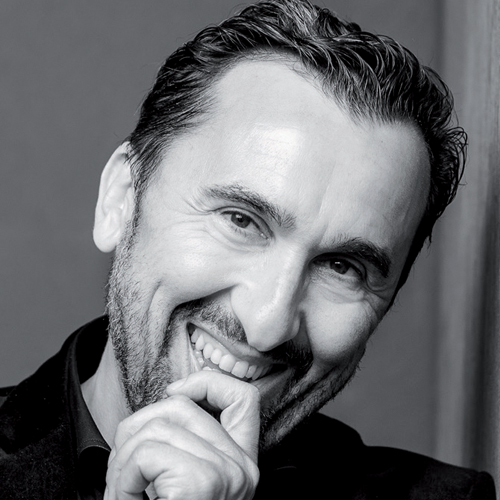
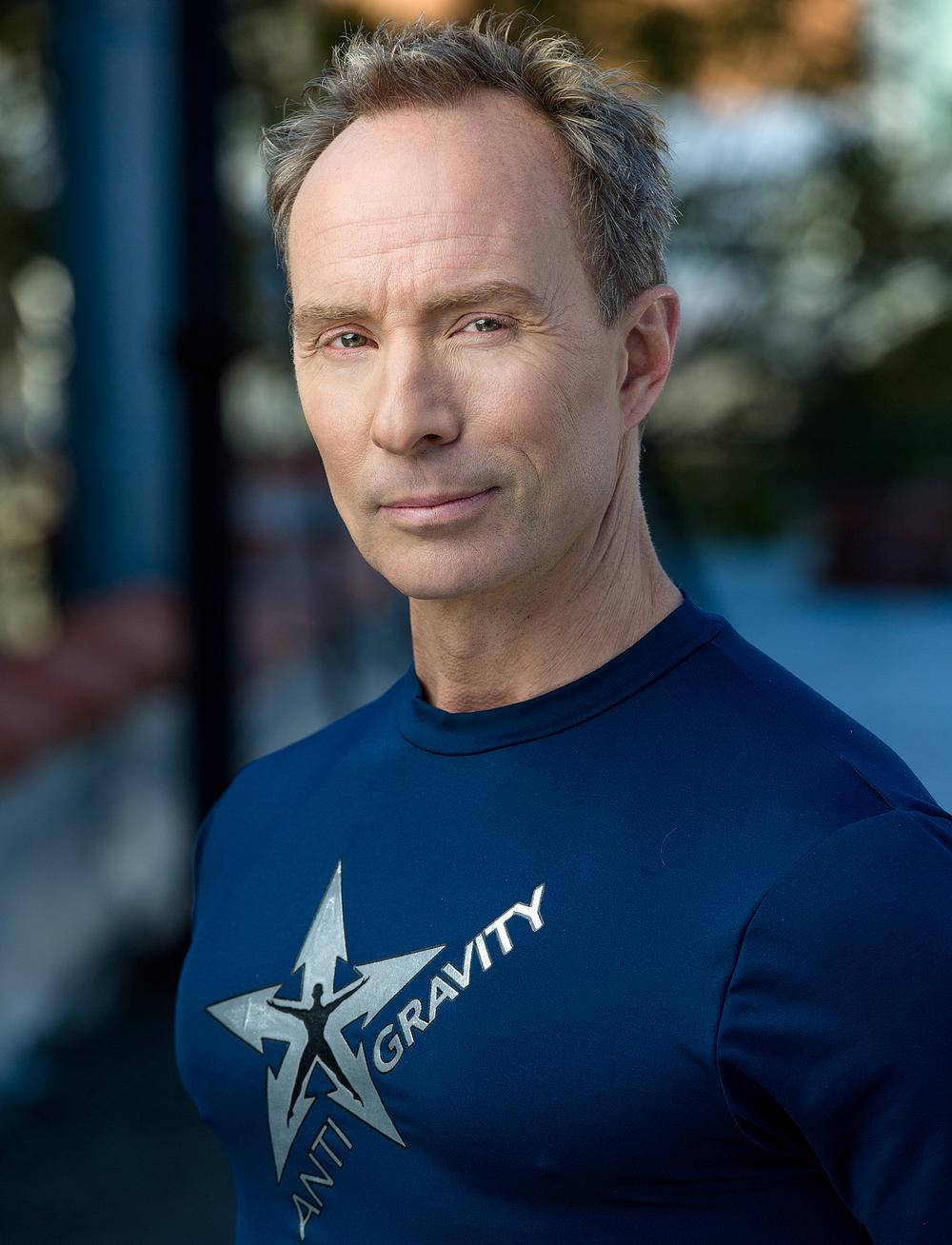
Christopher Harrison is a man whose feet rarely touch the ground.
A world-class gymnast and Broadway dancer, he founded the entertainment brand AntiGravity® in New York in 1991. Since then, he’s designed over 400 aerial productions in settings as diverse as Broadway, Olympic stadiums and the inauguration of President Obama.
Harrison is also the creator of AntiGravity® Aerial Yoga, one of the seven techniques which sit under the umbrella of AntiGravity® Fitness. The restorative form of yoga has become famous for its zero-compression inversions using a silk hammock and has gained a huge following from celebrities like Madonna and Gwyneth Paltrow to martial arts athletes and professional skiers. His mission is to spread health and happiness through movement and spas are very much on his radar – in fact, the spa-like discipline of yoga is really where it all started.
Inspiration from India Harrison began practising yoga after visiting India in the mid-90s. It helped him to become more mindful and present in his life and movement. “I gained a meditation practice and discovered that things started to flow easier because I could let go of the frantic energy of living in New York City,” he says. “As a gymnast and a dancer who’d performed in Cats, I’d pushed my body so hard it was so beat up by [the time I was] 33. I discovered the best way to deal with compression injuries is decompression. The one way to decompress in our society is through practising yoga.”
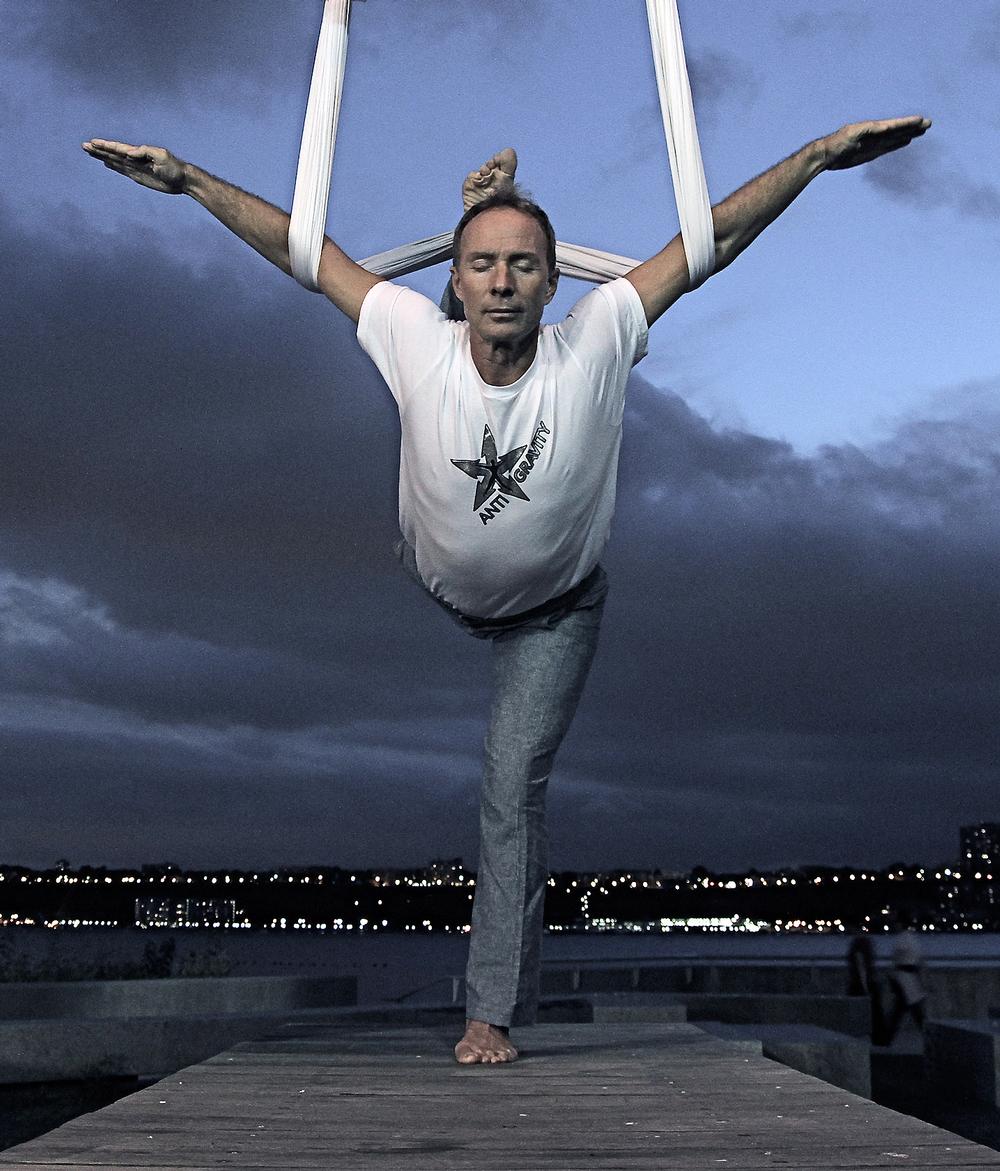
To help eliminate compression on the spine even further, Harrison began experimenting with a hammock he’d originally created for stage performances which has been used by artists such as Britney Spears and Mariah Carey. The silk fabric of the Harrison AntiGravity® Hammock, acted like a soft trapeze to suspend the body during yoga and help with alignment.
It also had health and fitness benefits as an exercise device. By putting the hammock at the same height as a ballet barre, he started adapting different moves from other disciplines such as pilates, aerial arts, gymnastics and dance. He realised that by using its support, he could also go deeper into a pose and the possibilities were endless.
Spa appeal Two decades on, AntiGravity® Fitness has, for want of a better saying, really taken off. It’s approved by numerous safety and fitness organisations and includes seven programmes ranging from suspension fitness and pilates to those for children. It’s available in over 400 facilities, including 20 high-end spas, in 50 countries.
The AntiGravity ®Aerial Yoga and Restorative Yoga are particularly popular with spas such as those at the Four Seasons in Bahrain, Bali, Sayan and the Maldives. It’s a natural fit for wellness operators says Harrison: “The feeling of being suspended somehow allows you to no longer feel the gravity of life. A meditation can really soar and a floating shavasana is so peaceful.”
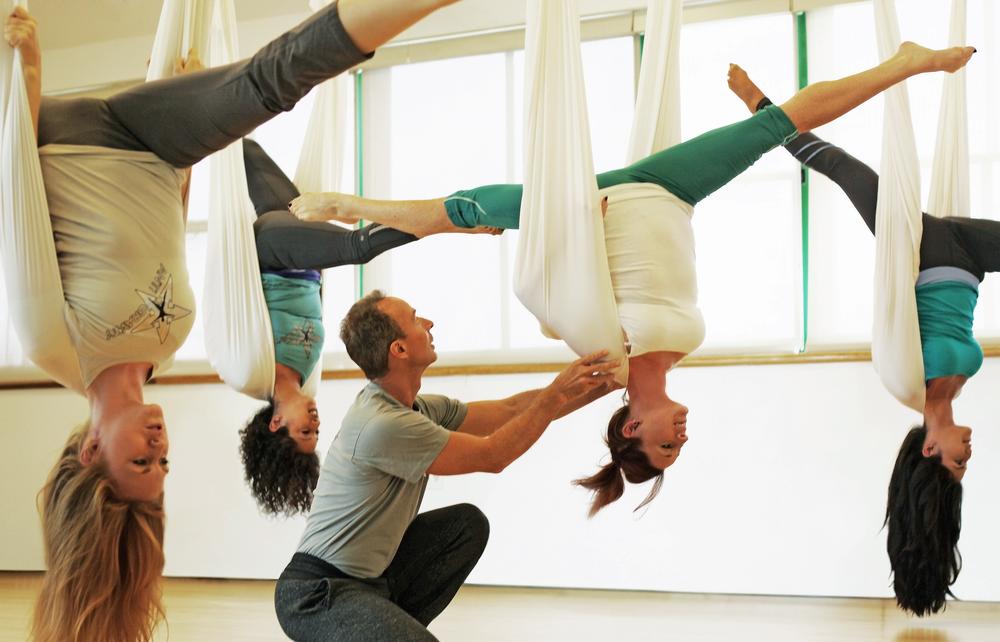
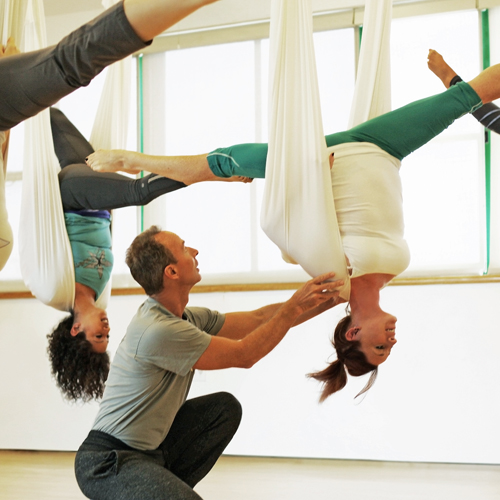
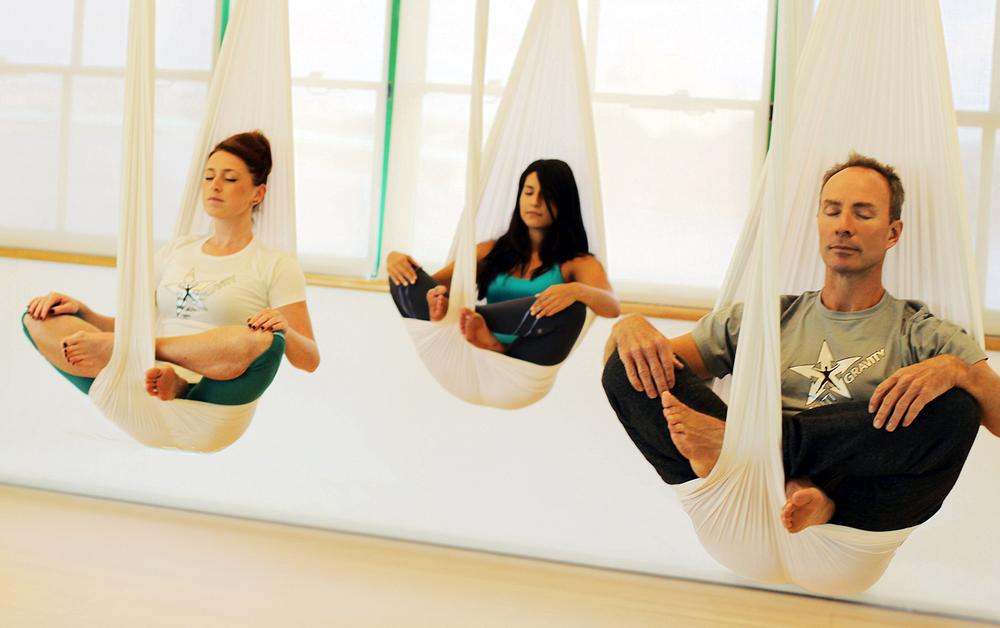
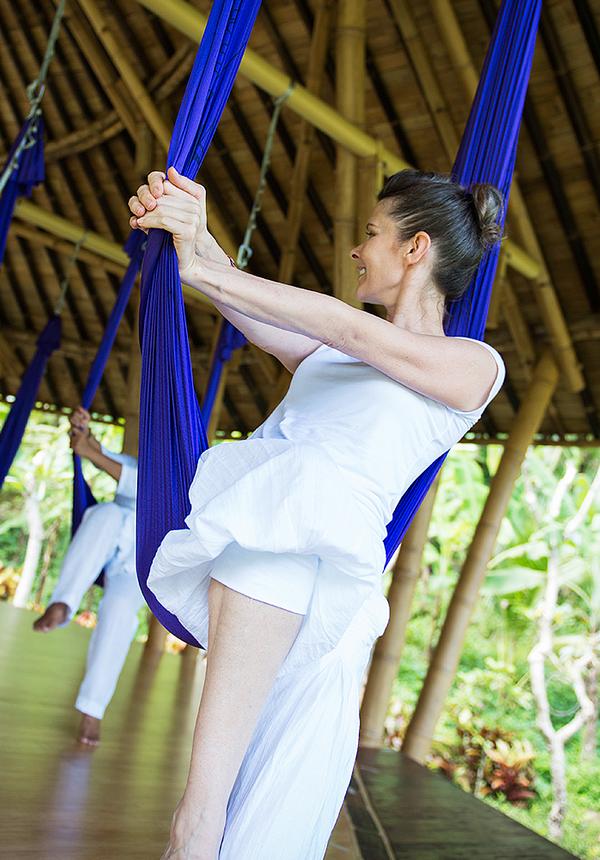
Harrison refers to aerial yoga as his baby because it’s the first technique that evolved out of AntiGravity® Fitness. To take part in a class, the user sits in the hammock, which can be height-adjusted. They balance between the hammock and the floor for 80 per cent of positions, using both to move in different directions and to change the relationship with gravity.
A typical class, which anyone can do, is low impact with a focus on mobility and agility. For the more advanced, there are a number of challenging poses that work the cardiovascular system and build strength. A session lasts 60-90 minutes and can include crunches, squats, push-ups and jumping jacks. The hammock acts as a support for other moves such as inversions, handstands and front flips.
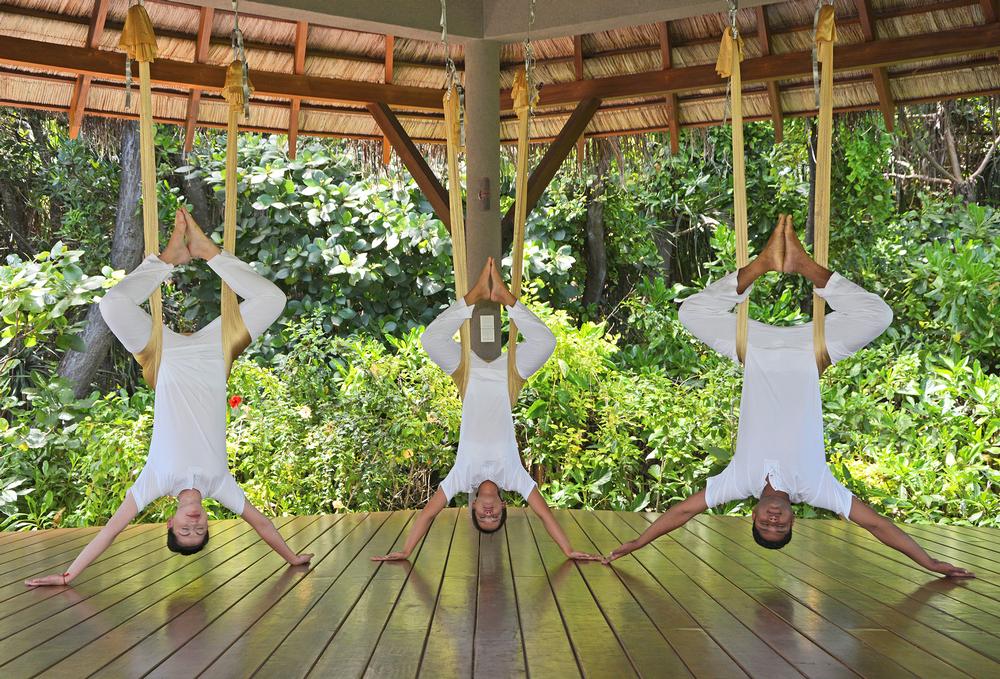
One of the main benefits this form of yoga brings over traditional practices is the ability for users to go into a zero-compression inversion. “When you’re hanging upside down, it takes away all the stress that’s been pushing on the discs of your spine,” explains Harrison. “You’re creating space, which allows the discs to hydrate and very often helps relieve back pain from the first session.
“It also releases serotonin, endorphins, oxytocin and dopamine; happy hormones, which make it easier for you to cope with life, lose weight and refresh the digestive system.” He adds that other positive side effects include improvement in flexibility, alignment, balance, joint mobility and muscular strength.
An average class has between eight to 16 pupils, although some studios offer private spaces for two or three pupils. Harrison recommends more than one person per class, as it’s easier to learn from watching someone else.
Suspension massage Harrison says that spas are very much a focus for him in the future: “People come to the spa for the sake of decompression – of their mind and their bodies through relaxation and massage. One of the things that we’re very excited about is the launch of AntiGravity® 1on1.”
AntiGravity® 1on1 is a new programme for personal fitness trainers which debuted in 15 countries in late February. Harrison feels the person-centric approach will work particularly well in spas, especially its 30-minute current session design called ‘D-kink.’ Incorporating the hammock, the D-kink sequence enables personal trainers to add a variety of moves to fitness regimes such as enhanced stretching, spinal traction, the zero-compression inversion and a floating rest, to provide a balanced workout. It’s also effective as a workout cool-down he says – instead of instructors stretching or massaging clients on a mat or table, they can use D-kink to decompress the spine and elevate the moves. D-kink is the first of many 1on1 therapeutic sessions Harrison is designing for personal trainers.
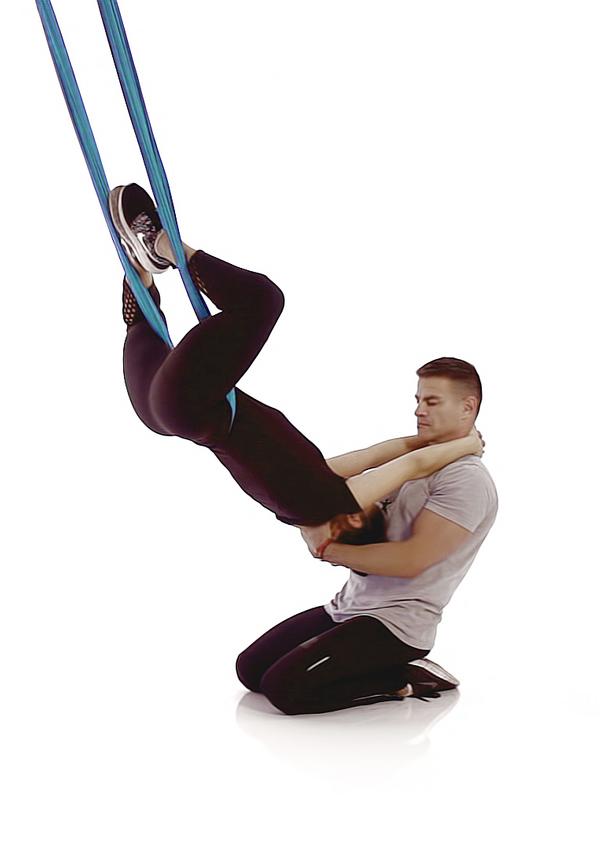
Something that’s even more suited to spas, however, is a specialist treatment called AntiGravity® Floating Massage, which Harrison’s currently developing. As it’s still being created, he’s reluctant to share too many details, but he describes it as a complex technique which will allow a licensed therapist to manipulate the client into a weightless state (presumably using the silk hammock somehow) in combination with massage therapy.
He adds: “All I can say is that once suspended in mid-air, the body reacts to manipulation very differently. The therapist has leverage that he/she would not be able to attain if the body was lying on a hard surface. The resulting benefits to the recipient are truly amazing.”
Expect to see Floating Massage rolling out in high-end spas by the end of the year, with Four Seasons already signed up. “I showed their [a Four Seasons] spa director what I had and she was very enthusiastic,” says Harrison. “She gave me the encouragement to proceed with the development of the technique.”
Switching off So what does the master of antigravity do to come back down to earth? He laughs and says, “I use my practices to relax. I go into the hammock every morning and start with restorative postures to open space in my back and my neck followed by suspension moves.”
He concludes: “It’s like giving yourself an amazing refresher. You find balance in your workout; between compression and decompression, strength and flexibility, agility and mobility and between body and mind. You are in greater flow, in less pain and things become a little bit easier because of it.”
Read more from this issue of Attractions Management magazine
View contents of Attractions Management 2016 issue 2
Editor’s letter: Who will own the well-life consumer?
It’s the wild west out there and there’s a land grab going on as interested parties make their play to own the well-life consumer. It’s not clear yet how this will pan out as the industry matures, or where spa stands in the pecking order, but the threats are clear
Spa people: Tyler Gage
Runa’s Tyler Gage working with Channing Tatum on an Amazon healing centre
Spa people: Todd Hewitt
For the first time in four years, Shangri-La appoints a global head of spas. Spa Business talks to Todd Hewitt, the man to fill the role
Spa people: James White
Thermal spa researcher and consultant to head up major overhaul of Maruia Hot Springs in New Zealand
Interview: Irene Forte
Daughter of hotelier Sir Rocco Forte and niece of designer Olga Polizzi tells Jane Kitchen why the Rocco Forte Hotel’s new spa concept is a family affair
Design: Natural wonderland
Neena Dhillon visits the striking new Keemala resort and spa in Phuket and finds out about its unique design
Science: Skin deep
Modern research is redefining the way we think about skin. Neuroscientist Dr Claudia Aguirre explains what the findings mean for spas
Promotional feature: Clarins
Clarins’ head of Spas, My Blend and Retail, Prisca Courtin-Clarins, talks about the strides the company is making in highly prescriptive skincare, and the development of hotel spa concepts with the My Blend brand
Promotional feature: Massage Heights
There’s a clear gap in the UK spa market for an affordable local offering that places an emphasis on top-quality treatments and services. Is Massage Heights, the successful US franchise chain, the solution?
Promotional feature: Neaumorinc
From a director of spa at Four Seasons to an entrepreneur who introduces exciting new beauty brands to five-star facilities, Shawna Morneau’s experience on both sides of the industry is enabling her consultancy to have an impact worldwide
Promotional feature: Dr Burgener Switzerland
Dr Burgener Switzerland to launch Haute Couture, a revolutionary skin treatment that personalises product and treatments to each person’s skin, using cutting-edge technology
Sensory zone: Set adrift
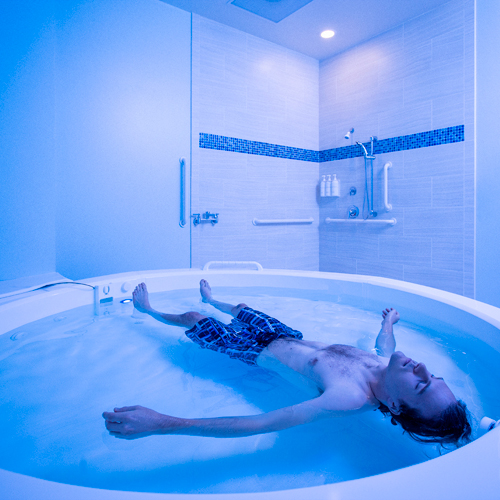
Niamh Madigan talks to researcher Justin Feinstein who thinks floatation could be a shortcut to meditation
Fitness: Defying gravity
The founder of AntiGravity® Aerial Yoga tells Niamh Madigan about the technique and a new suspension massage he’s developing for spas
Promotional feature: Gharieni
As Gharieni prepares to celebrate 25 years in the industry, founder and CEO Sammy Gharieni talks about the company’s culture of innovation, and how there will so many more exciting products to come
Christopher Harrison, founder of AntiGravity® Aerial Yoga, tells Niamh Madigan about creating the technique and reveals his high hopes for a new suspension massage he’s developing for spas
By Niamh Madigan | Published in Spa Business 2016 issue 2
Christopher Harrison is a man whose feet rarely touch the ground.
A world-class gymnast and Broadway dancer, he founded the entertainment brand AntiGravity® in New York in 1991. Since then, he’s designed over 400 aerial productions in settings as diverse as Broadway, Olympic stadiums and the inauguration of President Obama.
Harrison is also the creator of AntiGravity® Aerial Yoga, one of the seven techniques which sit under the umbrella of AntiGravity® Fitness. The restorative form of yoga has become famous for its zero-compression inversions using a silk hammock and has gained a huge following from celebrities like Madonna and Gwyneth Paltrow to martial arts athletes and professional skiers. His mission is to spread health and happiness through movement and spas are very much on his radar – in fact, the spa-like discipline of yoga is really where it all started.
Inspiration from India Harrison began practising yoga after visiting India in the mid-90s. It helped him to become more mindful and present in his life and movement. “I gained a meditation practice and discovered that things started to flow easier because I could let go of the frantic energy of living in New York City,” he says. “As a gymnast and a dancer who’d performed in Cats, I’d pushed my body so hard it was so beat up by [the time I was] 33. I discovered the best way to deal with compression injuries is decompression. The one way to decompress in our society is through practising yoga.”
To help eliminate compression on the spine even further, Harrison began experimenting with a hammock he’d originally created for stage performances which has been used by artists such as Britney Spears and Mariah Carey. The silk fabric of the Harrison AntiGravity® Hammock, acted like a soft trapeze to suspend the body during yoga and help with alignment.
It also had health and fitness benefits as an exercise device. By putting the hammock at the same height as a ballet barre, he started adapting different moves from other disciplines such as pilates, aerial arts, gymnastics and dance. He realised that by using its support, he could also go deeper into a pose and the possibilities were endless.
Spa appeal Two decades on, AntiGravity® Fitness has, for want of a better saying, really taken off. It’s approved by numerous safety and fitness organisations and includes seven programmes ranging from suspension fitness and pilates to those for children. It’s available in over 400 facilities, including 20 high-end spas, in 50 countries.
The AntiGravity ®Aerial Yoga and Restorative Yoga are particularly popular with spas such as those at the Four Seasons in Bahrain, Bali, Sayan and the Maldives. It’s a natural fit for wellness operators says Harrison: “The feeling of being suspended somehow allows you to no longer feel the gravity of life. A meditation can really soar and a floating shavasana is so peaceful.”
Harrison refers to aerial yoga as his baby because it’s the first technique that evolved out of AntiGravity® Fitness. To take part in a class, the user sits in the hammock, which can be height-adjusted. They balance between the hammock and the floor for 80 per cent of positions, using both to move in different directions and to change the relationship with gravity.
A typical class, which anyone can do, is low impact with a focus on mobility and agility. For the more advanced, there are a number of challenging poses that work the cardiovascular system and build strength. A session lasts 60-90 minutes and can include crunches, squats, push-ups and jumping jacks. The hammock acts as a support for other moves such as inversions, handstands and front flips.
One of the main benefits this form of yoga brings over traditional practices is the ability for users to go into a zero-compression inversion. “When you’re hanging upside down, it takes away all the stress that’s been pushing on the discs of your spine,” explains Harrison. “You’re creating space, which allows the discs to hydrate and very often helps relieve back pain from the first session.
“It also releases serotonin, endorphins, oxytocin and dopamine; happy hormones, which make it easier for you to cope with life, lose weight and refresh the digestive system.” He adds that other positive side effects include improvement in flexibility, alignment, balance, joint mobility and muscular strength.
An average class has between eight to 16 pupils, although some studios offer private spaces for two or three pupils. Harrison recommends more than one person per class, as it’s easier to learn from watching someone else.
Suspension massage Harrison says that spas are very much a focus for him in the future: “People come to the spa for the sake of decompression – of their mind and their bodies through relaxation and massage. One of the things that we’re very excited about is the launch of AntiGravity® 1on1.”
AntiGravity® 1on1 is a new programme for personal fitness trainers which debuted in 15 countries in late February. Harrison feels the person-centric approach will work particularly well in spas, especially its 30-minute current session design called ‘D-kink.’ Incorporating the hammock, the D-kink sequence enables personal trainers to add a variety of moves to fitness regimes such as enhanced stretching, spinal traction, the zero-compression inversion and a floating rest, to provide a balanced workout. It’s also effective as a workout cool-down he says – instead of instructors stretching or massaging clients on a mat or table, they can use D-kink to decompress the spine and elevate the moves. D-kink is the first of many 1on1 therapeutic sessions Harrison is designing for personal trainers.
Something that’s even more suited to spas, however, is a specialist treatment called AntiGravity® Floating Massage, which Harrison’s currently developing. As it’s still being created, he’s reluctant to share too many details, but he describes it as a complex technique which will allow a licensed therapist to manipulate the client into a weightless state (presumably using the silk hammock somehow) in combination with massage therapy.
He adds: “All I can say is that once suspended in mid-air, the body reacts to manipulation very differently. The therapist has leverage that he/she would not be able to attain if the body was lying on a hard surface. The resulting benefits to the recipient are truly amazing.”
Expect to see Floating Massage rolling out in high-end spas by the end of the year, with Four Seasons already signed up. “I showed their [a Four Seasons] spa director what I had and she was very enthusiastic,” says Harrison. “She gave me the encouragement to proceed with the development of the technique.”
Switching off So what does the master of antigravity do to come back down to earth? He laughs and says, “I use my practices to relax. I go into the hammock every morning and start with restorative postures to open space in my back and my neck followed by suspension moves.”
He concludes: “It’s like giving yourself an amazing refresher. You find balance in your workout; between compression and decompression, strength and flexibility, agility and mobility and between body and mind. You are in greater flow, in less pain and things become a little bit easier because of it.”
Read more from this issue of Attractions Management magazine
View contents of Attractions Management 2016 issue 2
Editor’s letter: Who will own the well-life consumer?
It’s the wild west out there and there’s a land grab going on as interested parties make their play to own the well-life consumer. It’s not clear yet how this will pan out as the industry matures, or where spa stands in the pecking order, but the threats are clear
Spa people: Tyler Gage
Runa’s Tyler Gage working with Channing Tatum on an Amazon healing centre
Spa people: Todd Hewitt
For the first time in four years, Shangri-La appoints a global head of spas. Spa Business talks to Todd Hewitt, the man to fill the role
Spa people: James White
Thermal spa researcher and consultant to head up major overhaul of Maruia Hot Springs in New Zealand
Interview: Irene Forte
Daughter of hotelier Sir Rocco Forte and niece of designer Olga Polizzi tells Jane Kitchen why the Rocco Forte Hotel’s new spa concept is a family affair
Design: Natural wonderland
Neena Dhillon visits the striking new Keemala resort and spa in Phuket and finds out about its unique design
Science: Skin deep
Modern research is redefining the way we think about skin. Neuroscientist Dr Claudia Aguirre explains what the findings mean for spas
Promotional feature: Clarins
Clarins’ head of Spas, My Blend and Retail, Prisca Courtin-Clarins, talks about the strides the company is making in highly prescriptive skincare, and the development of hotel spa concepts with the My Blend brand
Promotional feature: Massage Heights
There’s a clear gap in the UK spa market for an affordable local offering that places an emphasis on top-quality treatments and services. Is Massage Heights, the successful US franchise chain, the solution?
Promotional feature: Neaumorinc
From a director of spa at Four Seasons to an entrepreneur who introduces exciting new beauty brands to five-star facilities, Shawna Morneau’s experience on both sides of the industry is enabling her consultancy to have an impact worldwide
Promotional feature: Dr Burgener Switzerland
Dr Burgener Switzerland to launch Haute Couture, a revolutionary skin treatment that personalises product and treatments to each person’s skin, using cutting-edge technology
Sensory zone: Set adrift
Niamh Madigan talks to researcher Justin Feinstein who thinks floatation could be a shortcut to meditation
Fitness: Defying gravity
The founder of AntiGravity® Aerial Yoga tells Niamh Madigan about the technique and a new suspension massage he’s developing for spas
Promotional feature: Gharieni
As Gharieni prepares to celebrate 25 years in the industry, founder and CEO Sammy Gharieni talks about the company’s culture of innovation, and how there will so many more exciting products to come
Abu Dhabi-based investment firm Mubadala Capital has made a binding, fully financed
€1 billion
offer to acquire Pierre and Vacances SA, the European holiday resort operator behind the
continental European Center Parcs business.
Expo 2030 Riyadh is being planned as a permanent visitor destination, with organisers
confirming the six-million-square-metre site will become a Global Village after the event closes.
The owner of one of Australia's best-known waterparks has acquired a major competitor,
creating a new attractions business spanning two of the country's largest visitor destinations.
The Toverland theme park in the Netherlands has announced a €98m expansion programme
that will add a resort, new attractions and staff facilities as it pursues plans to become a multi-
day destination.
Hotel de France, located on the British Isle of Jersey, has created a wellness retreat package
that includes a hot yoga session that will take place in Jersey Zoo’s butterfly sanctuary.
A new immersive attraction designed to transport visitors into the final hours of ancient Pompeii
is preparing to open near the world-famous archaeological site in southern Italy.
Experience design company, BRC Imagination Arts, has completed a transition that sees founder
Bob Rogers pass ownership of the business to four long-serving senior executives, while
remaining actively involved with the company.
Movie Park Germany has opened a new Paramount Pictures-themed attraction as part of its 30th
anniversary celebrations, using immersive storytelling and adaptive reuse to reinforce the park’s
longstanding “Hollywood in Germany” positioning.
Therme Manchester’s 28-acre development, which will include interconnected glass pavilions
that measure 65,000sq m, will be the largest bathing and wellbeing attraction in the world once
complete, according to prof David Russell, CEO of Therme UK.
Efteling has opened Hooghmoed, a new family drop tower designed to broaden the appeal of its
recently launched Sirene Island themed area and introduce younger visitors to thrill attractions.
+ More news
COMPANY PROFILES
Painting With Light By combining lighting, video, scenic and architectural elements, sound and special effects we tell s [more...]
IDEATTACK IDEATTACK is a full-service planning and
design company with headquarters in
Los Angeles. [more...]
RMA Ltd RMA Ltd is a one-stop global company
that can design, build and produce from a
greenfield site upw [more...]
Taylor Made Designs Founded in 1993, Taylor Made
Designs supply corporate clothing
and brand-enhancing merchandise
to [more...]