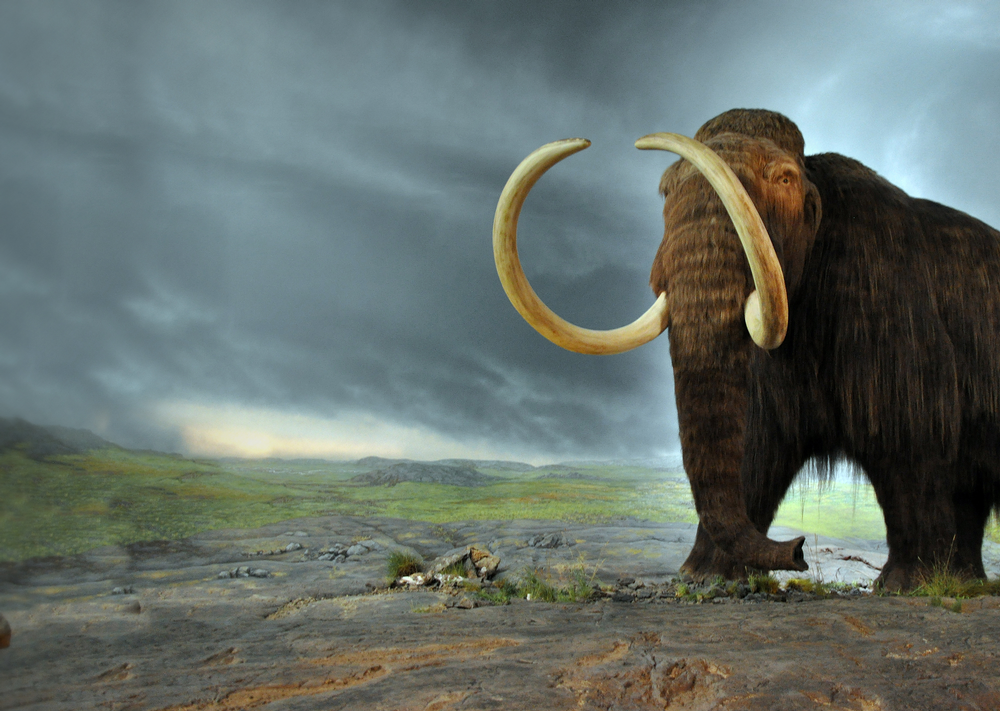
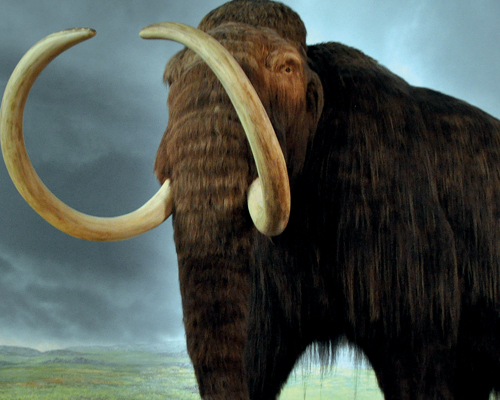
The majority of woolly mammoths were wiped out 10,000 years ago during the early part of our current geological age
Bringing animals extinct for more than 10,000 years back to life sounds like something straight from the script of a Hollywood movie.
Box office hits like Jurassic Park show the excitement this idea – straight out of science fiction – can have among the general public. Now a combined effort from Russian, Japanese and Korean scientists could turn this idea into a reality.
A myriaannum in the making The woolly mammoth, whose closest living relative is the Asian elephant, became extinct around 4,000 years ago due to a number of suspected causes, including increased temperatures, overhunting, habitat shrinkage and a reduction in the supply of fresh water.
We have evidence that mammoths existed in Siberia up to 9,650 years ago, during the Holocene epoch.
Now plans have been tabled to create a one-of-a-kind nature reserve, which will open in Siberia within the next decade. What makes it unique is that if scientists can crack their genetic code, resurrected mammoths will become the centrepiece of the mother nature-defying attraction.
“In 2014 I proposed a project to create an ice age park with mammoths,” said Aisen Nikolaev, the acting head of Russia’s Sakha Republic, while speaking at the recent Eastern Economic Forum (EEF). “Everyone laughed then, but they’re not laughing now. The prospect is no longer fantastical.”
Nikolaev revealed that a joint research project is currently underway, with the long-term goal of bringing back the woolly mammoth within the next decade.
To successfully clone a mammoth, scientists will have to work their way around a roadblock formed by existing mammoth DNA.
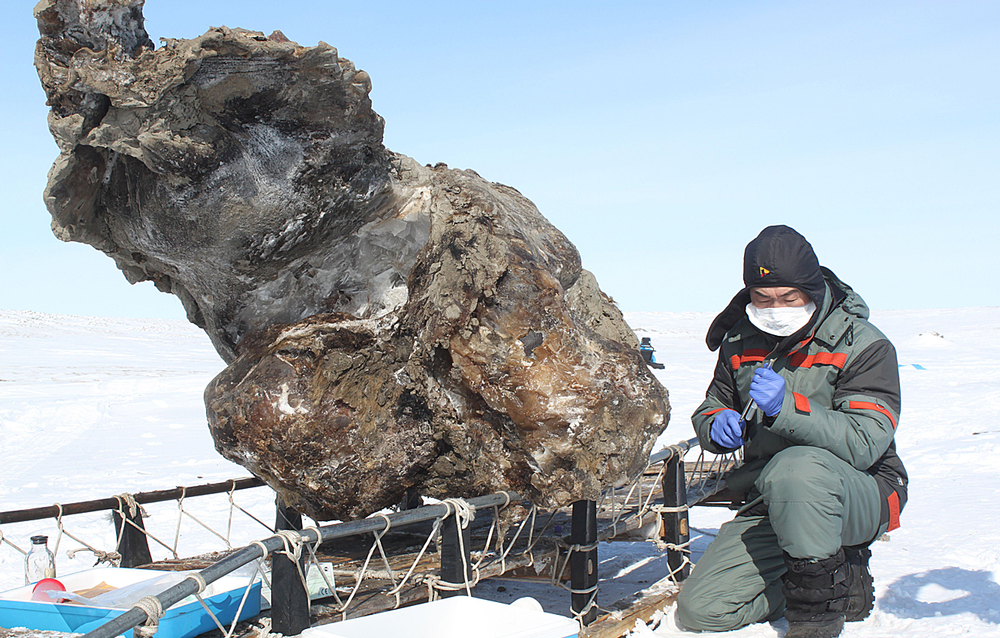
Because samples, taken from frozen mammoths, are at least 10,000 years old, the DNA has deteriorated significantly, meaning the cloning process is extremely difficult.
Cloning experiments with extinct horse breeds and cave lions are underway, with the aim of producing mammoth embryos that would be fertilised using elephant tissue.
Ice age attractions If successful, the creatures would be introduced to Pleistocene Park, a reserve where Russian scientists Sergey Zimov and Nikita Zimov are currently working to recreate the northern sub-arctic steppe grassland ecosystem that flourished in the area during the last glacial period.
The primary aim of the park would be to recreate the arctic tundra – known as the mammoth steppe.
Scientists working on the park believe that animals, rather than climate, maintained that ecosystem and that it could be restored.
Reintroducing large herbivores to Siberia would adjust the balance of the food chain by introducing a new species, say the scientists, who are promoting the reestablishment of the ancient grassland ecosystems.
“This is the project of the future,” said Nikolaev. “I believe that in our lifetime, we’ll be able to clone mammoths. All the prerequisites are here for this.
“Today, technology is developing at an explosive pace, and what seemed to be scientific nonsense yesterday, is now an absolutely clear prospect for scientists in the near future.
“I believe that miracles are possible,” he added.
Read more from this issue of Attractions Management magazine
View contents of Attractions Management 2018 issue 4
Rides: Themed dreams
We take a look at some of the major
openings at visitor attractions worldwide
Theme Parks: Fan power
Jordan Middleton explains how operators
can best work with their audiences
Tourism: The Tourist Trap
What role could attractions play to keep
tourism beneficial for residents and
visitors alike? Kath Hudson reports
Conference: Creativity Cocktail
This year’s SATE conference came to the global epicentre for themed entertainment – Orlando – as the Themed Entertainment Association (TEA) searched for the secrets to “The Experience Recipe”.
Promotional feature: Whitewater
WhiteWater is branching out of the waterpark business as it
introduces two new attractions products and its brand new
Vantage guest engagement and management software
Show report: Enabling fun
Tom Anstey was on-hand to see what was
on offer at this year’s Euro Attractions Show
Promotional feature: Simtec - forward thinking
Simtec is a flying theatre and simulator ride supplier
for the attractions industry, as well as a manufacturer
of driving and flight simulation applications
Woolly mammoths in culture During the 21st century, global warming made access to Siberian mammoths easier, The permafrost has thawed faster, exposing its hidden secrets.
Long since its extinction, the wooly mammoth has remained significant in popular culture, starring in films such as Ice Age and also proving to be big business for museums.
A 42,000-year-old baby woolly mammoth, discovered in 2007 and named Lyuba, is one of the most intact specimens of the species.
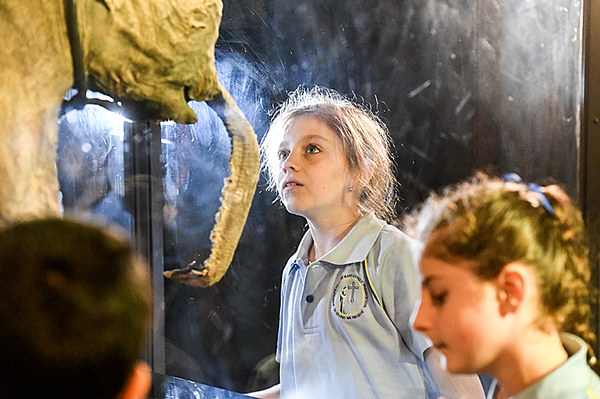
Last year, the Australia Museum debuted Mammoths – Giants of the Ice Age, which was Lyuba’s first visit.
Backed by the Government of New South Wales, the exhibition gave people across Australia a rare opportunity to explore the age of mammoths. During its run, the exhibition generated more than AUS$3.7m (US$2.6m) and over 9,000 overnight stays, with hundreds of thousands of people attending the landmark exhibition.
Lyuba the mammoth generated more than AUS$3.7m for New South Wales
Using DNA found in frozen woolly mammoths, scientists think they can clone the now extinct mammals
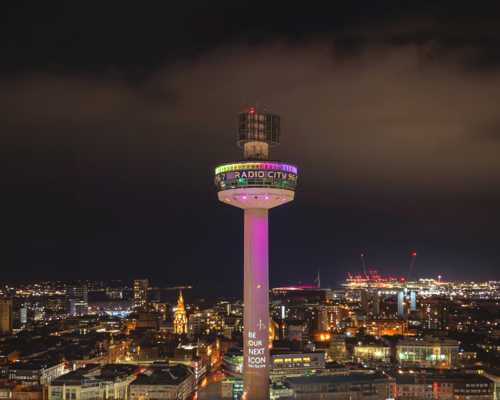
An opportunity to reimagine one of the UK’s most recognisable towers has been formally
opened by Rivington Hark, as St Johns Beacon invites operators and partners to shape its
next phase. [more...]
The majority of woolly mammoths were wiped out 10,000 years ago during the early part of our current geological age
Bringing animals extinct for more than 10,000 years back to life sounds like something straight from the script of a Hollywood movie.
Box office hits like Jurassic Park show the excitement this idea – straight out of science fiction – can have among the general public. Now a combined effort from Russian, Japanese and Korean scientists could turn this idea into a reality.
A myriaannum in the making The woolly mammoth, whose closest living relative is the Asian elephant, became extinct around 4,000 years ago due to a number of suspected causes, including increased temperatures, overhunting, habitat shrinkage and a reduction in the supply of fresh water.
We have evidence that mammoths existed in Siberia up to 9,650 years ago, during the Holocene epoch.
Now plans have been tabled to create a one-of-a-kind nature reserve, which will open in Siberia within the next decade. What makes it unique is that if scientists can crack their genetic code, resurrected mammoths will become the centrepiece of the mother nature-defying attraction.
“In 2014 I proposed a project to create an ice age park with mammoths,” said Aisen Nikolaev, the acting head of Russia’s Sakha Republic, while speaking at the recent Eastern Economic Forum (EEF). “Everyone laughed then, but they’re not laughing now. The prospect is no longer fantastical.”
Nikolaev revealed that a joint research project is currently underway, with the long-term goal of bringing back the woolly mammoth within the next decade.
To successfully clone a mammoth, scientists will have to work their way around a roadblock formed by existing mammoth DNA.
Because samples, taken from frozen mammoths, are at least 10,000 years old, the DNA has deteriorated significantly, meaning the cloning process is extremely difficult.
Cloning experiments with extinct horse breeds and cave lions are underway, with the aim of producing mammoth embryos that would be fertilised using elephant tissue.
Ice age attractions If successful, the creatures would be introduced to Pleistocene Park, a reserve where Russian scientists Sergey Zimov and Nikita Zimov are currently working to recreate the northern sub-arctic steppe grassland ecosystem that flourished in the area during the last glacial period.
The primary aim of the park would be to recreate the arctic tundra – known as the mammoth steppe.
Scientists working on the park believe that animals, rather than climate, maintained that ecosystem and that it could be restored.
Reintroducing large herbivores to Siberia would adjust the balance of the food chain by introducing a new species, say the scientists, who are promoting the reestablishment of the ancient grassland ecosystems.
“This is the project of the future,” said Nikolaev. “I believe that in our lifetime, we’ll be able to clone mammoths. All the prerequisites are here for this.
“Today, technology is developing at an explosive pace, and what seemed to be scientific nonsense yesterday, is now an absolutely clear prospect for scientists in the near future.
“I believe that miracles are possible,” he added.
Read more from this issue of Attractions Management magazine
View contents of Attractions Management 2018 issue 4
Rides: Themed dreams
We take a look at some of the major
openings at visitor attractions worldwide
Theme Parks: Fan power
Jordan Middleton explains how operators
can best work with their audiences
Tourism: The Tourist Trap
What role could attractions play to keep
tourism beneficial for residents and
visitors alike? Kath Hudson reports
Conference: Creativity Cocktail
This year’s SATE conference came to the global epicentre for themed entertainment – Orlando – as the Themed Entertainment Association (TEA) searched for the secrets to “The Experience Recipe”.
Promotional feature: Whitewater
WhiteWater is branching out of the waterpark business as it
introduces two new attractions products and its brand new
Vantage guest engagement and management software
Show report: Enabling fun
Tom Anstey was on-hand to see what was
on offer at this year’s Euro Attractions Show
Promotional feature: Simtec - forward thinking
Simtec is a flying theatre and simulator ride supplier
for the attractions industry, as well as a manufacturer
of driving and flight simulation applications
Woolly mammoths in culture During the 21st century, global warming made access to Siberian mammoths easier, The permafrost has thawed faster, exposing its hidden secrets.
Long since its extinction, the wooly mammoth has remained significant in popular culture, starring in films such as Ice Age and also proving to be big business for museums.
A 42,000-year-old baby woolly mammoth, discovered in 2007 and named Lyuba, is one of the most intact specimens of the species.
Last year, the Australia Museum debuted Mammoths – Giants of the Ice Age, which was Lyuba’s first visit.
Backed by the Government of New South Wales, the exhibition gave people across Australia a rare opportunity to explore the age of mammoths. During its run, the exhibition generated more than AUS$3.7m (US$2.6m) and over 9,000 overnight stays, with hundreds of thousands of people attending the landmark exhibition.
Lyuba the mammoth generated more than AUS$3.7m for New South Wales
Using DNA found in frozen woolly mammoths, scientists think they can clone the now extinct mammals
Experience design company, BRC Imagination Arts, has completed a transition that sees founder
Bob Rogers pass ownership of the business to four long-serving senior executives, while
remaining actively involved with the company.
Movie Park Germany has opened a new Paramount Pictures-themed attraction as part of its 30th
anniversary celebrations, using immersive storytelling and adaptive reuse to reinforce the park’s
longstanding “Hollywood in Germany” positioning.
Therme Manchester’s 28-acre development, which will include interconnected glass pavilions
that measure 65,000sq m, will be the largest bathing and wellbeing attraction in the world once
complete, according to prof David Russell, CEO of Therme UK.
Efteling has opened Hooghmoed, a new family drop tower designed to broaden the appeal of its
recently launched Sirene Island themed area and introduce younger visitors to thrill attractions.
A proposed Puy du Fou development near Bicester and Universal Destinations and Experiences’
planned resort in Bedford are emerging as part of a wider transformation of the Oxford–
Cambridge Growth Corridor into a major centre for UK leisure and tourism inv
Shedd Aquarium has opened the Immersion Theater developed in partnership with SimEx-
Iwerks, as part of a wider strategy to enhance the guest experience and create additional
revenue opportunities.
The UK government has announced a temporary reduction in VAT on visitor attractions and
children’s meals as part of a summer cost-of-living support package designed to stimulate the
visitor economy and encourage family days out.
As designer Yinka Ilori prepares for his first solo gallery show in London, he speaks exclusively
to CLADmag about his mission to spread joy, the power of play, and his bold approach to using
colour (including the colours you won’t see in his work).
The government of Thailand is exploring plans for a THB300bn (£6.3bn, US$8.3bn)
entertainment complex in the country’s Eastern Economic Corridor (EEC), with officials
proposing a large-scale theme park and sports destination as part of a broader tourism and
economic development strategy.
Royal Caribbean has revealed its Hero of the Seas cruise ship, home to the most pools at sea
(nine), and a record-breaking 28 dining venues, as well as attractions including a waterpark
with two new family raft slides.
An opportunity to reimagine one of the UK’s most recognisable towers has been formally
opened by Rivington Hark, as St Johns Beacon invites operators and partners to shape its
next phase. [more...]