Massage robots driven by artificial intelligence are coming to market, while chatbots are becoming ever more powerful.
AI could transform our industry if we learn to embrace innovation
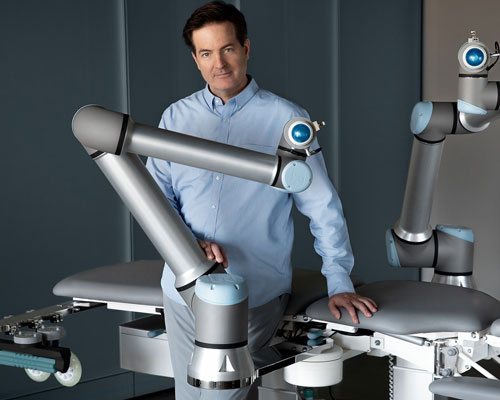
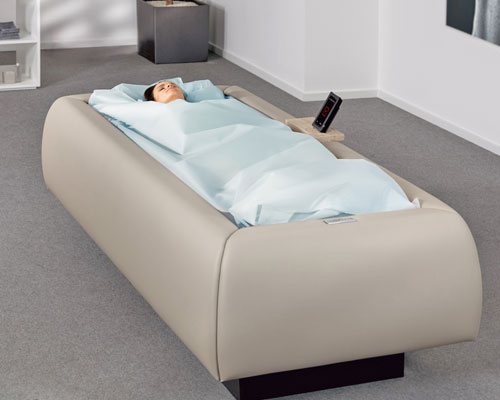
Massage Robotics has already launched an AI-powered device / photo: Massage Robotics
You’re lying on a massage table but there isn’t a therapist in the room. Instead, you’re scanned by a machine that detects muscle and joint issues and uses energy field imaging to locate ‘blockages’. Then an AI massage robot (that you can interact with in real-time) gets to work, taking these parameters into account.
This may sound like sci-fi, but companies such as Massage Robotics, Aescape and Capsix Robotics are engaged in bringing such products to market.
These early AI massage robots can adjust pressure and technique, but are not yet a match for a skilled therapist, however, by their very nature AI devices have the capacity to learn rapidly and our reporters who’ve tried them say sessions are surprisingly pleasant.
The industry has struggled for years with staff shortages and hasn’t done enough to invest in employee salaries, training or development, so we expect some operators to welcome AI robots that can deliver services reliably and be classed as a capital asset rather than a cost centre.
The risk for the sector, however, is that their arrival will negatively alter consumers’ views of the services we offer, meaning AI robots will need to be deployed with care.
They could prevent staff burnout if used by therapists to assist with treatments and we foresee a time when robots and humans work side by side.
But if we don’t integrate them carefully they could cause harm, so a tactical, industry-wide approach, backed up by effective training governed by leading industry bodies is needed.
Also coming down the AI track are new, highly sophisticated chatbots by Google, Microsoft and OpenAI which act as hyper-personalised internet assistants, guiding purchasing decisions.
In his debut as Spa Business’ contributing editor on page 18, Jeremy McCarthy focuses on chatbots, predicting the tech behind them will change the world on a scale akin to the internet.
People who work in spas are typically focused on hands-on healing, shying away from tech, however, we have a real opportunity to become a leading sector in the use of AI if we tackle it fearlessly and ensure our teams are trained in its use.
Although AI in its many guises still feels a way off, now is the time to prepare to embrace innovation.
Katie Barnes is the editor of Spa Business magazine
| [email protected]
Read more from this issue of Attractions Management magazine
View contents of Attractions Management 2023 issue 1
Write to reply: Letters
Zulal's Sandie Johannessen shares her passion for medical wellness and Kloodos' Julie Cichocki says wellness protocols should start with the vagus nerve
Spa People: Leekyung Han
The South Korean-born spa consultant on why her home country should be on the radar of all wellness developers
Sponsored: Art of Cryo: Working well
Spa operators and corporate offices can now offer a comprehensive, six-part wellness journey designed by Art of Cryo to elevate health
Research: Wellness Travel Consumer Survey
A general reboot and nature/outdoor activities are key considerations for wellness tourists according to a new study by WTA. Anne Dimon reports
First person: Doctor’s orders
Can a partnership with an international hospital elevate a wellness retreat? Neena Dhillon visits RAKxa in Bangkok, Thailand to find out
Interview: Justin Musgrove
We talk to the CEO of Core Life, the exclusive lifestyle brand which has ambitions to expand to the world's most affluent cities
Sponsored: Starpool: Zerobody Cryo
The new Zerobody Cryo will deliver comfortable cold therapy for spa, wellness and sports says Starpool CEO, Riccardo Turri
Massage robots driven by artificial intelligence are coming to market, while chatbots are becoming ever more powerful.
AI could transform our industry if we learn to embrace innovation
Massage Robotics has already launched an AI-powered device / photo: Massage Robotics
You’re lying on a massage table but there isn’t a therapist in the room. Instead, you’re scanned by a machine that detects muscle and joint issues and uses energy field imaging to locate ‘blockages’. Then an AI massage robot (that you can interact with in real-time) gets to work, taking these parameters into account.
This may sound like sci-fi, but companies such as Massage Robotics, Aescape and Capsix Robotics are engaged in bringing such products to market.
These early AI massage robots can adjust pressure and technique, but are not yet a match for a skilled therapist, however, by their very nature AI devices have the capacity to learn rapidly and our reporters who’ve tried them say sessions are surprisingly pleasant.
The industry has struggled for years with staff shortages and hasn’t done enough to invest in employee salaries, training or development, so we expect some operators to welcome AI robots that can deliver services reliably and be classed as a capital asset rather than a cost centre.
The risk for the sector, however, is that their arrival will negatively alter consumers’ views of the services we offer, meaning AI robots will need to be deployed with care.
They could prevent staff burnout if used by therapists to assist with treatments and we foresee a time when robots and humans work side by side.
But if we don’t integrate them carefully they could cause harm, so a tactical, industry-wide approach, backed up by effective training governed by leading industry bodies is needed.
Also coming down the AI track are new, highly sophisticated chatbots by Google, Microsoft and OpenAI which act as hyper-personalised internet assistants, guiding purchasing decisions.
In his debut as Spa Business’ contributing editor on page 18, Jeremy McCarthy focuses on chatbots, predicting the tech behind them will change the world on a scale akin to the internet.
People who work in spas are typically focused on hands-on healing, shying away from tech, however, we have a real opportunity to become a leading sector in the use of AI if we tackle it fearlessly and ensure our teams are trained in its use.
Although AI in its many guises still feels a way off, now is the time to prepare to embrace innovation.
Katie Barnes is the editor of Spa Business magazine
| [email protected]
Read more from this issue of Attractions Management magazine
View contents of Attractions Management 2023 issue 1
Write to reply: Letters
Zulal's Sandie Johannessen shares her passion for medical wellness and Kloodos' Julie Cichocki says wellness protocols should start with the vagus nerve
Spa People: Leekyung Han
The South Korean-born spa consultant on why her home country should be on the radar of all wellness developers
Sponsored: Art of Cryo: Working well
Spa operators and corporate offices can now offer a comprehensive, six-part wellness journey designed by Art of Cryo to elevate health
Research: Wellness Travel Consumer Survey
A general reboot and nature/outdoor activities are key considerations for wellness tourists according to a new study by WTA. Anne Dimon reports
First person: Doctor’s orders
Can a partnership with an international hospital elevate a wellness retreat? Neena Dhillon visits RAKxa in Bangkok, Thailand to find out
Interview: Justin Musgrove
We talk to the CEO of Core Life, the exclusive lifestyle brand which has ambitions to expand to the world's most affluent cities
Sponsored: Starpool: Zerobody Cryo
The new Zerobody Cryo will deliver comfortable cold therapy for spa, wellness and sports says Starpool CEO, Riccardo Turri
London Museum will open four new food and drink destinations when it launches its new home
at Smithfield on 28 November, making hospitality a central part of the visitor experience at one
of the capital's biggest cultural openings of the year.
OMA has completed a major transformation of New York's New Museum, creating a larger
cultural campus that combines expanded exhibition spaces with learning, performance,
hospitality and public programming.
A US$50 million (£44.2 million, €51.2 million) transformation of Chicago's historic McCormick
Mansion has created a new destination that combines live magic, immersive theatre, dining and
private membership under one roof.
The Montana Historical Society has officially celebrated the opening of its new Montana
Heritage
Center, a US$107 million (£79 million, €92 million) destination that combines immersive
storytelling with cutting-edge audiovisual technology to bring the sta
San Antonio Zoo has reported a US$283 million economic impact for 2025, following a decade-
long transformation programme that has seen almost US$200 million invested into the Texas
attraction.
Plans for the AU$180 million redevelopment of Reef HQ Aquarium in Townsville, Australia, are
progressing, with the project set to transform the attraction into a global centre for reef
education and conservation.
Abu Dhabi-based investment firm Mubadala Capital has made a binding, fully financed
€1 billion
offer to acquire Pierre and Vacances SA, the European holiday resort operator behind the
continental European Center Parcs business.
Disney has reaffirmed its commitment to investing US$30 billion in its US parks and cruise
business by 2033, using new America250 celebrations to underline the role its attractions play
in supporting jobs, tourism and economic growth.
Expo 2030 Riyadh is being planned as a permanent visitor destination, with organisers
confirming the six-million-square-metre site will become a Global Village after the event closes.
The owner of one of Australia's best-known waterparks has acquired a major competitor,
creating a new attractions business spanning two of the country's largest visitor destinations.