A general, overall reboot is the main motivation for wellness travel and nature/outdoor activities are the top must-have, according to the Wellness Tourism Association’s latest consumer survey, as Anne Dimon reports
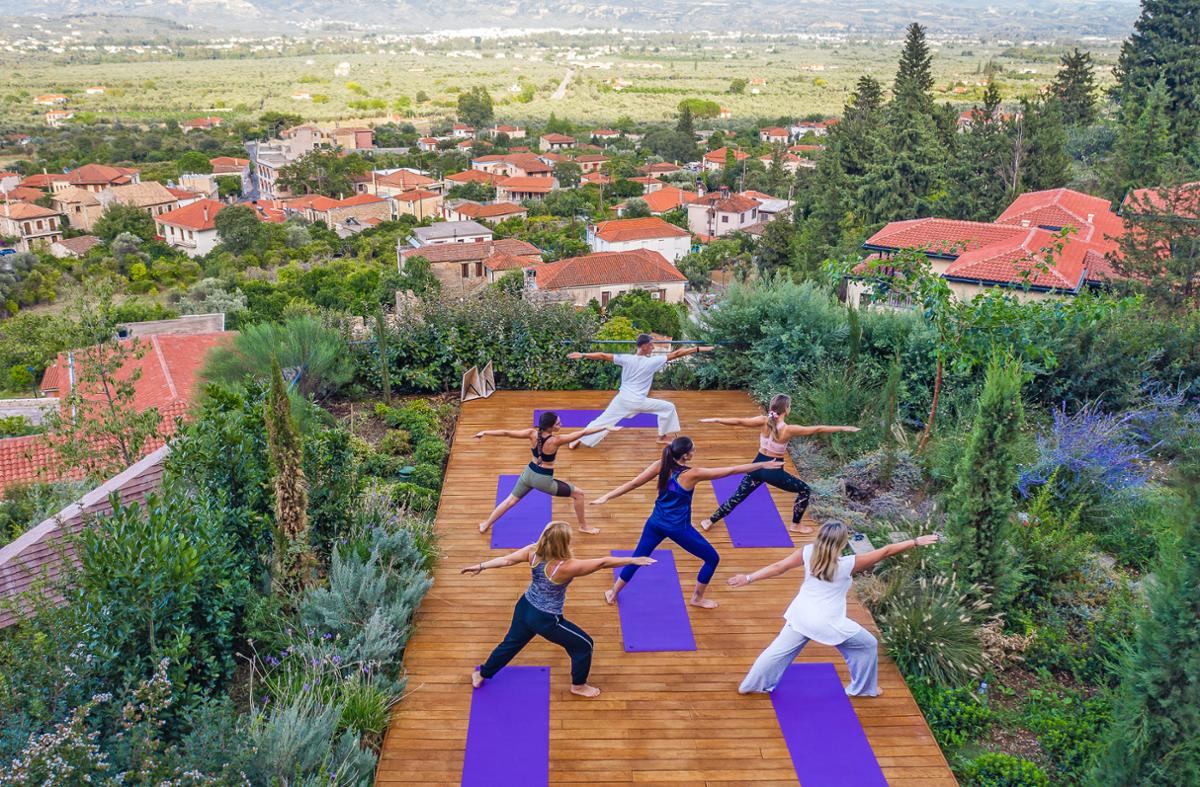
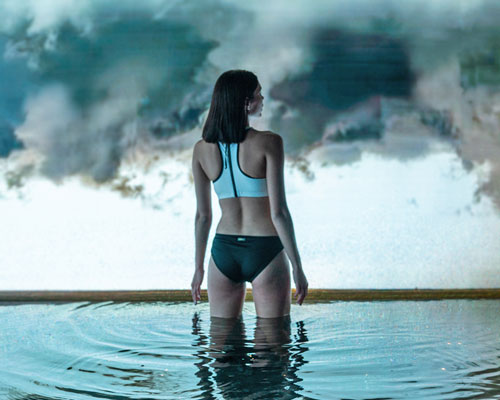
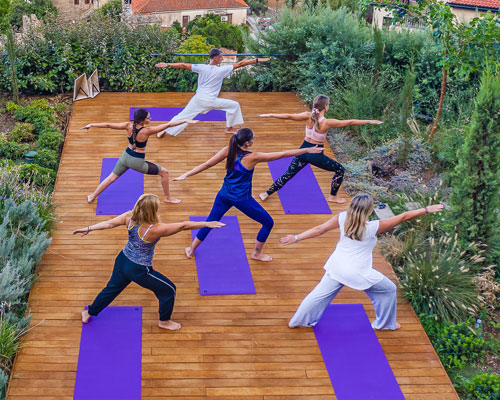
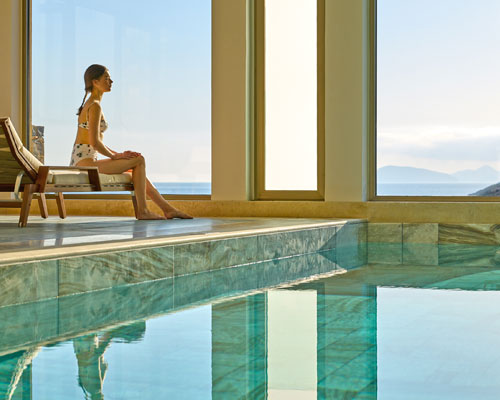
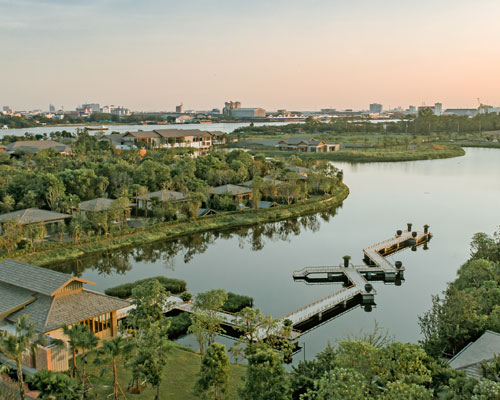
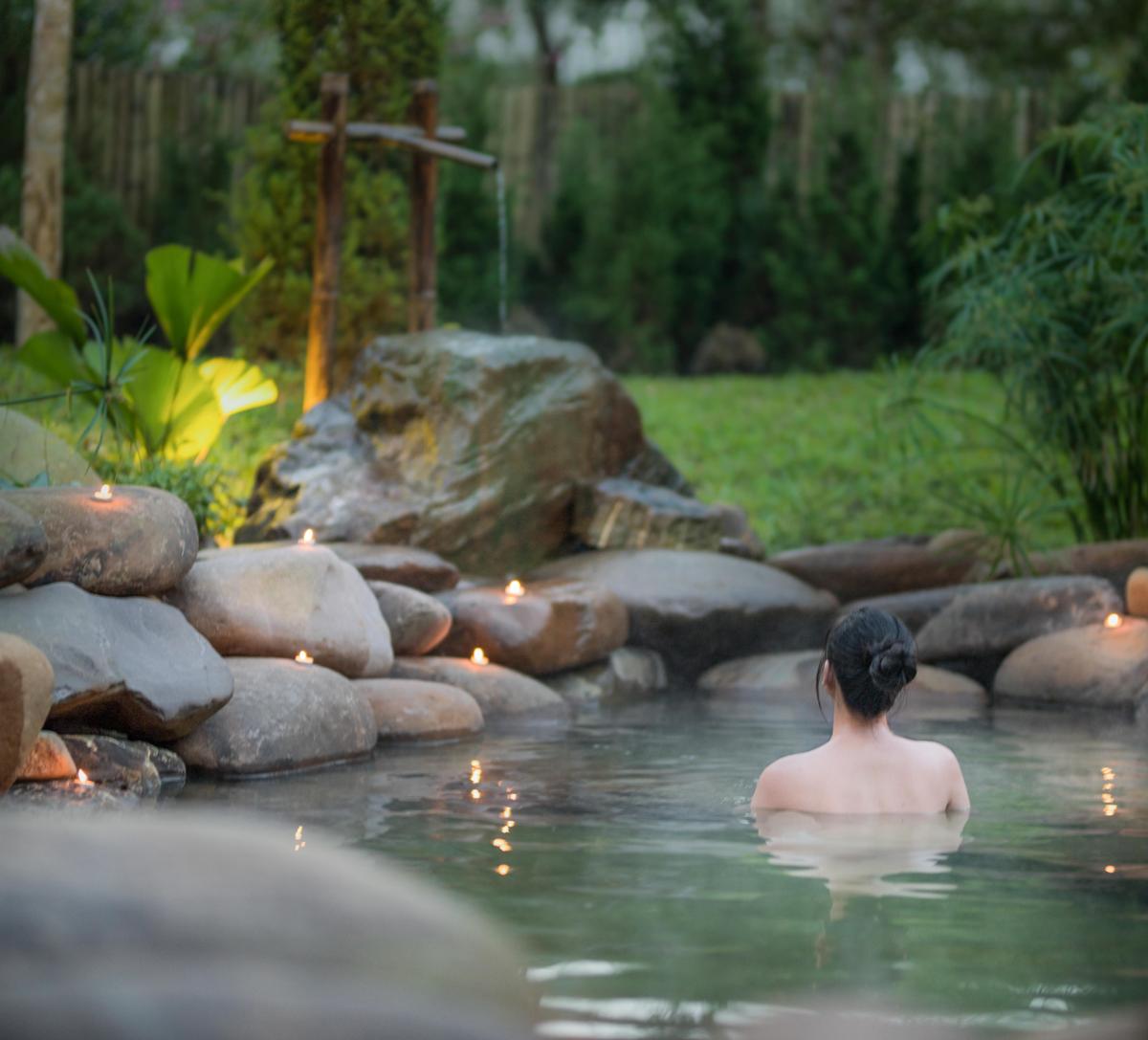
Euphoria Retreat in Greece makes the most of outdoor space / Photo: Euphoria Retreat (Sparta, Greece)
With a view to helping spa, hotel and tour operators understand wellness-minded travellers, the Wellness Tourism Association (WTA) has just revealed the results of its annual consumer survey.
The WTA represents operators and professionals in the sector and the fourth edition of its Wellness Travel Consumer Survey is based on insights from close to 1,500 respondents (see p56). It underscores what we’ve all come to acknowledge: wellness travel, which enables people to support their healthy lifestyle and sense of wellbeing, is clearly in demand as people take to the road once again.
“Of the 100,000 trip pages created through our platform in 2022, 35 per cent of those were wellness-focused,” says Shayna Zand, head of partnerships at online booking platform WeTravel, which sponsored this year’s survey. “That’s a significant 25 per cent year-over-year increase in overall bookings plus wellness.”
This corresponds with WTA’s survey results. Close to 90 per cent of the respondents reported they now incorporate wellness activities when they travel. This is up slightly from the 2021 survey. More people accept the fact that they’re responsible for their own self-care and that becoming healthy and staying healthy is about being proactive.
But what are the wants, needs and demands of those planning wellness holidays? The WTA’s five key findings are detailed below.
1. Length of stay and price point For those looking to book in the future, three to five nights is the preferred length of stay for most consumers (54 per cent), followed by seven nights (29 per cent). Shorter stays dwindle dramatically in popularity, with only 9 per cent of people considering a two-day, three-night package.
These same people have a clear idea of how much they’re willing to spend – only three per cent are prepared to pay more than US$5,000 for their wellness holiday. An overwhelming majority are looking to spend either US$2,500 or less (53 per cent) or between a US$2,500 and US$5,000 price point (44 per cent).
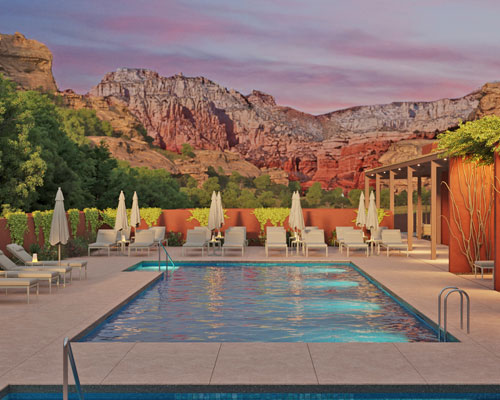
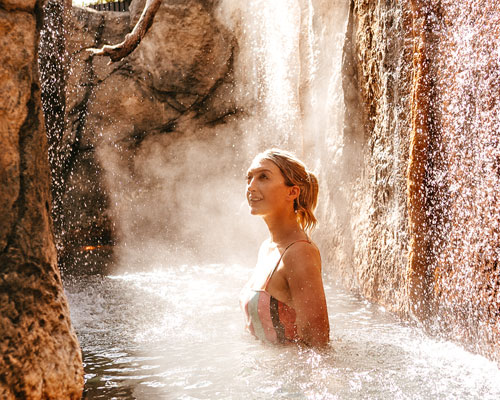
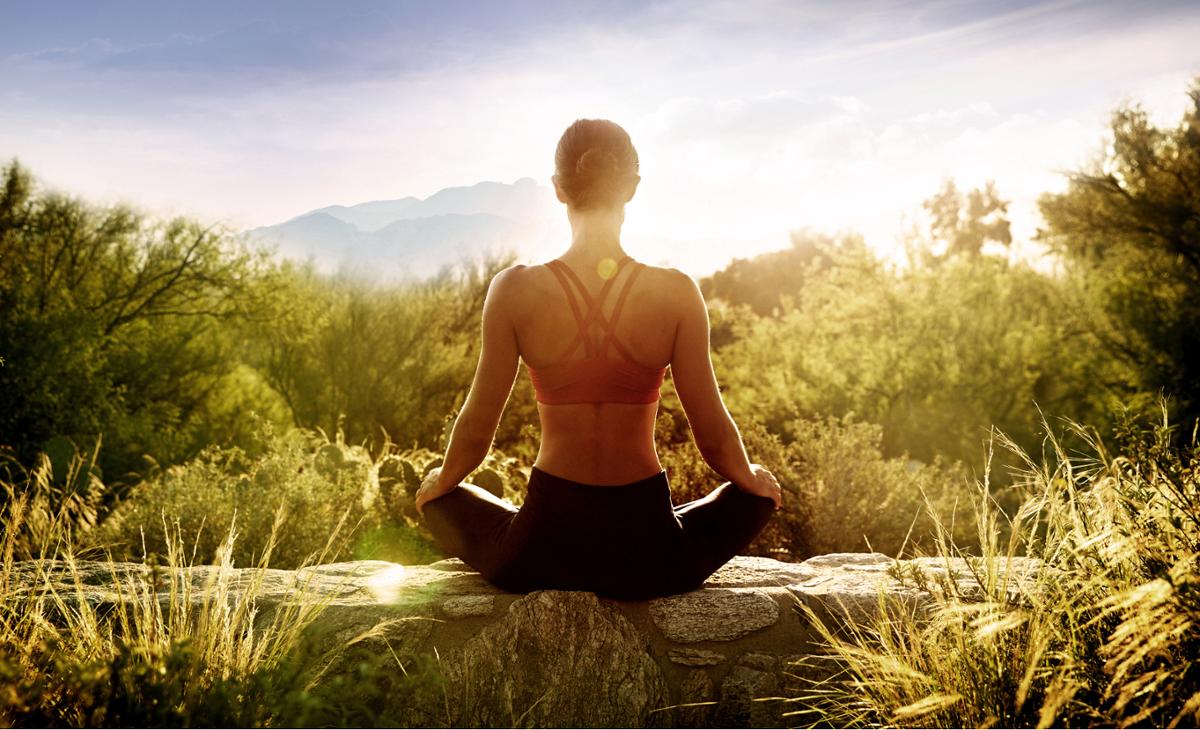
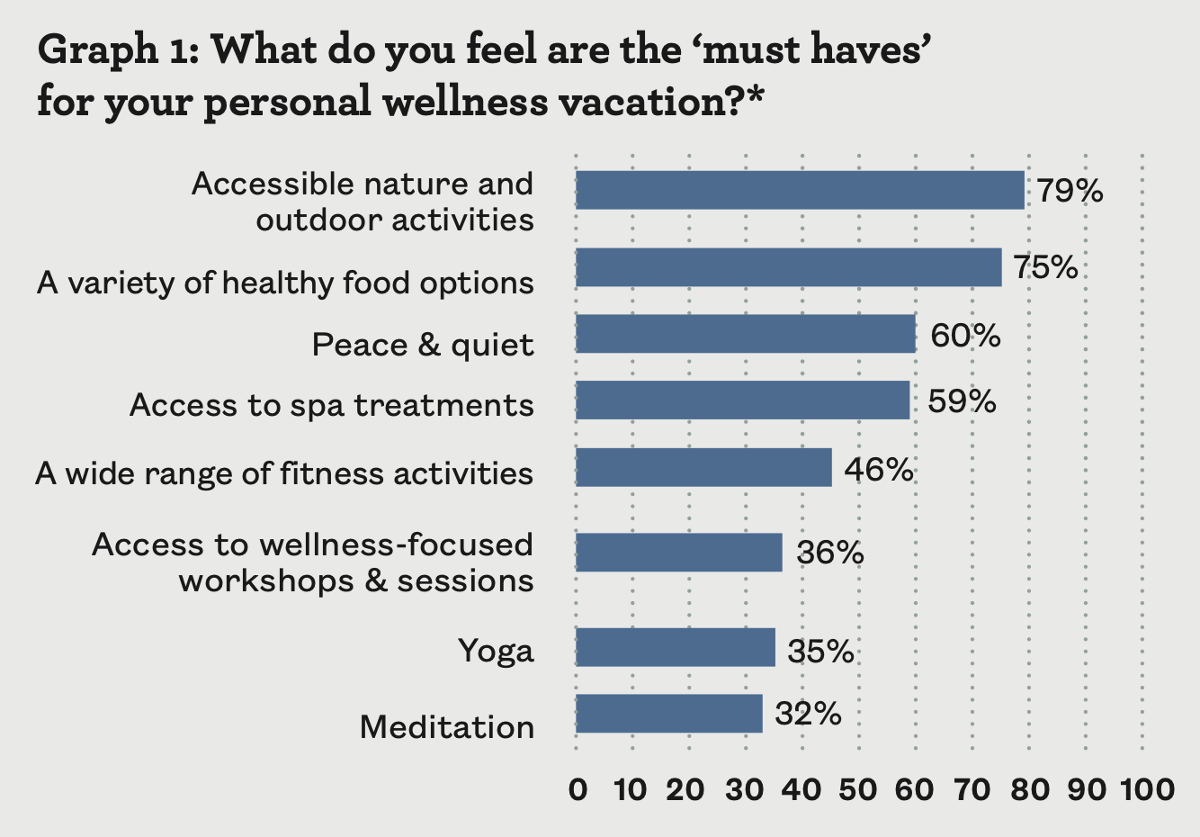
2. Nature rules (once again) Since the WTA introduced consumer surveys back in 2018, the desire to be in nature continues to dominate. In the 2022 survey, 79 per cent of respondents rated “Accessible nature and outdoor activities” as a must-have (see Graph 1). Euphoria in Greece and the Garden of the Gods resort in the US are great examples of operators who are taking sessions outdoors.
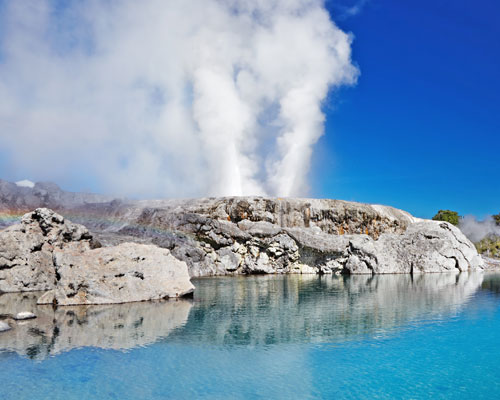
Those looking to attract the growing number of wellness-minded travellers but not fortunate enough to have forest trails, thermal springs or mountain vistas in their backyard, however, need to accept the growing importance of nature and consider developing a quiet garden space and making it available to clients and guests as part of a wellness package.
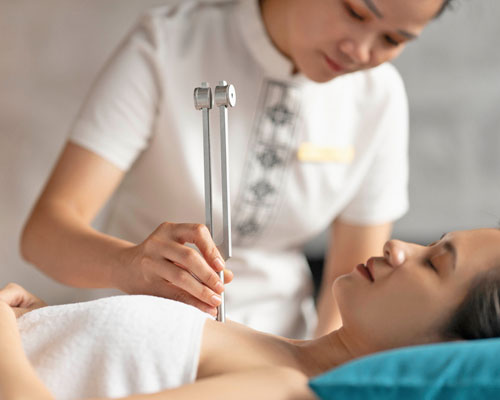
3. Where spas fit Number four on the list of must-haves – behind “Accessible nature and outdoor activities”, “A variety of healthy food options” and “Peace and quiet” – was “Access to spa treatments”. Consumers are beginning to realise that they can plan their wellness travels and holidays without including a spa experience. Now for those of you reading this who are spa operators, do not be discouraged. Treatments and the entire spa experience remain important aspects of the growing wellness tourism sector. While they’re not mandatory for wellness travel itself, they can certainly be built into wellness programmes and multi-day retreats.
At Alba Wellness Valley by Fusion in Vietnam, for instance, a free 50-minute massage per person is included in every resort booking. “We’ve taken the spa experience to another level,” says GM Hylton Lipkin, pointing out that this approach is a unique selling point for the resort which has “definitely been a contributing factor to the growth in occupancy”.
4. Self-guided programmes When asked about their preference for a bespoke programme versus a structured one for a wellness holiday, the vast majority (just under 80 per cent) of survey respondents selected the “self-guided programme with an opportunity to pick and choose from a menu of options.”
WTA members are responding to this preference with packages that can be personalised according to specific goals and interests. Kimberly Rossi, director of Wellness at Art of Living Retreat Center in North Carolina, USA says, “Back in 2019 we began noticing that guests wanted more flexible retreats instead of structured signature programmes, so we created Rest and Relaxation, a self-guided offering and it’s quickly become one of our most sought-after retreats.”
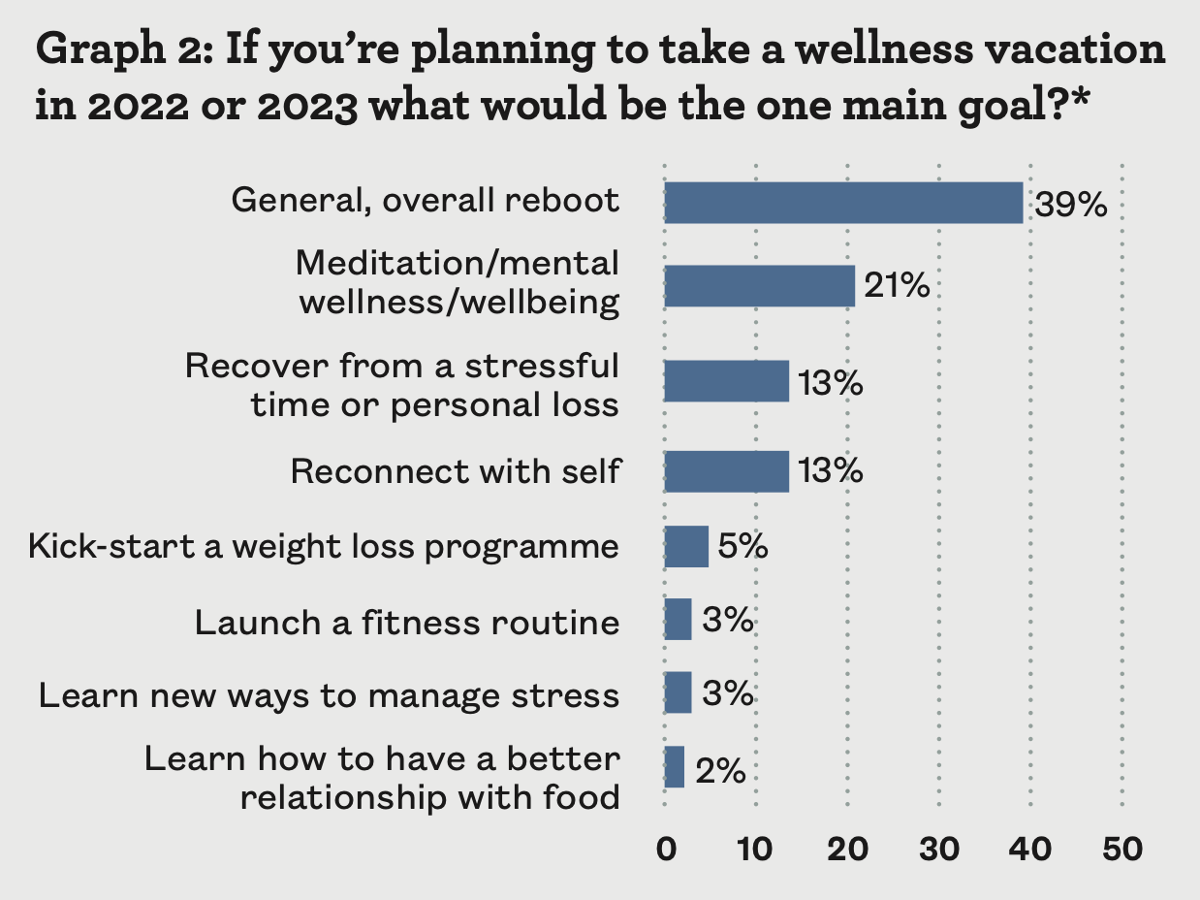
5. Top goals The survey presented a list of eight popular wellness holiday goals to participants and posed the question: “If you’re planning to take a wellness vacation in 2022 or 2023 what would be the one main goal?”
“General, overall reboot” topped the list (see Graph 2), followed by “Meditation/mental wellness/wellbeing” and, not surprisingly considering the pandemic, “Recover from a stressful time or personal loss”. We’re reminded here that by its very definition – a wellness vacation is planned with a specific intention in mind.
At the WTA’s 2022 International Wellness Tourism Conference in December, speaker Molly Anderson, vice president of sales and programming at Canyon Ranch, pointed out to attendees the need for a post-COVID shift toward more purposeful programming. She says: “intention-based guests are seeking guidance and many of our programmes are purpose-driven in response to specific goals.”
Flexibility is key The overall conclusion here is that personal wellness is top-of-mind as travel resumes and consumers are much more demanding. Spa operators, retreat programmers, tour leaders and others in the wellness space need to accept that having some flexibility with offerings is key. Wellness travellers come from various demographics and with varying demands so one size, definitely, does not fit all.
About the survey
The 2022 Wellness Travel Consumer Survey collected responses from nearly 1,500 consumers across 49 countries and territories.
Demographics of respondents
• 68% of consumers were from the USA
• 89% of respondents were female
• 85% were either gen X or baby boomers
• 44% were married
• 37% preferred to travel solo
Conducted online over a period of three months (March to May 2022), the survey was administered by the WTA in collaboration with its research associate Danny Kessler, assistant professor and director of the Workplace Wellness Research Lab at Dongseo University, International College in South Korea. Results were revealed in December.
"90 per cent of respondents incorporate wellness activities when they travel" – Anne Dimon
Read more from this issue of Attractions Management magazine
View contents of Attractions Management 2023 issue 1
Write to reply: Letters
Zulal's Sandie Johannessen shares her passion for medical wellness and Kloodos' Julie Cichocki says wellness protocols should start with the vagus nerve
Spa People: Leekyung Han
The South Korean-born spa consultant on why her home country should be on the radar of all wellness developers
Sponsored: Art of Cryo: Working well
Spa operators and corporate offices can now offer a comprehensive, six-part wellness journey designed by Art of Cryo to elevate health
Research: Wellness Travel Consumer Survey
A general reboot and nature/outdoor activities are key considerations for wellness tourists according to a new study by WTA. Anne Dimon reports
First person: Doctor’s orders
Can a partnership with an international hospital elevate a wellness retreat? Neena Dhillon visits RAKxa in Bangkok, Thailand to find out
Interview: Justin Musgrove
We talk to the CEO of Core Life, the exclusive lifestyle brand which has ambitions to expand to the world's most affluent cities
Sponsored: Starpool: Zerobody Cryo
The new Zerobody Cryo will deliver comfortable cold therapy for spa, wellness and sports says Starpool CEO, Riccardo Turri
A general, overall reboot is the main motivation for wellness travel and nature/outdoor activities are the top must-have, according to the Wellness Tourism Association’s latest consumer survey, as Anne Dimon reports
Euphoria Retreat in Greece makes the most of outdoor space / Photo: Euphoria Retreat (Sparta, Greece)
With a view to helping spa, hotel and tour operators understand wellness-minded travellers, the Wellness Tourism Association (WTA) has just revealed the results of its annual consumer survey.
The WTA represents operators and professionals in the sector and the fourth edition of its Wellness Travel Consumer Survey is based on insights from close to 1,500 respondents (see p56). It underscores what we’ve all come to acknowledge: wellness travel, which enables people to support their healthy lifestyle and sense of wellbeing, is clearly in demand as people take to the road once again.
“Of the 100,000 trip pages created through our platform in 2022, 35 per cent of those were wellness-focused,” says Shayna Zand, head of partnerships at online booking platform WeTravel, which sponsored this year’s survey. “That’s a significant 25 per cent year-over-year increase in overall bookings plus wellness.”
This corresponds with WTA’s survey results. Close to 90 per cent of the respondents reported they now incorporate wellness activities when they travel. This is up slightly from the 2021 survey. More people accept the fact that they’re responsible for their own self-care and that becoming healthy and staying healthy is about being proactive.
But what are the wants, needs and demands of those planning wellness holidays? The WTA’s five key findings are detailed below.
1. Length of stay and price point For those looking to book in the future, three to five nights is the preferred length of stay for most consumers (54 per cent), followed by seven nights (29 per cent). Shorter stays dwindle dramatically in popularity, with only 9 per cent of people considering a two-day, three-night package.
These same people have a clear idea of how much they’re willing to spend – only three per cent are prepared to pay more than US$5,000 for their wellness holiday. An overwhelming majority are looking to spend either US$2,500 or less (53 per cent) or between a US$2,500 and US$5,000 price point (44 per cent).
2. Nature rules (once again) Since the WTA introduced consumer surveys back in 2018, the desire to be in nature continues to dominate. In the 2022 survey, 79 per cent of respondents rated “Accessible nature and outdoor activities” as a must-have (see Graph 1). Euphoria in Greece and the Garden of the Gods resort in the US are great examples of operators who are taking sessions outdoors.
Those looking to attract the growing number of wellness-minded travellers but not fortunate enough to have forest trails, thermal springs or mountain vistas in their backyard, however, need to accept the growing importance of nature and consider developing a quiet garden space and making it available to clients and guests as part of a wellness package.
3. Where spas fit Number four on the list of must-haves – behind “Accessible nature and outdoor activities”, “A variety of healthy food options” and “Peace and quiet” – was “Access to spa treatments”. Consumers are beginning to realise that they can plan their wellness travels and holidays without including a spa experience. Now for those of you reading this who are spa operators, do not be discouraged. Treatments and the entire spa experience remain important aspects of the growing wellness tourism sector. While they’re not mandatory for wellness travel itself, they can certainly be built into wellness programmes and multi-day retreats.
At Alba Wellness Valley by Fusion in Vietnam, for instance, a free 50-minute massage per person is included in every resort booking. “We’ve taken the spa experience to another level,” says GM Hylton Lipkin, pointing out that this approach is a unique selling point for the resort which has “definitely been a contributing factor to the growth in occupancy”.
4. Self-guided programmes When asked about their preference for a bespoke programme versus a structured one for a wellness holiday, the vast majority (just under 80 per cent) of survey respondents selected the “self-guided programme with an opportunity to pick and choose from a menu of options.”
WTA members are responding to this preference with packages that can be personalised according to specific goals and interests. Kimberly Rossi, director of Wellness at Art of Living Retreat Center in North Carolina, USA says, “Back in 2019 we began noticing that guests wanted more flexible retreats instead of structured signature programmes, so we created Rest and Relaxation, a self-guided offering and it’s quickly become one of our most sought-after retreats.”
5. Top goals The survey presented a list of eight popular wellness holiday goals to participants and posed the question: “If you’re planning to take a wellness vacation in 2022 or 2023 what would be the one main goal?”
“General, overall reboot” topped the list (see Graph 2), followed by “Meditation/mental wellness/wellbeing” and, not surprisingly considering the pandemic, “Recover from a stressful time or personal loss”. We’re reminded here that by its very definition – a wellness vacation is planned with a specific intention in mind.
At the WTA’s 2022 International Wellness Tourism Conference in December, speaker Molly Anderson, vice president of sales and programming at Canyon Ranch, pointed out to attendees the need for a post-COVID shift toward more purposeful programming. She says: “intention-based guests are seeking guidance and many of our programmes are purpose-driven in response to specific goals.”
Flexibility is key The overall conclusion here is that personal wellness is top-of-mind as travel resumes and consumers are much more demanding. Spa operators, retreat programmers, tour leaders and others in the wellness space need to accept that having some flexibility with offerings is key. Wellness travellers come from various demographics and with varying demands so one size, definitely, does not fit all.
About the survey
The 2022 Wellness Travel Consumer Survey collected responses from nearly 1,500 consumers across 49 countries and territories.
Demographics of respondents
• 68% of consumers were from the USA
• 89% of respondents were female
• 85% were either gen X or baby boomers
• 44% were married
• 37% preferred to travel solo
Conducted online over a period of three months (March to May 2022), the survey was administered by the WTA in collaboration with its research associate Danny Kessler, assistant professor and director of the Workplace Wellness Research Lab at Dongseo University, International College in South Korea. Results were revealed in December.
"90 per cent of respondents incorporate wellness activities when they travel" – Anne Dimon
Read more from this issue of Attractions Management magazine
View contents of Attractions Management 2023 issue 1
Write to reply: Letters
Zulal's Sandie Johannessen shares her passion for medical wellness and Kloodos' Julie Cichocki says wellness protocols should start with the vagus nerve
Spa People: Leekyung Han
The South Korean-born spa consultant on why her home country should be on the radar of all wellness developers
Sponsored: Art of Cryo: Working well
Spa operators and corporate offices can now offer a comprehensive, six-part wellness journey designed by Art of Cryo to elevate health
Research: Wellness Travel Consumer Survey
A general reboot and nature/outdoor activities are key considerations for wellness tourists according to a new study by WTA. Anne Dimon reports
First person: Doctor’s orders
Can a partnership with an international hospital elevate a wellness retreat? Neena Dhillon visits RAKxa in Bangkok, Thailand to find out
Interview: Justin Musgrove
We talk to the CEO of Core Life, the exclusive lifestyle brand which has ambitions to expand to the world's most affluent cities
Sponsored: Starpool: Zerobody Cryo
The new Zerobody Cryo will deliver comfortable cold therapy for spa, wellness and sports says Starpool CEO, Riccardo Turri
London Museum will open four new food and drink destinations when it launches its new home
at Smithfield on 28 November, making hospitality a central part of the visitor experience at one
of the capital's biggest cultural openings of the year.
OMA has completed a major transformation of New York's New Museum, creating a larger
cultural campus that combines expanded exhibition spaces with learning, performance,
hospitality and public programming.
A US$50 million (£44.2 million, €51.2 million) transformation of Chicago's historic McCormick
Mansion has created a new destination that combines live magic, immersive theatre, dining and
private membership under one roof.
The Montana Historical Society has officially celebrated the opening of its new Montana
Heritage
Center, a US$107 million (£79 million, €92 million) destination that combines immersive
storytelling with cutting-edge audiovisual technology to bring the sta
San Antonio Zoo has reported a US$283 million economic impact for 2025, following a decade-
long transformation programme that has seen almost US$200 million invested into the Texas
attraction.
Plans for the AU$180 million redevelopment of Reef HQ Aquarium in Townsville, Australia, are
progressing, with the project set to transform the attraction into a global centre for reef
education and conservation.
Abu Dhabi-based investment firm Mubadala Capital has made a binding, fully financed
€1 billion
offer to acquire Pierre and Vacances SA, the European holiday resort operator behind the
continental European Center Parcs business.
Disney has reaffirmed its commitment to investing US$30 billion in its US parks and cruise
business by 2033, using new America250 celebrations to underline the role its attractions play
in supporting jobs, tourism and economic growth.
Expo 2030 Riyadh is being planned as a permanent visitor destination, with organisers
confirming the six-million-square-metre site will become a Global Village after the event closes.
The owner of one of Australia's best-known waterparks has acquired a major competitor,
creating a new attractions business spanning two of the country's largest visitor destinations.