It’s all joined up – happy people have better and more successful lives,
earn more, pay more tax and create fairer, more democratic societies.
This in turn leads to more stability and better prospects for the young.
All we need is for our politicians to realise this and do something about it
By Liz Terry | Published in Spa Business 2016 issue 4
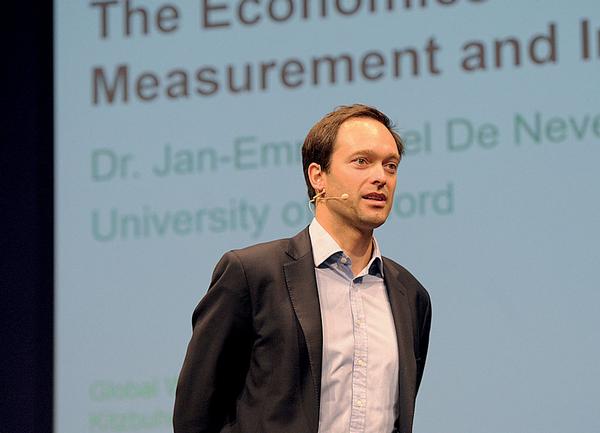
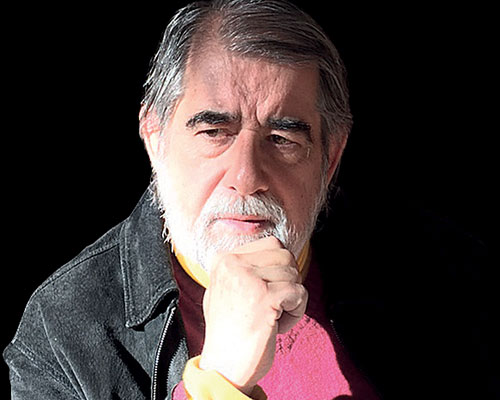
De Neve: direct correlation between happiness and political stability
The connection between wellbeing and political stability isn’t immediately obvious, but new research and thinking on this subject is showing a powerful and very direct correlation which demands our close attention.
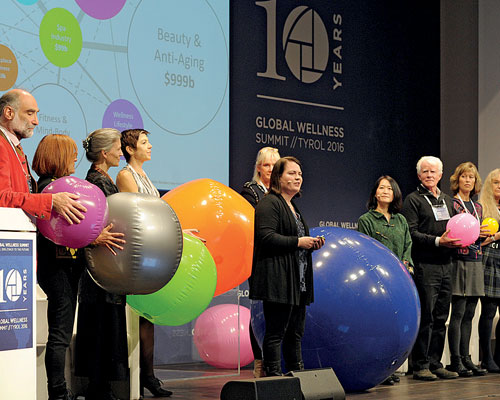
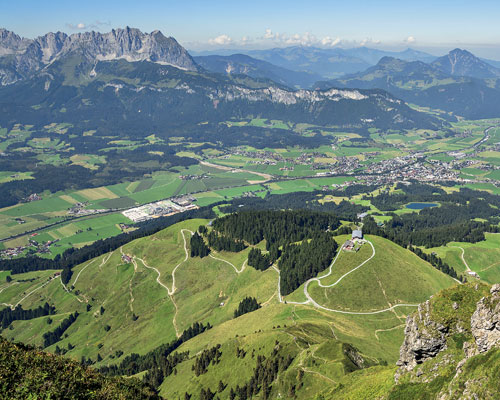
Speaking at the Global Wellness Summit in Austria recently, economist Thierry Malleret explained that we are hard-wired to object to unfairness and that our increasingly unjust world is giving rise to dictators, extreme political movements and civil unrest.
He said wellbeing strategies by governments around the world are essential to counteract this trend and also to offset the many factors which are causing ‘unwellness’, such as pollution, overconsumption of toxic social media content, unwell ageing, obesity, and diabetes.
The impact of happiness and wellbeing on geopolitical stability was also explored by keynote, Jan-Emmanuel De Neve, professor of economics at Oxford University.
He led with a quote from Ben Bernanke, economist at the Brookings Institution, who served as chair of the Federal Reserve: “The ultimate purpose of economics is to understand and promote the enhancement of wellbeing.” De Neve said there’s a clear correlation between happiness, wellbeing and economic success – and in turn, an impact on political stability and social cohesion. He cited Greece as an example, saying wellbeing in Greece was at its lowest level on record following the country’s economic collapse.
Research has found happiness is fragile – more easily destroyed than created – and people are twice as sensitive to loss of economic status as they are to its gain.
He showed a direct correlation between happiness and wealth – happier people have happier lives and this creates opportunity. People who are happiest at age 16, 18 and 22 will earn US$3,000 more a year than average by age 30.
However, he said “today’s adolescents are falling behind in terms of both wellbeing and mental wellness” and as a result will earn up to US$10,000 less than average in adulthood.
The deteriorating situation young people face in terms of their happiness, wellbeing and opportunity is a cause of huge concern. We’re building a world in which they’re more likely to fail and less likely to achieve their potential.
Essentially we’re building a less happy and less fair future.
With proven solutions available, we must mobilise as an industry and take every step we can to change this situation.
Liz Terry, editorial director @elizterry
Read more from this issue of Attractions Management magazine
View contents of Attractions Management 2016 issue 4
Promotional feature: Phytomer
As a pioneer of marine skincare, Phytomer represents a story of three impassioned generations and a dedication to cultivating the purest spa ingredients from the northern French coast
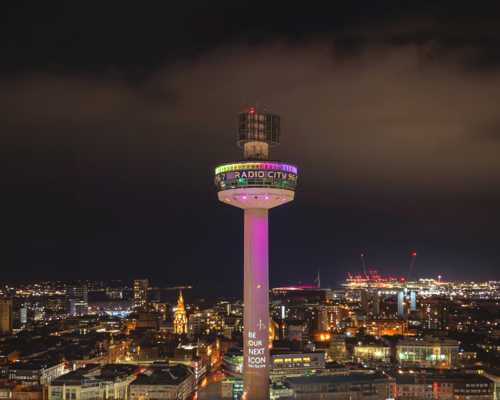
An opportunity to reimagine one of the UK’s most recognisable towers has been formally
opened by Rivington Hark, as St Johns Beacon invites operators and partners to shape its
next phase. [more...]
It’s all joined up – happy people have better and more successful lives,
earn more, pay more tax and create fairer, more democratic societies.
This in turn leads to more stability and better prospects for the young.
All we need is for our politicians to realise this and do something about it
By Liz Terry | Published in Spa Business 2016 issue 4
De Neve: direct correlation between happiness and political stability
The connection between wellbeing and political stability isn’t immediately obvious, but new research and thinking on this subject is showing a powerful and very direct correlation which demands our close attention.
Speaking at the Global Wellness Summit in Austria recently, economist Thierry Malleret explained that we are hard-wired to object to unfairness and that our increasingly unjust world is giving rise to dictators, extreme political movements and civil unrest.
He said wellbeing strategies by governments around the world are essential to counteract this trend and also to offset the many factors which are causing ‘unwellness’, such as pollution, overconsumption of toxic social media content, unwell ageing, obesity, and diabetes.
The impact of happiness and wellbeing on geopolitical stability was also explored by keynote, Jan-Emmanuel De Neve, professor of economics at Oxford University.
He led with a quote from Ben Bernanke, economist at the Brookings Institution, who served as chair of the Federal Reserve: “The ultimate purpose of economics is to understand and promote the enhancement of wellbeing.” De Neve said there’s a clear correlation between happiness, wellbeing and economic success – and in turn, an impact on political stability and social cohesion. He cited Greece as an example, saying wellbeing in Greece was at its lowest level on record following the country’s economic collapse.
Research has found happiness is fragile – more easily destroyed than created – and people are twice as sensitive to loss of economic status as they are to its gain.
He showed a direct correlation between happiness and wealth – happier people have happier lives and this creates opportunity. People who are happiest at age 16, 18 and 22 will earn US$3,000 more a year than average by age 30.
However, he said “today’s adolescents are falling behind in terms of both wellbeing and mental wellness” and as a result will earn up to US$10,000 less than average in adulthood.
The deteriorating situation young people face in terms of their happiness, wellbeing and opportunity is a cause of huge concern. We’re building a world in which they’re more likely to fail and less likely to achieve their potential.
Essentially we’re building a less happy and less fair future.
With proven solutions available, we must mobilise as an industry and take every step we can to change this situation.
Liz Terry, editorial director @elizterry
Read more from this issue of Attractions Management magazine
View contents of Attractions Management 2016 issue 4
Promotional feature: Phytomer
As a pioneer of marine skincare, Phytomer represents a story of three impassioned generations and a dedication to cultivating the purest spa ingredients from the northern French coast
Hotel de France, located on the British Isle of Jersey, has created a wellness retreat package
that includes a hot yoga session that will take place in Jersey Zoo’s butterfly sanctuary.
A new immersive attraction designed to transport visitors into the final hours of ancient Pompeii
is preparing to open near the world-famous archaeological site in southern Italy.
Experience design company, BRC Imagination Arts, has completed a transition that sees founder
Bob Rogers pass ownership of the business to four long-serving senior executives, while
remaining actively involved with the company.
Movie Park Germany has opened a new Paramount Pictures-themed attraction as part of its 30th
anniversary celebrations, using immersive storytelling and adaptive reuse to reinforce the park’s
longstanding “Hollywood in Germany” positioning.
Therme Manchester’s 28-acre development, which will include interconnected glass pavilions
that measure 65,000sq m, will be the largest bathing and wellbeing attraction in the world once
complete, according to prof David Russell, CEO of Therme UK.
Efteling has opened Hooghmoed, a new family drop tower designed to broaden the appeal of its
recently launched Sirene Island themed area and introduce younger visitors to thrill attractions.
A proposed Puy du Fou development near Bicester and Universal Destinations and Experiences’
planned resort in Bedford are emerging as part of a wider transformation of the Oxford–
Cambridge Growth Corridor into a major centre for UK leisure and tourism inv
Shedd Aquarium has opened the Immersion Theater developed in partnership with SimEx-
Iwerks, as part of a wider strategy to enhance the guest experience and create additional
revenue opportunities.
The UK government has announced a temporary reduction in VAT on visitor attractions and
children’s meals as part of a summer cost-of-living support package designed to stimulate the
visitor economy and encourage family days out.
As designer Yinka Ilori prepares for his first solo gallery show in London, he speaks exclusively
to CLADmag about his mission to spread joy, the power of play, and his bold approach to using
colour (including the colours you won’t see in his work).
The government of Thailand is exploring plans for a THB300bn (£6.3bn, US$8.3bn)
entertainment complex in the country’s Eastern Economic Corridor (EEC), with officials
proposing a large-scale theme park and sports destination as part of a broader tourism and
economic development strategy.
+ More news
COMPANY PROFILES
TechnoAlpin Indoor TechnoAlpin is the world leader for snowmaking systems. With the Indoor snow division, TechnoAlpin c [more...]
Simworx Ltd The company was initially established
in 1997. Terry Monkton and Andrew
Roberts are the key stakeh [more...]
instantprint We’re a Yorkshire-based online printer, founded
in 2009 by Adam Carnell and James Kinsella. [more...]
DJW David & Lynn Willrich started the Company
over thirty years ago, from the Audio Visual
Department [more...]
An opportunity to reimagine one of the UK’s most recognisable towers has been formally
opened by Rivington Hark, as St Johns Beacon invites operators and partners to shape its
next phase. [more...]