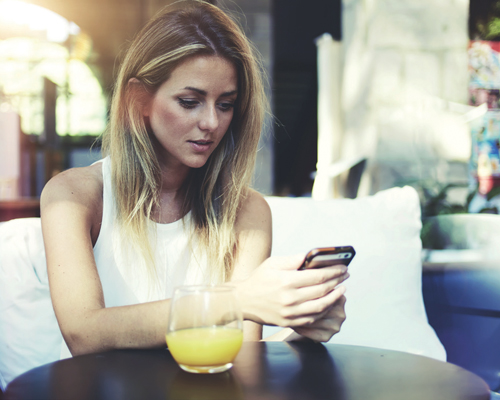
Skin feels softer when touch is
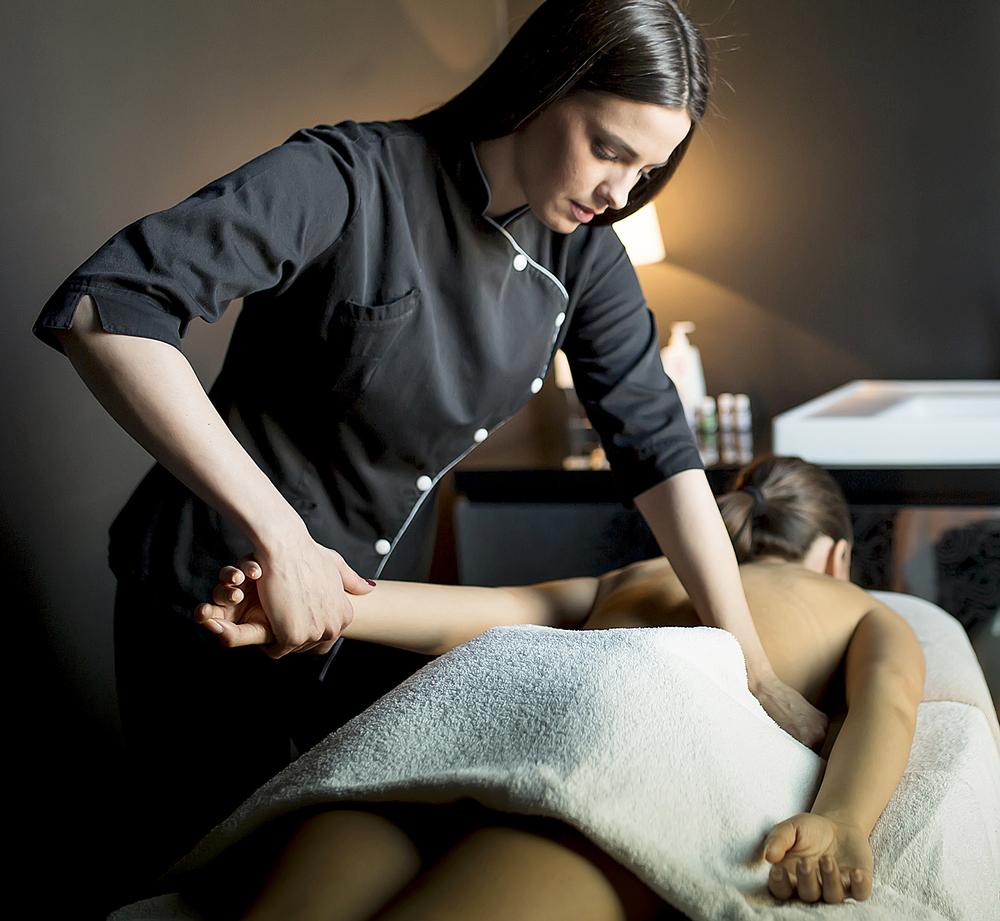
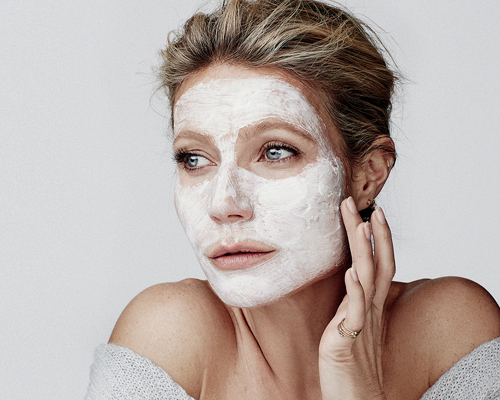
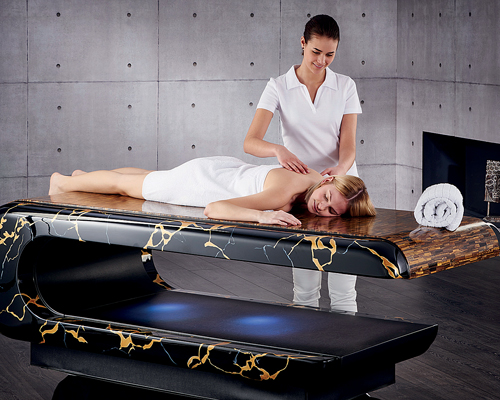
delivered intentionally the study found / Goran Bogicevic/SHUTTERSTOCK
Spas know about the power of touch and its mental and physical benefits from first-hand experience. Scientific studies have backed up these beliefs as well. Yet until recently, most research has focused on the benefits for the person receiving touch. But now a study* by University College London, UK, has highlighted the effect on the person actively touching others with some interesting findings.
The scientists found that participants consistently rated the skin of another person softer than their own, whether or not it really was. They suggest that this phenomenon may exist to ensure that humans are motivated to build social bonds through touch. “What’s intriguing about the illusion is its specificity,” says Antje Gentsch of UCL. “We found the illusion to be strongest when the stroking was applied intentionally and according to the optimal properties of the specialised system in the skin for receiving affective touch.”
This system typically responds to slow, gentle stroking found in intimate relationships and encodes the pleasure of touch, Gentsch explains.
“The illusion reveals a largely automatic and unconscious mechanism by which ‘giving pleasure is receiving pleasure’ in the touch domain,” says lead researcher Aikaterini Fotopoulou.
Earlier studies show that softness and smoothness stimulate parts of the brain associated with emotion and reward. Therefore, the ‘illusion’ that other people are softer ensures that reaching out and touching another person comes as its own reward. The UCL team believe this rewarding illusion acts as a kind of social glue, bonding people to each other.
In the last issue of Spa Business (see SB16/2 p58), neuroscientist Dr Claudia Aguirre also describes how gentle pressure – the kind we feel during a light massage – activates a different part of the brain to touch that is harder and quicker. This softer kind of touch reaches the brain at a much slower rate via slow-conducting fibres known c-tactile or CT fibres.
• Read more: http://lei.sr?a=k3w2e l
*Source: Fotopoulou, A et al. Active Interpersonal Touch Gives Rise to the Social Softness Illusion. Current Biology. September 2015
Read more from this issue of Attractions Management magazine
View contents of Attractions Management 2016 issue 3
Top team: Gwinganna Lifestyle Retreat
The people behind this world-renowned lifestyle retreat share their business insights with Julie Cramer. Plus a focus on co-investor Hugh Jackman
Ask an expert: Visiting practitioners
Done well, visiting practitioner programmes can boost profits by up to 40 per cent. But how can spas get the offer right? Kate Parker investigates
Promotional feature: Esadore - creating a splash
The MD of Esadore International, Theodora Kioussis, explains how the company’s creative, manufacturing and operational skill sets can bring an international managing director
of UAE-based esadore International to life in a short space of time
Skin feels softer when touch is
delivered intentionally the study found / Goran Bogicevic/SHUTTERSTOCK
Spas know about the power of touch and its mental and physical benefits from first-hand experience. Scientific studies have backed up these beliefs as well. Yet until recently, most research has focused on the benefits for the person receiving touch. But now a study* by University College London, UK, has highlighted the effect on the person actively touching others with some interesting findings.
The scientists found that participants consistently rated the skin of another person softer than their own, whether or not it really was. They suggest that this phenomenon may exist to ensure that humans are motivated to build social bonds through touch. “What’s intriguing about the illusion is its specificity,” says Antje Gentsch of UCL. “We found the illusion to be strongest when the stroking was applied intentionally and according to the optimal properties of the specialised system in the skin for receiving affective touch.”
This system typically responds to slow, gentle stroking found in intimate relationships and encodes the pleasure of touch, Gentsch explains.
“The illusion reveals a largely automatic and unconscious mechanism by which ‘giving pleasure is receiving pleasure’ in the touch domain,” says lead researcher Aikaterini Fotopoulou.
Earlier studies show that softness and smoothness stimulate parts of the brain associated with emotion and reward. Therefore, the ‘illusion’ that other people are softer ensures that reaching out and touching another person comes as its own reward. The UCL team believe this rewarding illusion acts as a kind of social glue, bonding people to each other.
In the last issue of Spa Business (see SB16/2 p58), neuroscientist Dr Claudia Aguirre also describes how gentle pressure – the kind we feel during a light massage – activates a different part of the brain to touch that is harder and quicker. This softer kind of touch reaches the brain at a much slower rate via slow-conducting fibres known c-tactile or CT fibres.
• Read more: http://lei.sr?a=k3w2e l
*Source: Fotopoulou, A et al. Active Interpersonal Touch Gives Rise to the Social Softness Illusion. Current Biology. September 2015
Read more from this issue of Attractions Management magazine
View contents of Attractions Management 2016 issue 3
Top team: Gwinganna Lifestyle Retreat
The people behind this world-renowned lifestyle retreat share their business insights with Julie Cramer. Plus a focus on co-investor Hugh Jackman
Ask an expert: Visiting practitioners
Done well, visiting practitioner programmes can boost profits by up to 40 per cent. But how can spas get the offer right? Kate Parker investigates
Promotional feature: Esadore - creating a splash
The MD of Esadore International, Theodora Kioussis, explains how the company’s creative, manufacturing and operational skill sets can bring an international managing director
of UAE-based esadore International to life in a short space of time
Abu Dhabi-based investment firm Mubadala Capital has made a binding, fully financed
€1 billion
offer to acquire Pierre and Vacances SA, the European holiday resort operator behind the
continental European Center Parcs business.
Disney has reaffirmed its commitment to investing US$30 billion in its US parks and cruise
business by 2033, using new America250 celebrations to underline the role its attractions play
in supporting jobs, tourism and economic growth.
Expo 2030 Riyadh is being planned as a permanent visitor destination, with organisers
confirming the six-million-square-metre site will become a Global Village after the event closes.
The owner of one of Australia's best-known waterparks has acquired a major competitor,
creating a new attractions business spanning two of the country's largest visitor destinations.
The Toverland theme park in the Netherlands has announced a €98m expansion programme
that will add a resort, new attractions and staff facilities as it pursues plans to become a multi-
day destination.
Hotel de France, located on the British Isle of Jersey, has created a wellness retreat package
that includes a hot yoga session that will take place in Jersey Zoo’s butterfly sanctuary.
A new immersive attraction designed to transport visitors into the final hours of ancient Pompeii
is preparing to open near the world-famous archaeological site in southern Italy.
Experience design company, BRC Imagination Arts, has completed a transition that sees founder
Bob Rogers pass ownership of the business to four long-serving senior executives, while
remaining actively involved with the company.
Movie Park Germany has opened a new Paramount Pictures-themed attraction as part of its 30th
anniversary celebrations, using immersive storytelling and adaptive reuse to reinforce the park’s
longstanding “Hollywood in Germany” positioning.
Therme Manchester’s 28-acre development, which will include interconnected glass pavilions
that measure 65,000sq m, will be the largest bathing and wellbeing attraction in the world once
complete, according to prof David Russell, CEO of Therme UK.