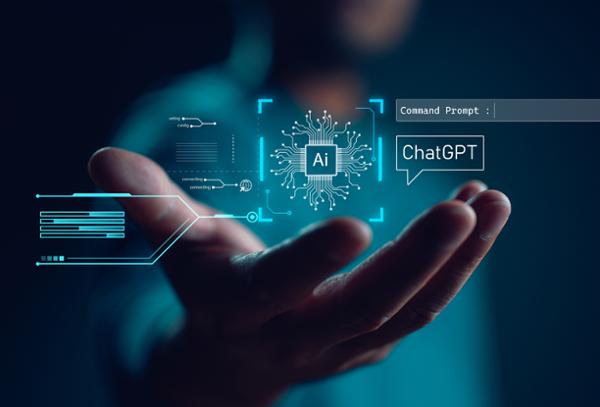
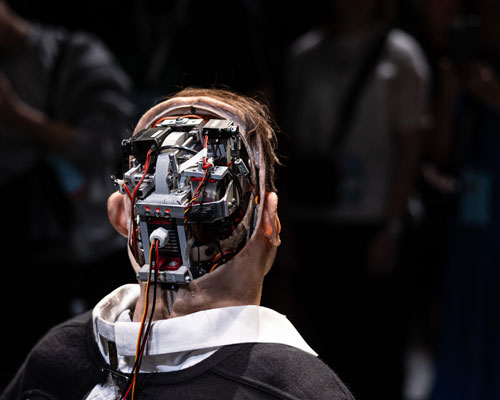
AI technologies are changing fast / Shutterstock/SomYuZu
T here’s no ignoring the issue of artificial intelligence (AI) right now, but for most of us, we’re still getting to grips with what it actually means in practice.
For now, everyone is looking at one another, and it’s important to learn from the early adopters about what works – and what doesn’t.
Many visitor attractions have traditionally been a little slow to adopt new technologies, but this is not the time to hang back.
It’s important to be aware of the potential pitfalls of AI, but it offers huge opportunities – for customising experiences, collating and interpreting data, improving efficiency, saving money, enhancing storytelling, offering novel in-person experiences and much more.
Attractions organisations currently using AI give valuable information about its potential for the industry. Disney, ever the pioneer, has set up a taskforce to study AI and how it can be used across its entertainment and theme park businesses.
Disney Research recently unveiled a prototype Baby Groot robot that uses AI machine-learning techniques to adapt to real-world scenarios, meaning it has the potential to move and act on its own, and interact with theme park visitors. The potential for this kind of technology to meet a growing desire for personalised experiences is huge. Characters could engage with individual guests, for example, and simulator rides could offer unique stories for each visitor.
Making sense of data to offer improved experiences is another area where AI can prove immensely useful.
London’s National Gallery has developed its own AI systems to predict the popularity of temporary exhibitions using past attendance data, and the British Museum has partnered with the Alan Turing Institute to use AI systems to process information from visitors to provide detailed analysis of their behaviour.
So where’s this all going? The simple answer is, no-one knows, but with AI set to enmesh itself more and more into our lives, those who don’t get to grips with it now run the risk of being left behind.
This industry is great at collaboration and sharing knowledge – this was particularly evident during the COVID-19 pandemic. Now is the time for experimenting, sharing and being bold. We’d love to hear how you’re getting on.
Interview: Fons Jurgens
Big changes are coming for much-loved Dutch theme park Efteling, with the launch of a Grand Hotel and major new attraction. Its CEO lets us into the plans
Museums: Ones to watch
Some seriously exciting new museums are taking shape across the globe. We highlight some of our favourites
Museums: Josh Kirk
As Copenhagen’s Home of Carlsberg relaunches after a five year revamp, the project design lead tells us how ground-breaking technology was used to bring the brand to life
Technology: AI – friend or foe?
How can attractions best exploit AI technologies? What are the dangers? What does the future hold? We get an expert opinion
Technology: Future shock
What can we learn from operators currently using AI? Lesley Morisetti gets some tips from early adopters
Museums: Jacqueline Springer
V&A East Museum will celebrate Black British music in its first exhibition. Its curator tells us more
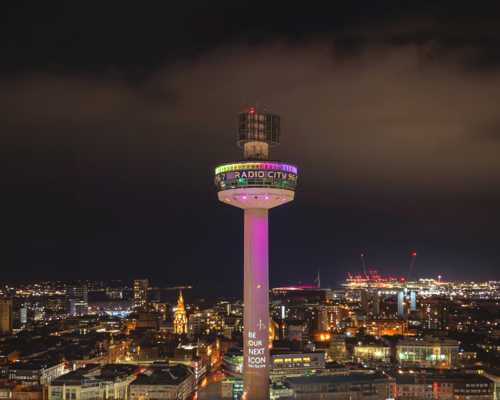
An opportunity to reimagine one of the UK’s most recognisable towers has been formally
opened by Rivington Hark, as St Johns Beacon invites operators and partners to shape its
next phase. [more...]
AI technologies are changing fast / Shutterstock/SomYuZu
T here’s no ignoring the issue of artificial intelligence (AI) right now, but for most of us, we’re still getting to grips with what it actually means in practice.
For now, everyone is looking at one another, and it’s important to learn from the early adopters about what works – and what doesn’t.
Many visitor attractions have traditionally been a little slow to adopt new technologies, but this is not the time to hang back.
It’s important to be aware of the potential pitfalls of AI, but it offers huge opportunities – for customising experiences, collating and interpreting data, improving efficiency, saving money, enhancing storytelling, offering novel in-person experiences and much more.
Attractions organisations currently using AI give valuable information about its potential for the industry. Disney, ever the pioneer, has set up a taskforce to study AI and how it can be used across its entertainment and theme park businesses.
Disney Research recently unveiled a prototype Baby Groot robot that uses AI machine-learning techniques to adapt to real-world scenarios, meaning it has the potential to move and act on its own, and interact with theme park visitors. The potential for this kind of technology to meet a growing desire for personalised experiences is huge. Characters could engage with individual guests, for example, and simulator rides could offer unique stories for each visitor.
Making sense of data to offer improved experiences is another area where AI can prove immensely useful.
London’s National Gallery has developed its own AI systems to predict the popularity of temporary exhibitions using past attendance data, and the British Museum has partnered with the Alan Turing Institute to use AI systems to process information from visitors to provide detailed analysis of their behaviour.
So where’s this all going? The simple answer is, no-one knows, but with AI set to enmesh itself more and more into our lives, those who don’t get to grips with it now run the risk of being left behind.
This industry is great at collaboration and sharing knowledge – this was particularly evident during the COVID-19 pandemic. Now is the time for experimenting, sharing and being bold. We’d love to hear how you’re getting on.
Interview: Fons Jurgens
Big changes are coming for much-loved Dutch theme park Efteling, with the launch of a Grand Hotel and major new attraction. Its CEO lets us into the plans
Museums: Ones to watch
Some seriously exciting new museums are taking shape across the globe. We highlight some of our favourites
Museums: Josh Kirk
As Copenhagen’s Home of Carlsberg relaunches after a five year revamp, the project design lead tells us how ground-breaking technology was used to bring the brand to life
Technology: AI – friend or foe?
How can attractions best exploit AI technologies? What are the dangers? What does the future hold? We get an expert opinion
Technology: Future shock
What can we learn from operators currently using AI? Lesley Morisetti gets some tips from early adopters
Museums: Jacqueline Springer
V&A East Museum will celebrate Black British music in its first exhibition. Its curator tells us more
Hotel de France, located on the British Isle of Jersey, has created a wellness retreat package
that includes a hot yoga session that will take place in Jersey Zoo’s butterfly sanctuary.
A new immersive attraction designed to transport visitors into the final hours of ancient Pompeii
is preparing to open near the world-famous archaeological site in southern Italy.
Experience design company, BRC Imagination Arts, has completed a transition that sees founder
Bob Rogers pass ownership of the business to four long-serving senior executives, while
remaining actively involved with the company.
Movie Park Germany has opened a new Paramount Pictures-themed attraction as part of its 30th
anniversary celebrations, using immersive storytelling and adaptive reuse to reinforce the park’s
longstanding “Hollywood in Germany” positioning.
Therme Manchester’s 28-acre development, which will include interconnected glass pavilions
that measure 65,000sq m, will be the largest bathing and wellbeing attraction in the world once
complete, according to prof David Russell, CEO of Therme UK.
Efteling has opened Hooghmoed, a new family drop tower designed to broaden the appeal of its
recently launched Sirene Island themed area and introduce younger visitors to thrill attractions.
A proposed Puy du Fou development near Bicester and Universal Destinations and Experiences’
planned resort in Bedford are emerging as part of a wider transformation of the Oxford–
Cambridge Growth Corridor into a major centre for UK leisure and tourism inv
Shedd Aquarium has opened the Immersion Theater developed in partnership with SimEx-
Iwerks, as part of a wider strategy to enhance the guest experience and create additional
revenue opportunities.
The UK government has announced a temporary reduction in VAT on visitor attractions and
children’s meals as part of a summer cost-of-living support package designed to stimulate the
visitor economy and encourage family days out.
As designer Yinka Ilori prepares for his first solo gallery show in London, he speaks exclusively
to CLADmag about his mission to spread joy, the power of play, and his bold approach to using
colour (including the colours you won’t see in his work).
The government of Thailand is exploring plans for a THB300bn (£6.3bn, US$8.3bn)
entertainment complex in the country’s Eastern Economic Corridor (EEC), with officials
proposing a large-scale theme park and sports destination as part of a broader tourism and
economic development strategy.
+ More news
COMPANY PROFILES
Clip 'n Climb Clip ‘n Climb currently offers facility owners and
investors more than 40 colourful and unique
Cha [more...]
An opportunity to reimagine one of the UK’s most recognisable towers has been formally
opened by Rivington Hark, as St Johns Beacon invites operators and partners to shape its
next phase. [more...]