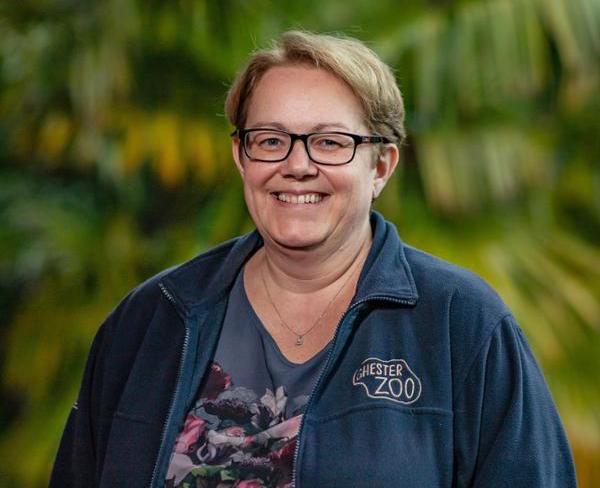
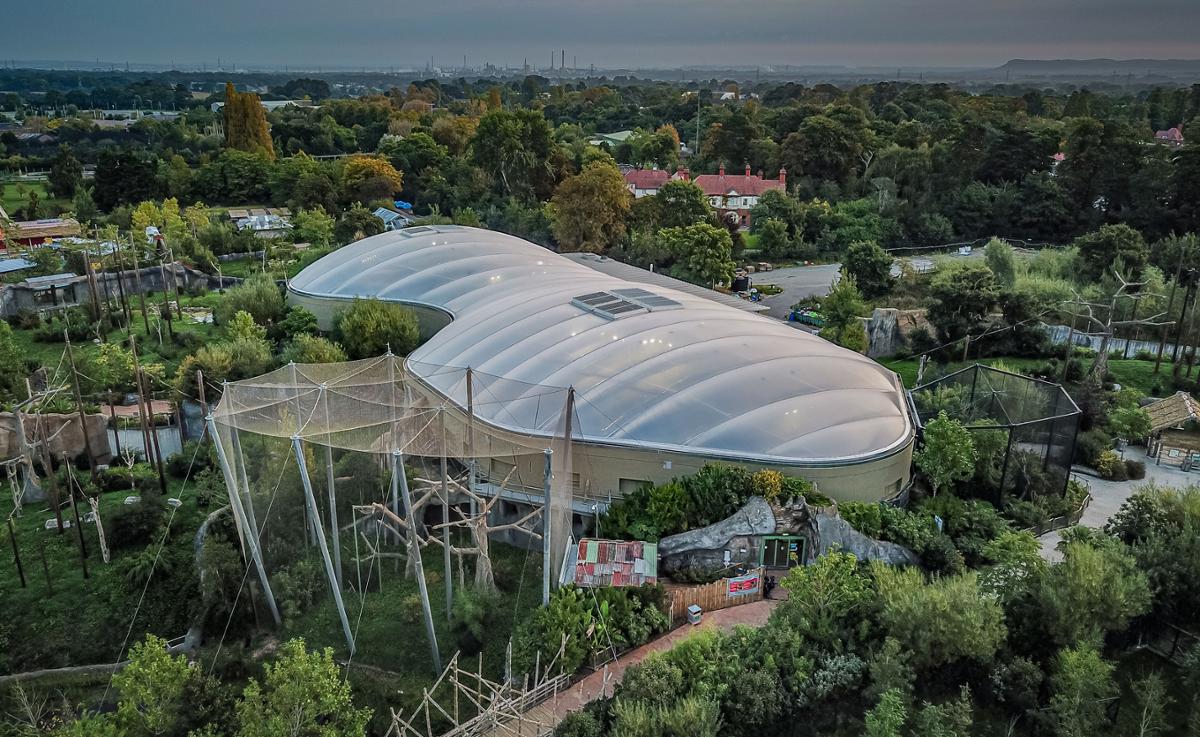
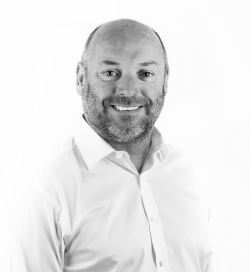
Dr Sue Walker has worked in zoo science for 25 years / Photo: Chester Zoo
Scientists at Chester Zoo have started to freeze tissue samples of some of the world’s rarest animals as part of a project to save them from extinction.
Together with leading animal reproduction experts, the conservationists at Chester Zoo have founded Nature’s SAFE: “One of Europe’s largest living biobanks dedicated to preserving and regenerating cells of the planet’s most precious animals.”
This project sees tissue samples taken from the ovaries, testicles and ears of animals that have died at Chester Zoo and are cryogenically frozen and stored at -196°C using liquid nitrogen.
The idea is that in the future, when reproductive technologies are more advanced, the frozen samples may be used to generate sperm and eggs, helping conservationists to restore genetic diversity in animal species threatened with extinction and even clone new animals.
To date, the frozen living biobank has cryopreserved multiple cell types from more than 100 highly threatened animal species – these include the jaguar, the Javan green magpie and the critically endangered Eastern black rhino.
“Without Nature’s SAFE, for many species already so near the brink of extinction, there will be no return,” said Tullis Matson, chair and founder of Nature’s SAFE.
“With Nature’s SAFE and other biobanking partners, there is optimism. We know the sixth mass extinction on Earth is underway, and there will be rough times ahead. The question is what do we want to do about it? And our answer is: we want to secure future options for biodiversity, by acting now.”
Nature’s SAFE is now home to biological tissue samples of some of the planet’s most endangered species – providing an insurance policy for threatened wildlife.
Dr Sue Walker, head of science at Chester Zoo and co-founder of Nature’s SAFE, speaks to Attractions Management about the project.
Why is this project so important? Species all over the world face extinction: each day we are losing millions of years of evolution. Repaired environments will only succeed if we have genetically diverse networks of fauna to sustain them.
Nature’s SAFE is providing hope to halt and reverse species decline by indefinitely storing and regenerating reproductive cells and cell lines from tissue that would otherwise be disposed of.
With gene pools and animal populations continually shrinking in the wild, the work of modern conservation zoos like ours has never been more important. Technologies such as cryopreservation offer us a new, critical piece of the conservation puzzle and help us provide a safeguard for many of the world’s animals that, right now, we’re sadly on track to lose.
What excites you most about this project? The most exciting part of this project is the optimism that it provides. Species conservation is challenging, there is no one quick-fix – it requires collaboration and innovation. As we restore and repair landscapes we must also act in parallel to deliver cutting edge scientific solutions to ensure genetic variation is not lost. Nature’s SAFE is an innovative tool in our conservation toolbox to ensure we store valuable genetic material after an individual animal dies.
What do you do with the tissue samples? Samples supplied by zoos and cryopreserved by Nature’s SAFE samples are processed in a unique way that ensures their functional ability is retained during preservation. From reproductive cells to ovarian and testicular tissue, to skin samples, specimens preserved by Nature’s SAFE have true functional relevance to species conservation, providing a robust living biobank of multiple tissue types and cell specimens to assist in future species preservation.
What’s the biggest challenge of this project? The greatest challenge for Nature’s SAFE is dealing with samples from such a huge variety of species – from rhinos to mountain chicken frogs. The diverse biology between species makes it technically challenging and that is where our scientific expertise take centre stage – developing new species specific methods and techniques. Additionally, safeguarding tissue samples is step one, the second is developing culture techniques to generate sperm and eggs from the preserved samples.
Why is it important for zoos to play a role in endangered species conservation? Zoos are a unique conservation model – not only do they have a very important role in species conservation, with thousands of visitors a day, they can also empower generations to care for our natural world and act sustainably. Chester Zoo will continue to work with Nature’s SAFE over the next few years in its mission to save animals from extinction by collecting, indefinitely storing and regenerating reproductive cells and cell lines from endangered animal species.
Read more from this issue of Attractions Management magazine
View contents of Attractions Management 2022 issue 2
Editor's letter: Open for all
We must listen to the communities we’re trying to serve if we’re going to make attractions inclusive for everyone, says Magali Robathan
Interview: Chris Mather
As the Gretna Green Experience opens in Scotland, Mather & Co’s CEO shares the highs and lows of almost three decades in exhibition design
Waterparks: Down to earth
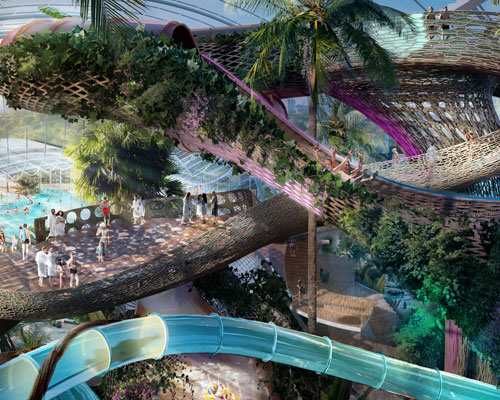
The world’s first ‘living waterslides’, a hydroponic farm, rooftop beehives and more than 1,500 trees – all part of the Therme Manchester next generation waterpark’s aims to be as green as possible
Museums: Gardens of the future
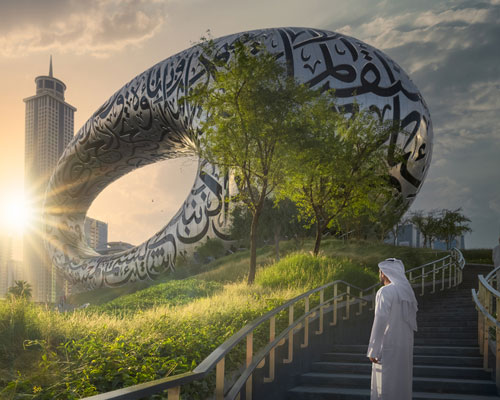
Dubai’s new Museum of the Future has opened with a bang. We look at how the innovative landscaping aims to support the museum’s message
Technology: A whole new world
The metaverse is coming, and the attractions industry needs to pay attention. Lesley Morisetti explores the challenges and opportunities
Immersive art: In the picture
Van Gogh: The Immersive Experience is part of a massive trend promising to offer new perspectives on art and artists
Awards: Museums & Heritage Awards
As the Oscars of the museum world celebrate the best, brightest and most creative, we take a look at this year’s winners
Tourism: The winds of change
Attractions providers not willing to take risks and get truly creative will get left behind, says Dr Terry Stevens. Here’s how to stay ahead of the curve
Research: A sustainable future
Research shows that consumers want attractions to get greener, faster, and they’re actively pushing for change. BVA BDRC’s Jon Young talks us through the numbers
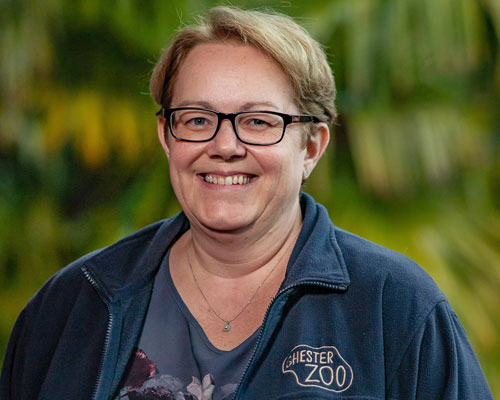
Dr Sue Walker has worked in zoo science for 25 years / Photo: Chester Zoo
Scientists at Chester Zoo have started to freeze tissue samples of some of the world’s rarest animals as part of a project to save them from extinction.
Together with leading animal reproduction experts, the conservationists at Chester Zoo have founded Nature’s SAFE: “One of Europe’s largest living biobanks dedicated to preserving and regenerating cells of the planet’s most precious animals.”
This project sees tissue samples taken from the ovaries, testicles and ears of animals that have died at Chester Zoo and are cryogenically frozen and stored at -196°C using liquid nitrogen.
The idea is that in the future, when reproductive technologies are more advanced, the frozen samples may be used to generate sperm and eggs, helping conservationists to restore genetic diversity in animal species threatened with extinction and even clone new animals.
To date, the frozen living biobank has cryopreserved multiple cell types from more than 100 highly threatened animal species – these include the jaguar, the Javan green magpie and the critically endangered Eastern black rhino.
“Without Nature’s SAFE, for many species already so near the brink of extinction, there will be no return,” said Tullis Matson, chair and founder of Nature’s SAFE.
“With Nature’s SAFE and other biobanking partners, there is optimism. We know the sixth mass extinction on Earth is underway, and there will be rough times ahead. The question is what do we want to do about it? And our answer is: we want to secure future options for biodiversity, by acting now.”
Nature’s SAFE is now home to biological tissue samples of some of the planet’s most endangered species – providing an insurance policy for threatened wildlife.
Dr Sue Walker, head of science at Chester Zoo and co-founder of Nature’s SAFE, speaks to Attractions Management about the project.
Why is this project so important? Species all over the world face extinction: each day we are losing millions of years of evolution. Repaired environments will only succeed if we have genetically diverse networks of fauna to sustain them.
Nature’s SAFE is providing hope to halt and reverse species decline by indefinitely storing and regenerating reproductive cells and cell lines from tissue that would otherwise be disposed of.
With gene pools and animal populations continually shrinking in the wild, the work of modern conservation zoos like ours has never been more important. Technologies such as cryopreservation offer us a new, critical piece of the conservation puzzle and help us provide a safeguard for many of the world’s animals that, right now, we’re sadly on track to lose.
What excites you most about this project? The most exciting part of this project is the optimism that it provides. Species conservation is challenging, there is no one quick-fix – it requires collaboration and innovation. As we restore and repair landscapes we must also act in parallel to deliver cutting edge scientific solutions to ensure genetic variation is not lost. Nature’s SAFE is an innovative tool in our conservation toolbox to ensure we store valuable genetic material after an individual animal dies.
What do you do with the tissue samples? Samples supplied by zoos and cryopreserved by Nature’s SAFE samples are processed in a unique way that ensures their functional ability is retained during preservation. From reproductive cells to ovarian and testicular tissue, to skin samples, specimens preserved by Nature’s SAFE have true functional relevance to species conservation, providing a robust living biobank of multiple tissue types and cell specimens to assist in future species preservation.
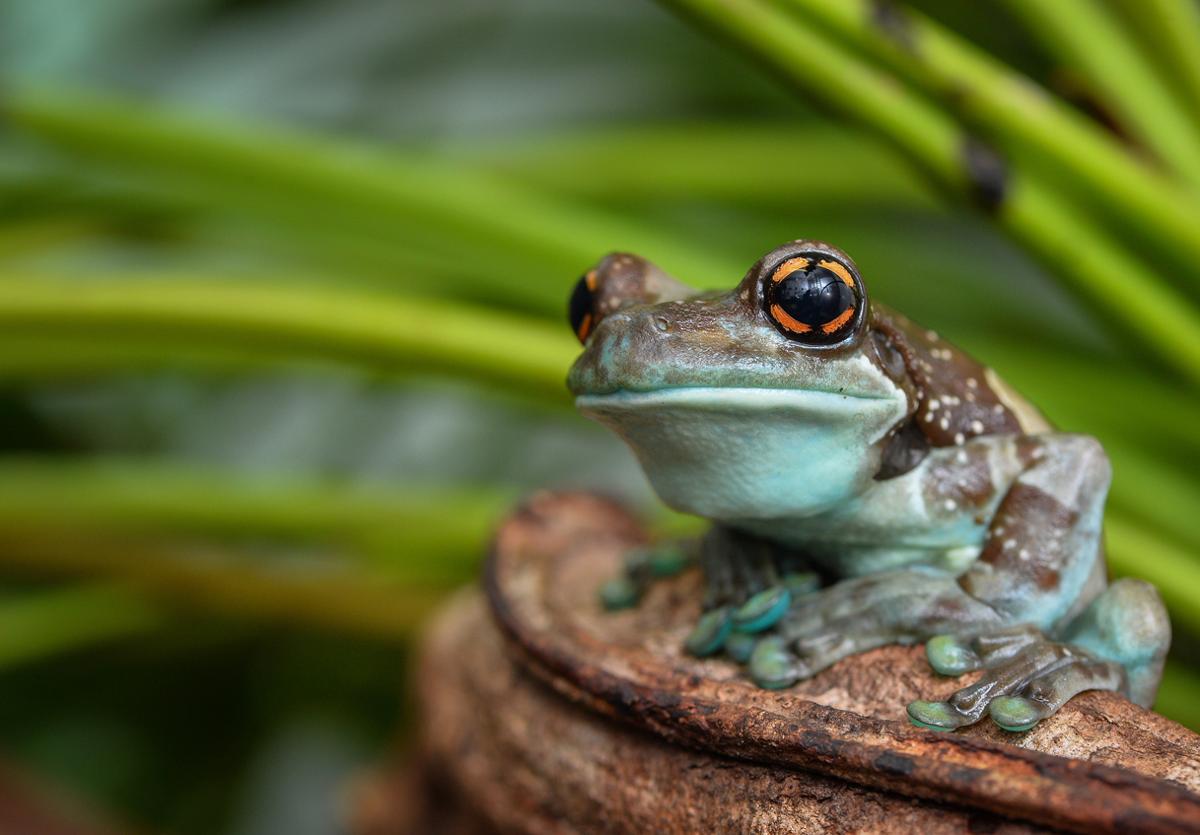
What’s the biggest challenge of this project? The greatest challenge for Nature’s SAFE is dealing with samples from such a huge variety of species – from rhinos to mountain chicken frogs. The diverse biology between species makes it technically challenging and that is where our scientific expertise take centre stage – developing new species specific methods and techniques. Additionally, safeguarding tissue samples is step one, the second is developing culture techniques to generate sperm and eggs from the preserved samples.
Why is it important for zoos to play a role in endangered species conservation? Zoos are a unique conservation model – not only do they have a very important role in species conservation, with thousands of visitors a day, they can also empower generations to care for our natural world and act sustainably. Chester Zoo will continue to work with Nature’s SAFE over the next few years in its mission to save animals from extinction by collecting, indefinitely storing and regenerating reproductive cells and cell lines from endangered animal species.
Read more from this issue of Attractions Management magazine
View contents of Attractions Management 2022 issue 2
Editor's letter: Open for all
We must listen to the communities we’re trying to serve if we’re going to make attractions inclusive for everyone, says Magali Robathan
Interview: Chris Mather
As the Gretna Green Experience opens in Scotland, Mather & Co’s CEO shares the highs and lows of almost three decades in exhibition design
Waterparks: Down to earth
The world’s first ‘living waterslides’, a hydroponic farm, rooftop beehives and more than 1,500 trees – all part of the Therme Manchester next generation waterpark’s aims to be as green as possible
Museums: Gardens of the future
Dubai’s new Museum of the Future has opened with a bang. We look at how the innovative landscaping aims to support the museum’s message
Technology: A whole new world
The metaverse is coming, and the attractions industry needs to pay attention. Lesley Morisetti explores the challenges and opportunities
Immersive art: In the picture
Van Gogh: The Immersive Experience is part of a massive trend promising to offer new perspectives on art and artists
Awards: Museums & Heritage Awards
As the Oscars of the museum world celebrate the best, brightest and most creative, we take a look at this year’s winners
Tourism: The winds of change
Attractions providers not willing to take risks and get truly creative will get left behind, says Dr Terry Stevens. Here’s how to stay ahead of the curve
Research: A sustainable future
Research shows that consumers want attractions to get greener, faster, and they’re actively pushing for change. BVA BDRC’s Jon Young talks us through the numbers
The owner of one of Australia's best-known waterparks has acquired a major competitor,
creating a new attractions business spanning two of the country's largest visitor destinations.
The Toverland theme park in the Netherlands has announced a €98m expansion programme
that will add a resort, new attractions and staff facilities as it pursues plans to become a multi-
day destination.
Hotel de France, located on the British Isle of Jersey, has created a wellness retreat package
that includes a hot yoga session that will take place in Jersey Zoo’s butterfly sanctuary.
A new immersive attraction designed to transport visitors into the final hours of ancient Pompeii
is preparing to open near the world-famous archaeological site in southern Italy.
Experience design company, BRC Imagination Arts, has completed a transition that sees founder
Bob Rogers pass ownership of the business to four long-serving senior executives, while
remaining actively involved with the company.
Movie Park Germany has opened a new Paramount Pictures-themed attraction as part of its 30th
anniversary celebrations, using immersive storytelling and adaptive reuse to reinforce the park’s
longstanding “Hollywood in Germany” positioning.
Therme Manchester’s 28-acre development, which will include interconnected glass pavilions
that measure 65,000sq m, will be the largest bathing and wellbeing attraction in the world once
complete, according to prof David Russell, CEO of Therme UK.
Efteling has opened Hooghmoed, a new family drop tower designed to broaden the appeal of its
recently launched Sirene Island themed area and introduce younger visitors to thrill attractions.
A proposed Puy du Fou development near Bicester and Universal Destinations and Experiences’
planned resort in Bedford are emerging as part of a wider transformation of the Oxford–
Cambridge Growth Corridor into a major centre for UK leisure and tourism inv
Shedd Aquarium has opened the Immersion Theater developed in partnership with SimEx-
Iwerks, as part of a wider strategy to enhance the guest experience and create additional
revenue opportunities.
+ More news
COMPANY PROFILES
Sally Corporation Our services include: Dark ride design & build; Redevelopment of existing attractions; High-quality [more...]
DJW David & Lynn Willrich started the Company
over thirty years ago, from the Audio Visual
Department [more...]
IAAPA EMEA IAAPA Expo Europe was established in 2006 and has grown to the largest international conference and [more...]
Taylor Made Designs Founded in 1993, Taylor Made
Designs supply corporate clothing
and brand-enhancing merchandise
to [more...]