The landscaping of Dubai’s
new Museum of the Future
supports the message of
the museum, with a focus on
sustainability and innovative
technologies aiming to address
challenges of climate change.
Cracknell’s Robert Shakespeare
talks us through them
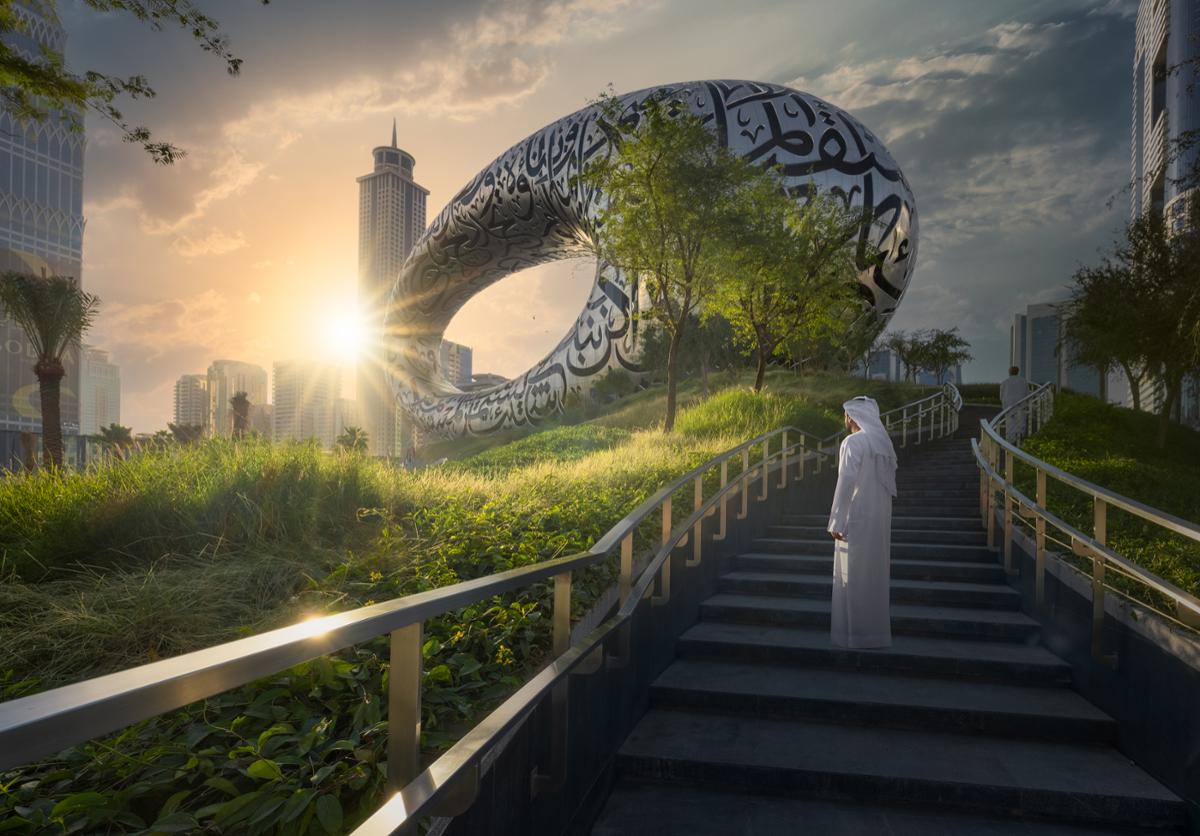
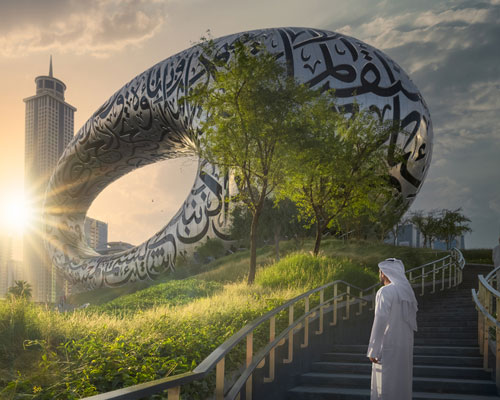
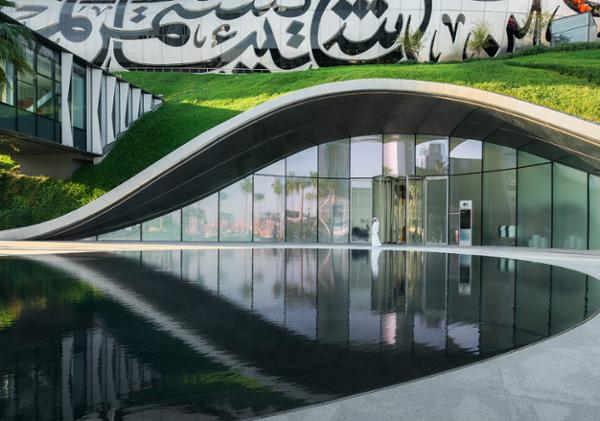
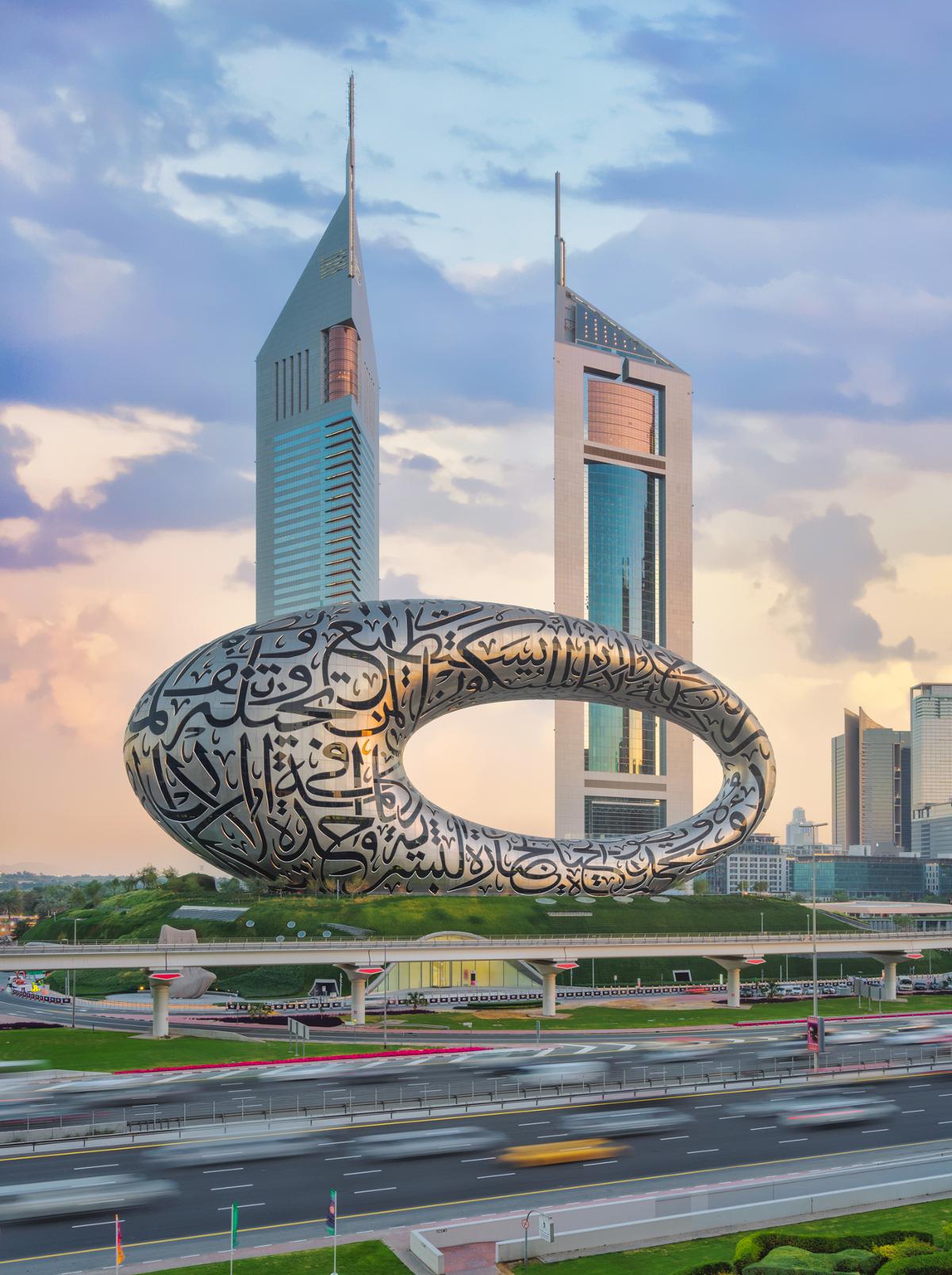
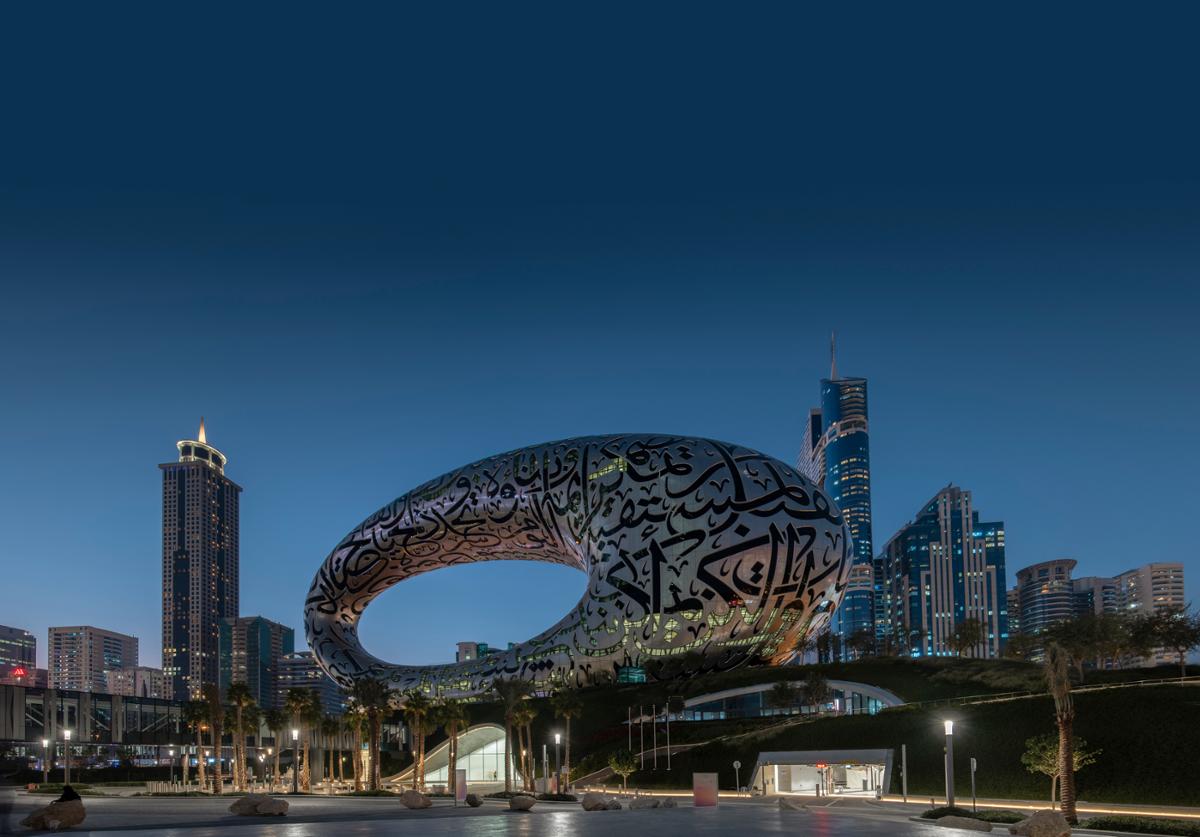
The distinctive museum building sits in landscaped gardens / IMAGE: MUSEUM OF THE FUTURE
Several years in the making, the Museum of the Future was inaugurated by Sheikh Mohammed bin Rashid Al Maktoum in February 2022, with a spectacular light show featuring projections onto the museum as well as the Burj Khalifa, Burj Al Arab and other prominent Dubai buildings.
The torus-shaped building, designed by Killa Design and Buro Happold, features a stainless steel facade covered with quotes written in Arabic calligraphy. The museum explores the science and technology of the future, via interactive exhibits spread across seven stories.
The museum transports visitors to the year 2071 via five exhibits: OSS Hope (Orbiting Space Station), which includes a ‘journey to space via a shuttle simulation; Heal Institute, which shows what Dubai could be like in 2071; Al Waha (Oasis), a series of experiences aiming to heal the mind and body; Tomorrow Today, which celebrate future technologies; and the children’s play space Future Heroes.
The distinctive building sits within new gardens featuring 100 species of trees and plants from across the UAE.
Masterplanned by landscape architecture firm Cracknell, the gardens are a key part of the design of the museum, and use a number of sustainable features, including LED lights, a smart irrigation system; and new green wall and steep slope technology.
Here Cracknell’s Robert Shakespeare talks us through the highs and lows of this unique project.
What advice would you give to attractions and museums operators looking to create or improve green space around their buildings? Creating outdoor components to museums is very important to their success, encouraging outdoor exhibits to complement the indoor experience. To achieve this the primary requirement, particularly for the climate in Dubai, is to create shade, ideally with tree planting, but also using shade canopies and structures.
Creating spaces that potentially link directly to indoor exhibition spaces, roof terraces and courtyards or outdoor pocket gardens can add visual and functional value to a museum, giving an additional level of visitor engagement, making the lessons people take from their visit that much more powerful and lasting. Integrating the exterior and indoor spaces to create a strong indoor/outdoor relationship for exhibition spaces is key.
What did the Museum of the Future project mean to Cracknell? We knew this was a high profile iconic project for Dubai and would become a significant landmark in the region, presenting an opportunity to partner with Killa to create something quite dramatic. We were also interested to explore the technology and innovation challenges that the project presented.
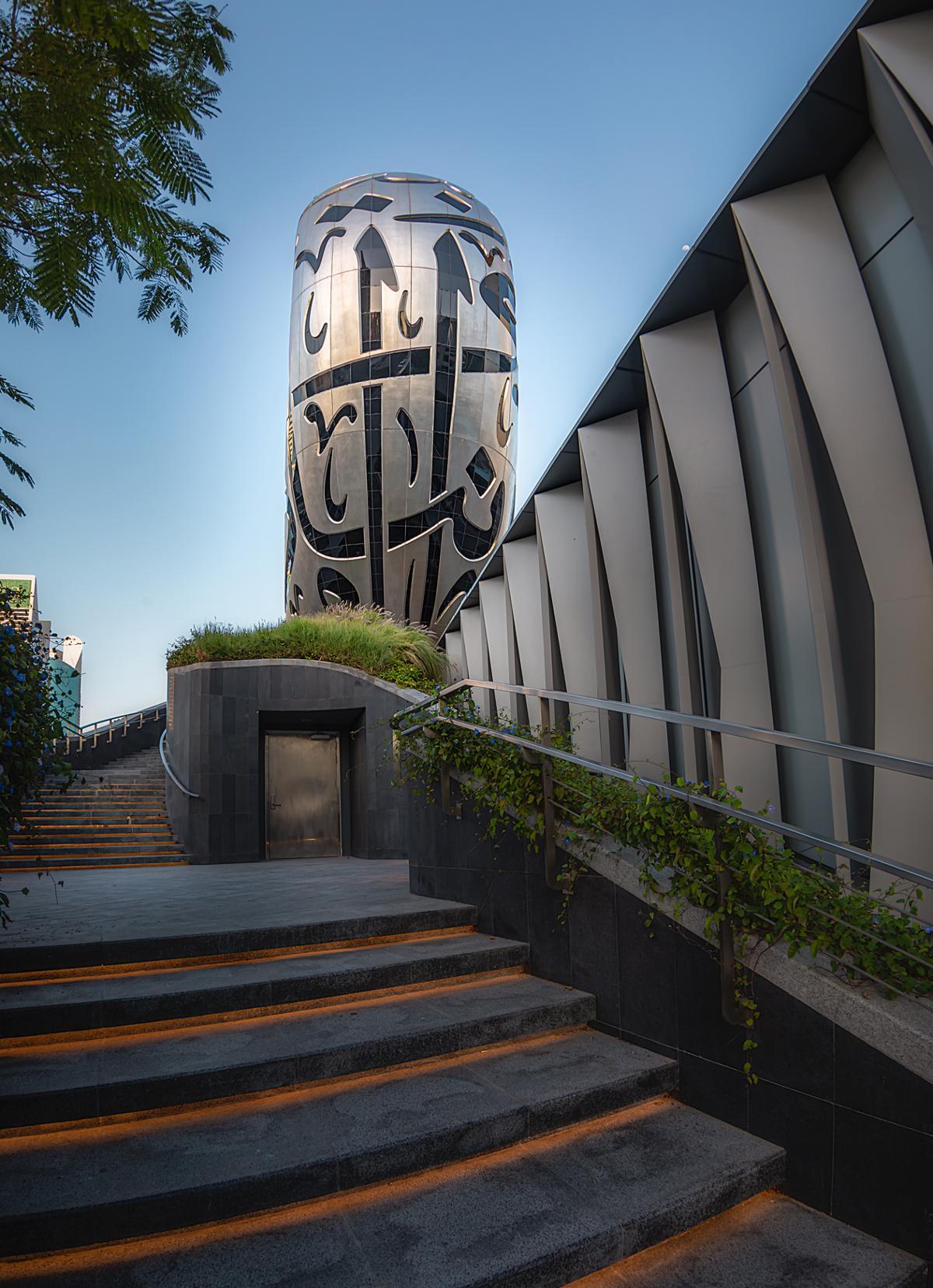
What makes it unique? The majority of the building is effectively covered by the landscape. Although what the public sees is the beautiful oval shape of the museum, a huge proportion of the building, including all the parking and infrastructure, is concealed beneath a green skin.
It was also an interesting concept to create the impression that access to the building was through the landscape. The technology and design innovation involved in creating the landscape was challenging and unique – the success of the planting given the urban constraints is a particular success.
How does the landscaping fit with the content of the museum? In line with the museum’s ethos of being a place where people can see, touch and shape our shared future, the landscape presents the latest innovation in green wall and steep slope technology and growing plants in restricted substrate.
The native planting brings many birds and insects to the site where people can immerse themselves in nature – the landscape has an important message for a sustainable future as we look to make our cities more resilient.
The site for the museum was very restricted by the adjacent buildings and infrastructure, and as a result the mound had to take on a soft shape, as if moulded into the remaining spaces. The landscape has become a fascinating and very unexpected intervention into the urban context, and is much larger than you expect when you approach it on foot. It has a strong presence in the space as if muscling in between adjacent buildings and metro lines.
The mound was also designed to encourage visitors to walk up it to experience the landscape, providing unusual and surprising views of the city.
The climate in Dubai is quite inhospitable for plants and greenery – what are the biggest challenges of creating a green urban oasis in this environment? The landscape presented tremendous technical challenges, but the extent of the planting also presented challenges in terms of sustainability and water consumption. However, by specifying drought tolerant plants we managed to reduce the overall water demand. The irrigation delivery system was modified to provide very short bursts of water through buried drip lines. Any excess water that wasn’t required by the planting is then collected and can be reused. As a result, the overall water usage is extremely low and highly efficient, exceeding the water saving requirements specified by the LEED rating system.
What other challenges were there? Fitting the building and the landscape into a very restricted space required significant coordination. The site is criss-crossed by underground services and existing roads that had to be respected. We also had to tie the building into overhead pedestrian walkways that would punch into the mound. The design process was complex and although the result looks simple, there is a lot happening below ground.
Did you use any interesting technologies in this project? The most important technology we used was to develop systems that would allow us to drape a carpet of planting over the building and to retain the soil on extremely steep slopes. This couldn’t be achieved without an integrated engineered system.
We used two different systems depending on the steepness of the slope, the soil carpet system, and a green wall system. The strategy also had to allow us to sculpt the mound to create the natural shapes you see in the completed project.
The first step was to use high density polystyrene blocks to form the final shape of the mound. These blocks are lightweight allowing us to create the mound profile without adding loading to the structure of the building below. Once complete we added the landscaped layering system. The soil ‘carpet’ consists of two layers of a flexible geoweb that retains the soil within pockets. The irrigation network of dripper lines is embedded within the soil ‘carpet’, delivering precise amounts of water to the plant root zones. The carpet is laid over a drainage mat system that is designed to collect any water that bypasses the roots and takes it down to a collection channel at the base of the mound. During heavy rain, any water run off from the mound is also collected, filtered and reused for irrigation. The water used for the planting is Treated Sewerage Effluent, or grey water, ensuring that no potable water is used for the project.
The second system we used for almost vertical slopes was the green walls system. This is effectively rigid panels with integrated soil and irrigation that is used like a cladding system. Once complete it creates a seamless planted wall of green.
Are you seeing any trends in the landscaping of attractions,museums, zoos and theme parks? There’s a trend in the Middle East in particular to create more ‘responsible’ and resilient landscapes that use less water and use more native plant species. The vision for designers and clients today is to create landscapes that are appropriate to the regional context and have a strong local identity, representing the hardscape materials, plants and design language of the region.
How do the challenges of climate change affect your work? With rising temperatures and water scarcity, landscape designers have a responsibility to address climate change through resilient design. This starts at the outset of the project with the planning process, establishing the vision and understanding the impact the project will have on the landscape.
Read more from this issue of Attractions Management magazine
View contents of Attractions Management 2022 issue 2
Editor's letter: Open for all
We must listen to the communities we’re trying to serve if we’re going to make attractions inclusive for everyone, says Magali Robathan
Interview: Chris Mather
As the Gretna Green Experience opens in Scotland, Mather & Co’s CEO shares the highs and lows of almost three decades in exhibition design
Waterparks: Down to earth
The world’s first ‘living waterslides’, a hydroponic farm, rooftop beehives and more than 1,500 trees – all part of the Therme Manchester next generation waterpark’s aims to be as green as possible
Museums: Gardens of the future
Dubai’s new Museum of the Future has opened with a bang. We look at how the innovative landscaping aims to support the museum’s message
Technology: A whole new world
The metaverse is coming, and the attractions industry needs to pay attention. Lesley Morisetti explores the challenges and opportunities
Immersive art: In the picture
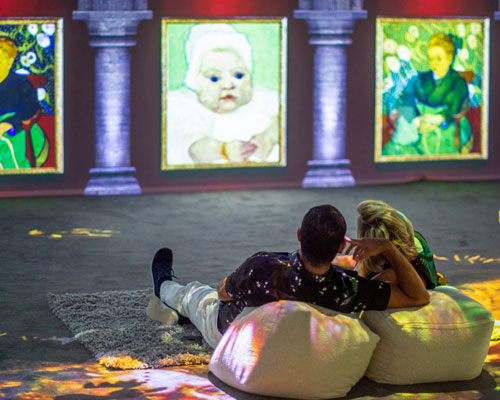
Van Gogh: The Immersive Experience is part of a massive trend promising to offer new perspectives on art and artists
Awards: Museums & Heritage Awards
As the Oscars of the museum world celebrate the best, brightest and most creative, we take a look at this year’s winners
Tourism: The winds of change
Attractions providers not willing to take risks and get truly creative will get left behind, says Dr Terry Stevens. Here’s how to stay ahead of the curve
Research: A sustainable future
Research shows that consumers want attractions to get greener, faster, and they’re actively pushing for change. BVA BDRC’s Jon Young talks us through the numbers
The landscaping of Dubai’s
new Museum of the Future
supports the message of
the museum, with a focus on
sustainability and innovative
technologies aiming to address
challenges of climate change.
Cracknell’s Robert Shakespeare
talks us through them
The distinctive museum building sits in landscaped gardens / IMAGE: MUSEUM OF THE FUTURE
Several years in the making, the Museum of the Future was inaugurated by Sheikh Mohammed bin Rashid Al Maktoum in February 2022, with a spectacular light show featuring projections onto the museum as well as the Burj Khalifa, Burj Al Arab and other prominent Dubai buildings.
The torus-shaped building, designed by Killa Design and Buro Happold, features a stainless steel facade covered with quotes written in Arabic calligraphy. The museum explores the science and technology of the future, via interactive exhibits spread across seven stories.
The museum transports visitors to the year 2071 via five exhibits: OSS Hope (Orbiting Space Station), which includes a ‘journey to space via a shuttle simulation; Heal Institute, which shows what Dubai could be like in 2071; Al Waha (Oasis), a series of experiences aiming to heal the mind and body; Tomorrow Today, which celebrate future technologies; and the children’s play space Future Heroes.
The distinctive building sits within new gardens featuring 100 species of trees and plants from across the UAE.
Masterplanned by landscape architecture firm Cracknell, the gardens are a key part of the design of the museum, and use a number of sustainable features, including LED lights, a smart irrigation system; and new green wall and steep slope technology.
Here Cracknell’s Robert Shakespeare talks us through the highs and lows of this unique project.
What advice would you give to attractions and museums operators looking to create or improve green space around their buildings? Creating outdoor components to museums is very important to their success, encouraging outdoor exhibits to complement the indoor experience. To achieve this the primary requirement, particularly for the climate in Dubai, is to create shade, ideally with tree planting, but also using shade canopies and structures.
Creating spaces that potentially link directly to indoor exhibition spaces, roof terraces and courtyards or outdoor pocket gardens can add visual and functional value to a museum, giving an additional level of visitor engagement, making the lessons people take from their visit that much more powerful and lasting. Integrating the exterior and indoor spaces to create a strong indoor/outdoor relationship for exhibition spaces is key.
What did the Museum of the Future project mean to Cracknell? We knew this was a high profile iconic project for Dubai and would become a significant landmark in the region, presenting an opportunity to partner with Killa to create something quite dramatic. We were also interested to explore the technology and innovation challenges that the project presented.
What makes it unique? The majority of the building is effectively covered by the landscape. Although what the public sees is the beautiful oval shape of the museum, a huge proportion of the building, including all the parking and infrastructure, is concealed beneath a green skin.
It was also an interesting concept to create the impression that access to the building was through the landscape. The technology and design innovation involved in creating the landscape was challenging and unique – the success of the planting given the urban constraints is a particular success.
How does the landscaping fit with the content of the museum? In line with the museum’s ethos of being a place where people can see, touch and shape our shared future, the landscape presents the latest innovation in green wall and steep slope technology and growing plants in restricted substrate.
The native planting brings many birds and insects to the site where people can immerse themselves in nature – the landscape has an important message for a sustainable future as we look to make our cities more resilient.
The site for the museum was very restricted by the adjacent buildings and infrastructure, and as a result the mound had to take on a soft shape, as if moulded into the remaining spaces. The landscape has become a fascinating and very unexpected intervention into the urban context, and is much larger than you expect when you approach it on foot. It has a strong presence in the space as if muscling in between adjacent buildings and metro lines.
The mound was also designed to encourage visitors to walk up it to experience the landscape, providing unusual and surprising views of the city.
The climate in Dubai is quite inhospitable for plants and greenery – what are the biggest challenges of creating a green urban oasis in this environment? The landscape presented tremendous technical challenges, but the extent of the planting also presented challenges in terms of sustainability and water consumption. However, by specifying drought tolerant plants we managed to reduce the overall water demand. The irrigation delivery system was modified to provide very short bursts of water through buried drip lines. Any excess water that wasn’t required by the planting is then collected and can be reused. As a result, the overall water usage is extremely low and highly efficient, exceeding the water saving requirements specified by the LEED rating system.
What other challenges were there? Fitting the building and the landscape into a very restricted space required significant coordination. The site is criss-crossed by underground services and existing roads that had to be respected. We also had to tie the building into overhead pedestrian walkways that would punch into the mound. The design process was complex and although the result looks simple, there is a lot happening below ground.
Did you use any interesting technologies in this project? The most important technology we used was to develop systems that would allow us to drape a carpet of planting over the building and to retain the soil on extremely steep slopes. This couldn’t be achieved without an integrated engineered system.
We used two different systems depending on the steepness of the slope, the soil carpet system, and a green wall system. The strategy also had to allow us to sculpt the mound to create the natural shapes you see in the completed project.
The first step was to use high density polystyrene blocks to form the final shape of the mound. These blocks are lightweight allowing us to create the mound profile without adding loading to the structure of the building below. Once complete we added the landscaped layering system. The soil ‘carpet’ consists of two layers of a flexible geoweb that retains the soil within pockets. The irrigation network of dripper lines is embedded within the soil ‘carpet’, delivering precise amounts of water to the plant root zones. The carpet is laid over a drainage mat system that is designed to collect any water that bypasses the roots and takes it down to a collection channel at the base of the mound. During heavy rain, any water run off from the mound is also collected, filtered and reused for irrigation. The water used for the planting is Treated Sewerage Effluent, or grey water, ensuring that no potable water is used for the project.
The second system we used for almost vertical slopes was the green walls system. This is effectively rigid panels with integrated soil and irrigation that is used like a cladding system. Once complete it creates a seamless planted wall of green.
Are you seeing any trends in the landscaping of attractions,museums, zoos and theme parks? There’s a trend in the Middle East in particular to create more ‘responsible’ and resilient landscapes that use less water and use more native plant species. The vision for designers and clients today is to create landscapes that are appropriate to the regional context and have a strong local identity, representing the hardscape materials, plants and design language of the region.
How do the challenges of climate change affect your work? With rising temperatures and water scarcity, landscape designers have a responsibility to address climate change through resilient design. This starts at the outset of the project with the planning process, establishing the vision and understanding the impact the project will have on the landscape.
Read more from this issue of Attractions Management magazine
View contents of Attractions Management 2022 issue 2
Editor's letter: Open for all
We must listen to the communities we’re trying to serve if we’re going to make attractions inclusive for everyone, says Magali Robathan
Interview: Chris Mather
As the Gretna Green Experience opens in Scotland, Mather & Co’s CEO shares the highs and lows of almost three decades in exhibition design
Waterparks: Down to earth
The world’s first ‘living waterslides’, a hydroponic farm, rooftop beehives and more than 1,500 trees – all part of the Therme Manchester next generation waterpark’s aims to be as green as possible
Museums: Gardens of the future
Dubai’s new Museum of the Future has opened with a bang. We look at how the innovative landscaping aims to support the museum’s message
Technology: A whole new world
The metaverse is coming, and the attractions industry needs to pay attention. Lesley Morisetti explores the challenges and opportunities
Immersive art: In the picture
Van Gogh: The Immersive Experience is part of a massive trend promising to offer new perspectives on art and artists
Awards: Museums & Heritage Awards
As the Oscars of the museum world celebrate the best, brightest and most creative, we take a look at this year’s winners
Tourism: The winds of change
Attractions providers not willing to take risks and get truly creative will get left behind, says Dr Terry Stevens. Here’s how to stay ahead of the curve
Research: A sustainable future
Research shows that consumers want attractions to get greener, faster, and they’re actively pushing for change. BVA BDRC’s Jon Young talks us through the numbers
OMA has completed a major transformation of New York's New Museum, creating a larger
cultural campus that combines expanded exhibition spaces with learning, performance,
hospitality and public programming.
A US$50 million (£44.2 million, €51.2 million) transformation of Chicago's historic McCormick
Mansion has created a new destination that combines live magic, immersive theatre, dining and
private membership under one roof.
The Montana Historical Society has officially celebrated the opening of its new Montana
Heritage
Center, a US$107 million (£79 million, €92 million) destination that combines immersive
storytelling with cutting-edge audiovisual technology to bring the sta
San Antonio Zoo has reported a US$283 million economic impact for 2025, following a decade-
long transformation programme that has seen almost US$200 million invested into the Texas
attraction.
Plans for the AU$180 million redevelopment of Reef HQ Aquarium in Townsville, Australia, are
progressing, with the project set to transform the attraction into a global centre for reef
education and conservation.
Abu Dhabi-based investment firm Mubadala Capital has made a binding, fully financed
€1 billion
offer to acquire Pierre and Vacances SA, the European holiday resort operator behind the
continental European Center Parcs business.
Disney has reaffirmed its commitment to investing US$30 billion in its US parks and cruise
business by 2033, using new America250 celebrations to underline the role its attractions play
in supporting jobs, tourism and economic growth.
Expo 2030 Riyadh is being planned as a permanent visitor destination, with organisers
confirming the six-million-square-metre site will become a Global Village after the event closes.
The owner of one of Australia's best-known waterparks has acquired a major competitor,
creating a new attractions business spanning two of the country's largest visitor destinations.
The Toverland theme park in the Netherlands has announced a €98m expansion programme
that will add a resort, new attractions and staff facilities as it pursues plans to become a multi-
day destination.
+ More news
COMPANY PROFILES
instantprint We’re a Yorkshire-based online printer, founded
in 2009 by Adam Carnell and James Kinsella. [more...]
Holovis Holovis is a privately owned company
established in 2004 by CEO Stuart
Hetherington. [more...]
Painting With Light By combining lighting, video, scenic and architectural elements, sound and special effects we tell s [more...]
Clip 'n Climb Clip ‘n Climb currently offers facility owners and
investors more than 40 colourful and unique
Cha [more...]