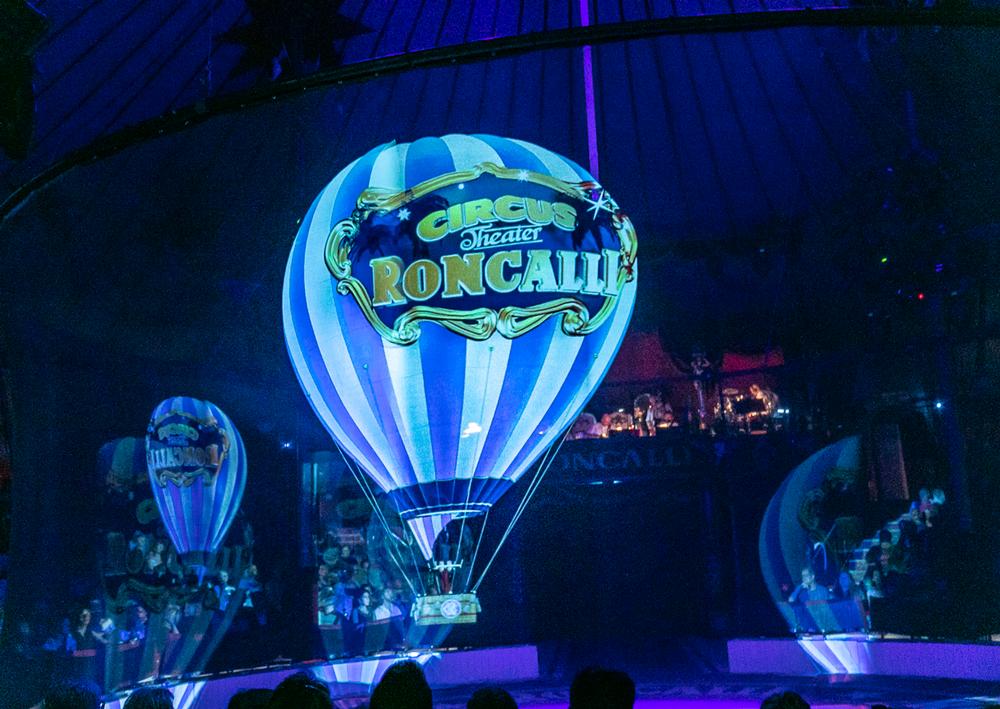
Public distaste for performing animals is spearheading change in the circus industry. German entertainer, Circus-Theater Roncalli, has embraced the zeitgeist and is leading the way, with a contemporary show featuring holograms instead of animals.
Kath Hudson reports
By Kath Hudson | Published in Attractions Management 2019 issue 3
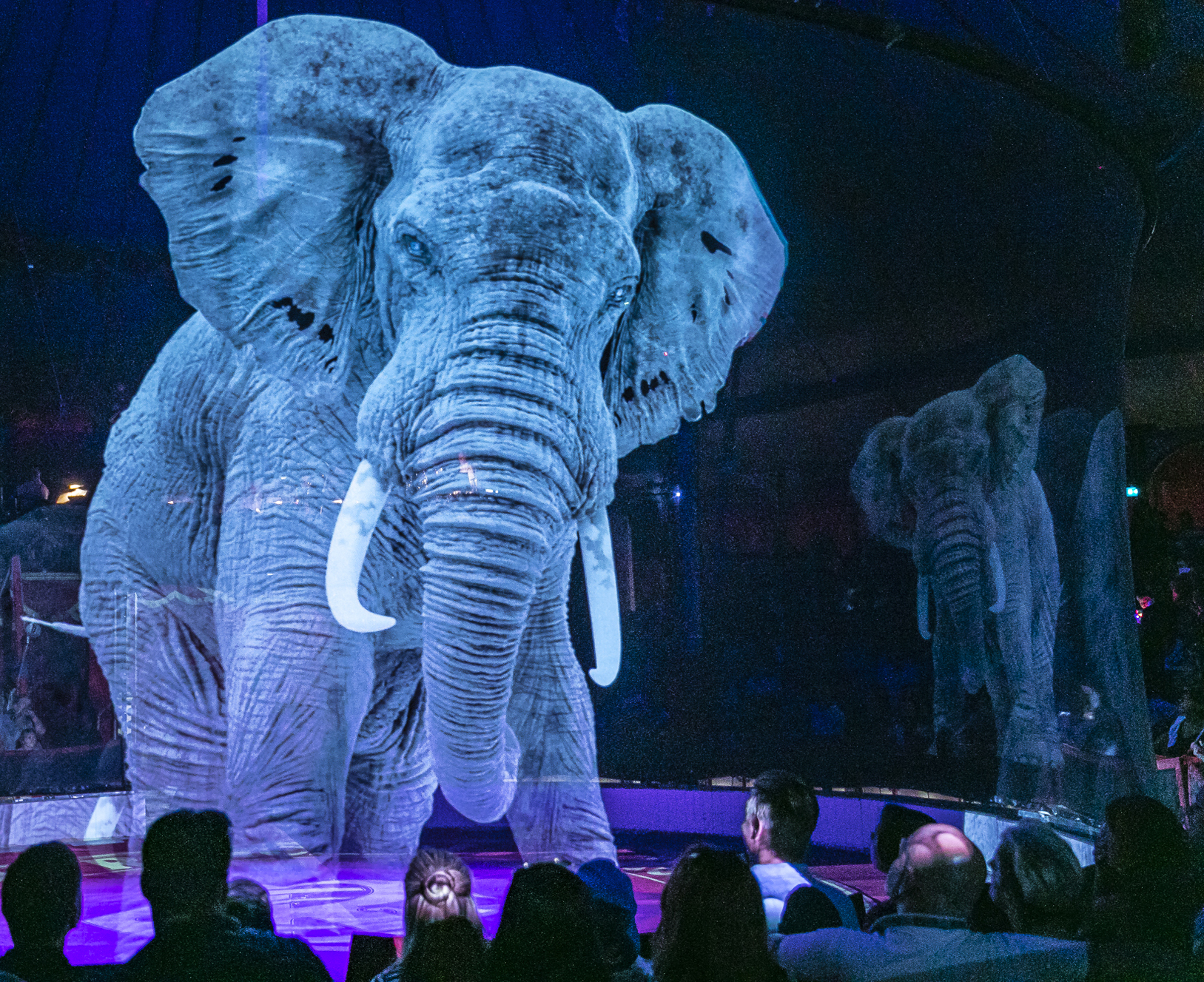
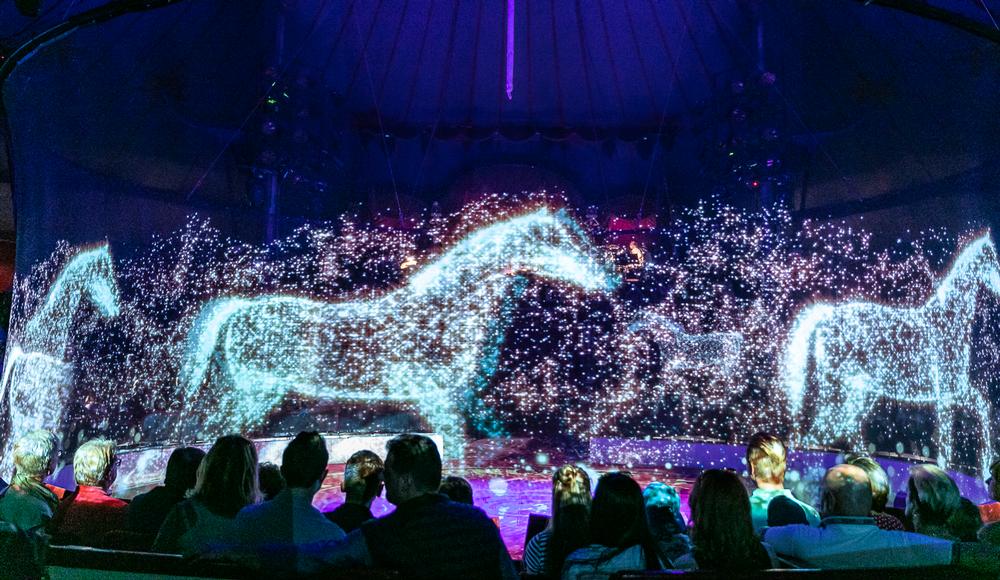
Spectral horses cantering in graceful circles, a giant goldfish hovering above the arena and an elephant doing a handstand have replaced dancing dogs and horses at Roncalli Circus.
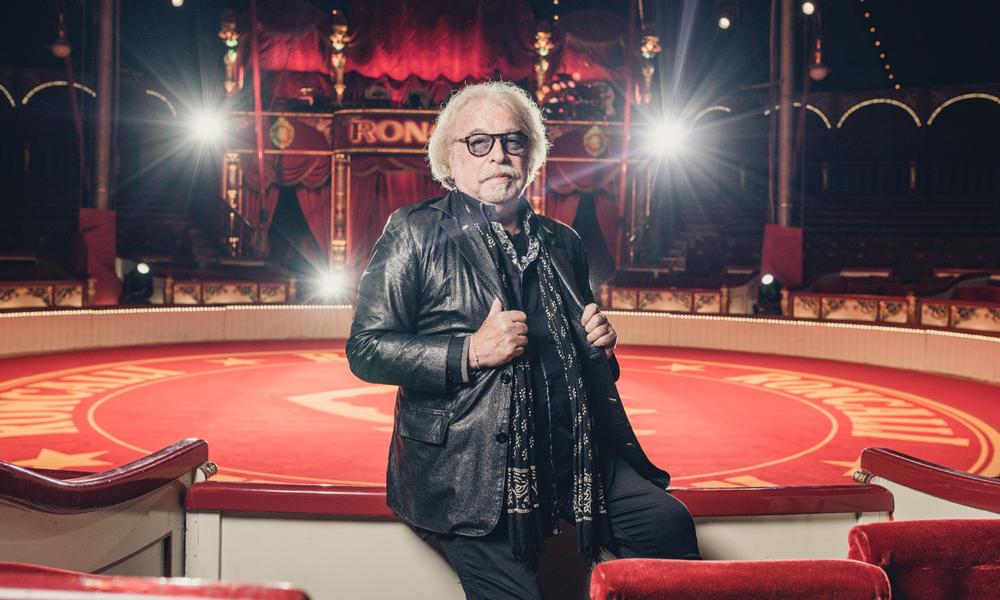
The circus, founded in 1976 by Bernhard Paul, has invested some £400,000 (US$500,000) in a holographic show, which was inspired by a performance at the 2018 Superbowl.
“Transporting animals on congested highways is an anachronism and not necessary,” says Paul. “Many cities had invited us, but they also had no space for animals. I had the wish to make something new at the circus and when I saw Justin Timberlake performing with a hologram of Prince during the Superbowl, I was so impressed with the technology that I wanted to have a go.
Not only would the idea offer a spectacular new draw for the circus, but it would completely change the way the business operated, doing away with live animals in exchange for holograms.
“Times change and so do opinions – the audience is our boss and when you feel the audience does not approve of something then you have to change it,” says Paul. “As a circus director you have to listen to the audience, but also to your heart and to trust your own gut. I was sure and focused on giving our audience something new.”
Public approval Since 2016, Paul had been experimenting with other forms of entertainment, using the circus in a more poetic and modern way, using, for example, puppets and costumes for a very convincing polar bear routine.
To bring the holographic dream to fruition, he hired in the expertise of Markus Strobl as Circus Roncalli’s chief digital officer and chief communication officer, to lead on the holographic project. Fifteen 3D software engineers spent two years creating the new show, Storyteller, which was premiered in Cologne, in March 2018, using Optoma laser projectors.
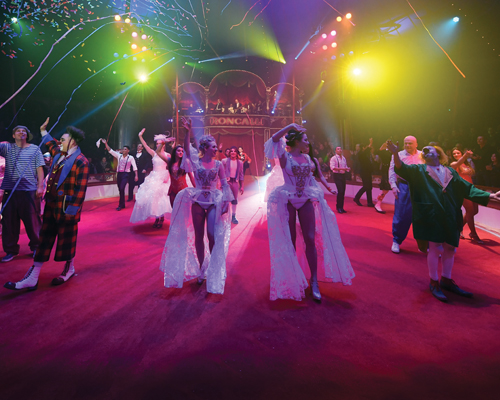
The first circus in the world to use holographic animals, it’s a 360 degree, 3D show which has been received with positivity and excitement. To reflect the fact that it’s now less of a circus and more of a spectacle aligned with theatres, and so it’s been rebranded to Circus-Theater Roncalli.
“After the announcement not to use any animals at our shows we received more than 20,000 emails and letters from all over the world, with 95 per cent positive feedback,” says Paul. “The holographic show went viral on social media and received media coverage in 40 countries. In one year, the show had more than 600,000 visitors.”
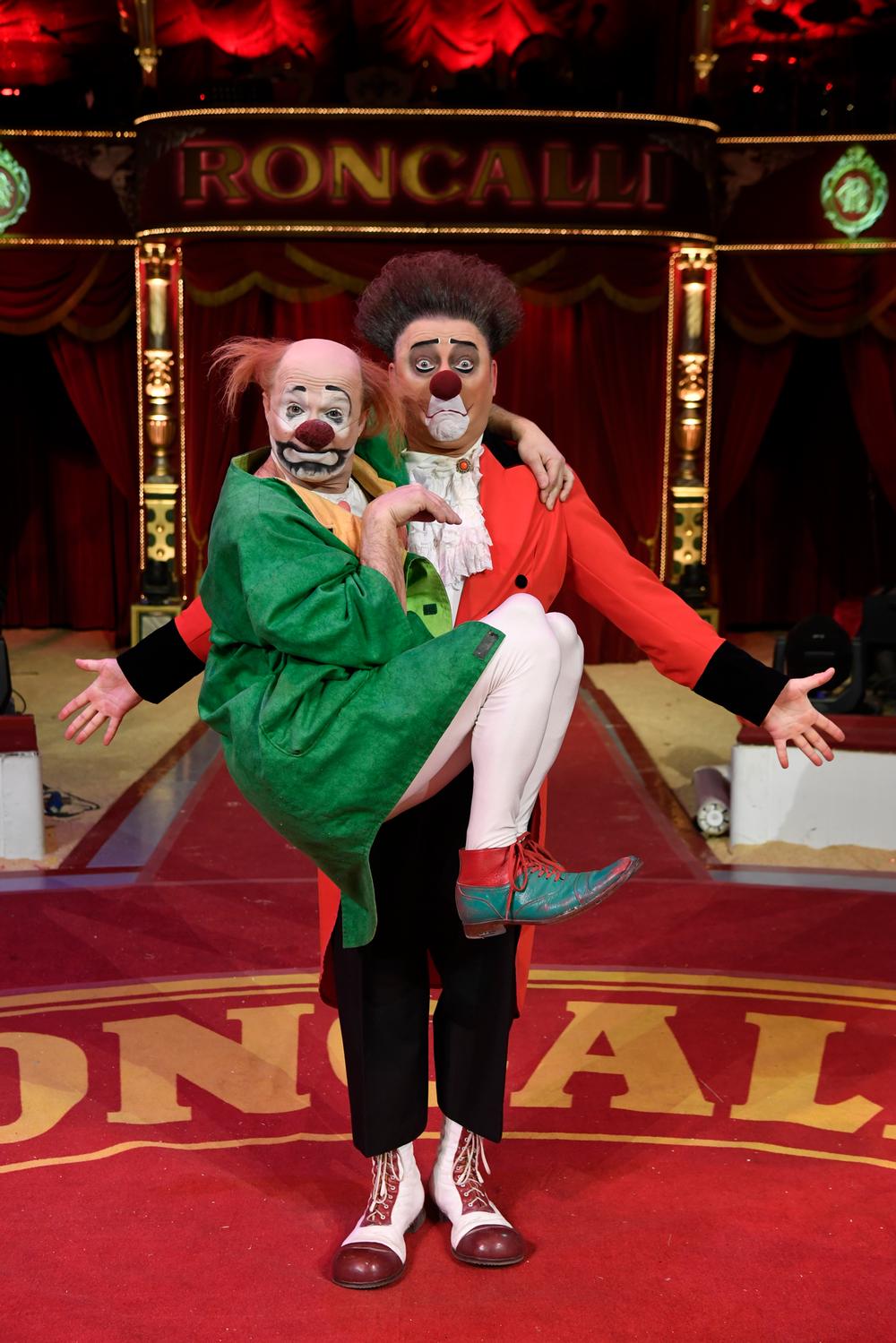
Animal free Wild animals were only briefly used at Circus Roncalli, although horses and dogs played a large part for 30 years. However, Paul says that the show was always more focused on other acts. In a 2018 visitor survey, horses were bottom of the list of attractions, with only 2.7 per cent saying that is what they expected from a Roncalli show. Most popular were the clowns, followed by acrobats, poetic acts, nostalgic and historic circus wagons and live music.
According to Paul, money had nothing to do with the decision to stop using animals, however, it looks to have been a commercial success as well. After a hefty initial investment, the new technology means the circus is far more mobile and has greater flexibility to go to more locations, meaning it tours more widely.
There’s also no longer animal upkeep to consider and the move has been hailed as a PR and social media triumph, which has led to global recognition and a boom in ticket sales.
The show will need to keep evolving to keep audiences interested, and the team will be continuing to look for new ways to use holography. Also continuing investment has to be made to make sure the technology is up to scratch with no glitches: “We’re the pioneers and we still have many ideas,” says Paul. “We want to lead the way outside of the ring. For example, being the first circus to go plastic-free.”
Other applications? Following this groundbreaking application of hologram technology, it will be interesting to see if the attractions industry will make greater use of the potential it offers. For example, aquariums could use it to recreate the magic of sharks and whales, while museums could use it to bring giant predators or dinosaurs back to life.
Martín Zordan, interim CEO of WAZA says that while it’s not the same as seeing a real animal, VR technologies can offer a new and exciting way to engage audiences: “VR can also enhance the visitor experience by being a new way of engaging visitors with animals and conservation education and offering a more immersive experience,” he explains.
“As technologies evolve, zoos and aquariums can use tech to bring people closer to the animals, as well as to show the audience things they would not normally see, such as behind-the-scenes care which takes place at zoos and aquariums, or a view of the animal’s wild habitat.”
Hologram technology
blueBOX, which has a background in blending holography and mixed reality, was in charge of developing Circus Roncalli’s holographic ring, in cooperation with creative agency, Tag/Traum. It was a challenge to create a hologram with such enormous dimensions – 32m (105ft) by 5m (16.4ft) – with 360-degree visibility for the audience.
Eleven ZU850 laser projectors from Optoma were used, which boast superior colour performance and 360-degree projection capability, these were coupled with innovative MultiColor laser technology to create the experience.
“We needed a high contrast projector with great colours for the 3D effect and ZU850’s 2,000,000:1 contrast is perfect for this project,” says Birger Wunderlich from Bluebox. “We have been using Optoma projectors for six years and have consistently had a very positive experience in price, performance and reliability.”
CHANGING CIRCUSES
According to PETA – which has campaigned against using animals in circuses for many years – public demand for animal-free shows continues to grow, leading to more circuses moving towards animal-free productions.
Over the last 20 years, stricter regulation and changing public sentiment means that performing animals are becoming a thing of the past: 94 per cent of UK people supported a ban, which is already in place in 26 countries.
In May, the UK government announced the Wild Animals in Circuses Bill, which will make it illegal for circus operators in England to use wild animals from January 2020. Then environment secretary, Michael Gove, said: “Travelling circuses are no place for wild animals in the 21st century and I am pleased that this legislation will put an end to this practice for good.”
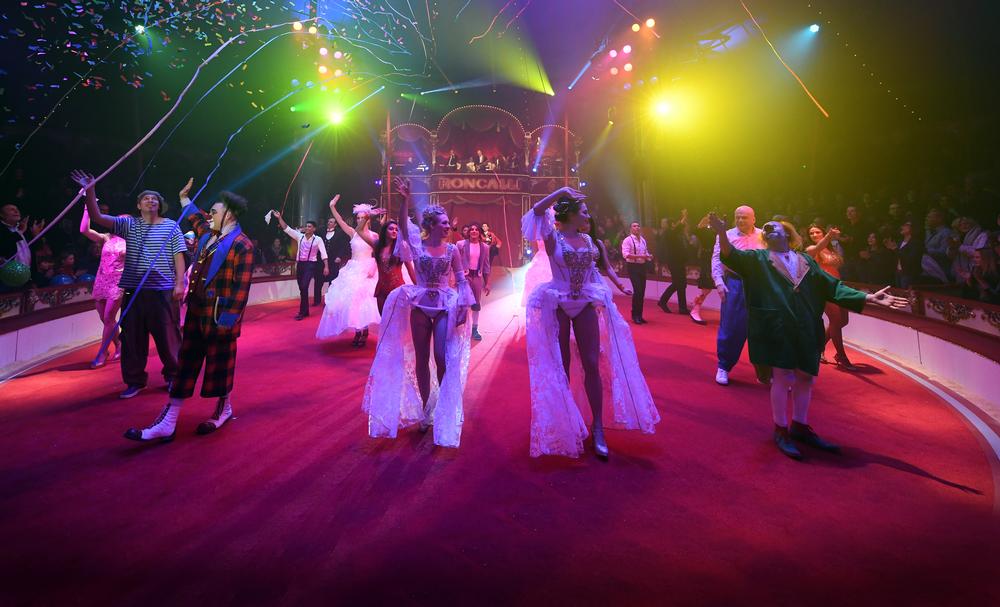
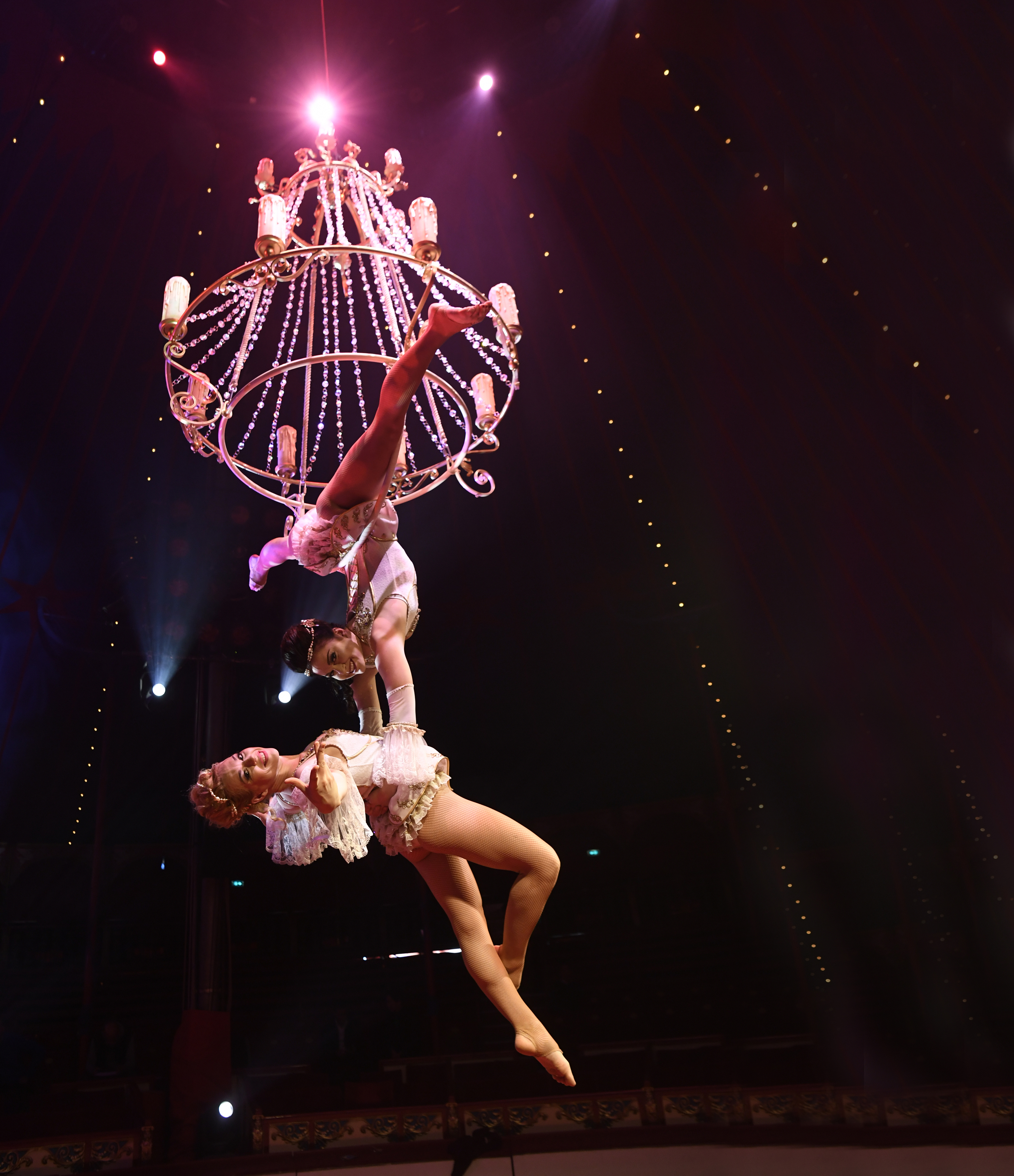
Circus Roncalli says its focus is on clowns, acrobats and poetic acts
Read more from this issue of Attractions Management magazine
View contents of Attractions Management 2019 issue 3
People profile: Tom Hennes
Tom Hennes discusses how he has transformed the Empire State Building's visitor experience
People profile: Dimitrios Pandermalis
The Acropolis Museum has just celebrated its 10-year anniversary. Its president, Dimitrios Pandermalis, talks about his plans to take the museum forward in the next decade and beyond
People profile: Gus Antorcha
SeaWorld's new CEO Gus Antorcha on the company's new direction as it starts to recover following several years of turmoil
Museums: A museum in motion
The Australian Centre for the Moving Image
is undergoing a AUS$40m renewal. CEO
Katrina Sedgwick talks about the plans
Tourism: The dark side
With locations like Chernobyl increasing
in popularity, Kath Hudson looks at the
dark side of the global tourism sector
Promotional feature: Whitewater
WhiteWater thinks outside the box to create memorable,
immersive experiences that go beyond the thrill
Rides: Monsters, myths and motorbikes
We take a look at some of the biggest ride
openings for visitor attractions worldwide,
including Universal’s new Hagrid coaster
Promotional feature: OurPeople
Home to the world-revered peppa pig world and welcoming more than one
million visitors every year, paultons park was voted Tripadvisor’s number
one UK amusement park for the fourth year running in 2019
An opportunity to reimagine one of the UK’s most recognisable towers has been formally
opened by Rivington Hark, as St Johns Beacon invites operators and partners to shape its
next phase. [more...]
Public distaste for performing animals is spearheading change in the circus industry. German entertainer, Circus-Theater Roncalli, has embraced the zeitgeist and is leading the way, with a contemporary show featuring holograms instead of animals.
Kath Hudson reports
By Kath Hudson | Published in Attractions Management 2019 issue 3
Spectral horses cantering in graceful circles, a giant goldfish hovering above the arena and an elephant doing a handstand have replaced dancing dogs and horses at Roncalli Circus.
The circus, founded in 1976 by Bernhard Paul, has invested some £400,000 (US$500,000) in a holographic show, which was inspired by a performance at the 2018 Superbowl.
“Transporting animals on congested highways is an anachronism and not necessary,” says Paul. “Many cities had invited us, but they also had no space for animals. I had the wish to make something new at the circus and when I saw Justin Timberlake performing with a hologram of Prince during the Superbowl, I was so impressed with the technology that I wanted to have a go.
Not only would the idea offer a spectacular new draw for the circus, but it would completely change the way the business operated, doing away with live animals in exchange for holograms.
“Times change and so do opinions – the audience is our boss and when you feel the audience does not approve of something then you have to change it,” says Paul. “As a circus director you have to listen to the audience, but also to your heart and to trust your own gut. I was sure and focused on giving our audience something new.”
Public approval Since 2016, Paul had been experimenting with other forms of entertainment, using the circus in a more poetic and modern way, using, for example, puppets and costumes for a very convincing polar bear routine.
To bring the holographic dream to fruition, he hired in the expertise of Markus Strobl as Circus Roncalli’s chief digital officer and chief communication officer, to lead on the holographic project. Fifteen 3D software engineers spent two years creating the new show, Storyteller, which was premiered in Cologne, in March 2018, using Optoma laser projectors.
The first circus in the world to use holographic animals, it’s a 360 degree, 3D show which has been received with positivity and excitement. To reflect the fact that it’s now less of a circus and more of a spectacle aligned with theatres, and so it’s been rebranded to Circus-Theater Roncalli.
“After the announcement not to use any animals at our shows we received more than 20,000 emails and letters from all over the world, with 95 per cent positive feedback,” says Paul. “The holographic show went viral on social media and received media coverage in 40 countries. In one year, the show had more than 600,000 visitors.”
Animal free Wild animals were only briefly used at Circus Roncalli, although horses and dogs played a large part for 30 years. However, Paul says that the show was always more focused on other acts. In a 2018 visitor survey, horses were bottom of the list of attractions, with only 2.7 per cent saying that is what they expected from a Roncalli show. Most popular were the clowns, followed by acrobats, poetic acts, nostalgic and historic circus wagons and live music.
According to Paul, money had nothing to do with the decision to stop using animals, however, it looks to have been a commercial success as well. After a hefty initial investment, the new technology means the circus is far more mobile and has greater flexibility to go to more locations, meaning it tours more widely.
There’s also no longer animal upkeep to consider and the move has been hailed as a PR and social media triumph, which has led to global recognition and a boom in ticket sales.
The show will need to keep evolving to keep audiences interested, and the team will be continuing to look for new ways to use holography. Also continuing investment has to be made to make sure the technology is up to scratch with no glitches: “We’re the pioneers and we still have many ideas,” says Paul. “We want to lead the way outside of the ring. For example, being the first circus to go plastic-free.”
Other applications? Following this groundbreaking application of hologram technology, it will be interesting to see if the attractions industry will make greater use of the potential it offers. For example, aquariums could use it to recreate the magic of sharks and whales, while museums could use it to bring giant predators or dinosaurs back to life.
Martín Zordan, interim CEO of WAZA says that while it’s not the same as seeing a real animal, VR technologies can offer a new and exciting way to engage audiences: “VR can also enhance the visitor experience by being a new way of engaging visitors with animals and conservation education and offering a more immersive experience,” he explains.
“As technologies evolve, zoos and aquariums can use tech to bring people closer to the animals, as well as to show the audience things they would not normally see, such as behind-the-scenes care which takes place at zoos and aquariums, or a view of the animal’s wild habitat.”
Hologram technology
blueBOX, which has a background in blending holography and mixed reality, was in charge of developing Circus Roncalli’s holographic ring, in cooperation with creative agency, Tag/Traum. It was a challenge to create a hologram with such enormous dimensions – 32m (105ft) by 5m (16.4ft) – with 360-degree visibility for the audience.
Eleven ZU850 laser projectors from Optoma were used, which boast superior colour performance and 360-degree projection capability, these were coupled with innovative MultiColor laser technology to create the experience.
“We needed a high contrast projector with great colours for the 3D effect and ZU850’s 2,000,000:1 contrast is perfect for this project,” says Birger Wunderlich from Bluebox. “We have been using Optoma projectors for six years and have consistently had a very positive experience in price, performance and reliability.”
CHANGING CIRCUSES
According to PETA – which has campaigned against using animals in circuses for many years – public demand for animal-free shows continues to grow, leading to more circuses moving towards animal-free productions.
Over the last 20 years, stricter regulation and changing public sentiment means that performing animals are becoming a thing of the past: 94 per cent of UK people supported a ban, which is already in place in 26 countries.
In May, the UK government announced the Wild Animals in Circuses Bill, which will make it illegal for circus operators in England to use wild animals from January 2020. Then environment secretary, Michael Gove, said: “Travelling circuses are no place for wild animals in the 21st century and I am pleased that this legislation will put an end to this practice for good.”
Circus Roncalli says its focus is on clowns, acrobats and poetic acts
Read more from this issue of Attractions Management magazine
View contents of Attractions Management 2019 issue 3
People profile: Tom Hennes
Tom Hennes discusses how he has transformed the Empire State Building's visitor experience
People profile: Dimitrios Pandermalis
The Acropolis Museum has just celebrated its 10-year anniversary. Its president, Dimitrios Pandermalis, talks about his plans to take the museum forward in the next decade and beyond
People profile: Gus Antorcha
SeaWorld's new CEO Gus Antorcha on the company's new direction as it starts to recover following several years of turmoil
Museums: A museum in motion
The Australian Centre for the Moving Image
is undergoing a AUS$40m renewal. CEO
Katrina Sedgwick talks about the plans
Tourism: The dark side
With locations like Chernobyl increasing
in popularity, Kath Hudson looks at the
dark side of the global tourism sector
Promotional feature: Whitewater
WhiteWater thinks outside the box to create memorable,
immersive experiences that go beyond the thrill
Rides: Monsters, myths and motorbikes
We take a look at some of the biggest ride
openings for visitor attractions worldwide,
including Universal’s new Hagrid coaster
Promotional feature: OurPeople
Home to the world-revered peppa pig world and welcoming more than one
million visitors every year, paultons park was voted Tripadvisor’s number
one UK amusement park for the fourth year running in 2019
The Toverland theme park in the Netherlands has announced a €98m expansion programme
that will add a resort, new attractions and staff facilities as it pursues plans to become a multi-
day destination.
Hotel de France, located on the British Isle of Jersey, has created a wellness retreat package
that includes a hot yoga session that will take place in Jersey Zoo’s butterfly sanctuary.
A new immersive attraction designed to transport visitors into the final hours of ancient Pompeii
is preparing to open near the world-famous archaeological site in southern Italy.
Experience design company, BRC Imagination Arts, has completed a transition that sees founder
Bob Rogers pass ownership of the business to four long-serving senior executives, while
remaining actively involved with the company.
Movie Park Germany has opened a new Paramount Pictures-themed attraction as part of its 30th
anniversary celebrations, using immersive storytelling and adaptive reuse to reinforce the park’s
longstanding “Hollywood in Germany” positioning.
Therme Manchester’s 28-acre development, which will include interconnected glass pavilions
that measure 65,000sq m, will be the largest bathing and wellbeing attraction in the world once
complete, according to prof David Russell, CEO of Therme UK.
Efteling has opened Hooghmoed, a new family drop tower designed to broaden the appeal of its
recently launched Sirene Island themed area and introduce younger visitors to thrill attractions.
A proposed Puy du Fou development near Bicester and Universal Destinations and Experiences’
planned resort in Bedford are emerging as part of a wider transformation of the Oxford–
Cambridge Growth Corridor into a major centre for UK leisure and tourism inv
Shedd Aquarium has opened the Immersion Theater developed in partnership with SimEx-
Iwerks, as part of a wider strategy to enhance the guest experience and create additional
revenue opportunities.
The UK government has announced a temporary reduction in VAT on visitor attractions and
children’s meals as part of a summer cost-of-living support package designed to stimulate the
visitor economy and encourage family days out.
As designer Yinka Ilori prepares for his first solo gallery show in London, he speaks exclusively
to CLADmag about his mission to spread joy, the power of play, and his bold approach to using
colour (including the colours you won’t see in his work).
An opportunity to reimagine one of the UK’s most recognisable towers has been formally
opened by Rivington Hark, as St Johns Beacon invites operators and partners to shape its
next phase. [more...]