The future of attractions are always evolving but what
do AI, machine learning and neural networks have to
do with it? Experience designers Holovis are pioneering
developments that not only extend and enhance the
guest experience but that will also become imperative
to safety, park performance and operations.
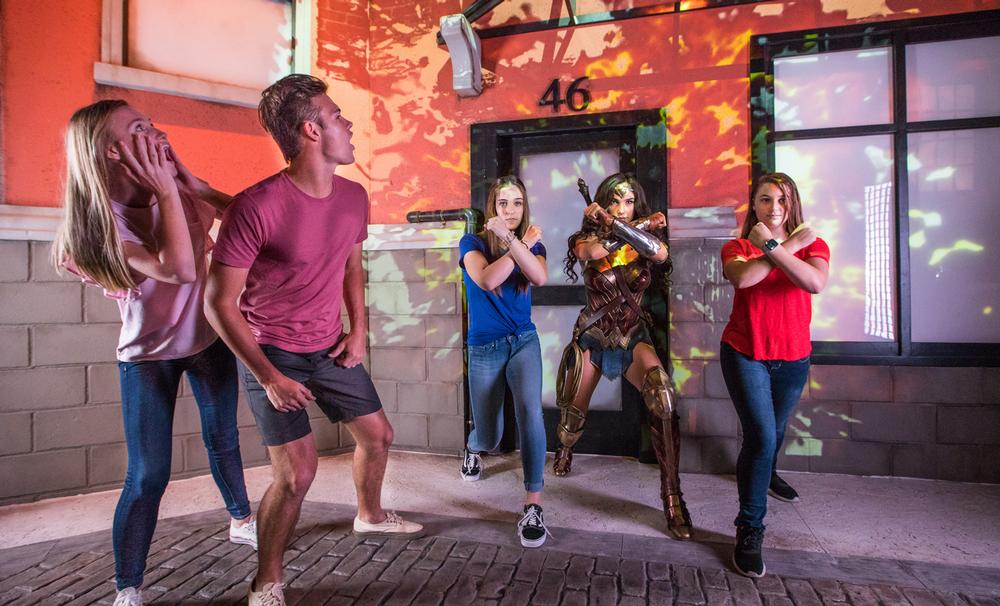
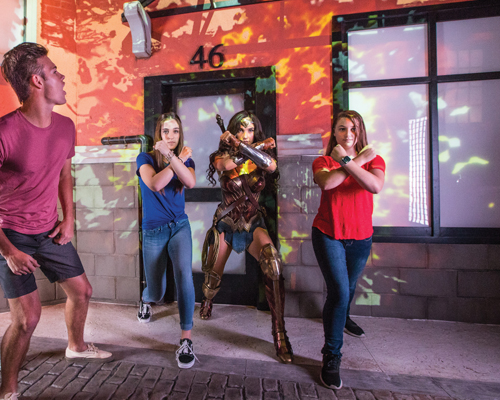
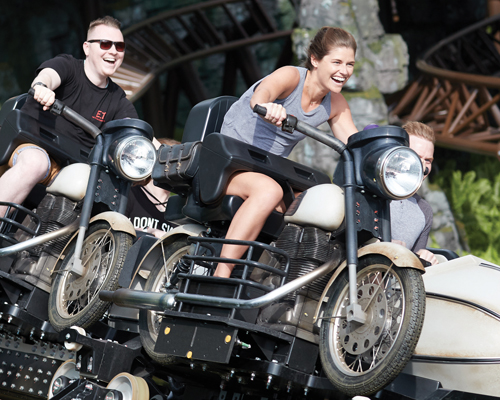
Holovis uses gesture recognition for Justice League A Call For Heroes at Madame Tussauds attractions in Orlando and Sydney
The desire for personalisation and unique guest experiences that drive ride and park repeatability have been at the top of the requirements list over the last few years," says Peter Cliff, creative director at Holovis.
"The evolution of real-time media and enhanced interactivity techniques have allowed guests to customise their experience, but we’re taking things one step further and achieving true personalisation where guests are in control and the same experience is never repeated twice."
To deliver this, Holovis has developed a proprietary software ecosystem that connects all elements of a themed entertainment space to streamline operations, transform security and safety protocols and provide deeply personalised, intelligent entertainment experiences.
"Our interactive attractions are evolving to become much more intelligent by using advanced tracking technologies including our biometric and AI platforms. We take the techniques currently being developed by our data scientists and software teams for our enterprise and simulation divisions and apply them to create next-generation themed entertainment solutions that are pushing the boundaries," explains Cliff.
New technologies Holovis has developed a suite of software modules that leverage advanced computer vision and tracking technologies. These are fronted through the provision of guest experiences with personalised content that enhances their journey but also produce powerful data analytic visualisations and insights into park dynamics and operations on the backend.
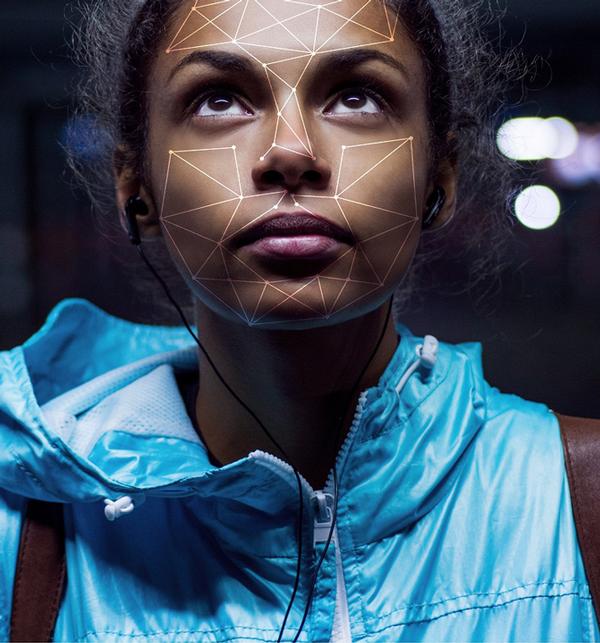
The biometric tracking works by picking up attributes of the guest from their physical appearance and linking them to a user profile. The user is completely anonymised during this process, no data about an individual is saved and nothing can be reverse-engineered that could compromise personal information.
"We've prioritised the development of several different methods of tracking guests around a space that remove the complete reliance of a second screen, such as a mobile phone, digital signage networks or virtual reality," says Cliff.
"Users are identified through a powerful attribute recognition engine, which drives guest experience through personalised outputs. These include gesture recognition, where the power is in the hands of guests to alter their surroundings without needing any other devices or technologies, just natural human interaction.
“They could, for example, cast a spell, make lights come on inside a building or make water come out of a fountain. When combined with the facial recognition, a user can’t perform that action until they have unlocked that power, so someone else can copy the gesture but it may not work for them if they haven’t also unlocked the feature. This adds to the illusion of magic.
"The great thing about attribute recognition is it removes barriers to entry. Costly props enhanced with RFID are no longer the only way to take part.
"It's the object recognition module that allows guests to bring props into the narrative. Machine learning is used to identify common objects or those that can be purchased in gift shops and when detected incorporate them into the user’s specific story. These can be standard items that don’t need to be enhanced with any technological systems."
These tools can be utilised across a whole park or at a family entertainment centre, just in one themed zone, as part of the in-ride experience to personalise media scenes and in passive areas such as queue lines to elevate boredom.
Behind the scenes, the guest experience is a user-friendly face for what is actually a system that will become critical to park security and operations.
Spacial awareness This real-time tracking intelligence of the way in which people are moving around the space combines with simulation data to deliver extensive insights into operations and security. This gives an accurate picture of proceedings and operators can choose to act on these for reasons such as improving the flow of guests, alleviating congestion and emergency situations.
When combined with the machine learning, analysis of the way guests typically move around a space, this identifies how crowds would move, should disasters occur and how emergency response teams should function. When a new ride is added, a simulation can be run to see in real-time how this will affect the way in which people are moving around the space.
"Just as Machine Learning and AI are changing other industries, such as manufacturing, healthcare, finance and retail, they are also set to have just as great an impact on themed entertainment," says Cliff. "This goes much further than simply contributing to guest entertainment – a whole ecosystem can be designed around these tracking technologies that keep guests safe by delivering extensive insights into park operations and security. We're very excited to see these transformations occur."
Read more from this issue of Attractions Management magazine
View contents of Attractions Management 2019 issue 3
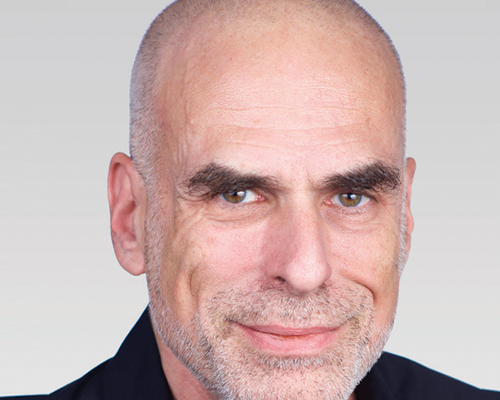
People profile: Tom Hennes
Tom Hennes discusses how he has transformed the Empire State Building's visitor experience
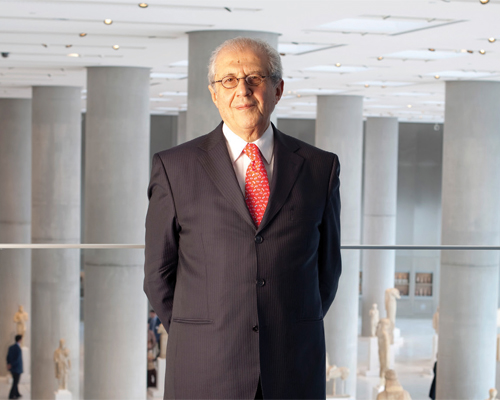
People profile: Dimitrios Pandermalis
The Acropolis Museum has just celebrated its 10-year anniversary. Its president, Dimitrios Pandermalis, talks about his plans to take the museum forward in the next decade and beyond
People profile: Gus Antorcha
SeaWorld's new CEO Gus Antorcha on the company's new direction as it starts to recover following several years of turmoil
Museums: A museum in motion
The Australian Centre for the Moving Image
is undergoing a AUS$40m renewal. CEO
Katrina Sedgwick talks about the plans
Tourism: The dark side
With locations like Chernobyl increasing
in popularity, Kath Hudson looks at the
dark side of the global tourism sector
Promotional feature: Whitewater
WhiteWater thinks outside the box to create memorable,
immersive experiences that go beyond the thrill
Rides: Monsters, myths and motorbikes
We take a look at some of the biggest ride
openings for visitor attractions worldwide,
including Universal’s new Hagrid coaster
Promotional feature: OurPeople
Home to the world-revered peppa pig world and welcoming more than one
million visitors every year, paultons park was voted Tripadvisor’s number
one UK amusement park for the fourth year running in 2019
The future of attractions are always evolving but what
do AI, machine learning and neural networks have to
do with it? Experience designers Holovis are pioneering
developments that not only extend and enhance the
guest experience but that will also become imperative
to safety, park performance and operations.
Holovis uses gesture recognition for Justice League A Call For Heroes at Madame Tussauds attractions in Orlando and Sydney
The desire for personalisation and unique guest experiences that drive ride and park repeatability have been at the top of the requirements list over the last few years," says Peter Cliff, creative director at Holovis.
"The evolution of real-time media and enhanced interactivity techniques have allowed guests to customise their experience, but we’re taking things one step further and achieving true personalisation where guests are in control and the same experience is never repeated twice."
To deliver this, Holovis has developed a proprietary software ecosystem that connects all elements of a themed entertainment space to streamline operations, transform security and safety protocols and provide deeply personalised, intelligent entertainment experiences.
"Our interactive attractions are evolving to become much more intelligent by using advanced tracking technologies including our biometric and AI platforms. We take the techniques currently being developed by our data scientists and software teams for our enterprise and simulation divisions and apply them to create next-generation themed entertainment solutions that are pushing the boundaries," explains Cliff.
New technologies Holovis has developed a suite of software modules that leverage advanced computer vision and tracking technologies. These are fronted through the provision of guest experiences with personalised content that enhances their journey but also produce powerful data analytic visualisations and insights into park dynamics and operations on the backend.
The biometric tracking works by picking up attributes of the guest from their physical appearance and linking them to a user profile. The user is completely anonymised during this process, no data about an individual is saved and nothing can be reverse-engineered that could compromise personal information.
"We've prioritised the development of several different methods of tracking guests around a space that remove the complete reliance of a second screen, such as a mobile phone, digital signage networks or virtual reality," says Cliff.
"Users are identified through a powerful attribute recognition engine, which drives guest experience through personalised outputs. These include gesture recognition, where the power is in the hands of guests to alter their surroundings without needing any other devices or technologies, just natural human interaction.
“They could, for example, cast a spell, make lights come on inside a building or make water come out of a fountain. When combined with the facial recognition, a user can’t perform that action until they have unlocked that power, so someone else can copy the gesture but it may not work for them if they haven’t also unlocked the feature. This adds to the illusion of magic.
"The great thing about attribute recognition is it removes barriers to entry. Costly props enhanced with RFID are no longer the only way to take part.
"It's the object recognition module that allows guests to bring props into the narrative. Machine learning is used to identify common objects or those that can be purchased in gift shops and when detected incorporate them into the user’s specific story. These can be standard items that don’t need to be enhanced with any technological systems."
These tools can be utilised across a whole park or at a family entertainment centre, just in one themed zone, as part of the in-ride experience to personalise media scenes and in passive areas such as queue lines to elevate boredom.
Behind the scenes, the guest experience is a user-friendly face for what is actually a system that will become critical to park security and operations.
Spacial awareness This real-time tracking intelligence of the way in which people are moving around the space combines with simulation data to deliver extensive insights into operations and security. This gives an accurate picture of proceedings and operators can choose to act on these for reasons such as improving the flow of guests, alleviating congestion and emergency situations.
When combined with the machine learning, analysis of the way guests typically move around a space, this identifies how crowds would move, should disasters occur and how emergency response teams should function. When a new ride is added, a simulation can be run to see in real-time how this will affect the way in which people are moving around the space.
"Just as Machine Learning and AI are changing other industries, such as manufacturing, healthcare, finance and retail, they are also set to have just as great an impact on themed entertainment," says Cliff. "This goes much further than simply contributing to guest entertainment – a whole ecosystem can be designed around these tracking technologies that keep guests safe by delivering extensive insights into park operations and security. We're very excited to see these transformations occur."
Read more from this issue of Attractions Management magazine
View contents of Attractions Management 2019 issue 3
People profile: Tom Hennes
Tom Hennes discusses how he has transformed the Empire State Building's visitor experience
People profile: Dimitrios Pandermalis
The Acropolis Museum has just celebrated its 10-year anniversary. Its president, Dimitrios Pandermalis, talks about his plans to take the museum forward in the next decade and beyond
People profile: Gus Antorcha
SeaWorld's new CEO Gus Antorcha on the company's new direction as it starts to recover following several years of turmoil
Museums: A museum in motion
The Australian Centre for the Moving Image
is undergoing a AUS$40m renewal. CEO
Katrina Sedgwick talks about the plans
Tourism: The dark side
With locations like Chernobyl increasing
in popularity, Kath Hudson looks at the
dark side of the global tourism sector
Promotional feature: Whitewater
WhiteWater thinks outside the box to create memorable,
immersive experiences that go beyond the thrill
Rides: Monsters, myths and motorbikes
We take a look at some of the biggest ride
openings for visitor attractions worldwide,
including Universal’s new Hagrid coaster
Promotional feature: OurPeople
Home to the world-revered peppa pig world and welcoming more than one
million visitors every year, paultons park was voted Tripadvisor’s number
one UK amusement park for the fourth year running in 2019
A US$50 million (£44.2 million, €51.2 million) transformation of Chicago's historic McCormick
Mansion has created a new destination that combines live magic, immersive theatre, dining and
private membership under one roof.
The Montana Historical Society has officially celebrated the opening of its new Montana
Heritage
Center, a US$107 million (£79 million, €92 million) destination that combines immersive
storytelling with cutting-edge audiovisual technology to bring the sta
San Antonio Zoo has reported a US$283 million economic impact for 2025, following a decade-
long transformation programme that has seen almost US$200 million invested into the Texas
attraction.
Plans for the AU$180 million redevelopment of Reef HQ Aquarium in Townsville, Australia, are
progressing, with the project set to transform the attraction into a global centre for reef
education and conservation.
Abu Dhabi-based investment firm Mubadala Capital has made a binding, fully financed
€1 billion
offer to acquire Pierre and Vacances SA, the European holiday resort operator behind the
continental European Center Parcs business.
Disney has reaffirmed its commitment to investing US$30 billion in its US parks and cruise
business by 2033, using new America250 celebrations to underline the role its attractions play
in supporting jobs, tourism and economic growth.
Expo 2030 Riyadh is being planned as a permanent visitor destination, with organisers
confirming the six-million-square-metre site will become a Global Village after the event closes.
The owner of one of Australia's best-known waterparks has acquired a major competitor,
creating a new attractions business spanning two of the country's largest visitor destinations.
The Toverland theme park in the Netherlands has announced a €98m expansion programme
that will add a resort, new attractions and staff facilities as it pursues plans to become a multi-
day destination.
Hotel de France, located on the British Isle of Jersey, has created a wellness retreat package
that includes a hot yoga session that will take place in Jersey Zoo’s butterfly sanctuary.
+ More news
COMPANY PROFILES
Polin Waterparks Polin was founded in Istanbul in 1976. Polin
has since grown into a leading company in
the waterpa [more...]
IAAPA EMEA IAAPA Expo Europe was established in 2006 and has grown to the largest international conference and [more...]
Painting With Light By combining lighting, video, scenic and architectural elements, sound and special effects we tell s [more...]
Sally Corporation Our services include: Dark ride design & build; Redevelopment of existing attractions; High-quality [more...]