If you’re thinking of investing in a spa bigger than 300sq m,
a feasibility study – at a cost of only US$10k-US$18k – can reveal the business model most likely to succeed. We talk to WTS International president Gary Henkin about the best use of this powerful tool
A feasibility study is important in gauging the viability of a spa development and its potential profitability. It’s also vital in determining whether or not to proceed with the project and in helping decide the appropriate size and scope of the facilities.
What exactly do clients get from a WTS feasibility study? WTS undertakes all aspects of the study from assessing the potential market, to recommending the appropriate size and scope of the facility, and from doing the first preliminary space design to assessing the competition. Then, finally, we do a full five-year financial analysis.
The market and demographic analysis examines the number of people and businesses within a certain radius of the property and their income levels and other demographic and sociographic information. This knowledge is critical to the success of spas – for example – developments in urban areas, where the spa is in a hotel. The operator won’t always be able to count on attracting short-stay business guests to the spa, so they need to know the potential for attracting non-hotel guests and then to be advised how they can maintain that traffic to create a sustainable and profitable business.
How do you assess the competition? We give a competitive set analysis which looks at local, regional and categorical competition to the spa and what they’re doing – their price points, menus, services, charges and so on. We give a thorough analysis so operators really thoroughly understand what the competition is, as opposed to what they think it might be based on preconceptions.
What about the scale of the investment? As part of our initial space analysis, we tell the owner what the spa should look like based on its square footage. We don’t do a schematic design at this stage, but we look at the breakdown of the space, for example, we show how big the locker rooms should be and the size of the treatment rooms.
The financial analysis includes every assumption for revenue sources. On the costs side we break down every expense generated by a spa.
What do developers gain? It will help them determine the costs of building and operating a spa. We give clients a real roadmap for understanding what it is they’re getting into, both from a build cost and an operating cost perspective.
Why do spa owners need a feasibility study if they haven’t previously had this as part of their development process? Things have changed so much compared with six or seven years ago and today there’s no such thing as a risk-free development. Economic conditions are tougher and there’s a lot more competition than there used to be. As a result, it’s very important to have an informed approach.
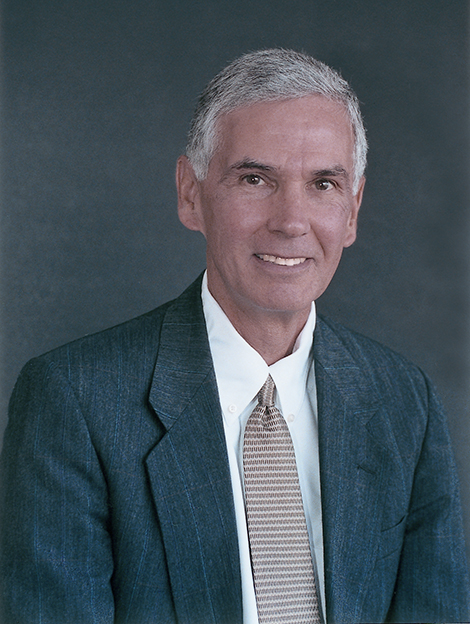
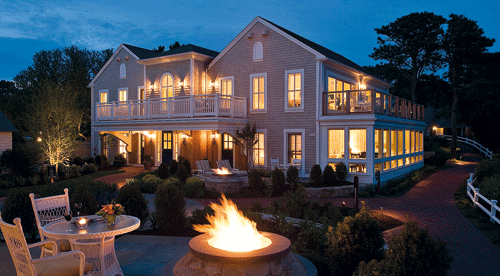
Who have you worked for? Clients we’ve recently done feasibility studies for include the Wequassett Resort and Golf Club, The Spa of Colonial Williamsburg and numerous sites for Remington Hotels.
What are the downfalls of not undertaking a feasibility study? If the spa is going to be above 300sq m (3000sq ft), then a feasibility study is needed and spending a few dollars at the outset can save big dollars later. Without it, the developer or owner risks going ahead without understanding the competition or knowing the true financial potential and operating or build costs and how large and sophisticated the spa should be.
If a developer or owner could have met their objectives building a 10,000sq ft spa but they end up building a 16,000sq ft spa, that extra 6,000sq ft has significant build costs associated with it which are completely unnecessary and will undermine the success of the project.
How can a study affect the spa vision? We believe a feasibility study can save clients significant amounts of money. Because developers so often build what they want, not what they need.
We focus them on building what’s needed to accomplish their goals without compromising the look or the aesthetic appeal of the spa. Many multi-million dollar spas are overbuilt and have lots of wasted space at a cost to the owner. We try to save our clients from that.
Feasibility studies focus on what makes sense in their locale and with their clientele.
What’s the cost of a feasibility study? The cost is based on flat fees which take into account geography and travel times and range from us$10,000 to us$18,000.
What advice would you give first-time developers? We advise them not to leap off the diving platform without knowing whether there’s water in the pool. We would advise them do their homework and study if the decision makes sense, and what the appropriate size and complexity is. They may have a vision but it makes sense to have that vision validated to ensure it matches market potential.
WTS has recently acquired Blu Spas, the worldwide spa consultancy firm. How will this affect the feasibility services offered to clients? The merger will have a very positive impact on the feasibility services we offer in that clients will be able to benefit from Blu Spas experience, capabilities and resources at the feasibility stage. We’re very excited about the opportunities this merger creates.
Contact WTS International Tel +1 301 622 7800 Fax +1 301 622 3373 www.wtsinternational.com
Read more from this issue of Attractions Management magazine
View contents of Attractions Management 2012 issue 4
Interview: Laurent Houel
Evian's global brand development
director tells Katie Barnes about the
group's new evianSpa licence concept
that's set for a strategic global rollout
Promotional feature: Value Proposition
If you're thinking of investing in a spa development bigger than 300sq m,
a feasibility study – at a cost of only US$10k-US$18k – can reveal the
business model most likely to succeed.
Research: Work it out
Katherine Johnston reveals key
recommendations following a
much-needed study on global spa
management training
Top team: Miraval
The team that created the new spa at
Miraval shared a bold vision as Liz
Terry discovered on her visit
Family matters: The Brepohls
Natural medicine is the focus at
Lapinha: one of Brazil's original
medical spas. Neena Dhillon talks to
the founding family
The making of...: A massage table
Up to 18 million parts are needed for
a year's production of massage tables.
Lisa Starr takes an ‘undercover' look
at just what goes into making this
industry staple
Research: The cold war
Meditation and exercise can
significantly reduce sick days taken
due to colds and flu
If you’re thinking of investing in a spa bigger than 300sq m,
a feasibility study – at a cost of only US$10k-US$18k – can reveal the business model most likely to succeed. We talk to WTS International president Gary Henkin about the best use of this powerful tool
A feasibility study is important in gauging the viability of a spa development and its potential profitability. It’s also vital in determining whether or not to proceed with the project and in helping decide the appropriate size and scope of the facilities.
What exactly do clients get from a WTS feasibility study? WTS undertakes all aspects of the study from assessing the potential market, to recommending the appropriate size and scope of the facility, and from doing the first preliminary space design to assessing the competition. Then, finally, we do a full five-year financial analysis.
The market and demographic analysis examines the number of people and businesses within a certain radius of the property and their income levels and other demographic and sociographic information. This knowledge is critical to the success of spas – for example – developments in urban areas, where the spa is in a hotel. The operator won’t always be able to count on attracting short-stay business guests to the spa, so they need to know the potential for attracting non-hotel guests and then to be advised how they can maintain that traffic to create a sustainable and profitable business.
How do you assess the competition? We give a competitive set analysis which looks at local, regional and categorical competition to the spa and what they’re doing – their price points, menus, services, charges and so on. We give a thorough analysis so operators really thoroughly understand what the competition is, as opposed to what they think it might be based on preconceptions.
What about the scale of the investment? As part of our initial space analysis, we tell the owner what the spa should look like based on its square footage. We don’t do a schematic design at this stage, but we look at the breakdown of the space, for example, we show how big the locker rooms should be and the size of the treatment rooms.
The financial analysis includes every assumption for revenue sources. On the costs side we break down every expense generated by a spa.
What do developers gain? It will help them determine the costs of building and operating a spa. We give clients a real roadmap for understanding what it is they’re getting into, both from a build cost and an operating cost perspective.
Why do spa owners need a feasibility study if they haven’t previously had this as part of their development process? Things have changed so much compared with six or seven years ago and today there’s no such thing as a risk-free development. Economic conditions are tougher and there’s a lot more competition than there used to be. As a result, it’s very important to have an informed approach.
Who have you worked for? Clients we’ve recently done feasibility studies for include the Wequassett Resort and Golf Club, The Spa of Colonial Williamsburg and numerous sites for Remington Hotels.
What are the downfalls of not undertaking a feasibility study? If the spa is going to be above 300sq m (3000sq ft), then a feasibility study is needed and spending a few dollars at the outset can save big dollars later. Without it, the developer or owner risks going ahead without understanding the competition or knowing the true financial potential and operating or build costs and how large and sophisticated the spa should be.
If a developer or owner could have met their objectives building a 10,000sq ft spa but they end up building a 16,000sq ft spa, that extra 6,000sq ft has significant build costs associated with it which are completely unnecessary and will undermine the success of the project.
How can a study affect the spa vision? We believe a feasibility study can save clients significant amounts of money. Because developers so often build what they want, not what they need.
We focus them on building what’s needed to accomplish their goals without compromising the look or the aesthetic appeal of the spa. Many multi-million dollar spas are overbuilt and have lots of wasted space at a cost to the owner. We try to save our clients from that.
Feasibility studies focus on what makes sense in their locale and with their clientele.
What’s the cost of a feasibility study? The cost is based on flat fees which take into account geography and travel times and range from us$10,000 to us$18,000.
What advice would you give first-time developers? We advise them not to leap off the diving platform without knowing whether there’s water in the pool. We would advise them do their homework and study if the decision makes sense, and what the appropriate size and complexity is. They may have a vision but it makes sense to have that vision validated to ensure it matches market potential.
WTS has recently acquired Blu Spas, the worldwide spa consultancy firm. How will this affect the feasibility services offered to clients? The merger will have a very positive impact on the feasibility services we offer in that clients will be able to benefit from Blu Spas experience, capabilities and resources at the feasibility stage. We’re very excited about the opportunities this merger creates.
Contact WTS International Tel +1 301 622 7800 Fax +1 301 622 3373 www.wtsinternational.com
Read more from this issue of Attractions Management magazine
View contents of Attractions Management 2012 issue 4
Interview: Laurent Houel
Evian's global brand development
director tells Katie Barnes about the
group's new evianSpa licence concept
that's set for a strategic global rollout
Promotional feature: Value Proposition
If you're thinking of investing in a spa development bigger than 300sq m,
a feasibility study – at a cost of only US$10k-US$18k – can reveal the
business model most likely to succeed.
Research: Work it out
Katherine Johnston reveals key
recommendations following a
much-needed study on global spa
management training
Top team: Miraval
The team that created the new spa at
Miraval shared a bold vision as Liz
Terry discovered on her visit
Family matters: The Brepohls
Natural medicine is the focus at
Lapinha: one of Brazil's original
medical spas. Neena Dhillon talks to
the founding family
The making of...: A massage table
Up to 18 million parts are needed for
a year's production of massage tables.
Lisa Starr takes an ‘undercover' look
at just what goes into making this
industry staple
Research: The cold war
Meditation and exercise can
significantly reduce sick days taken
due to colds and flu
OMA has completed a major transformation of New York's New Museum, creating a larger
cultural campus that combines expanded exhibition spaces with learning, performance,
hospitality and public programming.
A US$50 million (£44.2 million, €51.2 million) transformation of Chicago's historic McCormick
Mansion has created a new destination that combines live magic, immersive theatre, dining and
private membership under one roof.
The Montana Historical Society has officially celebrated the opening of its new Montana
Heritage
Center, a US$107 million (£79 million, €92 million) destination that combines immersive
storytelling with cutting-edge audiovisual technology to bring the sta
San Antonio Zoo has reported a US$283 million economic impact for 2025, following a decade-
long transformation programme that has seen almost US$200 million invested into the Texas
attraction.
Plans for the AU$180 million redevelopment of Reef HQ Aquarium in Townsville, Australia, are
progressing, with the project set to transform the attraction into a global centre for reef
education and conservation.
Abu Dhabi-based investment firm Mubadala Capital has made a binding, fully financed
€1 billion
offer to acquire Pierre and Vacances SA, the European holiday resort operator behind the
continental European Center Parcs business.
Disney has reaffirmed its commitment to investing US$30 billion in its US parks and cruise
business by 2033, using new America250 celebrations to underline the role its attractions play
in supporting jobs, tourism and economic growth.
Expo 2030 Riyadh is being planned as a permanent visitor destination, with organisers
confirming the six-million-square-metre site will become a Global Village after the event closes.
The owner of one of Australia's best-known waterparks has acquired a major competitor,
creating a new attractions business spanning two of the country's largest visitor destinations.
The Toverland theme park in the Netherlands has announced a €98m expansion programme
that will add a resort, new attractions and staff facilities as it pursues plans to become a multi-
day destination.
+ More news
COMPANY PROFILES
Clip 'n Climb Clip ‘n Climb currently offers facility owners and
investors more than 40 colourful and unique
Cha [more...]
Holovis Holovis is a privately owned company
established in 2004 by CEO Stuart
Hetherington. [more...]
RMA Ltd RMA Ltd is a one-stop global company
that can design, build and produce from a
greenfield site upw [more...]
DJW David & Lynn Willrich started the Company
over thirty years ago, from the Audio Visual
Department [more...]