Spa businesses are fast emerging in Québec. But to understand why this sector is growing, you need to look at the bigger picture.
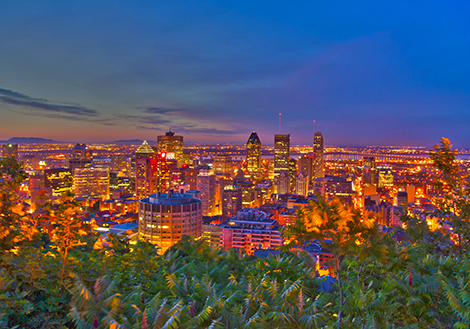
Covering 1.7 million sq km, Québec is three times the size of France and Canada’s largest province. As over 90 per cent of it is made up of the Canadian Shield, an uninhabitable rock, most people live in urban areas near the St Lawrence River between the city of Montréal and the capital Québec City.
Figures from the government body Statistique Québec show that substantial natural resources have long been the mainstay of Québec’s economy. Yet knowledge sectors such as aerospace, ICT and pharmaceuticals, along with tourism, also play leading roles. Interestingly, there’s also a focus on research and development – 2.63 per cent of GDP was channelled into R&D spending in 2011, above the European Union average of 1.84 per cent and more than any other Canadian province.
This is clearly a province of innovation, reflected in an advanced, market-based open economy. In 2011, its GDP was ca$327bn (us$333bn, €256bn, £207bn) making it the second largest economy in Canada and 37th in the world. Innovation is also present in the province’s tourism industry, especially where spas are concerned.
Spa tourism hub In 2011, Québec welcomed 26 million tourists according to the province’s Ministry of Tourism. This accounted for 2.5 per cent of GDP, 400,000 jobs and 30,000 businesses. The province is split into 22 tourist regions with Québec City and the area surrounding the St Lawrence River – commonly called the St Lawrence Lowlands – attracting 4.6 million, or 18 per cent of, international visitors a year who typically come from the US, France, the UK, Germany, Mexico and Japan. And while 70 per cent of tourism businesses are located outside of Québec City and Montréal, Québec City is a hub for spa and wellness tourism.
The city, and its surrounding area, has seen a number of new spa developments open in both traditional resorts and more contemporary city sites and in our case studies, we highlight a variety of those on offer.
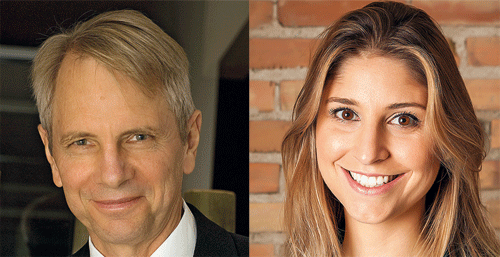
Most notably, in order to really push the growth of the spa industry, a new association – Association Québécoise des spas (AQS) – was launched this May and it already has 39 spa operator members. AQS’s strategy is to develop a cohesion between the players in the industry, to represent and promote spas in the region and to create tools and strategies to assist in challenges they may face. See our interview with AQS’s president and CEO Lucie Brosseau on p52.
In a nod to the investment the province dedicates to R&D, Québec City prides itself on being a place where creative ideas can thrive. For years it’s been a meeting ground of different cultures, languages and people. This is notable in the trend of Nordic-themed spa facilities focused on thermal and water circuits. Traditionally situated in natural settings such as at Station Blü (see case study 1), Nordic spas are now finding their way into the urban sprawl and include SkySpa, which opened in Québec City in January 2012 following its first site in Montréal (see sb11/1 p42); Spa Tyst Tradgard and Zone Spa.
Elsewhere, Daniel Gauthier, the former president and co-founder of Cirque du Soleil – which was first established on the east shores of the St Lawrence River – is now venturing into wellness. The 2,500sq ft (232sq m) Spa du Verger which is also focused on the Nordic bath cycle is due to open in December in Hôtel La Ferme, a contemporary 145-bed hotel that’s part of a wider ca$300m (us$306m, €235m, £190m) integrated tourism scheme called La Massif de Charlevoix. The scheme, includes a corridor of development in Québec’s Charlevoix region across three environments – the mountains, a train line and a regenerated farm (ferme). The spa features six treatment rooms, including one double suite; a thermal therapy circuit comprising an aromatic steamroom, Finnish sauna, two outdoor whirlpools (one for 25 people), cold plunge pool and snow dispenser; a relaxation area; a healthy drink and food bar; and a gym and mind body studio.
So, Québec… a region where tradition meets modernity and creativity abounds. Increasingly, the environment (natural, cultural, rural and urban) is shaping investment priorities with the spa sector contributing significantly to the overall appeal of this as a place to live, work and visit.
Read more from this issue of Attractions Management magazine
View contents of Attractions Management 2012 issue 4
Interview: Laurent Houel
Evian's global brand development
director tells Katie Barnes about the
group's new evianSpa licence concept
that's set for a strategic global rollout
Promotional feature: Value Proposition
If you're thinking of investing in a spa development bigger than 300sq m,
a feasibility study – at a cost of only US$10k-US$18k – can reveal the
business model most likely to succeed.
Research: Work it out
Katherine Johnston reveals key
recommendations following a
much-needed study on global spa
management training
Top team: Miraval
The team that created the new spa at
Miraval shared a bold vision as Liz
Terry discovered on her visit
Family matters: The Brepohls
Natural medicine is the focus at
Lapinha: one of Brazil's original
medical spas. Neena Dhillon talks to
the founding family
The making of...: A massage table
Up to 18 million parts are needed for
a year's production of massage tables.
Lisa Starr takes an ‘undercover' look
at just what goes into making this
industry staple
Research: The cold war
Meditation and exercise can
significantly reduce sick days taken
due to colds and flu
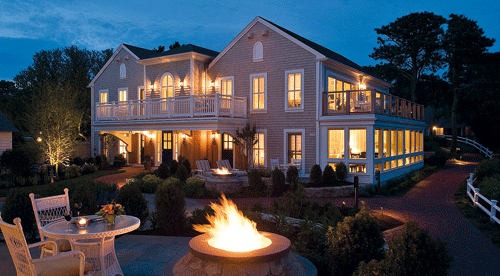
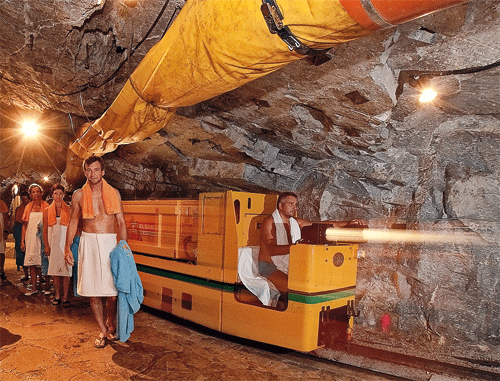
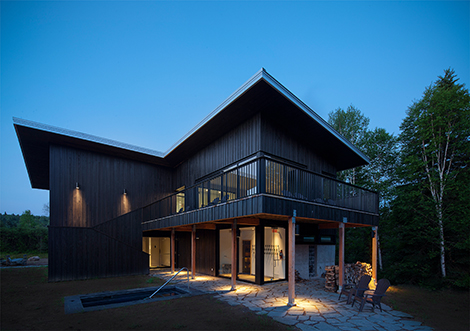
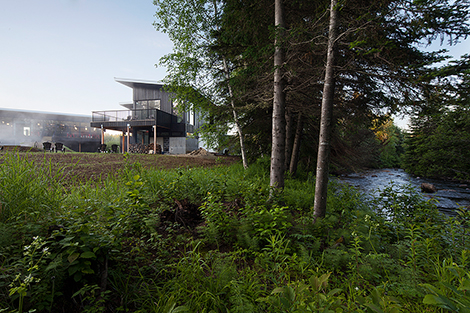
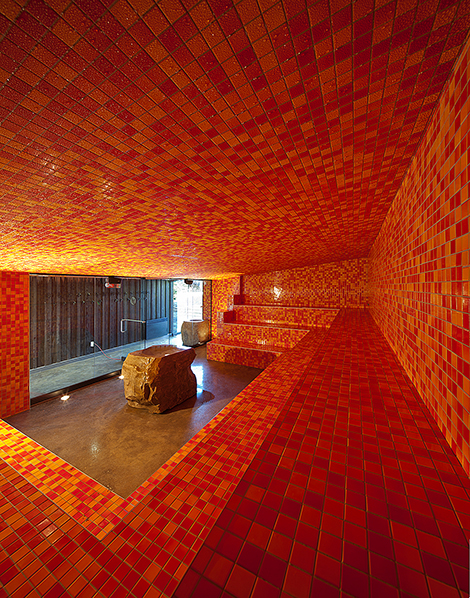
case study 1 Station Blü Forty minutes north-east of Québec City, Station Blü is a Nordic bath complex that’s nestled in a birch woodland in a meander of the river Lombrette. Opened in June 2011, it consists of three pavilions built by local architect Alexander Blouin in a modern, clean-line style using glass and the blackened wood. While one pavilion houses the reception and Oasis healthy food restaurant, the other two are focused on bathing – one has a large sauna, the other a big steamroom (both for 40 people), plus each have changing rooms, relaxation areas and five single and one double massage room. The buildings surround two warm whirlpools and ice plunge pools, with the option of also bathing in the river, to complete the cycle which alternates between hot and cold experiences to benefit muscle relaxation, stimulate blood circulation and purify the skin.
The man behind Station Blü is 40-year-old Martin Gladu, the former director of global firm Manulife Financial who had a vision to create a wellness centre that, unlike others in Canada, enabled people to reconnect with nature – especially water. Together with eight partners, he raised ca$5.2m (us$5.3m. €4m, £3.2m) to transform the former farm into an offer based on relaxation, socialising and fun while being at one with nature. The landscape smoothly runs into buildings, expansive windows give generous views in all directions and heat for sauna is delivered by a wood fire-heated 4 tonne granite boulder.
The bath cycle experience costs ca$35 (us$36, €27, £22) Monday to Thursday and us$45 (us$46, €35, £28) Friday to Sunday. Timescales for each experience are given, but guests are encouraged to stay to take advantage of the walking trails, good food, socialising or special events, such as watching shooting stars from the open air whirlpools. Massages aren’t sold separately, but a massage and Nordic bath package is available at ca$95 (us$97, €74, £60) in the week and ca$105 (us$107, €82, £66) at the weekend and around 35 per cent of guests go for this with the rest opting for bathing only. Tourists/day visitors make up 80 per cent of the clientele, followed by corporate group bookings at 15 per cent and members at 5 per cent.
Despite one of the buildings being struck by fire in earlier this year, Station Blü has already re-opened with a re-energised Gladu and team in place.
Station Blü has three pavilions, two of which house a sauna and steamroom big enough for 40 people
The setting gives a feeling of being at one with nature
A wood fire-heated boulder provides the warmth in the sauna
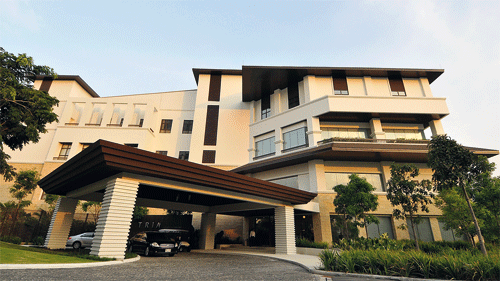
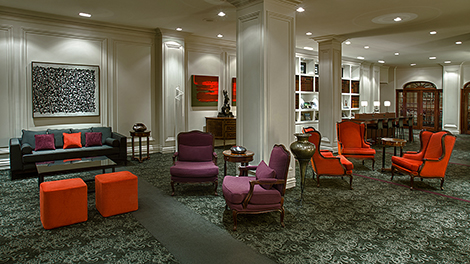
Case study 2 Boutique & Spa signé Pevonia, Hôtel Manoir Victoria This traditional four-star hotel in the centre of Québec City dates back to the 1830s, when it was known as Hôtel Victoria and was originally connected to the a Turkish bath and pool complex by an overpass. By the 1920s, it had become the fashionable place to be seen, but was forced to close in 1978 as it unable to compete with more modern facilities.
It was reborn as Hôtel Manoir Victoria in 1988 following a ca$12m (us$12.2m, €9.4m, £7.6m) for initial refurbishments. In the past eight years, a further ca$7m (us$7.1m. €5.5m, £4.4m) has been spent on improvements including the creation of a full-service spa catering to a local day market, accounting for 40 per cent of clients, as well as guests of the 156-bedroom hotel who make up the remaining 60 per cent of customers.
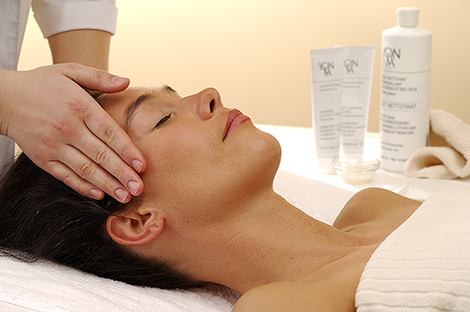
Incorporated in the lower levels of the hotel, Boutique & Spa signé Pevonia has eight treatment rooms, an indoor pool, fitness facility and a sauna. It offers a wide range of treatments by Pevonia, with a 60-minute Swedish massage priced at ca$120 (us$122, €94, £76)
CA$7m has been spent on hotel improvements over the last eight years
CA$7m has been spent on hotel improvements including a full-service spa supplied by Pevonia
Case study 3 Spa Chateau, Chateau Mont Sainte Anne The 220-bed, four-star Chateau Mont Sainte Anne is located 35km north-east of Quebec City in the heart of a traditional snow sports destination close to the pilgrimage town of Sainte-Anne-de-Beaupré. In the past 10 years, it’s been developed as a four season business – helped by a conference centre for up to 900 people, plus the creation of mountain biking and walking trials to reduce dependency on snow activities. In turn this has generated new audiences.
Its three-year-old Chateau Spa has also been fundamental in creating a year-round offering. The boutique spa has six treatment rooms including one double suite and two manicure and pedicure stations. There are also indoor and outdoor pools and whirlpools, a sauna and a fitness room. The treatment menu is based on Babor products and the numerous outdoor activities generate demand for sports massage, sports injuries and after sport recovery treatments and relaxation. Meanwhile, the resort has a strong, award-winning focus on sustainability and in keeping with the natural theme, balneotherapy and mud therapy are key therapies. Prices range from ca$40 (us$41, €31, £25) for a 20-minute bath session and go up to ca$85 (us$87, €67, £54) for a 60-minute volcanic mud treatment.
Over the next two years, the plan is to reshape the spa according to Nordic bath principles – but full details are yet to be revealed.
The spa is seeing a demand for sports-focused treatments due to the numerous outdoor activities nearby
The three-year-old spa helps the hotel to operate as year-round business and has six treatment rooms, including a double suite
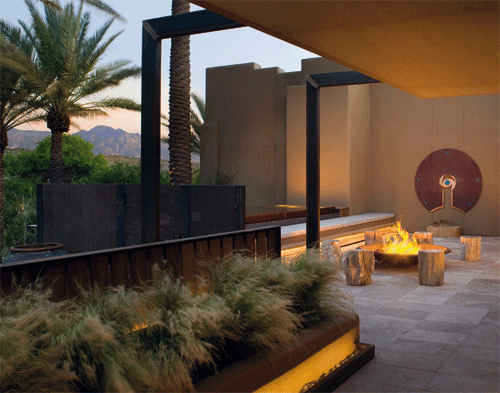
Standout Québec spa designs include the
Bota Bota that’s built on
a stationary ferry boat
Spa businesses are fast emerging in Québec. But to understand why this sector is growing, you need to look at the bigger picture.
Covering 1.7 million sq km, Québec is three times the size of France and Canada’s largest province. As over 90 per cent of it is made up of the Canadian Shield, an uninhabitable rock, most people live in urban areas near the St Lawrence River between the city of Montréal and the capital Québec City.
Figures from the government body Statistique Québec show that substantial natural resources have long been the mainstay of Québec’s economy. Yet knowledge sectors such as aerospace, ICT and pharmaceuticals, along with tourism, also play leading roles. Interestingly, there’s also a focus on research and development – 2.63 per cent of GDP was channelled into R&D spending in 2011, above the European Union average of 1.84 per cent and more than any other Canadian province.
This is clearly a province of innovation, reflected in an advanced, market-based open economy. In 2011, its GDP was ca$327bn (us$333bn, €256bn, £207bn) making it the second largest economy in Canada and 37th in the world. Innovation is also present in the province’s tourism industry, especially where spas are concerned.
Spa tourism hub In 2011, Québec welcomed 26 million tourists according to the province’s Ministry of Tourism. This accounted for 2.5 per cent of GDP, 400,000 jobs and 30,000 businesses. The province is split into 22 tourist regions with Québec City and the area surrounding the St Lawrence River – commonly called the St Lawrence Lowlands – attracting 4.6 million, or 18 per cent of, international visitors a year who typically come from the US, France, the UK, Germany, Mexico and Japan. And while 70 per cent of tourism businesses are located outside of Québec City and Montréal, Québec City is a hub for spa and wellness tourism.
The city, and its surrounding area, has seen a number of new spa developments open in both traditional resorts and more contemporary city sites and in our case studies, we highlight a variety of those on offer.
Most notably, in order to really push the growth of the spa industry, a new association – Association Québécoise des spas (AQS) – was launched this May and it already has 39 spa operator members. AQS’s strategy is to develop a cohesion between the players in the industry, to represent and promote spas in the region and to create tools and strategies to assist in challenges they may face. See our interview with AQS’s president and CEO Lucie Brosseau on p52.
In a nod to the investment the province dedicates to R&D, Québec City prides itself on being a place where creative ideas can thrive. For years it’s been a meeting ground of different cultures, languages and people. This is notable in the trend of Nordic-themed spa facilities focused on thermal and water circuits. Traditionally situated in natural settings such as at Station Blü (see case study 1), Nordic spas are now finding their way into the urban sprawl and include SkySpa, which opened in Québec City in January 2012 following its first site in Montréal (see sb11/1 p42); Spa Tyst Tradgard and Zone Spa.
Elsewhere, Daniel Gauthier, the former president and co-founder of Cirque du Soleil – which was first established on the east shores of the St Lawrence River – is now venturing into wellness. The 2,500sq ft (232sq m) Spa du Verger which is also focused on the Nordic bath cycle is due to open in December in Hôtel La Ferme, a contemporary 145-bed hotel that’s part of a wider ca$300m (us$306m, €235m, £190m) integrated tourism scheme called La Massif de Charlevoix. The scheme, includes a corridor of development in Québec’s Charlevoix region across three environments – the mountains, a train line and a regenerated farm (ferme). The spa features six treatment rooms, including one double suite; a thermal therapy circuit comprising an aromatic steamroom, Finnish sauna, two outdoor whirlpools (one for 25 people), cold plunge pool and snow dispenser; a relaxation area; a healthy drink and food bar; and a gym and mind body studio.
So, Québec… a region where tradition meets modernity and creativity abounds. Increasingly, the environment (natural, cultural, rural and urban) is shaping investment priorities with the spa sector contributing significantly to the overall appeal of this as a place to live, work and visit.
Read more from this issue of Attractions Management magazine
View contents of Attractions Management 2012 issue 4
Interview: Laurent Houel
Evian's global brand development
director tells Katie Barnes about the
group's new evianSpa licence concept
that's set for a strategic global rollout
Promotional feature: Value Proposition
If you're thinking of investing in a spa development bigger than 300sq m,
a feasibility study – at a cost of only US$10k-US$18k – can reveal the
business model most likely to succeed.
Research: Work it out
Katherine Johnston reveals key
recommendations following a
much-needed study on global spa
management training
Top team: Miraval
The team that created the new spa at
Miraval shared a bold vision as Liz
Terry discovered on her visit
Family matters: The Brepohls
Natural medicine is the focus at
Lapinha: one of Brazil's original
medical spas. Neena Dhillon talks to
the founding family
The making of...: A massage table
Up to 18 million parts are needed for
a year's production of massage tables.
Lisa Starr takes an ‘undercover' look
at just what goes into making this
industry staple
Research: The cold war
Meditation and exercise can
significantly reduce sick days taken
due to colds and flu
case study 1 Station Blü Forty minutes north-east of Québec City, Station Blü is a Nordic bath complex that’s nestled in a birch woodland in a meander of the river Lombrette. Opened in June 2011, it consists of three pavilions built by local architect Alexander Blouin in a modern, clean-line style using glass and the blackened wood. While one pavilion houses the reception and Oasis healthy food restaurant, the other two are focused on bathing – one has a large sauna, the other a big steamroom (both for 40 people), plus each have changing rooms, relaxation areas and five single and one double massage room. The buildings surround two warm whirlpools and ice plunge pools, with the option of also bathing in the river, to complete the cycle which alternates between hot and cold experiences to benefit muscle relaxation, stimulate blood circulation and purify the skin.
The man behind Station Blü is 40-year-old Martin Gladu, the former director of global firm Manulife Financial who had a vision to create a wellness centre that, unlike others in Canada, enabled people to reconnect with nature – especially water. Together with eight partners, he raised ca$5.2m (us$5.3m. €4m, £3.2m) to transform the former farm into an offer based on relaxation, socialising and fun while being at one with nature. The landscape smoothly runs into buildings, expansive windows give generous views in all directions and heat for sauna is delivered by a wood fire-heated 4 tonne granite boulder.
The bath cycle experience costs ca$35 (us$36, €27, £22) Monday to Thursday and us$45 (us$46, €35, £28) Friday to Sunday. Timescales for each experience are given, but guests are encouraged to stay to take advantage of the walking trails, good food, socialising or special events, such as watching shooting stars from the open air whirlpools. Massages aren’t sold separately, but a massage and Nordic bath package is available at ca$95 (us$97, €74, £60) in the week and ca$105 (us$107, €82, £66) at the weekend and around 35 per cent of guests go for this with the rest opting for bathing only. Tourists/day visitors make up 80 per cent of the clientele, followed by corporate group bookings at 15 per cent and members at 5 per cent.
Despite one of the buildings being struck by fire in earlier this year, Station Blü has already re-opened with a re-energised Gladu and team in place.
Station Blü has three pavilions, two of which house a sauna and steamroom big enough for 40 people
The setting gives a feeling of being at one with nature
A wood fire-heated boulder provides the warmth in the sauna
Case study 2 Boutique & Spa signé Pevonia, Hôtel Manoir Victoria This traditional four-star hotel in the centre of Québec City dates back to the 1830s, when it was known as Hôtel Victoria and was originally connected to the a Turkish bath and pool complex by an overpass. By the 1920s, it had become the fashionable place to be seen, but was forced to close in 1978 as it unable to compete with more modern facilities.
It was reborn as Hôtel Manoir Victoria in 1988 following a ca$12m (us$12.2m, €9.4m, £7.6m) for initial refurbishments. In the past eight years, a further ca$7m (us$7.1m. €5.5m, £4.4m) has been spent on improvements including the creation of a full-service spa catering to a local day market, accounting for 40 per cent of clients, as well as guests of the 156-bedroom hotel who make up the remaining 60 per cent of customers.
Incorporated in the lower levels of the hotel, Boutique & Spa signé Pevonia has eight treatment rooms, an indoor pool, fitness facility and a sauna. It offers a wide range of treatments by Pevonia, with a 60-minute Swedish massage priced at ca$120 (us$122, €94, £76)
CA$7m has been spent on hotel improvements over the last eight years
CA$7m has been spent on hotel improvements including a full-service spa supplied by Pevonia
Case study 3 Spa Chateau, Chateau Mont Sainte Anne The 220-bed, four-star Chateau Mont Sainte Anne is located 35km north-east of Quebec City in the heart of a traditional snow sports destination close to the pilgrimage town of Sainte-Anne-de-Beaupré. In the past 10 years, it’s been developed as a four season business – helped by a conference centre for up to 900 people, plus the creation of mountain biking and walking trials to reduce dependency on snow activities. In turn this has generated new audiences.
Its three-year-old Chateau Spa has also been fundamental in creating a year-round offering. The boutique spa has six treatment rooms including one double suite and two manicure and pedicure stations. There are also indoor and outdoor pools and whirlpools, a sauna and a fitness room. The treatment menu is based on Babor products and the numerous outdoor activities generate demand for sports massage, sports injuries and after sport recovery treatments and relaxation. Meanwhile, the resort has a strong, award-winning focus on sustainability and in keeping with the natural theme, balneotherapy and mud therapy are key therapies. Prices range from ca$40 (us$41, €31, £25) for a 20-minute bath session and go up to ca$85 (us$87, €67, £54) for a 60-minute volcanic mud treatment.
Over the next two years, the plan is to reshape the spa according to Nordic bath principles – but full details are yet to be revealed.
The spa is seeing a demand for sports-focused treatments due to the numerous outdoor activities nearby
The three-year-old spa helps the hotel to operate as year-round business and has six treatment rooms, including a double suite
Standout Québec spa designs include the
Bota Bota that’s built on
a stationary ferry boat
Abu Dhabi-based investment firm Mubadala Capital has made a binding, fully financed
€1 billion
offer to acquire Pierre and Vacances SA, the European holiday resort operator behind the
continental European Center Parcs business.
Disney has reaffirmed its commitment to investing US$30 billion in its US parks and cruise
business by 2033, using new America250 celebrations to underline the role its attractions play
in supporting jobs, tourism and economic growth.
Expo 2030 Riyadh is being planned as a permanent visitor destination, with organisers
confirming the six-million-square-metre site will become a Global Village after the event closes.
The owner of one of Australia's best-known waterparks has acquired a major competitor,
creating a new attractions business spanning two of the country's largest visitor destinations.
The Toverland theme park in the Netherlands has announced a €98m expansion programme
that will add a resort, new attractions and staff facilities as it pursues plans to become a multi-
day destination.
Hotel de France, located on the British Isle of Jersey, has created a wellness retreat package
that includes a hot yoga session that will take place in Jersey Zoo’s butterfly sanctuary.
A new immersive attraction designed to transport visitors into the final hours of ancient Pompeii
is preparing to open near the world-famous archaeological site in southern Italy.
Experience design company, BRC Imagination Arts, has completed a transition that sees founder
Bob Rogers pass ownership of the business to four long-serving senior executives, while
remaining actively involved with the company.
Movie Park Germany has opened a new Paramount Pictures-themed attraction as part of its 30th
anniversary celebrations, using immersive storytelling and adaptive reuse to reinforce the park’s
longstanding “Hollywood in Germany” positioning.
Therme Manchester’s 28-acre development, which will include interconnected glass pavilions
that measure 65,000sq m, will be the largest bathing and wellbeing attraction in the world once
complete, according to prof David Russell, CEO of Therme UK.