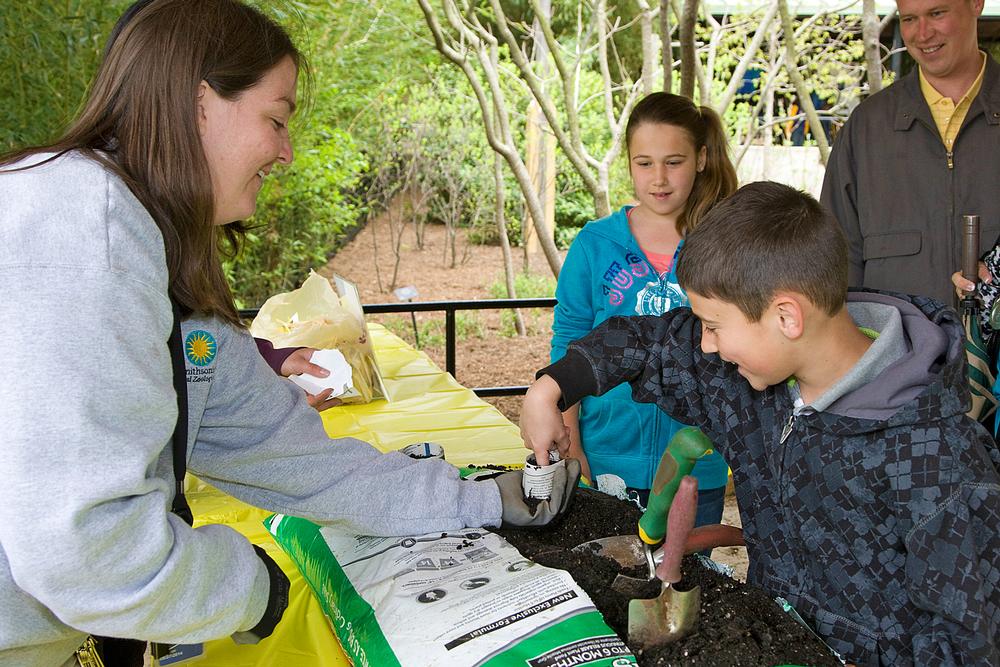
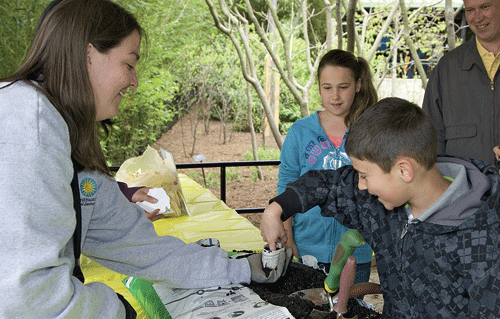
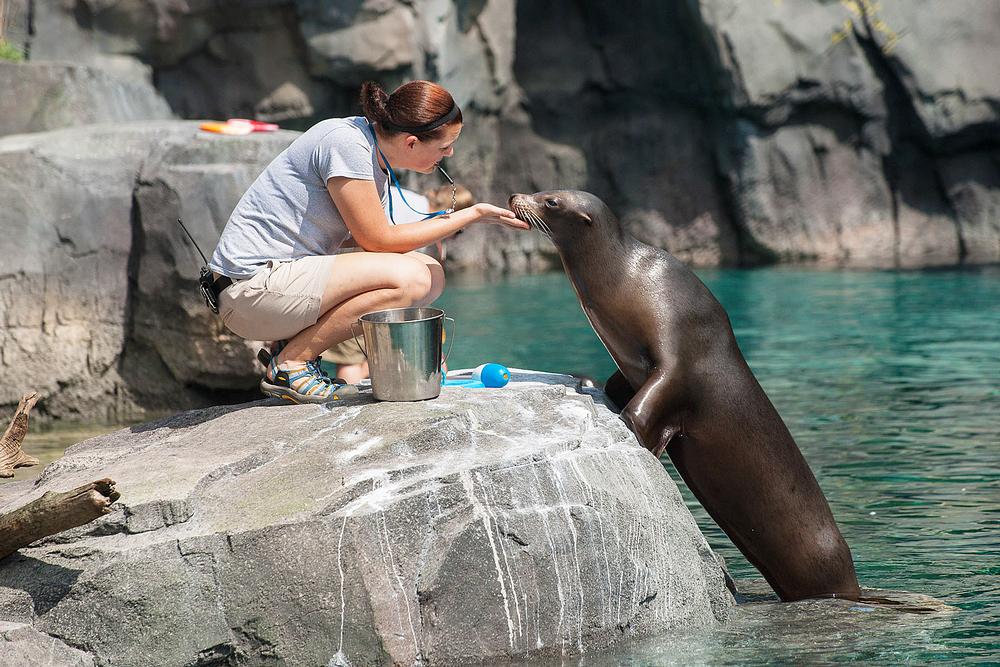
Smithsonian’s National Zoo hosts fun and educational events and celebrations / PHOTO: Mehgan Murphy, Smithsonian's National Zoo
The annual operating and capital outlays of zoos and aquariums accredited by the Association of Zoos and Aquariums (AZA) provides important economic benefits within local and state economies. It also generates important economic benefits nationally and internationally. These economic benefits include growing gross domestic product (GDP), creating wages for workers at the institutions and supporting jobs throughout the economy, as the initial spending by zoos and aquariums is re-spent and re-cycled.
Speculate to accumulate AZA-accredited zoos and aquariums in the US spent $4.6bn (E3.4bn, £2.8bn) in 2012 alone. This spending was divided between annual operations expenditures totalling $3.5bn (E2.6bn, £2.2bn), plus an additional $1.1bn (E809.2m, £683m) in capital improvements – an amount likely to vary by year. Not included in the analysis were the significant spending outlays of concessionaires that provide retail and food services on grounds at these facilities. Including the operating expenses of these businesses would certainly grow the total economic impact of the zoos and aquariums even more.
Another source of important revenue in the community surrounding AZA-accredited zoos and aquariums is the off-site spending of zoo and aquarium guests that occurs in combination with their visits. While not all zoo and aquarium guests combine their visit with other commercial activities, research has shown that some do and that this spending can be significant, particularly when it stems from out-of-town tourists.
The number of people that visited AZA-accredited zoos and aquariums in 2012 was 181.9 million globally – 169.4 million of those people visited an accredited zoo or aquarium in the US. The visit-related, off-site spending of those zoo and aquarium visitors in the US has been estimated at $2.4bn (E1.8bn, £1.5bn).
Economic benefits Therefore, the economic benefit of AZA-accredited zoos and aquariums and their visitors in 2012 can be highlighted as:
Direct expenditures by US AZA-accredited zoos and aquariums of $4.6bn (E3.4bn, £2.8bn) contributed a total of $13.2bn (E9.7bn, £8.2bn) to the United States’ GDP. This is based on the use of a widely accepted aggregate output multiplier of 2.88;
Direct spending generated $4.4bn (E3.2bn, £2.7bn) in wages and salaries for US workers and supported 132,015 jobs in the United States;
Before-and-after visitor spending, estimated to total $2.4bn (E1.8bn, £1.5bn), added an additional $6.6bn (E4.85bn, £4bn) to GDP, generated $2bn (E1.5bn, £1.2bn) in wages and supported 61,971 jobs nationwide.
Total contribution of AZA-accredited zoos and aquariums to the US economy in 2012 was $19.8bn (E14.6bn, £12.3bn), generating personal earnings totaling $6.4bn (E4.7bn, £3.9bn) and supporting 193,986 jobs. Eight of AZA’s 10 international member organisations reported direct annual operating and capital expenditures totaling $490.7m (E360.8m, £304.6m) in 2012. This spending added an estimated $1.1bn (E809.2m, £683m) in aggregate benefits to the economies of these international members’ countries, generated $352m (E259m, £218.5m) in new wages to workers residing locally (in addition to direct payroll outlays) and supported 10,772 jobs across their respective national economies.
These analyses have confirmed that the economic impacts of annual spending by AZA-accredited zoos and aquariums and the visit-related, off-site spending by their guests have benefits that far exceed the value of the initial investments.
These benefits constitute an important source of new income and jobs that contribute broadly across the economy locally and at the state, national and international levels.
Read more from this issue of Attractions Management magazine
View contents of Attractions Management 2013 issue 4
Profile: Joe Schott
The COO of Disneyland Paris talks about
the park's new immersive Ratatouille
dark ride, which is slated to open in 2014,
and how the park has evolved from an
American theme park to a European one
The benefits of zoos and aquariums include new income and jobs that contribute broadly to the economy / PHOTO: Mark Van Bergh, Smithsonian’s National Zoo
COMPANY PROFILES
Holovis
Holovis is a privately owned company
established in 2004 by CEO Stuart
Hetherington. [more...]
Sally Corporation
Our services include: Dark ride design & build; Redevelopment of existing attractions; High-quality [more...]
IAAPA EMEA
IAAPA Expo Europe was established in 2006 and has grown to the largest international conference and [more...]
RMA Ltd
RMA Ltd is a one-stop global company
that can design, build and produce from a
greenfield site upw [more...]
Smithsonian’s National Zoo hosts fun and educational events and celebrations / PHOTO: Mehgan Murphy, Smithsonian's National Zoo
The annual operating and capital outlays of zoos and aquariums accredited by the Association of Zoos and Aquariums (AZA) provides important economic benefits within local and state economies. It also generates important economic benefits nationally and internationally. These economic benefits include growing gross domestic product (GDP), creating wages for workers at the institutions and supporting jobs throughout the economy, as the initial spending by zoos and aquariums is re-spent and re-cycled.
Speculate to accumulate AZA-accredited zoos and aquariums in the US spent $4.6bn (E3.4bn, £2.8bn) in 2012 alone. This spending was divided between annual operations expenditures totalling $3.5bn (E2.6bn, £2.2bn), plus an additional $1.1bn (E809.2m, £683m) in capital improvements – an amount likely to vary by year. Not included in the analysis were the significant spending outlays of concessionaires that provide retail and food services on grounds at these facilities. Including the operating expenses of these businesses would certainly grow the total economic impact of the zoos and aquariums even more.
Another source of important revenue in the community surrounding AZA-accredited zoos and aquariums is the off-site spending of zoo and aquarium guests that occurs in combination with their visits. While not all zoo and aquarium guests combine their visit with other commercial activities, research has shown that some do and that this spending can be significant, particularly when it stems from out-of-town tourists.
The number of people that visited AZA-accredited zoos and aquariums in 2012 was 181.9 million globally – 169.4 million of those people visited an accredited zoo or aquarium in the US. The visit-related, off-site spending of those zoo and aquarium visitors in the US has been estimated at $2.4bn (E1.8bn, £1.5bn).
Economic benefits Therefore, the economic benefit of AZA-accredited zoos and aquariums and their visitors in 2012 can be highlighted as:
Direct expenditures by US AZA-accredited zoos and aquariums of $4.6bn (E3.4bn, £2.8bn) contributed a total of $13.2bn (E9.7bn, £8.2bn) to the United States’ GDP. This is based on the use of a widely accepted aggregate output multiplier of 2.88;
Direct spending generated $4.4bn (E3.2bn, £2.7bn) in wages and salaries for US workers and supported 132,015 jobs in the United States;
Before-and-after visitor spending, estimated to total $2.4bn (E1.8bn, £1.5bn), added an additional $6.6bn (E4.85bn, £4bn) to GDP, generated $2bn (E1.5bn, £1.2bn) in wages and supported 61,971 jobs nationwide.
Total contribution of AZA-accredited zoos and aquariums to the US economy in 2012 was $19.8bn (E14.6bn, £12.3bn), generating personal earnings totaling $6.4bn (E4.7bn, £3.9bn) and supporting 193,986 jobs. Eight of AZA’s 10 international member organisations reported direct annual operating and capital expenditures totaling $490.7m (E360.8m, £304.6m) in 2012. This spending added an estimated $1.1bn (E809.2m, £683m) in aggregate benefits to the economies of these international members’ countries, generated $352m (E259m, £218.5m) in new wages to workers residing locally (in addition to direct payroll outlays) and supported 10,772 jobs across their respective national economies.
These analyses have confirmed that the economic impacts of annual spending by AZA-accredited zoos and aquariums and the visit-related, off-site spending by their guests have benefits that far exceed the value of the initial investments.
These benefits constitute an important source of new income and jobs that contribute broadly across the economy locally and at the state, national and international levels.
Read more from this issue of Attractions Management magazine
View contents of Attractions Management 2013 issue 4
Profile: Joe Schott
The COO of Disneyland Paris talks about
the park's new immersive Ratatouille
dark ride, which is slated to open in 2014,
and how the park has evolved from an
American theme park to a European one
The benefits of zoos and aquariums include new income and jobs that contribute broadly to the economy / PHOTO: Mark Van Bergh, Smithsonian’s National Zoo
Abu Dhabi-based investment firm Mubadala Capital has made a binding, fully financed
€1 billion
offer to acquire Pierre and Vacances SA, the European holiday resort operator behind the
continental European Center Parcs business.
Expo 2030 Riyadh is being planned as a permanent visitor destination, with organisers
confirming the six-million-square-metre site will become a Global Village after the event closes.
The owner of one of Australia's best-known waterparks has acquired a major competitor,
creating a new attractions business spanning two of the country's largest visitor destinations.
The Toverland theme park in the Netherlands has announced a €98m expansion programme
that will add a resort, new attractions and staff facilities as it pursues plans to become a multi-
day destination.
Hotel de France, located on the British Isle of Jersey, has created a wellness retreat package
that includes a hot yoga session that will take place in Jersey Zoo’s butterfly sanctuary.
A new immersive attraction designed to transport visitors into the final hours of ancient Pompeii
is preparing to open near the world-famous archaeological site in southern Italy.
Experience design company, BRC Imagination Arts, has completed a transition that sees founder
Bob Rogers pass ownership of the business to four long-serving senior executives, while
remaining actively involved with the company.
Movie Park Germany has opened a new Paramount Pictures-themed attraction as part of its 30th
anniversary celebrations, using immersive storytelling and adaptive reuse to reinforce the park’s
longstanding “Hollywood in Germany” positioning.
Therme Manchester’s 28-acre development, which will include interconnected glass pavilions
that measure 65,000sq m, will be the largest bathing and wellbeing attraction in the world once
complete, according to prof David Russell, CEO of Therme UK.
Efteling has opened Hooghmoed, a new family drop tower designed to broaden the appeal of its
recently launched Sirene Island themed area and introduce younger visitors to thrill attractions.
+ More news
COMPANY PROFILES
Holovis Holovis is a privately owned company
established in 2004 by CEO Stuart
Hetherington. [more...]
Sally Corporation Our services include: Dark ride design & build; Redevelopment of existing attractions; High-quality [more...]
IAAPA EMEA IAAPA Expo Europe was established in 2006 and has grown to the largest international conference and [more...]
RMA Ltd RMA Ltd is a one-stop global company
that can design, build and produce from a
greenfield site upw [more...]