Quizzing curators about an exhibit,
recreating walkthroughs and creating
new income streams. Is ‘extended
reality’ the way forward for
attractions? Kath Hudson speaks
to White Light about the potential
of this exciting use of technology
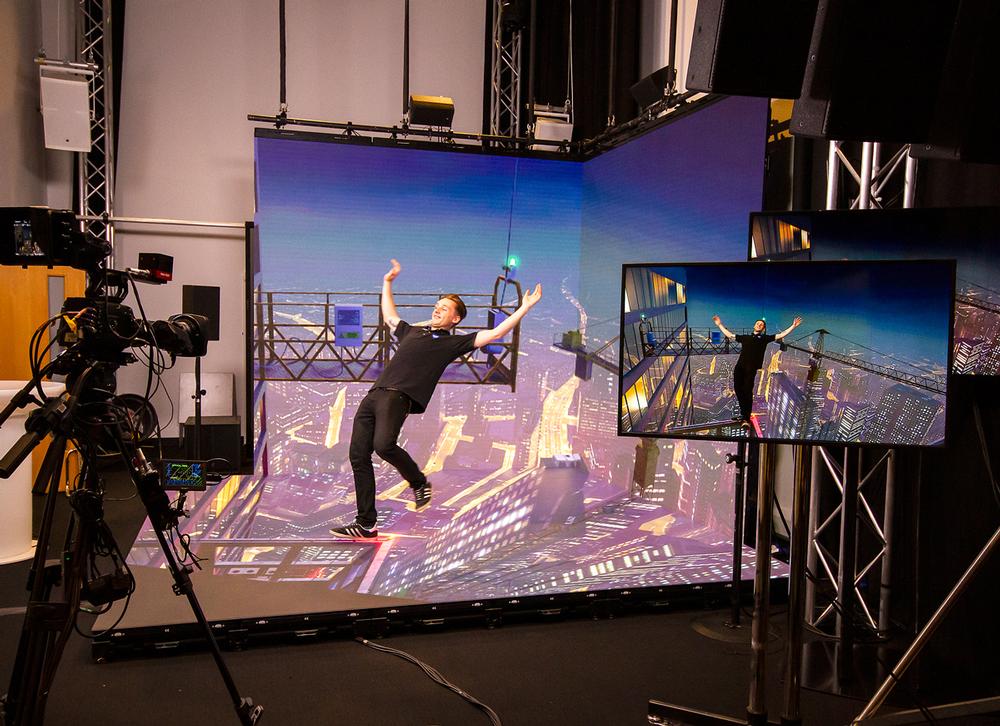
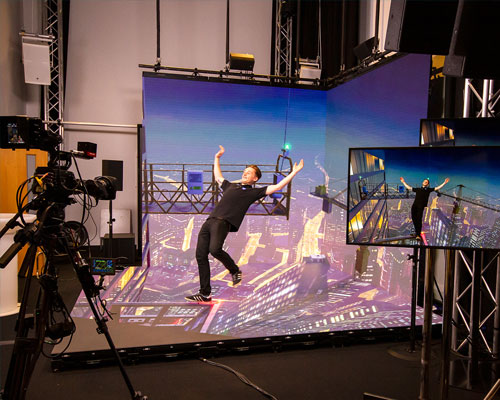
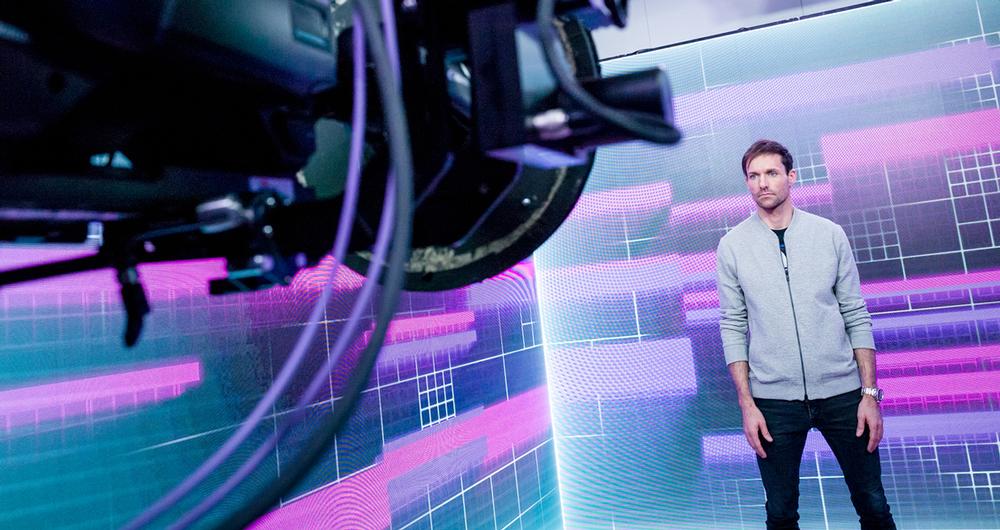
The SmartStage Studio immersive video environment / Photo: White Light
Across the world businesses found themselves having to pivot overnight last March in order to take their experience or service online; this posed an enormous challenge for the attractions industry. How could an online experience possibly measure up to the wonder of looking at a masterpiece in a gallery, the engagement of an interactive exhibit, or the thrill of a theme park ride?
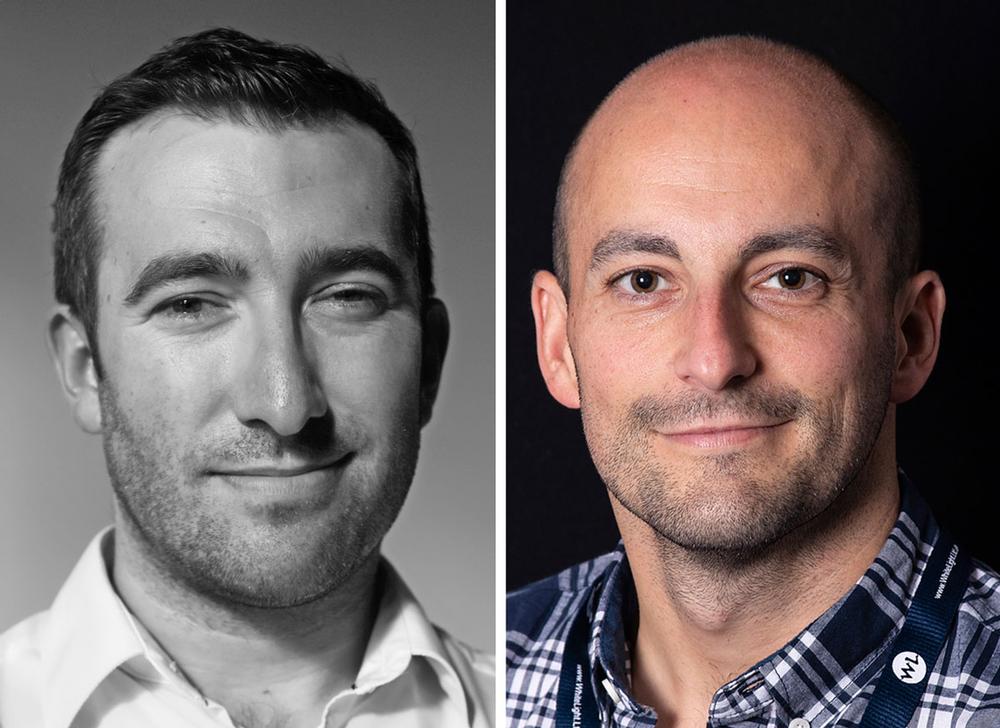
White Light has been at the forefront of digital technology since its formation 50 years ago, and believes that extended reality is the answer. “It has the potential to complement the live experience, as well as create a ‘money can’t buy’ experience in its own right,” says project manager, Jason Larcombe.
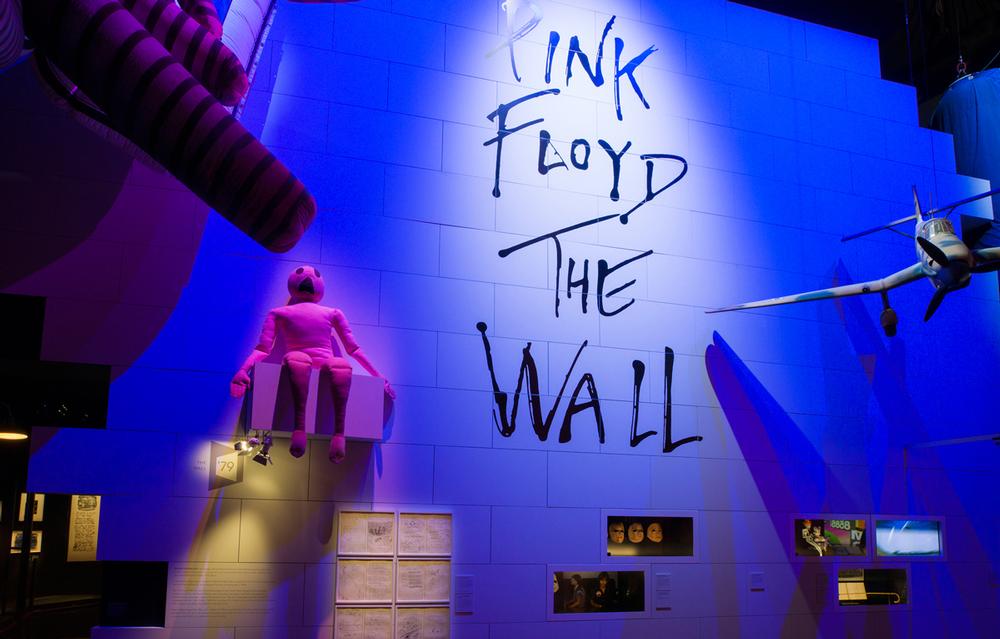
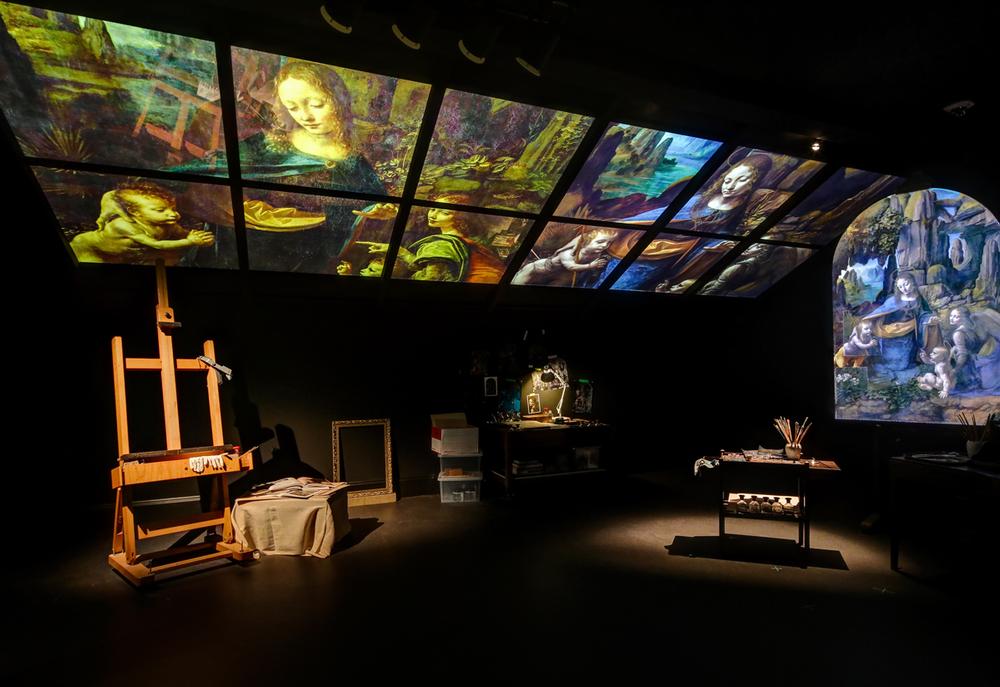
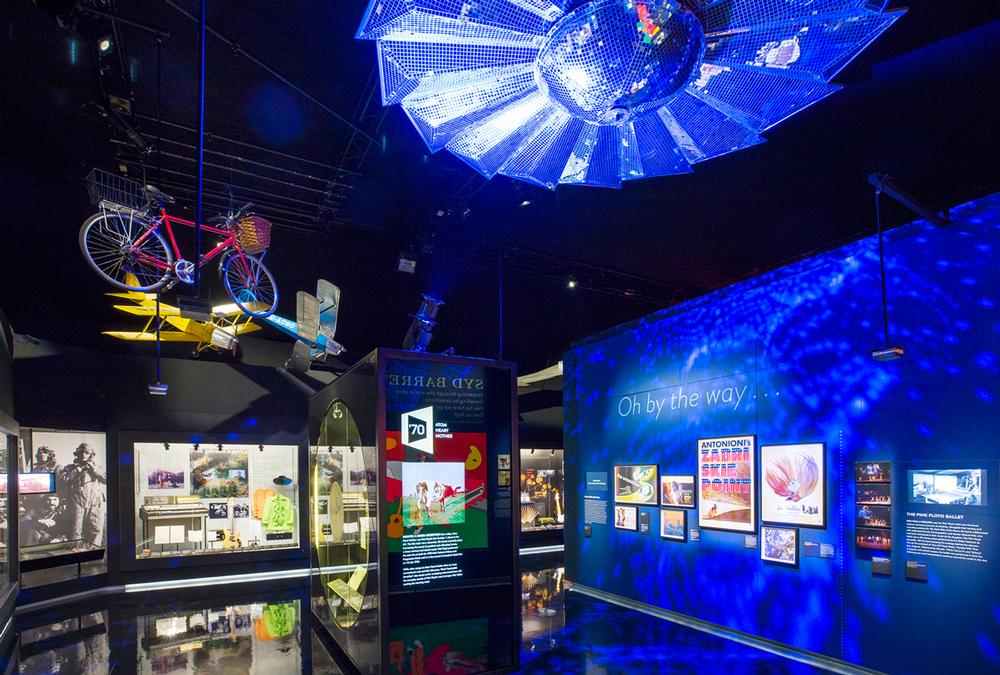
Initially creating immersive experiences for stage shows, White Light moved into the attractions industry in the early 2000s and has since collaborated on a range of exhibitions for museums, including Leonardo: Experience a Masterpiece at The National Gallery, London, and David Bowie Is and Pink Floyd: Their Mortal Remains at the V&A, London. Now the team are speaking to clients in the attractions sector about how extended reality can be part of operators’ strategies going forward.
“Over the first few months of the pandemic we saw a lot of reactive work with museums doing something quick to relate to audiences,” says Larcombe. “Initially feelings were that COVID-19 would be over with by October 2020 but now everyone is acknowledging that even if the situation does resolve over the next six, nine or 12 months, there’s been a shift towards receiving information on digital platforms and an appreciation of how that can work. We’re now using a range of toolkits to fulfil briefs and to prove that technology can deliver something which is on a par with the live experience.”
New opportunities Larcombe says that many museums and galleries were reluctant to put too much content on line, because of concerns it would stop people coming to the attraction, but now there’s an understanding that a unique online experience enables a new connection with the audience.
“If you’re interested in Andy Warhol, then nothing will beat a visit to an exhibition of his work,” he says. “But if you can also have a conversation with the curator from your home, that’s a money-can’t-buy-experience which complements the live event. This technology offers so many new opportunities.”
When Larcombe talks about having a conversation with the curator, he doesn’t mean a Zoom call. Augmented reality and extended reality (xR) technologies can allow the curator to appear in your living room for a face to face conversation, or appear live in a virtual environment to interact with an audience, even if they’re in other places.
The technology was first used by Eurosport during the 2018 Olympic Winter Games, when White Light worked with another technology company, Disguise, to create a pioneering mixed-reality television studio, into which they could teleport an athlete, using augmented reality, and wrap content around them. It was incredibly effective as it looked as though the presenter and athlete were having a face to face conversation. Other pundits could also be beamed in from separate locations and they could all have natural conversations, while the presenter could interact with augmented reality graphics and props.
White Light has since taken this technology and created the SmartStage product which offers exciting potential for many industries, including attractions and hospitality. White Light’s technical solutions manager, Andy Hook, explains how the company is talking to motor racing teams about an experience to offer their sponsors.
“Sponsors spend a lot of money in order to send people to races and without being able to attend, the sponsorship was in jeopardy. This technology allows us to create an experience where clients could virtually go inside the factory and see a race car being pulled apart, with bits flying around, and ask questions of the engineers.”
Hook adds that this technology offers a great way of personalising the experience: “With augmented reality you can do all sorts of things for sponsors, such as making a logo pop up from the floor.”
Wider audience Larcombe also believes this technology has great potential for heritage locations and museums to allow them to reach out to a wider demographic and a global audience. “It allows the heritage sector to go all over the world with their experience and find new audiences,” he says. “Digital is a great way of being able to connect.”
There’s also the potential to make this into an income stream. Hook says a museum could create an online show using SmartStage to teleport in experts to present, take questions and use augmented reality props. “There are lots of different ways that this content could be monetised,” he says. “If it’s just consuming content online, with no interaction, that could be free, whereas a charge could be made to ask a question of the person presenting or to see an additional camera angle. Then a higher price could be charged to see all the camera angles or a premium to actually appear on the screen and ask questions.”
Going forward, Hook and Larcombe believe augmented reality will become much more commonplace, with wearable AR devices as common as iPhones, allowing us all to augment our normal vision on a day to day basis.
“Attractions operators will be able to take advantage of this technology to create more interactive and collaborative features,” says Larcombe. “The experience could be personalised. With xR you could point your device at the immersive display and the information would appear curated to your needs. The same display could be used to reveal a more pictorial version of the content for young people as they explore the space, or a more detailed text heavy version for adults.”
Whatever happens with COVID-19, 2020 has changed us all, creating a remote audience which is here to stay and offers new commercial potential. Larcombe predicts that going forward we can expect to see digital attractions supporting physical ones. For example a virtual rollercoaster, which can build excitement before a visit and allow people to relive the experience afterwards, as well as create the desire to go and visit the real thing, and give a flavour of what it’s about for those who will never be able to visit.
Extending the concept
Virtual reality:
Put something on your head to take you into a siloed immersive environment.
Augmented reality:
Adding digital content over a person’s real vision to advance that individual’s own vision or digital communications.
Extended reality (xR):
An umbrella term covering all these technologies but is now starting to mean technology which is immersing the audience and allowing a shared experience.
Read more from this issue of Attractions Management magazine
View contents of Attractions Management 2021 issue 1
Editor's letter: Doing better
The Black Lives Matter movement has challenged museums professionals to ask testing questions about their role in reparative history and the way we display and interpret racist and colonial collections
People: Brent Bushnell
Two Bit Circus has pivoted to an innovative online model aimed at keeping its community in touch
People: Michel Linet-Frion
After decades creating for Disney, Grévin and Center Parcs, Linet-Frion has launched his own consultancy
People: Anthony Rawlins
The Digital Visitor CEO explains a new whitepaper on how attractions can survive 2021 and beyond
Interview: Sarah Roots
Warner Bros’ Sarah Roots shares exciting details of the second Harry Potter Studio Tour, set to open in Japan in 2023
Inspired: Alone with Vermeer
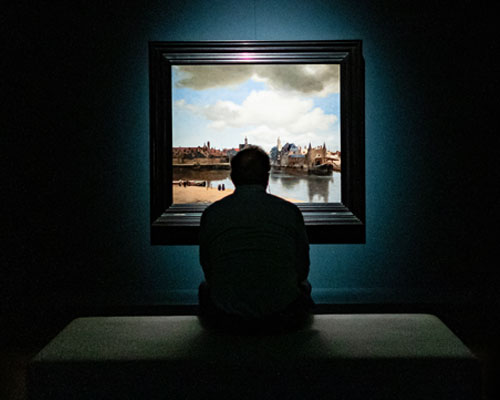
The Mauritshuis in The Hague has allowed visitors one-to-one time with Vermeer’s <i>View of Delft</i>, ‘the most beautiful painting in the world’
Aquariums: Into the deep
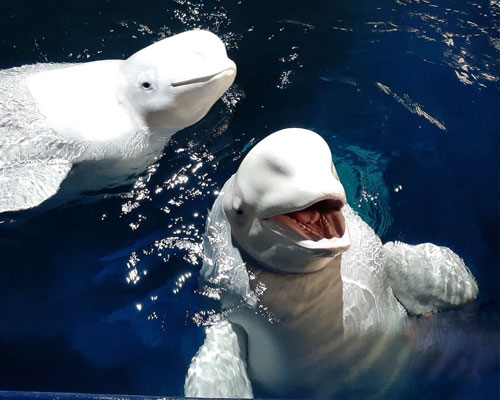
Merlin and the Sea Life Trust share the highs and lows of the epic journey to get two whales to their new home in the world’s first beluga whale sanctuary in Iceland
Innovation: Sea change
Edge Innovations’ incredibly
life-like robot dolphins could spell the end of marine mammals in aquariums, says CEO Walt Conti
Interview: Bob Rogers
As BRC Imagination Arts celebrates 40 years in business, its founder celebrates his team’s achievements
Sponsored: Technically Creative
With clients including the Xplore
Family Entertainment Centre in Athens,
Technically Creative provides a one
stop, in-house solution to create
memorable and magical experiences.
We talk to CEO, Marc Broadbent
Sponsored: Fun Spot: Providing turnkey solutions
Industry innovator, Fun Spot, is on a roll, with a new EMEA
office and a range of innovative new products to help operators
deliver excellence to the family fun market. We find out more
Interview: Phil Hettema
The Hettema Group president on weathering the pandemic and creating powerful experiences
Quizzing curators about an exhibit,
recreating walkthroughs and creating
new income streams. Is ‘extended
reality’ the way forward for
attractions? Kath Hudson speaks
to White Light about the potential
of this exciting use of technology
The SmartStage Studio immersive video environment / Photo: White Light
Across the world businesses found themselves having to pivot overnight last March in order to take their experience or service online; this posed an enormous challenge for the attractions industry. How could an online experience possibly measure up to the wonder of looking at a masterpiece in a gallery, the engagement of an interactive exhibit, or the thrill of a theme park ride?
White Light has been at the forefront of digital technology since its formation 50 years ago, and believes that extended reality is the answer. “It has the potential to complement the live experience, as well as create a ‘money can’t buy’ experience in its own right,” says project manager, Jason Larcombe.
Initially creating immersive experiences for stage shows, White Light moved into the attractions industry in the early 2000s and has since collaborated on a range of exhibitions for museums, including Leonardo: Experience a Masterpiece at The National Gallery, London, and David Bowie Is and Pink Floyd: Their Mortal Remains at the V&A, London. Now the team are speaking to clients in the attractions sector about how extended reality can be part of operators’ strategies going forward.
“Over the first few months of the pandemic we saw a lot of reactive work with museums doing something quick to relate to audiences,” says Larcombe. “Initially feelings were that COVID-19 would be over with by October 2020 but now everyone is acknowledging that even if the situation does resolve over the next six, nine or 12 months, there’s been a shift towards receiving information on digital platforms and an appreciation of how that can work. We’re now using a range of toolkits to fulfil briefs and to prove that technology can deliver something which is on a par with the live experience.”
New opportunities Larcombe says that many museums and galleries were reluctant to put too much content on line, because of concerns it would stop people coming to the attraction, but now there’s an understanding that a unique online experience enables a new connection with the audience.
“If you’re interested in Andy Warhol, then nothing will beat a visit to an exhibition of his work,” he says. “But if you can also have a conversation with the curator from your home, that’s a money-can’t-buy-experience which complements the live event. This technology offers so many new opportunities.”
When Larcombe talks about having a conversation with the curator, he doesn’t mean a Zoom call. Augmented reality and extended reality (xR) technologies can allow the curator to appear in your living room for a face to face conversation, or appear live in a virtual environment to interact with an audience, even if they’re in other places.
The technology was first used by Eurosport during the 2018 Olympic Winter Games, when White Light worked with another technology company, Disguise, to create a pioneering mixed-reality television studio, into which they could teleport an athlete, using augmented reality, and wrap content around them. It was incredibly effective as it looked as though the presenter and athlete were having a face to face conversation. Other pundits could also be beamed in from separate locations and they could all have natural conversations, while the presenter could interact with augmented reality graphics and props.
White Light has since taken this technology and created the SmartStage product which offers exciting potential for many industries, including attractions and hospitality. White Light’s technical solutions manager, Andy Hook, explains how the company is talking to motor racing teams about an experience to offer their sponsors.
“Sponsors spend a lot of money in order to send people to races and without being able to attend, the sponsorship was in jeopardy. This technology allows us to create an experience where clients could virtually go inside the factory and see a race car being pulled apart, with bits flying around, and ask questions of the engineers.”
Hook adds that this technology offers a great way of personalising the experience: “With augmented reality you can do all sorts of things for sponsors, such as making a logo pop up from the floor.”
Wider audience Larcombe also believes this technology has great potential for heritage locations and museums to allow them to reach out to a wider demographic and a global audience. “It allows the heritage sector to go all over the world with their experience and find new audiences,” he says. “Digital is a great way of being able to connect.”
There’s also the potential to make this into an income stream. Hook says a museum could create an online show using SmartStage to teleport in experts to present, take questions and use augmented reality props. “There are lots of different ways that this content could be monetised,” he says. “If it’s just consuming content online, with no interaction, that could be free, whereas a charge could be made to ask a question of the person presenting or to see an additional camera angle. Then a higher price could be charged to see all the camera angles or a premium to actually appear on the screen and ask questions.”
Going forward, Hook and Larcombe believe augmented reality will become much more commonplace, with wearable AR devices as common as iPhones, allowing us all to augment our normal vision on a day to day basis.
“Attractions operators will be able to take advantage of this technology to create more interactive and collaborative features,” says Larcombe. “The experience could be personalised. With xR you could point your device at the immersive display and the information would appear curated to your needs. The same display could be used to reveal a more pictorial version of the content for young people as they explore the space, or a more detailed text heavy version for adults.”
Whatever happens with COVID-19, 2020 has changed us all, creating a remote audience which is here to stay and offers new commercial potential. Larcombe predicts that going forward we can expect to see digital attractions supporting physical ones. For example a virtual rollercoaster, which can build excitement before a visit and allow people to relive the experience afterwards, as well as create the desire to go and visit the real thing, and give a flavour of what it’s about for those who will never be able to visit.
Extending the concept
Virtual reality:
Put something on your head to take you into a siloed immersive environment.
Augmented reality:
Adding digital content over a person’s real vision to advance that individual’s own vision or digital communications.
Extended reality (xR):
An umbrella term covering all these technologies but is now starting to mean technology which is immersing the audience and allowing a shared experience.
Read more from this issue of Attractions Management magazine
View contents of Attractions Management 2021 issue 1
Editor's letter: Doing better
The Black Lives Matter movement has challenged museums professionals to ask testing questions about their role in reparative history and the way we display and interpret racist and colonial collections
People: Brent Bushnell
Two Bit Circus has pivoted to an innovative online model aimed at keeping its community in touch
People: Michel Linet-Frion
After decades creating for Disney, Grévin and Center Parcs, Linet-Frion has launched his own consultancy
People: Anthony Rawlins
The Digital Visitor CEO explains a new whitepaper on how attractions can survive 2021 and beyond
Interview: Sarah Roots
Warner Bros’ Sarah Roots shares exciting details of the second Harry Potter Studio Tour, set to open in Japan in 2023
Inspired: Alone with Vermeer
The Mauritshuis in The Hague has allowed visitors one-to-one time with Vermeer’s <i>View of Delft</i>, ‘the most beautiful painting in the world’
Aquariums: Into the deep
Merlin and the Sea Life Trust share the highs and lows of the epic journey to get two whales to their new home in the world’s first beluga whale sanctuary in Iceland
Innovation: Sea change
Edge Innovations’ incredibly
life-like robot dolphins could spell the end of marine mammals in aquariums, says CEO Walt Conti
Interview: Bob Rogers
As BRC Imagination Arts celebrates 40 years in business, its founder celebrates his team’s achievements
Sponsored: Technically Creative
With clients including the Xplore
Family Entertainment Centre in Athens,
Technically Creative provides a one
stop, in-house solution to create
memorable and magical experiences.
We talk to CEO, Marc Broadbent
Sponsored: Fun Spot: Providing turnkey solutions
Industry innovator, Fun Spot, is on a roll, with a new EMEA
office and a range of innovative new products to help operators
deliver excellence to the family fun market. We find out more
Interview: Phil Hettema
The Hettema Group president on weathering the pandemic and creating powerful experiences
San Antonio Zoo has reported a US$283 million economic impact for 2025, following a decade-
long transformation programme that has seen almost US$200 million invested into the Texas
attraction.
Plans for the AU$180 million redevelopment of Reef HQ Aquarium in Townsville, Australia, are
progressing, with the project set to transform the attraction into a global centre for reef
education and conservation.
Abu Dhabi-based investment firm Mubadala Capital has made a binding, fully financed
€1 billion
offer to acquire Pierre and Vacances SA, the European holiday resort operator behind the
continental European Center Parcs business.
Disney has reaffirmed its commitment to investing US$30 billion in its US parks and cruise
business by 2033, using new America250 celebrations to underline the role its attractions play
in supporting jobs, tourism and economic growth.
Expo 2030 Riyadh is being planned as a permanent visitor destination, with organisers
confirming the six-million-square-metre site will become a Global Village after the event closes.
The owner of one of Australia's best-known waterparks has acquired a major competitor,
creating a new attractions business spanning two of the country's largest visitor destinations.
The Toverland theme park in the Netherlands has announced a €98m expansion programme
that will add a resort, new attractions and staff facilities as it pursues plans to become a multi-
day destination.
Hotel de France, located on the British Isle of Jersey, has created a wellness retreat package
that includes a hot yoga session that will take place in Jersey Zoo’s butterfly sanctuary.
A new immersive attraction designed to transport visitors into the final hours of ancient Pompeii
is preparing to open near the world-famous archaeological site in southern Italy.
Experience design company, BRC Imagination Arts, has completed a transition that sees founder
Bob Rogers pass ownership of the business to four long-serving senior executives, while
remaining actively involved with the company.