Californian tech company Edge Innovations
has unveiled an astonishingly lifelike
robot dolphin. Could this mean an
end to captive orcas and dolphins?
Kath Hudson asks CEO, Walt Conti
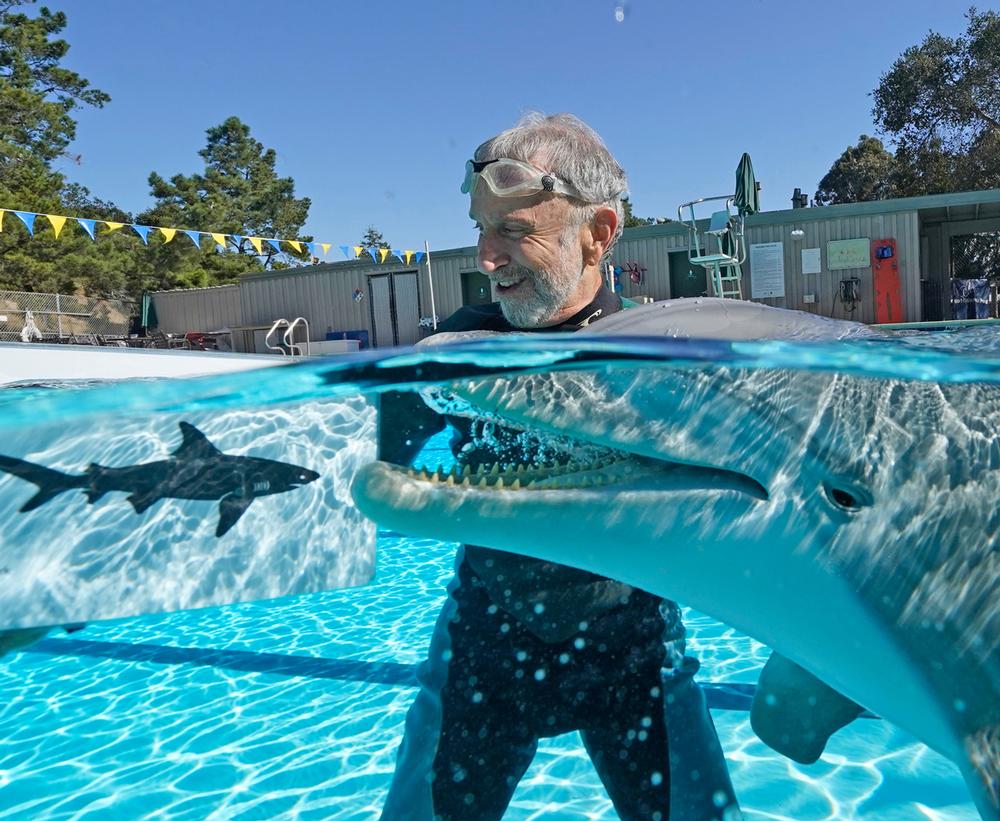
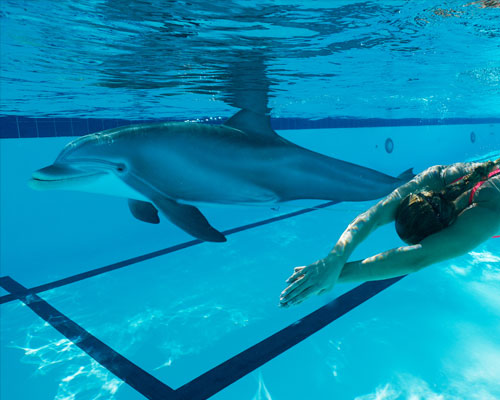
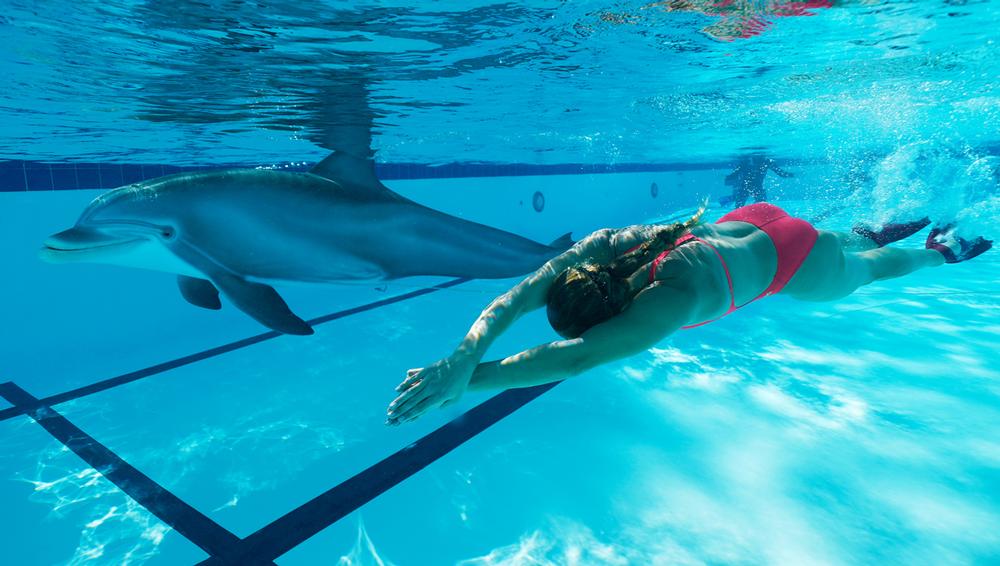
Every sub-system within the animatronic creatures has to be custom designed / Edge Innovations
Blending live puppeteering, programmed behaviour, and artificial intelligence, Edge Innovations – which has created numerous animatronic marine mammals for Hollywood blockbusters – believes its hyper real sea creatures offer the opportunity to reimagine aquaria. This technology could make captive orcas, sharks and dolphins a thing of the past, instead offering interactive experiences with robotic cetaceans. Edge CEO, Walt Conti, talks us through the challenges in creating these lifelike robots and the potential they offer.
What inspired the idea for the animatronic dolphins? The technology which enabled the creation of the dolphin sprung from Edge Innovations’ work in the film industry in the 1990s, creating the world’s first free-swimming, full size animatronic marine mammals. Prior to that, films such as Jaws were filmed with partial sections of an animatronic shark, rigged to big platforms and filmed from specific angles, such as one side or the front.
For Free Willy, Edge created completely self-contained orcas which could be filmed from any angle. Edge went on to create many aquatic animatronics for films such as Flipper, Deep Blue Sea, The Perfect Storm and The Aquatic.
In 2000, Roger Holzberg, a VP at Disney Imagineering and currently head of experience design at Edge, came up with a concept for an attraction that would feature this technology. We collaborated on two pilot attractions with Disney using version 1.0 of the dolphin: one for Epcot and one for Castaway Cay, Disney’s cruise ship island in the Bahamas. Disney did not proceed with the attraction at the time, but the pilots were a huge hit with guests and tested off the charts, showing the potential for the concept.
This current initiative was born from the realisation that there has been building resistance over the last decade against keeping these types of marine mammals – dolphins, orcas, belugas – in captivity. In addition, there has been a convergence of key technologies which makes this vision financially and experientially viable on a large and worldwide basis. We are able to take advantage of the billions of dollars now being spent in the development of the electric vehicle battery systems and autonomous sensors and AI. These industries have driven down the cost of these key elements which are integral to our creations.
What specific features and characteristics did you want to achieve? Our goal was pretty simple. We wanted to create real-time animatronics which were so realistic in appearance and movement that even up close people would interact with these creations as if they were alive. Once you have achieved that level of suspension of disbelief in guests then it opens up the opportunity for all sorts of engaging, entertaining and educational experiences.
How did you go about making this vision a reality? The success of these animatronics relies on an obsessive attention to detail. We base the animals on actual skeleton information and build out from there. Having that foundation ensures animals will move in the right way.
What were the main challenges? It’s extremely challenging to package all the technology – motors, electronics, batteries and skin systems in a way that fits inside an accurate form of a dolphin. One can’t just use off the shelf industrial components since they are typically not optimised for size. Therefore every sub-system has to be custom designed. Getting the skin to behave in a natural way is also very challenging and requires multiple rounds of prototyping and testing. Finally, achieving the right buoyancy control and stability while swimming is especially difficult. From a physics and engineering point of view one gains an incredible appreciation for mother nature when trying to recreate an animal like the dolphin. All in all the development of the V1.0 dolphin took over two years.
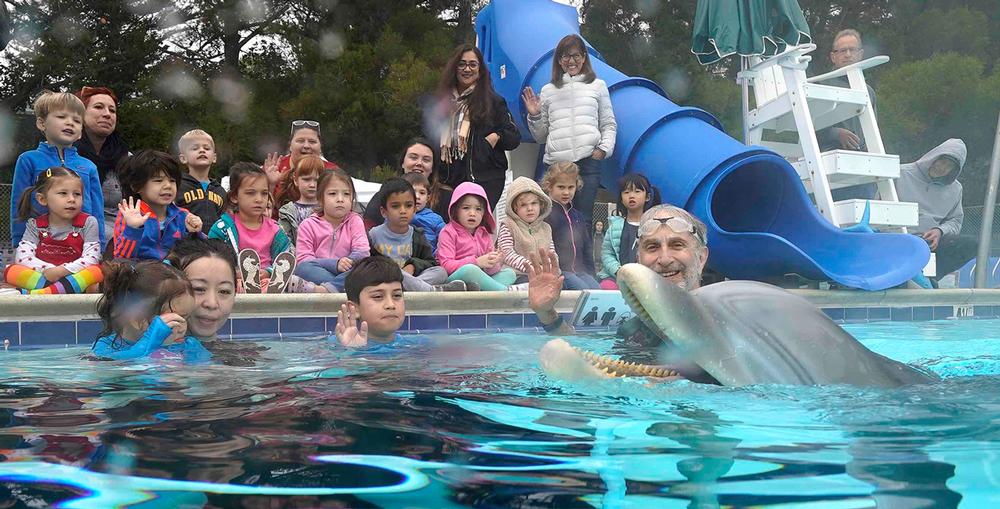
What has been the response from consumers? Without exception we have observed a complete suspension of disbelief in guests, both children and adults. Even when told these are robots, they end up petting the dolphins or trying to kiss them. There is some kind of magic which transcends all mechanical and silicone elements which ends up creating a powerful engagement with guests.
Have any attractions committed to buying one yet? We’re in advanced talks with our Chinese clients to populate three new large aquaria in China. COVID-19 slowed some of the progress this year – we were all set to implement a pilot attraction at a large aquarium in California just before the shut down, which will be restarted once attendance has recovered.
Is it viable for attractions to invest in robots rather than having live animals? Yes. It has become more and more challenging to operate attractions based on keeping large marine mammals in captivity. Theres a growing awareness that the negative aspects of keeping these animals in these environments has affected profitability.
Yet the public hunger to learn about and experience these animals is still as strong as ever. We believe that we can provide an alternative way to create experiences which are just as powerful, entertaining and educational. From a cost standpoint, over a 10 year timeframe this technology is more cost-effective than keeping live animals.
Beyond the ethical aspect, what other advantages do the animatronics have? Marine parks have operated under the premise that the most engaging experiences with these animals is to have them do acrobatic stunts. We can replicate those experiences, but there are so many other experiences which can be delivered, such as a toddler dream time with a dolphin, snorkelling among great white sharks, or bringing the Jurassic Seas to life.
What’s next for you? We’re currently in development on the next generation – V3.0 – which will incorporate more AI, allowing both an ‘exhibit’ natural behaviour mode and a ‘real time’ puppeteered mode for recurring shows.
Will you replicate any other mammals? The beauty of this technology is that you can replicate any marine mammal. It creates an opportunity to experience the wonders of the ocean world through a much broader range of the incredible animals which inhabit it.
"Marine parks have focused on acrobatics.
We can replicate this, but there are many other experiences – toddler dreamtime with
a dolphin; snorkelling with great white sharks" – Walt Conti
Read more from this issue of Attractions Management magazine
View contents of Attractions Management 2021 issue 1
Editor's letter: Doing better
The Black Lives Matter movement has challenged museums professionals to ask testing questions about their role in reparative history and the way we display and interpret racist and colonial collections
People: Brent Bushnell
Two Bit Circus has pivoted to an innovative online model aimed at keeping its community in touch
People: Michel Linet-Frion
After decades creating for Disney, Grévin and Center Parcs, Linet-Frion has launched his own consultancy
People: Anthony Rawlins
The Digital Visitor CEO explains a new whitepaper on how attractions can survive 2021 and beyond
Interview: Sarah Roots
Warner Bros’ Sarah Roots shares exciting details of the second Harry Potter Studio Tour, set to open in Japan in 2023
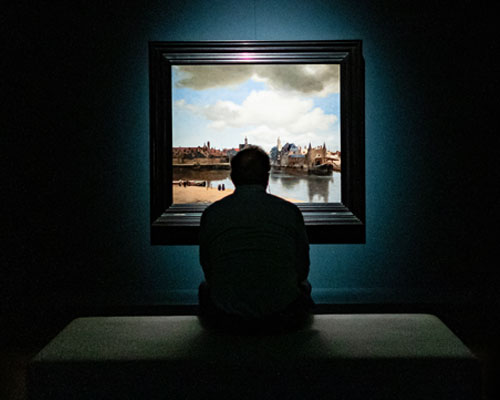
Inspired: Alone with Vermeer
The Mauritshuis in The Hague has allowed visitors one-to-one time with Vermeer’s <i>View of Delft</i>, ‘the most beautiful painting in the world’
Aquariums: Into the deep
Merlin and the Sea Life Trust share the highs and lows of the epic journey to get two whales to their new home in the world’s first beluga whale sanctuary in Iceland
Innovation: Sea change
Edge Innovations’ incredibly
life-like robot dolphins could spell the end of marine mammals in aquariums, says CEO Walt Conti
Interview: Bob Rogers
As BRC Imagination Arts celebrates 40 years in business, its founder celebrates his team’s achievements
Sponsored: Technically Creative
With clients including the Xplore
Family Entertainment Centre in Athens,
Technically Creative provides a one
stop, in-house solution to create
memorable and magical experiences.
We talk to CEO, Marc Broadbent
Sponsored: Fun Spot: Providing turnkey solutions
Industry innovator, Fun Spot, is on a roll, with a new EMEA
office and a range of innovative new products to help operators
deliver excellence to the family fun market. We find out more
Interview: Phil Hettema
The Hettema Group president on weathering the pandemic and creating powerful experiences
Californian tech company Edge Innovations
has unveiled an astonishingly lifelike
robot dolphin. Could this mean an
end to captive orcas and dolphins?
Kath Hudson asks CEO, Walt Conti
Every sub-system within the animatronic creatures has to be custom designed / Edge Innovations
Blending live puppeteering, programmed behaviour, and artificial intelligence, Edge Innovations – which has created numerous animatronic marine mammals for Hollywood blockbusters – believes its hyper real sea creatures offer the opportunity to reimagine aquaria. This technology could make captive orcas, sharks and dolphins a thing of the past, instead offering interactive experiences with robotic cetaceans. Edge CEO, Walt Conti, talks us through the challenges in creating these lifelike robots and the potential they offer.
What inspired the idea for the animatronic dolphins? The technology which enabled the creation of the dolphin sprung from Edge Innovations’ work in the film industry in the 1990s, creating the world’s first free-swimming, full size animatronic marine mammals. Prior to that, films such as Jaws were filmed with partial sections of an animatronic shark, rigged to big platforms and filmed from specific angles, such as one side or the front.
For Free Willy, Edge created completely self-contained orcas which could be filmed from any angle. Edge went on to create many aquatic animatronics for films such as Flipper, Deep Blue Sea, The Perfect Storm and The Aquatic.
In 2000, Roger Holzberg, a VP at Disney Imagineering and currently head of experience design at Edge, came up with a concept for an attraction that would feature this technology. We collaborated on two pilot attractions with Disney using version 1.0 of the dolphin: one for Epcot and one for Castaway Cay, Disney’s cruise ship island in the Bahamas. Disney did not proceed with the attraction at the time, but the pilots were a huge hit with guests and tested off the charts, showing the potential for the concept.
This current initiative was born from the realisation that there has been building resistance over the last decade against keeping these types of marine mammals – dolphins, orcas, belugas – in captivity. In addition, there has been a convergence of key technologies which makes this vision financially and experientially viable on a large and worldwide basis. We are able to take advantage of the billions of dollars now being spent in the development of the electric vehicle battery systems and autonomous sensors and AI. These industries have driven down the cost of these key elements which are integral to our creations.
What specific features and characteristics did you want to achieve? Our goal was pretty simple. We wanted to create real-time animatronics which were so realistic in appearance and movement that even up close people would interact with these creations as if they were alive. Once you have achieved that level of suspension of disbelief in guests then it opens up the opportunity for all sorts of engaging, entertaining and educational experiences.
How did you go about making this vision a reality? The success of these animatronics relies on an obsessive attention to detail. We base the animals on actual skeleton information and build out from there. Having that foundation ensures animals will move in the right way.
What were the main challenges? It’s extremely challenging to package all the technology – motors, electronics, batteries and skin systems in a way that fits inside an accurate form of a dolphin. One can’t just use off the shelf industrial components since they are typically not optimised for size. Therefore every sub-system has to be custom designed. Getting the skin to behave in a natural way is also very challenging and requires multiple rounds of prototyping and testing. Finally, achieving the right buoyancy control and stability while swimming is especially difficult. From a physics and engineering point of view one gains an incredible appreciation for mother nature when trying to recreate an animal like the dolphin. All in all the development of the V1.0 dolphin took over two years.
What has been the response from consumers? Without exception we have observed a complete suspension of disbelief in guests, both children and adults. Even when told these are robots, they end up petting the dolphins or trying to kiss them. There is some kind of magic which transcends all mechanical and silicone elements which ends up creating a powerful engagement with guests.
Have any attractions committed to buying one yet? We’re in advanced talks with our Chinese clients to populate three new large aquaria in China. COVID-19 slowed some of the progress this year – we were all set to implement a pilot attraction at a large aquarium in California just before the shut down, which will be restarted once attendance has recovered.
Is it viable for attractions to invest in robots rather than having live animals? Yes. It has become more and more challenging to operate attractions based on keeping large marine mammals in captivity. Theres a growing awareness that the negative aspects of keeping these animals in these environments has affected profitability.
Yet the public hunger to learn about and experience these animals is still as strong as ever. We believe that we can provide an alternative way to create experiences which are just as powerful, entertaining and educational. From a cost standpoint, over a 10 year timeframe this technology is more cost-effective than keeping live animals.
Beyond the ethical aspect, what other advantages do the animatronics have? Marine parks have operated under the premise that the most engaging experiences with these animals is to have them do acrobatic stunts. We can replicate those experiences, but there are so many other experiences which can be delivered, such as a toddler dream time with a dolphin, snorkelling among great white sharks, or bringing the Jurassic Seas to life.
What’s next for you? We’re currently in development on the next generation – V3.0 – which will incorporate more AI, allowing both an ‘exhibit’ natural behaviour mode and a ‘real time’ puppeteered mode for recurring shows.
Will you replicate any other mammals? The beauty of this technology is that you can replicate any marine mammal. It creates an opportunity to experience the wonders of the ocean world through a much broader range of the incredible animals which inhabit it.
"Marine parks have focused on acrobatics.
We can replicate this, but there are many other experiences – toddler dreamtime with
a dolphin; snorkelling with great white sharks" – Walt Conti
Read more from this issue of Attractions Management magazine
View contents of Attractions Management 2021 issue 1
Editor's letter: Doing better
The Black Lives Matter movement has challenged museums professionals to ask testing questions about their role in reparative history and the way we display and interpret racist and colonial collections
People: Brent Bushnell
Two Bit Circus has pivoted to an innovative online model aimed at keeping its community in touch
People: Michel Linet-Frion
After decades creating for Disney, Grévin and Center Parcs, Linet-Frion has launched his own consultancy
People: Anthony Rawlins
The Digital Visitor CEO explains a new whitepaper on how attractions can survive 2021 and beyond
Interview: Sarah Roots
Warner Bros’ Sarah Roots shares exciting details of the second Harry Potter Studio Tour, set to open in Japan in 2023
Inspired: Alone with Vermeer
The Mauritshuis in The Hague has allowed visitors one-to-one time with Vermeer’s <i>View of Delft</i>, ‘the most beautiful painting in the world’
Aquariums: Into the deep
Merlin and the Sea Life Trust share the highs and lows of the epic journey to get two whales to their new home in the world’s first beluga whale sanctuary in Iceland
Innovation: Sea change
Edge Innovations’ incredibly
life-like robot dolphins could spell the end of marine mammals in aquariums, says CEO Walt Conti
Interview: Bob Rogers
As BRC Imagination Arts celebrates 40 years in business, its founder celebrates his team’s achievements
Sponsored: Technically Creative
With clients including the Xplore
Family Entertainment Centre in Athens,
Technically Creative provides a one
stop, in-house solution to create
memorable and magical experiences.
We talk to CEO, Marc Broadbent
Sponsored: Fun Spot: Providing turnkey solutions
Industry innovator, Fun Spot, is on a roll, with a new EMEA
office and a range of innovative new products to help operators
deliver excellence to the family fun market. We find out more
Interview: Phil Hettema
The Hettema Group president on weathering the pandemic and creating powerful experiences
Abu Dhabi-based investment firm Mubadala Capital has made a binding, fully financed
€1 billion
offer to acquire Pierre and Vacances SA, the European holiday resort operator behind the
continental European Center Parcs business.
Disney has reaffirmed its commitment to investing US$30 billion in its US parks and cruise
business by 2033, using new America250 celebrations to underline the role its attractions play
in supporting jobs, tourism and economic growth.
Expo 2030 Riyadh is being planned as a permanent visitor destination, with organisers
confirming the six-million-square-metre site will become a Global Village after the event closes.
The owner of one of Australia's best-known waterparks has acquired a major competitor,
creating a new attractions business spanning two of the country's largest visitor destinations.
The Toverland theme park in the Netherlands has announced a €98m expansion programme
that will add a resort, new attractions and staff facilities as it pursues plans to become a multi-
day destination.
Hotel de France, located on the British Isle of Jersey, has created a wellness retreat package
that includes a hot yoga session that will take place in Jersey Zoo’s butterfly sanctuary.
A new immersive attraction designed to transport visitors into the final hours of ancient Pompeii
is preparing to open near the world-famous archaeological site in southern Italy.
Experience design company, BRC Imagination Arts, has completed a transition that sees founder
Bob Rogers pass ownership of the business to four long-serving senior executives, while
remaining actively involved with the company.
Movie Park Germany has opened a new Paramount Pictures-themed attraction as part of its 30th
anniversary celebrations, using immersive storytelling and adaptive reuse to reinforce the park’s
longstanding “Hollywood in Germany” positioning.
Therme Manchester’s 28-acre development, which will include interconnected glass pavilions
that measure 65,000sq m, will be the largest bathing and wellbeing attraction in the world once
complete, according to prof David Russell, CEO of Therme UK.
+ More news
COMPANY PROFILES
RMA Ltd RMA Ltd is a one-stop global company
that can design, build and produce from a
greenfield site upw [more...]
Simworx Ltd The company was initially established
in 1997. Terry Monkton and Andrew
Roberts are the key stakeh [more...]
DJW David & Lynn Willrich started the Company
over thirty years ago, from the Audio Visual
Department [more...]