Findings from a new survey revealed at this year’s SpaChina Summit indicate the current state of the Chinese spa market. Lisa Starr summarises the results
By Lisa Starr | Published in Spa Business 2018 issue 4
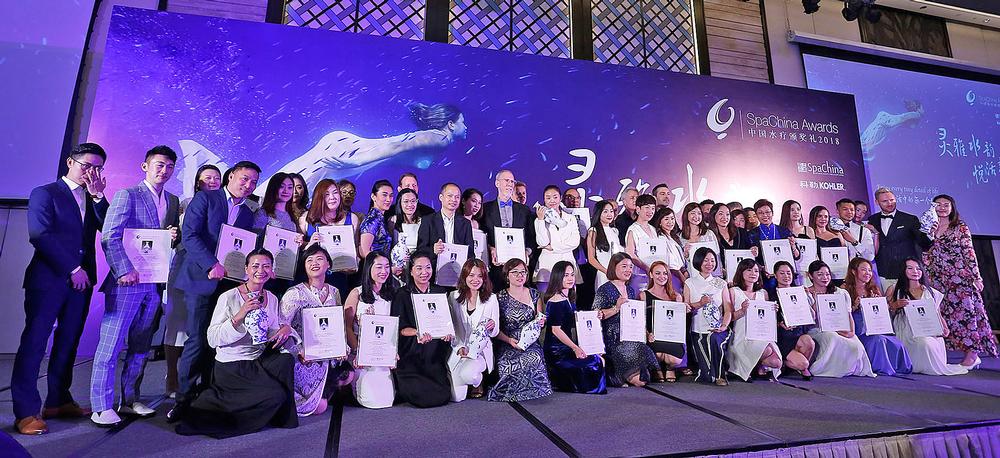
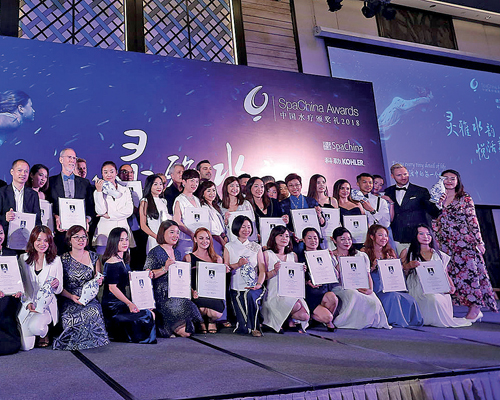
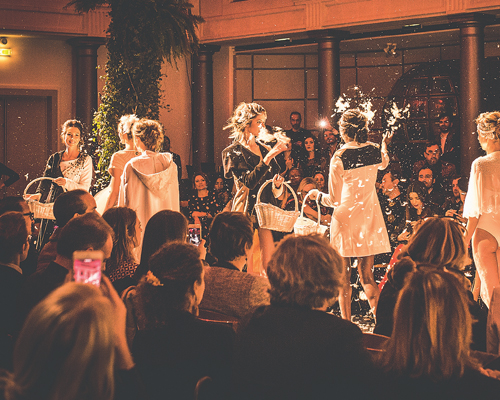
Chinese spa owners and suppliers were recognised in the summit’s annual awards ceremony
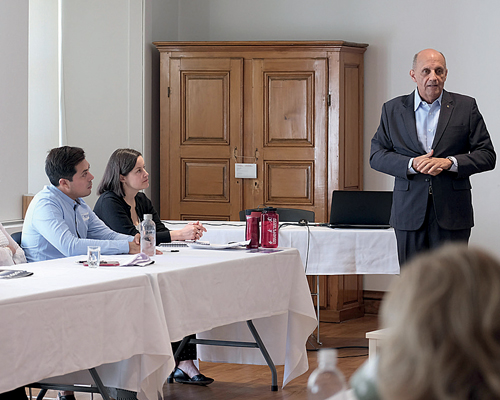
September saw almost 350 professionals convene in Sanya for the annual SpaChina Summit and this year an inaugural survey provided valuable insights into the state of the country’s spa market.
Inspired by a national consumer survey by Meituan, China’s equivalent of Groupon, which valued the Chinese beauty market at CNY660bn (US$95.9bn, €82bn, £73bn), show organiser SpaChina magazine conducted its own survey on over 100 high-end spas.
Chinese spa-goers Customers born in the 70s gravitate to health maintenance and traditional treatments like TCM and massage, while those born in the 80s prefer anti-ageing and body shaping, according to the spa owner survey respondents.
Spa-goers born in the 90s are most interested in newness, and will try everything – especially if it makes them look better in selfies! Yet they don’t have much money to buy lots of treatments.
Survey results revealed that 89 per cent of hotel spa menus only target guests born in the 70s, reflecting a need for modernisation.
Ninety per cent of hotel spa guests are Chinese and tend to favour ‘results’ rather than relaxation. Overall, it’s felt that as GDP grows, so do consumer expectations of the spa facility and experience.
State of the market China’s spa market generates CNY23bn (US$3.3bn, €2.9bn, £2.5bn), the survey shows – only 3.5 per cent of the reported national beauty market.
Sixty-five per cent of spa owners say business is the same, 21 per cent say growing, and 14 per cent say business down. It’s also noted that while 39 per cent of spas are newly opened, the business failure rate is high with just over 1/3 of spas (34 per cent) closing.
In China, hotel spas are seen as clean, safe and professional, but not innovative – many offer the same products, equipment and concepts with little differentiation, much like in western markets. Day spas are seen as being more unique. They frequently upgrade equipment and treatments, are not as constrained by brand guidelines, and owners are typically more involved.
Lack of innovation was flagged up as one of the major challenges Chinese spa owners face. Rising staff costs and recruiting difficulty is another big issue, as is lower than expected revenues.
Additional obstacles include modernisation of business software and hardware for spas, and the integration of mobile pay platforms, as most Chinese consumers pay via the WeChat app.
It is indeed interesting to see how quickly the Chinese spa market is mirroring the professional- and consumer-facing challenges we’re seeing globally.
Read more from this issue of Attractions Management magazine
View contents of Attractions Management 2018 issue 4
Interview: Thomas Klein
Senior living, family resorts and urban retreats are all on the cards for Canyon Ranch says COO and president Thomas Klein. Katie Barnes finds out more
Trends: Spa Foresight™ 2018/19
Spa Business’ predictions for the future include vegan spas, blue light antidotes, home wellness and plastic-free facilities
Interview: Dietmar Mueller-Elmau
The owner of Germany’s Schloss Elmau tells Spa Business why music, culture and spa feed the mind and soul
Promotional feature: Living Earth Crafts
Living Earth Crafts has distinguished itself with furniture for the spa industry that combines high design with seamless functionality. Brian Paris gives us insight into the company’s stylish new introductions
Event report: GWS 2018 - Bella vita
An Italian inspired Global Wellness Summit featured fashion, food, fitness and spa… and cameos from Hugh Jackman and Oprah Winfrey. Spa Business gives its highlights
Research: Growing up
Spa is the fastest growing sector of the US$4.2tn global wellness economy according to the latest GWI research
Event report: WTA Conference
What do wellness travellers want? And what issues need to be addressed as the wellness tourism sector grows? Anne Dimon reports from the inaugural meeting of the Wellness Tourism Association
Fitness: Inhale the future
Ashley Neese tells Spa Business about the possibilities of breathwork and opening up the practice to more people
An opportunity to reimagine one of the UK’s most recognisable towers has been formally
opened by Rivington Hark, as St Johns Beacon invites operators and partners to shape its
next phase. [more...]
Findings from a new survey revealed at this year’s SpaChina Summit indicate the current state of the Chinese spa market. Lisa Starr summarises the results
By Lisa Starr | Published in Spa Business 2018 issue 4
Chinese spa owners and suppliers were recognised in the summit’s annual awards ceremony
September saw almost 350 professionals convene in Sanya for the annual SpaChina Summit and this year an inaugural survey provided valuable insights into the state of the country’s spa market.
Inspired by a national consumer survey by Meituan, China’s equivalent of Groupon, which valued the Chinese beauty market at CNY660bn (US$95.9bn, €82bn, £73bn), show organiser SpaChina magazine conducted its own survey on over 100 high-end spas.
Chinese spa-goers Customers born in the 70s gravitate to health maintenance and traditional treatments like TCM and massage, while those born in the 80s prefer anti-ageing and body shaping, according to the spa owner survey respondents.
Spa-goers born in the 90s are most interested in newness, and will try everything – especially if it makes them look better in selfies! Yet they don’t have much money to buy lots of treatments.
Survey results revealed that 89 per cent of hotel spa menus only target guests born in the 70s, reflecting a need for modernisation.
Ninety per cent of hotel spa guests are Chinese and tend to favour ‘results’ rather than relaxation. Overall, it’s felt that as GDP grows, so do consumer expectations of the spa facility and experience.
State of the market China’s spa market generates CNY23bn (US$3.3bn, €2.9bn, £2.5bn), the survey shows – only 3.5 per cent of the reported national beauty market.
Sixty-five per cent of spa owners say business is the same, 21 per cent say growing, and 14 per cent say business down. It’s also noted that while 39 per cent of spas are newly opened, the business failure rate is high with just over 1/3 of spas (34 per cent) closing.
In China, hotel spas are seen as clean, safe and professional, but not innovative – many offer the same products, equipment and concepts with little differentiation, much like in western markets. Day spas are seen as being more unique. They frequently upgrade equipment and treatments, are not as constrained by brand guidelines, and owners are typically more involved.
Lack of innovation was flagged up as one of the major challenges Chinese spa owners face. Rising staff costs and recruiting difficulty is another big issue, as is lower than expected revenues.
Additional obstacles include modernisation of business software and hardware for spas, and the integration of mobile pay platforms, as most Chinese consumers pay via the WeChat app.
It is indeed interesting to see how quickly the Chinese spa market is mirroring the professional- and consumer-facing challenges we’re seeing globally.
Read more from this issue of Attractions Management magazine
View contents of Attractions Management 2018 issue 4
Interview: Thomas Klein
Senior living, family resorts and urban retreats are all on the cards for Canyon Ranch says COO and president Thomas Klein. Katie Barnes finds out more
Trends: Spa Foresight™ 2018/19
Spa Business’ predictions for the future include vegan spas, blue light antidotes, home wellness and plastic-free facilities
Interview: Dietmar Mueller-Elmau
The owner of Germany’s Schloss Elmau tells Spa Business why music, culture and spa feed the mind and soul
Promotional feature: Living Earth Crafts
Living Earth Crafts has distinguished itself with furniture for the spa industry that combines high design with seamless functionality. Brian Paris gives us insight into the company’s stylish new introductions
Event report: GWS 2018 - Bella vita
An Italian inspired Global Wellness Summit featured fashion, food, fitness and spa… and cameos from Hugh Jackman and Oprah Winfrey. Spa Business gives its highlights
Research: Growing up
Spa is the fastest growing sector of the US$4.2tn global wellness economy according to the latest GWI research
Event report: WTA Conference
What do wellness travellers want? And what issues need to be addressed as the wellness tourism sector grows? Anne Dimon reports from the inaugural meeting of the Wellness Tourism Association
Fitness: Inhale the future
Ashley Neese tells Spa Business about the possibilities of breathwork and opening up the practice to more people
Hotel de France, located on the British Isle of Jersey, has created a wellness retreat package
that includes a hot yoga session that will take place in Jersey Zoo’s butterfly sanctuary.
A new immersive attraction designed to transport visitors into the final hours of ancient Pompeii
is preparing to open near the world-famous archaeological site in southern Italy.
Experience design company, BRC Imagination Arts, has completed a transition that sees founder
Bob Rogers pass ownership of the business to four long-serving senior executives, while
remaining actively involved with the company.
Movie Park Germany has opened a new Paramount Pictures-themed attraction as part of its 30th
anniversary celebrations, using immersive storytelling and adaptive reuse to reinforce the park’s
longstanding “Hollywood in Germany” positioning.
Therme Manchester’s 28-acre development, which will include interconnected glass pavilions
that measure 65,000sq m, will be the largest bathing and wellbeing attraction in the world once
complete, according to prof David Russell, CEO of Therme UK.
Efteling has opened Hooghmoed, a new family drop tower designed to broaden the appeal of its
recently launched Sirene Island themed area and introduce younger visitors to thrill attractions.
A proposed Puy du Fou development near Bicester and Universal Destinations and Experiences’
planned resort in Bedford are emerging as part of a wider transformation of the Oxford–
Cambridge Growth Corridor into a major centre for UK leisure and tourism inv
Shedd Aquarium has opened the Immersion Theater developed in partnership with SimEx-
Iwerks, as part of a wider strategy to enhance the guest experience and create additional
revenue opportunities.
The UK government has announced a temporary reduction in VAT on visitor attractions and
children’s meals as part of a summer cost-of-living support package designed to stimulate the
visitor economy and encourage family days out.
As designer Yinka Ilori prepares for his first solo gallery show in London, he speaks exclusively
to CLADmag about his mission to spread joy, the power of play, and his bold approach to using
colour (including the colours you won’t see in his work).
The government of Thailand is exploring plans for a THB300bn (£6.3bn, US$8.3bn)
entertainment complex in the country’s Eastern Economic Corridor (EEC), with officials
proposing a large-scale theme park and sports destination as part of a broader tourism and
economic development strategy.
+ More news
COMPANY PROFILES
Clip 'n Climb Clip ‘n Climb currently offers facility owners and
investors more than 40 colourful and unique
Cha [more...]
Holovis Holovis is a privately owned company
established in 2004 by CEO Stuart
Hetherington. [more...]
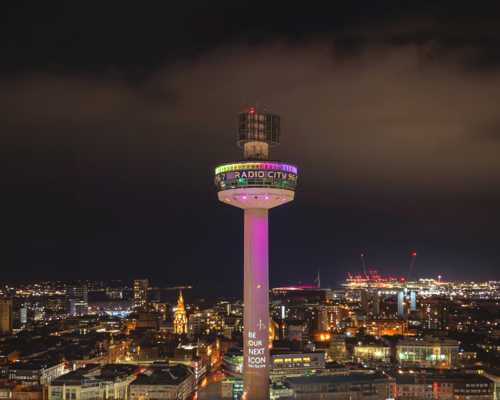
An opportunity to reimagine one of the UK’s most recognisable towers has been formally
opened by Rivington Hark, as St Johns Beacon invites operators and partners to shape its
next phase. [more...]